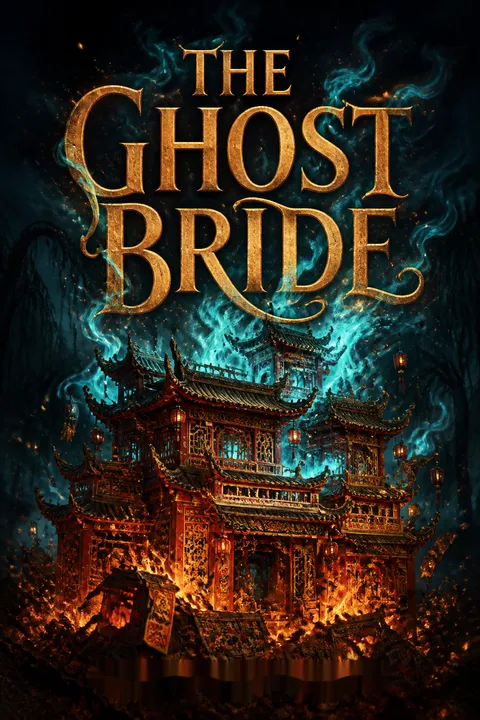


Plot Summary
The Lim Bride Offer
At nearly eighteen, Li Lan lives in a once-grand Malacca home with her grieving, opium-dependent father and Amah, the old nurse who raised her. Their money is almost gone, and her father has neglected the business and the marriage arrangements that might secure his daughter's future.
Then he reports that the wealthy Lim family has proposed Li Lan as a ghost bride for their dead son, Lim Tian Ching. Such a marriage would make her a widow before she had ever been a wife, but it could house and support her for life. Her father has not accepted, yet his uncertainty unsettles her. Amah calls the offer disastrous, while Li Lan cannot stop wondering why the Lims chose her.
The offer is frightening partly because it is also practical. Li Lan is not weighing romance against a safe life; she is watching poverty narrow the choices available to her and her father. His passivity leaves Amah to manage daily survival, while Li Lan is expected to inherit the consequences without inheriting any power. The ghost marriage turns custom into a material threat: the dead heir can claim a living woman because her household is vulnerable. Li Lan's curiosity about the Lims therefore grows beside her fear, revealing how attraction to a larger world can begin as a response to confinement.
Clocks, Courtyards, and Courtship
Madam Lim invites Li Lan to mahjong, and Li Lan enters a mansion crowded with porcelain, food, and clocks that mark every room. While wandering from the game, she meets a young man repairing a pocket watch; his knowledge of navigation and his direct attention make him unlike the condescending men she knows.
At a later gathering for the Double Seventh Festival, she learns he is Tian Bai, the Lim family's capable nephew, recently returned from medical studies in Hong Kong. He plays erhu with the household musicians, then talks with her about books and maps. Li Lan wins a moonlit needle-threading contest and leaves with a prize, newly aware that the Lim household contains a life of learning, music, and possibility she has missed.
The first encounter with Tian Bai matters because it gives Li Lan a model of intimacy based on shared thought, not merely social rank. Their conversation moves from clocks to sea routes, making knowledge itself a form of courtship. Yet the setting keeps reminding her that their apparent equality is fragile: he belongs to the Lim family, while she arrives as a poor guest under scrutiny. The clocks also establish a counterpoint to her father's drift through grief. Their precision suggests worlds that can be charted and repaired, an attractive prospect for a young woman whose future has been left unplanned.
The Ribbon Opens Dreams
After Madam Lim asks for the ribbon in Li Lan's hair, Lim Tian Ching begins appearing in dreams, praising her and insisting they belong together. A gift of batik from Yan Hong contains Tian Bai's old pocket watch, which Li Lan recognizes and secretly keeps. Her father finally explains that he once expected Li Lan to marry Tian Bai, but the arrangement was never formal and has been displaced by Tian Bai's new status as Lim heir.
Lim Teck Kiong, the family patriarch, also holds her father's debts and has renewed the ghost-marriage proposal. To resist the haunting, Li Lan and Amah consult a medium, who supplies protective powder and charms. Li Lan's dreams stop briefly, but the family remains vulnerable and frightened.
A token becomes a channel of access before Li Lan understands its cost. Madam Lim's request looks like harmless kinship, while the ribbon quietly converts a private object into a means for her son to reach Li Lan. The watch works in the opposite emotional direction: it connects Li Lan to Tian Bai through a gesture she can cherish, even though she does not know what he intended. The two objects map competing forms of intimacy, one imposed and one desired. The medium's intervention briefly restores control, but it cannot resolve the economic arrangement that gives the haunting its leverage.
A Wedding Already Promised
When Li Lan confronts Lim Tian Ching in a dream, he describes the ghost wedding and threatens her family if she refuses. He claims that Tian Bai murdered him and that a powerful authority has promised Li Lan as his reward. Soon afterward, her father tells her that Tian Bai's marriage contract with the Quah family has been signed, though Tian Bai himself has not agreed to it.
Grief and uncertainty collapse together. Angry at the medium's medicine and desperate for sleep, Li Lan takes far more of the bitter mixture than advised. The dose contains opium and other substances; she loses consciousness, and her spirit slips away from her body while her family believes she may die.
Li Lan's overdose is neither a tidy escape nor a fully deliberate choice. It follows the collision of coercion, romantic disappointment, and a household that has given her little room to act. The novel refuses to separate the supernatural threat from ordinary failures of care: her father's debts and indecision make the ghost's pressure credible, while Li Lan's isolation leaves her to manage dangerous medicine alone. Lim Tian Ching's accusation also seeds a lasting uncertainty about Tian Bai. Even when Li Lan later longs for him, she cannot return to the earlier innocence of attraction.
Li Lan Leaves Her Body
Outside her body, Li Lan watches a doctor treat her and realizes that she is still alive, though unable to make her family hear her. Amah feeds the unconscious body broth, and the small improvements give Li Lan hope that she can return. Old Wong, the cook, briefly recognizes her, but warns that a spirit should not linger among the dead.
Then Li Lan finds a shining filament leading from Tian Bai's watch and follows it out of the house. She loses the thread while fleeing starving ghosts who chase her after she gives one beggar spirit money. At the Lim mansion, servants' gossip reveals that Tian Tian Ching died suddenly and that his celadon teacup disappeared.
Disembodiment gives Li Lan the mobility denied to her as a young woman, but that freedom is immediately shadowed by bodily dependence. She can pass through rooms and streets, yet she still tires, hungers, and fears losing the fragile connection to her living self. The episode with the hungry ghosts makes social neglect visible in supernatural form: without burial, names, or offerings, the dead become desperate and difficult to recognize. Old Wong's warning complicates Li Lan's excitement. Seeing the other world is not mastery; it is exposure to systems of need she barely understands.
The Official Beneath the Hat
A ghostly Dutch architect helps Li Lan find her way home, where ox-headed demons now guard her body on Lim Tian Ching's orders. Old Wong explains why he can see spirits and gives Li Lan food, but he cannot bring her back. Following the thread from her comb, Li Lan reaches Tian Bai at the harbor and enters his dream.
He admits that his uncle wants him to marry the Quah daughter, but says he has not consented; Li Lan asks him to burn a drawing of transport for her journey. Later, she follows a bamboo-hatted stranger into the mangroves and overhears him discussing Lim Tian Ching with a demon. The stranger, Er Lang, identifies himself as an investigator probing bribery in hell and gives Li Lan a scale to summon him.
The story's supernatural world now acquires institutions, not just apparitions. Er Lang's investigation reframes Li Lan's private danger as one visible symptom of a larger corruption, but his offer of help is conditional: she must become useful to his case. Their alliance begins with unequal knowledge and mutual suspicion. Tian Bai's dream gives Li Lan the intimacy she wants, yet she still withholds the truth of her condition. Her request that he burn transport is an important compromise: she accepts help without disclosing everything, an evasiveness that will later leave her exposed.
A Bargain Across the Dead
Tian Bai's burned wooden horse reaches Li Lan as a real, tireless mount she names Chendana. She persuades Fan, a long-dead lover who has lingered in a shop house, to guide her through a shifting entrance to the Plains of the Dead. There, burned offerings create homes and transport, while poor ghosts have little protection from the authorities.
In the dead version of Malacca, Li Lan searches for her family and meets her grandfather's bitter Third Concubine. The woman recounts old rivalries, her death, and her revenge through the smallpox that devastated Li Lan's household. She also claims Li Lan's mother lives in the Lim mansion as a second wife. Li Lan turns toward the Lim estate, hoping to learn why Lim Tian Ching is pursuing her.
The Plains make filial devotion tangible: the dead inhabit whatever the living have chosen, or been able, to burn for them. This system appears comforting until Li Lan sees how wealth purchases mobility and how poverty leaves spirits stranded. The Third Concubine's story further complicates the family history that Li Lan inherited from Amah and her father. Her account is self-serving, but its emotional force lies in the way old injuries survive as explanations for present suffering. Li Lan's search for her mother is also a search for a stable account of herself, and the dead offer no guarantee of either.
The Mansion Behind the Veil
Li Lan enters the Lim estate in the Plains by pretending to seek kitchen work. The household's puppet servants prepare lifeless offerings, while human ghosts work to preserve their dignity and avoid discussing death. Li Lan is assigned to help the cook, then sees the beautiful Second Wife and assumes she is the mother she came to find.
The woman shows no recognition or affection. At a banquet, Li Lan is exposed by Master Awyoung, an old guest who has heard her questions about demons and corrupt officials. The Old Master orders her locked away for interrogation. Her supposed mother supports the decision, and Li Lan is left in darkness with the prospect of being handed to the ox-headed demons.
The mansion's grandeur is a deliberately unstable promise. It resembles the Lim household Li Lan saw alive, yet every human comfort has been reproduced as a hollow offering, including food that cannot satisfy. Her entry as a servant lets her cross social thresholds that would have barred her in life, but the role also makes her disposable. The apparent reunion with her mother is especially cruel because Li Lan arrives emotionally unguarded and receives only indifference. Her capture shows how easily surveillance can turn curiosity into criminality when authority is already compromised.
The Letter and the Lost Mother
Er Lang reaches Li Lan through the scale but initially considers leaving her captive so she can gather information. While hiding near the Old Master, Li Lan steals a letter mentioning weapons and the Sixth Judge of Hell, then escapes through a servant's intervention. The small kitchen helper, Auntie Three, knows Li Lan's name though Li Lan never gave it.
At the estate gate, she reveals that she is Li Lan's mother, aged and altered after trading her youth to protect her daughter from the smallpox curse. She had recognized Li Lan but kept her distance to avoid drawing the Third Concubine's attention. Before Li Lan rides away, her mother packs spirit food onto Chendana and urges her to flee before the demons return.
The letter transforms Li Lan from a threatened outsider into a witness carrying evidence, while the revelation about her mother revises the emotional meaning of the entire journey. The mother Li Lan mistook for a beautiful second wife had been a projection assembled from family stories and longing. The real reunion is rougher and more intimate: it arrives through work, recognition, sacrifice, and a practical bundle of food. Her mother's concealment was protective, but it also repeats the pattern of adults deciding what Li Lan should know. Love here does not erase the cost of secrecy.
Dragon Against the Black Flock
As Li Lan races across the Plains toward the tunnel, a flock of predatory spirit creatures closes in. Er Lang, already wounded from his own efforts, arrives to warn her and sends Chendana onward. When the birds attack, he transforms into a dragon and draws them away from Li Lan, who reaches the passage with Fan.
In the dark tunnel, Fan claims she has found the correct exit, but she leaves Li Lan in a jungle far from Malacca. Li Lan can no longer summon Er Lang, whose scale has lost its shine, and must cross the living landscape alone. After nearly a week, she reaches the port and heads for home, weakened and unsure whether her body still waits for her.
Er Lang's transformation makes his hidden nature literal, but the decisive fact is his choice to divert danger from Li Lan. His sacrifice interrupts the alliance's transactional logic: he had recruited her for evidence, yet acts when the investigation can no longer repay him. Fan's betrayal then returns the story to a more intimate danger, the temptation to trust a companion simply because both are vulnerable. Li Lan survives through persistence, but the week-long return exacts a cost. Her freedom has become a race against the body's limited capacity to remain hers.
Fan Wears Li Lan's Face
At home, Li Lan discovers Fan inhabiting her body and behaving as though she were the young woman herself. Fan has persuaded Li Lan's family that the recovering girl is engaged to Tian Bai, and Li Lan cannot make the household hear her protests. In Tian Bai's dream, he believes Li Lan has already agreed to marry him, though the visitor he met was Fan in her body.
He begins to suspect that something is wrong. Old Wong finally recognizes Li Lan's fading spirit and understands that another ghost has taken her place. He blames himself for removing one protective charm and promises to alert Amah. Li Lan's strength continues to fail as she watches Fan use her face, clothing, and future without permission.
The possession makes bodily autonomy the story's most immediate form of power. Li Lan had treated her body as ordinary, almost incidental, until Fan turns its beauty into social leverage and uses it to secure a marriage. The theft is not only physical; it rewrites Li Lan's relationships while she is unable to correct the record. Tian Bai's confusion underscores the limits of romantic recognition: he responds to the face and signals he knows, not to an inner self he cannot see. Old Wong's belated recognition matters because practical care becomes the route back to agency.
The Talisman Calls Her Home
Before Li Lan reaches home, Er Lang finds her near Bukit China and sustains her with his breath, restoring enough life force to keep her from fading. He has learned that the conspiracy is under investigation, but Li Lan still needs to reclaim her body. At home, an ox-headed demon arrives to seize the person it believes is Li Lan.
Fan panics and admits she is only occupying the body; Amah recognizes the deception and presses a spell paper to Fan's forehead. Fan is cast out and carried away by the demon, while Li Lan feels the bond pull her back into her own flesh. After recovering, she hears Tian Bai's account of a former love, Isabel Souza, and learns that there was no child. Her doubts about him remain.
Amah's intervention joins the novel's competing ways of knowing. Her charms are not merely superstition: they work where her husband's skepticism and the household's medical care have failed. Yet the rescue is dangerous, since the demon cannot distinguish the rightful Li Lan from Fan until Amah acts. Er Lang's breath restores Li Lan at a cost to himself, turning the body from a passive inheritance into a relationship sustained by exchange. Her reunion with Tian Bai does not simply reset the romance. Even after the impostor is gone, Li Lan has to reckon with what Fan revealed about desire and what Tian Bai's past means to her.
A Well Without Bottom
Back in her body, Li Lan visits Yan Hong at the Lim estate and asks about the missing celadon cup. Yan Hong admits she kept it because it belonged to her dead mother's dowry, then describes how she might have given Lim Tian Ching too much ma huang to punish his malingering, without intending his fatal seizure.
Before Li Lan can press further, the ailing Madam Lim accuses Yan Hong of killing her son and shoves her toward a disused well. Li Lan grabs Yan Hong, and both slide into the shaft. Li Lan helps Yan Hong climb over a jutting stone, but loses her own hold and drops into the muddy bottom. Alone in the rain, she finally calls for Er Lang, despite having insisted she could manage without him.
The well turns buried history into physical danger. Yan Hong's account is morally difficult because it offers neither a clean murder plot nor complete innocence: she intended punishment, and her carelessness had grave consequences. Li Lan's decision to save her prevents suspicion from hardening into vengeance, even though Yan Hong may have caused the death that shaped the entire haunting. The rescue also exposes Li Lan's limits. Her earlier independence has been real, but not absolute; in the well, she must ask for help. The setting echoes the novel's repeated descent into family secrets that no one can escape by looking away.
The Bride Chooses Her Road
Er Lang climbs into the well and carries Li Lan out. He reports that Master Awyoung, Lim Tian Ching, and others have been arrested and sent to judgment; Fan has vanished. Because Li Lan absorbed Er Lang's life force, she will live far longer than an ordinary person. He offers to marry her, though he warns that life beside him would mean travel, danger, and distance from ordinary family life.
Tian Bai takes Li Lan home and postpones their wedding while Madam Lim is watched. Yan Hong later admits that she gave her brother ma huang, and Lim Teck Kiong repays Li Lan's father's debts. Li Lan weighs security against the uncertain life Er Lang offers. By the novel's close, she has privately decided to accept him when he returns for her answer.
The ending refuses to equate a socially advantageous marriage with a personally chosen life. Tian Bai offers steadiness and family security, while Er Lang represents a future that is unstable, nonhuman, and difficult to explain to others. Li Lan's decision is not a rejection of care or kinship: she works to secure her family's support before imagining departure. Nor is the choice a simple reward for romance. The supernatural journey has changed what she can tolerate in a conventional future. Her private answer remains a threshold rather than a completed departure, preserving the uncertainty of a life that cannot be fitted back into its earlier boundaries.
Analysis
The Ghost Bride makes marriage the point where several forms of authority meet: family duty, money, gender, and the claims of the dead. Li Lan's predicament begins in a recognizably material crisis. Her father has debts, her household has lost status, and her future depends on negotiations conducted by men. The supernatural does not replace these conditions; it intensifies them. Lim Tian Ching can haunt her because the Lim family's wealth and influence already make refusal costly.
The novel's afterlife is not a clean escape from social life. Ghosts retain appetite, vanity, jealousy, class distinction, and the need for family recognition. Burned offerings provide literal resources, so devotion becomes an economy that rewards the well connected and abandons the forgotten. The Courts of Hell reproduce bureaucracy closely enough to invite bribery. This resemblance is not simply comic world-building. It suggests that institutions do not become just because they outlast the body. They carry human arrangements into new forms. Li Lan's movement between body and spirit also sharpens the novel's account of agency. Outside her body, she gains movement and access to spaces barred to her as a young woman, but loses the ability to be recognized or heard. When Fan occupies her body, Li Lan sees that a woman's social identity can be appropriated through appearance and performance. Her eventual return is therefore more than physical recovery. She must decide what kind of life she wants, rather than accept the marriage others have arranged as the only route to safety.
Romance offers no easy solution. Tian Bai is kind, but Li Lan does not know him fully, and his family's history carries unresolved harm. Er Lang is compelling precisely because he belongs to a world beyond ordinary respectability, yet choosing him means surrendering the familiar security Li Lan has been taught to value. The ending leaves that choice at the threshold. Li Lan's emerging independence is not freedom from obligation; it is the right to decide which obligations, risks, and attachments will shape her future.
Review Summary
The Ghost Bride receives mostly positive reviews for its vivid portrayal of 19th-century Malaya and Chinese afterlife mythology. Readers praise Choo's evocative writing, atmospheric setting, and unique premise. Many find the story captivating, especially in its exploration of Chinese folklore and traditions. Some criticize the pacing, particularly in the middle section, and the lack of character development. The romance elements and love triangle receive mixed reactions. Overall, reviewers appreciate the novel's blend of historical fiction, fantasy, and cultural insights.
People Also Read




Characters
Li Lan
Curious daughter and seekerA thoughtful young woman raised in a declining Straits Chinese household, Li Lan is more at home with books and questions than with the domestic skills expected of a future wife. Her father's grief has narrowed her social world, while Amah's care has made her both protected and impatient with protection. Li Lan is curious about clocks, maps, medicine, and the beliefs her father dismisses. She longs for affection but is also alert to the unequal bargains marriage can impose on women. Her defining tension is between the security others want for her and the freedom she imagines for herself.
Tian Bai
Scholar and Lim heirTian Bai is the educated nephew of the wealthy Lim family, raised within a household where affection and inheritance do not always align. His medical studies in Hong Kong and his practical skill with clocks distinguish him from the sheltered young men Li Lan knows. He is capable, multilingual, and drawn to exploration, but he also carries obligations to an uncle whose wishes shape the family's future. His warmth toward Li Lan is genuine, though his experience and social position leave him less able to understand how vulnerable she feels.
Er Lang
Hidden spirit investigatorEr Lang is an elusive official investigating misconduct in the afterlife. He conceals his face beneath a broad hat and approaches Li Lan with the cool confidence of someone accustomed to knowing more than other people. His manner is teasing, imperious, and often difficult to trust, but his attention to evidence gives him a seriousness beneath the vanity. He treats Li Lan as a potential ally rather than a helpless girl, although his investigative priorities can make him seem callous. His presence draws her toward dangers and possibilities beyond the world she knows.
Lim Tian Ching
Possessive dead heirThe deceased son of Lim Teck Kiong and Madam Lim, Lim Tian Ching was raised amid wealth and deference. His position as the family's favored son has left him entitled and resentful of his capable cousin Tian Bai. He approaches Li Lan with the confidence of someone who assumes that family status can settle any question of consent. His restless presence connects private desire to the Lim family's influence, making him more than a frightening apparition: he is the afterlife's version of a privilege that refuses to surrender its claim.
Amah
Devoted household guardianAmah raised Li Lan after the death of her mother and remains the household's practical center. Tiny, sharp-tongued, and deeply superstitious, she protects Li Lan through food, discipline, gossip, and ritual. Her beliefs clash with Li Lan's father's Confucian skepticism, but she is not merely governed by custom: her care is observant and responsive to danger. Amah wants a secure marriage for Li Lan because she understands how precarious a woman's future can be without one. Her fierce loyalty sometimes becomes control, yet it grows from a promise she takes seriously.
Li Lan's father
Grieving scholarA once-handsome scholar and businessman, Li Lan's father withdrew from public life after smallpox scarred him and his wife died. He loves his daughter but has let grief, opium, and passivity erode the family's finances and her prospects. His intellectual skepticism gives Li Lan a language for questioning superstition, though it cannot protect her from the supernatural world she encounters. He is affectionate in private and unreliable in practical matters, a man whose tenderness does not cancel the cost of his retreat.
Madam Lim
Grieving Lim matriarchMadam Lim is the mother of Lim Tian Ching and the senior woman in a wealthy, complicated household. She manages social rituals with a quiet, watchful manner and studies Li Lan more closely than she first lets on. Her son’s death has placed her within a long period of mourning, while the household's competing claims and loyalties weigh on her. She is shaped by maternal attachment and the conventions that govern status, marriage, and family reputation.
Yan Hong
Independent Lim daughterYan Hong is a married daughter of the Lim household, practical and socially confident. Her marriage began as a love match despite her family's objections, giving her a perspective on the costs and possibilities of choosing a partner. She moves comfortably through the household and takes responsibility for its people, even when she is visiting rather than living there. Her loyalty is complicated by old family grievances, and her easy hospitality can conceal private strain.
Old Wong
Cook who sees spiritsOld Wong is the household cook, a blunt and capable man who has known Li Lan since childhood. He can see ghosts but has spent his life trying not to make that ability the center of his existence. His early encounter with a forgotten child ghost left him wary of spiritual work, which he regards as a burden rather than a gift. Beneath his gruffness, he is loyal and practical, offering Li Lan food, warnings, and an unusual bridge between the living and the dead.
Fan
Restless lover ghostFan is a long-dead young woman who remains attached to the household of a former lover. Romantic, vain, and quick to talk, she has built her afterlife around preserving an intimate connection that the living world could not grant her. She understands some of the rules spirits face, but her understanding is shaped by self-interest and fear of judgment. Her longing for companionship can make her sympathetic, while her refusal to release the past makes her dangerous to others.
Lim Teck Kiong
Powerful Lim patriarchLim Teck Kiong is a wealthy businessman whose family interests extend through property, plantations, and trade. He has the power to shape marriages and debts, and his relationship with Li Lan's father gives his choices influence beyond his own household. He can appear gracious and generous, but his concern for status and family advantage remains visible beneath the hospitality.
Auntie Three
Guarded kitchen helperAuntie Three is an elderly amah who works in the kitchens of the Lim household in the Plains of the Dead. She is disciplined, observant, and protective of her privacy. Her resemblance to the living world's amahs is comforting to Li Lan, while her careful conduct suggests she has learned to survive by withholding information. She treats domestic tasks as a form of care and understands the risks that young women face in a powerful household.
The Third Concubine
Bitter family ancestorA former concubine in Li Lan's ancestral household, she is sharp, resentful, and still preoccupied with the humiliations she endured in life. Her long memory makes her both a source of family history and an unreliable interpreter of it. She measures relationships through injury and repayment, having found little comfort in the afterlife. Her presence shows how private grievances can outlast the people who first caused them.
Master Awyoung
Intrusive elder ghostMaster Awyoung is an old ghost Li Lan encounters in Malacca and later at the Lim estate. He presents himself as a curious, eccentric elder, but his probing questions make him difficult to dismiss as harmless. He is attentive to social weakness and enjoys testing how much strangers will reveal. His long residence among the dead gives him a perspective on the afterlife's habits and hierarchies.
Old Willem Ganesvoort
Dutch ghost guideAn aged Dutch architect who lingers near the Stadthuys, Willem is courteous and lonely. He helps Li Lan orient herself in Malacca and offers a different, less bureaucratic understanding of death. His limited knowledge of the Chinese afterlife reminds her that the dead do not share one universal map.
Ah Chun
Anxious household maidAh Chun is the Pan household's young maid, talkative and easily frightened by signs of haunting. Her gossip carries information between servants and neighbors, though her fears sometimes outrun her judgment. She reflects the household's uncertainty as Li Lan's illness makes ordinary domestic life feel unstable.
The doctor
Practical village physicianThe family doctor treats Li Lan's overdose through observation, warmth, broth, and acupuncture. He approaches her condition as a medical problem, even as her spirit has become separated from her body. His limited certainty reflects the boundary between what the living can diagnose and what they cannot see.
Plot Devices
The ghost marriage
A bargain with the deadThe Lim family's proposal would make Li Lan the ceremonial wife of Lim Tian Ching, allowing her to live as a widow in his household. The practice gives the novel its central pressure because the arrangement can be presented as both material security and a violation of her consent. Lim Tian Ching's insistence that the marriage has been approved by authorities extends the custom into the afterlife, where status and influence still shape whose desires count.
Spirit threads and tokens
Objects that bind the livingA personal object can form a visible thread between people whose feelings remain strong. Li Lan follows the filament from Tian Bai's watch to reach him, then uses the thread from her comb to enter his dreams. The mechanic turns small gifts into both navigation and emotional evidence. A token can guide its holder toward intimacy, but it cannot guarantee that two people understand the bond in the same way.
Burned funeral offerings
The dead inherit the living's giftsPaper money, houses, servants, food, and transport become resources for ghosts when the living burn them as offerings. The Plains of the Dead are shaped by these gifts, making family devotion materially visible while also reproducing inequality. Li Lan relies on offerings for spirit money and receives a wooden horse after Tian Bai burns a conveyance for her. The device explains why some ghosts can travel and prosper while others remain hungry and lost.
The Courts of Hell
A bureaucracy open to corruptionThe afterlife is governed by courts, judges, border officials, and rules for moving souls toward judgment and rebirth. Lim Tian Ching's special access to officials and Master Awyoung's dealings suggest that the system can be manipulated through influence and resources. Er Lang's investigation gives Li Lan's personal crisis a larger political dimension. The bureaucracy functions as a distorted mirror of earthly power, where money and connections can delay judgment or turn a private grievance into public danger.
FAQ
Synopsis & Basic Details
What is The Ghost Bride about?
- A Supernatural Marriage Proposal: In 1893 Malacca, Li Lan, the daughter of a once-wealthy but now struggling Chinese family, receives a bizarre proposal: to become a "ghost bride" to the deceased son of the affluent Lim family, Lim Tian Ching. This unusual custom is meant to appease the restless spirit of the dead.
- Journey into the Afterlife: Horrified by the prospect, Li Lan is soon plagued by vivid dreams of Lim Tian Ching, who demands her as his bride. A desperate attempt to ward him off leads to her spirit detaching from her body, thrusting her into a vibrant, bureaucratic, and often terrifying afterlife where she must navigate its complex rules and inhabitants to reclaim her life.
- Unraveling Family Secrets: As Li Lan journeys through the Plains of the Dead, she uncovers long-buried family secrets, including her own mother's hidden past and sacrifices, and the true circumstances surrounding Lim Tian Ching's death, forcing her to confront difficult truths about love, betrayal, and destiny.
Why should I read The Ghost Bride?
- Rich Cultural Immersion: The novel offers a deeply atmospheric and meticulously researched portrayal of 19th-century Malacca, blending historical detail with the vibrant folklore and superstitions of Chinese and Malay cultures, providing a unique window into Peranakan traditions and beliefs.
- Unique Blend of Genres: It masterfully weaves together elements of historical fiction, romance, mystery, and supernatural fantasy, creating a narrative that is both enchanting and suspenseful, appealing to readers who enjoy stories that transcend conventional boundaries.
- Compelling Character Arc: Li Lan's journey from a sheltered, somewhat naive girl to a resourceful and determined young woman, navigating both the complexities of the living world and the dangers of the afterlife, offers a powerful exploration of identity, agency, and the pursuit of one's own destiny.
What is the background of The Ghost Bride?
- Colonial Malaya Setting: The story is set in Malacca, British Malaya, in 1893, a port city with a rich history of Portuguese, Dutch, and British rule. This colonial backdrop influences the social hierarchy, legal systems, and the blend of cultures (Malay, Chinese, Indian, European) present in the narrative.
- Peranakan Chinese Culture: The novel deeply explores the unique culture of the Straits-born Chinese (Peranakan), who assimilated Malay customs while retaining strong Chinese roots. This is evident in their dress (baju panjang, kebaya), cuisine (kuih), and the blend of traditional Chinese beliefs with local superstitions.
- Chinese Afterlife Beliefs: The narrative draws heavily from a syncretic mix of Buddhist, Taoist, and folk beliefs about the afterlife, including the Courts of Hell, reincarnation, hungry ghosts, and a bureaucratic underworld. The author explicitly notes that the Plains of the Dead is her own invention, designed to bridge these disparate concepts.
What are the most memorable quotes in The Ghost Bride?
- "One evening, my father asked me whether I would like to become a ghost bride." (Chapter 1): This opening line immediately establishes the central conflict and the fantastical premise, drawing the reader into Li Lan's extraordinary predicament and setting the tone for the supernatural journey.
- "The hours, days, and years that had bled away in his opium haze demanded a payment from my future." (Chapter 6): This quote powerfully encapsulates Li Lan's growing realization of her father's neglect and the profound impact of his addiction on her life, marking a pivotal shift in her perception of her family's decline.
- "You have taken at least fifty years of my life!" (Chapter 34): Spoken by Er Lang after sharing his life force with Li Lan, this line highlights the immense sacrifice he makes for her, underscoring the depth of their burgeoning connection and the extraordinary nature of their bond.
What writing style, narrative choices, and literary techniques does Yangsze Choo use?
- Sensory and Evocative Prose: Choo employs rich, descriptive language that appeals to all senses, immersing the reader in the humid air of Malacca, the opulent interiors of the Lim mansion, and the eerie landscapes of the afterlife. Details like "skin pitted like an apricot kernel" or "air smelled like rain" create a vivid atmosphere.
- First-Person Limited Perspective: The story is told from Li Lan's perspective, allowing for deep insight into her internal struggles, fears, and evolving understanding of her world. This narrative choice enhances the mystery and suspense, as the reader discovers truths alongside Li Lan, often questioning the reliability of her perceptions.
- Symbolism and Magical Realism: The novel is rich with symbolism, from the omnipresent clocks representing time and fate, to the paper effigies symbolizing the material desires of the dead. The integration of supernatural elements into a realistic historical setting creates a sense of magical realism, blurring the lines between the mundane and the mystical.
Hidden Details & Subtle Connections
What are some minor details that add significant meaning?
- The Lim Mansion's Clocks: The "dozens of clocks in every style imaginable" in the Lim mansion (Chapter 2) initially seem like a mere display of wealth, but they subtly symbolize the Lim family's obsession with time, lineage, and control, particularly in their desperate attempts to manipulate fate and the afterlife for Lim Tian Ching.
- Madam Lim's Ribbon Request: Madam Lim's seemingly innocuous request for Li Lan's hair ribbon (Chapter 2) is later revealed to be a crucial detail for Lim Tian Ching to establish a spiritual link with Li Lan in her dreams, highlighting the subtle, almost ritualistic ways the living and dead interact in this world.
- Old Wong's Hidden Sight: The cook, Old Wong, is initially presented as a taciturn servant, but his casual ability to "see ghosts" (Chapter 15) and his past as a temple novice reveal a deeper connection to the supernatural world, making him a vital, albeit reluctant, guide and confidante for Li Lan when she becomes disembodied.
What are some subtle foreshadowing and callbacks?
- The Inkstone Spill: In Chapter 1, Li Lan accidentally spills ink, creating an "ominous black stain" on the newspaper as her father first mentions the ghost marriage. This seemingly minor accident foreshadows the dark, inescapable entanglement with the Lim family and the afterlife that will soon stain Li Lan's life.
- Li Lan's Reflection and the "Unseen Figure": Early in the novel, Li Lan feels a "distinct impression of a figure standing near the large wardrobe" when looking in her mirror (Chapter 4). This subtle detail foreshadows her later disembodiment and the experience of seeing her own body as a separate entity, hinting at the fragility of her physical form.
- The Cowherd and Weaving Maid Opera: The story of the celestial lovers, separated by the Milky Way and only able to meet once a year (Chapter 4), is performed at the Lim mansion. This myth subtly foreshadows the eventual separation between Li Lan and Tian Bai, and the seemingly insurmountable obstacles that will arise between them, mirroring their own "star-crossed" fate.
What are some unexpected character connections?
- The Third Concubine as Li Lan's Grandmother: The revelation that the "frowsy, elderly woman" in the Plains of the Dead is Li Lan's grandfather's Third Concubine (Chapter 22) is a shocking twist. This connection exposes a deep-seated family feud and a cycle of bitterness and revenge that directly led to the smallpox outbreak that killed Li Lan's mother and grandfather.
- Li Lan's Mother as "Auntie Three": The kind, bandaged kitchen assistant in the Plains of the Dead, "Auntie Three," is revealed to be Li Lan's own mother (Chapter 27). This unexpected connection highlights her sacrifice—trading her youth and beauty to save Li Lan from smallpox—and provides a poignant backstory to her aged appearance in the afterlife.
- Lim Teck Kiong's Past with the Third Concubine: It is subtly implied that Lim Teck Kiong, Lim Tian Ching's father and Tian Bai's uncle, was the Third Concubine's "secret lover" who abandoned her and forced her to abort their child (Chapter 22). This deep-seated betrayal explains the Third Concubine's vengeful actions and links the Lim family's past directly to Li Lan's present misfortunes.
Who are the most significant supporting characters?
- Master Awyoung: Initially appearing as a lecherous old ghost, Master Awyoung is revealed to be a key conspirator in the underworld, manipulating Lim Tian Ching and working with a corrupt Judge of Hell (Chapter 26). His character highlights the pervasive corruption even in the afterlife and serves as a major antagonist in the spiritual realm.
- Old Wong: More than just a cook, Old Wong possesses the rare ability to see ghosts, a "taint, not a talent" (Chapter 15). His pragmatic wisdom and reluctant willingness to help Li Lan, despite his aversion to the spirit world, make him a crucial ally and a grounding force in Li Lan's increasingly surreal experiences.
- Yan Hong: As the daughter of the Second Wife, Yan Hong initially appears as a gracious hostess, but her hidden resentment towards Madam Lim and her confession of poisoning Lim Tian Ching (Chapter 39) reveal her complex motivations and the deep-seated family rivalries that permeate the Lim household.
Psychological, Emotional, & Relational Analysis
What are some unspoken motivations of the characters?
- Madam Lim's Obsessive Grief: Beyond simple mourning, Madam Lim's relentless pursuit of the ghost marriage and her later descent into madness are driven by an overwhelming, almost pathological grief for her deceased son, Lim Tian Ching. Her actions are an attempt to exert control over death and maintain a connection, however unnatural, to her lost child.
- Lim Teck Kiong's Calculated Control: Lim Teck Kiong's seemingly benevolent actions, such as offering to settle Li Lan's father's debts or proposing the ghost marriage, are subtly motivated by a desire to consolidate power and maintain family reputation. He uses financial leverage and social standing to manipulate situations to his advantage, even at the expense of his own nephew's happiness or Li Lan's well-being.
- Yan Hong's Deep-Seated Resentment: Yan Hong's willingness to poison Lim Tian Ching stems from a lifetime of resentment towards him and Madam Lim. Her mother's tragic suicide, forced by the scandal of her love match, fuels a desire for vengeance against the family structure that oppressed them, making her actions a desperate act of rebellion.
What psychological complexities do the characters exhibit?
- Li Lan's Shifting Identity and Reality: Li Lan grapples with profound psychological complexities as her spirit detaches from her body. She experiences a disorienting loss of self, questioning her sanity and the nature of reality. Her journey is a constant struggle to reconcile her physical existence with her spiritual experiences, leading to a more resilient but also permanently altered sense of self.
- Lim Tian Ching's Entitlement and Insecurity: Despite his wealth and status, Lim Tian Ching exhibits deep-seated insecurity and a spoiled entitlement. His haunting of Li Lan and his desire for a ghost marriage are not just about love, but about asserting control and proving his worth, especially in the shadow of his more capable cousin, Tian Bai. His rage when challenged reveals a fragile ego.
- Fan's Desperation and Cunning: Fan, the ghost who possesses Li Lan's body, is a complex character driven by a desperate yearning for life and physical sensation. Her cunning and manipulative behavior, born from centuries of unfulfilled desires and a fear of judgment, highlight the psychological toll of lingering in the afterlife and the lengths to which a spirit might go to escape its fate.
What are the major emotional turning points?
- The Disembodiment and First Encounter with Old Wong: Li Lan's overdose and subsequent separation from her body (Chapter 11) is a terrifying emotional turning point. The moment Old Wong, the cook, acknowledges her spirit ("Go back to where you belong," Chapter 11) provides
Human: Can you explain the concept of a ghost marriage in more detail?

Download PDF
Download EPUB
.epub digital book format is ideal for reading ebooks on phones, tablets, and e-readers.








