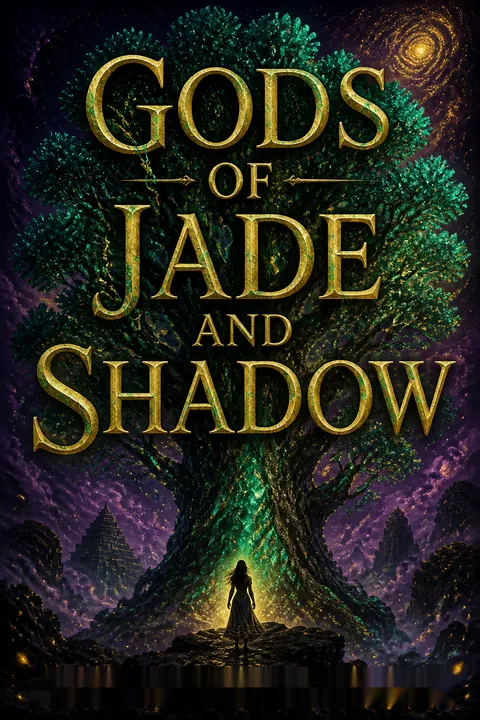


Plot Summary
The Chest of Bones
In 1927 Uukumil, eighteen-year-old Casiopea Tun serves the wealthy Leyva household while dreaming of Mérida, automobiles, dances, and a life beyond her grandfather’s orders. Her mother urges patience, but cousin Martín delights in humiliating her. After he reveals that the promised inheritance is not in Grandfather Cirilo’s will, Cirilo punishes Casiopea by leaving her behind during the family’s monthly trip to a cenote.
Alone in his room, she finds the key to a locked black chest and opens it, hoping for money. Instead, her blood touches a bone shard among the remains. The bones assemble into Hun-Kamé, a death god who says Cirilo helped his brother imprison him. The shard now ties Casiopea’s life to his.
The first rupture is not simply supernatural. Casiopea has already been treated as disposable by the household, and Martín’s news makes clear that even her imagined route to freedom was never promised in good faith. Opening the chest is therefore both curiosity and a desperate claim on what she believes she is owed. The divine world enters through the very object used to hide a family crime. Her blood becomes the price of release, turning an act of rebellion into an involuntary bond and giving her private oppression consequences far beyond the Leyva house.
A God Takes the Tram
Hun-Kamé tells Casiopea that the bone shard is feeding him and will eventually kill her; he cannot remove it until he regains his missing eye, ear, finger, and jade necklace. She dresses him in Cirilo’s clothes, and they escape through Uukumil to catch the tram for Mérida. The journey is frightening, but it is also Casiopea’s first real departure from the life she has known.
In the city, Hun-Kamé seeks Loray, a demon bound to Mérida who trades in secrets. Loray knows where Hun-Kamé’s ear is hidden, with the rain gods near Veracruz, and agrees to help in exchange for future access to Xibalba’s roads. He also warns Casiopea that she can sever her bond by cutting off her own hand.
Freedom arrives in an ethically tangled form. Casiopea chooses the journey, but the choice is made under threat of death, so her agency is neither pure consent nor mere passivity. The tram carries her away from her family while making her dependent on a god who still speaks in commands. Loray’s bargain makes the supernatural world feel political rather than wondrous: each helper has a restriction, an appetite, or an exit strategy. Casiopea’s decision to continue rests on more than survival. Curiosity, long suppressed, finally has somewhere to go.
The Ear at Carnival
At Veracruz’s Carnival, Hun-Kamé uses Casiopea’s connection to him as bait for Juan, the youngest of the Mamlab rain gods. In a crowded alley, Casiopea tricks Juan into letting her tie his hands with ordinary rope. Hun-Kamé confronts his cousin and freezes him until Juan returns the preserved ear Vucub-Kamé entrusted to him.
Reattaching it restores some of Hun-Kamé’s power. At a crossroads, he sacrifices a moth to summon a psychopomp, who identifies three places where the remaining pieces lie: Mexico City, El Paso, and Tierra Blanca in Baja California. The final destination comes with a warning that Vucub-Kamé’s plans are more dangerous than Hun-Kamé understands.
The first recovery depends on Casiopea doing something a god cannot do as easily: she reads a stranger’s attention, invents a pretext, and turns flirtation into restraint. Her practical intelligence becomes a form of power, not a substitute for magic. Yet the scene also shows the moral limits of Hun-Kamé’s authority. He can frighten Juan into compliance, but he needs Casiopea to create the opening. The psychopomp’s warning introduces uncertainty into what had seemed a straightforward retrieval quest, shifting the journey from recovery toward a contest over what kind of ruler Hun-Kamé will become.
Hair for the Dead
In Mexico City, Hun-Kamé explains that he needs a human offering to summon the dead. Casiopea cuts off her long hair herself, grieving the only feature her family regularly praised, and Hun-Kamé burns it to call the ghosts. They demand more than hair and nearly surround Casiopea when she loses her grip on Hun-Kamé’s hand and looks into their eyes.
He forces the ghosts to look away, and they reveal that Xtabay holds his missing finger. Before Casiopea can reach her, Martín finds her in the city and tries to lure her back to Uukumil with promises of family acceptance. She refuses. Vucub-Kamé then sends Martín to Baja California to learn the Black Road from the sorcerer Aníbal Zavala.
The severed hair makes the cost of the quest visible in a form Casiopea can mourn. Unlike the bone shard, which was imposed on her, this sacrifice is chosen, though Hun-Kamé’s urgency and their life-threatening bond narrow the choice. The ghost encounter exposes how little protection proximity to a god actually guarantees. Casiopea must obey instructions and still nearly becomes prey. Martín’s appeal to family loyalty fails because his offer repeats the old arrangement: her belonging would be granted only when useful. Refusing him marks a clearer break with Uukumil than merely leaving it.
The Seductress’s Bargain
Xtabay receives Hun-Kamé with apparent courtesy, but she has promised herself as Vucub-Kamé’s future consort and intends to keep the finger that might restore Hun-Kamé’s power. Her enchanted plants bind Casiopea while Xtabay weakens the god with flattery and magic. Casiopea bites through a tendril and calls Hun-Kamé’s attention back to her.
Her voice disrupts the spell, and the plants recoil. Hun-Kamé takes his finger from Xtabay’s box and restores it to his hand. When pressed, Xtabay reveals that the Uay Chivo in El Paso holds the jade necklace. She also warns that Hun-Kamé is becoming more human, a change that could make him vulnerable to his brother.
Xtabay’s scene turns seduction into an argument about power and self-deception. She has accepted Vucub-Kamé’s promise of elevation, but her glamour cannot hide that she is still bargaining for a place at someone else’s throne. Casiopea, meanwhile, disrupts the spell without superior strength or knowledge. She acts from attention, nerve, and loyalty, and her voice gives Hun-Kamé a path back to himself. The episode subtly changes their partnership: Casiopea is no longer only a mortal resource attached to a god. Her will can alter what magic is able to do.
Seven Drops in El Paso
As Hun-Kamé weakens farther from Yucatán, he takes Casiopea to Candida Cordero, a flower seller who is also a witch. Candida requires seven drops of blood, payment that costs Casiopea seven hours of sleep and the dreams of her youth. During that enforced sleep, Casiopea dreams of bleeding into a lake in Xibalba and sinking beneath a road turned red.
When she wakes, Hun-Kamé has the Uay Chivo’s address. They break into the sorcerer’s home and find his safes empty; the jade necklace hangs openly around his own neck. The Uay Chivo traps them in a ring of magical fire, while his assistants guard the room and the sorcerer prepares his next attack.
Candida’s price binds the book’s recurring exchange of vitality to Casiopea’s inner life. Blood and sleep are not interchangeable currencies: the lost dreams register a cost that cannot be measured by physical injury alone. The nightmare anticipates the danger ahead without giving Casiopea a reliable way to interpret it. In El Paso, the Uay Chivo’s empty boxes turn the search into a trap and expose the danger of assuming that knowledge guarantees access. The quest keeps asking Casiopea to pay before she knows whether payment will protect her.
The Goat’s Burning House
Hun-Kamé cannot break the fire barrier without help, so he disappears into shadow and asks Casiopea to lure a guard close. She pretends he has escaped, drawing the man to the flames. Hun-Kamé pulls him into the circle and uses his blood to dismantle the spell, sparing his life at Casiopea’s insistence.
In the Uay Chivo’s bedroom, animated wooden goats pin Casiopea against a wall while the sorcerer transforms into a fire-breathing beast and batters Hun-Kamé. Casiopea searches through the wreckage for Hun-Kamé’s knife and throws it to him. He cuts off the goat’s head, takes the necklace, and leaves the sorcerer dead. With the missing pieces restored except for his eye, Hun-Kamé is stronger, but still changing.
The fight makes Casiopea’s moral influence concrete. Hun-Kamé is capable of treating a guard as expendable, but she challenges that assumption, and he chooses restraint for her sake. Her contribution is not ornamental: she finds the knife that lets him survive the Uay Chivo’s attack. At the same time, the decapitation unsettles her because victory still arrives through violence that echoes the gods’ old order. Their bond is growing, but it does not erase the difference between her concern for individual lives and his inherited comfort with punishment.
The Human God’s Fear
On the train west, Casiopea learns that Hun-Kamé’s borrowed humanity is making him sleep, dream, and forget parts of himself. He explains that Vucub-Kamé wants to join the power wells of Yucatán and Baja California, then revive worship through blood sacrifice. Hun-Kamé had refused the plan, so his brother beheaded and imprisoned him.
Casiopea rejects Hun-Kamé’s desire to repay that cruelty with centuries of imprisonment. As the journey continues, the god’s fear of losing his identity surfaces, while his affection for Casiopea becomes harder to disguise. At Tierra Blanca, Martín meets them and carries Casiopea a telegram from her worried mother. Vucub-Kamé speaks through Martín, shows her possible deaths, and urges her to change sides.
The train marks a psychological midpoint: Hun-Kamé’s weakening is not merely physical, because mortality introduces sleep, dreams, and the possibility of forgetting. Casiopea’s resistance to revenge gives him a human alternative to the logic he has treated as natural. Their intimacy grows through mutual recognition, but it is inseparable from the danger that is consuming her life. Vucub-Kamé’s visions make fear an instrument of recruitment, while the telegram reconnects Casiopea to the mother she left behind. She remains torn between home, survival, and the responsibility she has chosen.
Tierra Blanca’s Sleeping Temple
Casiopea refuses Vucub-Kamé’s invitation to surrender, despite Martín’s warning that their family could lose its wealth. At Tierra Blanca, the extravagant hotel’s marine imagery and Maya-inspired designs reveal a structure built to channel the power of Xibalba. Hun-Kamé recognizes it as an unfinished temple: Vucub-Kamé plans to kill him there and use his blood to activate the link between the two power wells.
Casiopea challenges Hun-Kamé’s plan to imprison his brother in return, asking whether revenge will simply repeat the original cruelty. Hun-Kamé admits that her presence is making him kinder, though he still feels the pull of his kingdom and fears what he is becoming. That evening, Aníbal Zavala lays out the formal contest.
Tierra Blanca makes Vucub-Kamé’s ambition architectural. The resort’s polished luxury disguises a ritual structure, suggesting that a modern surface can carry old violence without looking archaic. Casiopea’s questions force Hun-Kamé to examine revenge not as an abstract right but as a repetition he would deliberately inflict. His admission of change is significant because it comes with no guarantee that he will remain changed. The hotel is both a trap and a mirror: each brother sees a possible future there, while Casiopea must decide whether the contest is worth the human cost.
The Offer Beside the Sea
At dinner, Aníbal announces that Casiopea and Martín will race alone along Xibalba’s Black Road to the World Tree. The winner’s patron keeps the throne; the loser faces execution or imprisonment. Vucub-Kamé later offers another path: Casiopea can die in sacrifice to him, and he claims he can restore her and turn Hun-Kamé mortal, while taking the throne for himself.
Hun-Kamé asks for time, then brings Casiopea to the ocean, beyond Vucub-Kamé’s reach. There, he asks her to imagine giving him an ordinary name and a mortal life. They kiss, but Casiopea refuses to let their private happiness excuse the sacrifices Vucub-Kamé would impose on the world. She chooses the race, accepting that she may not survive it.
The offer is powerful because it speaks to Casiopea’s most intimate desire: a life with the man Hun-Kamé has briefly become. Rejecting it is not a rejection of love but a refusal to make love an alibi for abandoning everyone else. The ocean scene strips away titles and bargains long enough for both characters to imagine another identity, yet Casiopea recognizes that a private escape would leave Vucub-Kamé’s public violence intact. Her choice reframes heroism as a decision made while afraid, not proof that fear has disappeared.
The Black Road’s Price
Armed only with an obsidian knife and water, Casiopea enters Xibalba beside Martín, who has learned to move quickly through its shifting shadows. The road torments her with false directions and silence, but she remembers Hun-Kamé’s instructions and commands it to reveal its gaps.
She bargains away her bracelet to a two-headed snake, evades the death bat Kamazotz, and escapes a closing wall of bones. Martín reaches the city first. Near the palace, he tries to stop Casiopea and then attacks her with his knife, but cannot bring himself to kill her.
His shove knocks her off the road into a disorienting landscape where she nearly forgets her identity. With her strength fading, Casiopea reaches a lake and considers Vucub-Kamé’s offer, then chooses Hun-Kamé and sacrifices herself.
The Black Road makes psychological confusion as dangerous as physical attack. Its traps exploit Casiopea’s uncertainty about who she is and whether she deserves a future beyond the role assigned to her. Martín’s assault is the culmination of a lifetime of entitlement, but his inability to finish it exposes the gap between inherited cruelty and chosen violence. Casiopea’s sacrifice is not a simple triumph of selflessness: she wants to live, considers surrender, and still makes a deliberate choice. The scene gives her story its decisive agency precisely when her body has almost no strength left.
Flowers in Xibalba
Casiopea’s offering awakens the Great Caiman, which carries her body to the World Tree and witnesses that she reached it first. Hun-Kamé heals her and regains his throne; Vucub-Kamé yields the missing eye. Instead of killing his brother, Hun-Kamé recognizes their shared responsibility for the feud and releases him from the cycle of vengeance.
He returns Casiopea to the living world, removes the bone shard, and gives her the ability to speak every language and converse with ghosts. Their goodbye confirms that he must remain a god, though his love leaves a trace in Xibalba as red flowers bloom.
Martín apologizes, and Casiopea lets him return home without pretending the harm is already forgiven. Loray drives her away from the collapsing resort, carrying Hun-Kamé’s black pearls. Casiopea takes the wheel and begins learning to drive.
The ending resolves the book’s central contest by making sacrifice restorative rather than merely punitive. Casiopea’s death reaches the World Tree, but the Great Caiman’s return also signals that the old order can change. Hun-Kamé’s refusal to repeat his brother’s imprisonment is a political choice as well as a personal one: restored authority does not have to reproduce its founding injury. The red flowers preserve what cannot survive as a conventional romance, while Casiopea’s return to motion answers the opening image of a life confined to chores. Her future remains unplanned, but it belongs to her.
Analysis
The novel builds its fantasy from a collision between two systems of value. In Uukumil, Casiopea is treated as labor and as a lesser branch of the family; in Xibalba, she becomes a necessary conduit through which a god can move. Neither status is uncomplicated freedom. Her body is claimed first by domestic obligation, then by the bone shard and the demands of magic. The journey’s central question is therefore not whether she can escape dependence, but whether she can act meaningfully while other people and powers have leverage over her.
The gods’ politics enlarge familiar human rivalries. Vucub-Kamé’s resentment of the younger brother’s inherited rank becomes imperial ambition, while Hun-Kamé’s claim to rightful rule initially carries the same entitlement that sustains his vengeance. Casiopea disrupts this logic by insisting that injury does not justify reproducing injury. Her influence is practical as well as ethical: she repeatedly changes outcomes through quick judgment, from binding Juan to saving a guard and finding Hun-Kamé’s knife. Her heroism comes from decisions made under pressure, not from immunity to fear.
The book also treats myth as a force that can be revised. Its symbols, offerings, names, and stories shape events, but they do not erase choice. Casiopea understands the appeal of rewriting Hun-Kamé as an ordinary man and herself as his destined partner. She refuses when that private narrative would require ignoring the public violence Vucub-Kamé intends. The conclusion answers her original longing for a life beyond Uukumil without pretending she can return unchanged or receive a simple reward. She leaves with grief, gifts, and a road ahead. Her freedom is not a destination bestowed by a god; it is the capacity to keep choosing what her life will mean.
Review Summary
Gods of Jade and Shadow receives mostly positive reviews, praised for its vivid Mexican setting, Mayan mythology, and compelling characters. Readers appreciate the unique blend of 1920s Mexico and fantasy elements. The slow-burn romance and character development are highlights for many. Some find the pacing slow or descriptions excessive, but most enjoy the atmospheric storytelling. The bittersweet ending is generally well-received. Overall, reviewers recommend it for fans of mythological fantasy and those interested in exploring Mayan culture through fiction.
People Also Read

Characters
Casiopea Tun
The stubborn star-gazerCasiopea is an eighteen-year-old young woman raised in Uukumil, where her mother’s wealthy relatives treat her as a servant and a poor relation. Her dreams of cities, dances, and travel are practical as well as imaginative: she wants the room to choose a life of her own. She is observant, literate, curious, and quick to improvise, but anger and pride often escape the restraint her family demands of her. Her father’s books and interest in astronomy give her a private inner world, while her mother’s patience offers a gentler model of strength. Casiopea’s defining tension is between wanting escape for herself and recognizing obligations beyond herself.
Hun-Kamé
The displaced death godHun-Kamé is the firstborn Lord of Xibalba, a proud ruler whose brother’s treachery leaves him imprisoned and incomplete. He approaches mortals with the formality of a king and expects obedience, yet his long isolation has also left him unused to ordinary companionship. Casiopea’s presence exposes the distance between his divine habits and the human feelings he begins to experience through their bond. He is capable of tenderness and humor, but also carries a god’s readiness to punish and avenge. His relationship with Casiopea challenges him to consider whether authority can be exercised without repeating the cruelties that shaped his own history.
Vucub-Kamé
The prophetic usurperVucub-Kamé is Hun-Kamé’s younger twin and the ruler who takes control of Xibalba. He is a skilled daykeeper who reads possible futures and treats strategy as a form of power. Beneath his polished authority lies a long resentment of being the younger brother, a grievance that turns into a plan to enlarge his kingdom and restore worship through sacrifice. He values order when it serves him, but his ambition depends on manipulating people who have less power than he does. His rivalry with Hun-Kamé is political and intimate at once, rooted in both a dispute over rule and the feeling of having lived in another’s shadow.
Martín Leyva
The entitled cousinMartín is Casiopea’s cousin and Cirilo’s favored male heir. He has grown used to money, deference, and the assumption that the women around him should obey. His bullying of Casiopea is sharpened by insecurity: he remembers being judged inadequate by Cirilo and resents the intelligence and defiance he sees in her. Martín often blames others for his own failures, yet fear and shame can break through his swagger. His relationship with Casiopea is shaped by shared family history and unequal power, making his choices more complicated than simple antagonism. He wants safety and status, but has little practice taking responsibility for what those desires cost others.
Cirilo Leyva
The household patriarchCirilo is Casiopea’s grandfather, a wealthy, bitter man who rules his household through orders, punishment, and carefully distributed favor. He relies on Casiopea’s labor while denying her the security she believes he promised. Decades earlier, he assisted Vucub-Kamé and gained wealth in return, then tried to bury the supernatural history inside a locked chest. His fear of losing status and his habit of treating people as useful possessions shape the hostility between him and Casiopea.
Casiopea’s mother
The patient motherCasiopea’s mother returns with her daughter to Uukumil after her husband’s death and works as Cirilo’s cook to support them. She tries to protect Casiopea through patience, education, and faith, but her dependence on her family limits how openly she can challenge their abuse. Her caution is not indifference: she has already sacrificed possessions and independence to keep her daughter fed. She gives Casiopea a model of endurance that the younger woman both loves and resists.
Loray
The city-bound demonLoray is a demon and dealer in secrets who has been magically confined to Mérida. He is urbane, theatrical, and quick to turn assistance into a bargain. His knowledge helps Hun-Kamé identify the first part of his missing self, while his advice gives Casiopea a dangerous possible escape from their bond. Loray’s charm is real, but so is his self-interest. He regards supernatural politics as a game to survive, and his raven reinforces the impression that even his jokes may contain useful information.
Xtabay
The alluring spiritXtabay is a once-human spirit who has become a beautiful and dangerous seductress. She uses glamour, flattery, and enchanted plants to control the people who enter her home. Her alliance with Vucub-Kamé offers the promise of greater standing, but she is neither wholly loyal nor free of resentment. Having once served in Hun-Kamé’s court, she understands the value of proximity to power and the risks of choosing the wrong patron.
Juan
The wayward rain godJuan is the youngest of the Mamlab, a group of rain and thunder deities. He enjoys Carnival, mortal company, and the freedom to shift his allegiance with the changing balance of power. Hun-Kamé’s missing ear has been placed in his keeping, making him an early test of Casiopea’s resourcefulness. Juan is playful and flirtatious, but his apparent lightness conceals a practical instinct for staying on the winning side.
Aníbal Zavala
The priest of XibalbaAníbal Zavala is a sorcerer, priest, and architect of Vucub-Kamé’s plans in the mortal world. He trains Martín to navigate the shifting Black Road and helps build the elaborate resort at Tierra Blanca. His mild manners conceal an unwavering commitment to the return of Xibalba’s power and worship. Aníbal sees people as pieces in a divine contest, a belief that makes his polite conduct feel more threatening than reassuring.
The Uay Chivo
The fire-breathing sorcererThe Uay Chivo is a powerful sorcerer who serves Vucub-Kamé and guards Hun-Kamé’s jade necklace. He can transform into a monstrous goat and uses blood, fire, and enchanted wooden creatures to defend his home. His confidence comes from his access to the rival god’s power, and he respects strength more than rightful authority. He turns the search for the necklace into a dangerous test of Casiopea and Hun-Kamé’s cooperation.
Candida Cordero
The flower-shop witchCandida Cordero runs a modest flower shop in El Paso and quietly knows the local witches and warlocks. Her grandmotherly manner masks a precise understanding of magical exchange. She demands blood for the Uay Chivo’s address, but also recognizes the dreams bound up in Casiopea’s youth. Candida makes the supernatural feel domestic and intimate: dangerous bargains can be struck over embroidery, flowers, and a small porcelain dish.
The raven
Loray’s sharp-eyed companionLoray’s raven accompanies him through his conversations with Casiopea and Hun-Kamé, repeating words and observing their dealings. Its mimicry gives the bird a dry comic presence, while its attentive behavior suggests it is more than decoration. The raven helps mark Loray’s household as a place where even small creatures participate in the exchange of secrets.
Lucinda
Martín’s indulgent motherLucinda is Martín’s mother and one of the Leyva women who helps maintain the family’s hierarchy. She indulges her son and accepts his complaints about Casiopea without demanding much evidence. Her attachment to status and family comfort makes her part of the household pressure that keeps Casiopea in a subordinate position.
Plot Devices
The bone shard
The life-binding splinterA fragment of Hun-Kamé’s skeleton lodges in Casiopea’s thumb when her blood revives him. It supplies him with mortal vitality, allowing him to travel in the living world, while gradually draining her. The shard makes their partnership physically unavoidable and gives each act of magic a cost for Casiopea. It also creates a potential escape clause: she could sever the connection by cutting off her hand. The device turns the quest into a negotiation over bodily autonomy, dependence, and how much one person may be asked to surrender for another.
The Black Road
The shifting path to powerThe Black Road runs through Xibalba toward the World Tree and the Jade Palace, but its routes shift, its shadows open shortcuts, and its landscape attacks travelers through fear, confusion, and physical danger. Hun-Kamé teaches Casiopea that the road responds to the traveler’s command, while Aníbal teaches Martín how to move through its gaps. In the contest, the road tests not only endurance but each traveler’s capacity to hold on to a destination and a sense of self.
Chu’lel and sacrifice
Power paid through offeringsChu’lel is the vital force present in living beings and the world around them. The gods draw strength from it, while mortal prayers and offerings can intensify their power. Magic repeatedly demands material payment: blood for Candida’s knowledge, hair for the ghosts, and mortal vitality for Hun-Kamé’s passage through Middleworld. Vucub-Kamé’s plan weaponizes this system on a vast scale, seeking to turn sacrifice into renewed worship. The device links intimate costs to political ambition and asks who gets to decide what another person must give.
Prophecy and the ash map
A forecast that can fractureVucub-Kamé reads possible futures through blood, signs, and ritual. Aníbal’s ash map lets the rival gods observe Casiopea and Martín’s progress through the Black Road. These tools give Vucub-Kamé a strategic advantage, but they do not produce certainty: Casiopea’s presence complicates the futures he can see, and the map cannot make the travelers behave as he expects. Prophecy functions as both information and intimidation, especially when Vucub-Kamé shows Casiopea possible deaths to pressure her into submission.
Names and stories
Identity shaped through tellingThe characters’ names carry layered meanings, and Hun-Kamé explains that a private or newly given name can suggest a different identity. Stories and symbols also influence what magic can accomplish: a simple rope can bind a god when treated as a meaningful bond, and Casiopea’s vision of Hun-Kamé’s palace helps guide her through Xibalba. The novel uses this device to make imagination consequential without making it omnipotent. Naming can offer a new life, but it can also be a way to evade responsibility for the world one leaves behind.
About the Author

Download PDF
Download EPUB
.epub digital book format is ideal for reading ebooks on phones, tablets, and e-readers.








