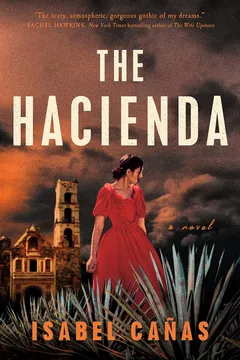


Plot Summary
The Empty Road
In November 1823, Padre Andrés Villalobos stands outside Hacienda San Isidro as a carriage carrying Beatriz Solórzano disappears into the distance. He had returned to the estate to protect her, and now her departure leaves him kneeling in the dust, grieving the companionship they found while confronting the house together.
The story then reaches back two months, to Beatriz’s arrival, and the losses that led her there. This opening glimpse makes the romance’s cost visible before its beginnings: Andrés’s duty to his home and Beatriz’s need to escape it will eventually pull them in opposite directions.
The frame makes separation the story’s first certainty, so the unfolding romance carries both attraction and anticipated loss. Andrés does not mourn only a beloved woman. He mourns the experience of being understood while living between incompatible identities: priest and witch, servant’s descendant and keeper of a powerful estate. Beatriz’s departure is not staged as a failure of love. It signals that intimacy cannot substitute for a life in which she feels safe. The opening therefore asks the reader to measure devotion not by possession, but by whether each person can recognize what the other needs.
A Bride Buys Freedom
Two months earlier, Beatriz arrives at San Isidro as Rodolfo’s new wife, hoping the estate will give her and her mother a future. Her father, a general who fought for Mexican independence, has been arrested and killed after the emperor’s fall; soldiers burned the family home, and her uncle’s household took them in only grudgingly.
Beatriz married Rodolfo, a wealthy landowner and political figure, because she could not support her mother alone. She wants to turn the hacienda into a home and bring her mother there, though her mother disapproves of the match. The property is far poorer and stranger than Rodolfo’s courtship stories promised. Beatriz nevertheless claims it as the first place she has had a chance to shape for herself.
Beatriz’s marriage is a survival strategy made under conditions that disguise coercion as choice. Her father’s death removes both material security and political protection, while her uncle’s household teaches her that dependence can be withdrawn at another person’s whim. The estate therefore signifies more than wealth: it promises an exit from humiliation and a way to protect her mother. Yet Beatriz imports the very hierarchy that injured her, initially imagining authority as something she can secure by becoming a patrón’s wife. Her confidence is real, but it has been built around a narrow bargain: safety in exchange for emotional compromise.
San Isidro's Wrong Silence
Rodolfo’s sister, Juana, greets Beatriz with blunt authority, while Rodolfo’s discomfort makes clear that his sister holds more sway on the estate than he admits. The house is neglected, the garden is dying, and a dead rat lies crushed on the front steps. Inside, Rodolfo points out a boarded passage and warns Beatriz away from a high ledge where a servant once fell.
A room Beatriz has just seen empty seems to laugh after its door closes. She tries to explain the atmosphere as disrepair and exhaustion, then pins her father’s military map above Rodolfo’s desk to give one room a piece of home. That night, red lights appear in a dark corner and vanish when she turns to look.
The first disturbances arrive amid a struggle over who has the right to define the estate. Rodolfo claims formal authority, but Juana’s familiarity with its people and routines makes her the practical power. Beatriz, meanwhile, tries to convert ownership into belonging through gardening, furnishing, and the map that preserves her father’s memory. The house resists that domestication before it becomes overtly violent. Its silence is not neutral emptiness; it makes Beatriz’s effort to impose order feel observed. By linking domestic authority to unseen attention, the novel turns an ordinary question, who governs this household, into a source of supernatural dread.
Blood Behind the Bricks
After Rodolfo leaves for the capital, Beatriz tries to restore the gardens and win Juana’s confidence. Instead, she finds her treasured silks soaked in blood. Juana and the housekeeper, Ana Luisa, hurry her to the kitchen, where Juana scrubs Beatriz’s hand even though the blood has disappeared.
That night, unseen hands shove Beatriz on the stairs, and the house’s laughter follows her into her bedroom. In daylight, she opens the boarded north passage and finds a skeleton bricked inside the wall, wearing a gold necklace.
When she rushes back with Juana and Ana Luisa, the bricks and body have vanished. Juana treats her discovery as a confused dream, leaving Beatriz certain that something happened and just as certain that no one will help her investigate.
The evidence disappears precisely when Beatriz tries to make it socially legible. Her private perception is not enough to command belief, especially from people whose authority over the estate predates hers. Juana’s response turns a haunting into a test of Beatriz’s credibility, echoing the ways women’s accounts of danger can be dismissed as weakness or instability. The blood on the silk is particularly pointed: material Beatriz associates with her mother and lost home becomes contaminated, then mysteriously clean. The house can erase traces, but it cannot restore the security those objects once represented.
A Priest in the Confessional
Beatriz seeks a blessing from the local priests, hoping to bring someone inside the house who can address its presence. Padre Vicente dismisses her fear and warns her against claiming the estate is haunted. The younger Padre Andrés, however, quietly arranges to meet her in a church storeroom.
He recognizes that San Isidro has changed and agrees to return, asking her to conceal his involvement from the other clergy. During their first night together in the house, its cold and shadows drive them into a candlelit room.
Andrés draws a protective circle with charcoal, speaks in his grandmother’s language, and uses his own blood to complete the markings. Beatriz realizes the priest is also a witch. Rather than recoil, she promises to guard his secret and accepts the protection he can offer.
Trust begins not with reassurance but with shared exposure. Andrés believes Beatriz before he has a complete explanation, then risks his position by entering the house and showing her the practice he has spent years concealing. Beatriz’s response matters because it refuses the easy division between Christian priesthood and local spiritual knowledge. For Andrés, secrecy has been a condition of survival, shaped by fear of the Inquisition and of racialized religious authority. For Beatriz, the secret becomes a test of whether a relationship can be founded on mutual recognition rather than status. The protective circle offers temporary shelter, not a cure.
The Circle Turns
Andrés attempts to draw the force inhabiting San Isidro into a protective circle, with Beatriz lending the authority of the house’s mistress. The entity fights back. It hurls Andrés against a wall, and Beatriz breaks the circle to drag him to the chapel, where he recovers with broken ribs and a serious head injury.
The next morning, Paloma finds her mother, Ana Luisa, dead in her bed, her face fixed in terror and a wooden cross crushed beside her. Andrés cannot remember the ritual that might have contained the presence. Beatriz returns to the house to clean up and finds Rodolfo’s name written in blood on the wall. As his return approaches, the danger is no longer confined to frightening visions.
The failed ritual exposes the difference between courage and control. Beatriz’s decision to break the circle saves Andrés from immediate danger, yet leaves the force beyond the boundary he was trying to maintain. His head injury compromises the expertise on which both of them depend, turning his vulnerability into a practical crisis rather than a symbolic one. Ana Luisa’s death makes the cost communal: the haunting has reached beyond the new mistress and into the people who have lived on the land for generations. The blood-written name also redirects suspicion toward the household’s history, suggesting that the apparition’s violence has a personal target.
The Empty Solórzano Grave
While Andrés struggles to recover his memory, Beatriz prepares food with Paloma, Ana Luisa’s daughter, who reveals that Rodolfo sexually abused young servants. His first wife, María Catalina, punished the women who became pregnant and was feared by the household.
Years earlier, Andrés tried to help Mariana, a servant carrying Rodolfo’s child, with a remedy from his grandmother’s teachings. María Catalina discovered the plan, threatened Paloma, and banished Andrés from San Isidro. Beatriz and Andrés then visit María Catalina’s grave and find it empty.
The gold necklace on the skeleton in the north wall identifies the hidden body as the first wife’s. Andrés recognizes that María Catalina’s anger is tied to the haunting, but neither he nor Beatriz yet knows who put her body there.
The revelation connects the supernatural threat to a history of gendered and class-based violence rather than treating it as an unrelated curse. Rodolfo’s wealth protects his access to servants’ bodies; María Catalina’s authority enforces the household order and punishes those who threaten its respectability. Andrés’s earlier attempt to help Mariana shows how even compassionate action can endanger the vulnerable when power remains unequal. The empty grave turns the house into a site where evidence has been deliberately concealed. Beatriz now has to interpret her marriage within this history, not merely within the romantic and political story Rodolfo presented to her.
Rodolfo Comes Home
Rodolfo returns with plans to meet neighboring landowners, and Beatriz hides her worsening fear behind the manners expected of his wife. At dinner, the apparition of María Catalina appears beside Andrés and fixes its attention on Rodolfo, unseen by the other guests.
Juana drinks heavily and disrupts the gathering; afterward, Rodolfo drags her from the room and strikes her when she challenges him. His threat to disinherit her reveals that their family bond is more fragile than Beatriz knew.
Left alone with her husband, Beatriz fears his unwanted advances and the house’s growing hostility. She escapes through the rain to the chapel, where Andrés finds her shaking and lets her sleep there. By morning, Rodolfo is dead, and Juana is ready to turn the accusation on Beatriz.
The dinner is a performance of stability staged inside a household that can no longer sustain it. Beatriz’s social competence helps her manage the guests, but it cannot make Rodolfo safe or make the apparition disappear. Juana’s public drunkenness exposes a family conflict, while Rodolfo’s slap reveals how quickly his cultivated manners yield to force. Beatriz’s flight is an act of self-preservation, not a romantic gesture, even as Andrés becomes the person she trusts in danger. The night also establishes an important contrast: the chapel offers safety because of its quiet and community, while the estate’s legal owner feels increasingly like a threat.
The Widow Accused
At dawn, Andrés escorts Beatriz back toward San Isidro, but she screams as they reach the house. Inside, Rodolfo lies dead with his throat cut. Beatriz sees his body move and hears a voice from it, though the caudillo and the others see only a corpse.
Juana accuses Beatriz of murder and has her confined in a storeroom. Bound and isolated, Beatriz experiences visions that reveal Juana and Ana Luisa discussing María Catalina’s death and hiding her body in the north wall.
Paloma later explains that Catalina had discovered Andrés’s attempt to help Mariana and had beaten her for information; Mariana died after being sent to work high above the dining room. Andrés and José Mendoza believe Beatriz, but know their testimony will carry little weight against Juana’s standing.
The accusation weaponizes Beatriz’s most precarious position: she is an outsider, a woman, and already regarded as unstable because she reports the haunting. Juana’s authority gives a plausible social shape to a lie, while Beatriz’s supernatural evidence is difficult to share with ordinary witnesses. The visions do not simply solve a murder mystery; they show how a household’s secrets become lodged in the minds and bodies of those who survive them. Paloma’s account also complicates the community’s complicity. Ana Luisa’s participation in concealment does not erase her own vulnerability, but it binds the household’s members to the violence they hoped to contain.
Fire and Thunder
As Juana’s accusation places Beatriz under guard, Andrés learns that she is alone inside the haunted house. He enters despite the guards and finds Juana pouring alcohol through the roof to set Beatriz’s room ablaze.
Unable to use the careful ritual he had planned, Andrés opens the part of himself he has long feared and calls a storm over San Isidro. Rain slows the fire, and he forces his way inside. Beatriz, still bound, challenges María Catalina’s presence and tries to escape the flames.
Juana falls through the burning roof, but when Beatriz reaches for the keys, Juana attacks her with a machete. Andrés arrives as the ceiling collapses, lifts the wounded Beatriz, and carries her through the house. Its doors open for them, and the rain receives them outside.
The climax makes rescue depend on a choice Andrés has resisted for years: he must use the power he associates with shame and damnation. The storm is not a simple triumph of mastery, since it cannot prevent every injury or undo the deaths that brought them here. Beatriz also acts rather than waiting to be saved; she confronts the entity and then offers help to Juana even after recognizing her as an enemy. That offer makes the attack especially brutal. The house’s final assistance suggests that its ancient presence is not identical to the hatred occupying it, a distinction that becomes essential to healing the estate.
The House Lets Go
Beatriz wakes in the village with a wound across her ribs. Juana has died beneath the collapsed roof, and Paloma and Mendoza produce the bloodied knife and clothing that prove Juana tried to kill Beatriz. The caudillo drops the murder accusation.
Among Rodolfo’s belongings, Paloma finds letters from Beatriz’s mother, which Rodolfo had kept from her. The letters invite Beatriz to return to Cuernavaca. While Beatriz recovers, Andrés goes back to San Isidro and uses the spellbook left by his aunt to confront María Catalina’s spirit.
He no longer treats his power as something that must be locked away; he draws the spirit into a circle and releases it from the house. The haunting subsides, but Beatriz understands that safety alone cannot erase what the house has done to her.
Several forms of confinement end at once, though not by the same means. Physical evidence counters Juana’s socially credible accusation, while the recovered letters expose Rodolfo’s control over Beatriz’s connection to her mother. Andrés’s decisive use of his inherited power resolves the haunting, but does not demand that Beatriz remain as proof of his success. This distinction respects the difference between curing a place and repairing a person’s memory. Andrés’s acceptance of his craft is also more than a magical upgrade: he stops measuring his vocation by whether it conforms to the institutions that once offered him shelter.
Two Roads at Dawn
Beatriz decides to return to her mother in Cuernavaca, even though Andrés hopes she might stay now that the house is quiet. They walk together across the estate, where she admits that San Isidro cannot become home for her.
When rain catches them on the way to the chapel, their restraint gives way to a kiss, and Beatriz asks Andrés to leave with her. He cannot abandon the village, his family, or the work that defines him.
Before her departure, Beatriz sells the land coveted by a neighboring hacienda and entrusts its management to Paloma and Mendoza, directing the proceeds toward reopening the village store and building a school. The next morning, she leaves for Cuernavaca. Their affection remains real, but neither asks the other to betray the life they have chosen.
The ending refuses the familiar romantic solution in which love makes incompatible obligations disappear. Beatriz can desire Andrés and still choose distance; Andrés can love her and still remain responsible to a community whose needs precede their meeting. Her land sale transforms inherited wealth from a private guarantee of status into resources that benefit the people who sustain the estate. This is not a rejection of home, but a revision of what home might require: consent, kinship, and a say in the future. The kiss matters because it confirms what the separation costs, rather than pretending the cost can be avoided.
A Letter in the Parlor
Six weeks after Beatriz leaves, Andrés enters the green parlor and finds an envelope bearing the Solórzano seal, addressed to him. He has already sent Beatriz two letters, one intimate and one apologetic, without knowing whether she would answer. Now he understands that the house has placed her reply in his path.
The rooms have begun to recover from María Catalina’s presence, and their old, varied voices return, teasing Andrés rather than threatening him. He admits to the house that Beatriz is gone, then carries her letter into the sunlight. The book ends before revealing what she wrote, leaving their future uncertain but their connection intact.
The final letter gives the house a role that is neither villainous nor wholly benign: it has become a mediator capable of responding to human absence. Its prankish return to old habits indicates recovery through renewed complexity, not through silence. Andrés’s response is deliberately modest. He does not treat the letter as a promise that Beatriz will return or that his grief has ended. Instead, he accepts evidence of continued connection while remaining where he chose to serve. Ending before the letter’s contents preserves the characters’ autonomy and makes hope a possibility rather than a guarantee.
Analysis
The Hacienda makes ownership feel like a promise and a trap at once. Beatriz marries for land because the social order has left her few ways to protect herself or her mother. Yet the estate she hopes to command is built on labor and inherited power she initially cannot see. Its supernatural violence gives physical form to histories that ordinary authority suppresses: the servants’ vulnerability, the racial hierarchy that shapes whose testimony counts, and the domestic violence hidden beneath respectable manners.
The novel’s haunting is therefore not interchangeable with its human crimes. María Catalina’s spirit intensifies the house’s malice, but the people who exploit, silence, and threaten others remain responsible for their choices. Juana’s actions arise from her precarious position within the Solórzano family, but her own losses do not erase the harm she inflicts. Likewise, Rodolfo’s political language cannot make his conduct just. The story asks readers to distinguish explanation from absolution.
Andrés’s struggle gives the book a second account of power. Seminary life offers him a place to belong while teaching him to fear the traditions and abilities inherited from his family. His eventual use of those abilities does not simply crown him with mastery. He acts while uncertain and accepts the risks of a path that has no institutional guarantee. Beatriz, meanwhile, learns that courage does not require staying in a place that has damaged her. Their love is most ethically serious when it does not demand that either abandon a necessary life.
The ending redirects the meaning of inheritance. Beatriz’s land and money can serve the village rather than reproduce the estate’s old hierarchy; Andrés can remain without treating her departure as betrayal. The house begins to heal, but human recovery follows different timelines. In refusing a tidy reunion, the novel treats survival as more than escape or romance. It is the difficult work of choosing what to carry forward, and what must no longer be owned.
Review Summary
The Hacienda received mixed reviews, with an average rating of 3.84 out of 5. Many praised its atmospheric gothic horror elements, compelling characters, and Mexican historical setting. Readers appreciated the blend of supernatural suspense, romance, and cultural elements. Some found it slow-paced or predictable, while others felt it lacked depth in character development and plot. The book was often compared to "Mexican Gothic" and "Rebecca," with divided opinions on how it measured up. Overall, it was generally considered an impressive debut with room for improvement.
People Also Read







Characters
Beatriz Hernández Valenzuela Solórzano
The self-made mistressBeatriz is the daughter of an independence-era general and a woman raised among the privileges of criollo society, then abruptly stripped of security after her father’s death. She is observant, proud, and practical, with a talent for reading social rooms because she has often been treated as an unwelcome presence in them. Marriage to Rodolfo offers her a way to protect her mother and direct her own household, but Beatriz’s determination to secure independence can make her mistake possession for belonging. She is resourceful with domestic work and unafraid to act when others dismiss her concerns. Beneath her cultivated composure is grief for her father and a longing to be valued for herself, not as a political inheritance or a useful wife.
Andrés Villalobos
The priest who hears spiritsAndrés is a young mestizo priest raised on the land surrounding San Isidro. His grandmother taught him to hear spirits and use healing and protective practices, gifts he conceals from church authorities who might condemn them. Seminary life gave him structure and refuge, but it also deepened his fear that parts of his identity are sinful. Andrés is attentive to the village’s needs, more comfortable helping than claiming authority, and haunted by the harm that can follow when he acts too late or too recklessly. His measured manner masks anger, grief, and an attraction he regards as dangerous. He approaches spiritual work as a vocation of listening, even while struggling to reconcile its demands with his faith.
Rodolfo Eligio Solórzano
The polished patrónRodolfo is Beatriz’s wealthy husband, a politically connected landowner whose polished manners and public convictions make him appear dependable. He offers Beatriz the security she lacks and presents himself as a modern supporter of political change. Yet his power rests on the estate and the people who work it, a structure that Beatriz initially cannot fully see. Rodolfo is practiced at controlling what others know about his family and his past, including the history surrounding his first marriage. His apparent steadiness is therefore difficult to separate from performance. He embodies the danger of mistaking social grace and political language for private decency.
Juana Solórzano
The estate's iron sisterJuana is Rodolfo’s sister, an unmarried landowner who has kept San Isidro functioning through years of war and financial strain. Practical, sun-browned, and openly impatient with refined expectations, she commands the workers through familiarity and competence. Beatriz first sees her as a rival for authority, but Juana’s independence also reflects a life built without the protections marriage might offer. She distrusts outsiders and resents interference in the estate she has struggled to preserve. Her sharp humor and abrupt manner make her difficult to read, especially when her loyalty to family collides with her desire to retain control.
Paloma
The guarded household heirPaloma is Ana Luisa’s daughter and Andrés’s cousin. Quiet in Beatriz’s presence at first, she is literate, capable with figures, and accustomed to doing essential work without public recognition. Her reserve is not passivity: she watches carefully, remembers how the household has treated its people, and speaks bluntly when she decides someone deserves the truth. Paloma is fiercely attached to her family and protective of Andrés, whose return matters deeply to her. She understands survival as a collective practice, shaped by people who share information and look after one another when those with formal power will not.
Ana Luisa
The guarded housekeeperAna Luisa runs the household and serves as Paloma’s mother. Brusque and formal, she protects the routines and authority she has built on an estate where women’s work is indispensable but rarely honored. Her use of copal and protective markings suggests knowledge inherited through practice rather than formal instruction. Ana Luisa distrusts Beatriz’s arrival as a possible disruption to the household’s fragile balance, and she remains closely tied to Juana. Her silence has several possible meanings: caution, loyalty, and the burden of knowing more than she can safely say.
María Catalina
The first señoraMaría Catalina was Rodolfo’s first wife, remembered by the estate’s workers and neighboring landowners as elegant, pale, and exacting. Her refinement gives her social authority, while her treatment of the household reveals how easily manners can coexist with cruelty. She is connected to the estate’s most troubling history, and her memory shapes the way Juana, Andrés, and the servants understand San Isidro. The gap between her public image and private conduct makes her presence difficult to interpret, even before the house’s disturbances begin.
Beatriz's mother
The absent refugeBeatriz’s mother is a genteel woman whose family disowned her for marrying a mestizo general. She has endured bereavement and dependence without surrendering her quiet dignity, though her caution can feel to Beatriz like silence or disapproval. Her love of gardening and their shared memories of home remain central to Beatriz’s hopes. She represents a bond that Beatriz wants to repair, but also a different model of life: one in which intimacy and mutual recognition matter more than status.
José Mendoza
The steady estate foremanMendoza keeps San Isidro’s records and serves as a trusted authority among its workers. Older and weathered by years of labor, he is practical rather than theatrical, offering stability when the household’s leadership becomes unreliable. His knowledge of the estate and the people who live on it makes him valuable beyond his official duties. He treats Paloma’s abilities seriously and provides a grounded counterweight to both Beatriz’s new authority and Andrés’s spiritual urgency.
Padre Vicente
The suspicious churchmanPadre Vicente is a senior priest who values institutional order and distrusts customs that do not fit his understanding of proper Catholic practice. He sees Andrés’s background and Beatriz’s claims through a lens of suspicion, then interprets her distress as a personal failing. Vicente’s authority is rooted in the church hierarchy and its social respectability. He contrasts with Andrés by preferring control and conventional explanations to listening.
Padre Guillermo
The village's genial priestPadre Guillermo is an older priest who has known Andrés since childhood and treats him with affection. He is sociable, tolerant of local custom, and more interested in serving the parish than enforcing every boundary of church authority. Though he cannot solve the danger at San Isidro, his warmth offers Andrés a model of religious life less governed by fear.
Mariana
The vulnerable servantMariana is a young household worker whose vulnerability exposes the imbalance between the patrón and the people employed on his estate. Her friendship with Paloma brings Andrés into a conflict between his desire to help and his fear of religious authorities.
Beatriz's father
The fallen generalBeatriz’s father is an independence-era general who taught her to read military maps and think strategically. His execution and the destruction of his home shape her determination to protect her mother and claim a future of her own.
Plot Devices
Hacienda San Isidro
A house with a memoryThe estate functions as both setting and active presence. Its cold passages, sealed north wing, shifting doors, and inexplicable laughter turn domestic space into a source of pressure. Andrés believes old houses absorb the feelings of those who live in them, while the story ties San Isidro’s disturbances to buried violence and the histories of its inhabitants. The house is not simply a monster to defeat: it has older, less hostile voices beneath the force that dominates it. Its changing behavior lets the reader distinguish the estate’s long memory from the spirit that has poisoned it.
Copal and protective marks
A fragile nighttime defenseCopal smoke, herbs, candles, and marks around thresholds provide temporary protection from the house’s force. Beatriz first encounters these practices through Ana Luisa, then learns how Andrés uses ritual boundaries more deliberately. The protection is limited: it must be maintained, and it cannot substitute for understanding what inhabits the estate. These practices also link spiritual knowledge to domestic labor and family transmission rather than to the church’s formal hierarchy.
Inés's spellbook
A hidden inheritance of powerA pamphlet of glyphs left by Andrés’s aunt preserves spells for protection, healing, curses, and exorcism. Andrés carries its teachings alongside his grandmother’s practices, but fears what using them means about his identity and salvation. His changing relationship to the book tracks his movement from concealment toward an imperfect acceptance of the gifts he can use to protect others.
The skeleton in the wall
A crime hidden in plain sightThe body concealed in San Isidro’s north wing turns the haunting into a mystery with physical evidence. A gold necklace connects the skeleton to the estate’s past, while the body’s disappearance after Beatriz discovers it encourages others to doubt her. The sealed wall is both concealment and architecture: a crime has been absorbed into the house itself. Its secret changes how Beatriz interprets the haunting, the family, and the history of the property.

Download PDF
Download EPUB
.epub digital book format is ideal for reading ebooks on phones, tablets, and e-readers.








