Plot Summary
Signs and Shadows
Sophia Tims, a determined young cartologer, is haunted by the disappearance of her explorer parents and the world's fractured Ages after the Great Disruption. She receives a cryptic pamphlet from the Nihilismian Archive, hinting at a clue to her mother's fate, and is visited by a spectral vision of her mother, Minna, who urges her to "find us while we still draw breath." These omens reignite Sophia's hope and determination, even as her uncle Shadrack, once her mentor, grows distant and preoccupied with his new government post. Sophia's longing for connection and answers is sharpened by her isolation, setting her on a path that will test her faith, courage, and the boundaries between reality and illusion.
The Archive's Secret
Driven by her mother's apparition and the pamphlet's promise, Sophia poses as a Nihilismian convert to gain access to the secretive Boston Archive. Inside, she meets Remorse, a young archivist with a prodigious memory, who becomes her unlikely ally. The Archive's labyrinthine indexes and Remorse's cryptic guidance lead Sophia to a crucial discovery: her mother's diary is held in the Granada Depository in the Papal States. The clock is ticking—Sophia's deception could be exposed at any moment, but the hope of finding her parents propels her deeper into the Archive's mysteries and the dangerous world of Nihilismian politics.
Lost Maps, Lost Time
As Sophia scours the Archive's endless volumes, her sense of time blurs, mirroring her emotional dislocation. The return of her friend Theo and explorer Miles brings a brief respite, but the group's efforts to trace the enigmatic "Ausentinia" and the "lost signs" mentioned in her father's letter yield only dead ends. A beaded memory map from a mad hermit offers tantalizing but cryptic glimpses of the Papal States. Meanwhile, political tensions in New Occident escalate, and Sophia's faith in the Fates is tested by disappointment, secrecy, and the growing realization that she must act on her own.
The Return of Theo
Theo's return to Boston brings warmth and humor back into Sophia's life, but also new complications. Political intrigue intensifies as Prime Minister Bligh warns Shadrack of MP Broadgirdle's machinations. Theo recognizes Broadgirdle as a dangerous figure from his own past, deepening the sense of threat. The group's unity is strained by secrets and the weight of their individual quests. Sophia's longing for her parents is mirrored by Theo's struggle with his own history, and both must navigate a world where trust is fragile and the past is never truly gone.
The Eerie and the Plague
The narrative shifts between Sophia's present and her parents' perilous journey years earlier. Minna and Bronson, shipwrecked and rescued by the enigmatic Captain Wren, are drawn into the heart of the Papal States, where a deadly plague—lapena—ravages the land. The Eerie, a mysterious people with healing powers, become central to both the past and present quests. In Boston, the search for the Eerie's Weatherers, who might cure the plague and other wounds, becomes urgent. The boundaries between Ages, realities, and identities blur, as healing and loss, myth and history, intertwine.
Broadgirdle's Leverage
Broadgirdle, a master manipulator with a hidden past, uses threats and forged evidence to coerce Shadrack and others into supporting his expansionist agenda. The murder of Prime Minister Bligh, for which Shadrack and Miles are framed, throws Boston into chaos. Theo, recognizing Broadgirdle as the slaver Graves, is forced to confront his own trauma and the pervasive corruption infecting New Occident's politics. The city's divisions—between natives and foreigners, truth and illusion—deepen, and the personal stakes for Sophia, Theo, and their friends become inseparable from the fate of the nation.
The Beaded Map
Sophia's study of the beaded map, crafted from the memories of Cabeza de Cabra, unlocks a hidden history of the Papal States and the fate of her parents. The map's layered memories reveal the collapse of Ausentinia, the encroachment of the Dark Age, and the tragic transformation of the lost into faceless Lachrima. Sophia's immersion in the map's world blurs the line between self and other, past and present, and she emerges changed—her faith in the Fates shaken, but her resolve hardened. The map becomes both a guide and a test, demanding that she risk everything to find the truth.
The Offer of Sail
With Shadrack unwilling to leave Boston, Sophia and Theo decide to seize the opportunity offered by Remorse: passage on a Nihilismian mission ship to the Papal States. Their departure is fraught with secrecy, guilt, and the pain of leaving loved ones behind. On the Verity, Sophia discovers she is alone—Remorse has orchestrated her journey from afar, and Theo is missing. The crossing is marked by seasickness, loneliness, and self-doubt, but also by the conviction that the only way forward is through action, not waiting for signs. The offered sail becomes a symbol of agency and the courage to choose one's own path.
The Phantom Hunter
In Seville, Sophia is aided by Errol Forsyth, a falconer haunted by the loss of his brother to a phantom. Together with Goldenrod, an Eerie healer, and later Rosemary, the warbler, they form a makeshift family of seekers, each driven by loss and hope. The group faces the perils of the plague, the Golden Cross, and the supernatural dangers of the Dark Age. Sophia's encounters with phantoms—especially the apparition of her mother—force her to question the nature of reality, memory, and guidance. The journey eastward becomes a test of trust, resilience, and the power of chosen kinship.
The Plague's Gold
The group's passage through the Papal States is marked by encounters with suffering and the limits of human and supernatural aid. Goldenrod's healing powers, rooted in her connection to the old ones and the natural world, offer hope against the plague, but also reveal the dangers of power and the costs of intervention. The Dark Age, a man-made Clime sustained by the plague and its monstrous fourwings, challenges the travelers' understanding of agency, responsibility, and the unintended consequences of human invention. The goldenrod blooms become both a literal and symbolic cure, transforming the land and its people.
The Path to Ausentinia
Guided by Ausentinian maps and the cryptic instructions of phantoms, Sophia and her companions navigate the shifting borders of the Dark Age. The journey is fraught with peril—poisonous spines, predatory fourwings, and the ever-present threat of losing oneself to illusion or despair. The maps' prophecies demand trust in the unseen and the willingness to sacrifice certainty for hope. Sophia's defense of her mother's phantom, against the warnings of her friends, becomes an act of faith in love and memory. The path to Ausentinia is revealed not by force or reason, but by surrendering to the unknown.
The Dark Age's Edge
At the border of the Dark Age, the travelers must choose between desire and dread, illusion and reality. Sophia's immersion in the memories of Ausentinia, and her willingness to lose herself in the Clime's consciousness, allows her to remake the path and lead her friends to safety. The experience is transformative—she emerges older, wiser, and stripped of her former innocence. The journey through the Dark Age becomes a metaphor for the passage from childhood to adulthood, from faith in external guidance to the acceptance of personal responsibility and the limits of knowledge.
The Warbler's Map
In Ausentinia, Sophia and her companions are welcomed as long-awaited guests. Rosemary finds her mother's resting place, and the city's healing extends to the land itself, as the goldenrod blooms banish the plague. The maps, both literal and metaphorical, have led each traveler to what they most needed—not always what they sought, but what allows them to move forward. The bonds forged in adversity become the foundation for new journeys, and the hope of reunion with lost loved ones is rekindled. The city of foretelling becomes a place of rest, reflection, and renewal.
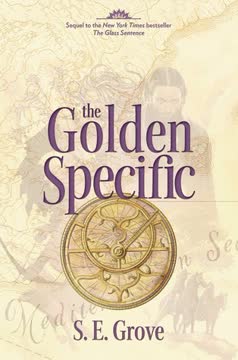
The Golden Specific
In Boston, Theo's efforts to expose Broadgirdle's crimes culminate in betrayal, imprisonment, and the realization that justice is often thwarted by power and fear. The confession of Peel, coerced by Broadgirdle, secures the villain's position, while Theo and others pay the price for their resistance. Yet the truth, once spoken, cannot be entirely silenced. The golden specific—the unique remedy, the act of healing or revelation—lies not in victory, but in the courage to persist, to forgive oneself, and to keep seeking the lost. The struggle for justice continues, unfinished but undaunted.
The Labyrinth of Remembering
Throughout the journey, memory—personal, collective, and cartological—serves as both guide and obstacle. The beaded map, the wooden rule, the silkshell, and the living Climes all embody the power and peril of remembering. Sophia's immersion in others' memories teaches her empathy, humility, and the necessity of letting go. The labyrinth of remembering is not a place to escape, but a path to understanding oneself and others. The past cannot be changed, but it can be honored, learned from, and, in rare moments, healed.
The City of Foretelling
As Sophia, Goldenrod, and Errol prepare to return west, the city of Ausentinia stands as a testament to resilience, hope, and the enduring power of maps—both those we inherit and those we create. The offered sail, once a symbol of risk and uncertainty, becomes an invitation to new adventures and the possibility of reunion. The story ends with Sophia holding her mother's diary and a new map, ready to continue the search for her parents and to chart her own course in a world remade by disruption, loss, and the golden thread of love.
The Rescue and the Return
The journey concludes with Sophia, Errol, and Goldenrod setting sail for home, their hearts full of loss, hope, and the knowledge that the world's wounds can be healed, if not erased. In Boston, the struggle for justice and belonging continues, but the bonds of chosen family endure. The lessons of the journey—about trust, agency, memory, and the acceptance of uncertainty—remain as guiding stars. The golden specific, in the end, is not a cure for all ills, but the courage to keep searching, loving, and making meaning in a world of shifting maps and endless horizons.
Characters
Sophia Tims
Sophia is a young cartologer whose longing for her lost parents drives the novel's emotional and narrative arc. Her journey is both external—across fractured Ages and perilous lands—and internal, as she moves from faith in the Fates to a hard-won acceptance of uncertainty and personal agency. Sophia's relationships—with her uncle Shadrack, her friend Theo, and her companions Errol, Goldenrod, and Rosemary—reveal her empathy, resilience, and capacity for growth. Her immersion in memory maps and her willingness to risk herself for others mark her as both a guide and a learner, a bridge between past and future, self and other.
Theo Constantine Thackary
Theo is Sophia's closest friend and a former street child from the Baldlands, scarred by trauma and betrayal. His humor and resourcefulness mask deep wounds, especially from his time as the captive of Wilkie Graves (Broadgirdle). Theo's journey is one of self-forgiveness and the struggle to break free from the patterns of fear and deceit instilled by his abuser. His loyalty to Sophia and his determination to expose injustice make him both a catalyst and a casualty in the battle against Broadgirdle's corruption. Theo's arc is a testament to the power of chosen family and the possibility of healing.
Shadrack Elli
Shadrack is Sophia's uncle and the greatest cartologer in New Occident, whose love for his niece is tested by the demands of public office and personal grief. His psychoanalytic depth lies in his struggle between duty and desire, faith and skepticism, action and paralysis. Shadrack's inability to act decisively on Sophia's behalf is both a source of pain and a realistic portrayal of adult limitations. His eventual support for Sophia's quest, and his own efforts to find the Eerie Weatherers, reflect a complex blend of guilt, hope, and the longing for redemption.
Minna and Bronson Tims
Minna and Bronson's disappearance is the central mystery and emotional wound of the novel. Through memory maps, diaries, and phantoms, their love for Sophia and each other is revealed as both a source of strength and a site of loss. Minna's apparitions guide Sophia, blurring the line between memory and magic, while Bronson's letters and actions embody the courage and vulnerability of those who seek and are sought. Their transformation into Lachrima—faceless wanderers—serves as a powerful metaphor for grief, absence, and the hope of restoration.
Errol Forsyth
Errol is a brooding, capable ally whose quest to find his lost twin brother Oswin mirrors Sophia's search for her parents. Haunted by guilt and the supernatural, Errol's stoicism masks deep longing and a capacity for tenderness, especially in his growing bond with Goldenrod. His skepticism and pragmatism balance Sophia's idealism, and his willingness to trust and be changed by others marks his psychological growth. Errol's journey is one of learning to accept help, to forgive himself, and to find meaning in connection.
Goldenrod
Goldenrod is a member of the Eerie (Elodeans), gifted with the power to heal and to communicate with beings and Climes beyond human perception. Her calm, enigmatic presence and her acts of healing are both miraculous and fraught with ethical complexity. Goldenrod's psychoanalytic depth lies in her awareness of the dangers of power, the necessity of secrecy, and the burden of being both needed and feared. Her relationship with Errol and her guidance of Sophia reveal her as a figure of wisdom, compassion, and quiet strength.
Rosemary
Rosemary is a former mute child whose life was transformed by the kindness of Bruno Casavetti and the maps of Ausentinia. Her journey from loss to reunion, and her role as the bearer of prophetic maps, make her both a guide and a symbol of resilience. Rosemary's grief for her mother and her capacity to help others find what they have lost reflect the novel's themes of memory, healing, and the interdependence of seekers.
Gordon Broadgirdle (Wilkie Graves)
Broadgirdle is a master of disguise, blackmail, and political ambition, whose hidden identity as the slaver Graves and a Sandman ties together the novel's personal and political conflicts. His psychological complexity lies in his ability to exploit fear, loyalty, and the desire for power in others. Broadgirdle's relationships—with Theo, Shadrack, and his assistant Peel—reveal the dynamics of abuse, complicity, and the costs of resistance. He is both a product and a driver of the world's brokenness.
Remorse (Cassia)
Remorse is a Nihilismian with a prodigious memory and a hidden agenda, who guides Sophia to the crucial clue of her mother's diary. Her actions are ambiguous—motivated by both compassion and necessity—and her absence from the journey she initiates raises questions about trust, agency, and the limits of help. Remorse's psychoanalytic depth lies in her struggle to balance personal risk, institutional loyalty, and the desire to do good in a world of shifting allegiances.
Winnie Pendle
Winnie is a young boy whose resourcefulness, loyalty, and "tweaky" sense of danger make him an invaluable ally to Theo and Nettie. His experiences of abandonment, institutionalization, and survival mirror the novel's larger themes of loss, resilience, and the search for belonging. Winnie's determination to make a difference, despite his powerlessness, and his capacity for forgiveness and hope, mark him as a character of quiet heroism and potential.
Plot Devices
Memory Maps and Prophetic Guidance
The novel's central plot device is the use of maps—not just as navigational tools, but as repositories of memory, emotion, and prophecy. Beaded maps, wooden rules, silkshells, and Ausentinian scrolls serve as both literal and metaphorical guides, blurring the boundaries between past and present, self and other, fate and choice. The act of reading or creating a map becomes an act of immersion, transformation, and self-discovery. Prophetic maps and phantoms challenge characters to trust in the unseen, to risk themselves for others, and to accept the limits of knowledge and control.
Fractured Ages and Climes
The Great Disruption has shattered time and space, creating a patchwork of Ages and Climes, each with its own rules, dangers, and possibilities. This fractured world serves as both setting and metaphor for the characters' psychological journeys—marked by loss, longing, and the search for wholeness. The shifting borders, man-made Ages, and living Climes reflect the instability of identity, memory, and meaning in a world where nothing is fixed and everything is contested.
Political Intrigue and Personal Betrayal
The novel's narrative structure weaves together personal quests and political machinations, using foreshadowing, parallelism, and dramatic irony to heighten tension and deepen character development. Broadgirdle's rise to power, the framing of Shadrack and Miles, and the manipulation of law and loyalty create a backdrop of danger and uncertainty. The personal betrayals—by friends, mentors, and even oneself—mirror the larger betrayals of justice, truth, and community.
Phantoms and Illusions
Phantoms—especially the apparitions of Minna—serve as both plot device and symbol, challenging characters to discern between true guidance and dangerous illusion. The defense of the phantom, the willingness to trust in love and memory even when reason warns against it, becomes a test of faith, agency, and the power of the heart. The novel uses foreshadowing and doubling to explore the risks and rewards of following one's own path, even when it leads into darkness.
The Labyrinth of Remembering
The narrative structure is recursive, with stories within stories, maps within maps, and memories within memories. Characters must navigate not only the external world but also the labyrinth of their own and others' pasts. The act of remembering—whether through maps, diaries, or silkshells—is both a source of healing and a potential trap. The novel's use of parallel timelines, shifting perspectives, and layered revelations creates a sense of depth, complexity, and emotional resonance.
Analysis
S.E. Grove's The Golden Specific is a masterful exploration of loss, memory, and the search for meaning in a world fractured by trauma and uncertainty. Through its inventive use of maps as both literal and metaphorical devices, the novel interrogates the boundaries between past and present, self and other, fate and agency. The characters' journeys—across continents, Ages, and the labyrinths of their own hearts—mirror the reader's own quest for connection, understanding, and hope. The novel's political intrigue and personal betrayals reflect the dangers of power, the costs of resistance, and the necessity of courage in the face of injustice. Yet, at its core, The Golden Specific is a story about the healing power of chosen family, the resilience of the human spirit, and the possibility of restoration—not as a return to a lost past, but as the creation of new maps, new bonds, and new meanings. In a world where nothing is certain and everything is in flux, the golden specific is not a cure-all, but the willingness to keep searching, loving, and making sense of the world, one map, one memory, and one act of trust at a time.
Last updated: