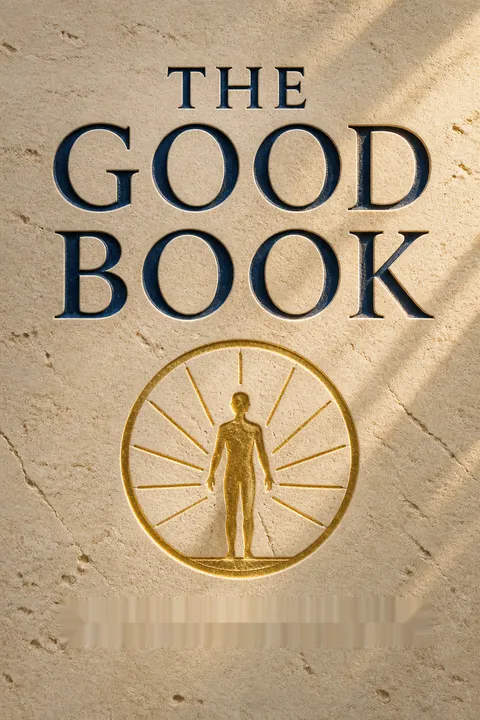


Key Takeaways
Use human flourishing, not obedience, to judge what deserves belief
A guide, not a creed. Grayling assembles writings from many centuries into a humanist counterpart to scripture. Its opening promise is not to demand belief or obedience, but to offer material for thinking about what is true and good. The collection moves through forms familiar from religious texts, including origin stories, wisdom sayings, parables, laments, histories, and letters.
Good as a target. The book treats the good as the purpose behind human action, much like a target helps an archer aim. It does not supply one final doctrine. Readers must consider its inherited arguments and decide how to use them. Its test is practical: does reflection help people understand the world, live with dignity, and contribute to human welfare?
What's striking is that the book borrows scripture's shape while refusing scripture's authority. That makes the reader an interpreter rather than a follower, and turns moral reflection into a public practice of judgment. The approach also raises a useful question: whose flourishing counts? The collection often answers through shared virtues such as justice, honesty, and care, but these can conflict across people and communities. A humanist guide is strongest when it invites that disagreement into the open rather than treating its own account of the good as settled.
Investigate nature before inventing causes that soothe fear
Observation before explanation. The opening chapters use the story of Newton noticing an apple to introduce a larger idea: nature can be investigated through evidence and reason. They point to invisible forces we know through their effects, like wind moving trees, and to slow changes that eyesight alone misses, like water wearing stone. The mind and scientific instruments extend what the senses can detect.
Keep claims revisable. The book argues that explanations should fit observed facts and avoid unnecessary causes. General conclusions drawn from experience should be treated as provisional, open to revision when new evidence appears. This makes knowledge a form of freedom: understanding natural causes weakens the fear that grows when ignorance is filled with legends.
The section joins two intellectual tasks that are often separated: explaining what happens and resisting the emotional comfort of a premature explanation. That is a useful discipline in science, medicine, and public debate. Yet evidence does not interpret itself. People choose what to measure, what to compare, and which results to trust. The book's insistence on revisability points toward an important safeguard: inquiry works best when claims can be challenged by other observers, not merely defended by the person who first proposed them.
Spend your finite time on living, not rehearsing a future life
Time is not a reserve. The book repeatedly returns to life's brevity. Its wisdom section imagines a life shorter than a thousand months, while its laments criticize people who postpone living until retirement or some other future release. Wealth, office, and ambition can consume years while remaining dependent on other people's choices.
Count experience, not calendar pages. The collection recommends filling a life with attention, knowledge, art, love, friendship, and worthwhile effort. Its discussion of old age argues that an active mind and a life of cultivated interests can make later years valuable, rather than merely an unpleasant prelude to death. Leisure matters too, when it refreshes thought and relationships instead of becoming passive drift.
The argument treats time as a moral resource, not simply a scheduling problem. It connects daily choices to mortality without making death a reason for frantic productivity: pleasure, friendship, and rest belong among the things worth doing. A useful complication is that not everyone controls how much time work, illness, or caregiving demands. The book's sharper target is avoidable postponement, especially the belief that life begins after success. Its counsel is most humane when urgency includes rest and obligation, not just achievement.
Separate your choices from fortune, then act where choice still matters
Sort what is yours. In the wisdom section, Epictetus distinguishes judgments, desires, and actions from things less fully under personal control, including health, possessions, reputation, and office. Treating outside events as guaranteed possessions invites frustration. Examining an appearance before reacting gives the mind time to decide what response fits.
Acceptance is not surrender. The collection suggests preparing for loss, illness, insult, and failure, then asking what response remains possible. A setback can test patience or courage; it need not determine the quality of a person's conduct. The point is not to stop pursuing external goals, but to avoid making inner freedom depend entirely on outcomes controlled by luck or other people.
This distinction resembles a practical form of cognitive reappraisal: pause, identify the judgment attached to an event, and consider whether another interpretation allows a wiser response. Its strength is agency under pressure. Its risk is turning hardship into a private attitude problem. An unjust law or preventable deprivation cannot be repaired by changing one's opinion alone. The collection also values public action, so the distinction works best as a guide to choosing a response, not as an excuse to accept every external condition.
Choose friends for character, and make honest correction part of loyalty
Affection is not a transaction. In the dialogue on friendship, Laelius argues that true friendship grows from affection and admiration of character, not from calculating what each person can provide. A friend can share happiness, ease hardship, and preserve a loved one's influence through memory.
Loyalty has limits. Friends should offer candid advice and receive it without treating correction as betrayal. The account draws a firm boundary: friendship cannot excuse a request to do wrong. The ideal is mutual service joined to respect, not flattery or blind compliance. A friend who indulges harmful conduct may feel agreeable in the moment but weakens the relationship's moral foundation.
The account gives friendship a demanding role: it is both emotional attachment and a setting where judgment can improve. This makes it more than companionship or social advantage. In modern terms, close relationships can function as a source of candid feedback, but honesty needs tact and mutual trust to be heard. The text's emphasis on choosing good people also risks making friendship sound available only to the already virtuous. A more generous reading treats integrity as a shared direction, not a requirement that either person arrive flawless.
Let grief honor love without demanding lifelong self-punishment
Loss deserves its place. The consolation passages do not claim that a wise person feels nothing. Laelius mourns Scipio, his closest friend, while finding comfort in what their years of work, conversation, and affection gave him. Other passages counsel the bereaved to remember the whole relationship, not let its final painful moment erase its earlier joys.
Memory can return life to the living. The story of Livia and Octavia contrasts two responses to a son's death. Octavia withdraws from family and public life; Livia continues to speak of her son and care for those still alive. The example argues against treating permanent isolation as proof of love. Grief may soften over time, and the living still need one another.
The strongest insight is that remembering someone well need not mean preserving the most painful moment as the whole story. That distinction gives grief room to change without treating love as disposable. The classical examples also risk turning mourning into a contest of self-command. Bereavement varies by person and circumstance, and prolonged grief is not evidence of weak character. The humane implication is narrower: sorrow can be witnessed and shared, while the bereaved remain entitled to return to ordinary life at their own pace.
Protect freedom of thought before authority mistakes silence for consent
Government cannot own judgment. In The Lawgiver, the argument is that rulers may need to govern actions to maintain peace, but cannot legitimately command what people believe. Attempts to dictate opinion encourage hypocrisy: people may repeat approved words while privately rejecting them. The result is mistrust, not genuine agreement.
Liberty serves more than dissent. Freedom of thought and expression is presented as necessary for learning, science, and the arts, whose work depends on judgment that is not forced. The book favors a democracy in which laws can be made by a majority and changed when opinion shifts, while individuals retain the right to think differently and argue their case.
The distinction between regulating conduct and controlling conscience remains central to pluralistic politics. It recognizes that coerced agreement is a poor substitute for legitimacy and makes open criticism part of a state's capacity to learn. Freedom of expression, however, does not by itself resolve conflicts over threats, deception, or targeted abuse. The passage offers a principle, not a full legal code. Its lasting contribution is to place the burden on authority to justify restrictions, rather than treating disagreement as proof of disloyalty.
Design institutions for actual citizens, not imaginary perfect people
Balance power against human habits. The Lawgiver draws on Aristotle to argue that political forms must fit real circumstances. A stable state should not depend on citizens being unusually virtuous, nor should it let the very rich or very poor dominate everyone else. A substantial middle group can help mediate between competing interests.
Lycurgus offers both a model and a warning. His Rhetra, a constitutional arrangement attributed to Sparta's lawgiver, balanced royal authority with a council and public participation. Spartan discipline promoted solidarity, but it also constrained individual life and relied on Helots, a subordinated laboring population. The book's own account therefore shows that order and equality among citizens can coexist with severe injustice toward outsiders.
The section's political realism is valuable: institutions should be judged by how they behave under ordinary incentives, not by the virtue their designers hope to inspire. Its account of Sparta makes the trade-off unusually visible. Shared discipline may reduce internal inequality while shifting its costs onto an excluded group. That tension is a reminder that stability is not the same as justice. Institutional analysis must ask both who participates in the common good and whose labor or freedom makes the arrangement possible.
Read history for the decisions that turn courage into survival
Power can misread its limits. In the Histories, Persia's rulers repeatedly underestimate Greek resistance. Xerxes leads a vast invasion, but the Greeks' choices about terrain, alliances, and naval strategy shape the outcome. At Salamis, Themistocles argues for fighting in a narrow strait, where Persian numbers matter less; the Greek fleet stays and wins.
Character is not enough. The story of Croesus and Solon adds a different warning. Croesus assumes wealth proves happiness, but Solon says a life cannot be judged before its ending. Together, the episodes make history a study of judgment under uncertainty: ambition can ignore counsel, while courage matters most when paired with strategy, preparation, and an honest view of risk.
The collection treats historical memory as a way to rehearse decisions before they become crises. Salamis is not simply a morality play about freedom defeating tyranny; the tactical setting and coalition choices matter. That attention to circumstance guards against easy patriotic lessons. The Croesus story adds an epistemic caution: success observed midway through a life is not the same as a final accounting. Historical examples are most useful when they expose contingencies, not when they are reduced to proof that one side was destined to win.
Keep learning public, embodied, and connected to action
Books should be used, not displayed. The parables praise accessible bookshelves and describe a couple who once shared cheap secondhand books, then later locked rare volumes away. Another story follows two sisters who return to their village able to read and start a school beneath a tree. Their example makes education a matter of initiative and access, not expensive buildings.
Learning needs movement and exchange. The collection values conversation with teachers, colleagues, pupils, and friends. It also describes philosophers walking as they think, and recommends balancing study with exercise and play. Reading matters because it extends experience, but its value depends on reflection and practice. Knowledge that never changes conduct remains an ornament rather than a guide.
The images of the open bookcase and the school beneath a tree make learning a social resource rather than a private badge of rank. The insistence on discussion and physical activity also resists the idea that education is only the accumulation of information. Still, access to books and time for study is unevenly distributed. A culture that praises self-education must also make it materially possible. The collection's most useful test of learning is whether it improves judgment and becomes visible in how people act.
Build a good life around your gifts, bounded by justice and care
There is no single life plan. In The Good, the collection argues that different people can find different forms of a worthwhile life by developing their abilities and choosing work that suits them. A musician, scientist, artist, or public servant can use distinct talents for pleasure and for the benefit of others. The good is not reduced to wealth, rank, or conformity to one approved model.
Plural lives share moral limits. The closing counsel joins personal freedom to affection, justice, honesty, courage, kindness, and respect for nature. It asks people to think for themselves and take responsibility, while recognizing that they live among others who also deserve consideration. The task is lifelong: a person can keep learning, correcting mistakes, and refining a chosen way of living.
This ending reconciles individual vocation with shared moral obligations. It avoids both a rigid universal script and the claim that any chosen life is equally good. The useful boundary is that personal fulfillment cannot erase harm to others or indifference to justice. The framework also leaves a real question open: when one person's talents or ambitions conflict with another's welfare, judgment is required rather than a formula. That openness suits a collection built from many voices, though it means readers must do more than select attractive maxims.
Analysis
The Good Book is less a single philosophical argument than an edited conversation across genres and centuries. Its biblical architecture gives readers a memorable route through natural inquiry, practical wisdom, friendship, grief, political thought, history, poetry, and counsel. That structure matters: abstract claims are repeatedly tested against lives and scenes. Newton's apple makes inquiry vivid; Solon's encounter with Croesus tests prosperity against mortality; the defense of Athens against Persia makes political freedom a matter of choices, resources, and risk. The collection's central humanist proposal is that inherited wisdom can guide without demanding submission. Readers are asked to examine evidence, deliberate about the good, and take responsibility for the lives they shape.
The anthology's breadth is also its productive tension. Its voices do not form a perfectly consistent doctrine. Some praise independence, others discipline; some advocate democratic freedom, while others distrust popular judgment. Its ideal of equal civic fellowship sits beside accounts of slavery, rigid social hierarchy, and women's lives described through ancient assumptions. The portrayal of Spartan order is especially revealing: equality and restraint among citizens depend on a brutally subordinated population. These contradictions should not be smoothed away. They show why a humanist canon needs critical reading as much as admiration.
The book is strongest when it treats wisdom as a practice rather than a collection of answers. Inquiry must remain revisable, friendship must include honest counsel, mourning must coexist with continued life, and public authority must leave room for independent judgment. Its recurring attention to mortality gives these duties urgency without making pleasure, art, or leisure frivolous. Yet the advice is most persuasive when applied with context: accepting what cannot be controlled should not excuse injustice, and cultivating virtue should not become a demand that everyone follow one model. The reader's task is to inherit selectively, preserving insight while examining its limits. That is the book's distinct form of humanism: a shared store of thought offered for judgment, not obedience.
Review Summary
The Good Book: A Secular Bible receives mixed reviews. Some praise its eloquent language, humanist philosophy, and compilation of wisdom from various sources. Others criticize its Bible-like format, lack of source citations, and lengthy, sometimes dull sections. Positive reviewers appreciate its secular approach to morality and life lessons, while critics find it pretentious and difficult to read. Many readers suggest approaching it as a reference book rather than reading it cover-to-cover. Overall, opinions are divided on its effectiveness as a humanist alternative to religious scripture.
People Also Read






Glossary
Rhetra
Spartan constitutional pronouncementA Rhetra is a foundational pronouncement associated with Lycurgus and the organization of Sparta's political life. In the book's account, its provisions balanced the authority of kings with a council and public participation. Lycurgus is said to have kept the laws unwritten because he wanted education and custom, rather than a written code alone, to shape citizens' conduct.
Helots
Subordinated Spartan laborersHelots were a conquered population compelled to work the land and support Sparta's citizen class. The book describes them as part of the economic arrangement that freed Spartan citizens from ordinary labor, while also recounting their harsh treatment and repression. Their position exposes a moral cost beneath Sparta's celebrated civic equality and military discipline.
FAQ
What’s The Good Book: A Humanist Bible about?
- Humanist Perspective: The book offers a humanist interpretation of traditional biblical texts, focusing on human experience and rational thought over divine command.
- Moral Guidance: It serves as a guide for ethical living, drawing wisdom from philosophers, poets, and thinkers throughout history.
- Structure and Content: Divided into sections like Genesis, Wisdom, Parables, and Consolations, it promotes understanding and personal growth through reflections and teachings.
Why should I read The Good Book: A Humanist Bible?
- Broad Appeal: It appeals to those seeking moral guidance without religious dogma, offering a secular approach to ethics and philosophy.
- Rich Wisdom: The book provides insights from historical figures and thinkers, encouraging critical thinking and self-examination.
- Cultural Relevance: Themes explored are relevant to contemporary issues, helping readers understand human nature and societal dynamics.
What are the key takeaways of The Good Book: A Humanist Bible?
- Pursuit of Truth: Emphasizes seeking knowledge and understanding as a lifelong endeavor, stating that determining the good is the master art of living.
- Value of Friendship: Highlights friendship as vital for support and joy, with Laelius noting the pleasure of having someone to confide in.
- Acceptance of Mortality: Encourages accepting death as a natural part of life, promoting living fully in the present.
What are the best quotes from The Good Book: A Humanist Bible and what do they mean?
- "To let light in upon ignorance and falsehood is a service to human understanding.": Highlights the importance of knowledge and enlightenment in combating ignorance.
- "Nothing comes from nothing; all things have their origins in nature’s laws.": Reflects the book's emphasis on naturalism and interconnectedness of existence.
- "The wise man knows that according to the painstaking is the reward.": Underscores the value of effort and diligence in achieving wisdom and success.
How does The Good Book: A Humanist Bible address the concept of suffering?
- Inevitability of Suffering: Acknowledges suffering as an inherent part of human experience, encouraging confrontation rather than avoidance.
- Growth Through Adversity: Suggests suffering can lead to personal growth and deeper understanding, compelling reflection on life and values.
- Philosophical Reflection: Promotes engaging with suffering philosophically, finding meaning and resilience through understanding and acceptance.
How does The Good Book: A Humanist Bible approach the topic of death?
- Natural Acceptance: Encourages accepting death as a natural part of life, viewing it as a release rather than a fearsome end.
- Legacy of Virtue: Emphasizes living a virtuous life, suggesting one's legacy is built on good deeds and relationships.
- Philosophical Reflection: Invites contemplation on death, suggesting understanding it can lead to a more meaningful and intentional life.
What philosophical themes are explored in The Good Book: A Humanist Bible?
- Humanism: Focuses on human experience, reason, and ethics without reliance on divine authority, promoting meaning and morality through understanding.
- Interconnectedness of Life: Emphasizes that actions have consequences that ripple through existence, encouraging responsibility towards others and the environment.
- Pursuit of Knowledge: Advocates for seeking knowledge and wisdom as essential to living a good life, enriching existence through understanding.
How does The Good Book: A Humanist Bible define wisdom?
- Practical Application: Wisdom is the ability to apply knowledge beneficially, highlighting the importance of effort in gaining wisdom.
- Moral Integrity: Associates wisdom with moral integrity, suggesting it cannot exist without ethical behavior.
- Continuous Learning: Portrays wisdom as dynamic, requiring ongoing learning and self-reflection to cultivate throughout life.
What role does nature play in The Good Book: A Humanist Bible?
- Reflection of Truth: Nature is a source of truth and wisdom, suggesting understanding it leads to greater self-awareness.
- Interconnectedness: Emphasizes humans as part of a larger natural order, encouraging respect for the environment and responsibility towards all life.
- Metaphor for Life: Serves as a metaphor for life cycles, illustrating existence's transient nature and inspiring reflection.
How does The Good Book: A Humanist Bible suggest we deal with adversity?
- Adversity as a Teacher: Posits adversity as a crucial teacher, encouraging viewing challenges as growth opportunities.
- Resilience and Strength: Emphasizes resilience in overcoming difficulties, suggesting adversity strengthens character.
- Community Support: Advocates seeking community support during tough times, highlighting the importance of solidarity.
What is the significance of friendship in The Good Book: A Humanist Bible?
- Foundation of Happiness: Portrays friendship as essential for a fulfilling life, providing emotional support and joy.
- Mutual Growth: Emphasizes friendships based on shared values and virtues, encouraging mutual respect and growth.
- Navigating Challenges: Discusses how friendships help navigate life's challenges, sharing joys and burdens.
How does The Good Book: A Humanist Bible encourage personal growth?
- Self-Reflection: Prompts self-reflection on values and beliefs, essential for personal development and ethical living.
- Empowerment through Knowledge: Advocates for knowledge pursuit as empowerment, encouraging critical thinking for moral decisions.
- Cultivating Empathy: Emphasizes empathy's importance in personal growth, developing a compassionate approach to life.
About the Author
Other books by A.C. Grayling




Download PDF
Download EPUB
.epub digital book format is ideal for reading ebooks on phones, tablets, and e-readers.








