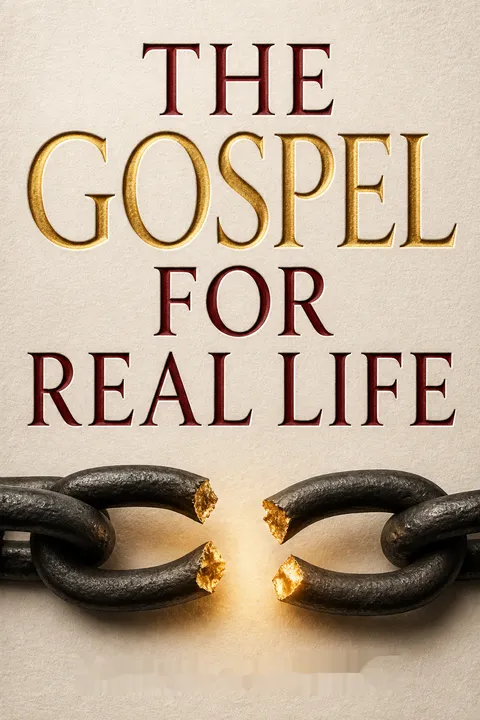


Key Takeaways
Preach the gospel to yourself daily, not merely at conversion
More than a doorway. Bridges argues that Christians often treat the gospel as the message that gets someone into faith, then move on to advice, discipline, or practical solutions. That leaves believers measuring God’s acceptance by their latest performance, even while they continue to struggle, suffer, and fail. The gospel, he says, answers the deeper problem beneath those troubles: estrangement from God and the fear that personal failure has made Him displeased.
Spend the inheritance. A story in the book describes a former enslaved man who inherited a large sum but asked the bank for a small amount to buy food, unaware of what he possessed. Bridges uses the image to argue that Christians can live on scraps of reassurance while overlooking the riches of acceptance, forgiveness, and hope already given in Christ.
The daily practice matters because beliefs are not merely stored as propositions. They shape how people interpret setbacks, guilt, and belonging. Returning to the gospel offers a stable account of acceptance that is not recalculated after every mistake. This resembles the role of a secure base in attachment theory: a trusted relationship can support honest exploration and change. The analogy has limits, since theological reconciliation is more than emotional security, but it helps explain why reassurance can enable responsibility rather than excuse it.
Let sin's real scale explain why forgiveness required the cross
Look beneath behavior. Bridges says the problem is not limited to conspicuous wrongdoing. In his Christian theological account, humanity inherits a bent toward sin, then adds personal acts that violate love of God and neighbor. Pride, resentment, envy, and self-righteousness can be morally serious even when they look respectable. Jesus’ commands to love God wholly and treat others with the care one seeks for oneself expose a standard that ordinary decency cannot meet.
The cross reveals both sides. The book presents God as holy, meaning not only morally pure but opposed to sin. The cross therefore signifies both the gravity of human wrongdoing and God’s provision of rescue. Bridges insists that recognizing the diagnosis is not an invitation to despair. It clarifies why forgiveness is needed and why, in his account, human effort cannot repair the relationship with God.
The argument's force comes from shifting attention from a ranking of outward offenses to the motives and loyalties beneath them. That can challenge the convenient habit of condemning others while excusing private resentment or vanity. It also needs careful handling: intense scrutiny of ordinary moral failure can become shame rather than moral clarity. Contemporary counseling often distinguishes guilt about an action from global shame about the self. Bridges' emphasis on a provided remedy offers a theological counterweight, but readers should notice that Christian traditions do not all describe inherited sin and divine wrath in identical terms.
Count Christ's obedience as yours, not merely his example
A representative life. Bridges emphasizes that Jesus did more than provide a model for better behavior. He lived without sin, obeying God with both action and desire, and died in the place of those who trust Him. The book calls Christ’s fulfillment of the Law’s demands active obedience, and His acceptance of its penalty passive obedience. These terms describe aspects of His work, not simply two chronological phases.
Union makes it yours. Federal headship means a representative acts for those joined to him. Bridges compares Adam’s disobedience, which he says brought condemnation to humanity, with Christ’s obedience, credited to believers. Union with Christ names the spiritual and legal bond through which Christ’s life and death count for them. The claim is not that believers personally lived Jesus’ life, but that God regards His representative work as theirs.
This distinction prevents the gospel from shrinking into advice to imitate an admirable person. In ordinary moral philosophy, an example can inspire, but it cannot undo another person's past or supply a new legal standing. Bridges' representative model addresses that gap within its theological framework. It also gives obedience a different motive: gratitude and participation, rather than a bid to earn acceptance. The account depends on accepting representative relationships as morally meaningful, a premise readers may examine, especially because everyday legal systems generally resist transferring personal guilt or punishment between individuals.
Trust the cross to satisfy justice, not simply soften it
The cup of judgment. Bridges interprets the cup Jesus accepts before His crucifixion as an image of God’s judgment against sin, not only the physical pain of execution. Propitiation is Christ’s work of bearing and exhausting that judgment for those who trust Him. In this account, God’s love does not persuade a reluctant Father to spare people. The Father sends the Son, and the Son willingly gives Himself.
Rescue from the curse. The book also describes Christ’s death as a ransom that releases believers from the Law’s condemnation and as the act that reconciles estranged people to God. It rejects the idea that the ransom was paid to Satan: God is both the Judge whose justice is addressed and the One who provides the rescue. The cross, then, is presented as justice and mercy meeting, not one being traded away for the other.
The strongest feature of this account is its insistence that forgiveness does not make harm or moral order unreal. It also resists a troubling caricature in which Jesus must protect people from an unloving Father, since divine initiative and the Son’s willing action belong together. Still, the courtroom and debt metaphors raise an ethical question: how can an innocent representative bear another person's liability? Bridges answers through divine appointment and union with Christ. That is a coherent claim inside his theology, though it is not an everyday legal analogy and should not be treated as one.
Believe that forgiven sin is removed, not kept on God's ledger
The second goat. On the biblical Day of Atonement, one goat was sacrificed and another symbolically carried the people’s sins away. Bridges uses the live goat to explain expiation, Christ’s removal of sin from God’s presence. The image complements propitiation: one addresses judgment, the other the burden and record of sin. The book recalls several biblical images of removal, including sins placed out of sight and carried far away.
Confess, then trust. Bridges says believers should acknowledge their sins honestly rather than rename or minimize them, then trust that Christ has dealt with them. This pairing of penitence and faith is meant to quiet a condemning conscience, not erase awareness of wrongdoing. The purpose is renewed service to God, not permission to repeat harm. The book argues that confidence in forgiveness makes it possible to face sin directly instead of hiding from it.
The distinction between actual wrongdoing and the permanent identity of being guilty is pastorally important. A person can acknowledge a harmful act, seek repair where possible, and still refuse to treat the act as the final truth about the self. That resembles restorative approaches to justice, which pair accountability with a path back into community. The theological claim that God no longer counts forgiven sin is stronger than ordinary interpersonal forgiveness, and it should not be confused with erasing consequences or dismissing the needs of people who were harmed.
Rest acceptance on Christ's righteousness, never on yesterday's performance
Paul drops his credentials. Before becoming a Christian, Paul had an impressive religious record and confidence in his law-keeping. After encountering Christ, he treated those credentials as worthless grounds for acceptance with God. Bridges calls this a great exchange: the believer gives up reliance on personal righteousness and receives Christ’s righteousness through faith. Justification is God’s declaration that a person is righteous, based on Christ’s work rather than that person’s moral record.
Faith receives, it does not earn. In Bridges’ account, faith means trusting Christ, not merely agreeing with facts about Him. It includes renouncing confidence in one’s own goodness and relying on Christ alone. This does not make obedience irrelevant. Paul’s continued effort to serve Christ shows that good works remain important, but they express gratitude and new life. They are not the price of salvation or a way to keep God’s favor.
This is a sharp critique of performance-based religion, especially because moral respectability can conceal the belief that acceptance is earned. The distinction between a status and the behavior that follows it also appears in legal and social settings: citizenship or membership is not awarded anew after every imperfect day. Yet legal status alone does not make someone loving or just. Bridges addresses that concern by treating good works as a consequence of grace, not its purchase price. The distinction is useful wherever people confuse accountability with the need to prove their worth.
Trust God's promise, then live from your adopted status
Assurance has several supports. Bridges identifies three ways Christians may know they have eternal life: God’s promises in Scripture, the Spirit’s inward witness, and the Spirit’s transforming work in their lives. The third is not a demand for sinlessness. The book points instead to a growing desire to obey God and love other believers. These signs support assurance, but the promises of God remain its primary foundation.
A child, not a defendant. The book describes believers as both born of God and adopted into His family. Adoption means a new relationship, full standing in the family, and confident access to God as Father. Bridges warns that self-examination can become a loop of anxious self-proof. When doubts rise, he directs readers first to God’s invitation and promise, then to the Spirit’s work, rather than treating fluctuating feelings as the final verdict.
The order of these supports is significant. Promises provide an external reference point, while inner experience and changed conduct offer personal confirmation. That arrangement can help prevent assurance from depending entirely on mood or on an impossible record of flawless behavior. It also carries a risk: people prone to religious scrupulosity may turn every sign of growth into another test to pass. Bridges' insistence that transformed conduct is evidence rather than the basis of acceptance helps limit that spiral. The adoption image adds relational warmth to what could otherwise remain an abstract legal declaration.
Let future bodily resurrection give today's suffering a horizon
Hope includes the body. Bridges describes Christian hope as more than a disembodied existence after death. He says believers are made perfect in spirit after death, then await resurrection, when their mortal bodies will be transformed into imperishable bodies like Christ’s. The book offers little detail about what such bodies will be like, and explicitly treats that mystery with restraint. Its emphasis is on the promised end of death, pain, and the curse.
Present pain is not the last chapter. The book opens with illness, aging, and discouragement to show that faith does not remove ordinary human suffering. Resurrection hope does not deny those losses. Instead, it places them within a future in which bodily life is restored and God’s presence is complete. Bridges sees this hope as a reason not to make present comfort the measure of whether God is faithful.
A bodily future gives Christian hope a distinctive shape: salvation is not escape from physical existence but its renewal. That can support a more integrated view of care for bodies, disability, aging, and grief. It also guards against treating present suffering as proof of spiritual failure. The limitation is epistemic: the book is candid that Scripture provides few details about the intermediate state or the mechanics of resurrection. That restraint is valuable. Hope can be vivid without pretending to know what the source texts leave unexplained.
Fight sin from forgiven status, using power you do not generate
A decisive break, then a long struggle. Bridges distinguishes definitive sanctification, a break with sin’s ruling power at conversion, from progressive sanctification, the continuing growth in holiness that follows. Christians still face temptation and fail, but sin is no longer their rightful master. To count oneself dead to sin is to trust this changed status, not to pretend temptation has disappeared.
Dependence is active. Bridges urges believers to resist sinful desires, cultivate Christlike character, and rely on the Holy Spirit rather than sheer willpower. He uses Jesus’ image of a vine and branches to describe this dependence: spiritual life and strength flow from Christ. The gospel motivates the struggle because acceptance is already given. Fear and uncertainty, he argues, cannot produce lasting holiness as reliably as knowing oneself forgiven and loved.
The model avoids two common errors: treating grace as permission to remain unchanged, and treating spiritual growth as a wage paid for sufficient effort. It frames change as both received and pursued, a useful account of motivation in which secure belonging can support difficult self-correction. The section is stronger on theological motive than on a detailed behavioral program. Readers may still need concrete practices, accountability, or professional help for entrenched patterns. Those resources need not compete with reliance on grace, provided they are not mistaken for a way to earn acceptance.
Carry the gospel outward through prayer, giving, and going
The gospel has a public horizon. Bridges argues that Christian faith is not a private arrangement between an individual and God. He traces the biblical theme of blessing for all nations and Christ’s commission to make disciples across them. In his reading, the gospel both rescues people and brings their lives under Christ’s rule.
Prayer becomes participation. The book recalls English ministers in 1784 who called their churches to pray for the gospel’s spread, before they had met a missionary. Bridges uses their example to emphasize prayer as a beginning, not a substitute for action. Christians can participate by going, supporting others financially, and praying for people and places where the gospel is little known. The roles differ, but the responsibility to care about the world does not belong only to missionaries.
This ending widens the book’s account of grace from personal reassurance to shared responsibility. Prayer matters here not as a way to control outcomes, but as a practice that directs attention beyond immediate private needs and may lead to material support or costly service. A useful nuance is that mission should not be reduced to counting conversions or exporting one culture along with religious claims. Bridges emphasizes Scripture’s vision of many peoples, which invites respect for the distinct communities among whom the gospel is shared.
Analysis
Bridges builds a cumulative case rather than presenting a checklist of spiritual techniques. The sequence matters: human need makes the cross intelligible; Christ’s representative work establishes a new standing; that standing becomes family belonging, assurance, hope, moral change, and mission. The narrative images, from the impoverished heir to the scapegoat and Paul’s discarded credentials, translate theological claims into remembered scenes. Their repeated function is to expose a mismatch between what Christians possess and what they experience when they treat faith as an entry ticket or an ongoing performance review.
The book’s theological center is specifically Reformed and evangelical. It understands sin through Adam’s representative role, salvation through Christ’s substitution, and faith as enabled by the Spirit. Those claims are not neutral descriptions accepted in every Christian tradition. They should be read as an integrated interpretation of biblical texts, not as uncontested conclusions. The account is most persuasive when it shows how grace can underwrite honest confession and active obedience without making either a payment for acceptance.
Its use of legal language is both strength and pressure point. Justification, debt, penalty, and representation give clear answers to the question of how a guilty person can be accepted. Yet legal metaphors can suggest that salvation is only a change in status. Bridges counters that concern by linking reconciliation to changed desire, family life, and sustained moral struggle. The metaphors still need to be held together with relational and transformational ones, especially when readers have been harmed by authority or religious shame.
The book’s practical claim is simple but demanding: return each day to the meaning of Christ’s work. That practice is not self-soothing detached from truth. It is intended to reshape the believer’s reading of failure, service, suffering, and other people. Its account of global mission completes that movement, locating personal assurance within a community and a world larger than the self.
Review Summary
The Gospel for Real Life receives mostly positive reviews, praised for its clear explanation of gospel truths and their daily application. Readers appreciate Bridges' accessible writing style and his ability to simplify complex theological concepts. Many found the book encouraging and edifying, particularly for new believers or those seeking to deepen their understanding of the gospel. Some reviewers noted repetition or simplicity as minor drawbacks, but overall, the book is highly recommended for its thorough exploration of core Christian doctrines and their practical implications.
People Also Read



Glossary
Federal headship
Representative standingFederal headship is the theological idea that one person can represent a larger group. Bridges describes Adam as humanity’s representative, so his disobedience brings condemnation and a sinful nature to his descendants. Christ represents those who trust in Him, so His obedience and death count for them. The term explains how the book understands both inherited sin and salvation through Christ.
Union with Christ
Believers joined to ChristUnion with Christ is the spiritual bond through which believers share in the benefits of Jesus’ life, death, and resurrection. Bridges distinguishes its legal aspect, in which Christ represents believers and His work is credited to them, from its vital aspect, in which the Holy Spirit works within them. The two aspects are distinct but inseparable in his account.
Active obedience
Christ fulfills God's lawActive obedience names Christ’s perfect fulfillment of God’s moral commands on behalf of those who trust Him. Bridges says Jesus did not merely avoid sin; He obeyed God throughout His life, including in His inward desires. This obedience supplies the righteousness believers lack. The term describes one aspect of Christ’s work and does not simply mean the events of His life before the crucifixion.
Passive obedience
Christ bears sin's penaltyPassive obedience names Christ’s willing acceptance of suffering and the penalty due to human sin. In Bridges’ account, it extends beyond the hours of crucifixion to the suffering of Christ’s earthly life, reaching its climax in His death. The term does not mean that Jesus was inactive. It describes His submission to the Father’s will in bearing the consequences of sin as believers’ representative.
Propitiation
Judgment borne by ChristPropitiation is Christ’s work of addressing God’s righteous judgment against sin by bearing it as a substitute. Bridges emphasizes that Christ does not merely divert judgment away from believers; in his account, He exhausts it. The Father initiates this work in love, and Christ undertakes it willingly. The term describes the judgment-focused aspect of the cross, alongside the removal of sin.
Expiation
Sin removed from recordExpiation means the removal or putting away of sin. Bridges uses the live goat in the Day of Atonement ritual as an image of Christ carrying sin away from God’s presence. He distinguishes expiation from propitiation: expiation concerns sin’s removal, while propitiation concerns judgment against sin. Together, the images describe complementary effects of Christ’s work.
Justification
God declares believers righteousJustification is God’s declaration that a believer is forgiven and righteous in His sight because of Christ’s righteousness, received through faith. Bridges presents it as a decisive act with lasting effect, not a status that changes with daily performance. It does not mean that believers are already morally perfect in experience. It means their standing before God rests on Christ’s work rather than their own record.
Imputation
Righteousness credited to believersImputation is the accounting or crediting of one person’s standing to another. Bridges uses the term for God’s charging human sin to Christ and crediting Christ’s righteousness to believers through union with Him. It is the theological explanation for how God can declare believers righteous without claiming that their everyday conduct is already flawless.
Definitive sanctification
Break with sin's ruleDefinitive sanctification is the decisive change in a believer’s relationship to sin at conversion. Bridges describes it as deliverance from sin’s dominion, not the end of temptation or the achievement of moral perfection. It occurs with justification through the Holy Spirit’s work. The term distinguishes this change in ruling status from the continuing process of growth in Christian character.
Progressive sanctification
Continuing growth in holinessProgressive sanctification is the lifelong process of resisting sin and growing in Christlike character. Bridges presents it as a struggle involving real human effort and dependence on the Holy Spirit. Believers pursue obedience because they are already accepted in Christ, not to earn acceptance. Growth may involve setbacks, but sin no longer has rightful dominion over the believer.
Adoption
Believers welcomed into God's familyAdoption is God’s act of bringing believers into His family with the status and privileges of His children. Bridges connects adoption to access to God as Father, inheritance with Christ, and belonging that does not depend on flawless behavior. He also links the present status of sonship with the future completion of redemption at the resurrection.
About the Author

Download PDF
Download EPUB
.epub digital book format is ideal for reading ebooks on phones, tablets, and e-readers.








