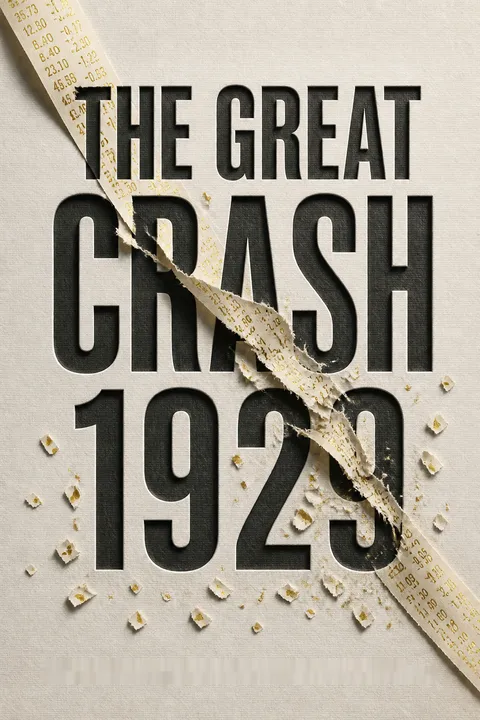


Key Takeaways
A boom ends when rising prices can no longer recruit new buyers
Rising prices recruit believers. The Florida land boom of the 1920s began with something real: the state’s appeal to winter visitors. Speculators then treated that appeal as proof that almost any parcel would become valuable. Lots were sold with down payments as low as 10 percent, including land far from the coast and subdivisions near towns that did not exist. Buyers often cared less about using the land than reselling it quickly at a higher price.
New buyers kept prices alive. When that supply began to thin, promoters’ confidence briefly helped sustain the boom. Hurricanes in 1926 exposed the fantasy, and Miami bank clearings fell sharply over the following years. The key pattern is that rising prices attract buyers, whose purchases push prices higher, until confidence or new demand gives way.
The Florida example captures a feedback loop: expectations affect prices, and those prices then appear to confirm the expectations. This resembles reflexivity in financial markets, where belief can temporarily help create the conditions that seem to justify it. The useful test is not simply whether an asset has a plausible story, but whether its price depends on a continuing stream of buyers. Still, speculation does not make every boom fraudulent. Florida did have real attractions. The danger begins when a genuine foundation is used to excuse prices that depend increasingly on resale rather than on the asset’s actual use.
Cheap credit can fuel a boom, but optimism gives speculation its motive
Credit was an accelerant. In 1927 the Federal Reserve lowered its New York discount rate from 4 percent to 3.5 percent, partly after European central bankers urged easier money. Funds became available to banks and investors, and speculation grew. Brokers’ loans, which financed stock purchases, rose from roughly $1 billion to $1.5 billion early in the decade to nearly $6 billion by the end of 1928. By late 1928, call-loan rates reached 12 percent, yet investors still borrowed to buy stocks.
Belief made borrowing attractive. Galbraith rejects the idea that easy credit alone caused the boom. Cheap money has existed in periods without major speculation, while the late 1920s boom continued despite expensive loans. What mattered was confidence that prices would keep rising and that ordinary people could share in the gains. Credit made larger bets possible; optimism made those bets seem sensible.
The distinction between fuel and motive is valuable because it avoids treating a single policy lever as a complete explanation. Credit conditions shape how much risk can be taken, but collective expectations shape whether people want that risk. This is a familiar systems problem: capacity and incentives interact. A limitation is that separating the two can be difficult in practice. Easier financing can change beliefs as well as behavior, since borrowers may interpret abundant credit as evidence that institutions consider an investment safe. The book’s point is not that credit is irrelevant, but that liquidity cannot explain a speculative fever by itself.
Leverage turns modest losses into the destruction of financial pyramids
Investment trusts multiplied claims. An investment trust pools money to buy securities. The model could provide diversification, but many American trusts in the 1920s issued layers of shares and debt, then used the proceeds to buy more securities or interests in other trusts. By 1929, about 265 new trusts had appeared during the year, selling an estimated $3 billion in securities.
Leverage magnified both directions. If a trust used bonds and preferred shares to finance stock purchases, gains in the portfolio accrued disproportionately to common shareholders. A 50 percent rise in underlying assets could produce a far larger percentage gain for the common stock. The same arithmetic worked in reverse. Goldman Sachs Trading Corporation sponsored Shenandoah, which helped sponsor Blue Ridge. As prices fell, the layers amplified losses, and securities once marketed at high prices became nearly worthless.
Leverage is not inherently a trick. It is a way to allocate risk and can support productive investment when cash flows are dependable and the structure is transparent. The danger in these trusts was the gap between the apparent solidity of the institution and the fragility of its financing. Interlocking ownership also made it harder to see where real assets ended and financial claims began. This is a general lesson in system design: complexity can distribute risk, but it can also conceal concentration. When confidence turns, each layer becomes a channel through which losses travel.
Regulators hesitate when stopping tomorrow's crash risks today's blame
Prevention had an immediate political price. Federal Reserve officials understood that speculation was growing, but their tools were blunt. Selling government securities risked drying up credit for ordinary business, while higher interest rates would burden borrowers beyond the stock market. The Fed also lacked authority to set margin requirements, a power Congress granted in 1934.
Words could move markets. In February 1929, a cautious Federal Reserve warning helped trigger a sharp decline, showing that even mild language could unsettle investors. In March, as the Board met in silence, selling accelerated and call-money rates surged. Charles Mitchell of National City Bank publicly promised to lend to prevent forced selling, and the market recovered. Officials faced a stark incentive: act and be blamed for an immediate collapse, or wait and risk a larger one.
This is a classic problem of asymmetric accountability. A preventive action is visible, attributable, and unpopular with those who lose from it. The damage avoided by inaction is hypothetical until it arrives. That incentive can make institutions behave cautiously even when their members recognize the danger. The episode also shows why technical expertise does not automatically produce effective policy. Tools may be limited, but so are the political mandates that determine whether they are used. A counterpoint is that forceful intervention can itself cause harm. The challenge is not simply to act sooner, but to build rules that make restraint credible and proportionate.
Market chatter can make borrowed confidence sound like expertise
The market became a cultural authority. At the height of the boom, stock prices and market tips dominated conversations far beyond Wall Street. Yet the number of active speculators was probably under one million in a country of about 120 million people. The market’s cultural reach was much larger than its direct participation.
Prestige often substituted for knowledge. Investors heard confident claims from bankers, journalists, and academics. Yale economist Irving Fisher treated stock prices as capable of remaining high, while the Harvard Economic Society repeatedly predicted recovery after the crash. Some commentators were paid to promote stocks. Galbraith’s point is not that every forecast is dishonest, but that confidence can be mistaken for competence, especially when respected voices share the same assumptions and dissenters are dismissed as enemies of prosperity.
This passage connects financial bubbles to social proof: people use others’ apparent confidence as a shortcut when the underlying facts are difficult to evaluate. A market can therefore shape public attention without most households owning stocks. The striking feature is not merely that predictions failed, but that institutional prestige helped make uncertainty sound settled. Yet hindsight can distort the judgment of forecasters. Economic prediction is genuinely difficult, and one failed forecast does not establish incompetence. The sharper standard is whether a forecaster communicates uncertainty and incentives honestly, rather than presenting a fragile judgment as a reliable fact.
Margin calls turn falling prices into a machine for further selling
Borrowing made losses self-reinforcing. A margin buyer borrowed part of the stock’s purchase price and left the shares as collateral. If prices fell, the broker could demand more cash. Investors unable to pay had to sell, often into a market already crowded with sellers. Those sales pushed prices down further and triggered more margin calls.
The panic unfolded in stages. On October 24, 1929, nearly 12.9 million shares traded amid disorder and steep declines. Bankers’ intervention helped produce a dramatic recovery that day, but it did not restore lasting confidence. On October 28 the market fell sharply again. The next day, more than 16 million shares changed hands, often with few buyers available. The crash was not one clean fall, but repeated waves of selling, forced liquidation, and failed reassurance.
Margin calls turn a change in valuation into a constraint on immediate cash. That distinction explains why a market can fall faster than investors can calmly reconsider what an asset is worth. It is a liquidity spiral: falling prices weaken collateral, forced sales deepen the decline, and the decline creates further pressure. This mechanism is not unique to stocks, but leverage makes it especially visible. The presence of buyers for every sale is not guaranteed at a stable price. A market can remain technically open while becoming practically unable to absorb selling without severe repricing.
The crash amplified a downturn, but did not make depression inevitable
The economy had begun to weaken. Industrial production peaked in June 1929 and declined before the October crash. The downturn was initially modest, and earlier slowdowns had reversed without becoming depressions. Galbraith rejects the claim that a depression was an automatic repayment for the prosperity of the 1920s or a necessary rest after growth.
The crash deepened the damage. Falling stock values reduced the spending and investment of wealthy households and businesses. They also weakened borrowing, helped collapse financial structures, and ended American lending that had supported foreign purchases of U.S. exports. By 1933, national output was nearly one third below its 1929 level, and almost 13 million people were out of work. The crash did not explain every cause of the depression, but it struck an economy vulnerable to a shock of that size.
The distinction between trigger and background condition is essential in historical explanation. A crisis can be neither a random bolt from the blue nor the inevitable result of a single underlying flaw. The market crash supplied a major shock, while existing economic weaknesses determined how widely it spread. This resembles the difference between a hazard and a system’s exposure to it. The book is careful that the exact causes of the downturn remain uncertain. That restraint matters: it prevents the vivid event of the crash from swallowing the more complicated question of why recovery failed.
Inequality and institutional fragility let Wall Street's shock spread widely
The economy depended on volatile spending. In 1929, the richest 5 percent of Americans received about one third of personal income. A system relying heavily on investment and luxury spending was vulnerable when wealthy households and firms became fearful. Their spending could not be replaced automatically by the everyday purchases of lower-income families.
Financial structures transmitted distress. Holding companies and investment trusts used debt and layers of ownership that could magnify losses. The banking system consisted of many independent institutions, so one failure could frighten depositors elsewhere and freeze lending. Foreign borrowers also relied on new U.S. loans to pay for imports; when lending stopped, exports fell, and higher U.S. tariffs made adjustment harder. These weaknesses made the downturn more contagious than a stock-price decline alone.
Galbraith’s account treats economic resilience as a matter of structure, not simply aggregate wealth. Who receives income affects what kinds of spending support demand. How firms borrow and banks connect affects whether a local failure stays local. These are distributional and institutional channels, not side issues. A useful nuance is that inequality alone does not mechanically cause a depression, and cross-border lending can finance productive activity. The critical questions are whether spending is broad enough to sustain demand and whether institutions can absorb losses without forcing healthy borrowers and businesses to contract.
Prosperity conceals fraud; a crash makes hidden losses visible
The hidden inventory of theft grew. Galbraith calls undiscovered embezzlement the “bezzle”: money already stolen but not yet recognized as missing. During prosperous periods, abundant money and relaxed oversight can allow such losses to accumulate. When a crash arrives, audits intensify, and employees who invested stolen funds may be unable to replace them.
The downturn exposed what the boom hid. At a Michigan bank, a group of officers stole millions, much of it intended for loans in the New York market. They diverted funds into stocks, and the crash destroyed the scheme’s chance of repayment. Galbraith also corrects the popular story of an immediate wave of suicides: the national suicide rate rose only slightly in 1929, while the larger increases came during the following depression years.
The bezzle is useful because it separates the timing of wrongdoing from the timing of discovery. A healthy balance sheet can reflect real strength, delayed accounting, or both. That idea applies beyond embezzlement: weak controls and optimistic reporting are easiest to overlook when results look good. The suicide statistics make a related point about evidence. A memorable tragedy can become a symbol for an entire period without representing the aggregate pattern. Individual losses were real, but responsible history needs both human stories and measurements that test the story’s scale.
Safeguards matter, but only if governments accept the cost of using them
Reforms addressed specific failure mechanisms. After the crash, federal law required fuller disclosure of securities, restricted market manipulation, separated commercial banking from securities affiliates, and gave regulators authority to set margin requirements. Deposit insurance helped interrupt the old pattern in which one bank failure could frighten depositors at other banks. These measures made a repeat of some 1929 dynamics less likely.
Rules cannot remove political reluctance. Galbraith argues that a future speculative boom remains possible because rising prices can again draw in buyers and persuade officials that controls are unnecessary. Governments may hesitate to restrain a boom for fear that doing so will cause unemployment or an immediate market break. The central lesson is not that safeguards are useless, but that their effectiveness depends on political willingness to use them before the costs become unmistakable.
Institutional safeguards work best when they change incentives before panic begins. Margin limits can reduce forced selling, disclosure can make some risks visible, and deposit insurance can limit bank runs. But regulation is not self-executing. Political leaders face pressure from those who benefit from a boom, while preventive action can look like needless interference. The book’s warning is therefore about governance as much as finance. A further complication is that rules can grow stale or be weakened over time. Resilience requires not only protective laws, but continuing scrutiny of the new financial forms that develop around them.
Analysis
Galbraith’s most durable contribution is to shift the story of 1929 from a single bad forecast or policy mistake to a chain of mutually reinforcing incentives. Buyers needed rising prices to validate their bets. Financial firms developed structures that expanded the bets. Experts and officials supplied reassurance, while regulators feared being blamed for interrupting prosperity. When prices turned, borrowed positions converted doubt into forced selling. The crash was therefore not simply irrationality breaking through the surface of a sound system. It was the point at which a system built around rising valuations began to operate in reverse.
The book is equally careful about the distinction between a crash and a depression. The crash mattered because it struck an economy with concentrated income, fragile banking, leveraged corporate structures, and dependence on foreign lending. It did not, by itself, make a decade of contraction inevitable. That distinction protects the history from two tempting simplifications: that speculation alone caused the Depression, or that the stock market was merely a sideshow to deeper economic forces.
A modern reader can see the book as an account of procyclicality: in good times, confidence expands credit and risk taking; in bad times, falling collateral and caution accelerate contraction. The political challenge is that prevention is hardest when the danger is least visible and most profitable to ignore. Galbraith’s portrait of reassurance is especially sharp because it treats public confidence as an instrument of policy, not just a reflection of private belief. Yet his causal account is not a complete quantitative model. He acknowledges uncertainties about what initiated the 1929 downturn and how much weight to assign each weakness. Its strength is not false precision, but a disciplined map of how a speculative shock acquired the power to become a national disaster.
Review Summary
The Great Crash 1929 is praised for its witty and engaging narrative of the stock market crash. Readers appreciate Galbraith's insights into the causes and consequences of the event, drawing parallels to modern economic crises. The book is commended for its accessible explanations of complex financial concepts, though some find it overly focused on technical details. Critics note that Galbraith's analysis may be outdated and biased towards Keynesian economics. Overall, the book is considered a valuable historical account of a pivotal economic moment.
People Also Read







Glossary
speculative mood
belief in quick gainsA shared disposition to expect prices to keep rising and to treat that rise as evidence that further gains are likely. In Galbraith’s account, speculation depends not only on available credit but also on confidence, social trust, and the belief that ordinary people can become rich through ownership.
brokers' loans
loans financing stock purchasesLoans made to brokers or customers to finance stock purchases, especially purchases on margin. The securities being bought served as collateral. Galbraith treats the volume of these loans as an indicator of speculation, since a rapid increase showed that more funds were supporting market positions.
margin trading
buying stocks with borrowed moneyThe purchase of securities using a mix of the buyer’s cash and borrowed funds. The securities act as collateral for the loan, allowing gains to exceed what the buyer’s cash alone could produce. If prices fall, brokers may demand additional cash or sell the securities, adding pressure to a declining market.
investment trust
company holding other securitiesA company that raises money by selling its own securities and invests the proceeds in other companies’ securities. Such trusts can diversify investors’ holdings. In the 1920s, many American trusts also used debt, multiple share classes, and ownership of other trusts, creating layers of financial claims that magnified gains and losses.
leverage
debt magnifying investment returnsThe use of borrowed money or fixed claims, such as bonds and preferred shares, to finance an investment. When asset values rise, the gains can accrue disproportionately to the remaining equity. When asset values fall, the fixed claims remain, so equity can be wiped out quickly. Galbraith emphasizes that this arithmetic works in both directions.
moral suasion
persuasion without direct ordersAn attempt by a central bank or public authority to influence private conduct through warnings, statements, or appeals rather than binding rules. In 1929 the Federal Reserve used cautious public language to discourage speculative lending. The market reacted, but the intervention did not produce lasting restraint.
organized support
coordinated buying to steady pricesA coordinated effort by powerful bankers or other financial actors to buy securities and prevent disorderly market declines. During the panic of October 1929, prominent bankers arranged support and Richard Whitney placed highly visible bids. The effort briefly restored confidence but could not guarantee a price floor.
bezzle
undiscovered stolen moneyThe stock of embezzled funds that have not yet been discovered or recorded as losses. Galbraith argues that this hidden total can grow in prosperous periods, when money is plentiful and oversight relaxed, then shrink during downturns as audits intensify and embezzlers can no longer conceal losses or repay what they took.
no-business meeting
meeting that substitutes for actionA gathering that creates the appearance of purposeful action without producing a substantive decision or policy. Galbraith uses the term for President Hoover’s meetings with business, labor, and agricultural leaders after the crash. The meetings offered reassurance and a public display of authority while leaving the government’s limited response largely unchanged.
FAQ
What is "The Great Crash 1929" by John Kenneth Galbraith about?
- Comprehensive account of 1929 crash: The book provides a detailed narrative of the events leading up to, during, and after the 1929 stock market crash in the United States.
- Analysis of causes and consequences: Galbraith examines the economic, social, and psychological factors that fueled the speculative bubble and the subsequent collapse.
- Focus on human behavior: The book highlights the role of mass psychology, optimism, and the desire for quick wealth in driving speculative manias.
- Lasting impact on policy and society: It discusses how the crash led to the Great Depression and influenced future financial regulation and economic thinking.
Why should I read "The Great Crash 1929" by John Kenneth Galbraith?
- Timeless lessons on speculation: The book offers insights into the recurring nature of financial bubbles and the human tendencies that drive them.
- Accessible economic history: Galbraith’s clear, witty prose makes complex economic events understandable for general readers.
- Relevance to modern crises: The analysis draws parallels between 1929 and later financial crises, making it valuable for understanding contemporary market behavior.
- Critical perspective on policy: The book critiques the failures of government and financial institutions, offering lessons for regulators and policymakers.
What are the key takeaways from "The Great Crash 1929"?
- Speculative manias are cyclical: Financial bubbles are a recurring feature of capitalist economies, driven by optimism and the belief in easy riches.
- Regulatory inaction has consequences: The reluctance of authorities to intervene or regulate speculation can exacerbate financial crises.
- Market crashes have wide effects: The collapse of the stock market can trigger broader economic downturns, affecting employment, savings, and social stability.
- Reassurance and denial are common: During crises, leaders often resort to incantations about "fundamental soundness," which rarely prevent disaster.
How does John Kenneth Galbraith explain the causes of the 1929 stock market crash?
- Widespread speculative fever: Galbraith attributes the crash to a pervasive mood of optimism and the conviction that everyone could get rich quickly.
- Easy credit and leverage: The proliferation of margin trading and brokers’ loans allowed people to speculate with borrowed money, amplifying risks.
- Weak regulatory response: Authorities, including the Federal Reserve and government officials, failed to act decisively to curb speculation.
- Structural weaknesses: The rise of investment trusts, holding companies, and complex financial instruments created systemic vulnerabilities.
What role did government and financial institutions play in the events leading up to the crash, according to "The Great Crash 1929"?
- Federal Reserve’s ambivalence: The central bank hesitated to raise interest rates or impose stricter margin requirements, fearing the political fallout.
- Bankers’ conflicting interests: Leading bankers, such as Charles E. Mitchell, often prioritized their own profits and supported the boom rather than restraining it.
- Lack of effective regulation: There were no mechanisms to control margin trading or speculative lending until after the crash.
- Failure of moral suasion: Official warnings and statements were too mild or ambiguous to deter rampant speculation.
How does Galbraith describe the speculative bubble and the psychology of investors in the 1920s?
- Desire for effortless wealth: Many Americans believed it was their destiny to become rich through the stock market, regardless of fundamentals.
- Self-reinforcing optimism: Rising prices attracted more buyers, which in turn pushed prices higher, creating a feedback loop of euphoria.
- Widespread participation: While not everyone was in the market, the culture of speculation permeated society, from chauffeurs to cattlemen.
- Disregard for risk: Investors ignored warning signs and rationalized high prices, convinced that the boom would never end.
What were investment trusts and how did they contribute to the crash, according to "The Great Crash 1929"?
- Definition and function: Investment trusts were companies that pooled investors’ money to buy stocks, often using leverage to amplify returns.
- Separation from real assets: These trusts allowed the volume of securities to far exceed the underlying corporate assets, fueling speculation.
- Leverage and pyramiding: Many trusts invested in each other, creating chains of leverage that magnified both gains and losses.
- Collapse and contagion: When the market turned, the leveraged structure of investment trusts accelerated the crash and deepened losses.
How does "The Great Crash 1929" analyze the aftermath of the crash and its impact on the Great Depression?
- Initial denial and reassurance: After the crash, leaders and the press insisted that the fundamentals were sound and recovery was imminent.
- Widespread economic pain: The crash wiped out savings, destroyed confidence, and led to business failures, unemployment, and social distress.
- Exposure of fraud and embezzlement: The downturn revealed widespread financial misconduct that had gone unnoticed during the boom.
- Long-term regulatory changes: The crisis led to major reforms, including the creation of the Securities and Exchange Commission and federal deposit insurance.
What are the main weaknesses in the 1920s economy identified by Galbraith in "The Great Crash 1929"?
- Unequal income distribution: A large share of income went to the wealthy, making the economy dependent on their spending and investment.
- Fragile corporate and banking structures: The proliferation of holding companies and small, undercapitalized banks increased systemic risk.
- Dubious foreign balance: The U.S. relied on foreign lending to maintain trade surpluses, which became unsustainable.
- Poor economic intelligence: Policymakers and economists failed to recognize or address the underlying vulnerabilities.
What lessons does "The Great Crash 1929" offer for preventing future financial crises?
- Importance of regulation: Effective oversight of margin requirements, lending practices, and market manipulation is crucial.
- Need for timely intervention: Authorities must be willing to act decisively to curb speculation, even at the risk of short-term unpopularity.
- Skepticism of "new era" thinking: Claims that "this time is different" or that markets can only go up should be viewed with caution.
- Limits of reassurance: Mere words and optimistic statements are no substitute for concrete policy action.
What are some of the most memorable quotes from "The Great Crash 1929" and what do they mean?
- "The world of finance hails the invention of the wheel over and over again, often in a slightly more unstable version." – Galbraith highlights the recurring nature of financial innovation and its risks.
- "In the short run, the market is a voting machine, but in the long run, it is a weighing machine." – This underscores the difference between popularity-driven price movements and underlying value.
- "Reassuring words are always the same: 'The fundamentals are sound.'" – Galbraith mocks the ritualistic optimism of leaders during crises.
- "Speculation buys up, in a very practical way, the intelligence of those involved." – He points out how even smart people can be blinded by the prospect of easy gains.
How does "The Great Crash 1929" remain relevant to understanding modern financial crises?
- Patterns repeat over time: The book’s analysis of speculative bubbles, regulatory failures, and mass psychology applies to later crises, such as 2008.
- Warnings about deregulation: Galbraith’s critique of weak oversight resonates with debates about financial regulation today.
- Human nature in markets: The tendency for optimism, herd behavior, and denial is a constant in financial history.
- Cautionary tale for policymakers: The book serves as a reminder that inaction and complacency can have severe consequences for the broader economy.
About the Author
Other books by John Kenneth Galbraith

Download PDF
Download EPUB
.epub digital book format is ideal for reading ebooks on phones, tablets, and e-readers.








