

Key Takeaways
Stop trying to remake the world in America’s image
The central warning. Mearsheimer calls the post-Cold War American project liberal hegemony: spreading liberal democracy, promoting an open global economy, and building international institutions, often through intervention. Its supporters expected a safer world, stronger human rights, and less terrorism and nuclear proliferation. The book argues that this ambition instead produced failed wars, unstable states, and worsening relations with major powers. The United States, unusually powerful after the Soviet Union collapsed, had room to pursue the project on a grand scale. It did so under Clinton, Bush, and Obama, despite accumulating evidence that foreign societies could not be redesigned as policymakers planned.
The intended alternative. Mearsheimer recommends a more restrained foreign policy, guided by security interests and awareness that other nations resist outside control. His target is not liberal democracy at home, which he favors, but the attempt to impose it abroad.
The argument’s force comes from separating a political ideal from a strategy for exporting it. Good intentions do not establish that a policy works, and the book insists that outcomes, not moral language, must be the test. That distinction is valuable beyond foreign policy: institutions often confuse the virtue of a goal with the effectiveness of a method. The harder question is how to define restraint without making it a license to ignore preventable atrocities. The book offers a strong warning against overreach, but the moral costs of nonintervention also require deliberate accounting.
Treat people as group-shaped, not detached reason machines
Human beings are social. Mearsheimer begins with two claims: people cannot reason their way to a shared answer about life’s deepest moral and political questions, and people develop within social groups that shape identity and loyalty. Culture, including shared practices, beliefs, and historical stories, helps people cooperate despite disagreement. Political institutions set and enforce rules, but power influences who writes them and whose interests they serve.
Why this matters. Groups are not merely collections of individuals. They help members secure necessities, protect one another, and make sense of who they are. The book uses the example of Robinson Crusoe to illustrate that even a person stranded alone carries the habits and assumptions acquired in society. This social foundation, Mearsheimer argues, makes conflict over values persistent, while making collective identity a powerful political force.
This account usefully challenges theories that begin with fully formed individuals choosing society from the outside. Identity and preference are partly inherited through relationships, language, and institutions, not simply selected from a menu. That perspective helps explain why external reforms can misread local commitments. Yet social belonging is not destiny: people hold several identities, and groups can change. The most productive use of the argument is therefore not to treat cultures as sealed boxes, but to ask which attachments and institutions shape choices in a particular situation.
Expect national self-determination to overpower universalist crusades
National loyalty runs deep. Mearsheimer defines nationalism as the belief that people belong to distinct nations and that each nation should control its political fate. Nations provide solidarity and shared purpose, but also a sense of distinction from outsiders. Their members often connect identity to territory and expect the state to protect their autonomy.
A historical force. The book describes nationalism as a relatively modern force that grew from the late eighteenth century, rather than an eternal expression of ancient hatred. It helped transform dynastic states into nation-states and supported mass armies. In 1914, European workers fought for their countries despite Marxist hopes that class solidarity would cross borders. Mearsheimer argues that liberal universalism must operate inside these nation-states, and that when rights claims collide with national sovereignty, national loyalties usually prevail.
National identity can explain why outside pressure often strengthens the very authorities it seeks to weaken: foreign intervention may be interpreted as an attack on collective autonomy. The insight also cautions against assuming that economic or class interests automatically outweigh national belonging. Still, nationalism is not one fixed impulse. It can support popular self-rule, but it can also justify exclusion and territorial aggression. Treating it as politically powerful is not the same as treating every nationalist claim as legitimate.
Without world government, survival keeps great powers playing realist politics
Anarchy means no referee. In international relations, anarchy does not mean chaos. It means there is no higher authority able to enforce rules or reliably protect states. Realism is Mearsheimer’s account of how states behave under that condition: they prioritize survival, cannot know rivals’ future intentions, and seek power to protect themselves.
Security shapes conduct. Even friendly governments can change, and promises cannot eliminate uncertainty. Alliances may help, but states cannot be certain that partners will defend them in a crisis. This is why Mearsheimer argues that liberal principles cannot replace power politics between states. The liberal order inside a country depends on a state that enforces rules; the international system lacks such an authority. A world state could change the logic, but the book considers one highly unlikely because nations are reluctant to surrender sovereignty.
The domestic and international comparison is one of the book’s clearest analytical moves: rules work differently when enforcement is absent. It explains why trust and institutions may support cooperation without guaranteeing security. A useful caution is that anarchy does not dictate one automatic policy. Leaders interpret threats, and misperception can make defensive measures appear aggressive. Realism identifies pressures, but sound policy still depends on judgment about which threats are real and which responses create more danger than they prevent.
Rights matter, but fear and stability often outrank them
Rights are not self-enforcing. Political liberalism places individual rights and tolerance at its center, yet Mearsheimer argues that people disagree about which rights exist and how to resolve conflicts among them. Freedom of speech and protection from hateful speech, for example, can point toward different policies. In a crisis, people may put security and order ahead of rights.
History exposes the limits. The book notes that American leaders curtailed civil liberties during the Civil War, and that slavery and racial discrimination persisted despite the country’s liberal principles. It also cites a 2014 poll in which 71 percent of Russians said they would sacrifice civil freedoms for stability, order, and personal well-being. Mearsheimer’s broader point is that rights can be important without being universally understood, consistently defended, or stronger than survival concerns.
This distinction between declaring a right and securing it is essential. Rights depend on institutions, public norms, and political coalitions capable of defending them. The book is persuasive that security emergencies can weaken those commitments, including in societies that praise liberty. Its skepticism, however, risks making rights appear weaker than they are: people may defend them through courts, protest, and political organization even when doing so is costly. The key question is not whether rights always prevail, but what arrangements make their defense more durable.
Foreign occupation rarely manufactures democracy; local consent matters
Political engineering is hard. Liberal hegemony assumes that outside powers can remove authoritarian governments and build stable liberal democracies. Mearsheimer argues that this task is especially difficult when the intervening country misunderstands local politics and the population resists foreign control. Nationalist opposition can turn an occupation into an insurgency, while removing a government may expose divisions that had been held in check.
The record is sobering. The book describes U.S. interventions in Afghanistan, Iraq, Libya, Syria, and Egypt as failures to achieve the intended stable democratic outcomes. It cites a study of 43 imposed democratic regimes from 1800 to 1994 in which nearly 63 percent failed. In Iraq, the overthrow of Saddam Hussein was followed by civil war and the rise of ISIS. Mearsheimer’s lesson is not that political change is impossible, but that military power cannot reliably create the social foundations it requires.
The distinction between removing a ruler and building a legitimate political order is crucial. An election is a procedure, not proof that rival groups accept the rules or trust the state. The book’s cases make the costs of assuming otherwise vivid. At the same time, failure rates do not show that every intervention is unjustifiable or that local consent can be measured cleanly during mass violence. The practical test is whether a mission has a credible political settlement, local support, and a realistic endpoint, not merely a plan for the first military victory.
Trade, elections, and treaties can restrain war, not abolish it
Three promises, three limits. The book examines democratic peace theory, economic interdependence theory, and liberal institutionalism. Democratic peace theory predicts that democracies rarely fight one another, but Mearsheimer points to cases he considers counterexamples, including World War I and the 1999 Kargil conflict. Trade can raise the cost of war, but leaders may accept economic damage when they believe core security or national claims are at stake. Institutions can support cooperation when states share interests, but they cannot reliably compel a great power to obey rules it sees as harmful.
The survival test. Mearsheimer argues that none of these theories makes war impossible. Even a small chance of catastrophic defeat can lead states to prioritize security over rights, prosperity, or legal commitments. Cooperation may reduce some tensions, but it can also serve strategic competition.
The distinction between reducing the likelihood of war and eliminating it is analytically important. Policies that encourage commerce, elections, or rules can still make conflict less attractive in many settings. Mearsheimer’s stricter standard asks whether those mechanisms can guarantee peace, a much harder claim. That standard clarifies the limits of liberal theories, but it can also understate the value of partial risk reduction. A theory need not make war impossible to matter; the policy question is whether it lowers risk enough to justify its costs and vulnerabilities.
Moral certainty can turn diplomacy into a crusade
Compromise requires respect. Diplomacy involves bargaining between governments with conflicting interests. Mearsheimer argues that a state pursuing liberal hegemony may see authoritarian governments as illegitimate and their leaders as unworthy negotiating partners. If one side views a dispute as a contest between good and evil, compromise can look like betrayal, and war may seem like the only acceptable solution.
Ukraine as a warning. Mearsheimer interprets the Ukraine crisis as a case in which Western efforts to draw Ukraine toward NATO, the European Union, and Western political norms collided with Russia’s security concerns and Ukrainian self-determination. He argues that Western policymakers underestimated how threatening the strategy appeared in Moscow. This is a contested interpretation, but it illustrates the book’s larger claim: intentions described as benign do not determine how other states perceive a policy.
This section highlights a recurring diplomatic hazard: the gap between an actor’s stated purpose and another actor’s threat assessment. A policy can be sincerely framed as inclusion or reform and still alter a rival’s security calculations. That does not make the rival’s response justified, nor does it prove that outside actors caused the crisis. The strength of the example is its reminder that diplomacy requires taking opposing perceptions seriously, while the weakness is the risk of over-centering a great power’s viewpoint and diminishing the agency of smaller states.
Endless foreign wars can hollow out liberty at home
War changes the state. Mearsheimer argues that a government committed to frequent intervention builds a large security bureaucracy, relies on secrecy, and asks the public to accept restrictions in the name of safety. Those tools can erode the civil liberties that liberal foreign policy claims to defend.
American examples. The book discusses post-9/11 surveillance, detention without ordinary due process, torture, and drone killings. It also notes earlier episodes in which U.S. leaders restricted rights during wartime, including the Civil War and the internment of Japanese Americans during World War II. The argument is not that security agencies are inherently malicious. Rather, officials facing perceived threats tend to prioritize protection, and emergency powers can persist after the immediate crisis. In this account, liberalism abroad can help build institutions that weaken liberal safeguards at home.
The domestic consequences matter because foreign policy is not contained at the border. Secrecy and emergency powers alter oversight, public trust, and the distribution of authority within the state. The argument is strongest when it identifies mechanisms, not just hypocrisy: surveillance and indefinite detention expand when accountability is weak. A counterpoint is that some security capacity is necessary, and not every restriction destroys liberty. The relevant measure is whether powers are narrow, reviewable, and temporary, rather than whether the state acts or refrains from acting altogether.
Concentrate force on vital interests, not every injustice abroad
Restraint is selective. Mearsheimer does not argue that realism produces a peaceful world. He argues that a strategy focused on national security is likely to use force less often than a mission to transform societies everywhere. For the United States, he identifies Europe, East Asia, and the Persian Gulf as strategically important, while warning against treating every country as a battlefield.
Learn from the Cold War. U.S. leaders feared that communist governments in minor countries would trigger a chain reaction, the domino theory. Mearsheimer argues they overestimated ideological loyalty and underestimated nationalism: states often resisted control even from ideological allies. He points to improved U.S.-Vietnam relations after the Cold War, when mutual concern about China mattered more than Vietnam’s communist system. The prescription is to prioritize interests, avoid meddling in other countries’ domestic politics, and let local societies shape their own political arrangements.
Restraint here is a strategy of prioritization, not a claim that distant suffering is unimportant. It asks whether intervention can achieve its stated goal without creating larger harms or strategic liabilities. That is a useful discipline for policymakers prone to treating capability as evidence of control. Yet defining a vital interest is itself political, and a narrow definition can overlook how crises spread across borders. A defensible restraint policy therefore needs transparent criteria, attention to spillover effects, and honest acknowledgment of the human costs of staying out.
Analysis
The book’s most important contribution is its insistence that foreign policy cannot be judged only by the values it announces. Liberal hegemony promises a world of rights, democracy, and peace, but its instruments include intervention, regime change, and the erosion of sovereignty. Mearsheimer’s contrast between liberalism at home and liberalism abroad makes the thesis sharper: an ideology can support individual freedom within a state while producing coercive policies when a powerful state tries to universalize it.
The argument is strongest when it links political outcomes to nationalism and international anarchy. A population’s resistance to outside rule is not a technical obstacle to be solved by better planning. It expresses a claim to collective agency. Likewise, institutions can structure cooperation without possessing the authority to enforce compliance when great powers perceive their survival to be at stake. These points expose the limits of policy plans that mistake formal rules or military superiority for political legitimacy.
The book is less convincing when it treats realism as a reliable corrective. Realist restraint may reduce some interventions, but balance-of-power reasoning can also encourage arms buildups, preventive action, and support for abusive partners. A strategy framed as protecting national interests still requires political choices about which risks count, whose security matters, and how much danger is tolerable. Nor does the failure of imposed democracy prove that all external pressure is futile; sanctions, diplomacy, and protective action vary in purpose and effect.
The Ukraine analysis illustrates both the value and the vulnerability of the method. It forces readers to consider how NATO expansion and Western political engagement appeared to Russia, rather than assuming benign intentions were self-evident. But a security explanation should not erase Ukraine’s own preferences or convert Russia’s sensitivity into a veto over its neighbors. The broader lesson is methodological: assess intentions, perceptions, power, and local agency together. Mearsheimer offers a powerful warning against crusading policy, not a substitute for moral judgment or case-by-case scrutiny.
Review Summary
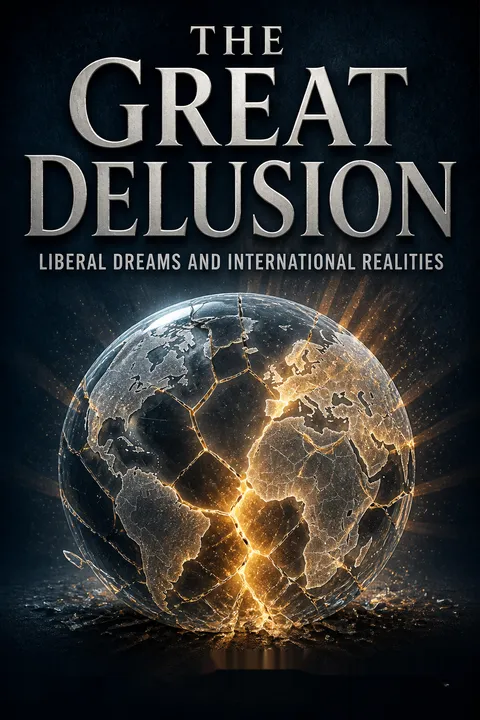
The Great Delusion critiques liberal interventionist foreign policy, arguing it leads to endless wars and undermines domestic liberalism. Mearsheimer contends that nationalism and realism trump liberalism in international affairs, and that attempting to spread democracy abroad through force consistently fails. Reviewers generally praise his clear arguments and thorough analysis, though some criticize his definitions, oversimplification of liberal theory, and perceived biases—particularly regarding Russia. Many find the book repetitive but valuable for understanding realist perspectives. Critics note he underestimates liberalism's successes and overattributes U.S. wars to ideological rather than strategic motivations.
People Also Read



Glossary
Liberal hegemony
Global liberal transformationA foreign policy strategy in which a powerful state seeks to spread liberal democracy, encourage an open international economy, and build international institutions. Mearsheimer argues that the strategy becomes especially tempting when one state dominates the international system, but that it often provokes resistance, failed interventions, and conflict.
Political liberalism
Rights-centered political ideologyAn ideology that places individualism and inalienable rights at its core. It assumes people can disagree deeply about the good life, values tolerance, and relies on a state to maintain order and protect rights. Mearsheimer distinguishes liberalism within a country from liberalism used as a guide to foreign policy.
Modus vivendi liberalism
Freedom with limited state actionA version of political liberalism that emphasizes negative rights, such as freedom from government interference, and favors a limited state. Its advocates are skeptical that governments can successfully engineer society or provide positive rights such as equal opportunity. Mearsheimer contrasts it with progressive liberalism and argues that it has less influence in modern states.
Progressive liberalism
Rights advanced by an active stateA version of political liberalism that supports basic individual freedoms as well as positive rights, including equal opportunity and access to services. It assigns the state an active role in promoting those rights through social programs and regulation. Mearsheimer argues that industrialization, nationalism, democracy, and modern warfare helped make this the dominant form of liberalism.
Nationalism
Loyalty to a self-governing nationAn ideology that sees people as members of distinct nations, usually bound by shared culture and a sense of common identity. It favors national self-determination and commonly seeks a state through which a nation can govern itself. In Mearsheimer’s account, nationalism can support solidarity and survival, but it can also encourage chauvinism and hostility toward outsiders.
Realism
Security politics under anarchyA theory of international politics that begins with the absence of a higher authority over states. Because states cannot know rivals’ intentions or count on outside protection, they prioritize survival and seek power to improve their security. Mearsheimer argues that this logic constrains great powers even when their domestic political systems are liberal.
Anarchy
No higher enforcing authorityIn international relations, anarchy means that no central government stands above states with the power to make and reliably enforce rules. It does not mean disorder. Mearsheimer treats anarchy as a condition that encourages states to provide for their own security because no dependable international protector exists.
Social engineering
Planned transformation of societyThe use of government or outside power to deliberately reshape social and political arrangements in pursuit of chosen goals. In the book, the term covers both domestic policies intended to promote rights and foreign efforts to build liberal democracies. Mearsheimer stresses that complex societies resist redesign and that intervention can create unintended consequences.
Unipolarity
One dominant great powerAn international system in which one state is the sole great power and does not face another great power as a direct security rival. Mearsheimer argues that this unusually favorable position can give a liberal state the freedom to pursue liberal hegemony. It is distinct from a world state, because other sovereign states still exist.
Democratic peace theory
Democracies rarely fight each otherA theory that democratic states are unusually unlikely to wage war against one another. Explanations include democratic institutions, public accountability, and norms of tolerance or peaceful dispute resolution. Mearsheimer disputes both the empirical record and the causal explanations, arguing that the theory does not remove the security pressures states face under anarchy.
Economic interdependence theory
Trade raises war’s economic costsA theory that states with substantial economic ties are less likely to fight because war threatens shared prosperity. The book accepts that economic links can sometimes discourage conflict, but argues they cannot guarantee peace. When leaders believe security or national interests are at stake, political considerations may outweigh economic losses.
Liberal institutionalism
Institutions enable interstate cooperationA theory that international institutions help states cooperate by setting rules, sharing information, reducing negotiation costs, and making cheating easier to detect. Mearsheimer argues that institutions can help states pursue shared interests but lack independent power to compel great powers to obey when rules conflict with their perceived security needs.
Hypernationalism
Hostile, exclusionary nationalismA particularly extreme form of nationalism in which other nations are viewed not merely as inferior but as dangerous enemies. Mearsheimer uses the term for national sentiment that can create pressure to confront or eliminate perceived threats. It illustrates how group loyalty may undermine tolerance and universal claims about equal rights.
About the Author
Download PDF
Download EPUB
.epub digital book format is ideal for reading ebooks on phones, tablets, and e-readers.








