

Key Takeaways
The Iraq case reverses the usual script: Saddam denied WMD, Washington inflated certainty
A disputed starting point. Mearsheimer opens by challenging a familiar explanation for the 2003 Iraq War: that Saddam Hussein pretended to possess weapons of mass destruction to deter attack. The Iraq Survey Group report suggested Saddam had bluffed, but Mearsheimer argues it offered no evidence for that claim. He notes that Saddam publicly denied having the weapons, while UN inspectors had not found them before the invasion.
The contrast matters. Mearsheimer instead argues that senior Bush administration officials overstated what they knew about Iraq’s weapons, alleged ties to al-Qaeda, and possible connection to September 11. They also claimed diplomacy might still avert war, though, he says, the decision to invade had already been made. The opening case previews the book’s central claim: leaders often lie more readily to their own citizens than to foreign governments.
What's striking is the reversal of the expected roles: the dictator is presented as comparatively candid about one capability, while a democratic government is accused of manufacturing certainty to secure public consent. The case highlights a principal-agent problem: citizens delegate security decisions to officials who control the evidence and can selectively reveal it. Yet intent is difficult to establish from public statements alone, and intelligence claims can mix deliberate distortion with sincere misjudgment. Mearsheimer's distinction makes the question sharper: did leaders report what they believed, or knowingly induce a false conclusion?
Do not confuse a false claim with selective truth or silence
Three ways to mislead. Mearsheimer defines a lie as a deliberate false statement, or an arrangement of facts intended to make listeners believe something the speaker thinks is false. Spinning is different: the speaker selects and emphasizes favorable facts while minimizing inconvenient ones, without necessarily inventing a false account. Concealment means withholding relevant information.
The distinction changes the verdict. A politician who describes only the favorable evidence may be spinning; an official who says a known falsehood is lying; an agency that keeps damaging evidence quiet is concealing. In the Iraq debate, the administration’s failure to publicize evidence against a Saddam-al-Qaeda connection counts as concealment in this framework, while assertions of certainty without supporting evidence are treated as lies. In practice, a single campaign can combine all three forms.
This taxonomy improves political debate because it separates different failures of candor instead of treating every omission as a lie. It also resembles distinctions in law and journalism between false testimony, selective framing, and withheld records. Those categories carry different burdens of proof: a false assertion requires evidence about what the speaker believed, while omission requires showing what was known and why it was withheld. The framework is useful, but real communication often sits on a boundary. A technically accurate statement can still predictably mislead, so literal truth is not a sufficient test of honesty.
States lie less to rivals because distrust makes deception hard to sustain
Suspicion is a defense. Mearsheimer’s counterintuitive claim is that leaders tell fewer direct lies to other states than popular cynicism suggests. Rival governments assume that security claims may be deceptive, then seek independent verification. Capabilities can often be inspected or counted; intentions are harder to verify because they exist in policymakers’ minds.
Credibility is a limited resource. A false claim can also undermine future cooperation, especially in economic or environmental negotiations where states expect repeated dealings. Mearsheimer cites Greece’s falsified deficit figures to secure entry into the eurozone, but says clear cases of diplomatic bluffing are surprisingly scarce. He cautions that historical records are incomplete and his examples are not a systematic count. Still, secrecy and selective disclosure are more common tools than overt falsehoods.
The argument fits a broader logic of strategic communication: a message persuades only when the audience sees some reason to trust it. In high-stakes settings, verification can substitute for trust, while repeated cooperation makes credibility valuable. That helps explain why governments may conceal a weapon program yet rarely rely on a simple verbal denial to settle the matter. The claim deserves caution, however. Hidden lies are difficult to count precisely because they are hidden, and archives may preserve a skewed sample. The book offers a plausible theory and historical inventory, not a definitive measurement of how often states lie.
Classify a lie by whom it serves before defending its necessity
Motive separates categories. Mearsheimer’s inventory contains seven kinds of foreign-policy lies. Five are described as strategic because leaders claim they serve the country: inter-state lies, fearmongering, strategic cover-ups, nationalist mythmaking, and liberal lies. Two are selfish: social imperialism, which diverts attention or advances a narrow interest, and ignoble cover-ups, which shield leaders or associates from deserved blame.
The label is not absolution. The book focuses on strategic lies, not because their good intent is guaranteed, but because they may plausibly protect national security or collective welfare. One lie can serve more than one purpose: exaggerating a threat to mobilize citizens might also deepen hostility toward an adversary. The audience matters too. A deception aimed at another government can reach domestic voters, allies, and the wider world, producing effects the original planners did not intend.
Classifying by intended beneficiary forces a useful question: who gains if the story works? That question echoes political-economy analysis, which distinguishes public goods from policies captured by organized interests. But stated motive cannot settle whether a lie is genuinely public-serving. Leaders may sincerely identify national interest with their own agenda, and narrow benefits can be presented as collective necessities. The categories are best treated as hypotheses to investigate, not moral certificates. Evidence about decision-making, expected beneficiaries, and foreseeable costs matters more than a leader’s claim to patriotic intent.
Fearmongering can sell a preventive war by making danger seem immediate
Threats become political instruments. Fearmongering is a leader’s deliberate exaggeration or invention of a foreign danger to make citizens support a policy they might otherwise resist. It is especially tempting when leaders favor a preventive war, an attack on a threat that is not imminent, because the public may prefer to wait rather than fight.
Three American cases show the pattern. Franklin Roosevelt misrepresented the 1941 USS Greer encounter, omitting that the destroyer had pursued a German submarine. Lyndon Johnson presented the disputed August 1964 Gulf of Tonkin attack as certain and unprovoked. Before invading Iraq, Bush administration officials overstated evidence about WMD and al-Qaeda, and implied a connection to September 11. Mearsheimer argues these claims helped turn uncertain dangers into a case for war.
Fear can focus attention on genuine risks, but it also changes how evidence is judged: once a threat feels immediate, uncertainty is often mistaken for proof that action cannot wait. This is a familiar feature of risk communication, where vivid possibilities can dominate less dramatic base rates and competing costs. The important complication is that a leader may sincerely perceive a danger while distorting particular facts to mobilize support. That does not make the distortion harmless. It removes the public’s chance to weigh preventive action against alternatives using an honest account of uncertainty.
Protecting morale can keep failed commanders and policies alive
Cover-ups serve two strategic purposes. Leaders may lie about a failed policy to preserve morale or avoid revealing weakness to an adversary. They may also hide a policy they consider wise but expect the public to reject. In both cases, the lie is presented as protection of the country, not simply protection of the people responsible.
The cost is delayed correction. During the battle of Verdun in World War I, French leaders concealed Marshal Joseph Joffre’s failings because they feared damaging public morale. Mearsheimer argues that keeping Joffre in command also prolonged the influence of a flawed approach. By contrast, John F. Kennedy hid the agreement to remove U.S. Jupiter missiles from Turkey in exchange for Soviet withdrawal from Cuba, a secret concession that helped resolve the Cuban Missile Crisis. Cover-ups can preserve room to maneuver, but they can also block accountability.
These cases reveal the double edge of secrecy. In a crisis, discretion can give leaders space to make a compromise that public posturing would foreclose. In an organization, however, hiding errors deprives decision-makers of feedback and allows poor performance to persist. The distinction is not simply between secrecy and transparency; it is between temporary confidentiality that enables a solution and concealment that prevents learning or scrutiny. A useful test is whether the hidden information can be reviewed once the immediate danger passes, rather than being buried indefinitely.
National myths make citizens heroes, especially when founding involved brutality
A shared past builds belonging. Nationalist mythmaking is the use of false stories about a nation’s history to portray its own people as noble and rival groups as blameworthy. Mearsheimer argues that these stories help create solidarity and can make sacrifice for the nation seem meaningful. They are shaped by elites, but also appeal to citizens who want a flattering account of their group.
Founding violence invites whitewashing. The book describes the postwar myth that the German army, or Wehrmacht, was largely innocent of atrocities on the Eastern Front, and the claim that Palestinians left their homes in 1948 because Arab leaders ordered them to flee. Mearsheimer argues that such myths usually justify policies already pursued, rather than causing them. Myths are especially persistent when a state’s birth was recent and violent.
Collective memory is not just a record of the past; it helps define who belongs and what obligations citizens owe one another. Social identity research offers a reason flattering narratives travel so well: group membership can make criticism of the group feel like a threat to the self. Still, solidarity need not depend on a spotless national story. A more durable civic identity can acknowledge wrongdoing while distinguishing responsibility from inherited guilt. Mearsheimer’s claim that policy usually drives myth rather than the reverse is insightful, though historical narratives can also shape what policies citizens find acceptable.
When state conduct violates liberal norms, leaders dress realism in moral language
Idealistic language can mask hard choices. Liberal lies are false accounts meant to hide actions that violate widely accepted norms, international law, or a state’s own professed principles. Governments may invade, target civilians, impose devastating sanctions, or ally with brutal regimes, then describe their conduct in language that preserves a self-image of justice.
The wartime alliance illustrates the move. Britain and the United States worked with Stalin against Nazi Germany, even as they presented him to their publics in a softened light. When Soviet responsibility for the 1940 Katyn massacre of Polish officers became evident, British officials helped blame the killings on Germany to preserve allied unity. Mearsheimer argues that leaders often act according to strategic calculations while explaining their actions through liberal ideals.
A government’s need to justify conduct in moral terms can reveal that shared norms have real force. If leaders considered those norms irrelevant, they would have little reason to disguise violations. Yet justification can also become a substitute for restraint: a polished account allows officials to preserve legitimacy without changing policy. The distinction between sincere principle and strategic rhetoric is rarely clean, since leaders can hold moral commitments and security goals at once. The useful question is whether the norm changes decisions, or only the story told after the decision is made.
Fearmongering and cover-ups threaten democracy more than lies told abroad
Two kinds of harm matter. Mearsheimer judges international lies by whether they backfire strategically and whether they spill into domestic life. A lie can backfire even if believed, as when Khrushchev exaggerated Soviet missile strength and helped fuel an arms race he wanted to avoid. A lie can also fail and damage relations, as happened after the Eisenhower administration’s false explanations for the U-2 spy plane flight.
Domestic blowback is the larger danger. Fearmongering and strategic cover-ups manipulate citizens, weaken informed debate, and can protect bad policies from correction. They may also erode trust in institutions and the rule of law. Mearsheimer sees inter-state lies as less corrosive because publics generally regard them as an exceptional tool of diplomacy. Nationalist myths and liberal lies can distort public understanding, but he judges their direct strategic and domestic costs less severe.
The distinction between backfire and blowback is analytically powerful. Backfire concerns a policy’s external consequences; blowback asks whether the method of governing damages the political community itself. Democratic accountability depends on citizens being able to connect claims, evidence, and outcomes, so deception about war can degrade the very mechanism meant to correct errors. The book’s ranking is plausible but not inevitable: myths and moralized excuses may also shape long-term public judgment. The severity depends on repetition, institutional checks, and whether independent sources can expose the deception.
Analysis
The book’s distinctive contribution is not the discovery that governments deceive. It is the insistence that different forms of deception have different audiences, motives, and risks. By separating false assertions from selective framing and silence, Mearsheimer makes a familiar moral accusation into a more precise political question: what did officials believe, what did they communicate, and whom did the communication serve? His central reversal, that leaders may lie more easily to trusting citizens than to suspicious foreign rivals, explains why domestic democratic accountability is central to the study of statecraft.
The framework is strongest as a map of strategic incentives and historical cases. It is less conclusive as an empirical account of frequency or effect. The author acknowledges that his evidence is not a systematic test, and the very secrecy under discussion creates selection problems: documented lies are not necessarily representative of undiscovered ones. Classification also depends on intent, which is hard to infer. A leader may sincerely believe a mistaken claim, selectively repeat it, or knowingly distort it; these possibilities can look alike in public records.
The utilitarian lens clarifies why officials might see deception as necessary, but it does not resolve the moral question of who gets to define the national interest. A leader’s confidence that the public cannot handle the truth may be the very reason the policy deserves scrutiny. Nor is success a reliable moral test: a policy may appear successful in the short term while weakening institutions or creating costs that emerge later.
The most durable lesson is therefore procedural. Security claims should be judged not only by their urgency, but by how uncertainty is disclosed, what contrary evidence exists, and whether decision-makers can be held accountable afterward. The book treats verification between states as a response to distrust. Within democracies, independent scrutiny and preserved records serve a parallel purpose. They cannot eliminate deception, but they make it harder for strategic secrecy to become an enduring license to rule without consent.
Review Summary
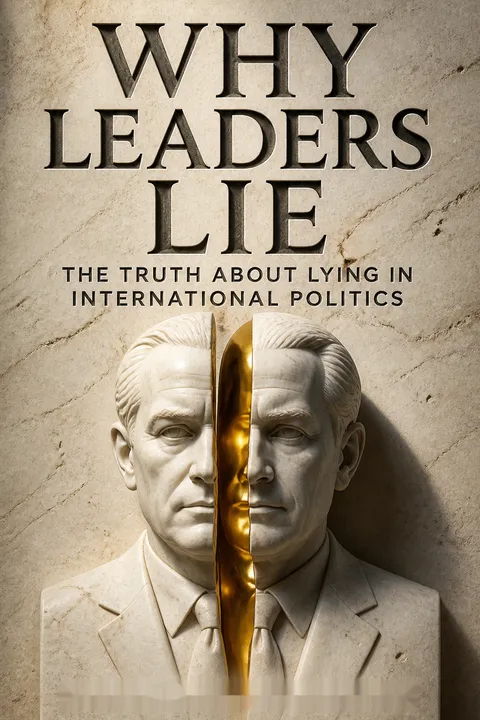
Why Leaders Lie receives mixed reviews averaging 3.47/5 stars. Readers appreciate Mearsheimer's taxonomy of seven types of political lies, particularly strategic lying between states, fear-mongering, and myth-making. Many find the book accessible and well-researched, with compelling historical examples from US foreign policy. However, critics note excessive repetition, limited depth, and questionable separation between strategic and selfish lies. Several reviewers express skepticism about justifying lies as serving national interests rather than personal gain. Arabic readers particularly engage with examples involving Israel-Palestine. The consensus suggests an interesting but overly brief treatment that could have been condensed into an article.
People Also Read


Glossary
Deception
Deliberate obstruction of truthAn intentional effort to prevent others from knowing the full truth as the deceiver understands it. Mearsheimer treats deception as the wider category that includes lying, spinning, and concealment. These differ in method: a lie makes a false or misleading assertion, spin selectively arranges facts, and concealment withholds information.
Lying
Deliberate false assertionMaking a statement believed to be false in order to persuade an audience that it is true. Mearsheimer also counts the deliberate arrangement of true facts to imply a conclusion the speaker believes false. His definition focuses on the speaker’s truthfulness and intent, not whether the claim later proves factually correct.
Spinning
Advantageous framing of factsPresenting known facts selectively by emphasizing favorable information and minimizing or ignoring inconvenient details. Spin distorts the overall picture, but does not necessarily construct a false story from the facts. Mearsheimer distinguishes it from lying, while recognizing that the boundary can be unclear in particular cases.
Concealment
Withholding relevant informationKeeping information from an audience because it could weaken the speaker’s position. In Mearsheimer’s classification, concealment involves silence rather than a positive false statement. If a leader is directly asked about the hidden information and knowingly gives a false answer, that answer is a lie.
Inter-state lies
Lies aimed at other statesFalsehoods that a government directs at another country to gain a strategic advantage or prevent a rival from gaining one. Examples include exaggerating military strength to deter an opponent, hiding a weapons program, or misleading an adversary during wartime. Mearsheimer argues that these lies occur less often than common assumptions suggest.
Fearmongering
Inflating a foreign threatA leader’s deliberate exaggeration or invention of a foreign-policy danger to persuade the public to support a policy. The claimed purpose is to mobilize citizens who might otherwise underestimate a threat or resist the necessary response. Mearsheimer sees fearmongering as especially relevant when leaders seek support for wars of choice or preventive wars.
Strategic cover-ups
Hiding policy for national advantageLies intended to hide a failed policy or conceal a controversial policy that leaders consider strategically beneficial. The claimed objective is to protect the country, preserve morale, or secure room to act, rather than merely to protect officials from deserved punishment. Mearsheimer warns that such cover-ups can obstruct correction and accountability.
Nationalist mythmaking
False stories about national historyThe use of historical falsehoods to portray one’s own nation or group favorably and rival groups negatively. Mearsheimer argues that these narratives help create solidarity and a sense of shared purpose, particularly around sacrifice and national identity. They may whitewash a country’s founding or its conduct in war.
Liberal lies
Moral cover for state conductFalse accounts designed to conceal state behavior that conflicts with liberal norms, international law, or a government’s own moral claims. Leaders may justify aggression, civilian harm, or alliances with brutal regimes in idealistic language. Mearsheimer argues that states often act according to strategic calculations while explaining those actions through liberal principles.
Social imperialism
Foreign threat serving narrow interestsA self-serving lie about another country used to advance the political or economic interests of a leader, social class, or interest group rather than the general welfare. A government might exaggerate an external danger to distract citizens from domestic problems or strengthen its hold on power. Mearsheimer excludes this category from his analysis of strategic lies.
Ignoble cover-ups
Lies shielding leaders from blameFalsehoods told to hide a leader’s mistakes or unsuccessful policies in order to protect that leader or associates from deserved punishment. Unlike strategic cover-ups, these lies are not intended to benefit the broader public. The categories can be difficult to distinguish because a strategic cover-up may also protect the officials responsible.
About the Author
Download PDF
Download EPUB
.epub digital book format is ideal for reading ebooks on phones, tablets, and e-readers.








