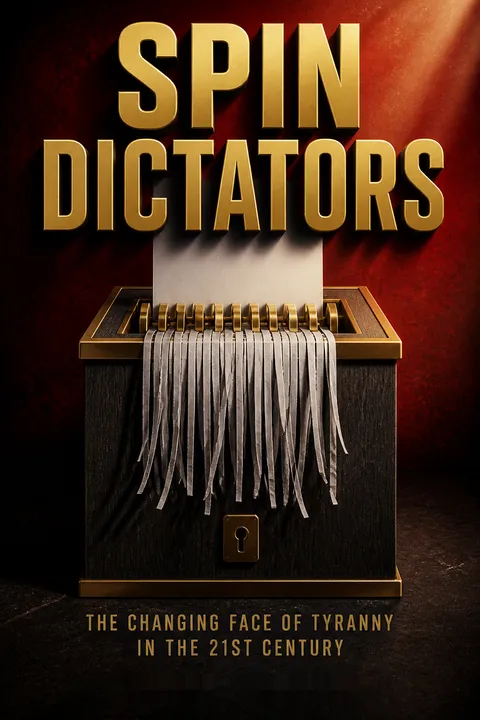


Key Takeaways
Recognize the new dictator: control can look like popularity, not terror
A changed bargain. A dictatorship is not defined only by tanks, prisons, and public executions. The authors distinguish dictatorships of fear, which rely on conspicuous violence and comprehensive censorship, from dictatorships of spin, which manipulate information to win public approval while narrowing real political choice. These rulers hold elections, allow limited criticism, and often present themselves as competent, democratic leaders. Their defining trick is making autocracy look acceptable, even popular.
A broad historical shift. In the authors’ data, fear dictators fell from about 60 percent of long-serving nondemocratic leaders who took power in the 1970s to less than one-tenth in the 2000s. Spin dictators rose from 13 percent to 53 percent. The categories are useful guides, not perfect boxes: many regimes mix both approaches.
The distinction changes what counts as evidence of authoritarian rule. Elections, a few critical newspapers, and high approval ratings can coexist with a system designed to prevent citizens from replacing its leaders. That makes the framework especially useful for analysis that looks beyond formal institutions to how power actually works. The categories should still be treated as ideal types, not labels that settle every case. A regime may shift its methods when threats change, and apparently popular rule can contain both genuine consent and carefully managed information.
Guard the informed minority before mass approval makes its warnings irrelevant
Who sees through the performance. The authors call the politically skilled, educated, and well-connected segment of society “the informed.” Its members are more likely to recognize manipulation and identify attractive alternatives, but they are usually too small to dislodge a ruler alone. Spin dictators therefore seek to separate them from the broader public: they co-opt some critics, restrict others, and portray dissenters as elitist, disloyal, or out of touch. The public may then continue supporting a leader even when informed critics see the system clearly.
Consent can be engineered. The book notes that college-educated citizens tend to be less supportive of leaders in authoritarian and lower-quality political systems. It also warns that approval polls can overstate support when respondents are reluctant to criticize the government.
The important divide is not simply between informed and uninformed people. It is between groups with different access to trustworthy information, different abilities to organize, and different incentives to trust one another. That resembles a coordination problem: citizens may privately doubt a ruler yet hesitate to act if they believe everyone else approves. The framework also raises a question about who gets called informed. Education and international connections are useful indicators, but they do not guarantee sound judgment. Public accountability depends on building broad coalitions, not handing political authority to a credentialed minority.
Make repression deniable: modern autocrats punish critics without making martyrs
Punishment without spectacle. Singapore’s Lee Kuan Yew learned from an earlier crackdown on student protests. Police force had dispersed the students, but it alienated the public and damaged the government. Lee’s alternative, described by political scientist Cherian George as “calibrated coercion,” used pressure carefully enough to preserve an image of order and restraint. Critics could face defamation suits, financial penalties, restrictions on protests, or discreet harassment rather than a public show of violence.
A flexible toolkit. Other rulers have used short detentions, fabricated nonpolitical charges, regulatory obstacles, and online harassment. The purpose is not to eliminate every critic. It is to make organizing costly while avoiding the publicity that can turn a target into a symbol of resistance. The authors’ data show a broad decline in political killings and large political-prisoner populations among recent dictators.
Low-visibility repression is difficult to detect because each case can be presented as ordinary law enforcement, a civil dispute, or routine regulation. That is also its political advantage: it fragments opposition and makes the pattern harder to prove. The shift from visible violence to procedural pressure does not mean that power has become harmless. It means observers need to track cumulative effects, such as whether fines, lawsuits, and permit rules consistently burden one side. A further caution is that counts of killings and prisoners capture only part of coercion, especially when harassment stays below the threshold of arrest.
Read polished competence as political messaging, not proof of competent government
From threats to performance. Older dictators often used rigid ideology, loyalty rituals, and violent language to signal strength. Spin dictators more often speak like managers, promising jobs, services, and growth. In a televised address, Kazakhstan’s Nursultan Nazarbayev sat behind a desk, announced economic targets, and publicly scolded underperforming ministers. The performance suggested expertise and accountability, even though citizens had limited power to remove him.
Spin the facts, not just the facts themselves. When results are good, rulers claim credit. When they are poor, their media can redirect blame toward foreign forces or bad luck, or imply that any alternative leader would do worse. They mix national, cultural, and economic appeals rather than impose one rigid doctrine. Some cultivate celebrity, entertainment, and online supporters to make the leader seem familiar and widely admired.
The performance of competence borrows from corporate communication: targets, dashboards, and public accountability rituals make leadership legible as management. Yet the appearance of measurement is not the same as independent evaluation. If a ruler controls the information used to assess results, an impressive scorecard can conceal poor outcomes or shift blame away from the center. The idea also explains why style matters politically: citizens often infer ability from presentation when reliable evidence is scarce. The limitation is that economic growth can be real, not merely spun, and competent administration may earn genuine support even in an unfree system.
Spot media capture before the last independent outlet goes dark
Censorship with a light touch. In 1992, Peru’s Alberto Fujimori sent troops to occupy newsrooms during his self-coup. The move drew international condemnation. He soon released detained journalists and allowed opposition papers to resume publishing. Their continued existence helped his government claim that the press remained free, and their reporting gave more credibility to polls showing public support for his actions.
Control without a formal ban. Fujimori’s intelligence chief, Vladimiro Montesinos, bribed television owners for favorable coverage, while the government used advertising contracts, legal pressure, and regulatory actions to weaken critical outlets. Other rulers have relied on defamation suits, ownership changes, fines, and technical disruptions. The aim is often to preserve a small space for criticism while keeping it from reaching a mass audience. Across nondemocracies, direct, routine censorship declined from 68 percent in 1980 to 45 percent in 2018, while indirect, limited methods rose from 3 percent to 19 percent.
Media capture is not only a problem of government censorship. It is also a problem of market structure: a few owners, advertisers, or distribution platforms can determine which voices reach large audiences. That makes transparency around ownership and public advertising as important as formal press protections. Fujimori’s reversal also shows why blunt censorship can backfire: visible suppression may attract attention and make banned reporting seem more credible. But allowing a few outlets to criticize the government does not establish meaningful press freedom if they lack reach, resources, or protection from retaliation.
Treat elections as tools for converting popularity into institutional control
A vote can build an autocracy. Hugo Chávez entered office with broad support, then used referenda and elections to reshape Venezuela’s political institutions. A constituent assembly dominated by his allies rewrote the constitution, and subsequent changes expanded executive influence over courts and other bodies. Elections served not just to record support, but to supply a mandate for weakening the checks that might limit him.
Fraud can reinforce a plausible win. Spin dictators often let opposition parties run and report victories that look less implausible than the near-total results favored by fear dictators. The authors find that fear dictators won presidential elections with more than 90 percent of the vote in 57 percent of cases, compared with 26 percent for spin dictators. Some spin regimes still manipulate ballots and rules. If voters expect a popular incumbent to exaggerate a victory, a padded margin can even reassure them that the incumbent really won.
Elections have a double character. They can provide citizens a peaceful way to coordinate around a challenger, but they can also help incumbents claim legitimacy and identify which officials deliver support. That is why election quality cannot be judged by whether voting occurs or opposition candidates appear on the ballot. Rules, media access, vote counting, and the possibility of alternation matter together. The authors’ account of fraud as potentially reassuring is especially useful, but it should not imply that voters simply accept manipulation. Visible cheating can also reveal elite weakness and give opponents a shared reason to mobilize.
Follow the money and endorsements that let dictators borrow Western legitimacy
Openness as an instrument. Unlike many fear dictators, spin dictators generally welcome trade, travel, foreign investment, and international attention. They use these connections to promote a modern image, attract resources, and influence debate abroad. Josip Broz Tito, an earlier partial example, cultivated Western support after breaking with Stalin while also welcoming tourists and sending workers overseas.
Influence runs both ways. Contemporary rulers seek praise from foreign leaders, experts, and celebrities, and may invite friendly election observers to validate flawed votes. They also hire lobbyists and public-relations firms, cultivate former officials, and use money or institutional rules to complicate criticism. Hungary’s Viktor Orbán, for example, benefited from European Union funding while attacking Brussels and using his position within European institutions to resist pressure. The book argues that spin dictators are generally less war-prone than fear dictators, but can exploit international organizations from within.
Interdependence creates leverage in both directions. Trade, institutions, and professional networks can expose abuses and raise their cost, but the same channels can carry money, access, and reputational cover to rulers. This is a familiar problem in network governance: openness creates useful connections while also creating opportunities for capture. The book’s emphasis on foreign enablers is valuable because it shifts attention from dictators alone to the people and institutions that make influence possible. Yet not every exchange is corrupt, and isolating a country can weaken independent contacts as readily as it pressures its leaders.
Modernization makes terror costly, but spin can postpone democracy for years
The modernization cocktail. The authors use this term for the combined effects of postindustrial work, expanded higher education, new communications technology, economic globalization, and international human-rights pressure. Creative economies depend on skilled workers who cannot simply be ordered to innovate. Universities and networked media also give citizens tools to question official accounts and organize. These changes make comprehensive censorship and violent repression more damaging to growth and harder to conceal.
Adaptation delays the result. A ruler can respond by manipulating information, co-opting educated critics, and restricting the reach of opposition media. This can buy time, but the growing, economically important population with the skills to challenge the regime becomes harder to neutralize. The transition is not automatic: oil wealth, weak institutions, crises, and foreign support can alter the path. Malaysia’s 2018 election shows how modernization and connected opposition networks can help end a long-standing ruling party’s dominance.
The argument improves on a simple claim that wealth automatically produces democracy. It identifies mechanisms: education builds analytical skills, postindustrial production rewards initiative, and communications networks reduce the cost of coordination. But these forces do not operate independently of political choices. Digital platforms can help organize protest and enable surveillance; educated citizens can be co-opted or divided from less secure groups. The model is best read as a theory of changing costs and opportunities, not a forecast with a fixed development threshold. Its central implication is conditional: modernization pressures autocracy, while skilled rulers can adapt to delay those pressures.
Engage autocracies while closing the Western loopholes their rulers exploit
Engagement, with safeguards. The authors recommend “adversarial engagement”: continue economic and diplomatic ties, but do not assume integration will make dictators cooperative. They favor targeted sanctions against responsible people and firms over isolating whole countries, since broad isolation can undermine the social and economic changes that challenge repression. They also urge stronger scrutiny of financial flows, lobbying, cybersecurity, and foreign influence in democratic institutions.
Democracy needs defenders. International bodies should be harder to exploit, and democratic governments should coordinate rather than rely on unilateral military interventions. At home, they must repair weaknesses in their own systems, including corruption, opaque political funding, and failing checks on executive power. Formal rules matter, but citizens, journalists, lawyers, officials, and activists have to make those rules effective by identifying abuse and organizing resistance.
This approach treats foreign policy as a contest over institutions and incentives, not a choice between naïve trust and total separation. It also makes democratic credibility part of strategy: governments that tolerate corruption or weaken their own checks give authoritarian messaging an easier target. The proposal requires careful distinctions. Targeted restrictions can punish specific enablers, while broad measures risk harming ordinary people and reducing independent contact. International coordination can improve consistency, but it cannot substitute for domestic political will. The strongest defense is therefore both external and internal: constrain transnational influence while making democratic institutions more worthy of public confidence.
Analysis
The book’s central achievement is to identify a form of authoritarian rule that is easy to misclassify precisely because it borrows democracy’s visible furniture. Elections, public approval, private media, and foreign travel are not reliable indicators of political freedom by themselves. The decisive question is whether citizens can use those freedoms to challenge power and replace leaders. By comparing fear and spin, Guriev and Treisman shift analysis from regime labels to governing methods, then connect those methods to the incentives created by modernization and globalization.
The framework is strongest when it explains why the methods reinforce one another. Media manipulation supports popularity; popularity legitimizes institutional changes; limited repression keeps the ruler’s democratic image intact; international openness supplies investment and borrowed credibility. This is more than a list of tricks. It is a strategy whose components protect each other. The historical data on declining political violence and changing censorship make the argument more than a set of vivid anecdotes, although definitions and records of coercion remain imperfect, and a decline in counted violence does not measure every form of intimidation.
The most important analytical tension concerns consent. Popularity may be sincere, manufactured, or both. A leader can deliver growth while restricting meaningful choice, and citizens can rationally prefer stability without endorsing the destruction of accountability. Consequently, approval ratings cannot settle whether a regime is legitimate. The book’s distinction between an informed minority and the general public usefully highlights unequal access to political information, but it risks suggesting that democratic protection belongs chiefly to educated elites. Those citizens can expose abuses, yet broad democracy requires coalitions that connect their knowledge to the interests of workers, minorities, and people outside elite media networks.
The modernization argument is best understood as pressure, not destiny. Education, creative work, and communications can raise the cost of repression, but technology also enables surveillance, and globalization can enrich rulers or their allies. Institutions matter most when people can organize around them. The resulting lesson is demanding: democratic resilience depends both on defending domestic contestation and on preventing cross-border finance, influence, and institutional access from becoming tools of authoritarian rule.
Review Summary
Spin Dictators examines how 21st-century autocrats differ from 20th-century tyrants, ruling through information manipulation rather than fear and violence. Modern dictators like Putin, Orbán, and Erdogan maintain power by appearing democratic, controlling media, and building popular support while undermining democratic institutions. Reviews praise the book's research and concept but criticize its optimism about democracy's future, occasional Western bias, and sometimes academic writing style. Some readers question whether the distinction between "spin" and "fear" dictators is sufficiently clear, while others find it essential reading for understanding contemporary authoritarianism's sophisticated tactics.
People Also Read



Glossary
Spin dictatorship
Autocracy built on manipulationA nondemocratic system in which rulers seek to stay in power by shaping public opinion and appearing popular, competent, and democratic. It commonly permits limited opposition and criticism while manipulating media, elections, and institutions, and generally avoids conspicuous violence against political opponents.
the informed
Politically skilled, connected citizensThe segment of society with comparatively strong education, communication skills, and access to political information. In the book’s framework, its members are more likely to see through a ruler’s manipulation and can help document abuses, organize opposition, and communicate with the broader public. Their influence depends on their resources and ability to build coalitions.
modernization cocktail
Forces that raise repression costsThe authors’ name for the interacting effects of postindustrial economic change, higher education, new communications technology, globalization, and the liberal international order. Together, these forces make comprehensive censorship and visible violence harder to sustain, while expanding citizens’ ability to access information and organize. They can encourage authoritarian adaptation as well as pressure toward democracy.
calibrated coercion
Low-visibility political pressureA method of controlling dissent through selective, measured pressure rather than conspicuous mass violence. The book uses the term for Singapore’s approach under Lee Kuan Yew, where legal restrictions, financial penalties, and limits on protest helped marginalize opponents while preserving a reputation for order and restraint.
spinspeak
Competence-focused political messagingThe communication style associated with spin dictators. It emphasizes administration, economic performance, public services, and the leader’s apparent connection to ordinary people rather than imposing a single official ideology or relying on overtly threatening language. It can also redirect blame, promote favorable interpretations, and use entertainment or social media to shape impressions.
Zersetzung 2.0
Digital harassment of opponentsThe book’s label for adapting low-visibility methods of political harassment to online settings. State agents or proxies may use trolls, threats, doxxing, hacked material, and fabricated accusations to isolate critics, damage their reputations, and disrupt opposition networks without relying on public trials or mass imprisonment.
Authoritarian Control Techniques Database
Dataset on rulers’ coercive methodsA database assembled by the authors to compare authoritarian leaders’ use of political killings, political imprisonment, and torture. It draws on historical, journalistic, human-rights, and government sources. Because records are incomplete and definitions vary, the authors use it to identify broad patterns rather than claim precise counts for every leader.
adversarial engagement
Engagement with active safeguardsThe authors’ proposed approach to dealing with authoritarian governments. It maintains economic and diplomatic connections while recognizing that dictators may exploit interdependence. The approach pairs continued engagement with targeted sanctions, stronger checks on corruption and foreign influence, cooperation among democracies, and efforts to strengthen democratic institutions at home.
Download PDF
Download EPUB
.epub digital book format is ideal for reading ebooks on phones, tablets, and e-readers.








