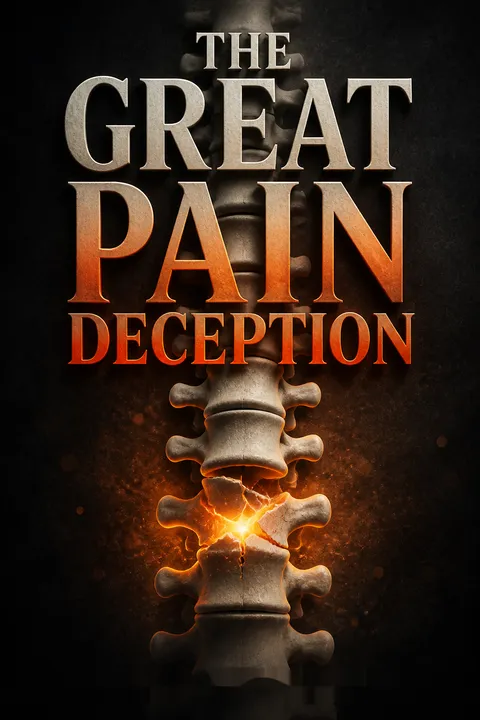


Key Takeaways
Treat pain as real, while investigating both bodily and psychological contributors
A personal turning point. Ozanich describes back pain beginning at fourteen, years of diagnoses and treatments, and escalating symptoms after his wife was permanently paralyzed by a medical complication. He later encountered physician John Sarno’s account of mind-body pain and, after years of doubt, became pain-free. He uses TMS, or Tension Myoneural Syndrome, for a proposed pattern in which psychological stress contributes to real physical symptoms.
A model, not a verdict. The book argues that symptoms can distract from distress, but Ozanich’s recovery is a personal account, not proof that every chronic symptom has an emotional cause. New, severe, changing, or unexplained symptoms deserve appropriate medical evaluation. Emotional factors and physical conditions can also coexist.
The book’s most humane point is that psychological influence does not make pain imaginary. Modern pain science also treats pain as an experience shaped by bodily signals, attention, expectation, and context. That perspective can widen care beyond a scan or a single tissue diagnosis. The essential limit is causal certainty: stress may influence symptoms, but a person should not be told that hidden anger explains their pain before relevant medical causes have been assessed.
Read scans as clues, not verdicts about the source of pain
Images need context. Ozanich recounts being told that changes in his spine meant he was structurally damaged and might need surgery. He later found that pain persisted despite treatments, while imaging showed abnormalities that can also appear in people without pain. The book cites research on spinal imaging and argues that findings such as disc bulges or degeneration do not, by themselves, establish what is causing someone’s symptoms.
Match findings to function. An image is one part of an assessment, alongside symptoms, examination, history, and changes over time. Ozanich’s warning is useful when a scan seems frightening, but his categorical claims that particular abnormalities do not cause pain go too far. Some structural conditions do cause serious symptoms and need treatment.
This distinction resembles a basic principle in diagnostic reasoning: a finding is meaningful only if it fits the person’s symptoms and examination. Imaging can reveal incidental changes, while a normal scan cannot answer every question about pain. The strongest version of Ozanich’s argument is therefore not to dismiss scans, but to resist treating them as self-explanatory. Patients benefit when clinicians discuss what a finding does and does not show, including uncertainty.
Fear and guarding can amplify pain, so rebuild safety carefully
Attention shapes experience. Ozanich describes fearing movement, protecting his back, and monitoring symptoms constantly. In his account, fear and avoidance helped keep pain central in his life. Sarno’s explanation, which the book adopts, is that symptoms can function as a distraction from distress. Ozanich also describes conditioned responses: after pain appeared during a particular movement, he came to expect it during that movement.
Change the cycle gently. The book encourages returning to ordinary activity rather than treating the body as fragile. It also recounts Ozanich pushing himself through intense pain. That is not a safe universal prescription. A clinician can help distinguish appropriate graded activity from movement that risks injury, especially when symptoms are new, severe, or accompanied by weakness or other concerning changes.
Fear, vigilance, and avoidance can shape disability even when they are understandable responses to pain. Research on pain-related fear supports a gradual return to valued activity for many people with persistent musculoskeletal pain. The useful principle is rebuilding confidence, not proving toughness. Pain is not a reliable measure of tissue damage in every case, but neither is it a signal to ignore. Individually paced movement keeps the book’s insight without turning it into a dare.
Track symptom timing alongside stress, without treating coincidence as proof
Look for patterns. Ozanich describes symptoms worsening during family crisis and appearing after intense periods had ended. He also reports pain shifting among body areas. Sarno calls this shifting pattern the symptom imperative: in the book’s theory, when one symptom no longer holds attention, another may take its place. Ozanich uses these observations to encourage readers to notice life events around symptom changes.
Observe, do not diagnose. A brief record of sleep, activity, mood, stress, and symptoms may reveal patterns worth discussing with a clinician. But symptoms can fluctuate for many reasons, and their timing alone cannot establish a psychological cause. Tracking should support practical decisions, not become another form of obsessive body-checking.
Longitudinal observation is more informative than a single snapshot, and a simple symptom diary can help patients and clinicians notice associations that memory misses. The caution is that association is not causation: symptoms may follow stress, but stress may also rise because symptoms disrupt life. A good record captures both directions and includes function, not just pain intensity. That approach turns self-observation into useful evidence rather than a search for one hidden explanation.
Make room for emotions and honest conversation instead of silent overcoping
Overcoping has a cost. Ozanich describes himself as responsible and controlled while carrying grief, anger, guilt, and relationship strain largely unspoken. The book links this pattern to the Type T personality, its label for perfectionistic, conscientious people who tend to suppress conflict and overextend themselves. That is the author’s characterization, not a clinical diagnosis.
Practice expression without blame. Ozanich recommends reflecting on current pressures, writing, speaking with a trusted person, or seeking counseling. He also describes a Hawaiian family practice called ho’oponopono, in which relatives discuss conflict, acknowledge harm, and seek reconciliation. These approaches can help people name needs and improve relationships. They do not require assuming that a particular family member caused an illness.
The connection between emotional expression and health is plausible without being absolute. Supportive conversation can reduce isolation, clarify problems, and help people seek care or change stressful circumstances. The book’s emphasis on perfectionism gives readers a specific pattern to examine: saying yes while resentment builds. The nuance matters because not everyone can safely confront family or disclose trauma. Professional support, boundaries, and a person’s own pace are part of honest communication too.
Restore movement gradually, with medical guidance rather than fear or force
Movement rebuilt confidence. Ozanich recounts moving from being bedridden to running, lifting, and playing golf while reading Sarno. His progress was uneven, and he says fear eased as he resumed activity. The book’s central practical advice is to avoid letting chronic pain dictate every movement or permanently shrink daily life.
Choose a safe progression. The account does not establish that strenuous exercise is appropriate for everyone, or that pain should be pushed through. For many persistent musculoskeletal problems, gradual activity can support function; the pace and type should reflect the person’s condition and medical advice. Physical therapy may be useful, and prescribed medication should not be stopped without consulting its prescriber.
The distinction between rest and movement is not all-or-nothing. Prolonged inactivity can reduce strength and confidence, while excessive loading can aggravate some conditions. Rehabilitation often works by finding a tolerable starting point and increasing demands in manageable steps. Ozanich’s story makes the psychological value of movement vivid, but his most extreme exercises are not a template. Sustainable progress is a better test of recovery than dramatic displays of endurance.
Choose clinicians who explain uncertainty without turning scans into sentences
Expectations matter. Ozanich argues that treatment rituals, confidence in a practitioner, and alarming explanations can influence symptoms. He discusses placebo effects, when expectations or care rituals can contribute to improvement, and nocebo effects, when negative expectations can worsen experience. He cites a 2002 trial of arthroscopic surgery for knee osteoarthritis in which participants receiving sham surgery reported similar improvement to those receiving the studied procedures.
Keep evidence specific. That trial concerns a particular operation and condition; it does not show that all surgery is useless. The broader lesson is to ask what a treatment is meant to address, what evidence supports it, and what alternatives exist. Clear explanations can reduce needless fear without promising a cure or withholding necessary care.
Expectation is not a substitute for treatment, but it is part of how treatment is experienced. A clinician’s words can help patients understand uncertainty or can accidentally make an incidental finding sound catastrophic. The knee trial is a powerful reminder to test procedures rigorously, especially when they are common and invasive. Its results should remain scoped to the intervention studied. Good care combines evidence, shared decision-making, and language that neither frightens nor falsely reassures.
Set small, meaningful goals that make life larger than symptom monitoring
Recovery is not a straight line. Ozanich says his own return from decades of pain involved repeated reading, reflection, relaxation, and increasing activity. He could not identify one exact day when the pain stopped; the change became clear when he noticed that he was living without continually checking it. The book recommends short, achievable activity goals and rewards, as well as breathing, visualization, social contact, and humor.
Measure life, not just symptoms. A useful goal might be returning to a valued task in a manageable way, rather than demanding an immediate pain-free day. These practices may support coping and confidence, but they cannot guarantee symptom resolution. Persistent distress or disability is a reason to seek qualified help, not evidence of weak will or insufficient belief.
Function-based goals shift attention toward what matters and give recovery observable milestones beyond a fluctuating pain score. This aligns with rehabilitation approaches that emphasize participation and quality of life. The book’s story also illustrates why recovery may be recognized retrospectively rather than as a sudden cure. Its limitation is implying that belief or attitude determines the outcome. Progress can depend on diagnosis, access to care, biology, resources, and support, not simply persistence.
Analysis
The book’s durable contribution is its insistence that pain can be physically real while psychological, social, and attentional processes shape it. Ozanich makes that idea memorable by telling a personal story: early back pain, years of structural explanations, a family catastrophe, and eventual recovery after encountering Sarno’s mind-body theory. The narrative supplies emotional force and an important corrective to the assumption that every abnormal image explains pain.
Its central weakness is the leap from that corrective to a universal explanation. Ozanich repeatedly treats hidden rage, repression, or a need for distraction as the cause of a wide range of symptoms, sometimes including serious disease. The text’s evidence is largely clinical anecdotes and personal interpretation, which cannot establish that a symptom is harmless or emotionally caused. Its proposed oxygen-deprivation mechanism is presented as settled, although the book itself supplies no basis for treating it as a general explanation of chronic pain. Its sweeping attacks on surgery, medication, and physical therapy also exceed what the cited examples can support.
A safer and more useful reading is biopsychosocial rather than either-or. Bodily pathology, nervous-system sensitivity, stress, expectations, relationships, and behavior can interact. Psychological care can complement medical assessment; it should not replace it. Imaging findings need clinical interpretation, and treatment decisions should reflect the specific condition rather than blanket claims about scans or procedures. Movement can help many people, but graded activity differs from forcing oneself through severe symptoms. The book is strongest when it invites curiosity: What changed around symptom onset? Has fear narrowed daily life? What support, communication, or activity might help? It is weakest when it turns these questions into diagnoses. Its memorable caution is not that pain is a deception, but that a single explanation, whether a damaged disc or buried anger, can obscure a more complex person and problem.
Review Summary
The Great Pain Deception receives overwhelmingly positive reviews, with readers praising its life-changing insights into chronic pain and mind-body connections. Many found relief from long-standing pain issues after applying the book's principles. Readers appreciate the author's personal experience and humor, though some criticize the writing style as disorganized and repetitive. The book is highly recommended for those suffering from chronic pain, with many considering it a must-read despite its unconventional approach. Some readers suggest starting with Dr. Sarno's works before delving into this more detailed exploration.
People Also Read





Glossary
TMS
Proposed mind-body symptom patternOzanich uses TMS for Tension Myoneural Syndrome, drawing on John Sarno’s account of pain and other symptoms associated with psychological stress. In the book, symptoms are described as real bodily experiences that may be influenced by unconscious conflict. TMS is not a universally accepted diagnosis, and the label cannot establish that a particular symptom is harmless or emotionally caused.
knowledge therapy
Education intended to reduce fearIn Sarno’s approach as presented by Ozanich, knowledge therapy means learning a proposed mind-body explanation for chronic symptoms, reducing fear of structural damage, and changing the attention and behavior that keep pain central. The book presents understanding as a therapeutic intervention. It should not be treated as a replacement for medical assessment or as a guaranteed cure.
symptom imperative
Shifting symptoms in the modelOzanich uses this term for the reported movement of symptoms from one body area or form to another. In his account, the brain may produce a new symptom when an earlier one stops capturing attention, while underlying conflict remains. The term describes the book’s explanatory model, not a clinical rule that shifting symptoms prove a psychological cause.
Type T personality
Book-specific overcoping profileOzanich’s Type T describes people he sees as perfectionistic, conscientious, driven, and prone to suppressing anger or needs while accommodating others. He associates this profile with chronic symptoms and overresponsibility. It is a narrative category used in the book, not a validated diagnostic classification or a reliable way to determine why an individual has pain.
nocebo effect
Worsening linked to negative expectationThe book uses nocebo effect for symptom worsening associated with expectations of harm, frightening explanations, or pessimistic predictions. It contrasts this with placebo effects, in which treatment expectations may contribute to improvement. Expectations can influence experience, but nocebo is not proof that symptoms are imagined, and it does not show that a medical finding is irrelevant.
FAQ
1. What is The Great Pain Deception by Steven Ray Ozanich about?
- Mindbody pain focus: The book explores how chronic pain and various physical symptoms are often caused by unconscious emotional tension, not structural damage, through the concept of TMS (Tension Myoneural/Myositis Syndrome).
- Personal healing journey: Steven Ray Ozanich shares his 27-year struggle with chronic pain and how he healed by applying mindbody principles, particularly those of Dr. John E. Sarno.
- Challenge to conventional medicine: It critiques mainstream medical practices that focus on structural abnormalities, arguing these often misdiagnose and worsen pain.
- Comprehensive guide: The book covers related conditions like anxiety, depression, and chronic fatigue, offering practical advice for holistic healing.
2. Why should I read The Great Pain Deception by Steven Ray Ozanich?
- Revolutionary perspective: The book challenges traditional medical views, revealing that many chronic pain conditions are rooted in repressed emotions rather than physical injury.
- Empowerment and hope: Readers are given tools and knowledge to take control of their healing, potentially avoiding unnecessary surgeries and treatments.
- Practical healing roadmap: It provides actionable steps for recovery, including knowledge therapy, increased activity, and emotional expression.
- Validation and support: Chronic pain sufferers find their experiences acknowledged and are offered a hopeful path to lasting relief.
3. What are the key takeaways from The Great Pain Deception by Steven Ray Ozanich?
- Pain is often emotional: Chronic pain is frequently a mindbody phenomenon, with symptoms serving as distractions from unconscious emotional conflict.
- Knowledge is healing: Understanding and accepting the emotional roots of pain is essential for recovery; belief in the process is crucial.
- Physical activity is vital: Resuming normal movement and challenging fear helps retrain the brain and break the pain cycle.
- Emotional work matters: Healing requires introspection, emotional expression, and sometimes therapy to address repressed feelings.
4. What is TMS (Tension Myoneural/Myositis Syndrome) as defined in The Great Pain Deception by Steven Ray Ozanich?
- Mindbody syndrome: TMS is a condition where repressed emotions, especially anger and anxiety, cause physical symptoms like pain, fatigue, and numbness without structural damage.
- Physiological mechanism: The autonomic nervous system constricts blood vessels in response to emotional tension, leading to mild oxygen deprivation and pain.
- Symptom shifting: TMS symptoms often move around the body, confusing sufferers and doctors, and serve as distractions from emotional conflict.
- Common triggers: Stressful life events, minor injuries, and personality traits like perfectionism can all contribute to TMS onset.
5. How does The Great Pain Deception by Steven Ray Ozanich explain the mindbody connection in chronic pain?
- Psychological roots: Pain arises from unresolved internal conflicts and repressed emotions, which the brain converts into physical symptoms.
- Unconscious repression: The ego hides unacceptable feelings in the unconscious, which then manifest physiologically.
- Autonomic nervous system role: Emotional tension triggers the sympathetic nervous system, reducing oxygen to tissues and causing pain.
- Distraction mechanism: Symptoms serve to distract the individual from facing difficult emotions, maintaining psychological equilibrium.
6. What are the most common misconceptions about chronic pain addressed in The Great Pain Deception by Steven Ray Ozanich?
- Structural damage myth: The book debunks the belief that herniated discs, arthritis, or other MRI findings are the main causes of chronic pain.
- Surgery and therapy limitations: It explains that medical interventions often fail long-term because they don’t address emotional roots.
- “All in your head” misunderstanding: TMS pain is real and physical, not imaginary, but is driven by unconscious emotional processes.
- Placebo and nocebo effects: The power of belief and fear can both heal and worsen symptoms, highlighting the mind’s influence over the body.
7. What role do repression and emotions play in causing TMS symptoms according to The Great Pain Deception by Steven Ray Ozanich?
- Repression as defense: Unconscious defense mechanisms hide painful emotions like rage and anxiety to protect self-image and social acceptance.
- Energy buildup: Repressed emotions generate tension that disrupts autonomic function, leading to physical symptoms.
- Symptoms as distractions: The brain creates physical symptoms to divert attention from emotional pain, allowing avoidance of difficult feelings.
- Personality factors: Traits like perfectionism, conscientiousness, and “goodism” increase susceptibility to TMS.
8. How does The Great Pain Deception by Steven Ray Ozanich describe the healing process from TMS?
- Knowledge therapy: Healing starts with understanding and accepting that pain is emotionally driven, not structurally caused.
- Resuming activity: Sufferers are encouraged to gradually return to normal and even vigorous physical activity to retrain the brain.
- Emotional expression: Introspection, journaling, and therapy help uncover and release repressed emotions.
- Letting go: Forgiveness and releasing the obsessive search for physical causes are important to reduce tension and promote healing.
9. What practical methods and advice does Steven Ray Ozanich recommend in The Great Pain Deception for overcoming chronic pain?
- Embrace knowledge and belief: Fully accept the TMS diagnosis and understand the mindbody nature of pain; doubt prolongs suffering.
- Increase activity and challenge fear: Gradually face feared movements and activities to break conditioned pain responses.
- Practice relaxation and mindfulness: Use techniques like progressive relaxation, visualization, and mindfulness to reduce tension.
- Express emotions: Journaling, talking, and therapy are recommended to process and release repressed feelings.
10. What is the significance of visualization and guided imagery in The Great Pain Deception by Steven Ray Ozanich?
- Bridge to the unconscious: Visualization helps communicate with the unconscious mind, addressing the emotional roots of pain.
- Proven healing tool: Guided imagery and imagining a healthy body can reduce or eliminate symptoms, as supported by personal and scientific evidence.
- Relaxation prerequisite: Deep relaxation is necessary for effective visualization, preparing the mindbody for healing.
- Goal setting: Visualization and incremental goal setting reinforce new neural pathways and build confidence in recovery.
11. How does The Great Pain Deception by Steven Ray Ozanich address the relationship between anxiety, depression, and chronic pain?
- Anxiety precedes pain: Anxiety and depression often come before the onset of pain, with pain serving as a physical outlet for emotional distress.
- Depression as survival: Depression is seen as a mechanism to inhibit aggression when escape or fight is impossible, often surfacing during isolation or life crises.
- Healing requires courage: Overcoming these emotional states involves facing feelings and reengaging with life, not just treating symptoms.
- Pain as distraction: Chronic pain acts as a holding cell for overwhelming emotions, maintaining psychological balance at a physical cost.
12. What are the most common TMS equivalents and symptoms listed in The Great Pain Deception by Steven Ray Ozanich?
- Wide symptom range: TMS can manifest as back pain, headaches, fibromyalgia, chronic fatigue, digestive issues, skin disorders, and more.
- Misdiagnosis is common: Many symptoms attributed to structural or disease causes are actually tension-induced mindbody responses.
- Symptom shifting: Symptoms often move or change, further confusing diagnosis and reinforcing the mindbody nature of the disorder.
- Healing potential: Recognizing these symptoms as TMS equivalents opens the door to recovery through emotional awareness and behavioral change.
Download PDF
Download EPUB
.epub digital book format is ideal for reading ebooks on phones, tablets, and e-readers.








