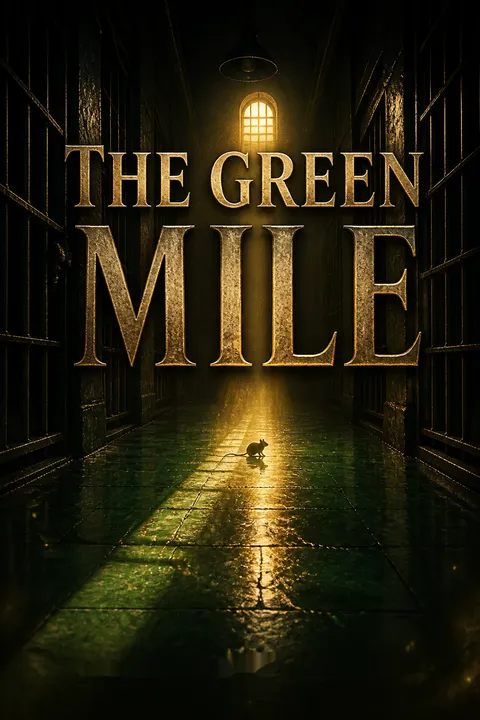


Plot Summary
Prologue
At Georgia Pines, an elderly Paul Edgecombe1 writes down what happened on Cold Mountain’s death row in 1932. Brad Dolan, an orderly who takes pleasure in humiliating residents, questions Paul’s1 solitary walks and tries to seize his papers.
Elaine Connelly,13 Paul’s1 sharp minded friend, intervenes and encourages him to finish. His account returns to the year John Coffey2 entered E Block, where condemned men waited to die in the electric chair.
The nursing home frame makes memory an act of resistance before the prison story begins. Brad’s casual bullying echoes the authority Paul once witnessed on the Green Mile, while Elaine’s intervention shows that age has not erased the ability to protect another person. Paul writes not to restore the past to a clean, settled shape, but to keep its moral complications from being worn away by routine and forgetfulness. The frame also establishes that the story’s consequences have outlived the prison: Paul is still trying to understand what he saw, and the act of recording it becomes a final effort to make his experience legible to someone else.
The Riverbank Accusation
In June 1932, Klaus Detterick15 and his son find the twins, Cora and Kathe, missing from their porch. Blood, torn nightclothes, and their dog’s broken neck lead a posse through the woods to the Trapingus River. There they find John Coffey,2 a huge Black drifter, holding the girls’ bodies and weeping.
His pocket contains sandwiches and a pickle, but no sausage, despite the prosecutor’s claim that he fed the dog to silence it. Coffey2 cannot explain how the girls died. The jury accepts the evidence against him and returns a guilty verdict in less than an hour. Paul Edgecombe,1 who will later supervise Coffey2 on death row, first learns of him through the newspaper accounts.
The crime scene is arranged to make a mistaken conclusion feel almost self evident: Coffey’s size, race, and proximity to the bodies overpower the smaller contradictions in the evidence. His grief is visible, but the investigators interpret it through the verdict they are already prepared to believe. The missing sausage and the hurried trial matter because they expose how procedure can assemble certainty without testing its assumptions. Coffey is not simply condemned by one false clue. He is condemned by a community whose racial expectations determine which details count as evidence and which can be ignored. The opening therefore makes the coming mystery ethical as well as factual: the question is whether Paul can learn to see past the story the court has already told.
A Giant Enters E Block
At Cold Mountain Penitentiary, Paul1 runs E Block, the quiet corridor leading to the electric chair known as Old Sparky. The condemned men walk its green floor on their final journey. When John Coffey2 arrives, guard Percy Wetmore6 taunts him as a dead man, but Paul1 sends Percy6 away and accepts Coffey2 without force.
Coffey2 follows instructions gently, cannot read beyond his own name, and admits that darkness frightens him. Before the cell door closes, he suggests that he tried to undo what happened to the Detterick girls but failed. Paul1 knows Coffey2 has been convicted of a monstrous crime; still, Coffey’s2 childlike manner and sorrow trouble his confidence. Meanwhile, Warden Hal Moores11 worries about his seriously ill wife, Melinda.10
Coffey’s arrival sets physical threat against emotional vulnerability. His size invites the guards to see a dangerous body first, yet his careful obedience and fear of a dark cell disrupt that reading. Paul’s offered handshake is a small breach in the institution’s usual distance: he responds to Coffey as a person before he can make sense of him as a prisoner. The encounter also establishes the limits of Paul’s compassion. He can offer a light and decent treatment, but he still accepts the machinery that will kill Coffey. Melinda’s illness introduces a private crisis alongside the prison’s public ritual, preparing a later test of what the guards believe is possible.
A Mouse Walks the Mile
Before Coffey2 arrives, a brown mouse8 begins appearing in E Block, scouting empty cells and approaching the duty desk without fear. The guards call it Steamboat Willy,8 feed it scraps, and notice that it accepts food from the regular officers but ignores the men who merely pass through.
Percy6 tries to kill it with his baton, then chases it into the restraint room, where it slips beneath the door. Paul1 and his colleagues cannot find how it gets in or out. The mouse’s8 strange confidence briefly turns the cellblock into a place of shared amusement rather than dread. When Percy6 is absent, the mouse8 returns, and the guards begin to treat its visits as a quiet, unspoken privilege.
The mouse changes the scale of attention on the Mile. In a prison organized around control, a small creature moves through the corridor on its own terms, refusing both the guards’ authority and the inmates’ confinement. The regular guards respond by protecting its presence, even before they understand why they care. Percy’s attempted violence reveals the opposite instinct: he treats anything vulnerable as an opportunity to demonstrate power. The mouse thus introduces a moral distinction among the guards through action rather than stated principle. Paul and his colleagues do not yet know what the animal means, but their choice not to swat it marks the first small refusal of the block’s ordinary cruelty.
Bitterbuck Takes His Walk
Arlen Bitterbuck,17 a Cherokee elder serving time for killing a man in a drunken fight over boots, is allowed to visit his family before his execution. The guards rehearse his final walk with the irrepressible snack vendor, Toot-Toot,22 standing in as the condemned man.
Bitterbuck17 then walks the Green Mile calmly, prays with a Baptist minister, and dies in Old Sparky. The execution is orderly but leaves smoke in his hair and a taste of metal in Paul’s1 memory.
Soon afterward, Eduard Delacroix7 arrives, a small French Cajun prisoner convicted of rape and murder. Percy6 beats him during intake after a harmless stumble brushes Percy’s6 trousers. Paul1 intervenes too late to prevent the bruises, but makes clear that Percy’s6 violence has no place on E Block.
Bitterbuck’s execution presents the prison’s central contradiction in miniature: the guards work carefully to preserve a condemned man’s composure while carrying out a killing they regard as routine. The rehearsal’s forced humor helps them function, but the real execution removes that protection. Delacroix’s arrival then shows how easily the institution’s controlled violence can be supplemented by private sadism. Percy uses his political connections to evade ordinary correction, while Paul’s intervention contains the immediate harm without removing Percy from the block. The result is a system where humane conduct depends on individual restraint, but the people with the least restraint retain the power to act.
Delacroix Finds His Mouse
After his beating, Delacroix7 remains fearful of Percy,6 but his attention changes when Steamboat Willy8 enters his cell and climbs onto his shoulder. Delacroix7 names him Mr. Jingles8 and asks for a cigar box as a bed. The guards contribute coins, and Percy6 supplies cotton padding, hoping to look generous while keeping Delacroix’s7 execution in view.
Mr. Jingles8 settles into the box, eats peppermint candies, and learns to chase a threadless wooden spool across the cell. Harry5 brings crayons so Delacroix7 can color it; the mouse8 reliably pushes the bright spool back. The little routine makes Delacroix7 laugh and draws the guards together, while Percy’s6 temporary kindness remains shadowed by his desire to take part in the execution.
Mr. Jingles does not erase Delacroix’s crime or his sentence; instead, the mouse gives him a relationship in which he can care for something without controlling it entirely. Delacroix’s pride in the spool trick is partly fantasy, but it also restores a sense of competence and anticipation to a life narrowed to waiting. The guards’ participation matters because it briefly makes the block communal. Percy’s contribution complicates that warmth: he can perform kindness when it serves his appetite for a prominent role in Delacroix’s death. The episode distinguishes care from performance. A soft bed and a cheerful trick may be real comforts, but they cannot be trusted when offered by someone who treats execution as entertainment.
Coffey Stops the Pain
William Wharton,9 a nineteen year old outlaw, arrives at Cold Mountain after medical tests and attacks before the guards can secure him. He drops his wrist chain over Dean Stanton’s4 head and chokes him.
Brutus Howell3 knocks Wharton9 unconscious, saving Dean,4 while Percy6 freezes instead of using his baton. Paul,1 feverish with a severe urinary infection, later opens Coffey’s2 cell despite the danger. Coffey2 places a hand on Paul’s abdomen; the pain and fever disappear, and a cloud of black insects rises from Coffey’s mouth before vanishing.
Paul1 verifies the cure when he urinates without pain. Coffey2 cannot explain what he did. Paul1 keeps the event secret, but the healing forces him to question the easy certainty he had accepted about the giant’s guilt.
The healing does not arrive in a safe or spiritually reassuring setting. It follows Wharton’s brutal attack, when Paul is sick and the prison’s ordinary tools have proved inadequate. Coffey’s power therefore enters the story as an event Paul experiences in his own body, not an idea he can dismiss as rumor. Yet the cure creates a problem rather than an answer: a man capable of extraordinary mercy has also been convicted of extraordinary violence. Paul’s secrecy reflects both practical caution and psychological shock. He has evidence that his world is larger than his categories, but no framework that reconciles that evidence with the court’s verdict. Wonder begins as discomfort, not belief.
The Reporter’s Hard Verdict
Paul1 travels to see Burt Hammersmith,14 the reporter who covered the Detterick case, hoping to understand Coffey’s2 past. Hammersmith14 can find almost no trace of Coffey2 before the murders, but he accepts the conviction and compares Coffey2 to a dog that can attack without warning. To explain his certainty, he shows Paul1 his young son Caleb, whose face was badly disfigured when the family dog bit him.
Hammersmith14 killed the dog afterward, though it had never shown aggression before. Paul1 leaves with no proof that the jury was wrong. He has seen Coffey’s2 scars and gentle behavior, but Hammersmith’s14 example reminds him that good conduct does not guarantee innocence. The visit deepens Paul’s1 doubt without resolving it.
Hammersmith’s story is persuasive because it converts a painful private experience into a general rule. His response to the dog’s sudden attack resembles the court’s response to Coffey: once violence occurs, earlier gentleness becomes irrelevant. Yet the analogy also exposes how prejudice can hide inside claims of common sense. Hammersmith treats Coffey’s race as a reason to expect danger, while his own family history remains a specific tragedy that he uses to justify a broad suspicion. Paul cannot simply reject the reporter’s reasoning, because the dead girls are real and Coffey’s guilt still seems possible. The scene forces Paul to distinguish compassion from evidence, a distinction that makes his later investigation necessary.
Percy Crushes the Mouse
On the evening before Delacroix’s7 execution, Percy6 spots Mr. Jingles8 chasing his colored spool in the corridor and stamps on him. The mouse8 lies in blood, and Delacroix7 cries out from behind his cell bars. Coffey2 asks Paul1 to pass him the injured animal. He cups Mr. Jingles in his hands, strains as if swallowing a sickness, then exhales black insects that turn pale and disappear.
Mr. Jingles8 runs back to Delacroix,7 alive but limping. The guards understand that Coffey has healed the mouse just as he healed Paul. Percy6 insists he killed it, but Paul1 and Brutal3 confront him and secure his promise to transfer to Briar Ridge after Delacroix’s7 execution.
The mouse’s injury makes Coffey’s capacity visible to witnesses who had previously shared only Paul’s private experience. The healing is no longer something Paul can contain as a personal anomaly. It also makes Percy’s cruelty consequential: his attempt to hurt Delacroix through the animal gives Coffey an occasion to intervene. Mr. Jingles’s limp keeps the event from becoming a tidy restoration. The mouse survives, but the violence leaves a mark, and the same will be true of the people who witness the execution that follows. Percy’s transfer promise is secured through pressure rather than genuine reform, leaving the guards with temporary leverage but no reason to trust him.
A Dry Sponge Burns
Delacroix7 gives Mr. Jingles8 to Paul,1 trusting him to keep the mouse8 safe, then walks toward Old Sparky with Brutal3 and Paul1 beside him. Percy,6 chosen to take a prominent role, tells Delacroix7 that the promised Mouseville does not exist. He then places the electric cap on Delacroix7 with a dry sponge, preventing the current from conducting properly.
Delacroix7 convulses, screams, and burns while the witnesses panic. Paul1 cannot stop the execution once the current begins. Brutal3 and Paul1 later confront Percy,6 but the prison staff agree to describe the death as an accident. Delacroix7 is dead, Percy6 remains at Cold Mountain, and Paul’s1 knowledge of Coffey’s healing power now carries the weight of a preventable atrocity.
The dry sponge transforms state execution from an official procedure into deliberate cruelty, but the institution’s structure makes intervention difficult once the switch is thrown. Percy exploits both the guards’ trust in routine and their fear of losing their jobs. His lie about Mouseville is especially intimate: he uses Delacroix’s attachment to Mr. Jingles to strip away comfort at the moment it matters most. The staff’s decision to call the execution an accident protects their livelihoods while also protecting Percy from immediate accountability. Their silence is not identical to his act, but it helps preserve the conditions that made the act possible. Paul’s later plan emerges from complicity as much as compassion.
Coffey Visits Melinda
Paul1 persuades Brutal3 and Harry5 to risk taking Coffey2 out of prison to see Melinda Moores,10 whose brain tumor has left her gravely ill. They drug Wharton,9 restrain Percy6 in the soft walled room, and carry Coffey2 through a tunnel beneath the prison in Harry’s5 farm truck. At first Warden Moores11 greets them with a cocked pistol, but Coffey2 steps past him and reaches Melinda’s10 bedroom.
He draws the illness from her in a violent, exhausting effort. Melinda’s10 face smooths, her strength returns, and she gets out of bed. Coffey2 coughs without releasing the black insects that followed his other healings. Melinda10 gives him a Saint Christopher medal, and the guards hurry him back before dawn.
The journey makes compassion a physical risk. Paul’s colleagues must turn prison procedures against the institution, not for personal gain but to give Coffey a chance to act. The scene also reverses the usual authority of the prison: the warden, who normally controls movement and punishment, must stand aside as the condemned man enters his home. Melinda’s recovery confirms the healing power, but Coffey’s worsening condition prevents the miracle from becoming a free resource. His compassion costs him something the guards cannot measure. The medal offers gratitude, yet it cannot protect him from the legal sentence already waiting at Cold Mountain.
Percy Shoots Wharton
After Coffey2 and the guards return, Percy6 walks past Coffey’s2 cell. Coffey2 reaches through the bars, draws the illness he took from Melinda10 out of himself, and forces it into Percy.6 Percy6 becomes vacant and unresponsive. He then walks to Wharton’s9 cell, draws his gun, and fires all six rounds into the sleeping outlaw.
The guards report that Percy6 suddenly went mad and killed a prisoner, concealing the removal of Coffey2 and the way Percy6 was restrained. Their account is plausible because Percy6 had already shown incompetence during Wharton’s9 first attack and had reason to fear him. The transfer to Briar Ridge no longer matters: Percy6 is catatonic, and the prison must now explain a killing.
Coffey’s action makes his healing power morally ambiguous. He does not merely absorb suffering; in this instance, he redirects it, and the recipient’s response becomes lethal. Wharton’s death is not a straightforward act of justice, since he is killed while unconscious and cannot answer for the crimes Paul will later connect to him. The cover story protects the guards but also turns them into managers of another concealed truth. Their practical need to keep the event from exposing the forbidden journey does not erase the cost of their silence. The prison has once again converted a complicated event into an administratively manageable account, but Paul knows the account leaves out its cause.
The Wrong Man Convicted
After Wharton’s9 death, Paul1 explains why he believes Coffey2 was innocent. Coffey could not tie Paul’s shoe, making it unlikely he had untied and retied the butcher’s twine around the lunch found in his pocket. Paul1 then reconstructs the trail: the dogs that followed the killer had wanted to track upstream, away from Coffey, and Wharton had worked near the Detterick farm as a painter under the name Will Bonney.
Records also show that Wharton9 had sexually assaulted a nine year old girl. Before his execution, Coffey2 confirms that he saw Wharton9 take the twins and forgot the memory until Wharton9 touched him. The evidence cannot force a new trial in a racist county, so Coffey2 remains condemned.
The revelation depends on ordinary details that the trial treated as insignificant: a knot, a dog’s direction, a temporary job, and an alias. Together they counter the visual spectacle that convicted Coffey. The truth becomes clearer only when Paul refuses to treat the verdict as the final shape of reality. Still, discovery does not produce justice. Local authority and racial bias make the evidence unusable in practice, leaving the guards with knowledge but no legitimate route to free Coffey. This is the book’s sharpest distinction between knowing what happened and possessing the power to correct it. Paul’s moral burden grows precisely because certainty arrives too late to change the outcome.
Coffey Chooses the Chair
Paul1 asks Coffey2 what he wants before the execution. Coffey2 reveals that he is exhausted by the pain he absorbs from people and by the cruelty he senses everywhere. He confirms that Wharton9 threatened each twin with the other’s death, using their love to keep them silent. Coffey2 does not ask to escape; he wants the suffering to end.
On November 20, 1932, he walks to Old Sparky while the Dettericks15 watch. When Coffey2 begs not to be covered in darkness, Paul1 leaves off the mask. The wet sponge conducts the current correctly, and the execution is quick. Paul1 returns home in tears, knowing that the innocent man he helped execute had also wanted release.
Coffey’s choice does not absolve the state, the jury, or Paul. His desire for release comes from accumulated exhaustion, not acceptance of the verdict or belief that the execution is fair. The explanation of the twins’ silence makes their deaths more devastating: their attachment, ordinarily a source of safety, was turned into the weapon that restrained them. Paul’s decision to omit the mask is a final, limited act of recognition. He cannot prevent the execution, but he can refuse one needless indignity. The ending denies a clean moral resolution. Coffey’s willingness to die eases the guards’ task without making their participation innocent.
Epilogue
In 1956, Paul1 survives a bus crash in Alabama that kills his wife, Janice.12 He sees Coffey’s2 presence among the wreckage and understands that the healing he received in 1932 has lengthened his life without sparing him grief.
Decades later at Georgia Pines, Mr. Jingles8 reappears, aged but still eager for his colored spool, then dies while Paul1 and Elaine13 watch. Paul1 and Elaine13 bury him together. Elaine13 dies three months later, while Paul,1 now 104, remains alive, carrying the people he has lost and the memory of the Mile.
The ending turns survival into an unintended sentence. Coffey’s touch protects Paul from illness and accident, but it cannot protect him from the deaths that give a long life its accumulating weight. Janice’s death makes the distinction plain: Paul receives more years, not more control over whom he can save. Mr. Jingles’s return briefly repairs the distance between the prison past and the nursing home present, while his death confirms that even an extraordinary reprieve eventually ends. Elaine’s companionship gives Paul tenderness without undoing his losses. The last movement therefore resists the idea that a miracle must function as a reward. What Coffey gives is life, and life includes grief that cannot be transferred or healed.
Analysis
The Green Mile makes the death penalty intimate by placing its machinery inside the routines of a small prison block. Paul1 and his colleagues feed prisoners, talk with them, rehearse procedures, and help them walk to the chair. Their care is genuine, but it does not undo their participation in state killing. That contradiction becomes especially severe with Coffey,2 whose gentleness and healing power coexist with a conviction the guards initially accept. The novel refuses to make mercy a simple alternative to justice: Coffey’s2 capacity to help does not restore the dead girls, and Paul’s1 recognition of the truth arrives too late to stop the execution.
Race shapes not only Coffey’s2 conviction but the limits of what can be done after evidence begins to point elsewhere. The court reads his body as proof; later, ordinary facts such as the untied lunch string and the dogs’ trail are insufficient to overturn the verdict. Paul’s1 moral awakening therefore cannot be separated from his realization that individual decency operates inside institutions built to ignore some people’s claims. His colleagues risk their jobs to save Melinda,10 but they do not find a lawful way to save Coffey.2
The mouse,8 the spool, and the healing episodes complicate the prison’s bleak order without dissolving it. Small acts of care matter precisely because they are fragile: Percy6 can crush a mouse,8 and a guard can corrupt an execution procedure. Paul’s1 extraordinary longevity is the final complication. Coffey2 gives him more life, but that gift also means witnessing the deaths of those he loves. The novel treats survival not as a reward but as responsibility: Paul1 must remember what happened, admit what he and the other guards did, and keep the story from being reduced to a convenient verdict.
Review Summary
The Green Mile is widely regarded as one of Stephen King's best works. Readers praise its emotional depth, memorable characters, and thought-provoking themes. The story, set in a 1930s prison, explores morality, justice, and the supernatural. Many found it deeply moving and cried while reading. The book is considered a masterpiece of character development and storytelling. Readers appreciate King's ability to elicit sympathy for condemned prisoners and his nuanced exploration of complex issues. The novel's impact lingers long after finishing, prompting reflection on life, death, and human nature.
People Also Read





Characters
Paul Edgecombe
The haunted death row guardPaul is the E Block superintendent and the story’s elderly narrator. He is conscientious, observant, and more compassionate than the prison’s routines require, but he is also shaped by economic fear and a belief in doing his job. He tries to keep condemned men calm, and he resents Percy’s6 cruelty because it threatens both the prisoners and the fragile order Paul maintains. His attention to small discrepancies and his willingness to question his own assumptions make him the story’s moral investigator. In old age, he writes to preserve what happened, even though remembering brings back guilt and grief. His care is genuine, but it does not make him free of complicity.
John Coffey
The condemned gentle giantJohn Coffey is an enormous, soft spoken Black man with limited literacy, a frightened response to darkness, and a face that often seems distant from the people around him. He carries deep sorrow and a powerful instinct to help, though he cannot always explain what he knows or does. His size makes others assume danger, while his hesitation and gentleness complicate that assumption. Coffey is also a figure of profound vulnerability: he depends on guards to interpret his needs and is unable to make himself understood in a hostile legal system. His presence forces Paul1 and the other guards to examine the distance between a person’s appearance, the story told about him, and the person they encounter.
Brutus Howell
The gentle guardBrutus Howell, known as Brutal, is a large, steady guard whose nickname hides a patient temperament. He helps Paul1 manage E Block and understands that the condemned need conversation and consistency more than intimidation. He is physically capable of force, but he treats force as a last resort rather than a pleasure. Brutal’s loyalty is practical and personal: he protects colleagues, restrains dangerous prisoners, and takes responsibility when a choice has to be made. His humor helps the guards endure work that would otherwise become unbearable. Beneath his competence is a clear moral unease about executions, especially when the prison’s procedures fail to protect the people in its custody.
Dean Stanton
The careful fellow guardDean Stanton is one of Paul’s1 trusted colleagues, a thoughtful guard who keeps records and tries to follow the block’s quiet rules. He is more cautious than Brutal3 and often sees how Percy’s6 behavior could endanger both prisoners and staff. Dean’s concern for his family shapes his willingness to take risks, but it does not make him indifferent to injustice. He provides a useful counterweight to Paul’s1 impulsiveness, asking what consequences a plan might have for people beyond E Block.
Harry Terwilliger
The loyal practical guardHarry Terwilliger is a reliable guard who works closely with Paul1, Dean4, and Brutal3. He is physically slight but dependable under pressure, and he often contributes practical solutions when the men face a problem. Harry’s humor and nervousness make him approachable, while his loyalty becomes clearest when a plan puts his job and safety at risk. He helps anchor the group’s decisions in the ordinary realities of prison work.
Percy Wetmore
The connected bullyPercy Wetmore is a young guard whose connection to the governor protects him from consequences his conduct would otherwise bring. He is vain, insecure, and fascinated by the spectacle of punishment. Rather than earning authority through competence, he relies on family influence and threats of retaliation. Percy’s appetite for control is especially dangerous because he mistakes cruelty for strength and treats prisoners’ fear as entertainment. His behavior exposes the institutional weakness that allows a person with official power, but little discipline or empathy, to endanger everyone on E Block.
Eduard Delacroix
The mouse loving prisonerEduard Delacroix is a small Cajun prisoner whose frightened manner and fractured English make him seem younger than he is. He has committed a terrible crime, yet on E Block he is often mild, lonely, and eager for connection. His attachment to Mr. Jingles8 gives him a daily source of delight and a role as caretaker. Delacroix’s fondness for performing the mouse’s tricks briefly makes him the center of a community that usually counts time by meals, rehearsals, and execution dates. His tenderness toward the animal8 exists alongside his violent past, refusing a simple division between a person’s worst act and every other part of him.
Mr. Jingles
The fearless circus mouseMr. Jingles is an unusually clever mouse who appears on the Green Mile before Delacroix7 arrives. He approaches the guards, accepts food selectively, and learns to chase a colored spool. His calm presence draws the prisoners and guards into moments of shared attention, while his smallness makes the violence around him impossible to dismiss as abstraction. He is more than a pet to Delacroix7: he is a companion who responds to affection and gives the condemned man something to anticipate. The mouse’s strange behavior also leaves the guards with questions they cannot answer.
William Wharton
The violent young outlawWilliam Wharton is a nineteen year old criminal who styles himself after an outlaw and treats confinement as another stage for provocation. His limp, vacant appearance can disguise explosive strength and calculation. He delights in frightening guards, humiliating them, and making ordinary routines unpredictable. Wharton’s behavior forces the staff to confront how easily familiarity can become carelessness. He is not a charismatic rebel so much as a young man who has made aggression his identity and dares other people to respond.
Melinda Moores
The warden’s ailing wifeMelinda is Warden Hal Moores’s11 wife and a cherished friend of Paul1 and Janice12. Before her illness, she is warm, funny, sociable, and involved in her community. Her sudden decline changes the emotional atmosphere of the prison, bringing Paul1 face to face with suffering that cannot be managed through rules or procedure. Her relationship with Hal11 is affectionate and long established, and his devotion to her reveals a tenderness beneath his stern public authority.
Hal Moores
The principled wardenHal Moores runs Cold Mountain with a plainspoken integrity uncommon in the political world around the prison. He is physically imposing and capable of decisive action, but his strongest attachments are personal, especially his marriage to Melinda10. He tries to manage Percy6 without provoking the governor’s family, balancing his duty to the institution against the limits imposed by political influence. His distress over Melinda’s10 illness exposes how little authority can do when faced with private suffering.
Janice Edgecombe
Paul’s clear eyed partnerJanice is Paul’s1 wife, a loving and perceptive partner who recognizes when he is hiding distress. She listens closely, challenges his reasoning, and refuses to let fear disguise itself as prudence. Her practical intelligence helps Paul1 think through risks, while her moral clarity pushes him to confront what his colleagues would prefer to leave unspoken. Their marriage gives Paul1 a place to be vulnerable without performing toughness.
Elaine Connelly
Paul’s steadfast late friendElaine is Paul’s1 intelligent, independent friend at Georgia Pines. She is physically frail and lives with chronic pain, yet she remains alert to cruelty and willing to confront it. Her companionship helps Paul1 face memories he would otherwise keep buried. Elaine respects his privacy, then acts decisively when Brad Dolan threatens him. She brings humor, affection, and a sense of adult agency to a setting that often treats its residents as if they have ceased to be full people.
Burt Hammersmith
The certain minded reporterBurt Hammersmith is the local reporter who covered the Detterick murders and trial. He is observant, intelligent, and protective of his family, but his confidence in his interpretation of Coffey2 is clouded by racial prejudice. His personal experience with his son and their dog gives his reasoning an emotional force that Paul1 cannot easily dismiss. Hammersmith matters because he shows how a person can recognize pain in private while still accepting a damaging public assumption.
Klaus Detterick
The grieving fatherKlaus Detterick is a farmer and father whose life is defined by the loss of his twin daughters. His grief shapes his role in the case and later places him among the witnesses to Coffey’s2 execution. He is a man of action in the first hours after the girls vanish, taking his son into the woods to search for them. The tragedy leaves him physically and emotionally altered.
Marjorie Detterick
The twins’ devastated motherMarjorie is Cora and Kathe’s mother. She raises the alarm when the girls are missing and tries to keep her husband15 and son from rushing into the woods alone. Later, grief and anger shape her response to the man she believes killed her children.
Arlen Bitterbuck
The condemned Cherokee elderArlen Bitterbuck is an older Cherokee prisoner serving a death sentence for killing a man during a drunken argument. He is dignified, reflective, and attached to memories of an earlier, happier life. His final days show the human work Paul1 and his colleagues do to steady men facing execution.
Arthur Flanders
The polished parricideArthur Flanders, known to the guards as the President, is a former real estate executive convicted of killing his father for insurance money. He maintains an air of respectability even in prison, revealing how social polish can survive alongside calculated cruelty.
Rob McGee
The observant deputyRob McGee is the deputy who leads the search for the Detterick twins. He asks focused questions, handles the posse carefully, and keeps Klaus15 and Howie from carrying loaded guns into the woods. His practical judgment protects Coffey2 from immediate violence, even though it cannot protect him from the court’s verdict.
Homer Cribus
The self serving sheriffHomer Cribus is the county sheriff, a politically secure and ineffective official. He represents the local power structure that prefers a convenient conviction to a destabilizing inquiry, especially when the accused man is Black.
Curtis Anderson
The warden’s administratorCurtis Anderson is Hal Moores’s11 chief assistant and the prison official who handles schedules, execution orders, and reports. He is conventional and politically cautious, more concerned with keeping the institution functioning than questioning its assumptions. His role shows how bureaucratic procedure can make grave decisions feel routine.
Toot Toot
The prison snack vendorToot Toot is an elderly prisoner who pushes a snack wagon through Cold Mountain. His jokes and small acts of commerce puncture the block’s grim routine, and his sale of a cigar box helps Delacroix7 care for Mr. Jingles8.
Plot Devices
The Green Mile
The corridor toward deathThe Green Mile is the lime colored corridor in E Block that leads from the prisoners’ cells to Old Sparky. Its name turns the final passage into a physical place the guards and condemned must cross, making execution part of daily architecture rather than a distant legal abstraction. Prisoners wait, talk, eat, and care for small comforts along the same route they will eventually walk. The corridor also establishes a contrast between the turn that leads back toward prison life and the turn toward the execution room. As a setting, it binds ordinary routines to irreversible punishment.
Mr. Jingles’s spool
A small act of playThe brightly colored wooden spool is a toy that Mr. Jingles8 chases and returns to Delacroix7. The trick gives Delacroix7 a source of pleasure and makes a small, repeated ritual for the guards to share. Because the spool is simple and portable, it becomes a focus for affection, grief, and memory. Its colors also make it a tangible link between the prison and Paul’s1 later life. The object carries no power on its own; its importance comes from the relationships built around the act of rolling it across the floor.
Coffey’s healing
Suffering passes through himCoffey2 can draw illness and injury from other bodies through touch, then expel dark insects that vanish. Paul1 experiences the healing first, and the guards later witness Coffey2 restore Mr. Jingles8. The ability motivates the attempt to save Melinda10 and creates the story’s central tension: extraordinary compassion exists in a man the law has condemned as a monster. The power is not a convenient cure. It leaves Coffey2 exhausted, and the cost becomes increasingly serious as he takes on greater suffering. The device tests whether the characters will trust what they have seen when it conflicts with legal authority.
The shoe and the trail
Small clues overturn certaintyPaul’s1 inability to tie a shoe becomes evidence about the butcher’s twine around Coffey’s2 lunch. He combines that observation with the hounds’ disputed direction at the river and records connecting Wharton9 to the Detterick farm. These details challenge the prosecution’s story without relying on supernatural proof. Their force lies in ordinary physical reasoning: the crime scene, a knot, a dog’s tracking behavior, and a past job. The device shows how careful attention can expose a verdict built on assumption, while also showing that evidence does not guarantee justice when local institutions refuse to reopen a case.
Paul’s old age memoir
Memory becomes testimonyPaul’s1 account moves between the Green Mile in 1932 and his life at Georgia Pines many decades later. His present day encounters with Elaine13 and Brad Dolan frame the prison memories, while the act of writing helps him resist the erosion of time and memory. The framing narrative gives the reader both the events and their long aftermath, including Paul’s1 continuing effort to interpret what Coffey2 did. It also lets the past reappear in the present through people, objects, and habits that resemble those at Cold Mountain. The memoir is testimony, but it is also Paul’s1 attempt to live with an unresolved moral debt.
FAQ
Synopsis & Basic Details
What is The Green Mile about?
- Death Row in 1932: The story follows Paul Edgecombe, a prison guard on E Block, also known as the Green Mile, where condemned inmates await execution.
- John Coffey's Arrival: The narrative centers around the arrival of John Coffey, a massive black man with a gentle nature, convicted of a heinous crime.
- Unfolding Mystery: As Paul and his fellow guards interact with Coffey, they begin to question his guilt and uncover a series of mysterious events that challenge their beliefs.
Why should I read The Green Mile?
- Emotional Depth: The novel explores complex themes of morality, justice, and the human condition, evoking a wide range of emotions in the reader.
- Compelling Characters: The characters are richly developed, with their own unique struggles and motivations, making them relatable and memorable.
- Thought-Provoking Narrative: The story challenges readers to question their own beliefs about good and evil, and the nature of true justice.
What is the background of The Green Mile?
- Depression-Era South: The story is set in the American South during the Great Depression, a time of economic hardship and social inequality.
- Racial Tensions: The novel explores the racial prejudices of the time, particularly in the context of the criminal justice system.
- Penal System: The setting of a penitentiary and death row provides a backdrop for examining the dehumanizing aspects of incarceration and capital punishment.
What are the most memorable quotes in The Green Mile?
- "I couldn't help it, boss.": This recurring line, spoken by John Coffey, encapsulates his helplessness and the tragic nature of his situation.
- "They did touch you, you know.": Paul Edgecombe's observation highlights the emotional impact of working on death row and the humanity of the condemned.
- "Sometimes there is no difference at all between salvation and damnation.": This quote reflects the complex moral landscape of the story and the blurred lines between good and evil.
What writing style, narrative choices, and literary techniques does Stephen King use?
- First-Person Narration: The story is told from Paul Edgecombe's perspective, creating an intimate and personal connection with the reader.
- Episodic Structure: The novel was originally published in serial form, resulting in a structure with distinct parts and cliffhangers.
- Foreshadowing and Symbolism: King uses subtle foreshadowing and recurring symbols (like the color green) to create a sense of unease and impending doom.
Hidden Details & Subtle Connections
What are some minor details that add significant meaning?
- The Color Green: The green linoleum of the Green Mile symbolizes the path to death, but also the possibility of life and growth, creating a complex visual motif.
- Mr. Jingles's Spool: The colored spool that Mr. Jingles plays with represents the small joys and connections that can be found even in the darkest of places.
- The Names: The names of characters, like "Coffey" (similar to coffee) and "Edgecombe" (suggesting a boundary), subtly hint at their roles and fates.
What are some subtle foreshadowing and callbacks?
- Percy's Hair: Percy's constant attention to his hair foreshadows his vanity and his need for control, which ultimately contribute to his downfall.
- The Black Insects: The black insects that John Coffey expels after healing foreshadow the darkness and pain he carries within him.
- The Broken Dog's Neck: The description of the dog's broken neck foreshadows the violence and cruelty that will be inflicted on other characters.
What are some unexpected character connections?
- Percy and Wharton: Despite their differences, Percy and Wharton are connected by their shared cruelty and their desire to exert power over others.
- Paul and John: Paul and John form an unlikely bond, with Paul becoming increasingly protective of John, despite his role as a prison guard.
- Brutal and Delacroix: Brutal's kindness towards Delacroix, despite his crimes, reveals a hidden depth of compassion in the seemingly tough guard.
Who are the most significant supporting characters?
- Brutal Howell: As Paul's close friend and fellow guard, Brutal provides a moral compass and a sense of loyalty, often acting as a voice of reason.
- Harry Terwilliger: Harry's sensitivity and empathy make him a valuable member of the E Block team, often showing compassion to the condemned.
- Dean Stanton: Dean's practicality and level-headedness provide a counterpoint to the more emotional reactions of the other guards, highlighting the different ways people cope with the horrors of their job.
Psychological, Emotional, & Relational Analysis
What are some unspoken motivations of the characters?
- Percy's Insecurity: Percy's cruelty stems from his deep-seated insecurity and his need to assert power over those he perceives as weaker.
- John's Burden: John's desire to help others is driven by a deep sense of responsibility and a need to alleviate the suffering he witnesses.
- Paul's Guilt: Paul's actions are motivated by a growing sense of guilt and a desire to atone for his role in a system that he increasingly sees as unjust.
What psychological complexities do the characters exhibit?
- Paul's Moral Conflict: Paul struggles with the conflict between his duty as a guard and his growing belief in John's innocence, leading to internal turmoil.
- John's Passive Acceptance: John's passive acceptance of his fate, despite his innocence, reveals a complex mix of resignation and a desire for peace.
- Percy's Sadism: Percy's sadistic tendencies are rooted in a deep-seated need for control and a desire to inflict pain on others, highlighting the darker aspects of human psychology.
What are the major emotional turning points?
- Coffey's Healing: The moment when Coffey heals Paul's infection marks a turning point, challenging the guards' perceptions of him and the world.
- Mr. Jingles's Death: The death of Mr. Jingles is a major emotional turning point, revealing Percy's cruelty and the fragility of hope.
- The Execution: The execution of John Coffey is the ultimate emotional turning point, leaving the guards grappling with guilt, grief, and a profound sense of loss.
How do relationship dynamics evolve?
- Guards' Camaraderie: The guards' relationships evolve from professional colleagues to a close-knit group of friends, bound by their shared experiences.
- Paul and John's Bond: Paul and John develop a deep, unspoken bond, with Paul becoming increasingly protective of the gentle giant.
- Percy's Isolation: Percy's cruelty and arrogance lead to his isolation from the other guards, highlighting his inability to form genuine connections.
Interpretation & Debate
Which parts of the story remain ambiguous or open-ended?
- The Source of Coffey's Power: The origin and nature of John Coffey's healing abilities are never fully explained, leaving room for interpretation.
- The Meaning of the Black Insects: The black insects that Coffey expels after healing remain a mysterious symbol, open to various interpretations.
- The Afterlife: The novel leaves the reader to ponder the fate of the characters after death, particularly John Coffey, and the nature of the afterlife.
What are some debatable, controversial scenes or moments in The Green Mile?
- The Execution of Delacroix: The graphic and disturbing nature of Delacroix's execution raises questions about the morality of capital punishment.
- Percy's Treatment of Inmates: Percy's sadistic behavior and the guards' complicity in it spark debate about the abuse of power and the dehumanizing effects of the prison system.
- The Morality of the Plan: The guards' decision to take John Coffey out of prison to heal Melinda Moores raises questions about the ethics of their actions and the limits of their authority.
The Green Mile Ending Explained: How It Ends & What It Means
- Coffey's Sacrifice: John Coffey's execution, despite his innocence, highlights the tragic flaws of the justice system and the power of human cruelty.
- Paul's Longevity: Paul's extended lifespan, a result of John Coffey's touch, serves as a reminder of the lasting impact of their encounter and the burden of his knowledge.
- Enduring Themes: The ending emphasizes the novel's themes of justice, redemption, and the enduring power of compassion, leaving the reader to ponder the complexities of the human condition.
About the Author
Other books by Stephen King





Download PDF
Download EPUB
.epub digital book format is ideal for reading ebooks on phones, tablets, and e-readers.








