

Plot Summary
Prologue
The novel opens in a forest where a ruined foundation seems to gather walls, firelight, food, and the scent of a mother’s home around itself. The imagined shelter grows vivid enough to offer refuge from fear, but its warmth carries a warning: when morning comes, the house will be gone. This brief vision introduces a place that can feel more real than the world around it, and a longing to stay inside it.
The prologue makes imagination both shelter and danger. Its house is not built from timber but from sensory memory, so comfort arrives before the reader can ask whether the structure exists. The tenderness of a parent’s presence is inseparable from the threat of waking, establishing the book’s central tension between an inner refuge and the obligations of ordinary life. The house is seductive precisely because it feels emotionally true, even when its physical reality is uncertain.
The Diner’s Final Frame
Maya Edwards, twenty-five and newly moved in with her boyfriend Dan, has spent three nights unable to sleep. She is hiding a dependence on Klonopin and has just run out of pills obtained from her college friend Wendy. In the early morning, she opens a video of a young woman dying in a Pittsfield diner.
The man seated across from her is Frank Bellamy, the stranger Maya dated at seventeen, shortly before her best friend Aubrey died in similar circumstances. Frank looks straight toward the security camera as the woman slumps, and Maya feels the old certainty return: two women have collapsed beside the same man. The footage turns a buried accusation into an immediate fear, while withdrawal makes Maya doubt her own judgment.
Maya’s first response is shaped by two competing vulnerabilities. The video appears to validate a belief she has spent years suppressing, while withdrawal gives her legitimate reason to question her perceptions. Her secrecy about Klonopin also narrows her options: Dan cannot help with a crisis whose basic conditions he does not know. The opening therefore makes uncertainty bodily as well as evidentiary. Maya is not simply deciding whether Frank is dangerous; she is trying to determine whether she can trust a mind she has repeatedly medicated into silence.
A Bus Back to Pittsfield
Maya shows Dan the video and explains that Aubrey died while speaking with Frank seven years earlier. Dan studies the footage but cannot see how Frank could have caused either death; he suspects Cristina Lewis, the woman in the diner, may have overdosed. At dinner with Dan’s parents, Maya drinks gin, a daiquiri, and wine to smother withdrawal and anxiety, then vomits in the bathroom.
She tells the family she has a stomach bug instead of admitting what is happening. Before dawn, she tells Dan she is going to Pittsfield to investigate. He offers support but remains unconvinced, and she boards a bus without revealing the pills or the drinking. Back home, she finally tells her mother, Brenda, about the Klonopin withdrawal.
The trip home is both investigation and retreat. Maya needs evidence, but she also needs a place where she can stop performing wellness for Dan’s family. Her lie about the stomach bug extends the same pattern as her hidden medication: concealment offers short-term control while making intimacy more fragile. Dan’s skepticism is not cruelty; it is an attempt to supply an ordinary explanation. Yet his rational account cannot resolve the coincidence that has governed Maya’s life, and his inability to confirm her fear leaves her to pursue it alone.
The Empty Booth Witness
Brenda worries that Maya’s abrupt withdrawal from Klonopin could bring on dangerous symptoms, but Maya still goes to the Blue Moon Diner, where the video was filmed. She pretends to be an old friend of Cristina’s and questions Barb, the waitress visible in the footage.
Barb remembers Cristina looking not at Frank but toward an empty booth, as though watching something no one else could see. Her ghost theory unsettles Maya, who has been taught to treat supernatural explanations as signs of illness.
At the museum where Cristina worked, Maya finds her friend Steven Lang. He initially resents being approached by strangers, then explains that Cristina had been talented, newly sober, and increasingly absorbed by Frank. Maya leaves with a troubling pattern, not proof.
The diner yields an observation but not an answer. Barb’s account is useful because it complicates the video: Cristina’s attention may have been fixed on something invisible, but that fact can support several incompatible explanations. Maya recognizes how easily grief turns uncertainty into a supernatural story, partly because a psychiatrist once used that reasoning to discredit her own suspicions. The scene refuses to let either skepticism or belief become automatic virtue. Maya must learn to distinguish an interpretation from the detail that prompted it.
Cristina’s Painted Cabin
Steven tells Maya that Cristina had begun canceling plans after Frank entered her life. Though she had been clean for two years, Steven believed she had returned to drugs, especially after learning she had spent an unaccounted weekend with Frank and returned with a small key tattooed on her arm.
Before Cristina died, she gave Steven a painting of a warm, detailed cabin, unlike her stark landscapes, and left him a note saying she planned to live with Frank. The details echo Maya’s own memories of Frank’s cabin and the strange key he once showed her. Remembering a mix CD bearing a woman’s name, Maya searches for Ruby Garza, a young woman who died in a fire shortly before Frank met her.
Cristina’s story gives Maya an external mirror, but it also tempts her to flatten two women into one pattern. The key tattoo, the intended move, and the final painting suggest attachment rather than obvious coercion; Steven’s account of Cristina’s relapse offers a more conventional explanation for her death. Yet the painting’s warmth unsettles that explanation by making the imagined cabin seem emotionally inhabited. Maya is forced to consider that someone can consent to an escape, be manipulated toward it, or experience both at once.
The Librarian’s Story
Seven years earlier, seventeen-year-old Maya spends her final summer in Pittsfield reading an unfinished novel by her late Guatemalan father. At the library, Frank, a temporary employee, notices the manuscript and draws her into conversation by describing a trip to Guatemala and his interest in architecture. Maya finds him attentive and easy to trust.
He tells her that his father is dying, that he has stayed in town to care for him, and that he is building a cabin in the woods. Their conversations and outings become intimate quickly. Maya loses track of hours with him more than once, but blames the marijuana he shares and the intensity of a first romance. Aubrey, her closest friend, notices Frank’s pull before Maya can name it.
Frank’s courtship is effective because it begins with attention to what Maya already loves. The manuscript gives him a map of her longings: her father, Guatemala, literature, and the possibility of a life beyond Pittsfield. Maya experiences being understood as evidence of compatibility, without recognizing that close observation can imitate intimacy. Her missing hours are an early fracture in the story she tells herself, but romance supplies a ready explanation. Aubrey’s unease matters because it offers an independent perspective that Maya is not yet willing to use.
A Cabin Made of Words
Frank takes Maya boating, encourages her to drive, and keeps their time together separate from her friendship with Aubrey. When Aubrey arrives to meet him, Frank cancels their planned trip to the cabin and offers Aubrey a ride. Maya later finds them having coffee, where Frank has arranged a book recommendation as a reason to see her.
Aubrey warns that he is controlling; Maya hears only a rival’s judgment. A mix CD in Frank’s car suggests another woman, while his affection and evasiveness keep Maya guessing. She considers deferring college for him, then recognizes how much of her attention he has captured. She ends the relationship, apologizes to Aubrey, and joins her at a concert before leaving town.
The conflict with Aubrey exposes how quickly romantic uncertainty can deform a friendship that once felt unquestionable. Maya does not merely fear losing Frank; she fears that Aubrey’s beauty and confidence make her easier to choose. Frank benefits from this insecurity without needing to openly forbid the friendship. His alternating warmth and distance turn Maya’s attention into a scarce resource she tries to earn. Her decision to leave him and repair things with Aubrey is a first return to her own priorities, though it comes just before the danger becomes unmistakable.
The Pearl’s Inheritance
Before she met Frank, Maya traveled with Brenda to Guatemala for her grandmother’s funeral, determined to meet the family and country her mother had kept at a distance. Her aunt Carolina shares memories of Maya’s father, Jairo, a literature student and writer killed during Guatemala’s civil war. Maya’s grandfather gives her the unfinished novel Jairo left behind.
Years later, Cristina’s cabin painting prompts Maya to find the manuscript again. Its mistbound boy, who forgets his true home after entering the city, recalls an ancient hymn about a child sent to retrieve a pearl. Maya understands that her father had woven the hymn into his story. Its return-home pattern becomes a warning: comfort can conceal the loss of one’s real identity.
The manuscript joins Maya’s private grief to a larger inheritance. Her father’s unfinished work is not simply a keepsake; it is a story about forgetting where one belongs and recovering that knowledge through attention. The hymn’s structure gives Maya a way to interpret the cabin without treating every sensation as proof. It also complicates her longing for escape. Her father’s history, her mother’s care, and her Guatemalan relatives form a home that is imperfect and endangered, but not disposable.
The Foundation in Snow
Back in the present, Maya returns to Frank’s former home and follows the abandoned road toward the cabin she remembers. She sees that the bridge is nearly impassable, then crosses it to find no cabin at all, only a ruined foundation. Frank is there with a sleeping bag and a battery lamp, pretending the old house still exists.
He admits he invented the cabin to impress her and describes how, as a frightened child, he imagined it as refuge from his father. The confession makes the place seem pitiable rather than threatening. But Maya remembers that the real visit ended in a rainstorm, with dirt on her hands and knees and no memory of leaving. His imagined shelter had helped him make her doubt what happened.
The physical ruin exposes a crucial distinction: Frank’s refuge began as a coping strategy, but he used its emotional force to control another person’s sense of reality. Maya can feel compassion for the lonely child who invented a safe place without excusing the adult who used that invention as a lure. The bridge turns the discovery into a test of judgment, not merely a reveal. She must cross a dangerous structure to reach the truth, then recognize that sympathy can become another route into Frank’s story.
A Key Opens the Past
Maya searches for what Frank’s father did and discovers that Oren Bellamy had worked as a hypnotherapist. A specific term on a treatment site seems impossible for her to read or hear, as if her mind keeps sliding away from it.
The association brings back Aubrey’s last morning seven years earlier. While Maya was preparing to leave for college, Aubrey described Frank’s long, hypnotic story about making a key levitate and the hour she could not account for afterward. Frank arrived as the friends discussed him.
Soon after Maya stepped inside to call for help, Aubrey collapsed on the porch without warning. Police found no physical evidence against Frank, released him, and treated Maya’s accusation as delusion. Dr. Barry diagnosed her and prescribed Klonopin.
Aubrey’s collapse transforms the past from a private suspicion into a repeated sequence: Frank’s focused speech, a gap in time, then a body falling. Still, the memory cannot by itself prove causation, and the police response helped teach Maya to distrust her own account. Her diagnosis offered relief from fear at the cost of making the accusation unspeakable. The hidden word is therefore more than a puzzle. It represents the difficulty of thinking about an act when the mind has been trained, or persuaded, to turn away from its name.
The Whistling Pig Trance
Maya records a meeting with Frank at the Whistling Pig, where she pretends to be glad to see him. He says his father used experimental cues to induce trances and that he learned to use the same method. The key, he explains, can trigger the state; his descriptions of a cabin then guide the person inside it.
As Maya fixates on the key, the bar gives way in her perception to the imagined room. Frank claims Cristina wanted to remain there and that he could not make her return to ordinary life. Maya struggles to move or speak. Brenda arrives after finding Maya’s warning note and pulls her away. The interruption breaks Frank’s control before he can finish what he began.
The confrontation makes the novel’s supernatural atmosphere answer to a human mechanism, without making the harm feel less uncanny. Frank’s method works through attention, suggestion, and a person’s capacity for absorption, turning imagination into a point of access. His account of Cristina is self-serving and cannot settle what she chose or what he did. Brenda’s arrival matters because it interrupts the closed circuit between Frank’s voice and Maya’s attention. Ordinary attachment, however imperfect, proves more protective than the perfect refuge he offers.
Evidence Against Hart
At the station, Detective Donnelly’s earlier skepticism gives way to Detective Diaz’s careful attention to the recording. Diaz hears Frank’s unusual cadence and asks to have the audio cleaned up.
She traces the late-night calls to Frank’s house and investigates Clear Horizons Wellness Center, where Frank has presented himself as Dr. David Hart. Dan helps Maya obtain a report on Oren’s 1984 study: one highly hypnotizable participant, Russell DeLuca, died of a stroke during a session, and Oren lost his career after the inquiry.
A published paper describes a key as a cue for rapidly inducing a trance. Diaz also locates Frank’s mother, who has changed her name repeatedly and lives privately. A restraining order gives Maya some immediate protection, though Frank is not shown arrested.
The investigation does not produce a neat scientific verdict; it builds a credible chain from sound, records, and repeated behavior. That distinction matters because Maya’s earlier failure was not simply that no one believed her, but that she lacked evidence capable of surviving other people’s skepticism. The study establishes danger without proving every death, while the recording gives Diaz something concrete to examine. Frank’s assumed identity extends the book’s concern with self-invention: he has made a professional role out of the same power to shape what others perceive.
Home, Not Escape
Maya gets medical help for withdrawal, starts tapering off sleep medication, and agrees to attend recovery meetings. At Christmas, she and Brenda walk beside Silver Lake, once feared as poisoned ground, and begin to imagine that it might become safe again.
Dan returns to Pittsfield and embraces her, but their trust remains something to rebuild. Maya tells his parents what happened rather than hiding behind the stomach-bug story; Greta’s suspicion softens when she understands that Maya is trying to face her history openly.
Back in Boston, Maya and Dan adopt Toto, a frightened dog who settles when Maya holds her. Maya starts writing her father’s unfinished story in a new notebook, planning to visit Guatemala and continue it in her own voice.
The ending resists a cure-through-revelation. Maya has identified Frank’s method, but she still faces withdrawal, fear, and the consequences of secrecy. Her recovery is practical: medical care, sobriety, renewed honesty with Dan, and attention to a frightened animal. The lake’s gradual cleanup offers a modest parallel, not a promise that harm disappears, but that damaged places can change. By writing her father’s story forward, Maya converts inheritance from a burden she must decode into work she can choose.
Analysis
The House in the Pines makes the boundary between imagination and deception its central source of suspense. Maya’s vivid inner life is not simply an unreliable narrator’s defect: it is also how she reads stories, senses emotional patterns, and eventually recognizes that Frank’s cabin is an invented structure. The danger arises when another person learns to direct that capacity. Frank makes his victims’ own longing for safety and escape do part of his work, leaving Maya with memories that feel emotionally true but are difficult to substantiate.
The book also treats disbelief as a relationship, not merely an evidentiary problem. Maya’s mother and Dan have understandable reasons to question her, especially while she is sleep-deprived and withdrawing from Klonopin. Yet their caution reproduces the isolation that followed Aubrey’s death. The narrative does not suggest that loved ones should accept every extraordinary claim without scrutiny. Instead, it distinguishes careful doubt from dismissal: Detective Diaz listens, tests the recording, and follows the records without pretending she already knows what they mean.
The unfinished novel and the Hymn of the Pearl offer a counter-story to Frank’s cabin. Both ask what it means to forget one’s home, but the answer is not a perfect retreat from pain. Maya’s home is made of imperfect attachments: Brenda’s care, Dan’s honesty, Aubrey’s friendship, her Guatemalan family, and the work of writing. Recovery is therefore neither a revelation that erases harm nor a return to an untouched past. It is the slow act of choosing which stories to trust, which relationships to repair, and what to build from what remains.
Review Summary
The House in the Pines received mixed reviews, with praise for its atmospheric writing and intriguing premise but criticism for its slow pacing and confusing narrative structure. Some readers found the unreliable narrator trope overused, while others appreciated the unique twist. The book explores themes of addiction, memory, and trauma. Many reviewers felt the ending was unsatisfying or far-fetched. Despite its flaws, some readers found it engaging and suspenseful, particularly in the final chapters. Overall, opinions were divided, with ratings ranging from 1 to 5 stars.
People Also Read









Characters
Maya Edwards
The doubtful witnessMaya is a bright, imaginative young woman whose habit of disappearing into books and stories is both a gift and a vulnerability. She grew up between her Guatemalan heritage and her small-town Massachusetts life, carrying grief for a father she never knew and the pressure of being treated as fragile by those who love her. Her dependence on medication and alcohol makes her mistrust her own perceptions, while her desire to be believed can leave her isolated. Maya is observant, sentimental, and capable of fierce loyalty, but she often hides distress until concealment becomes its own danger. She wants to write, to belong, and to build a home that does not require her to disappear.
Frank Bellamy
The persuasive strangerFrank is a magnetic, attentive man who knows how to make people feel singled out. He presents himself through carefully chosen stories about travel, architecture, family, and the places he hopes to build. His ease with others can mask insecurity and a need to control how he is seen. He is drawn to people who are imaginative and searching, and he treats intimacy as something he can shape by directing attention. Frank’s longing for safety is real, but his way of pursuing it puts the perceptions and boundaries of other people at risk.
Aubrey West
Maya’s fearless confidanteAubrey is Maya’s closest friend from high school, a perceptive, socially nimble young woman with a taste for poetry, music, risk, and magic. Having moved often as a child, she knows how to read a room and how to make new friends, though sustaining closeness is harder. She is bolder than Maya in action and more willing to challenge her when she senses danger. Their friendship is built on shared humor and long familiarity, but also on differences in confidence, ambition, and how each imagines the future.
Dan
Maya’s candid partnerDan is Maya’s boyfriend, a law student committed to environmental law and to a life grounded in practical values. He is thoughtful, sober-minded, and unusually direct, qualities that make him a steady partner but can also make his skepticism painful when Maya needs belief before proof. He loves cooking, dancing, and making a home through shared routines. Dan wants honesty more than a polished version of Maya, yet he must learn how to support her without pretending that every frightening claim is already established fact.
Brenda Edwards
Maya’s vigilant motherBrenda raised Maya largely on her own and has built her life around practical care, first as an emergency medical worker and later as a baker at a treatment center. She is protective, competent in a crisis, and attentive to physical signs of distress. Her fear of inherited mental illness can make her interpret Maya’s unusual perceptions too quickly as symptoms, even when her daughter needs a listener. Brenda’s love is expressed through food, work, and vigilance, and her own grief over Maya’s father shapes what she can bear to believe.
Cristina Lewis
The gifted painterCristina is a young artist who taught herself to paint and earned a residency at MASS MoCA. She has struggled with drugs and family estrangement, yet her work shows a disciplined eye for light, emptiness, and landscape. At the museum, she forms a close friendship with Steven. Her art and her choices become central to Maya’s effort to understand what Frank offers people who want relief from the ordinary world.
Steven Lang
Cristina’s loyal friendSteven works at the Berkshire Museum and cares deeply about Cristina’s art and well-being. He is reserved, self-blaming, and reluctant to turn grief into amateur investigation, partly because he fears that his own inaction contributed to her troubles. His memories of Cristina provide Maya with concrete information about her work, her friendship, and her relationship with Frank.
Oren Bellamy
Frank’s academic fatherOren is a psychology academic whose work concerns hypnosis and the limits of conscious control. His career and family life are marked by controversy and estrangement. He remains a shadow over Frank’s account of childhood, representing the danger of treating another person’s mind as a field for experimentation.
Carolina
Maya’s Guatemalan auntCarolina is Jairo’s sister, a schoolteacher and devoted plant caretaker who welcomes Maya into the family after years of distance. She shares stories about her brother and gives Maya a more intimate connection to the father she never met. Her warmth and easy curiosity help Maya feel that family history can be lived rather than merely inherited.
Carl
Dan’s generous fatherCarl is Dan’s warm, sociable father, a fifth-grade teacher and poet who welcomes Maya into his home. He uses humor and hospitality to ease tension, and his instinct to make room for others provides a gentler contrast to the judgment Maya fears from Dan’s family.
Greta
Dan’s discerning motherGreta is a photojournalist with a keen, searching attention to people and places. Her reserve can feel like judgment to Maya, who wants her approval, but her questions come from concern for Dan as well as a desire to understand what is happening. She is careful, perceptive, and not easily reassured by appearances.
Dr. Fred Barry
Maya’s former psychiatristDr. Barry treats Maya after Aubrey’s death and interprets her suspicions through the lens of grief and mental illness. He provides medication that quiets her fear, but his confidence in his diagnosis leaves little room for the possibility that Maya has witnessed something real.
Aunt Lisa
The family cautionary taleLisa is Brenda’s sister, whose untreated mental illness and substance use shaped the family’s fear of inherited vulnerability. Though Maya never knew her, Lisa influences how Brenda responds when her daughter’s perceptions become difficult to explain.
Detective Diaz
The careful investigatorDetective Diaz listens to Maya’s account without rushing to accept or dismiss it. She preserves the recording, follows the late-night calls, and checks the history behind Clear Horizons. Her measured skepticism gives Maya’s claims a chance to become evidence.
Plot Devices
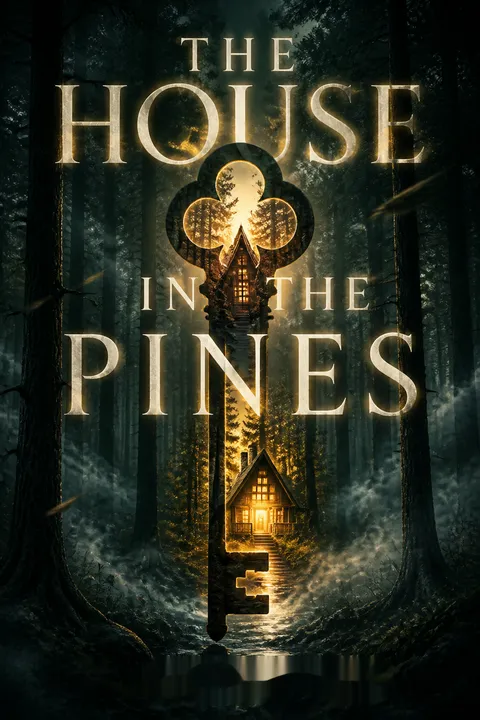
Frank’s imagined cabin
A refuge that deceivesFrank’s cabin begins as a place he invented in childhood to survive fear and loneliness. In adulthood, he describes it so vividly that Maya and Cristina experience it as a real home. The cabin gives the thriller its central setting even though its walls and furnishings exist only in perception. It represents the powerful comfort of an imagined refuge, but also the danger of using someone else’s need for safety to redirect their attention and choices.
The Bellamy key
A cue for altered attentionOren Bellamy’s research describes pairing a distinct object with a hypnotic state so that seeing the object can trigger that state again. Frank uses a sharply cut key as such a cue, then sustains the trance through focused speech and descriptions of his imagined cabin. The key links the early mystery to the later explanation, while its ordinary appearance makes the method easy to overlook until Maya and Aubrey compare their missing hours.
Jairo’s unfinished novel
A map back to identityMaya’s father’s incomplete story follows a boy who forgets his original home after entering the city. Maya initially reads it as a mystery about an unfinished journey, then recognizes that it adapts an ancient hymn about losing and recovering one’s true inheritance. The manuscript helps her understand the cabin as a seductive substitute for home and gives her a way to resist Frank’s version of reality. At the end, she chooses to continue the story herself.
The diner recording
A witness made of soundSecurity footage of Cristina’s collapse brings Frank back into Maya’s life, but it records no explanation for what happened. Later, Maya’s phone captures her confrontation with Frank at the Whistling Pig. The recording preserves his unusual vocal cadence and parts of his account, allowing Detective Diaz to investigate details that Maya alone might not be able to prove. The device turns an unsettling perception into evidence that can be replayed, examined, and compared with records.
FAQ
Synopsis & Basic Details
What is The House in the Pines about?
- Haunted by the past: Maya Edwards is plagued by insomnia and unsettling memories, triggered by a video of a woman dying in a diner, where a man from her past, Frank Bellamy, is present.
- Unraveling a mystery: Maya suspects Frank is connected to her best friend's death years ago and embarks on a quest to uncover the truth, battling her own psychological struggles and a growing sense of danger.
- Exploring manipulation: The story delves into themes of control, manipulation, and the power of suggestion, as Maya confronts a sinister force that has haunted her for years.
Why should I read The House in the Pines?
- Intricate psychological thriller: The novel offers a complex and suspenseful narrative that explores the depths of human manipulation and the power of suggestion.
- Compelling character study: Maya's journey is a gripping exploration of trauma, resilience, and the struggle to reclaim one's autonomy.
- Unpredictable plot twists: The story is filled with unexpected turns and reveals, keeping readers engaged and guessing until the very end.
What is the background of The House in the Pines?
- Psychological manipulation: The story explores the concept of hypnosis and its potential for manipulation, drawing on real-world research and historical context.
- Small-town secrets: The setting of Pittsfield, Massachusetts, a town with a history of industrial decline, adds a layer of unease and mystery to the narrative.
- Personal trauma: The story is rooted in Maya's personal experiences with loss, grief, and the lingering effects of trauma, which shape her perception of reality.
What are the most memorable quotes in The House in the Pines?
- "Deep in these woods, there is a house that's easy to miss.": This opening line sets the tone for the novel, hinting at the hidden and elusive nature of the story's central mystery.
- "I forgot I was a son of kings.": This quote, the title of Maya's father's unfinished book, becomes a recurring motif, symbolizing the loss of identity and the search for one's true self.
- "You're the only one who's ever been here.": This line, spoken by Frank to Maya, highlights his manipulative nature and the way he uses intimacy to control others.
What writing style, narrative choices, and literary techniques does Ana Reyes use?
- Introspective first-person: The story is told from Maya's perspective, allowing readers to delve into her thoughts, fears, and unreliable perceptions.
- Non-linear timeline: The narrative shifts between past and present, creating a sense of disorientation and mirroring Maya's fragmented memories.
- Symbolism and foreshadowing: Reyes uses recurring symbols, such as the key and the cabin, to foreshadow future events and deepen the story's thematic resonance.
Hidden Details & Subtle Connections
What are some minor details that add significant meaning?
- The Mayan weaving: Maya's tapestry, a seemingly decorative item, connects her to her Guatemalan heritage and foreshadows the themes of hidden meanings and cultural secrets.
- The Tender Wallpaper band: The band's name and music, a favorite of Aubrey's, become a recurring motif, symbolizing the lost friendship and the passage of time.
- The specific mention of the children's book, Where the Wild Things Are: Dan's Halloween costume choice is a subtle nod to the themes of wildness, escape, and the hidden depths of the human psyche.
What are some subtle foreshadowing and callbacks?
- The description of the cabin in the prologue: The prologue's description of a house that appears and disappears foreshadows the illusory nature of Frank's cabin and the manipulation of reality.
- The mention of Silver Lake: The lake's history of pollution and its connection to Aunt Lisa's mental illness foreshadows the themes of toxicity and delusion.
- The recurring image of the birdhouse: The birdhouse falling from its branch foreshadows the fragility of life and the sudden, unexpected nature of death.
What are some unexpected character connections?
- The shared experience of loss: Both Maya and Steven have lost someone close to them, creating a bond that allows them to connect over their shared grief and suspicion of Frank.
- The parallel between Maya and Cristina: The two women share physical similarities and a history of substance use, highlighting Frank's pattern of targeting vulnerable individuals.
- The connection between Frank and his father: The revelation that Frank's father was a hypnotherapist and that Frank was his test subject reveals a pattern of manipulation and control that spans generations.
Who are the most significant supporting characters?
- Steven Lang: As a friend of Cristina, Steven provides crucial information about Frank's manipulative behavior and Cristina's state of mind before her death.
- Brenda Edwards: Maya's mother, though initially skeptical, provides emotional support and a grounding force as Maya grapples with her past and present.
- Aunt Carolina: Maya's aunt in Guatemala, who provides a connection to her father's heritage and a sense of belonging, as well as a key piece of information about his book.
Psychological, Emotional, & Relational Analysis
What are some unspoken motivations of the characters?
- Frank's need for control: Frank's manipulation of others stems from a deep-seated need for control, likely rooted in his traumatic childhood experiences with his father.
- Maya's desire for connection: Maya's vulnerability and her longing for connection make her susceptible to Frank's manipulation, as she seeks to fill the void left by Aubrey's death.
- Brenda's fear of mental illness: Brenda's overprotectiveness of Maya stems from her own family history of mental illness and her fear that Maya will follow in her aunt Lisa's footsteps.
What psychological complexities do the characters exhibit?
- Maya's unreliable perception: Maya's struggles with insomnia, withdrawal, and past trauma make her an unreliable narrator, blurring the lines between reality and delusion.
- Frank's narcissistic tendencies: Frank's charm and charisma mask a deep-seated narcissism and a lack of empathy for his victims.
- Steven's survivor's guilt: Steven's guilt over Cristina's death and his inability to protect her reveals his deep emotional investment in their friendship.
What are the major emotional turning points?
- Maya's discovery of the video: The video of Cristina's death forces Maya to confront her past and the possibility that Frank is a killer.
- Maya's realization of Frank's manipulation: The moment Maya understands that Frank has been using hypnosis to control her is a turning point, empowering her to fight back.
- Maya's confession to Dan: Maya's decision to reveal her Klonopin addiction and her fears about Frank marks a shift in her relationship with Dan and her willingness to be vulnerable.
How do relationship dynamics evolve?
- Maya and Dan's relationship: Their relationship is tested by Maya's secrets and her growing obsession with Frank, but ultimately strengthened by their shared vulnerability and commitment to honesty.
- Maya and Aubrey's friendship: The novel explores the complexities of female friendship, highlighting the deep bond between Maya and Aubrey, as well as the ways in which their relationship is tested by external forces.
- Maya and Brenda's mother-daughter bond: The relationship between Maya and her mother is marked by both conflict and love, as they struggle to understand each other's perspectives and fears.
Interpretation & Debate
Which parts of the story remain ambiguous or open-ended?
- The extent of Frank's power: The novel leaves open the question of how much control Frank truly has over his victims and whether his abilities are supernatural or purely psychological.
- The nature of the cabin: The cabin's existence as both a real and imagined space blurs the lines between reality and illusion, leaving its true nature open to interpretation.
- The possibility of redemption: The novel does not offer a clear resolution for Frank, leaving readers to question whether he is capable of change or if he is destined to repeat his patterns of manipulation.
What are some debatable, controversial scenes or moments in The House in the Pines?
- Maya's use of alcohol and drugs: Maya's reliance on substances to cope with her trauma raises questions about the nature of addiction and the effectiveness of self-medication.
- The portrayal of mental illness: The novel's depiction of Maya's "psychosis" and her mother's fear of mental illness can be interpreted as both a realistic portrayal of stigma and a potentially harmful stereotype.
- The ending: The ending, with Maya's escape from Frank's control, can be seen as either a triumph of resilience or a somewhat ambiguous resolution that leaves some questions unanswered.
The House in the Pines Ending Explained: How It Ends & What It Means
- Maya's escape from Frank's control: Maya's ability to break free from Frank's hypnotic influence represents her reclaiming of her autonomy and her refusal to be a victim.
- The power of self-awareness: The ending emphasizes the importance of self-awareness and the ability to recognize and resist manipulation.
- The ambiguity of closure: While Maya escapes Frank's immediate control, the ending leaves open the question of whether she will ever fully escape the psychological scars of her experiences.
Download PDF
Download EPUB
.epub digital book format is ideal for reading ebooks on phones, tablets, and e-readers.








