

Plot Summary
Prologue
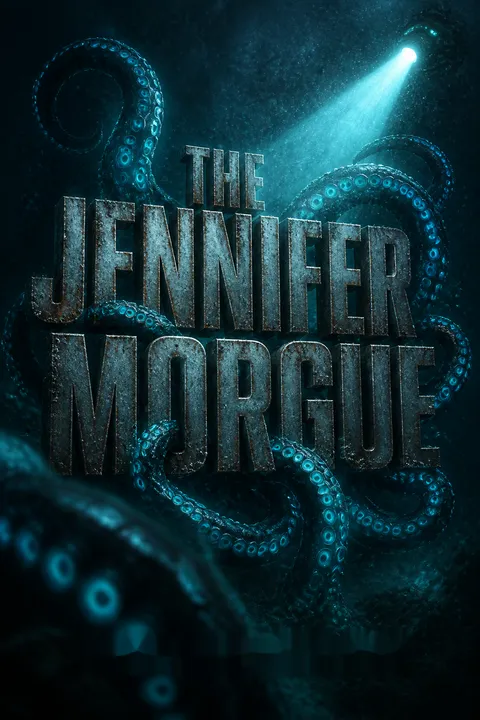
In 1975, the CIA and a team of American engineers raise the Soviet submarine K-129 from the Pacific floor aboard the vast Hughes Glomar Explorer. A British observer warns that the operation violates a treaty with the Deep Ones, who control the abyss.
The crew secures the submarine in a giant mechanical grab, then watches strange tendrils rise from the seabed and pursue it. The ship cannot haul faster without risking a catastrophic break in the drill string. At three thousand feet below the surface, the tendrils catch the stolen wreck. The salvage attempt becomes a warning about what waits beneath human territory.
The prologue makes technological triumph feel provisional. The crew has built a machine capable of lifting a submarine from crushing depths, yet its engineering limits become a countdown the crew cannot control. The British observer understands that the danger is not simply mechanical or geopolitical: the expedition has crossed a boundary enforced by a power older than human states. The episode also plants the novel's central tension between secrecy and consequence. The Americans treat the wreck as property and the treaty as an inconvenience; the Deep Ones answer in a language no bureaucracy can contain. The failed recovery frames later ambition as a repetition of an already disastrous mistake.
Ramona Finds Bob
Bob Howard, a young Laundry field agent who usually handles occult computing and paperwork, drives a tiny rental car across the autobahn toward a routine European liaison meeting. A red Audi nearly forces him off the road. At the hotel, a glamorous stranger named Ramona Random corners him with a gun and reveals that she works for the secretive American Black Chamber.
She knows his job, but he has no briefing about her or their supposed joint assignment. When Bob reports her arrival to his boss, Angleton, the old spymaster sends him to a neighboring room instead of his own. Bob finds his friends Pinky and Brains, a containment circle, and a dangerous operation already underway.
Bob's opening predicament is not a test of courage so much as a test of how little control he has over his own work. He is sent abroad under the cover of bureaucracy, then discovers that the ordinary rules of his job have been replaced without his consent. Ramona's glamour makes attraction itself an instrument of misdirection, while her weapon makes the danger literal. Bob's humor gives him a way to keep panic manageable, but it also exposes how often he uses irony to avoid asking what he truly wants. The novel begins by making espionage feel less like mastery than being drafted into someone else's plan.
Bound by the Ritual
Pinky and Brains bind Bob to Ramona through a forced destiny-entanglement ritual, creating a private telepathic channel and a dangerous bleed between their sensations. Ramona is a Black Chamber operative, but the Laundry has not explained why they must work together or what she can do.
Boris arrives with the actual assignment: reach Saint Martin within a week and get close to billionaire Ellis Billington. A covert salvage project called JENNIFER MORGUE may involve an ancient deep-sea machine, and Billington has bought the old Glomar Explorer to retrieve it. Bob also remembers Mo, his partner, leaving for secret training at Dunwich and hoping they can take a holiday together.
The bond is both a tactical advantage and an ethical violation. The agencies create trust by engineering intimacy, then expect Bob and Ramona to treat the resulting exposure as operational equipment. Their shared sensations make deception harder, but they do not make either person free. The brief mention of Mo's training and planned holiday gives the assignment a human cost: Bob is pulled away from a relationship whose stability he has taken for granted. His job has repeatedly made private life conditional on institutional need, and this ritual turns that pattern inward by making even his thoughts vulnerable to another person's presence.
The Meeting Turns Hungry
Before Bob can leave Darmstadt, he attends the liaison meeting and introduces Ramona as an authorized observer. During a presentation about TLA Systems' procurement software, she warns him that the slides are carrying an occult pattern. Bob shields himself with a ward and tears out the projector cable, but several delegates have already been overtaken by extradimensional entities.
Ramona and Bob subdue the presenter, Sophie Frank, and drag her out. Sophie dies as soon as she crosses the room's protective boundary, and Ramona explains that the others inside are already beyond rescue. The incident reveals that TLA's software demonstrations can consume minds and steer governments toward buying its products.
The attack turns corporate persuasion into a literal technology of capture. A presentation does not merely shape preferences; its images open a channel through which foreign intelligences can occupy human bodies. Bob's quick intervention saves him and Ramona, but not the delegates, leaving him with a new burden of guilt and an uncomfortable question about the limits of rescue. The bureaucracy that surrounded the meeting is no protection against manipulation; its routine, passive attention makes it an ideal delivery system. The scene also establishes a conflict between curiosity and precaution: Ramona wants to identify the mechanism, while Bob must act before he fully understands it.
A Yacht in the Deep
On the flight to the Caribbean, Angleton briefs Bob through a dream, explaining that the original JENNIFER and AZORIAN salvage operations were cover for attempts to enter territory ceded to the Deep Ones by treaty. Billington may be trying to recover a second JENNIFER MORGUE machine, a damaged artifact associated with a far older species that even the Deep Ones fear.
If humans interfere, the Deep Ones can trigger undersea landslides and tsunamis capable of devastating coastal cities. Bob's task is to learn Billington's intentions and prevent a treaty crisis. During the same flight, Mo warns Bob that the entanglement can eventually merge their identities and can only be ended if both partners cooperate. She decides to come after him.
The briefing enlarges the story's scale without making the danger abstract. The treaty is not a diplomatic nicety; it is the fragile condition that keeps humanity's coastal populations from being destroyed by powers it cannot match. Billington's private ambition could therefore convert a corporate operation into a species-level threat. At the same time, Mo's warning makes the entanglement a deadline inside Bob's own identity. Institutional secrecy may be useful against hostile agencies, but here it also deprives an agent of information about a bond that can permanently alter him. The novel's two crises now mirror one another: both involve trespass across boundaries that cannot safely be ignored.
The Caribbean's Gatekeeper
Bob reaches Saint Martin exhausted and meets Jack Griffin, the Laundry's old Caribbean station chief, who resents the London operation and insists that the island is crawling with Black Chamber assets. Griffin explains that Billington's luxury yacht, the Mabuse, is a converted Russian guided-missile frigate, large enough to travel quickly and hold private meetings beyond easy surveillance.
Bob learns that Billington has arrived early and is already visiting his casino. Griffin also reports that a Black Chamber assassin known as Charlie Victor may be on the island. Bob is left with an unreliable local commander, an enormous target that can vanish offshore, and no clear way to approach its owner.
Griffin represents the danger of institutional knowledge that has curdled into territorial possessiveness. He may understand the Caribbean better than Bob, but his distrust makes useful information feel like a weapon in an internal contest. The Mabuse extends Billington's power into geography: a former warship lets him decide when he is visible and when he is outside the reach of ordinary authorities. Bob's assignment depends on access to that mobile fortress, yet his local support regards him as an intruder. This section shifts the problem from discovering a conspiracy to entering a world where every route, introduction, and act of observation may already be monitored.
Billington Sizes Up Bob
Ramona takes Bob to Billington's casino, where she uses her glamour to get them past the doorman and into the gaming rooms. She explains that the brutal doorman, Marc, has been preying on tourists, but gives Bob little time to understand why she knows him. The pair spot Billington with his wife, Eileen, and his legal and security entourage.
Billington recognizes Bob's organization and studies him as though measuring an insect, then delays any serious conversation. After Ramona exchanges polished pleasantries with Eileen, she leads Bob onto a balcony and breaks down in his arms. She quickly regains control and sends him away, warning through her behavior that she has not yet fed.
The casino uses glamour, wealth, and social performance as operational tools. Ramona can make a doorman cooperate and appear to belong among the elite, but those abilities do not erase the strain of living under a predatory role. Her brief collapse interrupts the image of effortless control she presents to Bob. He responds with care, though he cannot tell whether her distress is genuine, strategic, or both. Billington's attention is similarly hard to read: he knows Bob is important but refuses to reveal why. The scene makes uncertainty interpersonal. Bob is not only investigating a billionaire; he is trying to decide whether the person beside him can be trusted with his vulnerability.
A Dream Takes a Life
That night, Bob dreams from Marc's perspective as the doorman lures a woman to his room, intending to drug her and deliver her to traffickers. Marc's heart fails during the encounter, and Ramona feeds on him before he can continue his crimes. Because Bob is entangled with her, the experience becomes a vivid erotic and horrific dream that leaves him ashamed and physically unsettled.
In the morning, Ramona is asleep beside him, though neither can explain how she entered his warded room. She refuses to confirm whether the dream reflected reality and warns him not to mistake a dream for proof. Bob chooses not to press her, but the shared experience has changed their intimacy.
The dream collapses the distance between witness and participant. Bob does not simply learn that Ramona feeds; he feels the event through a connection he never chose, including its pleasure and its violence. His shame is therefore more complicated than jealousy or moral disgust: he cannot separate what he experienced from what he wanted, or what the bond transmitted from what he consented to. Ramona's refusal to confirm the dream protects her privacy but leaves Bob carrying an unresolved moral fact. Their closeness becomes neither a romance nor a straightforward threat. It is a form of involuntary knowledge that forces both of them to negotiate the boundaries of consent.
The Reef Reveals Ramona
Bob checks the marina at Anse Marcel and questions boatmen about Marc. They describe the doorman taking young women out by boat, where they disappear. A watcher attacks Bob on the road, then a corpse controlled by another intelligence climbs into his car and orders him back.
Bob activates the car's occult defenses, which stop the corpse, and Ramona rescues him. To clear possible surveillance, she takes him through a submerged coastal defense emplacement. Its wards reveal that Billington's construction subsidiary has tampered with the island's protective barrier.
Ramona removes her glamour, showing Bob her true, sea-adapted appearance and explaining that her people are intermediaries between humans and the Deep Ones. Divers then force them into a flooded maintenance tunnel.
The investigation links seemingly separate crimes to a breach in the island's defenses. Marc's disappearances, the corpse-controlled attackers, and the compromised coastal wards all suggest that Billington's operation reaches beyond the casino and the yacht. Ramona's revelation is also an act of trust: she lets Bob see what her glamour conceals, risking the rejection she expects from humans. His acceptance does not erase the power imbalance between them, but it changes the terms of their alliance. Their escape depends on physical closeness and shared breathing, turning the entanglement from a remote channel into bodily dependence. What began as surveillance now governs how they survive.
The Casino Becomes a Trap
At Eileen's private sales party, Bob discovers that her cosmetics business uses glamour in its products and may be tied to a broader intelligence network. Lawyer Liza Sloat warns him away, while security consultant Pat McMurray steers him into a baccarat game and pressures him to keep betting.
Bob loses a large part of his expense money and sees the gathering's guests as something more sinister through a hidden resonator. Johanna Todt, one of Billington's operatives, then claims she will take him to the yacht. Ramona arrives, but a patterned carpet suppresses their mental link. Johanna disarms Bob, and Billington's guards capture both agents and transport them aboard the Mabuse.
The casino's games turn Bob's professional weakness into an instrument of control. His discomfort with gambling is not a charming contrast to the spy archetype; it is a vulnerability that McMurray exploits to pull him deeper into Billington's system. The glamour and the resonator make the room's social surface unreliable, while the carpet physically cuts the link Bob and Ramona have come to depend on. Their capture follows from a chain of small concessions, not a single spectacular mistake. The scene demonstrates how an antagonist can make coercion feel like a sequence of choices, each one narrowing the field until resistance becomes difficult to distinguish from compliance.
Billington Writes the Hero
Aboard the Mabuse, Billington reveals that his cosmetics carry a surveillance network and that he has designed a supernatural geas to force events into a James Bond plot. Bob has been pushed into the role of the British hero, while Billington expects to control the climax before the hero can defeat him.
The supposed auction is a cover; Billington wants to revive the chthonian machine and believes it will make him ruler of the world. He offers to free Ramona from the entity bound to her if she pilots the retrieval. Bob and Ramona find a model of the geas in the yacht's lounge, built from Bond memorabilia and a Gravedust device. Billington's ritual has trapped governments and agents inside its script.
Billington's central weapon is not merely occult power but narrative expectation. He has converted a familiar spy story into a causal machine that narrows the actions available to everyone around him. The parody is unsettling because the archetype works through habits already present in intelligence culture: secrecy, hero worship, theatrical villains, and the assumption that violence can resolve political problems. Bob's position as the designated hero is also unstable; the geas is trying to make him perform a part that conflicts with his ordinary character. Billington's offer to Ramona targets her deepest vulnerability, demonstrating that the plot is powered as much by deprivation and coercion as by ritual engineering.
Mo Enters the Operation
Mo arrives on Saint Martin under a weak cover identity and finds Griffin waiting in her hotel suite. His account of Bob's capture mixes truth with falsehood, and her truth-detecting ward exposes the deception.
When Griffin tries to control her, Mo uses her specially prepared violin to incapacitate him and learns that Billington has compromised the local station. Angleton recruits Mo for the next phase, supported by Captain Alan Barnes and special forces, but warns that the geas restricts direct action.
Mo disguises herself as Eileen using makeup and glamour, then prepares to reach the Explorer. She has trained for deep-cover insertion, and her arrival makes clear that Bob's rescue depends on someone the villain's script has not accounted for.
Mo's entrance reframes her absence from Bob's life. The training that seemed like an unexplained separation has prepared her for a role with real operational authority, though it has not made her immune to fear or anger. Her confrontation with Griffin shows that she can act decisively without surrendering judgment to the people in command. She does not trust Angleton merely because he is her superior, and she insists on interpreting the rules herself. The disguised approach to the Explorer is a form of tactical authorship: Mo uses the same systems of appearance that have constrained Ramona, but directs them toward intervention rather than concealment. Her competence unsettles Bob's assumptions about who needs saving.
Ramona Reaches the Wreck
Billington connects Bob to a chair that amplifies his entanglement with Ramona, then sends her down to the damaged machine in a new retrieval grab. Ramona operates the hydraulic controls while Bob experiences her descent and the fear of a woman sacrificed to power the protective wards. She reaches JENNIFER MORGUE Two and secures it for the lift.
Billington's associate McMurray appears to help Bob, but he restores the block between the entangled agents and keeps Bob from communicating with Ramona. The descent and retrieval take far longer than promised. As the machine rises, Bob recognizes that Billington has no intention of honoring his bargain and that the shared link is the only way to track Ramona's peril.
The retrieval turns human lives into components of an engineering system. The sacrifice does not simply energize a ward; it reveals the moral logic of Billington's project, where workers and captives are consumable inputs to a grand design. Bob's sensory connection makes him witness the procedure without giving him control over it, an especially cruel form of forced participation. McMurray's interference removes even that imperfect connection at the moment it matters most. Ramona's skill keeps the operation functioning, but her success increases the danger because Billington now has the artifact and can discard the people who enabled him. Technical achievement becomes indistinguishable from complicity.
The Mabuse Starts Sinking
Billington orders the Mabuse scuttled after Bob sabotages its surveillance network. Ramona warns him through their restored link that she has been abandoned underwater and is beginning an irreversible physical change. Bob fights through corpse-controlled guards, then confronts Johanna, who holds the tokens that can control Ramona.
She attacks him with a death-feeding entity, but Bob shoots her before she can take him over. He steals the Bond geas model and reaches the deck as the yacht's charges explode. His modified Smart car arrives on the water, but its engine fails as the Mabuse breaks apart. Bob fires its ejector, sending himself and the car by parachute toward the Explorer, where Mo's team is preparing to intervene.
The escape depends on Bob abandoning the passive role Billington assigned him. He cannot outfight the guards through conventional skill, so he uses whatever remains available: the mental link, technical improvisation, and a decision to act before certainty arrives. Johanna's offer exposes how the Black Chamber's coercive structures can be replicated by a private power hungry for control. Bob's theft of the geas model matters because he is carrying the mechanism that has shaped his behavior, not merely fleeing its consequences. The Smart car's absurd arrival makes institutional support look both ludicrous and useful. His leap toward the Explorer is a choice to re-enter danger rather than wait to be rescued.
Mo Breaks the Script
Mo reaches the Explorer disguised as Eileen and plays a song of unbinding that breaks Billington's geas and releases Bob from his restraints. She also gets seawater to Ramona, who is close to being consumed by her bound entity.
Bob realizes that Billington's white cat, Fluffy, is hosting the chthonian intelligence; when the cat reacts to a laser pointer, Bob shoots it, prompting the awakened creature to attack. Its tentacle crushes Billington as he kneels before it.
Mo and Bob escape the control room with Ramona and the arriving special forces, while the revived machine thrashes against the Explorer. The climax defeats Billington but does not make the ancient weapon harmless. The agencies must contain the consequences of a danger they have helped unleash.
Mo's song breaks the story's imposed machinery through a medium that is at once mathematical, musical, and embodied. The geas has constrained action by making one plot seem inevitable; unbinding restores contingency, but it cannot reverse the damage already done. Bob's recognition of the cat as a host is an act of interpretive attention rather than brute force, and it triggers the very catastrophe he hopes to prevent. The tentacle's attack is not a neat victory over evil: Billington's death is followed by a larger threat. The novel refuses the clean ending promised by the Bond archetype. Survival requires teamwork, and the world remains damaged by the attempt to control it.
Epilogue
Back in England, Bob and Mo meet at the Laundry's isolated Village and confront the damage the operation did to their relationship. Ramona is undergoing a transformation that will keep her in the sea, but Bob and Mo agree she was as much a victim of the agencies as he was.
Before they can settle matters, Eileen attacks them at the pub in disguise. Bob and Mo use a concealment spell and a burning paper dart to stop her. On the beach afterward, Bob proposes marriage as an ending no Bond story would allow. Mo accepts, and they choose a future written by themselves rather than by the geas.
The epilogue measures victory less by the survival of institutions than by the possibility of repairing trust. Bob and Mo do not pretend the operation was harmless, and Angleton's acknowledgment that the Laundry used them does not undo the violation. Instead, they decide what to do with the knowledge and intimacy forced upon them. Ramona's transformation leaves their bond unresolved in one sense, but Bob can recognize her coercion without confusing it with betrayal. Eileen's last attack shows that the conspiracy's consequences have followed them home, so the final rescue cannot be mere retirement from danger. Bob's proposal counters the borrowed script at its most basic level: he asks, and Mo chooses.
Analysis
The novel's deepest joke is also its most serious claim: stories can become operating systems. Billington does not merely imitate a spy thriller. He builds a geas that recruits familiar plot expectations as causal force, turning heroism, villainy, rescue, and romantic closure into constraints on real people. The danger lies in the appeal of those roles. Bob wants to believe he is an ordinary civil servant, but his training and assignments have already made him part of a system that sends people into danger while calling them assets. The Bond archetype intensifies that habit by making violence seem inevitable and glamour seem like competence.
Against this imposed script, the book places several forms of compromised intimacy. Bob and Ramona are psychically joined without consent, and their closeness alternates between practical survival and frightening intrusion. Ramona's predicament exposes the Black Chamber's use of nonhuman agents as tools without rights. Bob and Mo, meanwhile, have treated silence as protection, although it leaves each of them alone with the other's danger. Their eventual reconciliation requires them to speak about fear, jealousy, and institutional manipulation rather than merely survive another operation.
The novel's bureaucratic comedy sharpens this critique. Wards, weapons, and world-ending artifacts arrive alongside travel claims, procurement procedures, and obsolete equipment. This is not simply a contrast between the mundane and the supernatural. It shows how institutions normalize catastrophe by translating it into procedures and budget lines. Billington's corporate language performs the same reduction on a grander scale, rendering people interchangeable and sacrifice an operational expense.
The ending refuses the tidy restoration promised by the genre it dismantles. Billington dies, but the ancient machine awakens; the protagonists escape, but Ramona's transformation separates her from life on land. Bob and Mo's proposal matters because it is a freely chosen future, not a reward automatically attached to a mission. Their small act of authorship cannot repair every consequence, but it rejects the idea that power, romance, or destiny must follow someone else's script.
Review Summary
The Jennifer Morgue combines James Bond spy thriller elements with Lovecraftian horror in this second Laundry Files novel. Reviews praised Stross's blend of bureaucratic humor, tech references, and supernatural action, with protagonist Bob Howard navigating a Bond-parody plot involving a billionaire villain and destiny entanglement with a succubus agent. Readers appreciated the self-aware Bond spoofing and creative mythology, though some found the technobabble excessive and characterization weak. The book's appeal targets niche audiences familiar with Bond films, Lovecraft, and computer science. Most reviewers rated it 3-4 stars, calling it entertaining but divisive depending on Bond appreciation.
People Also Read


Characters
Bob Howard
The reluctant occult hackerBob is a Laundry field agent whose practical expertise lies in computational demonology, wards, and improvised technical solutions. He is quick with jokes, easily embarrassed, and more comfortable debugging a system than meeting danger face-to-face. His irony often protects him from fear, but it can also delay difficult emotional questions. Bob cares deeply about Mo, even when he assumes that keeping her uninformed is a form of protection. His work repeatedly forces him to act before he feels ready, and his strongest resource is not the swagger of a conventional spy but a stubborn habit of noticing how systems fail.
Ramona Random
The weaponized Black Chamber agentRamona is an American intelligence operative whose glamour, self-possession, and lethal competence make her difficult to read. She protects herself with sarcasm and carefully managed distance, but her confidence masks the vulnerability of someone whose employers control her choices. Her partnership with Bob exposes how dangerous it is to confuse intimacy with consent when their minds and sensations are linked by force. Ramona understands the emotional and physical costs of her condition more clearly than Bob does, yet she still has to decide what risks she is willing to accept. Her guardedness is not simply deception; it is one of the few forms of agency she can claim.
Mo O'Brien
The sorcerer with a violinMo, whose full name is Dominique O'Brien, is Bob's partner and a philosopher whose work has brought her into the Laundry's occult operations. She is older than Bob, sharply observant, and more willing than he is to confront emotional conflict directly. Her violin is both a musical instrument and a highly specialized magical tool, reflecting the way her intellectual training and practical power meet. Mo values loyalty but does not equate loyalty with obedience to the organization. When Bob disappears into an operation, her fear is sharpened by the knowledge that institutions can use people while calling the use necessary.
Ellis Billington
The billionaire with a planBillington is an immensely wealthy technology entrepreneur with government contracts, global business interests, and the confidence of a man accustomed to making other people adapt to his ambitions. He presents himself as rational and managerial, treating people as employees, assets, and problems to be solved. His polished manner does not conceal his appetite for control so much as make it appear respectable. He values scale, leverage, and systems that convert uncertainty into predictable outcomes. The contrast between his corporate language and his occult interests makes him unsettling: he brings the logic of executive management into realms where a bad decision can endanger far more than a company.
James Angleton
The Laundry's spectral spymasterAngleton is Bob's senior controller, a frighteningly perceptive figure who has survived decades of secret operations. He gives instructions with little explanation and treats personnel as scarce resources whose abilities must be deployed where needed. His pragmatism can protect the organization, but it also makes him capable of imposing severe costs on individuals. He understands more of the larger crisis than Bob does and is willing to manipulate events to preserve national security. His authority rests not on warmth but on an unnerving ability to anticipate what others will do.
Eileen Billington
The cosmetics magnateEileen is Ellis Billington's wife and the driving force behind his cosmetics business. She combines commercial instinct with occult expertise, turning beauty products into instruments of influence and observation. Her company presents glamour as a consumer benefit, while her methods rely on hidden costs and carefully managed supply chains. Eileen's public role as a polished executive allows her to move easily through elite business circles. She is more than an accessory to her husband's wealth: she runs an extensive operation of her own and expects her staff to meet its demands.
Pat McMurray
The handler for hireMcMurray is a seasoned American operative who specializes in managing supernatural entities and understands how to make other people useful. He is controlled, observant, and comfortable using pressure when it serves his objectives. His connection to Ramona's past gives him unusual authority over her, while his professional competence makes him valuable to whichever side can command his skills. McMurray sees intelligence work as a business of leverage, not sentiment, and his calm manner can make a threat sound like ordinary administration.
Jack Griffin
The compromised station chiefGriffin runs the Laundry's Caribbean station and carries himself like an old-school colonial intelligence officer. He is suspicious of London management and convinced that local experience should command respect. His knowledge of the region is genuine, but his methods and judgment are clouded by age, habit, and private interests. Mo quickly recognizes that his version of events cannot be trusted at face value. Griffin embodies the problem of a veteran whose accumulated knowledge remains useful even as his loyalties become uncertain.
Johanna Todt
Billington's glamourous enforcerJohanna is a poised operative in Billington's organization, using a glamour to move through elite spaces while concealing a predatory supernatural nature. She is direct where other characters prefer misdirection, and she treats captivity and desire as tools of control. Her connection to McMurray gives her access to the mechanisms that bind other people. Johanna's confidence rests on her belief that everyone has a price or a weakness, a belief that makes her dangerous even when she is not the strongest person in the room.
Boris
The blunt field supervisorBoris is a Laundry operative with a damaged speaking voice and responsibility for preparing Bob's mission. He is direct, disciplined, and more concerned with completing the assignment than soothing the people sent into it. His matter-of-fact delivery makes impossible procedures sound like ordinary work instructions. Though he acknowledges that Bob has not volunteered for the danger, Boris still helps carry out the organization's plan.
Pinky
The exuberant gadget manPinky is one of Bob's former housemates and a technical support specialist. He delights in elaborate devices and treats field preparation as a chance to build increasingly absurd solutions. His exuberance provides welcome levity, though his inventions can make Bob's already dangerous assignments feel even less predictable. Beneath the jokes, Pinky is a capable technician who takes the team's safety seriously.
Brains
The practical occult technicianBrains is Bob's other technical support specialist, methodical where Pinky is exuberant. He builds wards, adapts electronic equipment, and approaches occult hazards as problems requiring both engineering and ritual safeguards. His competence gives Bob useful tools, although he is not always able to explain what a device will do before it is deployed. Brains treats preparation as a craft, not a guarantee.
Alan Barnes
The special forces liaisonCaptain Alan Barnes coordinates military support for the Laundry's most dangerous operations. He is a small, energetic officer whose cheerful manner sits beside serious experience in occult combat. Barnes understands how to balance covert action against the need for overwhelming force, and he prepares contingencies for threats that ordinary military planning cannot address. He respects Mo's specific expertise and is willing to let her lead when the mission demands it.
Sophie Frank
The compromised German delegateSophie Frank is a representative of Germany's occult security agency who presents a software procurement plan at the Darmstadt liaison meeting. Her formal, procedural manner initially makes her presentation seem like routine bureaucracy. Bob and Ramona's investigation reveals that something has altered the purpose of her work.
Franz
Bob's Dutch colleagueFranz is a capable Dutch intelligence officer whom Bob meets at the Darmstadt conference. He is cultured, socially confident, and perceptive about the inefficiency of formal interagency meetings. His presence gives Bob a glimpse of a colleague who seems more at ease in the international intelligence world.
Plot Devices
Destiny-entanglement
A forced psychic lifelineThe Laundry binds Bob to Ramona through an occult ritual that creates telepathy, shared sensations, and eventual pressure toward merged identity. The connection lets them communicate privately, but also exposes them to each other's dreams, appetites, fear, and physical distress. It is imposed rather than chosen, so its usefulness never cancels its violation. Billington's operation exploits the pair's connection, while Bob and Ramona rely on it to coordinate when conventional communication is blocked. The bond raises the story's central question about intimacy: knowing another person from inside their experience does not automatically mean understanding or respecting them.
The Hero geas
A story turned into machineryBillington builds an occult probability field around the Mabuse and its operation, shaping events to follow the conventions of a James Bond story. It pressures agents and governments toward familiar roles, makes some actions easier than others, and isolates a designated hero from outside intervention. The auction, the villain's capture of the hero, and the eventual rescue are pieces of a deliberately constructed script. The device draws strength from the cultural familiarity of the archetype, making genre expectation a practical hazard rather than a mere joke. Mo's intervention breaks the pattern and restores the possibility of unscripted action.
Gravedust and JENNIFER MORGUE
A channel to ancient mindsThe Gravedust apparatus is an occult communication system that can reach the dead far beyond the limits its designers expected. Its history links the 1975 recovery attempt of the K-129 to Billington's modern salvage mission. JENNIFER MORGUE Two is a damaged, ancient machine on the ocean floor, surrounded by a field that disables ordinary electronics and resists intrusion. Billington intends to retrieve and revive it, using sacrifices and a temporary host body to supply what it needs. The device connects intelligence work, archaeology, and weapons research, showing how an attempt to learn from the past can awaken something that does not share human priorities.
Pale Grace cosmetics
Beauty sold as surveillanceEileen's cosmetics use glamour to alter appearance, while specially engineered products also connect wearers to Billington's intelligence network. The products allow him to monitor what customers see and hear, turning ordinary vanity and brand loyalty into a vast surveillance system. Their commercial success gives the occult mechanism cover, revenue, and access to people who would never knowingly consent to being watched. The cosmetics also supply ingredients and power for other magical operations. Their function is both technological and psychological: the desire to look younger or more beautiful becomes an invitation to surrender privacy.
The Tillinghast resonator
A lens for hidden threatsThe resonator lets Bob perceive supernatural presences and concealed conditions that ordinary sight cannot register. Hidden in one of his shoes, it reveals the dead, occult manifestations, and the predatory nature of people masked by glamour. It does not make Bob invulnerable or tell him how to act; instead, it gives him evidence he must interpret under pressure. The device becomes an extension of his hacker's instinct, letting him inspect a hostile environment as though it were a system with hidden processes. Its usefulness depends on judgment, because seeing a threat does not guarantee that responding to it is safe.
Laundry Files Series

About the Author
Other books by Charles Stross

Download PDF
Download EPUB
.epub digital book format is ideal for reading ebooks on phones, tablets, and e-readers.








