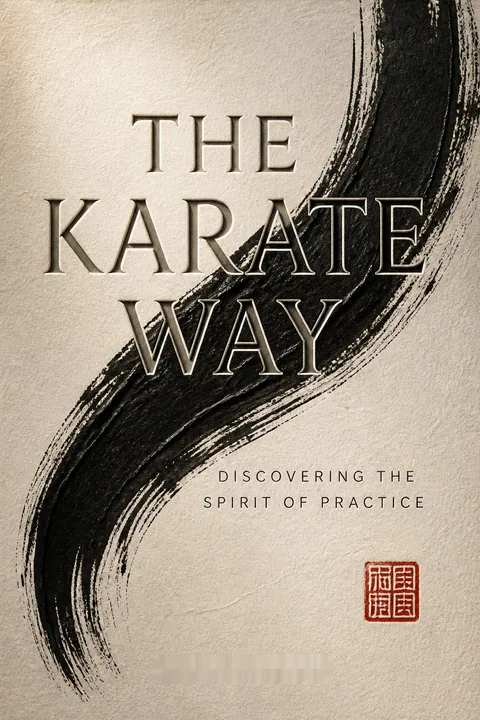


Key Takeaways
Practice karate for the person it makes, not the belt it awards.
A mountain range, not a ladder. Lowry compares karate to a range of peaks. Some practitioners are content at the elevation they have reached: they value exercise, friendship, and competition. Others sense there is more to understand and keep exploring. Neither choice makes one person morally superior. The difference is what each practitioner wants from the art. Karate can be sport or self-defense, but its deeper purpose is also the gradual shaping of character through practice.
No final summit. The path is not a tidy sequence ending with mastery. A teacher may even tell a skilled student that a basic movement is wrong, forcing them to reconsider years of confidence. That unsettling moment can become a chance to learn again, if the student stays curious rather than defending their status.
The mountain image makes room for different levels of ambition without pretending that every student wants the same destination. That is a useful correction to cultures that turn commitment into a status contest. Still, the language of being more or less serious can itself become a gatekeeping tool if teachers use it to shame students. A healthier test is whether practice serves the practitioner’s chosen aims, and whether those aims can change without being treated as a betrayal.
Read karate's traditions as layered history, not a uniform and bow.
Tradition has layers. Okinawan karate did not begin as the familiar package of white uniforms, belt ranks, and indoor dojo. Lowry describes an older art that combined indigenous grappling with striking influenced by Chinese fighting systems. Open-handed movements in some kata may preserve traces of grabs, locks, or throws. Training often took place outdoors, and practitioners wore ordinary clothing or light garments suited to Okinawa’s heat.
Japan reshaped the art. When karate reached mainland Japan in the early twentieth century, Okinawan teachers adopted Japanese teaching structures and martial customs to help it gain acceptance. The rank system and the ideal of defeating an opponent with one decisive strike are examples of influences that were not simply ancient Okinawan inheritance. Calling a practice traditional without asking which tradition it reflects can conceal that history.
This historical layering is a strong antidote to the idea that cultural authenticity can be recognized by costume. It also shows how traditions survive through adaptation, not through perfect preservation. The account is a corrective rather than a complete history, however. Claims about origins and influence remain difficult to settle when early records are limited. Practitioners can value inherited forms while staying honest about what is documented, what is inferred, and what was added to make the art fit a new setting.
Change training gears with age instead of choosing all-or-nothing.
Overdrive is not a lifetime plan. Lowry recalls railroad workers who had been standout high-school athletes. As adults, strenuous jobs did not keep them fit because they had dropped nearly all exercise outside work. Their pattern was extreme training when young, then almost none. He sees a similar trap in karate: practitioners may believe that if they cannot train as often or intensely as before, they might as well stop.
Make practice sustainable. Japanese university clubs helped popularize very demanding schedules, and some foreign students carried that intensity into their own dojo. Lowry argues that this history should not become a universal requirement. Careers, families, and age change available time and recovery. Training less intensely can preserve the art’s place in life. Choosing a practice that can be continued safely matters more than imitating a young competitor’s schedule.
The shift from all-or-nothing effort to sustainable practice resembles periodization in athletic training, where workload changes to match capacity and recovery. The insight also applies to long-term learning: continuity protects accumulated skill, even when the dose must shrink. There is a useful caution here. A sustainable pace should not become a convenient excuse for avoiding all challenge. The relevant question is not whether training feels easy, but whether its demands remain purposeful and recoverable within the practitioner’s actual life.
Choose a teacher whose conduct makes their instruction trustworthy.
Technique is not the whole lesson. Lowry asks whether a student should learn from a technically excellent teacher whose conduct is seriously harmful. The answer depends partly on the severity and pattern of the behavior, but the choice is not ethically neutral. Students, especially young ones, may absorb a teacher’s example along with their movements. A dojo is also a community, and a student’s association with its leader affects how others understand the student’s own standards.
A good teacher releases control. Lowry’s teachers did not need to remain superior in every respect. A healthy instructor expects students to develop their own judgment and may even surpass the teacher. By contrast, a leader who demands permanent deference can make rank and loyalty serve the leader’s ego rather than the student’s growth.
This account treats teaching as a relationship of influence, not a simple exchange of technical services. That aligns with what is known about mentorship: authority shapes norms as well as skills. It also argues against the fantasy of an infallible master. At the same time, standards should distinguish serious abuse from ordinary human imperfection. Without that distinction, students may either excuse dangerous conduct or demand impossible purity. Clear boundaries and accountability matter more than charisma or reputation.
Master the model before asking where your own movement begins.
Learn the form first. In traditional Japanese arts, beginners are often expected to copy carefully before offering their own interpretations. Lowry compares this to calligraphy, where a copybook gives the student a model but a living teacher shows how the brush must move. In karate, a book or video can show a shape, but cannot fully convey timing, pressure, balance, or the feel of a movement.
Then investigate. After months of exact instruction, Lowry asked why his supporting foot turned differently in a roundhouse kick on each side. His teacher did not prescribe one answer. He was expected to test the difference himself. The point is not permanent obedience. Form provides a foundation from which the student can investigate, adapt, and eventually recognize when a model does not suit their body.
The sequence matters: imitation gives learners a shared baseline, while later experimentation makes knowledge usable rather than merely copied. This resembles apprenticeship in crafts, where tacit knowledge is transmitted through demonstration before independent judgment develops. Yet copying can also preserve a teacher’s limitations, including movements shaped by a different body or injury history. The best model is not treated as unquestionable. It is a starting reference that students learn to test against their own capacity and the task at hand.
Strike something that yields, then build power without wrecking yourself.
Air does not push back. Karate is a striking art, so practicing only against empty space leaves an important gap. Lowry recommends tools that offer resistance, such as a heavy bag or the makiwara, a padded post used for striking practice. Beginners often discover that their wrists collapse when they meet resistance, a problem that can remain invisible during punches in the air. A moving bag also lets practitioners work on adjusting to a target that shifts.
Train gradually. Resistance is useful only if the body can adapt to it. Lowry warns against repeatedly hitting stones or rigid surfaces, since impact can injure the hand rather than strengthen it. A makiwara should give slightly under pressure, and training volume should increase with care. The aim is not impressive calluses or exhaustion, but reliable contact and sound mechanics.
Resistance training improves feedback: it reveals whether force travels through a stable wrist and aligned body, rather than merely looking convincing. The same principle appears in skill learning whenever practice must transfer beyond a simulated environment. The caution is equally important. More impact is not automatically better, and pain or visible toughness does not prove technical progress. Equipment, instruction, and load all affect injury risk. The useful standard is controlled adaptation, not how much punishment a practitioner can tolerate.
Win space and timing before trying to win with force.
Read the whole encounter. Lowry distinguishes three connected ideas: hyoshi is the timing of a particular exchange, choshi is the broader pace of the encounter, and ma no tori-kata is the effective use of the space between opponents. A fighter who controls those conditions can shape what the other person is able to do. Lowry’s account of Okinawan master Kyan Chotoku illustrates the point: a smaller man facing a charging bully moved off the line and used the attacker’s momentum rather than meeting it head-on.
Evade without disappearing. Mikiri means evading an attack through body movement rather than relying only on a block. The practitioner learns an opponent’s reach and moves just far enough to avoid the strike while staying close enough to counter. It takes timing and repeated practice, but it changes defense from retreating indefinitely into a way to regain initiative.
These ideas widen the meaning of combat skill beyond speed or striking power. They emphasize perception, spacing, and control of tempo, capacities that also matter in sports, negotiation, and other interactions where one person’s timing shapes another’s options. The Kyan story is memorable, though an anecdote cannot establish how consistently a technique works under pressure. The practical lesson is not to romanticize evasion, but to practice it with resisting partners and recognize how much uncertainty real confrontations contain.
Use kata to rehearse adaptation, not to decode a single hidden script.
Patterns train possibilities. Kata are set sequences of movements, but Lowry rejects the idea that each one records a single secret fight. Bunkai means analysis of a kata’s techniques. Such analysis can reveal plausible uses for a movement, but the deeper value of kata is that repeated patterns help practitioners internalize movement skills they can adapt to changing situations.
Vary the conditions. Lowry suggests practicing kata in street clothes, on uneven ground, or in a limited space, where familiar movements may need to change. Partners can also supply attacks with different timing or targets. A practitioner who only performs a memorized response may miss when the situation changes. These exercises make the pattern less like a recital and more like a resource for responding to varied circumstances.
This view connects kata to the idea of a motor vocabulary: repeated forms can build a repertoire that supports flexible action, rather than prescribing a single answer. The distinction between learning a pattern and adapting it is crucial. Still, staged exercises can create an illusion of readiness if partners remain predictable or compliant. Variation helps, but it cannot erase the difference between training and real danger. A sound practice treats kata as preparation, not proof that every possible encounter has been rehearsed.
Treat belts and tournaments as imperfect tools, not proof of mastery.
A black belt marks a beginning. The dan-i is the modern ranking system used in karate and other Japanese martial arts. Lowry reports that several organizations typically required about four years of regular training for a first black belt, or shodan. The rank can recognize commitment, but it does not make someone a master. Standards vary between organizations, and the belt cannot measure every dimension of improvement.
Competition has limits. A tournament can test focus, nerves, and spontaneous choices, but its rules and prepared setting differ from a sudden real confrontation. Lowry points out that competitors can warm up and study the contest environment, opportunities an assaulted person may not have. Tournaments can contribute to training, but neither winning nor wearing a black belt is a complete measure of skill, judgment, or readiness.
Ranks and competitions make progress visible, which can motivate practice and help organize instruction. Their weakness is a problem of measurement: a clear score can be mistaken for a complete account of ability. The same danger appears in schools and workplaces when a proxy becomes a target. These measures are most useful when paired with other forms of assessment, such as technical feedback, judgment, and sustained practice. Rejecting them entirely would discard useful structure; treating them as definitive would confuse the map with the terrain.
Practice form until skill becomes free, then keep beginning again.
Emptiness means possibility. The Japanese character for karate was changed from one meaning China to one meaning empty. Lowry connects that choice to sunyata, a Buddhist concept of emptiness that suggests open potential, not mere absence. In practice, a beginner has little form; training supplies patterns, and repeated study can make skilled action less dependent on conscious calculation. The practitioner does not discard form so much as become able to move beyond rigid dependence on it.
Freedom is not a finish line. The Kusanku kata begins with a distinctive gesture: the hands rise, separate, and return toward the body before the fighting movements begin. Lowry reads this as an image of form arising from emptiness and returning to it. Even advanced practitioners may still find unnecessary preparation in their movement. The task is to refine, notice, and begin again, rather than declare the art complete.
The idea gives the book’s technical and philosophical concerns a shared shape: disciplined repetition can create the freedom to respond without mechanically reciting a rule. Similar patterns appear in music and craft, where fluency depends on practice but cannot be reduced to memorization. The metaphor should not imply that expertise becomes effortless or mystical. Skilled action still relies on physical capacity, attention, and judgment. Its value is as a direction for practice, not a claim that a final state of perfect spontaneity can be permanently secured.
Analysis
The Karate Way is a collection of linked essays rather than a linear training manual. Its organizing question is not simply how to perform karate, but what kind of practice makes karate a Way. Lowry moves between history, technique, etiquette, teaching, and personal reflection, using specific episodes to challenge assumptions that often pass unnoticed: that old customs are necessarily Okinawan, that extreme training is the authentic standard, or that a black belt signals mastery.
The book’s strongest contribution is its insistence that practical and ethical dimensions belong together. Karate without fighting skill risks becoming an abstract performance of virtue; fighting skill without judgment risks becoming organized violence. The same balance appears in its teaching philosophy. Students need enough submission to learn a form, but not so much that they surrender independent judgment or remain dependent on a teacher’s authority. This makes practice less like collecting techniques and more like developing a capacity for discernment.
Lowry also repeatedly distinguishes a training proxy from the thing it represents. Belts can acknowledge progress without measuring it fully. Competition can test composure without recreating an assault. Kata can preserve patterns without encoding one definitive application. These distinctions are useful well beyond martial arts because human institutions rely on visible measures that are easier to reward than the underlying capability.
The essays are persuasive as practitioner reflection, but they are not a systematic history or an empirical evaluation of combat effectiveness. Some historical interpretations are presented through anecdotes and plausible inference, and some technical claims depend on the reader’s access to competent instruction. That limitation does not diminish the book’s central value. It asks readers to become more precise about what they mean by tradition, progress, and mastery, while treating humility as an active practice: the willingness to revise one’s understanding without pretending that uncertainty has disappeared.
Review Summary
The Karate Way receives mixed reviews, with an overall rating of 4.17 out of 5. Readers appreciate Lowry's insights into karate history, philosophy, and technique. The book is praised for its readability and thought-provoking content, especially for martial artists. However, some find it geared towards traditional approaches and potentially grating in tone. Critics note the lack of cohesive structure and occasional assertions presented as truisms. Despite these concerns, many readers find value in the book's exploration of karate concepts and practices.
People Also Read






Glossary
budo
Japanese martial WaysA term for Japanese martial disciplines understood as more than technical training. The word can include an ethical, personal, or cultural dimension alongside combat methods. Karate-do, judo, and aikido are examples of modern budo. Lowry cautions that the boundary between budo and older martial arts is not always as clear as simplified definitions suggest.
kata
Set movement patternsA formal sequence of movements practiced in a martial art. In karate, kata preserve and train combinations of techniques, balance, and movement. Lowry argues that they should not be treated as fixed stories of particular fights. Repeated practice can build a movement vocabulary that practitioners learn to adapt to different conditions.
makiwara
Flexible striking postA post fixed to the floor or ground and topped with a padded striking surface. Karate practitioners use it to practice punches and other strikes against resistance. A well-made makiwara gives slightly when struck. Lowry warns against rigid surfaces and excessive impact, which can injure the practitioner rather than improve technique.
choshi
Overall encounter paceThe broader rhythm or pace of an encounter, including its changes in speed and intensity. It differs from the timing of a single exchange because it concerns the shape of the whole confrontation. A practitioner who can influence this pace may affect when an opponent acts and how effectively they can respond.
hyoshi
Timing of an exchangeThe timing or beat within a particular exchange. It concerns when an attack, evasion, or counter occurs in relation to an opponent’s movement. Lowry distinguishes it from choshi, which describes the broader pace of an encounter. Skillful timing can make a movement effective even when it is not especially fast.
ma no tori-kata
Effective use of distanceThe skill of managing the space between oneself and an opponent. The useful distance changes with the situation, the opponents’ movements, and any weapons involved. A practitioner who can operate effectively at different ranges has more options than one who depends on a single comfortable distance.
mikiri
Evading through body movementA method of avoiding an attack by moving the body off its path rather than relying only on a block. It requires a sense of an opponent’s reach and careful control of distance. The aim is to evade by just enough to stay in position for a counter, rather than retreat so far that response becomes difficult.
bunkai
Analysis of kata techniquesThe analysis of techniques contained in a kata. Bunkai explores how movements in a formal sequence might function in application. Lowry values such study but cautions against claims that a teacher has discovered the one definitive secret meaning of every movement. Kata can support multiple interpretations and adaptable skills.
dan-i
Modern rank systemA grading system used in karate and other Japanese arts, with kyu grades for less experienced students and dan grades for more advanced ones. In karate, dan grades are commonly indicated by black belts. The system offers visible milestones, but different organizations use different standards, and rank cannot capture every aspect of skill.
shiai
Martial arts contestA formal contest in a martial art, conducted according to rules and within a defined setting. Shiai can test composure and decision-making under pressure, but its conditions differ from a sudden violent encounter. Lowry argues that competition can support training when its limits are understood.
sunyata
Emptiness as potentialA Buddhist concept of emptiness that Lowry presents as open possibility rather than simple absence. In his account, forms arise from this emptiness and return to it. He uses the idea to describe how disciplined training can lead from unformed movement, through technique, toward action that is less constrained by conscious rules.
tai-sabaki
Body movementThe movement of the body to avoid or manage an opponent’s attack. It can involve shifting in different directions rather than confronting force directly. Lowry uses the movement of Okinawan karate master Kyan Chotoku to illustrate how changing position can let a smaller practitioner evade an attack and respond.
FAQ
1. What is "The Karate Way: Discovering the Spirit of Practice" by Dave Lowry about?
- Comprehensive Guide to Karate: The book explores karate as a lifelong journey focused on the perfection of character, not just a sport or hobby.
- Practice, Philosophy, and Culture: Lowry delves into the technical, philosophical, and cultural aspects of karate, including its history, etiquette, and spiritual dimensions.
- For All Levels: The content is relevant for karate practitioners of all ages and experience, from beginners to advanced students.
- Personal Insights: Drawing on over forty years of experience, Lowry shares personal anecdotes, lessons from teachers, and reflections on the deeper meaning of karate-do.
2. Why should I read "The Karate Way" by Dave Lowry?
- Deepens Understanding: The book goes beyond physical techniques, offering insights into the mindset, values, and traditions that define authentic karate practice.
- Addresses Common Questions: Lowry tackles issues like the meaning of rank, the role of tradition, and whether one needs to train in Japan, which are often debated in martial arts circles.
- Practical and Philosophical: Readers gain both practical advice for training and philosophical perspectives that can be applied to life beyond the dojo.
- Accessible and Engaging: Written in an approachable style, the book is suitable for both newcomers and seasoned martial artists seeking to enrich their practice.
3. What are the key takeaways from "The Karate Way: Discovering the Spirit of Practice"?
- Karate as a Way of Life: Karate-do is a lifelong pursuit aimed at self-improvement, not just physical prowess or competition.
- Importance of Attitude and Consistency: Success in karate depends on consistent practice, the right mindset, and a willingness to learn from mistakes.
- Tradition vs. Modernity: Understanding the roots of karate, including its Okinawan origins and Japanese influences, is crucial for meaningful practice.
- Spiritual and Character Development: The ultimate goal of karate is the cultivation of character, humility, and spiritual growth, not just technical mastery.
4. How does Dave Lowry define "traditional karate" in "The Karate Way"?
- Okinawan Roots: Traditional karate began on Okinawa, blending indigenous grappling arts with Chinese striking techniques.
- Misconceptions About Tradition: Many so-called "traditional" practices, like white uniforms and bowing, are actually modern Japanese additions, not original Okinawan customs.
- Teaching Methods: Historically, Okinawan teachers often taught by observation and minimal correction, rather than constant demonstration.
- Training Environment: Early karate was practiced outdoors or in simple clothing, emphasizing practicality and privacy over formality.
5. What is the role of the student-teacher relationship in "The Karate Way" by Dave Lowry?
- Character Matters: Lowry emphasizes that a sensei’s character is as important as their technical skill, especially for young or impressionable students.
- Role Models: Teachers inevitably serve as role models, influencing students’ values and behavior both inside and outside the dojo.
- Critical Evaluation: Students should consider both the technical and moral qualities of a potential teacher, as learning is deeply affected by trust and respect.
- Growth and Independence: A healthy teacher-student relationship evolves, with the teacher encouraging students to eventually surpass them.
6. Does "The Karate Way" by Dave Lowry suggest you need to go to Japan to master karate?
- Not a Requirement: Lowry argues that technical mastery can be achieved outside Japan, as there are excellent teachers worldwide.
- Cultural Context: Training in Japan or Okinawa can provide valuable cultural insights and a deeper appreciation for karate’s origins.
- Personal Motivation: The decision to train in Japan should be based on one’s desire for cultural immersion and understanding, not the belief in secret techniques.
- Practical Considerations: Financial, logistical, and personal factors should be weighed carefully before committing to training abroad.
7. How does "The Karate Way" by Dave Lowry address the meaning and value of rank and the black belt?
- Modern Invention: The dan-i ranking system and black belt are relatively recent, introduced by judo’s founder Jigoro Kano and later adopted by karate.
- Symbol of Commitment: In most dojos, a black belt signifies readiness to begin serious study, not mastery or expertise.
- Potential for Misunderstanding: The public often misinterprets the black belt as a mark of ultimate skill, leading to misconceptions and issues like awarding black belts to children.
- Perspective on Progress: Lowry encourages practitioners to focus on personal growth and the journey, rather than obsessing over rank.
8. What does Dave Lowry say about the importance of consistency and practice pace in "The Karate Way"?
- Consistency is Key: Regular, sustained practice is more important than sporadic bursts of intense training.
- Adapting Over Time: As life circumstances change, practitioners should adjust their training pace rather than quitting altogether.
- Avoiding Extremes: The book cautions against the “all or nothing” mentality, advocating for a balanced approach that accommodates different life stages.
- Maximizing Value: Making the most of available training time, even if limited, is essential for long-term progress.
9. What are some core technical and philosophical concepts explained in "The Karate Way" by Dave Lowry?
- Choshi, Hyoshi, Ma no Tori-kata: These Japanese terms refer to rhythm, timing, and spatial management in combat, all critical for effective karate.
- Mikiri and Tai-sabaki: Concepts like evasion (mikiri) and body movement (tai-sabaki) are explored as essential skills beyond basic blocking.
- Stance as Transition: Stances are seen as transitional movements, not static poses, emphasizing fluidity and adaptability.
- Integration of Jutsu and Do: The book stresses that technical skill (jutsu) and spiritual development (do) must go hand in hand for true mastery.
10. How does "The Karate Way" by Dave Lowry approach the analysis and meaning of kata?
- Not Just a Sequence: Kata are not simply collections of techniques or stories, but tools for internalizing movement and developing spontaneous responses.
- Hidden Applications: While some applications are subtle or “hidden,” Lowry warns against claims of secret knowledge and encourages critical, personal exploration.
- Adaptability: Practicing kata in varied environments and with live partners helps develop adaptability and real-world effectiveness.
- Personal Discovery: The true meaning of kata is often discovered through consistent practice, experimentation, and guidance from experienced teachers.
11. What advice does Dave Lowry give about choosing a karate style or method in "The Karate Way"?
- Long-Term Health: Consider the long-term effects of training methods on your body, not just short-term effectiveness or excitement.
- Personal Fit: Choose a style or teacher that aligns with your goals, values, and physical capabilities.
- Avoid Dabbling: Lowry advises against dabbling in multiple arts without the time or commitment to learn them thoroughly.
- Sustainability: Select a “horse” (method or style) that can carry you safely through a lifetime of practice, not just into the heat of battle.
12. What are the best quotes from "The Karate Way" by Dave Lowry and what do they mean?
- “Karate-do is a very big mountain range. One may spend a lifetime perfectly and legitimately content to circle around and around its many peaks at a certain level, satisfied and fulfilled. There are others, however, who want to go higher.”
- This quote illustrates the idea that karate offers endless depth, and each practitioner must choose their own path and level of commitment.
- “Do without jutsu is pointless.”
- Emphasizes that spiritual or philosophical pursuits in karate must be grounded in technical skill and practical application.
- “Form arises from emptiness; from emptiness emerges form.”
- Drawn from Buddhist philosophy, this reflects the cyclical nature of learning and mastery in karate, where structure and spontaneity are intertwined.
- “If you want to give your karate vitality and life, however, it eventually has to come from a model you can copy.”
- Stresses the importance of finding appropriate role models and adapting techniques to fit one’s own body and circumstances.
- “Victory is in the scabbard.”
- Suggests that true mastery lies in restraint, awareness, and the ability to avoid unnecessary conflict, not just in technical prowess.
Download PDF
Download EPUB
.epub digital book format is ideal for reading ebooks on phones, tablets, and e-readers.








