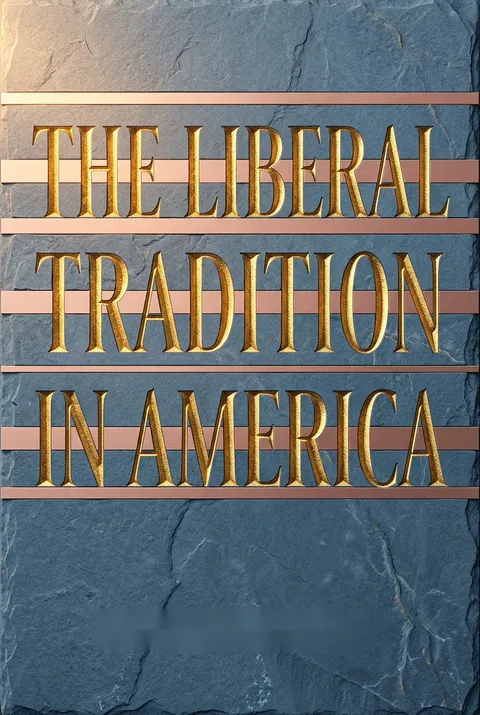


Key Takeaways
America inherited liberal equality, so its fiercest conflicts stayed inside it
A different starting point. Hartz argues that the United States began without Europe’s entrenched feudal order. Settlers left societies shaped by inherited rank, land obligations, and established churches, and built communities where individual liberty, equality, and private property could seem like ordinary facts. He calls this outlook liberal in the older Lockean sense, not in today’s partisan sense. Since Americans did not have to overthrow a powerful aristocratic system, their politics lacked the revolutionary and reactionary traditions that shaped European conflicts.
Conflict within consensus. This did not mean Americans agreed on policies. Federalists, Jacksonians, Progressives, and New Dealers fought fiercely, but Hartz sees them as arguing within a shared liberal framework. He urges historians to compare the United States with Europe, rather than treating American political habits as universal or self-explanatory.
The argument’s force comes from distinguishing agreement about political fundamentals from agreement about policy. That distinction helps explain why intense electoral conflict can coexist with broad acceptance of private property and individual opportunity. It also resembles path dependence: institutions and founding conditions make some later choices feel natural and others foreign. The comparative method is valuable, but a shared liberal vocabulary does not prove equal access to liberty. Enslavement, Indigenous dispossession, and exclusion from citizenship show that an egalitarian ideal can coexist with severe, structured inequality.
Treat 1776 as independence within an existing society, not a European-style social revolution
The revolution’s scale. For Hartz, the American Revolution broke imperial authority but did not overturn a deeply rooted feudal society. Some inherited institutions, including primogeniture and established churches in certain colonies, were dismantled, yet they were already weak compared with Europe’s aristocratic structures. The ease with which Americans challenged monarchy and inherited privilege therefore reflected a prior social transformation, not a sudden conversion of a feudal population.
A sober political imagination. Hartz contrasts American revolutionaries with European thinkers who imagined a wholesale remaking of human nature and society. Colonial religious diversity helped keep political change from having to replace a dominant church with a new political religion. American constitutionalism could look both traditional and inventive: its forms grew from colonial practices, while written constitutions deliberately organized new governments. The founders were not simply copying either European tradition or abstract theory.
This distinction is useful because revolutions are often judged by their rhetoric rather than by what social order they actually replace. Hartz asks readers to examine the starting conditions: a break with an empire is not automatically a break with class hierarchy. Yet calling the Revolution socially limited can understate the scale of change for people who gained political standing, and the catastrophic consequences for those who did not. A revolution can preserve one social structure while transforming another. The question is always: whose position changed, and whose remained protected?
Guard dissent, because a culture of equality can punish difference as betrayal
The danger of agreement. Hartz’s central warning is that a society’s shared liberal creed can become coercive. If most people regard individualism, equality, and capitalism as self-evident, dissent may seem less like a legitimate argument than a moral defect. Hartz calls this pressure the tyranny of opinion. It can coexist with formal rights and constitutional protections because the threat comes not only from law, but from a public that treats deviation as suspicious.
Institutions have limits. Hartz links this habit to America’s strong reliance on courts and constitutional interpretation. Legal restraints can protect individuals, but they may falter when public anger turns dissent into disloyalty. He points to American red scares, when a comparatively small radical presence provoked intense efforts to silence or exclude it. In his account, the problem is not simply majority rule, but a powerful majority that assumes it speaks for everyone.
This insight anticipates a familiar problem in social psychology: groups often enforce norms most strongly when those norms feel like common sense rather than ideology. That makes the warning relevant beyond American politics. Constitutional protections matter, but informal penalties, reputational damage, and accusations of disloyalty can narrow debate without changing a statute. Hartz’s account should not imply that all consensus is oppressive. Shared commitments can support cooperation. The practical test is whether people can challenge those commitments without being treated as enemies of the community.
Read early democracy as a contest between liberal allies, not a battle of social systems
Whigs meet the mass electorate. Hartz uses “Whig” for the wealthier, more cautious strand of liberalism, represented by figures such as Alexander Hamilton. These leaders valued capitalism but feared broad democracy. In Europe, comparable liberals could build alliances against aristocrats or use fear of radical workers to divide their opponents. In the United States, Hartz argues, no entrenched aristocracy or large revolutionary proletariat offered the same political foothold. The growing electorate was made up largely of people who shared the Whigs’ basic attachment to property and individual advancement.
An unexpected defeat. Jacksonian democracy expanded political participation and defeated elitist strategies, but it did not reject the liberal order. The American majority could support democracy while accepting property rights and market ambition. Hartz says this helps explain why suffrage expanded relatively early: the upper-middle-class opponents of democracy lacked the social divisions that had let their European counterparts contain it.
Hartz turns the familiar story of democratic expansion into a strategic comparison. The key is not that elites lacked power, but that their usual coalition-building tools worked differently in a society with fewer legally entrenched ranks. This resembles a political feedback loop: expanding participation changes which alliances are viable, even when participants share many economic assumptions. The account is strongest as an explanation of political strategy, not as proof that early democracy was socially inclusive. Voting access expanded for many white men while women, enslaved people, and Indigenous peoples remained excluded.
Notice how democratic ambition and capitalist ambition often shared the same American voter
A hybrid political character. Hartz’s “American democrat” is not simply a European shopkeeper, peasant, or industrial worker. The term describes a political culture in which small farmers, artisans, and wage earners often saw themselves as independent property owners or future entrepreneurs. Abundant land and social mobility helped this outlook take root. Workers could pursue better wages while imagining eventual ownership, rather than organizing primarily around a permanent class identity.
Conflict hides common ground. Jacksonians might describe themselves as laborers or agrarians opposing capitalist elites, yet their hopes often depended on property, credit, and commercial opportunity. Hartz uses the fight over the national bank to illustrate the tension: opposition to concentrated financial power could coexist with strong demand for easier credit and local banking. Political conflict was real, but the language of class struggle sometimes concealed a shared belief in individual advancement.
This account connects political identity to aspiration, not only to current income or occupation. A person may identify with a future self, which can make class-based explanations incomplete even when material interests are unequal. The distinction also helps explain why anti-monopoly movements can resist concentrated power while defending market competition. Hartz’s emphasis on mobility, however, risks treating the aspiration to rise as evidence that structural barriers are weak. Hope can shape political behavior without making opportunity equally available.
The South’s defense of slavery borrowed conservative language without escaping liberal America
A reaction built on contradiction. When antislavery politics threatened the South, writers such as George Fitzhugh and John C. Calhoun attacked liberal individualism and borrowed ideas from European conservatism. Hartz calls this intellectual surge the “Reactionary Enlightenment.” Southern thinkers praised hierarchy, social duties, and inherited authority, while also trying to preserve aspects of democracy and constitutional liberty for white people. Their defense of slavery made those combinations unstable: they condemned freedom as socially dangerous while claiming political rights for their own region and population.
A brief, uneasy tradition. Hartz argues that this Southern conservatism never became a durable national alternative. Its theorists could not fully detach themselves from the liberal ideas they opposed, and their arguments were weakened by their dependence on slavery. After defeat in the Civil War, their work largely disappeared from mainstream political thought. The South’s challenge exposed American liberalism’s limits, but did not establish a lasting conservative rival to it.
The contradiction Hartz identifies is politically revealing: movements can defend liberty for an in-group while denying it to others, then present the arrangement as a coherent moral order. That pattern is not unique to the nineteenth-century South. Still, treating the Southern position mainly as an ideological anomaly can obscure slavery’s central role in American political economy, rather than making it a mere exception to liberalism. The analysis is most persuasive when it shows how political principles were selectively applied, and less complete when it treats the society built on slavery as peripheral to the national story.
Recognize how reform changed policy while preserving the promise of individual advancement
Reform inside the creed. Hartz argues that Progressives often attacked trusts and political bosses in the name of restoring opportunity, not replacing capitalism. Their reform language therefore remained close to the promise of individual advancement associated with Horatio Alger, the popular symbol of rising from modest beginnings to success. Socialists, by contrast, used concepts of class and collective ownership that many Americans regarded as alien. Hartz sees this contrast as one reason socialism struggled to build broad political support.
Pragmatism after crisis. The New Deal expanded government action, but Roosevelt generally presented it as practical problem-solving rather than a new social doctrine. That framing let Americans accept policies that departed from strict laissez-faire without openly repudiating their liberal identity. Hartz argues that this flexibility helped stabilize the system during the Depression and allowed later political opponents to accept many New Deal measures.
Hartz offers a useful distinction between changing policy and changing political identity. A government can intervene more extensively while citizens continue to understand themselves as defenders of individual freedom. This helps explain why political movements often describe structural reforms as repairs to a shared ideal. The tradeoff is that pragmatic language can make experimentation possible while leaving deeper inequalities unnamed. Hartz’s account also gives ideological habits substantial causal weight; economic organization, labor institutions, and the political choices of specific groups matter too.
Expect American universalism to swing between avoiding foreign systems and remaking them
Two impulses, one outlook. Hartz argues that American liberal confidence can produce both isolationism and missionary foreign policy. If foreign societies seem threatening or unintelligible, the response may be to withdraw. If America enters their affairs, the same confidence can encourage efforts to reshape them according to American political and economic ideals. Woodrow Wilson represents the outward-facing impulse; the isolationist traditions associated with Jefferson and Warren Harding represent the retreat. Hartz sees both as expressions of a national belief in the authority of its own model.
Foreign pressure comes home. In ideological conflict, Hartz warns, this outlook can narrow domestic freedom as well as distort foreign judgment. The First World War and the red scare that followed intensified suspicion of dissent. In his account, the severity of anti-radical hysteria was striking precisely because radical movements were relatively small. A nation convinced that its political principles are universal may find disagreement at home especially difficult to tolerate.
The connection between foreign policy and domestic politics is especially useful because it treats international crises as forces that reshape what citizens consider acceptable at home. Political scientists describe a related dynamic as rallying around a national identity under external threat. That can support solidarity, but it can also blur the line between criticism of policy and hostility to the country. Hartz’s framework encourages scrutiny of universalist claims without assuming that every international commitment is imperial or every security concern invented.
Compare political traditions before mistaking American habits for universal rules
History needs contrast. Hartz criticizes American scholarship that explains the nation mainly through internal economic conflict, especially accounts that divide its past into opposing camps without placing those divisions in a wider Western history. His alternative is comparative: ask what political conflicts look like where feudal institutions, aristocratic traditions, and revolutionary socialist movements were more established. The comparison, he argues, makes American democracy and its persistent attachment to liberal ideas easier to interpret.
A useful, limited lens. Hartz does not claim that the absence of feudalism explains every American event. He presents it as a powerful factor that can correct other explanations, including accounts centered only on the frontier, industrial growth, or religious origins. His approach is strongest when it reveals what those single explanations leave out. Used carelessly, however, the contrast can flatten differences among American regions and groups, or make a complicated history look more uniform than it was.
The methodological lesson is broader than this book: comparison makes tacit assumptions visible. A practice that seems natural in one society may be a historical outcome, not a political law. Hartz’s account demonstrates the value of that move, though its contrast between a relatively liberal America and feudal Europe is sharper than the evidence can always sustain. Comparisons should illuminate differences without turning either side into a caricature. A strong historical model identifies what it explains, then keeps enough room for counterexamples.
Analysis
Hartz’s lasting contribution is a theory of political common sense. He argues that liberalism in the United States became so deeply embedded that Americans often experienced it not as an ideology, but as the natural setting for politics. This shifts attention away from the loudest disputes and toward the assumptions that competing movements share. A Jacksonian, a Progressive, and a New Dealer could disagree about banks, trusts, or public spending while continuing to value individual advancement and private property. The framework helps explain both political continuity and the recurring difficulty of building a socialist movement.
The argument also offers a striking account of how national confidence can become a vulnerability. A society that sees its own principles as universal may struggle to interpret other societies on their terms, and may treat dissent at home as evidence of disloyalty. Hartz’s discussion of foreign policy and red scares links those problems rather than treating them as separate episodes. His analysis remains useful wherever a political community confuses its historically specific institutions with universal common sense.
The model’s greatest weakness is its tendency to make the United States look more socially uniform than it was. The claim that America escaped feudalism does not mean it escaped coercive hierarchy. Enslavement, Indigenous dispossession, racial exclusion, and regional differences complicate any picture of a society simply born into equality. Hartz recognizes slavery’s importance, but his central contrast can still make it appear as an aberration rather than a force that shaped national institutions and wealth. His explanation for weak socialism also risks privileging ideas over labor organization, political repression, and economic change. The book is most convincing as a comparative interpretation of dominant political language, not as a complete account of every American group or cause.
Review Summary
The Liberal Tradition in America receives mixed reviews, with readers praising its insightful analysis of American political philosophy but criticizing its complexity. Hartz argues that America's lack of feudal history led to a dominant liberal tradition, preventing socialism from taking hold. Reviewers note the book's difficult prose and extensive name-dropping, making it challenging for non-experts. Some appreciate Hartz's exploration of American exceptionalism, while others find his arguments dated or oversimplified. Despite its flaws, many consider it a significant work in understanding American political development.
People Also Read





Glossary
liberal society
Society organized around liberal assumptionsHartz’s term for a society in which individual liberty, political equality, private property, and market opportunity are widely accepted as basic principles. He applies it especially to the United States, where he argues that these principles became dominant without a preceding struggle against a powerful feudal order. The term describes a broad political culture, not a modern party platform.
natural liberalism
Liberalism treated as ordinary lifeHartz’s description of American liberalism as an inherited social outlook rather than a political doctrine won through revolution against feudal institutions. Because Americans experienced individual independence and social mobility as familiar conditions, liberal principles could seem self-evident. Hartz argues that this apparent naturalness made the tradition powerful, but also encouraged conformity and obscured its ideological character.
American democrat
The property-minded democratic majorityHartz’s name for a distinctively American political figure formed from small farmers, artisans, and workers who often saw themselves as independent or future property owners. This figure combined democratic demands with capitalist aspirations. The category is not a precise occupational class; it describes a broad political outlook that, in Hartz’s account, made American democracy difficult for European class categories to explain.
Americanism
Nationalized American liberal faithHartz uses this term for the national expression of America’s liberal commitments, especially individual liberty, equality, capitalism, and confidence in the American way of life. It can support isolation from foreign systems or inspire efforts to remake them in America’s image. Because it presents historically specific principles as universally valid, Hartz connects it to both political confidence and intolerance of dissent.
Reactionary Enlightenment
Southern anti-liberal thoughtHartz’s label for the antebellum Southern intellectual movement that opposed liberal individualism and defended slavery through ideas borrowed from European conservatism, social theory, and hierarchy. Writers such as George Fitzhugh sought to build a coherent alternative to liberal society. Hartz argues that their project was internally contradictory because it could not fully escape liberal principles or the social realities of the South.
democratic capitalism
Market ambition joined to democracyHartz’s term for the political ideal that combined broad democratic participation with the promise of individual economic advancement. It became especially influential when American Whigs adapted to mass democracy and promoted opportunity rather than elitist rule. The ideal helped attract voters who opposed concentrated privilege but still hoped to succeed within a capitalist society.
Liberal Reform
Reform without abandoning liberalismHartz uses this term for movements that accepted a larger role for government and sought to address social problems while retaining liberal principles such as individual liberty and private property. He places Progressivism and the New Deal within this broad tradition, while emphasizing that American reform often presented itself as opportunity-restoring pragmatism rather than a systematic theory of class or collective ownership.
Whig
Wealthier, cautious liberal strandHartz extends the historical label “Whig” to describe a recurring Western political tendency: support for capitalism and individual liberty combined with caution about mass democracy. In American history, he applies it to figures and movements from Hamiltonian Federalism through post-Civil War Republicans. The term identifies a political tendency, not one continuous party or fixed organization.
FAQ
What is The Liberal Tradition in America by Louis Hartz about?
- Core thesis: Hartz argues that the United States is fundamentally shaped by a unique and pervasive liberal tradition, rooted in the absence of feudalism and the dominance of Lockean liberalism.
- Historical development: The book traces how this liberal consensus influenced American political thought, social structures, and conflicts from colonial times through the 19th and 20th centuries.
- Comparative perspective: Hartz contrasts American political development with Europe, emphasizing how the lack of feudal structures led to a different trajectory, including the absence of a revolutionary left and aristocracy.
Why should I read The Liberal Tradition in America by Louis Hartz?
- Understanding American exceptionalism: The book provides a deep explanation of why American political culture and society differ fundamentally from European models, especially regarding liberalism and democracy.
- Insight into political conflicts: Hartz’s analysis clarifies the origins of American political parties, internal conflicts, and the persistence of liberal values.
- Relevance to modern debates: The book helps readers understand contemporary issues like conformity, individualism, and the roots of American political debates.
What are the key takeaways from The Liberal Tradition in America by Louis Hartz?
- Liberal consensus: America’s political and social life is dominated by an absolute liberal tradition, leaving little room for alternative ideologies.
- Absence of feudalism and socialism: The lack of feudal structures prevented the rise of class-based politics and socialism, making America unique among Western nations.
- Impact on political movements: Movements like Whiggery, Progressivism, and the New Deal are all shaped by or reactions to this dominant liberal ethos.
What are the most important concepts introduced in The Liberal Tradition in America by Louis Hartz?
- Liberal absolutism: Hartz describes American liberalism as an all-encompassing ideology that shapes national identity and political discourse.
- Reactionary Enlightenment: The Southern attempt to resist liberalism through feudal and conservative ideas, ultimately failing after the Civil War.
- Democratic capitalism and Americanism: The evolution of American political thought into a form of democratic capitalism, reinforced by myths like Horatio Alger and a nationalistic interpretation of liberalism.
How does Louis Hartz define a "liberal society" in The Liberal Tradition in America?
- Absence of feudalism: A liberal society, according to Hartz, is one without feudal class structures, where individual liberty and equality are foundational.
- Natural liberalism: America’s liberalism is "natural" because it was not born from revolution but from settling a new land free of feudal oppression.
- Consequences: This led to political homogeneity, the absence of an aristocracy, and social conflicts framed within liberal alignments rather than class warfare.
How does The Liberal Tradition in America by Louis Hartz explain the absence of feudalism and socialism in the United States?
- Skipped feudal stage: America never developed feudal social structures, so the ideological conflicts tied to feudalism never took root.
- Socialism’s weak roots: Socialism, which arose in Europe as a revolt against feudalism, failed to gain traction in America due to the dominance of Lockean liberalism.
- Liberal consensus: The pervasive belief in individual property and equality prevented the emergence of class consciousness and socialist ideology.
What is the significance of Tocqueville’s insight that America was "born equal" in The Liberal Tradition in America by Louis Hartz?
- No need for revolution: America did not require a violent democratic revolution, as it was founded by settlers escaping feudal oppression.
- Liberal consensus: This birthright of equality created a society with strong liberal agreement and little class antagonism.
- Paradoxes: While this led to stability, it also produced conformity and a "tyranny of opinion" that could suppress dissent.
How does Louis Hartz characterize the American Revolution in The Liberal Tradition in America?
- Primarily political, not social: The American Revolution was not a social upheaval like those in France or Russia, as there was no feudal order to overthrow.
- Conservative outlook: Revolutionaries aimed to preserve inherited liberties rather than pursue radical social change.
- Limited crusading spirit: Americans did not seek to export their revolution, reflecting a pragmatic and sober approach.
What are the main social and political groups identified by Louis Hartz in early American politics?
- Whigs: Represented the upper middle class, propertied liberals who supported capitalism but feared democracy.
- Democrats: Comprised a broad "petit-bourgeois" group of farmers, artisans, and workers, embracing liberalism with internal tensions.
- Their conflict: The Whig-Democrat struggle shaped American political development, with Democrats eventually triumphing due to their mass base.
What is the "law of Whig compensation" in American politics according to The Liberal Tradition in America by Louis Hartz?
- Definition: The defeat of Whiggery was compensated by the rise of a democratic capitalist ethos that merged liberalism with mass participation.
- Mechanism: Whigs failed to adapt to the democratic masses, leading to their political isolation and eventual defeat.
- Outcome: Whiggery ultimately embraced democratic capitalism, transforming American political culture after 1840.
How does Louis Hartz explain the paradox of conformity and individualism in American liberalism in The Liberal Tradition in America?
- Paradoxical combination: American liberalism merges a strong belief in individual liberty with a powerful conformist ethos.
- Tyranny of opinion: This conformity can suppress dissent and treat eccentricity as a threat, as seen in episodes like the Red Scares.
- Root cause: The shared Lockean tradition creates a near-unanimous national will, which is both a strength and a potential threat to liberty.
What is the Southern "Reactionary Enlightenment" and its significance in The Liberal Tradition in America by Louis Hartz?
- Southern conservatism: The South developed a reactionary ideology combining feudal romanticism with slavery, resisting dominant American liberalism.
- Contradictions: Southern thinkers struggled to reconcile liberal origins with reactionary goals, leading to intellectual confusion.
- Impact: This movement ultimately failed, had limited influence on the broader American tradition, and was marginalized after the Civil War.
Download PDF
Download EPUB
.epub digital book format is ideal for reading ebooks on phones, tablets, and e-readers.








