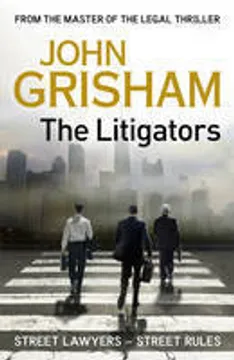


Plot Summary
The Elevator Opens Downward
At thirty-one, David Zinc1 has spent five years at Rogan Rothberg, billing punishing hours on deals he barely believes matter. One morning, unable to make himself step out of the elevator onto his floor, he rides back down and walks away from the firm. He drinks through the day at Abner’s17 bar, dodging his worried wife,5 Helen,5 and the furious calls from his former boss.
A cab carries him toward a bus advertisement for Finley & Figg, a tiny injury firm run by Oscar Finley3 and Wally Figg.2 David1 arrives drunk just as a pileup erupts at their neighborhood intersection. He drives off a rival lawyer with a piece of wreckage, and the partners decide the stranger might be useful after all.
David’s departure is less a carefully chosen career move than a bodily refusal: the elevator ride makes visible what years of exhaustion have concealed. His first day outside corporate law is not immediately noble or clear-eyed. He drinks, avoids Helen, and finds his new workplace through an accident advertisement. Yet the pileup gives his legal training its first concrete object: frightened people who need help now. The scene sets the novel’s central contrast between law as abstract production and law as direct contact, while refusing to pretend that escape from a harmful institution automatically makes a person healthy or wise.
Krayoxx Finds Its Ambulance
Before David1 returns sober, Wally Figg2 visits the funeral home of Chester Marino, whose will Finley & Figg prepared. Chester’s son, Lyle, believes the cholesterol drug Krayoxx contributed to his father’s fatal heart attack.
Wally2 recognizes the possibility of a mass tort and, after discovering that a Florida firm has already sued drugmaker Varrick Labs, sells himself as an experienced specialist. Oscar3 resists another grand scheme, but Wally2 keeps pushing. David1 comes back to the office, accepts a tiny salary and a dusty upstairs room, and is handed work on the new litigation.
Wally2 also signs Iris Klopeck,7 another widow, and begins collecting potential cases. The firm’s ordinary clients and unpaid bills remain, but its partners start imagining that one drug could rescue them from years of scraping by.
Wally’s talent is real, but it is inseparable from his appetite for risk and his ability to make uncertainty sound like opportunity. He sees a grieving family not only as people in need but as the first opening in a lucrative case. David, meanwhile, accepts street law without yet understanding its ethical or financial costs. The partnership begins in a contradiction: the firm hopes to hold a powerful company accountable, but its first steps include overconfident claims and aggressive client hunting. That tension matters because the coming crisis is not simply a question of whether Krayoxx is dangerous. It is also a test of what the lawyers are willing to tell the people who trust them.
A Small Firm Goes National
Wally2 files a $100 million federal suit for families who say Krayoxx caused deaths, then sends the filing to newspapers until publicity floods the office with frightened users and grieving relatives. The firm signs eight death cases, while Wally2 and David1 join forces with mass tort heavyweight Jerry Alisandros11 of Zell & Potter.
Their agreement takes a large share of any fees and requires an advance for expenses, details Wally2 does not fully explain to Oscar.3 At Varrick, chief counsel Nicholas Walker and CEO12 Reuben Massey12 select Chicago for a test case, hire celebrated trial lawyer Nadine Karros,6 and plan to make the plaintiffs expect a settlement while preparing to force a trial. Judge Harry Seawright13 keeps the case in Chicago and demands rapid discovery, giving Varrick the fast timetable it wants.
The lawsuit enlarges the scale of the story before the small firm has built the capacity to meet it. Publicity becomes both a tool for finding clients and a source of fear, while Alisandros offers expertise at a price the partners barely examine. Varrick’s strategy exploits the plaintiffs’ own expectations: the prospect of settlement can weaken trial preparation without requiring the company to make a promise. Judge Seawright’s speed makes the conflict unusually concentrated. His Rocket Docket does not create the weakness in the plaintiffs’ case, but it removes the time in which an inexperienced firm might have discovered it before making promises to clients.
The Teeth in the Toy Box
As Helen’s5 friend Toni connects David1 with Zaw, a Burmese housekeeper, he learns that her grandson8 Thuya8 is gravely ill with lead poisoning. Zaw’s son,9 Soe,9 shows him colorful plastic vampire teeth that Thuya8 kept in his mouth.
The packaging has been thrown away, so David1 cannot identify the maker. He pays toxicologist Biff Sandroni15 to test the toy, searches flea markets for another set, and brings Soe9 and Thuya’s8 mother,10 Lwin,10 to the edge of a possible lawsuit without promising them money.
Helen5 becomes pregnant, and the couple begin visiting the Khaing family regularly. David1 also gathers samples from their apartment; those tests show the home is not the source. The teeth remain the strongest lead, but without a maker or importer, the evidence cannot yet become a claim.
The Khaing case gives David a different measure of legal work from the mass tort: attention to one family whose problem cannot be made simple by a headline or a settlement estimate. The missing packaging turns ordinary consumer life into an investigative obstacle. The toy was designed to go in a child’s mouth, yet its route from factory to market is obscure enough to frustrate accountability. David’s caution with Soe and Lwin contrasts with Wally’s confident promises to Krayoxx clients. He is learning that ethical lawyering sometimes means admitting what is not known, then continuing to search rather than filling the gap with reassurance.
A Shot in the Dark
David1 files a wage-and-hour suit for Burmese and Mexican workers cheated by Cicero Pipe, a contractor paying undocumented laborers for long weeks of work. The case draws threats against the lawyers.
One night, Oscar,3 sleeping at the office during his separation from his unhappy wife, catches a Cicero Pipe worker trying to set the building on fire and shoots him in both legs. The attempted arson leads to arrests and a federal investigation. Under pressure from the court and the project’s general contractor, Cicero Pipe settles quickly: David’s1 five clients receive $40,000 each, and dozens of other workers receive compensation too.
Oscar’s3 defense of the office makes him a local news figure. The victory gives David1 his first deep sense of pride in practicing law, even as it exposes the risks of taking a case against an employer with power.
The labor case turns David’s decision to leave corporate law into a tangible result: workers who were afraid to complain receive money they had earned. The danger does not arrive as a courtroom abstraction. It comes to the firm’s back door, where Oscar responds with force and the legal dispute becomes a criminal investigation. Oscar’s actions are both protective and excessive, a reminder that the partners’ streetwise instincts can save them while creating new liabilities. His separation from his wife also begins a personal reckoning he has postponed for decades. Here the firm’s rough methods produce a genuine victory, but the victory does not make those methods harmless.
The Rocket Docket Trap
When Senator Kirk Maxwell collapses and dies on camera, his family’s disclosure that he had taken Krayoxx intensifies public pressure. The FDA removes the drug from the market, and Finley & Figg’s client calls multiply. Wally’s2 campaign has attracted more than four hundred possible injury claims, although none has yet been medically screened.
Seawright13 separates the eight death cases and chooses Percy Klopeck’s for an accelerated Chicago trial. Wally2 tells clients to expect a settlement near $2 million each, even while Varrick continues preparing its defense.
Oscar,3 newly separated and hopeful about future fees, agrees with Wally2 on how the eventual money should be divided. Their firm’s finances worsen as they neglect routine work and sign a costly agreement with Zell & Potter. The partners begin spending tomorrow’s imagined settlement before they know whether the drug harmed anyone.
Maxwell’s death supplies the litigation with a public image powerful enough to overwhelm distinctions between allegation and proof. The FDA’s decision seems to confirm the lawyers’ fears, but the story keeps the crucial scientific question open. Wally’s forecasts transform uncertainty into an emotional asset: clients can picture recovery, and the partners can picture escape from debt. That imagined future also reshapes private choices. Oscar leaves his marriage expecting financial freedom, while the firm accepts costs it cannot comfortably bear. The Rocket Docket then converts optimism into a deadline. What began as a hunt for cases is now a trial that will expose whether the lawyers have built a claim or merely a story about one.
The Experts Vanish
As the Chicago trial approaches, Zell & Potter’s researchers discover that the studies linking Krayoxx to heart damage are unreliable. The lead researcher is preparing to retreat from his conclusions, screening tests show little evidence of the alleged valve damage, and the firm’s experts refuse to support the case.
Alisandros11 cancels settlement talks and withdraws from the Klopeck lawsuit, leaving Finley & Figg exposed. Wally2 tries to dismiss the cases without telling clients who have been promised large recoveries.
Varrick’s lawyer, Bart Shaw, warns that the clients may sue for malpractice, while Karros6 seeks sanctions for a frivolous filing. The partners borrow against their office building to fund a defense. They know the science may be against them, but abandoning the case could bankrupt the firm in another way.
The collapse is not a sudden twist in the evidence so much as the belated arrival of evidence the firm should have demanded before filing. Wally’s confidence has depended on borrowed expertise, and once the experts withdraw, the distance between a mass tort campaign and a provable case becomes impossible to ignore. The threat of malpractice sharpens the ethical stakes: the firm cannot simply disappear without harming clients who relied on its assurances. Yet financing the trial means exposing the firm to further loss. The lawyers are trapped partly by Varrick’s hardball strategy, but also by their own earlier choices, especially the decision to sell certainty where they had only hope.
Opening Day Falls Apart
Iris Klopeck7 misses jury selection after leaving the emergency room before receiving care, forcing the lawyers to rely on her recorded deposition. During Oscar’s3 opening statement, he collapses from a heart attack.
As paramedics carry him away, Wally2 makes an ill-judged joke about Krayoxx within the jury’s hearing. Karros6 moves for a mistrial, and Seawright13 grants it. Oscar3 undergoes bypass surgery; the judge13 fines Wally2 and orders a rapid retrial. The firm has no experienced trial lawyer to replace them, and David1 is the least prepared of the three.
Wally2 begins drinking again under the pressure, then disappears before court resumes. The court refuses to let the case drift, leaving David1 to face Varrick’s legal team alone, with Helen5 quietly joining him as an unofficial paralegal.
The courtroom strips away the firm’s remaining protective fictions. Oscar’s body fails at the moment he is meant to establish authority; Wally’s humor converts fear into a procedural disaster; and David inherits the work neither partner can finish. Their weaknesses are not interchangeable. Oscar’s crisis is physical, Wally’s is addiction, and David’s is inexperience. Seawright’s insistence on moving forward may appear severe, but it forces the case toward an answer instead of allowing the lawyers to hide indefinitely behind delay. Helen’s presence offers private support, not a substitute for skill. David must now decide whether to retreat from the very work he chose.
Zinc Takes the Table
After Wally2 vanishes, David1 works through the trial without him and arranges to get his recovering colleague into treatment. On the drive to Harbor House, he stops at a truck stop and spots packaged sets of Nasty Teeth among the Halloween novelties.
The label identifies Gunderson Toys as the importer and Sonesta Games as its parent company. At last, Thuya’s8 family has a possible defendant. Meanwhile, the trial continues: David1 watches Karros6 dismantle Dr. Borzov, whose thickly accented, jargon-heavy testimony fails to persuade the jury.
David1 studies the record through the night and prepares to question Varrick’s research chief himself. The toy discovery does not rescue the Krayoxx case, but it gives David1 a separate case with a traceable product and a child8 whose injuries have a direct, documented source.
David’s two urgent responsibilities converge on a roadside shelf. He is trying to help Wally survive a relapse, yet the same trip uncovers the missing link in the Khaing case. The discovery is deliberately mundane: a cheap package in a truck stop, not a revelation delivered by a courtroom expert. Its value comes from connecting injury to a company that can be named and approached. In court, by contrast, David watches a paid expert become a liability. He is beginning to distinguish the appearance of expertise from evidence that can withstand examination. His confidence grows not because he has suddenly become an accomplished litigator, but because he has learned to look closely at what the record actually supports.
Varrick’s Record on Trial
Taking over the examination, David1 questions Varrick research chief Mark Ulander about clinical trials conducted abroad and about earlier drugs the company tested despite warnings of serious harm.
He brings internal records into the case and forces Ulander to acknowledge that Varrick continued testing Klervex after employees reported debilitating headaches, then stopped trials of an abortion drug after deaths. The questions shake Varrick’s carefully polished reputation, but they do not prove Krayoxx caused Percy’s death. Karros6 answers with respected doctors who describe the drug as safe and Percy as seriously ill from multiple causes.
David’s1 closing argument challenges the imbalance between a grieving family and a corporate legal army. The jury deliberates only seventeen minutes before finding for Varrick. Afterward, David1 punches the anonymous blogger who had insulted Helen.5
David finally finds a line of questioning that makes the courtroom listen, but the victory is evidentiary and moral, not legal. By opening the door to Varrick’s broader research history, he shows that a company’s reassuring account of its own rigor can be tested against its conduct elsewhere. Yet damaging corporate history cannot substitute for proof that this particular drug caused this particular death. The swift verdict preserves that distinction, even as it leaves the widow’s case defeated. David’s assault on the blogger is a less admirable release of anger: he has learned to defend clients in court, but has not yet learned to contain every injury to his pride.
A Better Case, A New Firm
With Sandroni’s15 tests confirming toxic paint on the teeth, David1 meets Sonesta Games’ chief executive16 and demands $6.5 million for Thuya’s8 care, his family’s losses, and their emotional suffering. The company accepts responsibility for the importer it owns and settles without a lawsuit.
David1 uses the $1.5 million legal fee to pay the firm’s debt and Krayoxx sanctions, give Rochelle4 a substantial bonus, and propose a cleaner partnership with Oscar3 and Wally.2 His new rules prohibit referral bribes, reckless advertising, and taking cases without agreement from all partners.
The settlement brings real resources to Thuya’s8 family, but it cannot make the child8 well or undo what happened. David’s1 return to law now rests on a case built from physical evidence, careful investigation, and a specific promise of support.
The settlement offers a pointed counterweight to the failed Krayoxx suit. Sonesta responds not to a national stampede or a projected global payout, but to a documented injury, an identifiable product, and a family’s concrete needs. David’s demand includes care over time rather than treating compensation as a single dramatic number. He also refuses to make the fee private windfall: he uses it to stabilize the firm and share its benefit with Rochelle. His proposed partnership rules are an attempt to convert a personal ethical preference into institutional practice. The agreement cannot erase harm, and its importance lies precisely in that limit: money can support care without pretending to restore what was lost.
Epilogue
Thuya8 dies after a series of seizures, but the settlement remains in place for his family. Oscar’s3 divorce becomes final, while Wally2 maintains sobriety and helps other lawyers facing addiction. The three-way partnership does not last: Oscar3 retires, Wally2 loses his taste for chasing large cases, and David1 leaves to establish a product-liability practice.
He takes Rochelle4 and the office dog, AC, with him. After Helen5 gives birth to twin boys, David1 works from a new office overlooking the downtown skyline, a view that recalls the tower he once fled. His practice grows through further lead-poisoning cases, built on the kind of evidence the Krayoxx litigation lacked.
The ending refuses the neat arithmetic that the novel’s mass tort promoters repeatedly promise. Thuya’s family receives money, but the child dies; the settlement is meaningful because it funds care and recognizes responsibility, not because it repairs the injury. The firm’s eventual dissolution likewise does not cancel the value David found there. He leaves with experience, Rochelle, and a clearer sense of what kind of work he wants to do. The skyline returns as a changed symbol: it no longer represents the only respectable career David could imagine, but a direction he can choose to face on his own terms.
Analysis
The Litigators pits two versions of legal practice against each other, but it does not romanticize either. Rogan Rothberg consumes David1 through lucrative work detached from ordinary human need; Finley & Figg offers contact and purpose, yet its partners often confuse hustle with competence. The Krayoxx suit becomes the novel’s sharpest test of that difference. Wally’s2 ability to locate clients is not matched by the discipline to establish the drug’s harms, and the mass tort network rewards scale and expectation before certainty. Varrick, meanwhile, has the money and expertise to shape not only its defense but the timetable and public meaning of the case.
The contrast with Thuya’s8 lawsuit is not that one company is more evil or one kind of injury more worthy. It is that David1 eventually follows a particular object through testing, sourcing, medical records, and a direct negotiation with the responsible corporation. His work becomes effective when he stops treating a large possible payout as evidence. Even his courtroom success against Varrick’s research chief has limits: exposing past misconduct damages reputation, but does not prove that Krayoxx caused Percy Klopeck’s death. The quick defense verdict insists on this distinction, however frustrating it is for the plaintiffs.
The novel also treats institutions as collections of people making choices under pressure. Wally’s2 addiction, Oscar’s3 unhappy marriage and health, Rochelle’s4 unrecognized labor, and Helen’s5 concern for the life David1 has abandoned all shape the legal plot. Their private lives are not decorative subplots; they determine who can work, who can be trusted, and what money seems to promise. David’s1 eventual independence is therefore not a simple escape from bad bosses. He carries forward the relationships and practical knowledge he gained at Finley & Figg, while rejecting its casual ethics. The book’s hard lesson is that meaningful advocacy requires both proximity to suffering and the discipline to tell the truth about what the evidence can support.
Review Summary
The Litigators receives generally positive reviews, averaging 3.91/5. Readers praise its humor, engaging characters, and entertaining legal drama involving the small ambulance-chasing firm Finley & Figg tackling a pharmaceutical class-action lawsuit. Many appreciate the likable protagonist David Zinc and Grisham's satirical take on legal culture. Critics note it lacks the suspense of Grisham's earlier works, with some finding the plot predictable and the ending rushed. Overall, most consider it an enjoyable, light read, though not among his finest work.
People Also Read






Characters
David Zinc
The reluctant street lawyerDavid is a Harvard-trained attorney whose years at Rogan Rothberg have narrowed his life to billable hours and exhaustion. He is observant, intellectually quick, and initially more comfortable analyzing systems than speaking for individuals. His departure is impulsive, and his drinking shows that insight alone cannot undo the damage of chronic pressure. At Finley & Figg, direct contact with clients changes his understanding of legal work: he begins to value careful fact-finding, practical help, and the difference between an allegation and proof. His marriage to Helen5 and his developing responsibilities as a father matter to his choices, but they do not simply make him cautious. David is driven by a desire to do useful work without surrendering his life to the institution performing it.
Wally Figg
The restless case hunterWally is the junior partner at Finley & Figg, a gifted hustler with a talent for finding clients, reading opportunity, and selling an ambitious idea. His energy masks insecurity about money, status, and the smallness of the firm. He dreams of a major mass tort that will release him from routine injury cases, and his confidence often outruns his knowledge. Wally’s alcoholism is not a comic flaw but a force that repeatedly threatens his judgment and relationships. He can be generous and loyal, especially to Rochelle4, yet those qualities coexist with manipulation and overpromising. His life is organized around hoped-for turning points: a settlement, sobriety, a new romance, a larger practice. He is most vulnerable when hope becomes an excuse to avoid the facts in front of him.
Oscar Finley
The weary senior partnerOscar has spent decades practicing low-level injury and domestic law after leaving police work and building a firm from a converted house. He is disciplined in appearance, cynical about schemes, and tired of the income and marriage that have shaped his adult life. His skepticism about Wally’s2 plans is often justified, but it is mixed with fear of change and a habit of retreating behind a locked office door. Oscar understands how street clients behave because he has worked among them for years, though his methods can be blunt and self-protective. Beneath the grumbling is a man who has postponed his own happiness until postponement feels permanent. His relationships with Wally2 and Rochelle4 are marked by conflict, familiarity, and a shared history neither partner can replace.
Rochelle Gibson
The firm’s steady centerRochelle runs Finley & Figg’s front desk, files, phones, clients, and daily peacekeeping, often supplying more practical judgment than the attorneys around her. She knows the firm’s finances and habits intimately because she has survived its disorder from the inside. Her sharpness is a form of self-protection, shaped by family responsibilities, economic strain, and past experience as a client who was poorly represented. She is loyal without being deferential: she challenges Wally2 and Oscar3, screens out work she considers unprofitable, and recognizes when their schemes threaten her safety. Rochelle takes pride in being a legal secretary, not because the firm is prestigious, but because she has mastered work that its lawyers often neglect. Her presence gives the office continuity even when its partners are in crisis.
Helen Zinc
David’s clear-eyed partnerHelen is David’s1 wife, a Northwestern doctoral student in art history who sees what the firm’s punishing culture has done to him before he can admit it. She is intelligent, candid, and protective without treating David1 as incapable of choosing for himself. Her earlier restraint around his difficult boss reflects a realistic awareness of professional power, not passivity. When David1 leaves the firm, Helen must confront the financial uncertainty and the possibility that his new workplace is ethically unstable. Her pregnancy and later parenthood deepen the practical stakes of their choices, while her curiosity and support help David1 approach the Khaing family with care. Helen grounds the story’s private life in concrete labor: she worries, works, studies, and helps sustain a household as David1 tries to build a different career.
Nadine Karros
Varrick’s courtroom strategistNadine is a celebrated trial lawyer at Rogan Rothberg, hired to defend Varrick Labs in Chicago. She is controlled, prepared, and alert to the way procedural choices shape a case before a jury ever hears it. Her calm presentation should not be mistaken for softness; she studies witnesses closely and uses their weaknesses with precision. Nadine believes in professional command, but she is also capable of negotiating limits with David1 when his partners falter. Her role complicates David’s1 view of his former firm: its legal talent is real, even when the institution’s culture is destructive. She is not simply an antagonist but the capable opponent whose preparation exposes the plaintiffs’ lack of preparation.
Iris Klopeck
Percy’s troubled widowIris is the widow of Percy Klopeck and the representative of his estate in the Krayoxx case. She is burdened by health problems, financial insecurity, and a difficult family life, and she is wary of the lawyers who enter her home promising help. Her needs make her susceptible to Wally’s2 confident projections, while her blunt questions sometimes cut through his salesmanship. Iris is neither a reliable emblem of victimhood nor a simple obstacle to the case. She is a complicated client whose physical condition, emotions, and circumstances shape what the lawyers can responsibly ask of her.
Thuya Khaing
The injured childThuya is the young son of Soe9 and Lwin Khaing10 and the center of the lead-poisoning case David1 investigates. Before his illness, he is remembered by his family as energetic and playful. Afterward, his severe impairments make daily care a shared responsibility for his parents, sisters, and grandparents. Thuya cannot explain what happened to him, so the case depends on the adults’ memories, medical records, and the physical evidence of the toy. His presence gives David’s1 legal work a human scale that cannot be reduced to a fee or verdict. The family’s efforts to include him in meals and outings show how love becomes routine labor when a child’s needs are extensive.
Soe Khaing
Thuya’s determined fatherSoe is Thuya’s8 father and Zaw’s son, an immigrant worker who supports his family through demanding physical labor. He is cautious around lawyers and the legal system, yet he agrees to let David1 investigate the toy that may have poisoned his child8. Soe’s guilt over buying the teeth reflects how easily responsibility falls on parents when a product’s dangers are hidden from them. He does not have the resources or language to navigate a corporate dispute alone, but he becomes an essential witness and advocate for his family.
Lwin Khaing
Thuya’s devoted motherLwin is Thuya’s8 mother, a working parent whose life is reorganized around her son’s8 illness and care. She is quiet in the early meetings with David1, but her grief and attention are unmistakable. Lwin helps preserve the toys that may explain what happened and participates in the family’s long effort to support Thuya8 at home. Her role reveals the invisible labor behind a product-injury case: feeding, cleaning, watching, and making room for a child whose needs do not pause when legal proceedings end.
Jerry Alisandros
The mass tort heavyweightJerry leads Zell & Potter, a prosperous plaintiffs’ firm experienced in mass tort litigation. He knows how to recruit smaller firms, organize broad campaigns, and negotiate with corporate defendants. To Wally2, Jerry’s invitation into the national Krayoxx effort appears to validate the case and promise a path to wealth. Jerry’s confidence is backed by resources and reputation, but his interests do not always align with those of the individual clients or smaller partners depending on him. His presence shows how mass litigation can concentrate authority and fees in the hands of a few powerful firms.
Reuben Massey
Varrick’s calculating CEOReuben Massey leads Varrick Labs through repeated product litigation and believes the company’s research justifies its defenses. He is disciplined, hard-nosed, and skilled at treating legal exposure as a business problem to be managed. His confidence in Krayoxx is genuine, but so is his determination to protect sales, reputation, and shareholders. Massey’s approach turns the courtroom into one arena in a wider campaign involving public relations, legal spending, regulators, and investors. He embodies corporate power without needing to be a cartoon villain: he can believe in a product and still prioritize the institution built around it.
Judge Harry Seawright
The impatient federal judgeSeawright is an experienced federal judge who dislikes delay and expects lawyers to move cases toward trial. His Rocket Docket gives the Krayoxx litigation a pace that exposes Finley & Figg’s inexperience. He is stern with both sides, though his willingness to let the case proceed gives the defense a chance to press its advantage. Seawright’s courtroom authority is not merely ceremonial: his deadlines, rulings, and sanctions shape what the lawyers can do. He believes procedural order matters, but his impatience can leave little room for a struggling party to recover from mistakes.
DeeAnna Nuxhall
Wally’s volatile clientDeeAnna is a repeat divorce client who becomes romantically involved with Wally2. She is flirtatious, impulsive, and accustomed to using charm and pressure to get what she wants. Her relationship with Wally2 offers him excitement and affirmation, but it also becomes entangled with his fantasies about future Krayoxx money. DeeAnna’s presence makes the boundary between personal and professional life increasingly porous at the firm, where Wally’s2 judgment is already strained.
Biff Sandroni
The lead-poisoning expertDr. Sandroni is a toxicologist with extensive experience testing products for lead and explaining the results in court. David1 seeks him out to determine whether Thuya’s8 plastic teeth contain dangerous paint. Sandroni is blunt, energetic, and expensive, but he is also willing to work with David1 as the investigation develops. His expertise helps distinguish a plausible suspicion from evidence that can support a case.
Carl LaPorte
Sonesta’s accountable executiveCarl LaPorte is the chief executive of Sonesta Games, the parent company connected to the importer of Nasty Teeth. He understands that a toy company’s reputation depends on parents believing its products are safe. In meeting the Khaing family, he approaches the harm as a human and corporate responsibility rather than merely a litigation threat. His willingness to discuss a resolution contrasts with Varrick’s adversarial posture, while his concern for the company’s public image remains part of the negotiation.
Abner
The bartender who listensAbner owns the downtown bar where David1 spends the day after quitting Rogan Rothberg. He recognizes a man in crisis without demanding a polished explanation, offering food, conversation, and eventually a safe ride home. His bar also brings David1 into contact with Miss Spence18, whose daily ritual gives him a first glimpse of a life organized outside work. Abner’s practical care makes him a quiet counterpoint to the institutions that treat exhaustion as normal.
Miss Spence
Abner’s daily regularMiss Spence is an elderly, wealthy Cubs fan who visits Abner’s17 bar at the same time each day for her familiar drink and solitude. She prefers to control the terms of her own company and has little interest in David’s1 troubles. Her presence briefly offers him companionship without interrogation, while her long loyalty to the Cubs gives her a private history entirely separate from his crisis.
Adam Grand
A bereaved Krayoxx claimantAdam is an assistant manager at an all-you-can-eat pizza restaurant and the son of a woman who took Krayoxx. Wally2 recruits him as a potential claimant by presenting the case as an opportunity for compensation. Adam asks direct questions about fees and likely recovery, revealing that clients hear promises as practical expectations, not legal qualifications.
Anderson Zinc
David’s judicial fatherAnderson Zinc is David’s1 father, a Minnesota Supreme Court justice whose own career was shaped by pressure from his formidable father. He values professional achievement and initially struggles to understand David’s1 departure from an elite firm. His disagreement with David1 is complicated by affection and by the family pattern of sons resisting inherited expectations. Anderson represents a respected legal tradition that David1 both benefits from and wants to escape.
Plot Devices
The Krayoxx litigation
Turns hope into exposureThe drug alleged to cause heart attacks and strokes gives Wally2 a chance to build the mass tort practice he has long imagined. The lawsuit brings publicity, grieving clients, powerful co-counsel, and a national network of potential claims. It also requires medical proof, expert testimony, and resources Finley & Figg does not possess. Varrick’s12 planned test trial, the experts’ retreat, and the brief settlement expectations all grow from this device. Krayoxx makes the partners’ desire for money inseparable from the question of whether they have responsibly established that the drug caused harm.
The Rocket Docket
Compresses a legal reckoningJudge Seawright13 places the Klopeck case on an accelerated federal schedule, requiring the parties to move from pleadings and discovery toward trial quickly. The fast pace serves Varrick’s strategy and exposes the plaintiffs’ lack of preparation. It leaves Finley & Figg little room to find reliable experts after Zell & Potter withdraws, while also preventing the firm from avoiding the case through indefinite delay. The device turns procedural time into dramatic pressure: each missed deadline makes the partners’ earlier choices more consequential.
The Nasty Teeth
Makes hidden harm traceableThe cheap plastic vampire teeth Thuya8 plays with are designed to sit in a child’s mouth, yet their packaging disappears before David1 can identify who made or imported them. Laboratory testing links the colored coating to lead, while David’s1 search through toy stalls and stores gradually narrows the trail. A truck-stop package finally connects the product to Gunderson Toys and its parent, Sonesta Games. Unlike the diffuse Krayoxx allegations, the teeth provide a physical object, an identifiable supply chain, and a clear focus for an investigation into the harm suffered by one family.
The Preston intersection
Feeds the street practiceThe busy intersection near Finley & Figg produces frequent collisions, and the firm’s location allows its partners to rush toward accidents and seek injury clients. The practice is comic in its hunger, but it also establishes the firm’s dependence on immediate, local encounters rather than polished institutional work. David’s1 first contact with the partners occurs during a pileup there, where he protects an injured family from a rival lawyer. The intersection embodies the firm’s habits: opportunistic, rough around the edges, and close enough to ordinary injury that its lawyers cannot pretend their clients are abstractions.
The borrowed courtroom team
Tests lawyering against theaterFinley & Figg’s Krayoxx case depends on outside expertise and the reputation of Zell & Potter, while the firm itself has little federal trial experience. The contrast between the modest plaintiffs’ table and Nadine Karros’s6 disciplined defense team grows sharper as the case advances. When the experts retreat, the borrowed authority disappears, leaving David1 to learn in public. His later questioning of Varrick’s research chief does not reverse the verdict, but it demonstrates that preparation and attention can matter even when resources are unequal. The device distinguishes courtroom performance from the underlying work needed to make a claim credible.
Download PDF
Download EPUB
.epub digital book format is ideal for reading ebooks on phones, tablets, and e-readers.








