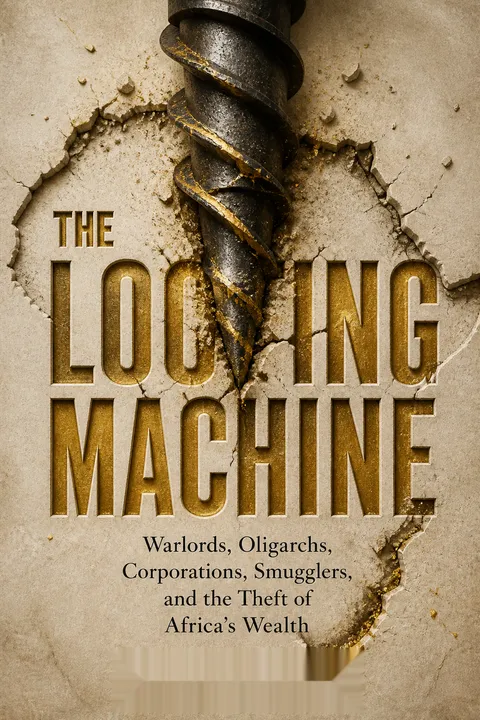


Key Takeaways
Treat resource wealth as a political prize, not automatic public prosperity.
The rentier trap. The resource curse is the pattern in which countries rich in oil or minerals often experience weaker development, greater inequality, and political instability instead of broad prosperity. Resource income is largely unearned by the state: leaders grant companies access to deposits, then control the resulting revenue. When governments can fund themselves without taxing citizens, they have less reason to answer to them. The book cites estimates that 69 percent of people in extreme poverty live in countries where oil, gas, or minerals dominate the economy.
Geology is not destiny. Corruption and violence also occur in countries less dependent on extraction, while Norway shows that resource wealth can be managed differently. The crucial question is not simply what lies underground, but who controls the revenue, and whether public institutions can compel its use for public benefit.
The argument is strongest when it treats resource dependence as a political arrangement rather than a curse embedded in geology. The same oil revenue can fund public goods or a ruler's patronage network, depending on who controls budgets and what checks exist. That framing preserves agency and avoids portraying African countries as doomed by nature. It also suggests a useful test for any resource boom: do citizens gain influence over public spending, or does wealth merely accumulate around the people who award contracts? The book's own Norway comparison helps keep the claim conditional rather than deterministic.
Africa exported $333 billion in fuel and minerals, over seven times aid.
The direction of value. In 2010, African fuel and mineral exports were worth $333 billion, more than seven times the aid flowing into the continent. Burgis uses this comparison to challenge the familiar image of Africa as a place sustained mainly by outside generosity. The continent supplies oil, gold, platinum, copper, and minerals used in everyday electronics, while traders and financial centers elsewhere help set prices and handle the profits.
A global supply chain. The book estimates that one in five mobile phones contains tantalum from eastern Congo, while one in fourteen car fill-ups uses African crude. The cargo may travel far from the mine or oil field, and the profits travel farther still. The contrast between resource-rich communities and distant consumers makes the trade's distributional question hard to ignore.
The export-versus-aid comparison changes the frame from charity to exchange: Africa is not merely receiving resources from abroad, it is supplying valuable inputs to the global economy. The phone example makes that connection tangible without implying that each device has a simple, traceable origin. The harder question is how much value should remain where extraction occurs, especially when infrastructure, expertise, and investment also come from elsewhere. The book's emphasis on unequal returns is persuasive, but the headline comparison alone cannot establish that every export dollar could or should become public revenue.
Expose the shadow partnerships that convert public office into private ownership.
Power behind the paperwork. In Angola, state oil company Sonangol became both a powerful commercial actor and a channel through which the ruling circle shaped the economy. The IMF found a $32 billion gap in the country's accounts for 2007 to 2010, with $4.2 billion still unaccounted for. In a separate oil venture, Cobalt International Energy accepted local partners whose hidden owners, according to company records and interviews, included senior officials who influenced oil concessions.
A similar pattern in Congo. Documents traced a state-owned mining stake in the SMKK copper prospect from a $15 million sale to a private vehicle linked to businessman Dan Gertler, then to a $75 million resale. The account illustrates how opaque corporate structures can move public assets into private hands. These cases concern specific deals, not proof that every foreign investor or local partner acts improperly.
The cases show why formal contracts are not enough to establish who benefits from extraction. A public official can appear absent from the shareholder register yet remain connected through intermediaries, relatives, or layers of companies. That makes ownership transparency and independent scrutiny central to accountability, not administrative niceties. The reporting also reveals a limit: complicated structures can support legitimate financing as well as conceal conflicts, so suspicion is not itself proof. Reliable public records and credible investigations are needed to distinguish ordinary complexity from arrangements that privatize public authority.
When oil crowds out factories, smuggling becomes an economy of its own.
The Dutch Disease cycle. Dutch Disease describes how a resource boom can strengthen a country's currency and make imports cheaper, undermining local farms and manufacturers. Nigeria's oil wealth coincided with a collapse in its textile industry, already struggling with unreliable electricity and poor roads. The book reports that the country went from 175 textile mills in the mid-1980s to 25 a quarter-century later, while employment fell from 350,000 to 25,000.
A replacement economy. Cheap counterfeit fabric, much of it made in China, entered Nigeria through a vast smuggling network. Businessman Dahiru Mangal was described as a key organizer of the trade, which depended on bribed border officials and political protection. Customers could buy cheaper clothes, but former factory workers and cotton farmers lost livelihoods. Smuggling did not cause the original failures alone; it exploited and deepened an economy already distorted by oil dependence.
This example gives Dutch Disease a human scale: a currency shift and power shortages eventually show up as shuttered factories, lost wages, and imported fabric in a market stall. The smugglers thrive because the legal economy cannot compete, while corruption makes the illegal route reliable. That is more revealing than treating smuggling as a cultural defect or isolated criminality. At the same time, affordable imports matter to cash-strapped consumers. A durable response would need to restore the conditions for local production, not simply police a border or ban goods that domestic industry cannot yet make competitively.
Read ethnic and religious violence through the contest for resource rents.
Identity and patronage. In Nigeria's city of Jos, clashes were commonly described as religious or ethnic conflict. The book shows how political competition over local offices and access to oil-funded patronage sharpened the divide between groups treated as local indigenes and Hausa residents regarded as settlers. The identities were real, as were the grievances, but politicians could use them to mobilize supporters and protect claims to public resources. Nigeria recorded about 18,000 deaths in ethnic, religious, and political violence between 1999 and 2012.
Conflict as business. In eastern Congo, rival militias and army units fought over mineral territory yet could cooperate in mining and trade. In the Niger Delta, armed groups combined political demands with oil theft, kidnappings, and protection rackets. These examples do not reduce every conflict to money. They show how resource revenue can give violence a financial structure and make political identity a weapon in the struggle for power.
The book resists a familiar shortcut: explaining violence as ancient hatred detached from material interests. Its cases instead trace the way access to state money, land, and mines can make identity politically combustible. That does not mean religion or ethnicity is merely a disguise. People experience exclusion and threat through those identities, and dismissing them as cynical tools would erase real harm. The sharper analysis holds both points together: grievances have histories of their own, while elites can organize them around contests for patronage and control.
China built infrastructure, but its deals also financed unaccountable rulers.
A real alternative, with risks. China's resources-for-infrastructure agreements offered governments roads, bridges, railways, and power projects, often financed through loans repaid in oil or minerals. In Niger, Chinese companies built a bridge, a dam, and the country's first refinery. That mattered in a region where basic infrastructure was scarce and Western investors had often refused similar projects.
Who gains from the bargain? The book also shows how easy financing could strengthen leaders who were weakening democratic checks. Niger's president Mamadou Tandja used Chinese resource payments as he tried to extend his rule, before a military coup removed him. In Angola, private intermediaries helped connect the ruling circle to Chinese state companies. These arrangements were not simply a contest between China and the West: African leaders, foreign corporations, and middlemen all pursued their interests, with the public often excluded from the terms.
The account avoids a simple choice between benevolent China and exploitative Western powers. Chinese investment delivered projects that other financiers had declined to support, while opaque contracts and few political conditions could protect rulers from pressure to reform. The distinction that matters is between building infrastructure and building an economy that can use it broadly. A road serving a mine may be valuable, but its wider effect depends on who can travel it, what local businesses can sell, and whether the debt and resource payments are publicly scrutinized.
Do not mistake development finance for proof a project serves the public.
The legitimacy problem. The International Finance Corporation, part of the World Bank Group, lends to private companies and says its work supports development. Yet it backed projects whose public benefits were uncertain. At Ghana's Ahafo gold mine, Newmont received IFC financing despite an earlier World Bank review questioning the mining sector's net benefits. After a cyanide-bearing spill killed fish near the mine, the company agreed to pay $4.9 million in compensation.
A warning ignored. An independent review led by economist Emil Salim found that resource-rich poor countries often grew more slowly and urged the World Bank to support extraction only when benefits were transparent, sustainable, and shared. Management rejected most of the recommendations. The IFC also backed Lonmin before the Marikana killings in South Africa, and a review found failures in its monitoring. Public backing can confer credibility without giving the institution enough power to change corporate behavior.
The gap between a development institution's mission and its investments is central here. Financing can signal that a project has passed a public-interest test, even when local costs, revenue sharing, or labor conditions remain unresolved. The book's examples make a strong case for judging projects by outcomes rather than institutional branding. A further distinction is useful: poor results do not automatically prove bad faith, but they do expose weaknesses in project selection, monitoring, and accountability. Public institutions need to explain not only why they invest, but what evidence would make them stop.
Follow the money beyond royalties, into the tax structures that hide profits.
Paper profits, real losses. Multinational companies can shift reported profits among subsidiaries to reduce taxes in the countries where extraction takes place. One method, transfer pricing, occurs when related companies set internal prices that move earnings toward low-tax locations. Offshore companies and loans between subsidiaries can make the trail harder to follow. Some of these arrangements are legal, while others involve mispricing or concealment.
The scale is difficult to see. The book cites estimates of $947 billion in illicit outflows from developing countries in 2011 and $5.9 trillion over the preceding decade. One estimate put Africa's illicit outflows at 5.7 percent of GDP, with trade mispricing responsible for much of the loss. These figures include more than resource companies alone, but extraction-heavy economies are particularly exposed: oil and minerals can dominate exports while complex corporate structures obscure where profits are booked and taxes are paid.
The tax discussion expands the meaning of extraction. A country can lose public value not only through a low royalty or a corrupt concession, but also through accounting choices that make profits appear elsewhere. That shifts attention from the visible mine gate to the less visible rules of international finance. The book is appropriately cautious that estimates are uncertain and include varied kinds of outflow. The policy challenge is not to label all multinational accounting as illicit, but to make ownership, prices, and tax contributions legible enough for governments and citizens to test the claims.
Design mineral rules around workers and communities, not only clean paperwork.
Certification has limits. In eastern Congo, coltan and other minerals helped finance armed groups, prompting certification schemes that tried to track ore from mine to buyer. The US Dodd-Frank Act required companies using minerals from the region to report on their supply chains. But some buyers withdrew from Congo rather than risk noncompliance, worsening miners' livelihoods and pushing trade toward smugglers and buyers with less scrutiny.
The wrong target can persist. The Kimberley Process was created to certify rough diamonds and block rebel groups from selling so-called blood diamonds. It helped restrain some rebel financing, but its focus on rebels left governments that committed abuses less exposed. Certification can improve traceability, yet it cannot substitute for a functioning state, safe mines, or enforcement that applies to armies as well as militias. Rules need to reduce violence without making legitimate work impossible.
The lesson is not that supply-chain rules are futile, but that rules can misfire when they target a commodity rather than the institutions governing its production. A buyer's withdrawal may reduce exposure for a company while transferring the cost to miners with few alternatives. Certification also risks mistaking a clean paper trail for a safe and fair industry. Effective standards need to distinguish abusive actors from entire regions, include state forces in their scope, and account for the livelihoods that formal markets sustain.
Judge resource growth by living standards, not GDP or ownership headlines.
Growth can bypass the majority. The book compares economic output with human development, including health and education, and finds that several African resource states perform much worse on living standards than their income rankings suggest. Equatorial Guinea had GDP per person near $30,000, yet most people faced conditions far below what that figure implied, while the president's family acquired luxury homes and vehicles.
Changing owners is not enough. South Africa's Black Economic Empowerment policy transferred stakes to some previously excluded black business leaders, but the benefits remained concentrated and mine workers still faced harsh conditions. At Marikana, police killed 34 striking miners. The book's closing argument reaches beyond African governments: consumers use phones, fuel, and metals made from global supply chains, while pension funds invest in the companies extracting them. Better measures must ask who lives longer, learns more, earns decent wages, and can hold decision-makers to account.
GDP is useful for measuring economic activity, but it cannot show whether income reaches households or becomes better health, education, and security. The contrast between Equatorial Guinea's national wealth and ordinary living conditions makes that limitation vivid. The South African case adds another warning: representation among owners can matter without transforming the structure that distributes gains. The closing emphasis on consumers is less about assigning equal blame to every buyer than about tracing the institutions behind everyday goods. Individual awareness matters most when it supports demands for disclosure and accountability.
Analysis
The book's most valuable move is to make extraction a political relationship, not simply an economic sector. Oil and minerals create concentrated, readily captured revenue. Leaders who control licenses and public companies can distribute that money through contracts, security forces, and patronage without depending heavily on ordinary taxation. The result is not merely corruption in the narrow sense. It is a weakened feedback loop between public needs and state decisions. Elections may continue, but the competition can become a contest over access to rents rather than a choice between governing programs. The reporting makes this mechanism visible through recurring intermediaries: officials with hidden stakes, foreign firms seeking concessions, traders moving commodities, and offshore structures that obscure ownership or profit. The names differ across Angola, Congo, Nigeria, Guinea, and Zimbabwe, but the recurring function is gatekeeping. Local elites control access to territory and state authority; international firms and financial systems provide markets, capital, legal structures, and legitimacy. This is why the book's account cannot be reduced to either foreign exploitation or domestic misrule. The system depends on their connection.
A useful extension is to distinguish resource abundance from fiscal dependence. Countries can possess valuable deposits without making them the state’s primary source of revenue. Dependence matters because it weakens the practical necessity of bargaining with taxpayers, while volatility makes public budgets vulnerable to price swings. That distinction also clarifies why transparency is necessary but insufficient. Publishing a contract cannot by itself create capable regulators, competitive politics, or institutions able to enforce the terms. The book is strongest as an investigation of mechanisms and consequences, not as a universal theory of African poverty. It acknowledges counterexamples and non-resource causes, and its field reporting restores human stakes to abstractions such as rents and tax regimes. Its focus on dramatic corruption cases can still make the story feel more unified than every country’s history warrants. The durable conclusion is therefore conditional: resource wealth becomes a curse when public institutions cannot convert extraction into accountable, broadly shared gains. The relevant measure is not how much a nation exports, but whether its people gain power over the money and improved lives from the wealth beneath them.
Review Summary
The Looting Machine is a thoroughly researched exposé of corruption and exploitation in Africa's resource-rich countries. Burgis details how foreign corporations, governments, and local elites profit from natural resources while leaving populations impoverished. Readers found the book informative, infuriating, and eye-opening, praising Burgis's investigative skills and ability to uncover complex financial networks. Some felt the writing was dry or dense at times, but most appreciated the depth of information provided. The book offers a sobering look at the "resource curse" plaguing many African nations.
People Also Read



Glossary
Resource curse
Resource wealth, weak developmentA recurring pattern in which countries heavily dependent on oil, gas, or minerals experience poor development, concentrated wealth, corruption, or conflict despite substantial natural riches. In the book, the curse is not inevitable: political institutions and the distribution of resource revenue shape whether extraction benefits the broader population.
Resource rent
Income from resource accessRevenue gained by a state or private actor from control of access to valuable natural resources. Governments commonly receive it by granting companies licenses or concessions to extract oil and minerals. Because this income does not depend on taxing citizens, it can concentrate power among those who control the state and the contracts.
Dutch Disease
Resource booms weaken other sectorsAn economic pattern in which a surge of resource exports strengthens a country's currency, making imports cheaper and local manufacturing or agriculture less competitive. As other sectors contract, the economy becomes more dependent on extraction, which often employs relatively few people and may leave the country exporting raw materials rather than processed goods.
Shadow state
Informal power beside governmentA parallel network of officials, businesses, and intermediaries that exercises real power or controls public wealth outside the transparent workings of formal institutions. The term describes systems in which state authority and private interests overlap, allowing rulers and allies to distribute or capture resource income with limited public oversight.
Contractocracy
Politics organized around contractsA political economy in which government contracts distribute resource revenues through networks of officials, favored businesses, and political allies. Public spending may be announced as a route to roads or services, yet contracts can primarily sustain patronage. The term is used in the book to describe how oil money circulates through Nigeria's political and commercial system.
guanxi
Reciprocal personal connectionsA Chinese term for relationship networks built through trust, introductions, and reciprocal favors. Such connections can be important in business and politics, where personal ties may carry considerable weight alongside formal agreements. The book shows how claims of guanxi could help intermediaries present themselves as connected to powerful Chinese institutions.
Angola Mode
Resources exchanged for infrastructureA model of Chinese financing in which loans support infrastructure projects and are repaid through oil or other natural resources. Named after an early agreement with Angola, the arrangement can provide projects and credit where other lenders hesitate. Its terms may also be opaque, and the infrastructure and debt can strengthen ruling governments without ensuring broad public benefit.
Futungo
Angola's ruling inner circleThe informal name for the small group of families and power brokers surrounding Angolan president José Eduardo dos Santos. It takes its name from Futungo de Belas, the former presidential palace. The book uses the term for a ruling circle that fused political authority, state oil revenues, and private business interests.
Queensway Group
Hong Kong-based corporate networkAn informal label for a network of companies associated with Sam Pa and his collaborators, many registered at an office address on Queensway in Hong Kong. It is not a single formal corporation. The network used partnerships with African state entities and foreign companies to pursue resource and infrastructure deals across several countries.
Kimberley Process
Rough-diamond origin certificationAn international certification scheme involving governments, campaign groups, and the diamond industry. It was designed to prevent rough diamonds from rebel movements from entering legitimate trade by requiring certificates of origin. The book notes that its focus on rebel groups left gaps when governments, rather than rebels, committed abuses.
Survival of the fattest
Patronage rewards political captureA phrase associated in the book with economist Paul Collier's account of resource-state politics. When resource revenue makes patronage feasible, political competition can reward those best able to capture and distribute rents rather than those most committed to public services. Elections may persist while the incentive to win office shifts toward control of the resource-funded system.
FAQ
What is The Looting Machine by Tom Burgis about?
- Explores Africa’s resource exploitation: The book investigates how Africa’s vast natural resources—oil, minerals, and diamonds—have become a curse, fueling corruption, violence, and poverty instead of prosperity.
- Focus on global networks: Tom Burgis uncovers the complex alliances between warlords, oligarchs, multinational corporations, and foreign intermediaries that siphon wealth from African countries.
- Case studies and global impact: Through detailed case studies in countries like Angola, Nigeria, Congo, and Guinea, Burgis connects local suffering to global economic systems and consumer habits.
- Critique of international complicity: The book also examines the roles of Western and Chinese companies, financial institutions, and offshore centers in perpetuating Africa’s resource curse.
Why should I read The Looting Machine by Tom Burgis?
- Insight into resource politics: The book offers a nuanced, investigative look at why Africa’s natural wealth often leads to poverty and conflict, challenging simplistic explanations.
- Reveals hidden corruption networks: Burgis exposes the shadowy alliances between African elites, multinational corporations, and global financiers, making it essential reading for those interested in global economics or African development.
- Humanizes complex issues: Through vivid stories of individuals and communities, the book connects local African struggles to global markets, making the topic relevant to a worldwide audience.
- Debunks common myths: It critically examines the failures of international institutions and resource companies, providing a fresh perspective on global economic governance.
What are the key takeaways from The Looting Machine by Tom Burgis?
- Resource wealth fuels corruption: Instead of benefiting the majority, Africa’s natural riches often enrich a small elite and entrench patronage systems, leading to widespread poverty and inequality.
- Global complicity in looting: The book reveals how multinational corporations, foreign financiers, and middlemen collaborate in opaque deals that siphon off resource revenues, transcending national borders.
- Violence and instability linked to resources: Armed groups and militias often fight for control over resource-rich areas, perpetuating cycles of violence and human suffering.
- Reform is difficult but vital: Attempts at transparency and governance face entrenched interests, but understanding the machinery of looting is essential for crafting effective solutions.
What is the "resource curse" as defined in The Looting Machine by Tom Burgis?
- Paradox of resource wealth: The resource curse refers to the phenomenon where countries rich in natural resources often experience less economic growth, weaker governance, and more conflict than resource-poor countries.
- Economic and political effects: Resource rents create unearned income for governments, weakening accountability and fostering kleptocracy and “big man” politics.
- African examples: Countries like Angola, Nigeria, and Congo illustrate how resource wealth fuels corruption, violence, and economic enclaves that exclude most citizens.
- Institutional failures: Weak institutions and lack of transparency exacerbate the resource curse, with international actors often failing to ensure resource wealth benefits the broader population.
How does Tom Burgis describe the role of the World Bank and IMF in Africa’s resource industries in The Looting Machine?
- Critique of institutional support: The World Bank and IMF are criticized for supporting extractive projects without ensuring poverty reduction or environmental protection, often prioritizing financial allocation over real impact.
- Ignored reform recommendations: Reviews like Emil Salim’s 2004 report, which called for major changes, were largely disregarded, reflecting institutional inertia.
- Mixed impact of IMF: While the IMF sometimes pressures governments for transparency, its structural adjustment programs often enable corrupt regimes and fail to foster sustainable development.
- Competition from China: The rise of Chinese lending has reduced the leverage of these institutions, complicating efforts to enforce reforms in Africa’s resource sectors.
Who are the key players in the "Queensway Group" described in The Looting Machine by Tom Burgis?
- Sam Pa and associates: Sam Pa, a shadowy figure with ties to Chinese intelligence, leads the Queensway Group, acting as a middleman between Chinese state interests and African elites.
- Lo Fong-hung and Veronica Fung: These principal shareholders and directors manage the group’s complex corporate structures, exemplifying opaque ownership.
- China Sonangol: This joint venture between Queensway and Angola’s Sonangol is a flagship entity, holding major oil, diamond, and real estate interests.
- Global reach and secrecy: The group operates through offshore structures, leveraging guanxi and political connections to secure lucrative contracts while obscuring beneficial ownership.
How does The Looting Machine by Tom Burgis explain the link between natural resources and violence in Africa?
- Resource control as a driver: Control over oil, minerals, and diamonds often leads to armed conflict, with militias and warlords vying for access to resource rents.
- Militias and warlords: Figures like Farah Dagogo in Nigeria and Laurent Nkunda in Congo use resource theft and violence to sustain their power, engaging in kidnapping, sabotage, and extortion.
- State complicity: Governments and security forces often collude with armed groups or fail to hold them accountable, perpetuating cycles of violence.
- Economic desperation: Environmental degradation and lack of alternatives push locals into illicit mining or oil theft, feeding instability and deepening poverty.
What role do multinational corporations play in Africa’s resource exploitation according to The Looting Machine by Tom Burgis?
- Complicity in corruption: Many multinational oil and mining companies have been implicated in bribery, kickbacks, and corrupt contracts, entrenching corrupt elites.
- Tax avoidance and profit shifting: Corporations use transfer pricing and offshore havens to minimize taxes, depriving African states of vital revenues.
- Community impact: Companies often fail to deliver on development promises, with environmental damage and diverted funds harming local communities.
- Links to armed groups: Some companies have paid protection money to militias or hired local armed groups, blurring the line between business and conflict.
How does The Looting Machine by Tom Burgis describe the role of Angola’s Futungo in resource looting?
- Elite control of oil wealth: The Futungo refers to the elite families and political-military clique around Angola’s president, who control the state’s oil industry for personal enrichment.
- Key figures and networks: Individuals like Manuel Vicente and business generals secure secret shares in oil ventures, extending their influence into banking and construction.
- Societal impact: While the elite enjoy luxury and rapid economic growth, most Angolans remain in poverty, with dissent suppressed and slums cleared for elite developments.
- Secrecy and repression: The Futungo’s looting machine is protected by secrecy, repression, and the silencing of opposition voices.
What is "guanxi" and how does it relate to the resource trade in Africa as discussed in The Looting Machine by Tom Burgis?
- Definition of guanxi: Guanxi is a Chinese concept of personal connections and networks that facilitate business and political dealings, often blurring into corruption or nepotism.
- Sam Pa’s use of guanxi: Sam Pa leveraged his guanxi to build the Queensway Group, acting as a gatekeeper for Chinese state-owned companies seeking African resources.
- Securing deals: Guanxi enabled Pa and associates to bypass formal state channels, securing lucrative oil and infrastructure contracts in Angola and beyond.
- Shadow structures: These networks create shadow structures that facilitate looting and corruption, often hidden from public scrutiny.
How does The Looting Machine by Tom Burgis explain the conflict minerals trade in eastern Congo?
- Minerals fueling conflict: Rich deposits of coltan, gold, tin, and tungsten in eastern Congo finance militias and foreign armies, perpetuating violence and instability.
- Artisanal mining and smuggling: Most mining is artisanal, with miners working in dangerous conditions and paying protection money to armed groups; minerals are smuggled to global markets.
- International response: Efforts like the US Dodd–Frank Act aim to reduce funding to armed groups through supply chain transparency, but practical challenges and loopholes limit effectiveness.
- Persistent violence: Certification schemes struggle to cover the entire trade, and militias adapt to maintain their revenue streams, sustaining cycles of violence.
How does The Looting Machine by Tom Burgis portray the impact of oil on Nigeria’s economy and society?
- Dutch Disease and decline: Oil wealth has caused Dutch Disease in Nigeria, undermining other sectors like textiles and agriculture and leading to massive job losses.
- Smuggling and patronage: Smugglers with political protection control illicit trade routes, further weakening legitimate industries and fueling a patronage system that sustains autocrats.
- Social consequences: The resource curse has exacerbated ethnic and religious tensions, contributing to violence and the rise of groups like Boko Haram.
- Widespread poverty: Despite oil wealth, most Nigerians remain poor and unemployed, excluded from the benefits of resource extraction.
What are the best quotes from The Looting Machine by Tom Burgis and what do they mean?
- “Africa’s resource curse is not a failure of globalization, but a product of it.” This quote encapsulates the book’s argument that global economic systems and actors are deeply complicit in Africa’s exploitation.
- “The looting machine is not just African; it is global.” Burgis emphasizes that the networks enabling corruption and theft span continents, involving Western and Chinese interests alike.
- “The resource curse is not inevitable, but it is entrenched.” This highlights the possibility of reform, while acknowledging the deep-rooted challenges facing African countries.
- “The world’s richest continent is also its poorest.” This paradox underscores the central tragedy explored throughout the
Download PDF
Download EPUB
.epub digital book format is ideal for reading ebooks on phones, tablets, and e-readers.








