

Key Takeaways
Make independence a continental project, not the finish line
Ghana looked outward. When Ghana became independent in 1957, Kwame Nkrumah argued that freedom for one country was incomplete while the rest of Africa remained under colonial rule. His answer was a federation of African states able to pool skills, resources, and economic capacity rather than depend on outside powers.
Accra became a meeting place. In 1958, Ghana hosted the first All African People’s Conference, bringing more than 300 delegates from 28 African territories. Liberation organizers exchanged strategies, and Ghana offered refuge, education, and practical support. The gathering also helped introduce Congolese leader Patrice Lumumba to Nkrumah’s Pan-African vision, which reshaped Lumumba’s politics.
What's striking is that Ghana treated independence as infrastructure for solidarity, not merely a flag-raising ceremony. The conference connected local struggles and gave organizers a place to compare experiences that colonial borders had kept apart. This resembles coalition-building in labor movements: shared interests can create leverage that isolated groups lack. But unity was never automatic. Language, political strategy, and regional loyalties differed, and a federation would require institutions capable of balancing them. Nkrumah’s ambition is powerful precisely because it answers a real problem, though its scale makes the practical question unavoidable: how can unity be built without replacing one distant authority with another?
Track Congo's uranium to understand the battle over sovereignty
A mine shaped policy. The Shinkolobwe mine in Katanga produced exceptionally rich uranium ore, averaging about 65 percent uranium oxide. By comparison, the book gives about 0.2 percent for marketable ores in the United States and Canada. Congolese uranium supplied material for the Manhattan Project and the bombs dropped on Hiroshima and Nagasaki.
The stakes continued after the war. The Congo also supplied major shares of the world’s cobalt and industrial diamonds. The book shows American officials, Belgian mining interests, and the CIA treating access to these resources as a strategic concern. The Cold War mattered, but so did control of contracts, exports, and a region whose minerals fed military and industrial power.
The resource story complicates the familiar claim that intervention was simply a response to Soviet expansion. Security fears were real, but the documents and business relationships described here also point to a contest over who could buy, protect, and profit from Congolese resources. Political economy helps clarify why sovereignty is more than formal independence: control of extraction and revenue can shape what a new government is actually able to decide. At the same time, resource wealth should not be treated as a single cause of conflict. Foreign interests mattered, but so did Congolese political choices and the institutions inherited from colonial rule.
Follow the money through culture, labor, and supposedly private aid
Influence wore civilian clothes. The CIA supported or created organizations that appeared to be independent cultural, educational, labor, and student groups. Among the examples in the book are the African-American Institute, the American Society of African Culture, and the Congress for Cultural Freedom. Funds moved through foundations and other intermediaries, making government sponsorship hard to see.
The work could still be valuable. These organizations funded scholarships, publications, festivals, and cultural centers. Many participants did not know where the money came from; others appear to have suspected or known. A 1967 press investigation identified more than 225 organizations worldwide linked to CIA funding. In Accra, an American journalist at the 1958 conference was caught recording a closed session.
This is a case study in how soft power can be both sincere and instrumental. A scholarship can expand a student’s options while also creating access and influence for its sponsor. That dual use is harder to detect than a military intervention because the visible benefit is genuine. The central ethical issue is informed consent: people cannot judge a patron’s agenda if the patron’s identity is concealed. Still, the book’s evidence does not make every artist, unionist, or scholar a knowing agent. Distinguishing unwitting recipients from collaborators matters, or criticism of covert funding can become another form of guilt by association.
Blame colonial design, not Congolese incapacity, for the 1960 state crisis
Independence came without preparation for power. When Belgium transferred authority in June 1960, the Congo had fewer than 30 university graduates. Of about 5,000 management-level civil-service positions, only three were held by Congolese. The army remained under Belgian officers, and Congolese soldiers saw little change in rank or pay.
The transition broke open. An army mutiny began days after independence. Belgium sent troops back into the country, and Katanga declared secession with support from Belgian interests, including the mining company Union Minière. This was not a simple story of a population unready for self-government. The new state faced a severe capacity gap, an unreformed military, foreign intervention, and a struggle over its most valuable province all at once.
The numbers expose a familiar colonial maneuver: deny a population access to senior institutions, then cite the resulting shortage of trained officials as evidence that self-rule is premature. Institutional sociology calls attention to how organizations reproduce power through hiring, credentials, and command structures. The Congolese state inherited those structures at the moment it was expected to govern. This does not mean every failure after independence can be assigned to Belgium or foreign powers. It does mean that an honest account must separate the consequences of deliberate under-preparation from claims about innate incapacity.
Do not mistake nonalignment for communism when strategic access is at stake
Lumumba sought room to choose. His party won the largest share of seats in the May 1960 election, and he became prime minister through a coalition. He was a Pan-Africanist who sought relations with multiple powers, not a communist by the evidence summarized in the book. After Belgian troops returned and the United Nations failed to remove them or end Katanga’s secession, he turned to the Soviet Union for assistance.
Washington read the move as a threat. CIA officials described Lumumba as a danger to Western interests and worked to strengthen political opponents. The book argues that the alarm about a Soviet takeover was exaggerated, while access to the Congo’s resources and strategic position remained central concerns. In this framing, independence was acceptable only when its leaders made choices Washington considered safe.
Cold War reasoning often turned a spectrum of political positions into a binary test: a government was either aligned with Washington or treated as aligned with Moscow. That framework could convert a leader’s search for bargaining power into apparent evidence of disloyalty. The result is a feedback loop: suspicion narrows a government’s options, it seeks help elsewhere, and that dependence is then cited as proof of the original suspicion. The book makes a strong case that this logic obscured Congolese aims. It also leaves room for scrutiny of Lumumba’s decisions without confusing tactical reliance on Soviet assistance with ideological allegiance.
A peacekeeping mandate can preserve order while denying elected authority
The UN was both shield and arena. Lumumba appealed to the United Nations after Belgian troops intervened. UN forces arrived, and Ghana sent a major contingent. UN protection helped prevent Congolese forces from immediately seizing Lumumba, but the mission’s rules limited its use of force. The UN also struggled to make Belgium withdraw and to end Katanga’s secession.
Recognition became decisive. In November 1960, the General Assembly seated President Kasavubu’s delegation rather than Lumumba’s. The book describes intense American lobbying and pressure on delegates. Ghanaian forces were themselves divided: General Henry Alexander, a British officer commanding Ghana’s contingent, took actions that angered Nkrumah and Lumumba. A peacekeeping mission could therefore protect people while also becoming part of a contest over who counted as the Congo’s legitimate government.
The episode reveals a tension built into international institutions: they rely on member states for authority and resources, yet are expected to act impartially among those states. Recognition can stabilize diplomacy, but it can also confer legitimacy on a government that lacks democratic authorization. Peacekeeping rules may prevent escalation while leaving a lawful government unable to defend itself. That is not proof that every UN decision served a foreign agenda. It is a reminder that procedural neutrality does not guarantee political neutrality, especially when powerful states can exert pressure and weaker states depend on the institution for protection.
Separate the CIA's assassination plan from the disputed mechanics of Lumumba's death
The plot is documented; the final chain remains contested. The book recounts a CIA plan to kill Lumumba, including a poison kit delivered to station chief Larry Devlin. The poison was not used. Another operation sought to draw Lumumba out of UN protection and into Congolese custody. Newly released records also show that Devlin sent a CIA agent to Thysville, where Lumumba was imprisoned, in January 1961.
The killing had Belgian and Congolese perpetrators. On January 17, Lumumba, Maurice Mpolo, and Joseph Okito were transferred to Katanga, tortured, and shot by a firing squad. Their bodies were later destroyed. The US Senate investigation concluded that the CIA did not participate in the killing itself; the author challenges that narrow conclusion, while acknowledging that the surviving evidence does not resolve every operational detail.
This distinction is essential to responsible historical judgment. Evidence that an agency planned murder, tried to remove a target from protection, and cultivated the people who controlled his custody is not identical to proof that its officers carried out the final execution. Conversely, an official finding of no direct role deserves scrutiny when testimony is incomplete and records were destroyed or withheld. The strongest reading preserves both facts: the documented American campaign against Lumumba and the uncertainty surrounding the precise path from captivity to death. Treating uncertainty honestly strengthens the case; it does not weaken it.
Challenge Nkrumah's authoritarian turn without calling a foreign-backed coup democratic
Nkrumah built and restricted. Under his government, school enrollment, teacher training, hospital capacity, and infrastructure expanded. He also imposed preventive detention without trial, moved Ghana toward a one-party state, and concentrated presidential power. In 1961, finance minister Komla Gbedemah plotted to remove him with American encouragement, but the plan was exposed.
The 1966 coup came while Nkrumah was abroad. The new military rulers dismantled the Convention People’s Party and reversed major state projects, including Ghana’s planned atomic reactor. The book cites evidence that US officials knew about the coup plot and supported conditions favorable to the new regime. This was not the same operation as the overthrow of Lumumba, but it shared a central contradiction: a foreign power invoked stability and democratic values while helping displace a government at home.
A serious account must hold two truths together. Nkrumah’s restrictions on political competition and detention without trial harmed democratic rights; those policies should not be excused because his government pursued development. But criticizing domestic authoritarianism does not make a foreign-backed coup democratic. Political legitimacy is not a prize that outside actors can award to whichever successor promises alignment. The distinction matters beyond Ghana: intervention often exploits real internal grievances, then presents imposed outcomes as popular correction. The book is strongest when it shows both the harms of Nkrumah’s rule and the self-interest behind its removal.
Watch covert sponsorship split Angola's liberation movement, then outlast its patron
Roberto became Washington’s preferred partner. Holden Roberto’s UPA fought Portuguese rule in Angola and received CIA funding from 1955. The MPLA, a rival liberation movement, sought a united front; Roberto resisted joining it. The book describes American pressure on Congo’s government to strengthen Roberto and keep the movements divided, partly because the MPLA accepted support from communist states.
The sponsorship did not secure lasting leadership. Roberto’s movement later became the FNLA, while the CIA shifted support to Jonas Savimbi’s UNITA. After Portugal withdrew, the MPLA became Angola’s recognized government. Roberto won only 2.1 percent in the 1992 presidential election. The ensuing civil war lasted 27 years and killed more than 500,000 people, with outside powers supporting opposing sides.
Covert patronage can reshape a liberation movement’s incentives, encouraging leaders to compete for foreign backing instead of building a broad domestic coalition. Yet the Angolan story should not be reduced to puppets controlled from abroad. Roberto, the MPLA, and UNITA had their own strategies, constituencies, and rivalries. External support intensified those divisions and helped arm them, but local political choices mattered too. The lasting lesson is not that one patron single-handedly caused Angola’s war. It is that sponsorship can reward fragmentation, then leave a country with conflicts that outlive the sponsor’s preferred candidate.
Analysis
The book’s central argument is that decolonization in Africa did not end external control; it changed its instruments. The transfer of a flag could coexist with foreign leverage over minerals, military command, diplomatic recognition, and the stories told about political leaders. Susan Williams builds this claim through a wide archive of cables, oral histories, memoirs, press accounts, and newly released intelligence files, while following the vivid human arc from Ghana’s independence to Lumumba’s death and Nkrumah’s overthrow.
Its most useful analytical distinction is between formal sovereignty and practical autonomy. The Congo could be a recognized state while its government struggled to control its army, its territory, and its mineral exports. Ghana could deliver education and development while restricting political freedoms. These tensions prevent the history from collapsing into a simple contest between virtuous nationalists and uniformly malign foreigners. African leaders made consequential choices; external actors exploited, rewarded, and sometimes helped manufacture the conditions in which those choices were made.
The evidence also requires careful grading. CIA funding of political and cultural networks, plans to remove Lumumba, and support for preferred Congolese figures are documented in considerable detail. The precise agency role in Lumumba’s final transfer and murder is more contested. Some claims concerning uranium transactions, covert biological operations, or other suspicious deaths remain hypotheses rather than established facts. The book’s strongest contribution is not that every mystery has been solved, but that it makes the established record much harder to dismiss and shows how secrecy itself shaped political outcomes.
The underlying warning is institutional. Covert action can weaken elected coalitions, make lawful processes appear irrelevant, and give armed actors resources without public accountability. Its consequences do not stop when a mission ends: they can deepen factional conflict, damage the credibility of international institutions, and narrow the future choices of newly independent societies. Reading this history responsibly means keeping both the archive’s revelations and its silences in view.
Review Summary
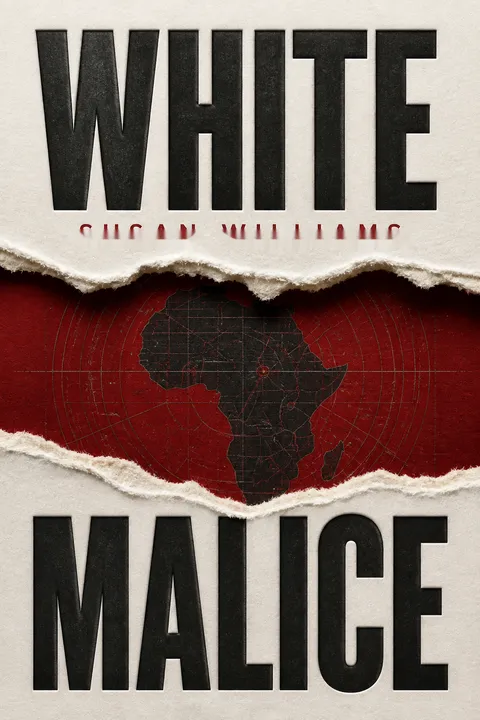
White Malice is a meticulously researched book exposing CIA involvement in post-independence Africa, focusing on Ghana and Congo. Readers praise Williams' thorough examination of CIA operations, including assassinations and government overthrows. The book is described as informative, engaging, and infuriating, detailing the extent of US interference in African affairs. Some readers found it dense and occasionally disorienting due to its wealth of information. Overall, it's highly recommended for those interested in African history, decolonization, and CIA activities, though its scope is narrower than the title suggests.
People Also Read

Glossary
All African People’s Conference
Pan-African liberation gatheringA 1958 conference in Accra that brought together more than 300 political and labor representatives from 28 African territories, alongside observers from outside Africa. Organized under the slogan of ending foreign rule, it connected liberation movements, debated strategy, and promoted African unity. Patrice Lumumba attended, and the meeting helped shape his political relationship with Kwame Nkrumah.
Shinkolobwe
High-grade uranium mineA mine in Katanga, in the Belgian Congo, whose uranium ore was exceptionally concentrated. The book identifies it as a crucial source for the Manhattan Project and the atomic bombs used against Japan in 1945. Its strategic value continued into the Cold War, when American and Belgian officials sought to control access and prevent Soviet acquisition.
neocolonialism
Control without formal ruleKwame Nkrumah’s term for a condition in which a country is formally independent but its economic system and political choices are directed from outside. In this book, the concept helps explain how influence could persist after colonial administrations withdrew, through control of investment, strategic resources, military support, aid, and international recognition.
third-country agent
Foreign covert intermediaryA person recruited to conduct covert work who is neither a citizen of the country targeted nor an American official. The arrangement can obscure the sponsoring government’s role if an operation is exposed. In the Congo, the CIA used agents such as QJWIN in efforts connected to Lumumba’s removal from UN protection and into Congolese custody.
YQPROP
Secret Lumumba operation channelA highly restricted CIA designation associated with the operation to assassinate Patrice Lumumba. The label combined a special code for the assassination effort with a classification used for sensitive personnel matters. The book uses it for the poison plan and related covert activity, while distinguishing that documented plan from the unresolved question of who directed Lumumba’s final transfer and killing.
pass-through
Hidden funding intermediaryA foundation or organization used to move money from a government sponsor to a recipient while concealing the original source. The CIA used pass-throughs, including the Farfield Foundation, to fund cultural, educational, and political projects. These arrangements could make a government-supported initiative appear privately financed and independent.
TRICO
Congo research reactorThe name of the research reactor installed at Lovanium University in Leopoldville in 1959. It was a 50-kilowatt TRIGA reactor intended for training, research, and producing isotopes for medical and agricultural uses. The CIA later instructed its Congo station chief to remove reactor rods, but the plan was abandoned after the university rector objected.
Download PDF
Download EPUB
.epub digital book format is ideal for reading ebooks on phones, tablets, and e-readers.








