

Key Takeaways
Treat forgetting as a political force, not a gap in the record.
Memory shapes the present. Chomsky argues that collective memory is constructed: public stories highlight some events and obscure others, shaping what societies think is possible and who they blame. In Guatemala, Indigenous communities sometimes preserved culture and resistance by keeping knowledge secret. Rigoberta Menchú's testimonio, a personal account that speaks to a wider community's experience, shows how silence could protect people under threat as well as erase their history.
Erasure serves power. After El Salvador's 1932 uprising and massacre, official records and public discussion suppressed Indigenous identity and political organizing. In Guatemala, soldiers followed researchers who tried to reunite displaced families with those who stayed behind. Remembering could put survivors in danger, while forgetting helped elites and US officials avoid responsibility.
What's striking is that memory here is not merely a cultural inheritance. It is a resource whose control can determine whether a grievance appears political, private, or nonexistent. This resembles the way archives and official statistics govern what institutions can recognize: what is not recorded can be treated as if it never happened. Yet testimony also has limits. A witness cannot stand for every person in a community, and public disclosure may endanger survivors. The book's emphasis on both testimony and protected silence makes a more careful case for historical recovery than a simple demand that everyone speak.
Follow the land: export prosperity was built through dispossession.
Independence did not end colonial rule. Central American elites gained political control after Spanish rule, but often preserved racial hierarchies and transferred communal lands into private hands. In the late nineteenth century, coffee expansion brought land seizures, coerced labor, and police power. Chomsky calls this a second conquest. In Guatemala, state labor drafts and debt peonage helped plantations secure Indigenous workers after communities lost land.
Exports enriched a narrow few. United Fruit and other US companies built banana empires across the region, controlling land, railways, ports, or utilities. By 1950, United Fruit owned 565,000 acres in Guatemala. After World War II, cotton and cattle expansion took more land while creating relatively few jobs. The resulting landlessness and labor migration were not side effects of progress. They were part of how the export model worked.
The useful analytical move is to ask who controls land, labor, and infrastructure, rather than treating export growth as a neutral measure of development. This also helps explain why formally independent states could remain economically dependent. Still, the account does not reduce every conflict to a simple contest between foreign companies and local communities. Indigenous authorities, local elites, workers, and migrants had different interests, and power relations within communities mattered. That complexity strengthens the central argument: dispossession operated through institutions and alliances, not through a single outside actor acting alone.
US Cold War policy protected a system, not simply democracy.
Reform became a threat. Guatemala's elected governments from 1944 to 1954 expanded labor rights and organized a land reform. Jacobo Árbenz's Decree 900 redistributed 1.4 million acres to about 500,000 peasants, including land held idle by United Fruit. In 1954, the CIA backed an invasion that helped force Árbenz from office. The campaign invoked communism, but corporate interests and fear that reform might spread across Central America also mattered.
The pattern continued. During the 1980s, the United States funded El Salvador's military, backed the Contras against Nicaragua's Sandinista government, and used Honduras as a staging ground. Congress restricted Contra funding, but Reagan administration officials secretly kept the operation alive, culminating in the Iran-Contra scandal. The International Court of Justice ruled that US support for the Contras violated Nicaragua's sovereignty; Washington rejected the ruling.
This account shows how security language can disguise economic and geopolitical priorities. The Guatemala coup is especially clarifying because land redistribution threatened a major US corporation, while officials also feared that its example could inspire neighboring populations. A useful caution is that US influence did not make Central American governments or elites passive puppets. Local actors pursued their own goals, sometimes inviting intervention and sometimes resisting it. The strongest reading therefore treats intervention as a powerful constraint and enabling force, while still asking which domestic institutions and interests made it effective.
Repression often turned local reform movements into armed resistance.
Organizing came before many insurgencies. In El Salvador, church-led study groups, peasant leagues, unions, and cooperatives helped rural people interpret poverty as a political condition they could challenge. The military and paramilitary group ORDEN attacked activists before a major armed insurgency had emerged. The killing of Jesuit priest Rutilio Grande in 1977 and Archbishop Óscar Romero in 1980 deepened the sense that peaceful reform offered little protection.
Violence targeted communities. In Guatemala, the army attacked Indigenous villages, destroyed crops, and forced survivors into military-controlled model villages. By 1983, roughly 80 percent of Indigenous people in four highland departments had fled home at least temporarily. Civil Defense Patrols compelled many men to police or attack their own communities. These systems made neighbors and relatives instruments of counterinsurgency, not merely casualties of a battlefield.
The account challenges a familiar sequence in which radical ideas produce violence and the state responds. Here, repression can close peaceful routes, widen the constituency for armed movements, and make whole communities targets because of their capacity to organize. That does not mean every insurgent action represented popular consent, or that armed movements were free of internal disputes. The book's examples invite a distinction between a movement's social base, its armed organizations, and the civilians caught between them. Keeping those categories separate avoids both blaming victims and romanticizing revolution.
A peace accord cannot deliver justice while preserving inequality.
War ended without transforming its foundations. The peace agreements of the 1990s demobilized armed groups and created elections and truth commissions, but often left land ownership and economic power largely intact. In El Salvador, an amnesty law blocked prosecution after a truth commission attributed 85 percent of documented abuses to state and state-sponsored forces. Guatemala's accords recognized Indigenous rights but avoided land reform and established existing property claims as the baseline.
Austerity filled the vacuum. Neoliberalism, a policy approach emphasizing privatization, deregulation, reduced public spending, and foreign investment, became the postwar economic model. Maquiladoras expanded, while social services and public employment contracted. In Honduras, the 2009 coup against Manuel Zelaya was followed by policies favoring investors and weakening protections. Formal peace could coexist with land conflict, impunity, poverty, and renewed displacement.
The distinction between ending armed conflict and resolving its causes is essential. Elections can make political competition more orderly while leaving communities without land, public services, or meaningful recourse against powerful actors. Truth commissions can preserve evidence, but truth alone cannot redistribute power or guarantee punishment. At the same time, neither peace agreements nor transitional justice should be judged only by what they failed to accomplish: they can create openings for organizing and legal change. The sharper question is whether those openings come with resources and enforceable rights, or merely transfer responsibility to underfunded local institutions.
Migration is the downstream result of war, austerity, and dispossession.
Flight followed the whole history. Central Americans migrated long before the civil wars, pushed by land loss, plantation labor, and population pressure. The wars of the 1980s displaced millions; by the decade's end, about three million had left their countries, and roughly one million had crossed through Mexico into the United States. Migration did not stop when peace agreements were signed. Austerity, unemployment, violence, land conflict, and weak public services continued to make survival difficult.
The path north became familiar. Family ties, remittances, and the presence of earlier migrants helped others follow. Parents who left to support children sometimes found those children making the journey later to reunite with them. The number of unaccompanied Central American minors apprehended at the US border rose to about 69,000 in fiscal year 2014 and again in 2019. Drought and coffee crop disease added pressure for small farmers.
Migration is best understood here as a process linking households to political economy, not as an isolated decision made at a border. Remittances can keep families afloat while also deepening dependence on migration and creating new local inequalities. That does not mean every migrant is driven by one cause, or that economic hardship automatically produces migration. Family networks, personal aspirations, danger, and opportunity all shape individual choices. The book's historical framing is most persuasive when it explains the conditions that narrow those choices without denying migrants' own judgment and agency.
Border policy made refugees illegible when acknowledging them threatened US policy.
Asylum decisions reflected foreign policy. During the 1980s, the United States approved only 1.8 percent of Guatemalan and 2.6 percent of Salvadoran asylum applications. Recognizing many applicants as refugees would have contradicted Washington's support for their governments. By contrast, Nicaraguans fleeing the Sandinista government had a better chance of approval. US policy treated people with similar claims differently according to the political story the government wanted to tell.
Enforcement outlasted legalization. The 1986 Immigration Reform and Control Act offered legal status mainly to people already in the country by 1982, excluding many Central Americans who arrived during the wars. Its lasting provisions expanded border enforcement and penalized employers, while legalization was a one-time measure. Later policies intensified detention and deportation. The border became more dangerous without addressing the conditions that made people flee.
The mismatch between asylum law and political practice shows that humanitarian categories are never applied in a vacuum. Legal standards can be formally universal yet unevenly administered when recognition would challenge an ally or expose state violence. This history also complicates the idea that more enforcement is a neutral response to unauthorized migration: it changes routes, risks, and who can safely reach a hearing. A further question is how a system should distinguish protection from labor-market control when the same person may be fleeing threats and seeking work. The book makes clear that treating those motives as mutually exclusive obscures reality.
Make solidarity accountable: change policy, repair harm, and listen locally.
Solidarity meant more than sympathy. In the 1980s, US churches and community groups sheltered refugees, organized public education, and sent visitors to Nicaragua and El Salvador. Witness for Peace placed US volunteers in communities targeted by Contra attacks, both to offer accompaniment and to show visitors the effects of US policy. The movement connected Central Americans' struggles with pressure on Congress and public opinion.
Listen before offering help. When US visitors asked Nicaraguan mothers what they could do, the answer was to return home and change their government's policy. Chomsky uses this encounter to challenge the assumption that outsiders are rescuers. The book closes by arguing that reparations mean repairing damage caused by extraction and intervention, not simply transferring money. That requires confronting how US policy helped create displacement and violence.
This section turns solidarity from a benevolent identity into an accountability practice. Its central test is whether an action shifts power toward affected communities or makes outsiders feel helpful while leaving policy untouched. The distinction applies well beyond international activism: listening is meaningful when it changes who sets priorities and who bears costs. Reparations also require care, since no single program can undo centuries of harm, and poorly designed aid can reproduce dependency. The strongest implication is not that assistance is useless, but that it must be answerable to those whose lives and political choices it affects.
Analysis
The book's central move is to replace a border-centered explanation of migration with a historical account of how people came to need refuge and why the United States became their destination. Its chronology is also an argument: colonial dispossession, export agriculture, US intervention, Cold War counterinsurgency, postwar austerity, and migration are presented as connected stages rather than separate crises. This structure makes policy consequences visible across generations.
The narrative is strongest when it connects large systems to specific human experience. Menchú's guarded testimony, the destruction of Guatemalan villages, the asylum decisions facing Salvadorans, and the mothers who ask US visitors to change their own government's policy all give political history a personal scale. At the same time, the book avoids presenting Central Americans only as victims. Indigenous communities preserved traditions, workers organized, revolutionary movements built institutions, refugees created self-governing camps, and activists in the United States challenged their own government.
That emphasis on agency is also where the account's tensions matter. Revolutionaries disagreed over strategy, Sandinista policies alienated some Indigenous and rural communities, and local elites sometimes benefited from exploitative systems. These complications do not cancel the argument about US power; they show how intervention worked through local alliances and conflicts. The story is not a simple morality play in which one external actor determines every outcome.
The most consequential distinction is between formal peace and substantive repair. Elections and accords can end a war without changing ownership, opportunity, or impunity. Likewise, a border can be tightly controlled while the policies that help produce displacement remain intact. The book's challenge to readers is therefore epistemic and political: remember the relationships hidden by national narratives, then judge proposed solutions by whether they confront those relationships. Its history does not promise an easy remedy. It makes a humanitarian response more serious by insisting that compassion without accountability leaves the machinery of displacement running.
Review Summary
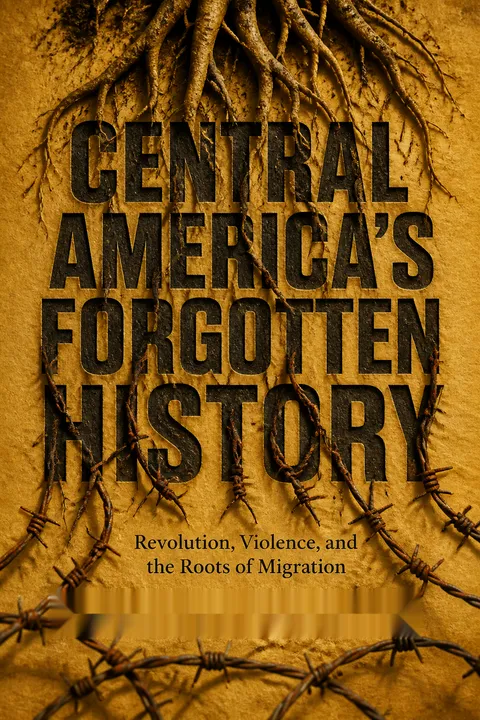
Central America's Forgotten History receives mostly positive reviews for its comprehensive overview of US intervention in Central America and its lasting impacts. Readers appreciate the detailed historical account and its relevance to current immigration issues. Some critics find the book's organization challenging and its perspective one-sided. Many reviewers highlight the book's importance in understanding the root causes of Central American migration and the US role in shaping the region's history. The book is praised for shedding light on often-overlooked aspects of US foreign policy.
People Also Read



Glossary
testimonio
community-rooted personal testimonyA first-person account that presents an individual's experience as connected to the broader experience of a community. In the book, Rigoberta Menchú's testimony recounts Indigenous life, repression, and resistance in Guatemala. It also highlights that disclosure can be dangerous, and that silence may sometimes protect cultural knowledge and community organizing.
settler colonialism
colonial replacement of peoplesA form of colonialism in which settlers seek not only to govern an existing population but to take its land and replace it with a new population. Chomsky uses the concept to describe the United States' expansion across Indigenous lands, arguing that independence from Britain intensified rather than ended this project.
cofradía
village religious brotherhoodA village-level religious brotherhood that often also served as a governing institution in Indigenous communities. Cofradías organized local religious life and connected spiritual authority with social and political power. Their role could sustain community institutions, though their hierarchies could also reinforce the authority of elders and local elites.
Liberation Theology
faith joined to social justiceA current in Latin American Catholic thought that treated Christian commitment as a demand to confront poverty and injustice in everyday life. It encouraged Bible study, community organizing, and social action among poor communities. In Central America, priests and lay religious workers helped build cooperatives and political awareness, making some church networks targets of repression.
low-intensity warfare
proxy-led counterinsurgencyA US strategy of pursuing military goals through local allies and proxy forces rather than deploying large numbers of US troops. It combined military aid and training with political and psychological operations intended to weaken revolutionary movements. Although described as low intensity from the US perspective, it involved severe violence and mass displacement in Central America.
neoliberalism
market-first economic policyA political and economic approach that prioritizes privatization, deregulation, reduced public spending, austerity, and attracting foreign investment. In the book, postwar neoliberal reforms are contrasted with revolutionary demands for redistribution and social provision. The reforms expanded export-oriented industries while often weakening public services and leaving underlying inequality unresolved.
maquiladora
low-wage export factoryA duty-free manufacturing or assembly plant located in a low-wage country, often producing goods for export. Governments promoted maquiladoras to attract foreign investment and create jobs. Chomsky describes how this model also encouraged competition among countries to offer low wages and limited regulation, while employment could disappear when companies moved elsewhere.
transitional justice
accounting for past abusesProcesses used after conflict or repression to address past abuses and establish a public record. They may include truth commissions, investigations, and legal proceedings, but do not always result in punishment or reparations. The book shows how Central American commissions documented atrocities while amnesties and continuing political power limited accountability.
mano dura
punitive anti-gang policyA tough-on-crime approach adopted in Central America, based partly on US anti-gang tactics. These policies relied on aggressive policing and incarceration. The book argues that mass imprisonment could strengthen gang recruitment and deepen violence, rather than resolve the poverty, displacement, and weak social support that helped gangs grow.
FAQ
What's Central America's Forgotten History about?
- Historical Context: The book examines the intertwined histories of Central America and the United States, focusing on U.S. military interventions and economic policies that have shaped the region's crises, particularly migration.
- Migration Roots: It delves into the historical roots of migration from Central America to the U.S., emphasizing the legacy of centuries of oppression and violence carried by many migrants.
- Indigenous Struggles: The author highlights the struggles of Indigenous peoples, detailing how their identities and histories have been suppressed in mainstream narratives.
Why should I read Central America's Forgotten History?
- Essential Understanding: Aviva Chomsky provides a crucial perspective on the historical context of current migration issues, essential for understanding immigration debates.
- Challenging Narratives: The book challenges dominant narratives that portray migrants as economic burdens, framing them instead as individuals shaped by historical injustices.
- Informed Activism: Readers interested in social justice and reforming U.S. foreign policy will find valuable insights and historical evidence to support their advocacy efforts.
What are the key takeaways of Central America's Forgotten History?
- Interconnected Histories: The book emphasizes the deep connections between the histories of the U.S. and Central America, particularly through colonialism and neocolonialism.
- Role of U.S. Policies: Chomsky argues that U.S. policies have often exacerbated conditions leading to migration, including support for oppressive regimes and economic exploitation.
- Importance of Memory: The author stresses the importance of remembering and acknowledging histories of oppression to understand contemporary issues and work towards justice.
What are the best quotes from Central America's Forgotten History and what do they mean?
- “History matters, and how we tell and remember history matters.”: This quote underscores the significance of historical narratives in shaping current perceptions and policies, particularly regarding immigration.
- “Forgetting can be a form of oppression and silencing.”: Chomsky highlights how the erasure of historical injustices perpetuates ongoing struggles and prevents meaningful solutions to contemporary issues.
- “The roots of this narrative are as deep as the roots of migration.”: This statement emphasizes that understanding migration requires a deep dive into historical contexts, rather than viewing it as a recent phenomenon.
How does Central America's Forgotten History address the issue of migration?
- Historical Roots of Migration: Chomsky traces the historical factors that have led to migration, including U.S. interventions that created conditions of violence and poverty.
- Personal Narratives: The book includes personal stories of migrants, illustrating how their experiences are shaped by historical events and systemic injustices.
- Call for Understanding: Chomsky urges readers to understand migration as a complex issue rooted in history, rather than a simple matter of choice or economic necessity.
What role does U.S. foreign policy play in the narratives presented in Central America's Forgotten History?
- Policy Implications: The book argues that U.S. foreign policy has often prioritized corporate interests over human rights, leading to the destabilization of Central American countries.
- Historical Accountability: Chomsky calls for a reckoning with the historical consequences of U.S. actions in the region, suggesting that understanding this history is crucial for reforming current policies.
- Impact on Migration: The author connects U.S. foreign policy decisions directly to the migration crisis, illustrating how past actions have created the conditions that force people to flee their homes.
How does Central America's Forgotten History depict Indigenous organizing?
- Historical Resistance: Chomsky highlights the long history of Indigenous resistance against colonial and neocolonial forces, showcasing their struggles for rights and recognition.
- Contemporary Movements: The book discusses current Indigenous movements and their efforts to reclaim their histories and advocate for justice, emphasizing the importance of solidarity.
- Cultural Identity: The author illustrates how Indigenous identities have been suppressed but continue to play a vital role in contemporary social movements and the fight for justice.
What is the significance of memory in Central America's Forgotten History?
- Collective Memory: Chomsky discusses how collective memory shapes cultural identity and informs current struggles for justice, particularly among marginalized communities.
- Political Implications: The book argues that struggles over historical memory are inherently political, as those in power often seek to erase or distort histories that challenge their narratives.
- Path to Justice: By emphasizing the importance of remembering and acknowledging historical injustices, Chomsky suggests that this is essential for moving towards a more just future.
How does Central America's Forgotten History relate to contemporary issues?
- Relevance to Current Events: The book connects historical events to contemporary issues such as immigration policy, social justice movements, and U.S. foreign relations.
- Framework for Understanding: Chomsky provides a framework for understanding current crises through the lens of history, encouraging readers to consider the long-term impacts of past actions.
- Advocacy for Change: The author advocates for a rethinking of U.S. foreign policy and immigration practices, rooted in an understanding of historical context and justice.
What role does neoliberalism play in Central America's Forgotten History?
- Economic Shift: The book discusses the transition from developmentalism to neoliberalism in the 1980s, which prioritized privatization and deregulation.
- Impact on Society: Chomsky argues that neoliberal policies have exacerbated poverty and inequality, leading to social unrest and increased migration.
- Resistance Movements: The author explores how neoliberalism has sparked resistance movements among Indigenous and marginalized communities, seeking to reclaim rights and challenge imposed economic structures.
How does Central America's Forgotten History depict the violence in the region?
- State Violence: Chomsky details the systematic violence perpetrated by state forces and paramilitary groups, often with U.S. support, as a tool for maintaining power and suppressing dissent.
- Human Rights Abuses: The book documents numerous human rights abuses, including disappearances, torture, and extrajudicial killings, particularly during the civil wars.
- Legacy of Trauma: The author emphasizes the lasting impact of this violence on communities, contributing to cycles of trauma and displacement.
What historical events are crucial to understanding the themes in Central America's Forgotten History?
- U.S. Interventions: Key events include the U.S.-backed coup in Guatemala in 1954, support for the Contra rebels in Nicaragua, and military aid to El Salvador.
- Civil Wars: The civil wars in El Salvador and Guatemala during the 1980s are critical to understanding the violence and migration patterns that followed.
- Neoliberal Reforms: The shift to neoliberal economic policies in the 1980s and 1990s transformed the region's socio-economic conditions, linked to increased poverty and migration.
About the Author
Other books by Aviva Chomsky
Download PDF
Download EPUB
.epub digital book format is ideal for reading ebooks on phones, tablets, and e-readers.








