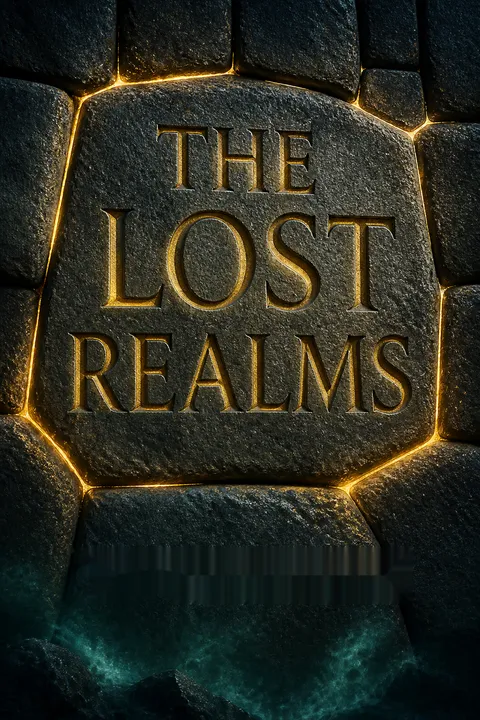


Key Takeaways
Read the Americas as an ancient Anunnaki mining frontier
The book’s central claim. Zecharia Sitchin argues that the Anunnaki, beings he identifies as visitors from a planet called Nibiru, came to Earth for gold and helped shape human civilizations. In his account, their influence crossed into the Americas, where they sought metals and left behind cities, calendars, myths, and monuments that resemble those of the ancient Near East.
A connected world. The book treats the Maya, Aztecs, Olmecs, and Andean peoples not as isolated societies, but as inheritors of contact with these visitors and their human followers. Its evidence is a sweeping combination of legends, architecture, artifacts, language, and astronomical alignments. This is Sitchin’s interpretation, not an established archaeological account.
What’s striking is the scale of the proposed synthesis: Sitchin asks readers to interpret myth, engineering, and ritual as parts of one history rather than as separate curiosities. That ambition makes the book memorable, but it also raises the standard of proof. Resemblance across cultures can suggest a question; it cannot by itself establish a shared cause. A strong case for ancient contact would need independent evidence, such as securely dated objects, clear routes of transmission, and material traces that cannot be explained by local development.
Gold was sacred wealth to Indigenous rulers, not ordinary money
A clash of meanings. The Spanish conquistadors treated gold as portable wealth. The book contrasts that with Aztec and Inca accounts in which gold belonged to the gods and adorned temples, rulers, and ritual objects. Inca gold objects could be melted down for ransom or bullion, while their original religious and artistic meanings vanished.
Conquest as erasure. Atahualpa, the Inca ruler captured by Francisco Pizarro, promised a room filled with gold for his release. His people gathered precious objects, which the Spaniards melted down; the ruler was executed anyway. Sitchin uses these episodes to show how European hunger for metal obscured the civilizations that had made it. He further argues that the sacred status of gold points to an older purpose: obtaining it for the gods.
The contrast between sacred and commercial value is a useful corrective to histories that treat gold simply as money. An object can be economically precious and culturally irreplaceable, a distinction that matters whenever conquest turns living traditions into raw material. Yet religious meaning does not establish that gold was mined for extraterrestrial purposes. The conquest records also come through Spanish chroniclers, whose accounts can reflect their own interests and assumptions. Their evidence is essential, but it needs to be read with attention to who recorded it and what they stood to gain.
Follow El Dorado’s rumors back to the mystery of accumulated gold
A moving target. Columbus returned from his first voyage with gold objects and stories of a golden city. Spanish expeditions then pursued El Dorado, the imagined ruler or kingdom whose riches seemed always to lie farther inland. Conquests of Mexico and Peru brought enormous quantities of gold, yet the search continued because the Spaniards believed they had not found the source of the wealth.
The production puzzle. Sitchin emphasizes the difference between the vast stores the conquistadors seized and the local gold gathering they observed, such as collecting nuggets from riverbeds. He argues that earlier, more capable miners must have produced the accumulated treasure. The book also notes that gold was extracted from temples, tombs, and hidden caches, as well as through tribute, so the surviving hoards were not necessarily the product of a single mine or era.
The distinction between a stockpile and an annual production rate is a sound historical question. A society can accumulate precious objects through generations of tribute, trade, inheritance, and ritual deposit, even when local mining is limited. That helps explain why conquest-era inventories need not map neatly onto contemporary extraction. Sitchin is right to treat the mismatch as a puzzle, but the puzzle does not have only one solution. Estimates from chronicles, the circulation of objects, and the difference between mining and river panning all require separate scrutiny.
Treat shared myths as clues to contact, not proof
Patterns across traditions. Sitchin compares American stories of a great flood, divine creators, sacred numbers, and returning gods with accounts from Mesopotamia and the Bible. He also points to the Aztec feathered serpent Quetzalcoatl, legends of bearded visitors, and migration stories that begin across the sea. He interprets these similarities as memories of contact with the ancient Near East.
A bold identification. The book suggests that the Aztecs’ ancestral figure Tenoch may echo the biblical Enoch, and that the Americas could be a lost realm of Cain’s descendants. It also identifies the Olmecs as Africans and their bearded contemporaries as Mediterranean visitors. These are Sitchin’s proposals, drawn from comparisons among names, images, and stories, not conclusions established by the evidence presented.
Comparative mythology can reveal how societies organize recurring concerns: creation, catastrophe, ancestry, and divine authority. It can also generate testable questions about migration and exchange. The danger is treating a familiar motif as a historical fingerprint. Flood stories, serpents, and sacred numbers can arise independently, while apparent word similarities may be accidental or altered by translation. Claims about the racial identity of ancient figures need particular care: facial resemblance in a sculpture is not a reliable substitute for skeletal, genetic, or archaeological evidence.
Maya calendars reveal precision, but not who supplied it
Three ways to count. The Maya used a Long Count, which recorded elapsed days from a starting date that Sitchin correlates with August 13, 3113 BCE. They also used the Haab, a 365-day solar calendar, and the Tzolkin, a 260-day ritual calendar. Combined, the Haab and Tzolkin formed a 52-year cycle known as the Calendar Round.
A sky-facing society. Maya cities included observatories and buildings aligned with celestial events. Copan, at a latitude where the interval between the Sun’s overhead passages is close to 260 days, was a major center for astronomical study. Sitchin argues that the calendar’s numbers and methods came from Mesopotamia through Egypt. He treats the starting date as evidence of a remembered event, rather than only a calendrical convention.
The Maya calendar is impressive because it coordinates several cycles for different purposes, from ritual scheduling to long-term chronology. Its mathematical structure is evidence of sustained observation and intellectual work, not evidence of outside instruction by itself. Calendars can share numbers because human communities face similar astronomical regularities, and the book’s proposed chain of transmission needs evidence beyond numerical parallels. The more productive question is how Maya specialists maintained and revised these systems, and what political or religious work the cycles performed in their own society.
Read Tiahuanacu’s waterworks as evidence, then question the industrial leap
Engineering in the highlands. Tiahuanacu stands near Lake Titicaca, roughly 13,000 feet above sea level. Its remains include immense stone structures, a solar observatory called the Kalasasaya, and channels and conduits that run through the site. At the nearby Puma-Punku complex, enormous blocks bear precisely cut grooves and indentations; some were joined with bronze clamps.
From feature to theory. Sitchin interprets the channels, reservoirs, and subterranean passages as parts of a metal-processing operation, possibly for washing gold-bearing material. He treats the site’s unusual stonework and technological features as evidence of knowledge beyond what he believes local societies possessed. The book also connects Machu Picchu with Tampu-Tocco, a refuge named in Inca-origin stories, and places both sites within a much older Andean history.
Tiahuanacu’s scale and setting make it reasonable to ask how its builders organized labor, water, and construction. Archaeology often advances by turning puzzling features into specific functional hypotheses. But channels do not automatically indicate ore processing, and complex stonework does not establish an unknown technology. Each interpretation should be checked against excavation context, residues, wear patterns, and comparison with other water systems. The site’s sophistication is important in its own right, without needing to explain it through an outside civilization.
Trace tin and bronze to Lake Titicaca’s mineral belt
A metal with a long route. Bronze is an alloy of copper and tin, and tin must generally be extracted from ore rather than collected as a natural lump. Sitchin notes that Lake Titicaca lies near Bolivian sources of tin, gold, and copper, and that bronze artifacts and metalworking remains have been found in the region. He argues that Tiahuanacu served as a center for working and transporting these materials.
A disputed connection. The book links the Aymara name element titi with tin and compares the Mesopotamian word Anaku with Sumerian terminology for tin. It proposes that Andean metal reached the Old World, helping explain renewed bronze production there. The geographical presence of minerals is one part of that argument; the proposed ancient trade route and its timing are another, and require evidence of their own.
Following a metal from ore to artifact is a valuable way to connect geology, technology, and trade. Tin scarcity in some regions can make distant supply routes historically plausible, and alloy composition can sometimes help identify sources. But a word resemblance is not a trade record, and a mineral deposit does not prove that it was exported across oceans. Stronger support would come from securely dated artifacts with trace-element signatures that link them to a specific source and distribution route.
Place Quetzalcoatl and Viracocha inside Sitchin’s map of rival gods
Gods with geographic realms. Sitchin reads the Feathered Serpent Quetzalcoatl, worshiped in Mexico and Yucatan, as a visiting culture-bringer associated with Thoth, the Egyptian god of knowledge. In the Andes, he connects Viracocha, the creator figure who gives a golden wand to the first rulers, with the Near Eastern storm god Adad. The book treats the gods as real visitors whose human followers brought mining skills, calendars, and political authority.
A transcontinental map. In this reconstruction, the Olmecs were African mining specialists, while bearded Mediterranean peoples brought related knowledge to the Americas. The book places these groups in contact and sometimes competition, then links the abandonment of cities to the departure of the gods and their followers. These identifications are the narrative framework Sitchin uses to connect distinct American traditions, not a consensus interpretation of their deities or peoples.
Reading deities through their attributes, such as a thunderbolt, a serpent, or a culture-giving role, can illuminate how different societies expressed power and knowledge. Yet similar divine functions do not make two gods the same historical person. The book’s map is compelling as storytelling because it gives separate traditions a shared cast and plot. As history, it needs evidence that distinguishes direct transmission from local religious development. Respecting the distinct cultural settings of these gods is as important as comparing them.
Compare the Americas’ dark day with Joshua’s stalled Sun cautiously
One event, two memories. Sitchin draws together an Andean account of a day when sunrise was delayed for about twenty hours, a Mesoamerican tradition of darkness, and the biblical story in which Joshua’s Sun appears to stop. He places the events around 1400 BCE, arguing that reports from opposite sides of the Earth describe one disruption of the planet’s rotation.
The timeline at work. The proposed date depends partly on Montesinos’s chronology of ancient Andean rulers, which Sitchin calculates against the biblical date of the Exodus. He presents the alignment as confirmation that the Andean traditions preserve history. The book offers no direct astronomical record that establishes one global event or identifies its cause; the parallel depends on interpreting stories and chronologies in the way Sitchin proposes.
A striking parallel between geographically distant accounts can be a powerful prompt for investigation, especially when each tradition has its own chronology. But matching narratives do not independently verify an event if both their dates and meanings are uncertain. The physical claim that Earth’s rotation changed also requires a mechanism and corroborating evidence from multiple records. A careful reading preserves the question Sitchin raises while distinguishing an intriguing cross-cultural comparison from a demonstrated astronomical occurrence.
Test the lost-realms thesis against artifacts, dates, and ordinary explanations
A sweeping reconstruction. The book follows a route from El Dorado and the conquest of Mexico and Peru to the Maya cities, Olmec monuments, and Andean sites such as Cuzco, Machu Picchu, and Tiahuanacu. Sitchin joins their legends, calendars, metalwork, and architectural alignments into a history of ancient visitors and mining. He interprets the Long Count’s 3113 BCE starting point as linked to Quetzalcoatl’s arrival, and places the beginning of an Andean Ancient Empire around 2400 BCE.
What the story asks. The book’s lasting appeal is its insistence that the abandoned cities and lost knowledge deserve serious questions. Its answers, however, rest on connections among evidence that is often ambiguous. The most useful way to read it is to keep the mysteries alive while asking whether each proposed link has independent archaeological support.
The book succeeds at making scattered material feel narratively connected, and it draws attention to real achievements in Indigenous astronomy, architecture, and metallurgy. Its central weakness is that resemblance often does the work of proof: a similar symbol, name, or building form becomes evidence for a common source without a demonstrated path between them. Readers gain most by separating observation from inference. That discipline protects both the value of the questions and the historical agency of the American societies whose accomplishments the book seeks to explain.
Analysis
The Lost Realms is best understood as a speculative synthesis, not a conventional history. Its organizing move is to treat legends, archaeological sites, metals, calendars, and religious symbols as fragments of one planetary narrative. That structure gives the book unusual momentum: it begins with the conquistadors’ pursuit of gold, travels through Mesoamerican myths and ruins, and arrives at the high-altitude engineering and mineral resources of the Andes. Its most productive questions concern how societies accumulated gold, why certain sites were built where they were, and how astronomical knowledge served political and religious life.
The central weakness is the gap between observation and explanation. A stepped pyramid, a serpent deity, a similar calendar number, or an unfamiliar construction feature may justify investigation, but none independently proves ancient transoceanic contact or extraterrestrial intervention. The book frequently treats resemblance as transmission, and a proposed etymological connection as historical evidence. Its interpretations of the Olmecs as Africans, American bearded figures as Mediterranean visitors, and Tiahuanacu as a metal-processing plant are not accepted conclusions of archaeology. The monumental achievements of Maya, Aztec, Olmec, and Andean societies do not require an external source to be remarkable.
The strongest reading keeps Sitchin’s hypotheses distinct from established findings. The Long Count, Maya urban planning, Tiahuanacu’s stonework, and Andean metallurgy are real subjects of study; the Anunnaki explanation is not supported by credible archaeological evidence. Claims about contact would need securely dated artifacts, clear material provenance, decipherable records, and converging evidence that rules out local development. Claims about ancient astronomical events require reliable independent chronologies and physical corroboration. The book’s enduring value lies less in its proposed answers than in the questions it directs readers to ask, provided those questions are pursued with methods that can disprove as well as confirm a theory.
Review Summary
The Lost Realms, the fourth book in Sitchin's Earth Chronicles series, explores connections between ancient Mesopotamia and pre-Columbian Americas. Reviews average 4.15/5 stars. Readers appreciate Sitchin's detailed examination of Mesoamerican civilizations, linking Sumerian gods to American deities like Quetzalcoatl and Viracocha. The book discusses gold mining, architectural similarities, and tin trade between regions. While some find it academically thorough and thought-provoking, others note slow passages and question the ancient alien theory. Most agree it presents compelling archaeological and mythological evidence, though interpretations remain controversial. Fans value its expansion of Sitchin's theories to the Americas.
People Also Read

Glossary
Anunnaki
Sitchin’s visiting godsIn Sitchin’s account, the Anunnaki are beings from the planet Nibiru who came to Earth and influenced human civilization. The name is commonly rendered in the book as those who came from heaven to Earth. Sitchin presents their search for gold as a central motive for their presence, a claim not established by archaeology.
Nibiru
Anunnaki home planetNibiru is the planet from which Sitchin says the Anunnaki traveled to Earth. In his reconstruction, it has a long orbit that brings it near Earth periodically, and its inhabitants need gold to protect their atmosphere. This role is essential to the book’s story, but the planet and its described history are not accepted astronomical findings.
Long Count
Maya elapsed-day calendarThe Maya Long Count records elapsed days from a starting point by combining units of different sizes. Sitchin uses the commonly cited correlation that places its starting date in 3113 BCE and argues that it marks a remembered historical event. The calendar system itself is a Maya achievement; the proposed meaning of its starting date is an interpretation.
Tzolkin
260-day ritual calendarThe Tzolkin is a 260-day calendar used in Mesoamerica. In the Maya calendrical system described in the book, it works alongside the 365-day Haab calendar. Their combined cycles create a 52-year Calendar Round. Sitchin argues that the number and structure reflect knowledge transmitted from the ancient Near East.
Haab
365-day Maya calendarThe Haab is a Maya solar calendar of 365 days, organized into eighteen periods of twenty days, followed by five additional days. It operated alongside the 260-day Tzolkin, rather than replacing it. Sitchin compares its structure with calendars in Egypt and Mesopotamia and treats the similarities as evidence of historical transmission.
Viracocha
Andean creator deityViracocha is a creator figure in Andean traditions, associated in the book with creation, civilization, and the region around Lake Titicaca. Sitchin emphasizes stories in which Viracocha gives a golden wand to the ancestors of the Incas, then identifies the deity with the Near Eastern storm god Adad. That identification is his comparative theory.
Quetzalcoatl
Feathered Serpent deityQuetzalcoatl, the Feathered Serpent, is a major deity in Mesoamerican traditions, associated in the book with knowledge, crafts, and the promise of return. Sitchin interprets the figure as a culture-bringing visitor and connects him with the Egyptian god Thoth. The book uses that proposed identity to link Mesoamerican beliefs with ancient Near Eastern religion.
Grid of Viracocha
Proposed Andean site alignmentThe Grid of Viracocha is a proposed geometric arrangement linking ancient Andean sites, developed by Maria Schulten de D’Ebneth and discussed by Sitchin. It uses lines, squares, and circles to connect places including Tiahuanacu, Cuzco, and Machu Picchu. Sitchin presents the alignments and calculated dates as evidence of an ancient regional plan.
Earth Chronicles Series
About the Author
Other books by Zecharia Sitchin
Download PDF
Download EPUB
.epub digital book format is ideal for reading ebooks on phones, tablets, and e-readers.








