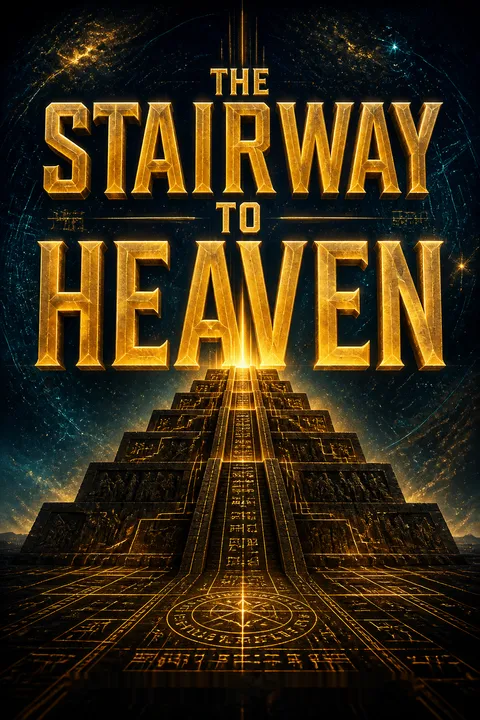


Key Takeaways
See how Eden's lost immortality became a real-world expedition.
A longing made literal. The book opens with the expulsion of Adam and Eve from Eden: immortality was once near, then became humanity's defining loss. Sitchin follows that desire from biblical and classical stories to Spain's exploration of the Americas. In 1513, Ponce de León sailed north in search of Bimini and the rumored rejuvenating waters, a quest the book says had royal backing and was more important than the public search for riches.
Myth fuels movement. Greek stories of restorative fruit, Quranic and Alexander traditions about a revived fish, and medieval tales of Paradise all helped make the Fountain seem discoverable. Sitchin's point is that belief in a sacred place can shape politics, travel, and risk-taking, even when the promised prize remains elusive.
What's striking is how a story about immortality becomes an account of political motivation. Exploration is rarely driven by one clean objective: wealth, faith, status, and personal hope often travel together. The Fountain also shows how inherited stories can turn uncertain testimony into a destination worth pursuing. That is a useful way to read the past without assuming the legends are literally true. The narrative is strongest when it documents what people believed and did. It is weaker when the existence of a recurring legend is treated as evidence that the magical water itself existed.
Read ancient myths as possible records of extraterrestrial contact.
The book's central wager. Sitchin argues that myths and sacred texts preserve distorted memories of encounters with technologically advanced visitors. He treats the Bible as a historical record, compares it with Sumerian, Egyptian, and other ancient sources, and interprets recurring images of gods descending, flying, or ascending as traces of actual events.
Comparison becomes evidence. The book repeatedly places traditions side by side: a revived fish appears in Greek, Quranic, and Alexander stories; divine journeys resemble one another across cultures; and ancient descriptions of heavenly vehicles are read as spacecraft. Sitchin sees these parallels as pieces of a shared history, not simply stories borrowed or reshaped over time. This premise organizes the book's many separate legends into one sweeping narrative.
This approach takes myth seriously as cultural memory rather than dismissing it as primitive fantasy. That is a productive starting point: oral traditions can preserve historical events, and comparison across languages can reveal contact and influence. But resemblance alone cannot identify the cause. Shared motifs may spread through trade, translation, or ordinary human concerns such as death and power. The crucial question is what evidence distinguishes a remembered spacecraft from a metaphor, ritual image, or literary convention. The book often moves quickly from an evocative similarity to a confident historical claim, leaving that test unresolved.
Read the Pharaoh's afterlife journey as Sitchin's map to spaceflight.
A route through the Duat. The Duat is the Egyptian realm through which the deceased king travels toward an afterlife. Sitchin reads funerary texts as descriptions of a physical journey: a crossing over water, passage through mountain gates and underground corridors, preparation for ascent, and departure in a celestial vehicle. He interprets the Pharaoh's journey as an imitation of what the gods had done.
Ritual becomes technical. The texts describe a ladder or Ascender, a vehicle called the Eye of Horus, protective attendants, and a final opening to the sky. Sitchin connects these images to launch equipment and astronaut clothing. In his reading, tomb rituals were not merely symbolic promises of resurrection. They rehearsed an earlier route that led from Egypt through a hidden complex to a launch point.
The Egyptian texts do present the afterlife as a journey with stages, obstacles, guides, and equipment. Reading that sequence spatially helps explain why its imagery is so vivid and orderly. Yet ritual precision does not establish engineering fact. Religious traditions commonly give an invisible journey concrete geography so that the community can imagine and perform it. Sitchin's interpretation invites useful questions about how metaphors acquire technical detail, but it needs independent archaeological evidence for spacecraft, launch infrastructure, and the proposed route. Without that, the reading remains an imaginative hypothesis rather than a demonstrated reconstruction.
Sitchin casts the Anunnaki as alien rulers who engineered human labor.
A proposed origin story. Sitchin's account begins with the Anunnaki, beings from the planet Nibiru who arrive on Earth roughly 450,000 years ago seeking gold. Their mining operation is demanding, and the workers eventually rebel. The scientist Enki proposes creating a labor force by combining the biology of an Earth primate with that of an Anunnaki. Sitchin identifies this engineered hybrid with the first humans.
The gods become managers. In this reconstruction, Enlil commands the enterprise, while Enki is the inventor and advocate for humanity. The biblical Adam's placement in Eden becomes, in Sitchin's reading, a memory of humans being assigned work. Stories of divine ancestry, forbidden knowledge, and human mortality are likewise recast as episodes in the visitors' attempts to control their creation.
This origin story gives familiar religious themes a clear narrative logic: human labor, knowledge, mortality, and divine authority all emerge from a conflict among powerful outsiders. Its dramatic coherence is a genuine strength. But coherence is not verification. Modern genetics supports human evolution through populations over long spans, not the kind of engineered hybrid described here, and no archaeological evidence identifies an Anunnaki mining operation. The story also turns ancient social hierarchies into literal extraterrestrial history. Readers can appreciate its explanatory ambition while asking whether it explains the evidence better than evolution, political mythology, or cultural transmission.
Treat the Flood as Sitchin's reset point for ancient civilization.
A catastrophe changes the story. Sitchin presents the Deluge as a real worldwide disaster, linked in his reconstruction to the return of Nibiru and the destabilization of Antarctic ice. The Anunnaki know that a vast flood is coming, but their leader Enlil wants humanity to perish. Enki secretly warns Ziusudra, the Sumerian flood hero, to build a vessel and preserve people and other living creatures.
Survival restarts history. After the waters recede, the Anunnaki accept that humanity has survived and is needed to rebuild. Sitchin connects this account to Noah and other flood traditions, arguing that civilization begins again after the catastrophe. He places the Deluge about 13,000 years ago, then links later milestones in agriculture and urban life to successive periods in the gods' chronology.
Flood stories appear in several ancient traditions, and comparing their differences can reveal how communities remember environmental danger. Sitchin's narrative also gives the Deluge a structural role: it divides an age of direct divine rule from the rebuilding of human society. The difficulty is that a shared flood motif does not establish a single global event or its proposed cause. Geology does document major regional floods and changing sea levels, but the book's specific planetary trigger and date are not established by that evidence. The story is compelling as comparative mythology, less secure as a scientific chronology.
Follow Gilgamesh's two quests to distinguish a landing site from a spaceport.
The first journey fails. In the Epic of Gilgamesh, the king seeks to escape death. Sitchin interprets his first expedition, with his companion Enkidu, as a journey to a landing site in the Cedar Forest of Lebanon. There they confront Huwawa, whom Sitchin reads as a mechanical guardian, and encounter the goddess Ishtar. Their conflict ends the expedition without granting Gilgamesh immortality.
The second journey goes farther. After Enkidu dies, Gilgamesh sets out to find the flood survivor Utnapishtim. Sitchin traces the king's route toward the Sinai and a place of rocket launches. Utnapishtim tells him of the Flood and reveals a plant that can restore youth. Gilgamesh finds it underwater, but a serpent takes it before he can use it. The epic's failed quest becomes the book's template for later searches.
Gilgamesh's story gives the book a human center. The king's loss of Enkidu turns fear of death from an abstract theme into a personal crisis, and the lost plant offers no easy consolation. Sitchin's distinction between a landing site and a spaceport helps organize episodes that otherwise seem geographically confusing. The same distinction, however, depends on reading epic details as literal technical reports. The poem can preserve memories of real places while also transforming them for dramatic and religious purposes. Its emotional truth is clear even where the proposed aerospace history is not.
Locate Sitchin's Tilmun in Sinai, not in the Persian Gulf.
A disputed place-name. Tilmun, also written Dilmun, appears in Mesopotamian records as a distant, prosperous land associated with trade, minerals, and the gods. Many scholars have identified it with Bahrain. Sitchin argues instead that it was the Sinai Peninsula, which he calls the Land of the Missiles and places at the center of the ancient search for immortality.
Geography carries the argument. He points to Sinai's position between the Gulf of Suez and the Gulf of Aqaba, its copper and turquoise mines, and its date palms and water sources. He interprets Mount Mashu in Gilgamesh as a mountain in Sinai, and reads the descriptions of rocket guardians and ascending craft as signs of a spaceport. In this account, Tilmun was both a resource-rich land and the launch region for the Anunnaki.
The debate over Tilmun shows why ancient geography is difficult: names shift, trade routes change, and texts may distinguish a region from its port or capital. Sitchin assembles several details into a coherent case for Sinai, especially its mineral resources and position between two bodies of water. But a geographic fit does not settle an identification. The mainstream identification with Bahrain draws on textual and archaeological evidence that must be weighed directly, rather than dismissed through one preferred translation. The proposed rocket function is a separate claim and requires separate evidence from the location argument.
See Giza's pyramids and Sphinx as alleged navigation beacons, not tombs.
Pyramids as infrastructure. Sitchin argues that the earliest pyramids at Giza were built by the gods, not by the Pharaohs conventionally credited with them. He reads their alignment, scale, and smooth reflective casing as features that made them visible markers for approaching spacecraft. The Sphinx, which he considers older than the rulers later associated with it, serves as another marker, its gaze fixed eastward.
A larger grid. In the book's reconstruction, Giza connects to Mount Ararat, Baalbek, and peaks in the Sinai. The three pyramids form part of a landing corridor, while the Great Pyramid's internal chambers and shafts may have housed guidance instruments. Sitchin argues that later Pharaohs attached temples and funerary structures to pre-existing pyramids, creating the mistaken impression that they had built the monuments themselves.
The pyramids' precision, scale, and relationship to the surrounding landscape invite serious questions about planning, labor, and astronomy. Sitchin's beacon theory makes those features part of a single functional design, which is a memorable way to frame the monuments. Yet alignment is not proof of aerospace purpose, and the book treats geometric correspondences as stronger evidence than they are. Archaeology provides substantial evidence for Egyptian construction and funerary use, even if individual details remain debated. A sound account should explain both the monuments' practical and ritual roles before replacing them with an extraterrestrial one.
Map the alleged flight corridor with Jerusalem as its control center.
A sacred network. Sitchin connects Jerusalem to Baalbek, Giza, Heliopolis, Mount Umm Shumar, and Mount Ararat in a proposed grid of landing points and communications sites. He treats Jerusalem's sacred rock as a marker for the central line and suggests that the city's ancient role was comparable to a mission-control center. Baalbek, with its enormous stone platform, becomes a landing site; the Sinai becomes the spaceport.
Oracles as communications. The book links conical oracle stones, called omphaloi, with what it terms Stones of Splendor: devices that could send messages among gods and transmit oracles to humans. Repeated alignments, paired structures, and traditions of divine speech are presented as remnants of this network. The interpretation ties together Egyptian, Mesopotamian, Canaanite, Greek, and biblical material.
The network idea is the book's most ambitious act of synthesis. It encourages readers to look at sacred places in relation to one another, rather than treating each monument or tradition in isolation. Ancient societies did build roads, sanctuaries, and political systems that linked distant sites, so spatial analysis can be revealing. The challenge is distinguishing deliberate design from patterns produced by selecting favorable points after the fact. A proposed alignment becomes persuasive only when its measurements, tolerances, and alternatives are explicit. Otherwise, the map may reflect the interpreter's choices more than an ancient master plan.
Test Sitchin's forgery case against the evidence for pyramid builders.
The disputed markings. Sitchin challenges the attribution of the Great Pyramid to Khufu by arguing that a stone inscription found near the pyramid says it already existed in Khufu's time. He also questions red-painted marks discovered in chambers above the King's Chamber. Colonel Howard Vyse reported these markings in 1837, and Egyptologists have used them to connect the pyramid with Khufu.
An accusation, not a settled finding. Sitchin alleges that Vyse and associates fabricated the markings. He points to inconsistent writing styles, errors in the symbols, and the circumstances of their discovery. He also claims that similar evidence connecting other Giza pyramids to their named Pharaohs is unreliable. The book uses this argument to support its larger claim that the pyramids predate dynastic Egypt, but the forgery theory remains contested and is not the accepted archaeological conclusion.
Questioning the provenance of an artifact is essential scholarship, especially when a single find carries major historical weight. Sitchin usefully directs attention to the circumstances of discovery and the interpretation of inscriptions. But a serious forgery claim needs more than suspicious features: it must account for the full body of archaeological context and explain why competing explanations fail. The broader evidence for Fourth Dynasty activity at Giza cannot be dismissed merely because one inscription is disputed. The case is best read as a challenge to examine, not as a solved scandal.
Analysis
The Stairway to Heaven is an argumentative history of religion, archaeology, and ancient astronomy built around one audacious premise: myths preserve memories of extraterrestrial visitors. Its structure is cumulative. Sitchin begins with humanity's longing for immortality, follows that longing through Alexander, Gilgamesh, and Egyptian funerary texts, then turns the stories into a proposed map of alien operations on Earth. The reader moves from legend to location, and from location to a planetary-scale explanation of civilization.
The book's energy comes from pattern recognition. Egyptian, Sumerian, biblical, and Canaanite traditions are placed beside one another, and the resulting parallels can feel startling. It also asks worthwhile questions about how ritual, political authority, and cultural memory interact. A reader can learn a great deal about the stories Sitchin discusses, even while rejecting his conclusions.
The central weakness is the repeated conversion of resemblance into proof. A god's ascent becomes a rocket launch, a ritual journey becomes a technical itinerary, and a set of geographic alignments becomes a flight grid. Each step is possible as an imaginative reading, but the cumulative argument needs independent confirmation. Mainstream Assyriology and Egyptology do not accept Sitchin's key translations or his extraterrestrial reconstruction. Archaeological evidence supports Egyptian construction and funerary activity at Giza, while planetary science has not established the proposed Nibiru as a body returning every 3,600 years. The distinction between documented artifact, ancient story, and modern interpretation is therefore crucial.
The fairest reading treats the book as a provocative hypothesis and a guide to an unusually wide collection of ancient traditions, not as a reliable account of established history. Its lasting value lies in the questions it raises about how humans convert encounters with the unknown into stories of gods, origins, and eternal life. Its most important test is also its simplest: what evidence would distinguish an alien memory from a powerful myth?
Review Summary
The Stairway to Heaven is the second book in Sitchin's Earth Chronicles series, following The 12th Planet. Reviews are mixed, with an overall 4.03/5 rating. Readers appreciate Sitchin's theories connecting ancient civilizations, particularly Egyptian and Sumerian cultures, to extraterrestrial Anunnaki visitors. Many find the detailed analysis of pyramids, hieroglyphics, and ancient texts fascinating, though some criticize the repetitive content and slow pacing. Several reviewers note the book drags compared to its predecessor, with data-heavy passages that are difficult to read. Common themes include the search for immortality, ancient spaceports, and connections between different mythologies. Opinions range from calling it groundbreaking to dismissing it as conspiracy theory.
People Also Read


Glossary
Anunnaki
Sitchin's extraterrestrial visitorsIn Sitchin's reconstruction, the Anunnaki are beings who came to Earth from Nibiru and established mining, settlement, and political operations. He interprets Sumerian references to these deities as accounts of extraterrestrial visitors. This identification is not accepted by mainstream Assyriology, which reads the Anunnaki within Mesopotamian religious traditions.
Nefilim
Biblical beings recast as astronautsThe Nefilim are mentioned in Genesis before the Flood and are traditionally translated as giants or mighty beings. Sitchin interprets the term as referring to the Anunnaki and connects its meaning to beings arriving from the sky in spacecraft. This reading supports his claim that biblical stories preserve memories of alien contact, but it is not the standard scholarly interpretation.
Duat
Egyptian afterlife realmThe Duat is the realm through which the deceased king journeys in ancient Egyptian funerary texts. It contains gates, guardians, waterways, and regions associated with gods and rebirth. Sitchin interprets its described route as a real subterranean complex leading to a launch site. Egyptologists generally understand the Duat as a religious and cosmic landscape, not a spaceport.
Shem
Sitchin's term for spacecraftShem is a Hebrew word commonly understood as name or renown. Sitchin argues that in certain ancient contexts it refers instead to a rocketship or vehicle used to ascend to heaven. He uses this reading to reinterpret biblical and Mesopotamian stories of human ascent. Linguistic scholars do not accept this as the established meaning.
Tilmun
Sitchin's Sinai launch regionTilmun, also written Dilmun, is a place in Mesopotamian texts associated with trade, resources, and divine traditions. Sitchin identifies it with the Sinai Peninsula and interprets its name as the Land of the Missiles. Many scholars instead associate Dilmun with Bahrain or the nearby Persian Gulf region, and the location remains a subject of historical debate.
Nibiru
Sitchin's proposed home planetNibiru is the planet that Sitchin identifies as the home of the Anunnaki. In his account, it follows an elongated orbit and returns near Earth approximately every 3,600 years. He uses this proposed planet to explain the visitors' arrival and the Deluge. Planetary science has not verified the existence of this planet or the orbit described.
Ben-Ben
Sitchin's spacecraft capsuleThe Ben-Ben is an Egyptian sacred object associated with the god Ra and the temple at Heliopolis. Sitchin interprets it as a physical command capsule that brought Ra to Earth, comparing its depictions with the upper section of a modern rocket. Egyptological interpretations place it within Egyptian religious symbolism rather than identifying it as spacecraft.
Stone of Splendor
Proposed ancient communications deviceSitchin uses Stone of Splendor for an object he believes could transmit messages between Earth, the heavens, and distant sites. He connects it to oracle stones, including conical omphaloi, and to descriptions of divine speech. The proposed technological function is Sitchin's interpretation, not an established archaeological identification.
Landing Grid
Proposed network of beaconsThe Landing Grid is Sitchin's name for a network of ancient sites that he says guided spacecraft to a Sinai spaceport. Its proposed points include Giza, Baalbek, Jerusalem, Heliopolis, Mount Umm Shumar, and Mount Ararat. The theory relies on alignments and interpreted sacred functions, rather than accepted archaeological evidence of aerospace infrastructure.
Earth Chronicles Series
About the Author
Other books by Zecharia Sitchin
Download PDF
Download EPUB
.epub digital book format is ideal for reading ebooks on phones, tablets, and e-readers.








