

Plot Summary
Prologue
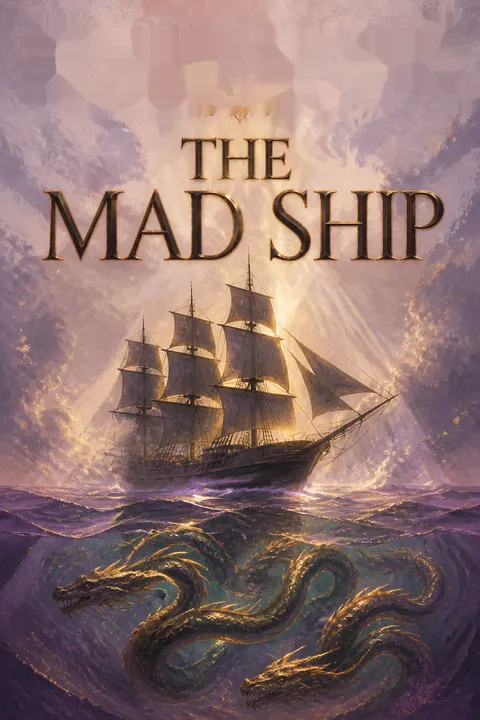
Maulkin, a sea serpent prophet, leads the last remnants of his tangle north in search of the one who can restore their memories and guide their rebirth. Starving and weakened, he watches another group of serpents attack as if they have forgotten every law of their kind.
Shreever and Sessurea help save him, but Maulkin warns that their people may become mindless too if they abandon their purpose. When a provider drops human bodies into the water, the serpents accept the food and press on, following a scent they cannot yet understand.
The serpents' crisis establishes the novel's central fear: survival without memory can become a form of extinction. Maulkin's followers are not merely hungry; they are losing the knowledge that makes them a people. Their dependence on easy food mirrors the political communities elsewhere in the story, where comfort and short-term gain can erode shared responsibility. The bodies dropped by the provider also connect the sea's ancient mystery to human violence. What looks like sustenance to the serpents is evidence of a world whose histories have been buried, consumed, or forgotten.
Paragon's Last Chance
Amber visits Paragon, the blind, disfigured liveship left stranded by the Ludluck family for decades, and tells him that his owners have refused to sell him to her. Worse, they have hired men to move him secretly, intending to strip him for wizardwood.
Paragon first clings to the comforting belief that his family still cares, then retreats into despair when Amber explains the danger. He asks her to burn him rather than let him be dismantled. Amber refuses to promise, but moves aboard to guard him and seeks an Old Trader who might intervene. Paragon's fear of another betrayal makes even rescue feel like a threat.
Paragon's crisis begins with a painful contradiction: his family preserves the legal bond while abandoning the living being bound by it. His hope that refusal to sell proves affection shows how urgently he needs to interpret neglect as care. Amber offers no easy reassurance; she makes the threat concrete and asks him to imagine a future beyond passive endurance. Their relationship starts not with trust, but with her decision to remain present when he expects everyone eventually to leave.
The Knife and the Ship
Aboard the captured Vivacia, young Wintrow faces an impossible choice: Captain Kennit's sea serpent wound is rotting, and if Kennit dies, Wintrow and his imprisoned father may die with him. With the medical chest missing, Wintrow improvises tools and performs an amputation on the deck.
Vivacia absorbs much of Kennit's pain through their growing bond, but the strain is so great that Wintrow loses himself in the ship's memories. When Kennit's breathing stops, Wintrow and Vivacia draw him back from death. Kennit survives, maimed and dependent on others, while Wintrow discovers that healing has tied him to the pirate more deeply than his bargain ever intended.
The surgery turns Wintrow's priestly training into a practical, morally compromised act. He saves the man who holds power over him, but the procedure binds him emotionally and physically to the pirate's fate. Vivacia's willingness to absorb pain complicates the idea of care: compassion here is not abstract kindness but a bodily cost. Kennit's survival also begins a pattern in which his vulnerability gives him intimacy and influence, even as his actions remain dangerous.
The Dragon Under Stone
In the Rain Wilds, Reyn Khuprus argues with his mother Jani over the last wizardwood log in the family's possession. His relatives see valuable timber; Reyn believes it is a cocoon holding a living dragon, one of a kind his people once knew. He has spent too long touching the log and hearing its memories, so Jani fears it is shaping his thoughts.
Meanwhile, Reyn's unexpected courtship of Malta Vestrit gives his family a reason to renew trade ties with Bingtown. In a shared dream, Malta sees the dragon and hears its offer to help rescue her father if someone frees it. Reyn insists the creature is trapped too deeply to help.
Reyn's conflict reveals that knowledge is not neutral when it comes from a living, suffering source. His family treats wizardwood as capital; he sees a being whose past has been converted into material. Jani's suspicion is also psychologically credible: Reyn's pity may be genuine, but prolonged contact makes it hard to distinguish his own convictions from the dragon's influence. Malta's dream links private desire and political crisis to the same buried history, making the dragon's freedom a question of responsibility rather than mere discovery.
Fire at the Harbor
On Althea's voyage home aboard Ophelia, a Chalcedean galley flying the Satrap's colors demands the right to board and search the liveship. When its crew prepares firepots, Ophelia ignores her captain's orders, seizes the enemy figurehead, and hurls the smaller vessel aside. The galley's own weapons ignite its deck, while fire scorches Ophelia's hands.
Amber, disguised as a slave to move safely through Bingtown, later scrapes away the damaged wizardwood and reshapes the hands. Althea sees the attack as proof that the Satrap's new patrols threaten Trader independence, while the Teniras begin openly resisting the tariffs funding them.
Ophelia's resistance makes political coercion physically visible: the state claims authority over Bingtown, but its agents behave like raiders and endanger a sentient ship. Her act is brave and reckless at once, exposing how liveships can refuse the roles imposed on them. Amber's repair matters beyond restoring appearance; she treats wizardwood as a vulnerable body rather than a resource. The episode also pushes Althea toward public action by showing that the danger to her family is part of a larger assault on Bingtown.
Serilla's Captive Passage
Serilla, the Satrap's educated and outspoken Heart Companion, hopes to reach Bingtown as his envoy, but the voyage turns into a display of Cosgo's indulgence and political folly. He ignores her warnings that Chalcedean nobles are using him and threatens her when she refuses his sexual demands.
When she stands her ground, he orders a Chalcedean captain to take her. The captain rapes and confines her for days, while Cosgo's party continues its pleasures nearby. Serilla survives by withdrawing into herself and waiting for a chance to escape. When she is finally returned, she finds the Satrap sick and dependent, and forces him to authorize her mission.
Serilla's authority rests on knowledge and ethical candor, but the court's gendered structure makes that authority revocable whenever it inconveniences power. Cosgo's violence is not an eruption separate from his politics; both arise from the belief that people exist to satisfy him. Serilla's survival depends first on psychological detachment, then on reclaiming practical control. Her decision to return to the Satrap's chamber and secure a mandate is not forgiveness. It is a strategic use of the limited leverage still available to her.
Malta's Costly Courtship
Malta has long demanded to be treated as a young woman, but her family's financial crisis turns courtship into a contract. The Rain Wild Khuprus family holds the debt on Vivacia, and Reyn's marriage could release it. Reyn overwhelms Malta's first visit with gifts and frank devotion; she enjoys the attention while calculating what it might secure.
Her family is divided over whether to accept the match, and Malta's grandmother worries that the girl is clever but self-serving. Malta also uses Cerwin Trell's interest to provoke jealousy and obtain help, but he cannot persuade his father to risk the family's fortune. The first romantic games begin to acquire real consequences.
Malta's ambition initially appears as vanity, but the pressure of debt exposes its practical intelligence. She understands that marriage is one of the few instruments available to a girl in her position, even as she resents being treated as an asset. Her manipulation of Cerwin is not harmless flirtation once family fortunes are at stake. The section also contrasts Reyn's intensity with Malta's calculation: each imagines a future together, but neither yet understands what the other would have to surrender.
Althea Comes Home
After proving herself at sea as a sailor aboard Ophelia, Althea returns to Bingtown dressed as a ship's boy and slips into her family's house. She finds neglected grounds, shrinking resources, and a mother and sister struggling to manage the Vestrit estate. Kyle has turned Vivacia into a slaver, while Malta's courtship may be needed to settle the ship's debt.
Althea also learns that Keffria now holds the family's Trader vote. She asks her sister to support the Teniras' resistance to the Satrap's tariffs, then states that she intends to reclaim Vivacia under Kyle's promise that a ship's ticket would prove her worth. The reunion becomes a tense family negotiation.
Althea returns expecting to prove herself, but first has to listen to the damage her absence and Kyle's choices have left behind. Her independence is not simply a refusal of domestic life; she sees command of a ship as both vocation and a way to rescue the family economy. Keffria's position complicates the claim because loyalty to her husband and responsibility to her birth family cannot be cleanly separated. The sisters' conflict is therefore not only about property, but about whose judgment counts within a family.
Vivacia Is Captured
Brashen, now working aboard the smuggler Finney's Springeve, recognizes a portrait of Vivacia among stolen goods and learns that Kennit captured her. He risks returning to Bingtown with the news. The Vestrit women hear that the ship, Kyle, and Wintrow may all be lost, and Malta attacks Brashen in disbelief before Althea steadies her and redirects the family toward action.
The next night Althea speaks at the Traders' Council, connecting the capture to slavery, the Satrap's tariffs, and Bingtown's weakening autonomy. The council's debate fractures into hostility, while someone leaves a slaughtered pig at Davad Restart's carriage as a warning.
Brashen's arrival converts anxiety into fact, and the family's grief immediately becomes a question of what can still be done. Althea's public speech connects the private loss of a liveship to the political system that made it vulnerable. Her willingness to name rebellion unsettles the council because it exposes how much the Traders have already conceded. The pig at Davad's carriage turns disagreement into intimidation, showing that Bingtown's internal division is no longer safely contained within debate.
Kennit Sends Kyle Away
After reaching Divvytown, Kennit discovers that former slaves can leave his ship or join his crew, cutting away Sa'Adar's claim to lead them. He later takes Kyle Haven, Sa'Adar, and two former slaves to his childhood home on Key Island. Kennit leaves Kyle chained in the old wine cellar, assigns Ankle to live with his mute mother, and expects the others to help maintain the small settlement.
Sa'Adar refuses the arrangement and tries to return to the ship. Kennit tricks him into the water and kills him when he reaches for the boat. Wintrow wakes to find his father gone and learns Kennit has fulfilled his request in a way he never intended.
Kennit grants Wintrow's wish for distance from Kyle while refusing to let the boy control what that wish means. His solution is both protective and coercive: Kyle is alive, but removed from public reach and placed under Kennit's power. Sa'Adar's death exposes the cost of Kennit's preferred method, in which dissent becomes an inconvenience to eliminate. The episode also shows how easily freedom can be reframed as a bargain, since Kennit offers the island's residents shelter and food in exchange for labor and obedience.
A Liveship Rescue Plan
Brashen and Amber propose using Paragon to reach the captured Vivacia, while Althea insists on joining the expedition. The plan is risky: Paragon has not sailed in decades, carries a reputation for killing crews, and may refuse to cooperate. At the Traders' Council, Tomie Tenira challenges the illegal tariffs, while Althea calls for Bingtown to stand together.
The meeting erupts after Davad supports the Satrap, and the Teniras answer the harbor blockade by unloading Ophelia's cargo rather than paying. Chalcedean galleys are sunk and the tariff dock catches fire. Althea drives Davad home after the pig attack, then demands he free a young enslaved stable boy.
The rescue plan turns the liveship itself into both means and moral test: Paragon cannot simply be treated as equipment, because his consent and history shape whether the voyage is possible. At the same time, Althea's civic argument becomes action when the Teniras defy the tariff system and risk open violence. Her demand that Davad free the boy makes the political crisis personal and immediate. She refuses to separate Bingtown's future from the people its prosperity has begun to commodify.
The Crosspatch Falls
Kennit and Sorcor ambush the Crosspatch, a richly laden slave ship whose captain has boasted that no pirate can stop his trade. Vivacia joins the attack and pursues the fleeing vessel with a speed that astonishes Wintrow. The pirates defeat the crew, seize the cargo, and free most of the captives, though several women ask to be ransomed to their wealthy owner rather than begin again in Divvytown.
A wounded young pirate, Opal, dies after surgery aboard Vivacia. Kennit uses the battle to persuade the ship that his violence serves a righteous cause, while Wintrow sees how readily the ship and captain have become partners in it.
Vivacia's first true hunt marks a shift from being used as a slaver to choosing violence for herself. That choice is not automatically moral: her exhilaration risks making the suffering on the other deck invisible. Kennit gives the violence a coherent political story, and Wintrow struggles to distinguish genuine opposition to slavery from the captain's appetite for power and victory. The women's refusal of immediate freedom further complicates liberation, showing that escape from ownership does not instantly provide safety, livelihood, or belonging.
Paragon Takes to Sea
Brashen, Althea, Amber, and a hired crew haul Paragon off the beach and repair him enough to sail. Amis Ludluck confronts the ship with the family's accumulated grief, then confirms the sale, leaving Paragon devastated but no longer bound to people who deny him. Brashen takes command; Althea serves as second mate, while Amber and Jek join the crew.
During the voyage, a sea serpent attacks. Althea drives a boat hook into the creature's jaw, and its blood and poison trigger Paragon's buried memories. He recognizes that he was once a dragon, then rejects the identity the Ludlucks imposed on him. The ship begins to imagine himself as more than his disgrace.
Paragon's relaunch is not a simple return to function. Amis's accusation gives voice to the family's pain, but also confirms the cruelty of treating the ship as a public monument to shame. At sea, the serpent's blood awakens a history that complicates Paragon's identity: his present self was built from the remains of another species. His new sense of self is not a clean recovery of an old one. It is a choice to claim agency despite the violence that made him.
The Dragon's Dream Bargain
Using a dream-box Reyn gave her, Malta shares a vivid dream with him. A dragon appears and offers a trade: freedom from the buried city in exchange for help rescuing Malta's father and the captured ship. Reyn admits the dragon is real but says no one can reach her.
The dream strengthens Malta's desire to act for herself, while Reyn's family debates the cost of freeing the last wizardwood log. Jani and Bendir bargain with Reyn: they will forgive the Vestrit debt and give him an independent allowance if he stops visiting the dragon. Reyn accepts, believing he can still help Malta without the dragon, but the bargain leaves the creature's fate unresolved.
The dream-box makes desire a shared space, but it does not erase the limits each character carries into it. Malta wants a direct means of rescue; Reyn wants to help her while protecting the dragon and his family from consequences he cannot predict. His bargain with Jani and Bendir reveals how affection can be managed through money and permission. The dragon's offer remains ethically unstable: she may be a victim seeking freedom, yet the help she promises could turn her into a force no one can control.
Serilla Warns the Traders
Serilla survives her passage with the Satrap and arrives in Bingtown carrying knowledge of Chalcedean plans, including maps of the harbor and Rain Wild River. After Cosgo recovers, she persuades him to keep her as his envoy and uses his signed authority to build a position for herself.
At the Summer Ball, she warns Reyn that a faction of Jamaillian nobles and Chalcedean leaders intends to kill Cosgo and blame Bingtown. Reyn leaves to alert the Traders, while Malta, still hurt by his secrecy, stays behind. Serilla's warning reframes the gathering: the celebrations and political negotiations are taking place on the edge of an engineered attack.
Serilla's recovery of agency is neither a return to innocence nor a straightforward triumph. She uses the Satrap's weakness to gain a mandate, while concealing how much she has suffered and how little she trusts him. Her warning arrives at a moment when the Traders' social rituals could easily obscure the threat. Reyn's departure illustrates the cost of secrecy: acting to protect Malta and Bingtown also looks to her like another abandonment.
The Coach Leaves the Road
After the ball, armed men attack the coach carrying Malta, Keffria, Ronica, Selden, the Satrap, and his Companion. The vehicle crashes down a wooded slope, killing Davad and the coachman. Malta is badly injured but survives; Reyn finds her and carries her to safety in Trehaug with the rest of the family.
Ronica refuses to leave Bingtown, while Keffria later offers the Rain Wild Traders a dangerous plan: return secretly to the city and gather information about the conspirators. The attack proves Serilla's warning was real. Bingtown's conflict has moved from speeches and sabotage to a campaign in which civilians are hunted and the city burns.
The coach crash collapses the distance between political intrigue and bodily consequence. Davad's death ends his long habit of treating every moral crisis as a problem of profit, while Malta's survival leaves her physically vulnerable and newly dependent on people she has distrusted. The family disperses under pressure: Ronica stays to face the danger, Keffria turns toward intelligence work, and Malta is carried into the Rain Wilds. Survival now requires several different forms of courage, none of them compatible with the old assumption that one household can remain safely outside politics.
The Prison Opens
While recovering in Trehaug, Malta follows Selden into the buried city, searching for the dragon who promised to help her. The dragon, Tintaglia, guides Malta through the memories stored in the city's walls until she finds the mechanisms for the great southern door. Malta operates them, but the structure begins to collapse before it opens fully.
The trapped dragon breaks through her wizardwood cocoon and rises toward daylight, while Reyn and Selden are caught beneath falling earth. Outside, the Satrap and Kekki remain stranded with Malta's family. The rescue is incomplete, but the ancient creature is free, and the Rain Wild Traders' buried history can no longer be treated as mere timber.
Malta's action fulfills the dragon's demand but does not resolve the cost of obeying it. She is no longer merely negotiating marriage or waiting for male protection; she enters the city's buried past and uses its knowledge to alter the present. Yet the collapse makes freedom inseparable from danger. Tintaglia's emergence restores a living presence to a culture that humans have mined for materials, while leaving the people who helped her in immediate peril.
Kennit Claims the Ruins
When Kennit returns to Divvytown, he finds the settlement burned and its survivors blaming him for the attack. The mob surrounds him, but Wintrow steps between Kennit and the angry townspeople, denounces their dependence on hiding, and urges them to rebuild the harbor with defenses, clean water, and a shared shelter.
Some survivors side with Kennit, and the threat breaks apart. Wintrow then publicly declares that Kennit is destined to rule the Pirate Isles. Kennit accepts the declaration as prophecy and begins directing the rebuilding, while Etta's courage and Sorcor's loyalty reinforce his authority. The town's ruin becomes the foundation of Kennit's political project.
Wintrow's speech marks a dramatic reversal: the boy who once resisted Kennit's moral claims now gives them public force. His reasons are sincere, but his language also grants Kennit a legitimacy that the pirate has been carefully cultivating. The rebuilt town becomes a material answer to the accusation that piracy only destroys. At the same time, Kennit's leadership remains double-edged: he offers planning and resources, yet increasingly expects people to see his ambitions as their salvation.
Epilogue
Maulkin's tangle continues upriver, strengthened by memories recovered from a liveship, but still ignorant of how much the world has changed. Tellur urges the serpents to reclaim the memories held in other silver ships. Maulkin refuses to divert the migration before they reach the place where their kind can change.
Meanwhile, Tintaglia swims after the vessel that carries the humans who freed her. She is crippled, newly hatched, and uncertain what awaits her, but she chooses to follow the current and begin her own search for the remaining serpents.
The ending widens the story rather than closing it. Maulkin's migration and Tintaglia's release belong to one history, but neither side yet understands the other. Their species' future depends on memory, while the human world has treated that same memory as a commodity embedded in wizardwood. Tintaglia's choice to follow the ship reverses the usual direction of rescue: the dragon is no longer a hidden object to be recovered, but an agent pursuing her own people and purpose. The novel ends with lives newly in motion and consequences still unresolved.
Analysis
The novel's central struggle is over who has the right to define another being's purpose. Kyle treats Vivacia as family property and turns her into a slaver. The Ludlucks preserve Paragon's legal status while leaving him to decay. The Rain Wild Traders treat wizardwood as wealth without understanding the lives it contains. Kennit opposes slavery, yet repeatedly turns other people into instruments of his authority. Against these forms of possession, the most consequential acts are choices to recognize another being as more than a resource: Amber sees Paragon as a person, Wintrow sees the freed captives as people rather than a political faction, and Malta ultimately treats the dragon's demand as a claim she must answer.
Memory gives this conflict its material form. Wizardwood stores experience in a way that can preserve identity, but memory can also become a prison. Paragon's inherited trauma narrows his sense of himself; Wintrow's bond with Vivacia makes pain shared rather than private; the sea serpents risk losing their history altogether. The dragon's cocoon embodies both preservation and suffocation. Human extraction has kept her memories intact while preventing her life from continuing. The novel therefore refuses a simple opposition between remembering and forgetting. Memory is necessary for responsibility, but it can overwhelm those who inherit it without the means to interpret it.
The political plot mirrors the family plot. Bingtown's leaders rely on a charter and old customs, yet the Satrap's tariffs and Chalcedean force expose the limits of inherited protections. Althea, Keffria, and Malta respond differently: Althea claims public authority, Keffria discovers a capacity for strategic action, and Malta begins to understand that neither marriage nor a powerful father can guarantee her future. Their choices do not produce a settled victory. They make action possible in a world where delay has become another form of surrender.
Kennit remains the novel's most dangerous contradiction. His projects improve pirate settlements, free captives, and give Wintrow a sense of purpose. They also cultivate loyalty around his ambition to rule. Good outcomes do not erase manipulative motives, but motives alone do not erase the good. The story leaves readers with a difficult measure of leadership: judge not only what a person intends, but what structures of dependence their help creates.
Review Summary
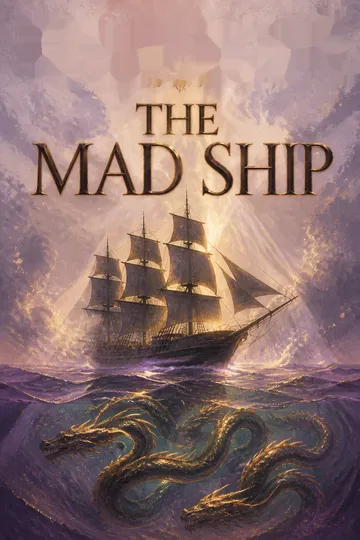
The Mad Ship receives widespread praise for its intricate plot, complex characters, and immersive world-building. Readers appreciate Hobb's masterful character development, particularly with Malta and Wintrow. The book's exploration of themes like memory, love, and courage resonates strongly. Many consider it an improvement over the first installment, with some calling it one of the best fantasy novels they've read. The multiple storylines and perspectives are generally well-received, though a few readers note pacing issues. Overall, reviewers eagerly anticipate the trilogy's conclusion.
People Also Read






Characters
Althea Vestrit
The ship's rightful heirEphron Vestrit's younger daughter, Althea is a skilled sailor who believes she should command Vivacia, the family liveship. She resists the narrow expectations placed on Bingtown women and measures herself through competence rather than permission. Her loyalty to her family is real, but it does not erase her independent ambitions. Althea's bluntness can wound people who are trying to help her, especially when she mistakes care for control. Her bond with Brashen is complicated by years of friendship, desire, and incompatible expectations. She is most alive when making decisions at sea, yet she must learn that independence does not mean refusing every form of trust.
Brashen Trell
The disinherited captainBrashen is a capable sailor and former first mate of the Vivacia, cast out by his Bingtown family after a reckless youth. He hides shame and grief behind humor, cindin use, and an appearance of not caring where he ends up. His skill is stronger than his self-respect: he often expects to fail before anyone else can reject him. Althea's regard matters because she once treated him as a valuable officer rather than a disgraced son. He is drawn to her, but also understands that her ambitions cannot be reduced to marriage or romance. His challenge is to choose responsibility without mistaking self-punishment for humility.
Vivacia
The divided liveshipVivacia is the Vestrit family's young liveship, a sentient vessel whose wizardwood body absorbs the memories of blood spilled on her decks. She once carried cargo as a trader, then endured being turned into a slaver. Her bond with Wintrow is intense and complicated, shaped by family ties, shared suffering, and a history neither can simply undo. She longs to be recognized as a person capable of choosing her own life, not as property passed between captains. Kennit's attention appeals to her because he listens and imagines a future for her, though his influence also pulls her toward violence.
Wintrow Vestrit
The reluctant priestWintrow is a young novice of Sa who expected a life of study and craft before his father forced him aboard Vivacia. His forced service, facial tattoo, and missing finger have made his former identity difficult to recover. He is thoughtful and compassionate, but his moral certainty falters when survival demands action. His healing knowledge makes him valuable to Kennit, and his bond with Vivacia places him between the ship and the pirate. Wintrow's instinct is to understand rather than dominate, yet he can be drawn into causes that ask him to fight. His central struggle is whether accepting his present life means surrendering his conscience.
Kennit
The charming pirate kingKennit is an ambitious pirate captain whose charm and strategic intelligence have made him influential among the scattered settlements of the Pirate Isles. He attacks slavers and frees their captives, but he also craves authority and knows how to turn generosity into loyalty. His missing leg and childhood trauma expose vulnerabilities he usually conceals behind wit and control. He is capable of tenderness, particularly toward Wintrow and Vivacia, yet often treats other people as pieces in a plan. Kennit's most unsettling quality is not simple cruelty but his ability to make self-interest resemble public purpose, even to himself.
Etta
The pirate's chosen partnerEtta is a former prostitute who became Kennit's closest companion after helping him survive an attack. She speaks plainly, trusts few people, and refuses to treat her past as a source of shame. Her loyalty to Kennit is chosen rather than sentimental, though it leaves her vulnerable to the power he holds over her. Etta is practical, physically fearless, and more perceptive than she first appears. Her interactions with Wintrow reveal both her suspicion of his influence and her capacity to teach and care for him. She seeks a place in which she can be more than an object men desire or a weapon they use.
Paragon
The blind mad shipParagon is the Ludluck family's old liveship, stranded for decades after a catastrophe that left him blind and convinced that he killed his crews. He can be playful, curious, and childlike, then turn suddenly furious or despairing. His shifting moods are not mere eccentricity; he is trying to assemble an identity from damaged memories, abandonment, and the expectations placed on a ship. Amber's attention helps him explore interests beyond his history of failure. His life as a vessel is inseparable from his life as a person, which makes every attempt to restore him ethically fraught.
Amber
The quiet shipwrightAmber is a skilled bead-maker and woodworker who moves through Bingtown by adopting disguises, including that of a slave. She notices people whom society treats as invisible and uses practical skills to support them. Her care for Paragon is patient but not passive: she challenges his despair, gives him tools and companions, and pushes others to consider what he needs. She also understands political networks and the dangers of slavery. Amber's reserve suggests a private history she does not readily share. Her instinct is to protect, but she knows that protection can become another form of control if the person being helped has no choice.
Malta Vestrit
The ambitious Trader's daughterMalta is Keffria's daughter, raised amid Bingtown's social rules and increasingly severe financial strain. She craves beauty, attention, and independence, and at first treats courtship as a way to secure a more exciting life. Her sharp intelligence is often hidden beneath vanity and theatrical behavior. As the family crisis deepens, she begins to understand that wealth and romance cannot guarantee safety. Malta is sensitive to being dismissed as a child, but she also underestimates the obligations attached to the choices she makes. She wants to be admired, yet is gradually forced to ask what kind of person she intends to become.
Reyn Khuprus
The Rain Wild scholarReyn is a young Rain Wild Trader and gifted student of the buried Elderling city. His relative lack of physical deformity makes him conspicuous among his people, while his curiosity draws him toward knowledge his family would rather exploit or ignore. He falls for Malta with a force that unsettles his normally analytical nature. Reyn's desire to free a dragon is rooted in pity and guilt, but it also reflects his tendency to believe he can solve problems through insight alone. His relationship with his family reveals the tension between individual conviction and inherited responsibility.
Keffria Vestrit Haven
The burdened family TraderKeffria is Althea's older sister and the mother of Malta, Selden, and Wintrow. After inheriting the Vestrit family's Trader vote, she must manage debts and decisions previously shaped by her husband, Kyle. Her habit of yielding to others has left her unsure of her own authority, but crisis gradually forces her to act. Keffria's loyalties are divided among her husband, children, mother, and sister. She is not naturally bold, yet her practical intelligence becomes clearer when she stops waiting for a stronger person to decide. Her story asks whether someone trained to defer can still become a leader.
Ronica Vestrit
The grieving matriarchRonica is the Vestrit matriarch, widowed by Ephron's death and left to preserve a family fortune in decline. She is shrewd, disciplined, and often severe, especially toward Malta, whose impulsiveness alarms her. Ronica's mourning has narrowed her life, but family emergencies draw her back into public and political action. She understands the costs of old Trader traditions, yet still believes kinship imposes obligations beyond convenience. Her friendship with Davad and her concern for Althea show that loyalty does not require approval. Ronica's authority comes from endurance and judgment, not from needing to be liked.
Kyle Haven
The hard-handed captainKyle is Keffria's husband, father to Wintrow, Malta, and Selden, and captain of the Vivacia. He believes strict control and profitable choices are what a family needs, even when those choices injure the people closest to him. His use of the liveship in the slave trade exposes the gulf between his self-image as provider and the harm his ambition causes. Kyle's contempt for Wintrow is especially damaging because it denies the boy's moral and emotional reality. He is not without competence, but he confuses authority with care.
Serilla
The Satrap's sharp adviserSerilla is a scholar and Heart Companion who serves as the Satrap's adviser on Bingtown. She is direct, ethically serious, and unwilling to flatter a ruler merely because he holds power. Her knowledge of history and politics gives her unusual leverage, though her position is constrained by court traditions and Cosgo's demands. Serilla's ambition is not simply personal advancement; she wants the freedom to apply her learning and to see the city she has studied. She is capable of strategic compromise, but does not mistake it for trust. Her composure conceals a fierce determination to define her own future.
Satrap Cosgo
The pleasure-bound rulerCosgo is the young Satrap of Jamaillia, raised with little discipline and surrounded by people who satisfy his appetites while steering his decisions. He is vain, self-indulgent, and prone to treating criticism as an attack. Yet he is not simply a fool: he can be suspicious and recognizes when someone is trying to gain authority over him. His neglect of Bingtown's charter and reliance on Chalcedean power place the city at risk. Cosgo's weakness is political as well as personal, because he mistakes the ability to command for the ability to govern.
Maulkin
The serpent prophetMaulkin leads a dwindling tangle of sea serpents toward the place where their memories and purpose may be restored. He is visionary but not omniscient; his certainty often exceeds what he can truly remember. That gap makes leadership exhausting, especially when his followers grow hungry, confused, and violent. Maulkin insists that the serpents remain a people rather than devolve into solitary predators. His hope is costly, and he must continually persuade others, and himself, that their migration still has meaning.
Shreever
Maulkin's steadfast followerShreever is one of the few serpents who remains with Maulkin when his original tangle breaks apart. She cares for him when he is injured and questions the wisdom of his choices without abandoning him. Her perspective gives the serpent storyline a grounded emotional center: she feels hunger, fatigue, doubt, and loyalty all at once. Shreever's courage is practical rather than prophetic. She keeps the group alive through attention to immediate needs while still trying to preserve its larger purpose.
Selden Vestrit
The overlooked younger brotherSelden is the youngest Vestrit child and is often treated as too small to matter in adult affairs. He resents being protected and wants to prove that he can contribute. His curiosity draws him into places adults would rather keep sealed, while his loyalty to Malta makes him more perceptive than his family expects. Selden is still a child, with a child's appetite for adventure, but his courage is real. He reminds the adults that being young does not mean being passive.
Grag Tenira
The steady liveship heirGrag is the Tenira family's capable sailor and the likely heir to their liveship, Ophelia. He respects Althea's competence and seeks a partner who can understand a life divided between home and sea. His courtesy and careful planning make him a genuine alternative to impulsive romance, but he can also inherit conventional assumptions about what a wife should give up. Grag is loyal to his family and to Bingtown's interests, even when those loyalties cost him personally. His restraint is a strength, though it can keep him from acting when action matters.
Jani Khuprus
The Rain Wild matriarchJani is Reyn's mother and a senior member of the Khuprus family. She must balance the family's wealth, political vulnerability, and responsibility for the buried city. Jani values caution because she understands the danger of exposing her people or releasing something they cannot control. Her disagreements with Reyn arise from love and fear, but she is willing to use family authority to direct his choices. She is a political actor as well as a mother, and often regards restraint as the only protection available.
Tomie Tenira
The defiant Trader captainTomie is Grag's father and captain of the liveship Ophelia. He resists the Satrap's unlawful tariffs and refuses to let Chalcedean patrols define Bingtown's rights. Tomie is a practical captain, but his decision to confront the authorities is also a deliberate attempt to awaken the other Traders. His respect for Althea comes from recognizing her competence at sea. He treats political independence as something that must be defended through visible action, not merely remembered as tradition.
Sa'Adar
The freedmen's priestSa'Adar helped lead the slave uprising aboard Vivacia and believes the ship should belong to the people who seized it. He speaks in the language of justice and liberation, but his certainty can harden into a desire to judge and command others. He distrusts Wintrow's connection to the liveship and sees Kennit's authority as another form of domination. Sa'Adar's presence shows that freedom does not automatically produce agreement about who should lead or what justice requires.
Clef
The freed sailor's apprenticeClef is a young former slave who has lost his family and chooses shipboard work over returning to a life that no longer exists. His speech is rough and his body small, but he knows the rhythms of a deck and is eager to learn. Clef's insistence on joining Brashen's crew is a quiet claim to self-determination. He often sees emotional truths that adults try to hide, especially when they are being cruel to themselves.
Tintaglia
The buried dragonTintaglia is a dragon preserved in a wizardwood cocoon beneath the Rain Wild city. Through Reyn and Malta, she reaches into the human world and demands release, presenting herself as both a captive and a powerful being with her own agenda. Her memories connect the Rain Wild Traders' wealth to an older civilization and to the fate of the sea serpents. Tintaglia is proud, impatient, and accustomed to thinking on a scale beyond human lives. Her return challenges the assumption that the buried past belongs to those who excavate it.
Bendir Khuprus
The cautious elder brotherBendir is Reyn's older brother and a practical manager of Khuprus family interests. He sees wizardwood as a resource and Reyn's attachment to the buried dragon as a danger to the family. Bendir is blunt and impatient, but his objections come from a genuine concern for political and financial survival. He often clashes with Reyn because he values what can be secured now, while Reyn pursues knowledge whose worth may not be immediately measurable.
Plot Devices
Liveships and wizardwood
Memory made into a vesselLiveships are built from wizardwood and awaken through the memories held in the timber and the blood of the families connected to them. They are ships, but also people with desires, loyalties, and histories of their own. Vivacia's blood bond with Wintrow deepens her ability to feel human lives; Paragon's damaged body and memory make his identity uncertain. The same material is also used to preserve dragon cocoons, so the Traders' commercial wealth rests on a history they barely understand. Wizardwood therefore joins inheritance, commerce, personhood, and cultural theft in one object.
Blood memory
The past enters the presentBlood absorbed by wizardwood carries identity rather than a simple record of events. Vivacia feels the dead and wounded whose blood has soaked her decks, while Wintrow experiences Kennit's pain through their shared connection. The same principle shapes the serpent and dragon histories: memories can preserve a people, but they can also overwhelm an individual who cannot distinguish inherited experience from personal life. Blood memory makes the ships' histories physically present and turns violence into an enduring burden rather than a moment that can simply be forgotten.
The dream-box
Shared dreams carry bargainsThe dream-box lets Malta and Reyn enter a shared dream shaped by their desires and fears. Reyn uses it to court Malta, while Malta's plea for help brings the imprisoned dragon into their dream and reveals her offer. The device allows emotional truths to emerge before the characters can manage them in waking conversation, but it also blurs the boundary between private fantasy and real influence. The dragon's presence turns a romantic instrument into a channel between the human world and the buried history of the Rain Wilds.
The Satrap's charter
A treaty becomes a weaponBingtown's founding charter limits the Satrap's authority and records the obligations between Jamaillia and the Traders. New tariffs, land grants, slavery, and Chalcedean patrols test those terms. The charter gives the Old Traders a legal language for resisting the Satrap, but legal argument alone cannot protect ships or people from force. As the political crisis escalates, Bingtown's leaders must decide whether tradition can still function as a defense or whether they must act as an independent power.
The serpent migration
A species searches for memoryMaulkin's tangle travels toward a place where a memory keeper should restore their history and guide their transformation. Hunger and forgetting threaten to reduce the serpents to solitary predators, while the memories preserved in liveships offer a partial link to their lost past. The migration gives the novel a second scale of time and a nonhuman view of the same historical catastrophe that shaped wizardwood. It also makes the serpents' return to the river a race against the season and against the possible extinction of their kind.
The Liveship Traders Series
About the Author



Download PDF
Download EPUB
.epub digital book format is ideal for reading ebooks on phones, tablets, and e-readers.








