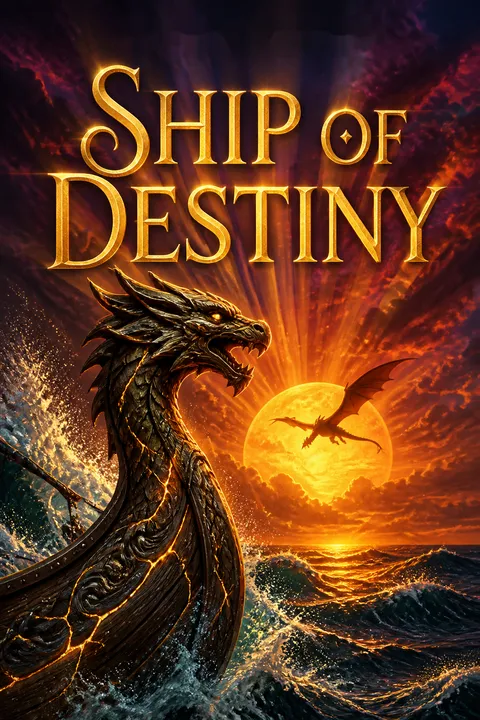


Plot Summary
Prologue
She Who Remembers19 hatched with the ancestral memories of dragons, but the beings she calls Abominations seized her before she could reach the sea. Kept for ages in a cramped pool, she survives by holding fast to the task her memories gave her: guide her kind to their nesting grounds.
When Wintrow3 frees her, she follows the strange ship that smells like a serpent and meets a white serpent who cannot bear the history she gives him. He flees, but she has found proof that her kind may still survive.
She Who Remembers begins as both survivor and living archive. The memories that should make her a guide also make captivity unbearable: she knows what her people were, and knows how little remains. Her encounter with the white serpent complicates the promise of recovery. Memory can restore identity, but it can also reveal loss too painful to carry. The ship’s mysterious resemblance to a serpent offers another puzzle, joining the trilogy’s intimate story of captivity to the larger question of what has been done to dragonkind.
The City Breaks Open
Malta Vestrit4 enters the buried Elderling city to confront the dragon8 haunting Reyn Khuprus,12 but an earthquake collapses the passages and separates her from her companions. She leads the young Satrap Cosgo and his Companion Kekki out through a different route, then poles them toward Trehaug in a salvaged boat.
Acidic river water eats at her clothes and wounds, and the current catches them before they reach safety. Upstream, Reyn12 and Malta’s young brother13 Selden13 are trapped in rising mud as the newly freed dragon8 bursts through the chamber roof. Their families begin digging through the ruins, with Keffria10 fearing that both her children4 and Reyn12 have died beneath the city.
The quake turns private desire into a survival crisis. Malta’s attempt to protect Reyn becomes an escape that leaves her own family unable to find her, while Selden and Reyn witness the dragon’s liberation from a position of near helplessness. The split geography matters: each group knows only a fragment of the others’ fate. Malta’s practical competence begins to displace the vanity and social ambition that once guided her, but she is not yet free of the class habits that taught her to measure people by their rank.
Bingtown Burns Twice
The battle that drives the Chalcedeans from Bingtown gives way to fires, looting, and a civil conflict between Old and New Traders. Ronica Vestrit,9 left behind as Keffria10 and the children flee, turns back after finding two ordinary townspeople murdered by fellow refugees.
She discovers her home ransacked and her family branded traitors. When Cerwin Trell visits, his account of the divided city confirms that fear is hardening into vengeance.
Ronica9 confronts Companion Serilla,14 who claims the Satrap’s authority and has taken Davad Restart’s house, then demands that the Bingtown Council investigate Davad’s death and her family’s persecution. Serilla14 resists, but Ronica’s9 challenge begins to expose how little evidence supports the accusations.
Ronica’s return is not a recovery of her old home but a refusal to abandon the people left outside the Traders’ protection. Her authority comes from memory of Bingtown’s civic obligations, not wealth or force. Serilla, by contrast, treats official status as a shield against her own vulnerability. Their conflict reveals how quickly emergency rule can turn into self-preservation, but also how a public claim to justice can reopen a community’s capacity to govern itself.
A Dragon Beneath Vivacia
A sea serpent’s venom leaves Wintrow3 near death aboard the Vivacia,6 and the ship6 cannot feel him through their bond. As he recovers, a dragon presence inside him reveals that liveships were made from the cocoons of dragons, whose memories survive in the wizardwood. The Vestrits’ ship6 is not simply a family vessel with a living figurehead; her life was built over a stolen and suppressed one.
When Wintrow3 shares this truth with Vivacia,6 she confronts the possibility that her identity was imposed on a dead dragon. She tears at her own face and turns against life. Kennit5 later bargains with the newly awakened presence, calling her Bolt, and uses her power to heal Wintrow’s3 scars.
The revelation makes the trilogy’s central object morally unstable. Vivacia has been loved as a person and possessed as property, yet her existence rests on an earlier act of dispossession. Wintrow’s bond with her gives him knowledge but not control; he can neither restore her former self nor prevent her despair. Kennit responds by treating the revelation as a problem to solve through power and negotiation. The same capacity that heals Wintrow also makes the dragon’s influence harder to refuse.
The Dragon Returns
The dragon Tintaglia,8 newly hatched and unwillingly indebted to the humans who freed her, returns to the buried city and lifts Reyn12 and Selden13 out of the rising mire. At Trehaug, she confirms that Malta4 is alive and drifting down the Rain Wild River, so Reyn12 persuades her to search for the boat.
They spot Malta4 with Cosgo and Kekki, but Tintaglia8 cannot safely lift them from the tiny craft. Reyn12 races back to Trehaug, where the Kendry sets out after them. Malta,4 meanwhile, fights exhaustion, thirst, and the Satrap’s insults as the acid current carries them farther from safety. The rescue attempt becomes a desperate race against the river and the fragile boat.
Tintaglia’s rescue is generous but limited. She can carry two people from a collapsing chamber, yet cannot simply solve every human danger. Reyn must translate his attachment to Malta into practical action, while the dragon treats human bonds as brief and secondary to her own species. Selden’s wonder contrasts with Reyn’s fear and guilt. Their different responses foreshadow a larger conflict: whether humans can admire a dragon without surrendering their own judgment.
The First Pirate Attack
Far from Bingtown, Althea Vestrit1 serves as second mate aboard Paragon,7 commanded by Brashen Trell,2 as they search for the Vivacia.6 First Mate Lavoy bullies crewmen and keeps former slaves separate, while encouraging the unstable liveship’s7 violent talk. When pirates ambush them, the poorly trained crew scrambles to defend the deck.
Paragon7 refuses to flee and helps turn the boarding into a bloody fight; he kills a captured pirate after Lavoy encourages his rage. Brashen2 orders the ship7 isolated, but the punishment deepens the strain. During the next escape, Lavoy stabs Brashen2 and jumps overboard with men loyal to him. Brashen2 survives, and the remaining crew sail onward with their command structure weakened.
The attack exposes the cost of confusing obedience with unity. Lavoy’s harsh discipline may produce short-term order, but his favoritism and brutality create a rival faction aboard the ship. Paragon’s violence is not separate from that conflict: the crew’s appetite for revenge feeds his own unstable sense of self. Althea, meanwhile, learns that competence at sea requires more than courage. She must judge people, distribute responsibility, and confront the fact that her own shipmate can become a danger.
Ronica Rebuilds the Council
Ronica9 presses the Traders to convene, and the first Council meeting begins with the families cleaning the burned Concourse themselves. The Council agrees to suspend debts and restore city duties, but Roed Caern blocks Ronica9 from raising Davad’s death because she lacks Keffria’s10 written authority. Grag Tenira supports an investigation, while the Companion Serilla14 clings to her claim to speak for the Satrap.
At a later gathering, Ronica,9 Keffria,10 Rain Wild Trader Jani Khuprus,15 fisherfolk, New Traders, and Tattooed representatives argue over who will govern. The Tattooed demand freedom and land; Three Ships families demand equal standing. Keffria10 urges an alliance rather than expulsion, giving the divided groups a path toward shared rule.
Ronica’s civic labor and Keffria’s political insight mark different forms of agency. Ronica restores the Council by doing the unglamorous work of making a meeting possible. Keffria sees that Bingtown cannot survive by restoring the old hierarchy unchanged. The newcomers’ demands force the Traders to distinguish tradition from justice. Their emerging alliance is fragile, but it is concrete: shared labor, land, and votes replace the assumption that a small hereditary class can speak for everyone.
Tintaglia Names Her Price
Tintaglia8 reaches Bingtown during a renewed Chalcedean assault and attacks the ships with her venom, scattering the fleet and saving the harbor from immediate capture. When the people gather to negotiate, Roed Caern urges her to destroy outsiders, but Serilla14 turns against him and the crowd restrains him.
Tintaglia8 demands human help: the Rain Wild River must be dredged so the surviving serpents can reach a cocooning ground, and the cocoons must be guarded through winter. Jani Khuprus15 agrees only after securing labor and support from Bingtown. The Tattooed are offered freedom, while the Council begins drafting a wider agreement binding residents to shared laws and votes.
The dragon’s intervention saves lives, but it also reveals the danger of gratitude becoming submission. Tintaglia assumes that her power entitles her to obedience; the people must bargain without mistaking rescue for benevolence. Jani’s terms turn an imposed task into a negotiated exchange, while Dujia’s demand for freedom makes clear that no alliance can be legitimate if it preserves slavery. The new Bingtown begins not with a return to normal, but with a public argument over who counts.
Malta Learns to Bargain
After the river carries Malta,4 Cosgo, and Kekki away from Trehaug, a Chalcedean galley rescues them. The Satrap’s authority offers little protection, and Kekki weakens after drinking the caustic water. Before she dies, she teaches Malta4 how to use Chalcedean customs to discourage assault. Malta4 then plays the role of a loyal servant to keep Cosgo’s status intact, even while he demeans her.
When another ship captures them, she confronts its captain and insists that treating the Satrap as a valuable guest will bring greater reward than abusing him. Her argument wins improved quarters and a measure of protection. She begins to see that survival depends on reading power accurately, not merely defying it.
Malta’s transformation is not a simple rejection of ambition; she redirects it from social display toward survival and negotiation. Her scar and captivity strip away the protections she once assumed beauty and rank would provide. Kekki’s practical knowledge helps her navigate a world built to endanger women, while Malta’s performance preserves Cosgo’s status because his status is the only shield available to them. Her resourcefulness is hard-won, and never confused with consent to her circumstances.
Divvytown Knows Kennit
Paragon7 guides Brashen2 through fog to Divvytown, revealing that the supposedly blind ship7 remembers its hidden channels. Brashen2 and Althea1 go ashore dressed and behaving like aspiring pirates, hoping to learn where Kennit5 keeps the Vivacia.6 Divvytown’s people describe Kennit5 as a liberator who frees slaves and shares spoils, complicating Althea’s1 image of him as a simple thief.
She also learns that Kyle turned Wintrow3 into a slave aboard the Vivacia,6 and that the ship6 may have chosen Kennit5 after he freed her. Their plan to negotiate with Kennit5 becomes more difficult: recovering the family ship6 may mean separating her from a life she now seems to accept.
The port does not confirm Althea’s assumptions; it makes them harder to maintain. Kennit’s public reputation is built on concrete acts that matter to people who have survived slavery, not merely on theatrical charisma. Althea must distinguish the ship she loves from the family’s claim to own her. Her discovery about Wintrow also forces her to confront the damage Kyle did under the Vestrit name, a legacy she cannot dismiss simply because she opposed it.
Paragon Remembers Kennit
Paragon’s7 crew reaches Key Island and brings aboard the woman living there: Kennit’s mother,7 whose silence and survival connect the pirate’s past to the ship’s.7 Her presence awakens Paragon’s7 buried memories of the boy Kennit,5 who was abused by the pirate Igrot. Paragon7 had absorbed Kennit’s5 pain and promised to die with those memories so the boy could escape them.
When Paragon7 later learns that Kennit5 is alive, he is torn between anger at being abandoned and the loyalty that once defined him. The revelation explains why the ship7 is both vulnerable to Kennit5 and capable of choices no captain can fully command. Amber recognizes that his divided identity cannot be mended by simply hiding the past.
Paragon’s history makes his loyalty morally complex. He protected Kennit by carrying pain that the boy could not bear, but that sacrifice also trapped Paragon in a role defined by another person’s survival. The ship’s desire to be remembered as himself clashes with the promise to disappear. Amber’s presence matters because she refuses to treat his past as either a shameful secret or a complete identity. Recovery requires integration, not erasure.
A Ship Chooses Life
When Kennit’s5 crew attacks Paragon,7 the serpents obey Vivacia’s6 call and turn on the ship.7 Their venom damages the hull while their bodies batter it, and the fighting leaves Brashen’s2 crew badly wounded. Kennit5 then orders Paragon7 set alight, expecting the ship7 to sink with everyone aboard. Paragon7 begins opening his seams, choosing death rather than let the dragons inside him dominate.
Amber reaches through the wizardwood and persuades the two dragons to accept a third presence: Paragon7 himself. The ship7 closes his seams and levels in the storm. Brashen2 and the surviving crew escape the flooding hold, while Amber’s choice gives Paragon7 a chance to become more than a battleground between selves.
Paragon’s near-destruction is not resolved by a victory over the dragons but by a change in the terms of identity. Amber asks the competing selves to make room for the ship who has lived among humans. This is a difficult alternative to both Kennit’s demand for loyal self-erasure and the dragons’ claim to a supposedly purer origin. The ship survives because someone insists that adaptation need not mean surrendering every earlier self.
Vivacia Finds Althea
Kennit5 keeps Althea1 isolated aboard the Vivacia6 and gives her drugged wine, then sexually assaults her while she is disoriented. He tells himself the encounter is harmless, but Althea1 experiences it as another violation layered over her earlier assault. In her half-conscious state, she reaches for the ship6 and finds Vivacia6 trapped beneath the dragon identity that has taken control.
Althea1 refuses to let the ship6 choose death and shares memories of her father, the sea, and their life together. Vivacia6 answers her and begins to reclaim her own history. The bond does not restore their old innocence, but it gives Althea1 a reason to return to life and the ship6 a way back to herself.
The scene treats trauma as more than a memory: it distorts what Althea can perceive and makes her doubt her own agency. Vivacia’s response does not erase the assault or cure Althea, but it interrupts the isolation Kennit uses to control her. Their shared memories become a form of testimony, affirming that Althea’s body and history belong to her. The ship’s awakening is therefore inseparable from Althea’s refusal to disappear.
The Satrap's Fleet Returns
Aboard the Motley, Malta4 persuades the captured Satrap to appear as a ruler rather than a helpless prisoner, then negotiates better treatment from the pirate captain18 by promising the value of his ransom. She uses the same discipline to keep herself protected, even as she conceals her fear and her scarring.
At the same time, Etta11 tells Wintrow3 she is carrying Kennit’s5 child, and Wintrow3 recognizes that his devotion to Kennit5 has cost him his own judgment. The Jamaillian fleet later attacks the liveships, and Malta’s4 ship is drawn into the wider conflict. Her survival now depends on the political value of Cosgo, the choices of the pirates, and whether the scattered family can find one another.
Malta and Wintrow reach parallel reckonings about dependence. Malta turns herself into an indispensable interpreter of power because the Satrap cannot protect himself. Wintrow, by contrast, begins to see how easily loyalty can become an excuse not to judge. Etta’s pregnancy makes the consequences of Kennit’s rule intimate and future-facing, but it does not resolve the danger around her. The family’s separate journeys are converging, though trust remains badly damaged.
A New Bingtown Takes Shape
When the surviving Vestrits return to Bingtown, Ronica9 and Keffria10 find a city damaged by fire but beginning to rebuild. Keffria,10 once content to let others manage family affairs, accepts that she is more capable of governing the Vestrit vote than Kyle was. She lets Selden13 leave with Jani Khuprus15 to be fostered among the Rain Wild Traders, while agreeing to represent their interests in Bingtown.
Ronica9 stays to reclaim the family’s vineyards and orchards, hiring workers and planning for the next harvest. Their choices do not restore the household they lost. Instead, mother9 and daughter10 take responsibility for a changed city and accept that their family may no longer live under one roof.
Keffria’s change is measured through decisions rather than declarations. She gives Selden room to become Rain Wild, takes on political responsibility, and recognizes that control of her own life is worth the labor it brings. Ronica’s attention to the vineyards likewise looks beyond immediate grief toward a future that requires work now. Their separation from Selden is painful, but not a failure of care: they refuse to confuse keeping someone close with serving his needs.
Analysis
Ship of Destiny makes ownership its central practical and emotional question. The Vestrits believe Vivacia6 is a family inheritance; Kennit5 treats her as a prize; the serpents recognize something of their own kind in her; and Vivacia6 must discover whether her life belongs to any of those claims. The answer is not a simple declaration of freedom. Her human attachments are real, even when the history beneath them is stolen. The novel’s liveships make that contradiction impossible to keep abstract: each command, departure, or act of violence changes a relationship that can be felt through wood and memory.
The political plot asks a related question of Bingtown. Its old Traders survive only by widening the meaning of community. Ronica9 restores civic habits, Keffria10 accepts authority, and the Tattooed and Three Ships families refuse to be treated as labor or guests. Their alliance is not sentimental; it is built through bargaining over land, votes, work, and safety. The same principle appears in Malta’s4 survival. She learns to negotiate from a position of weakness without confusing adaptation with consent.
Kennit5 is the story’s sharpest warning about good outcomes used to excuse private harm. His campaign against slavers genuinely benefits people, and that public good makes followers reluctant to name his abuses. Wintrow’s3 struggle is therefore not merely whether to believe Kennit,5 but whether gratitude can become a substitute for judgment. Paragon’s7 history deepens the problem: protecting someone by carrying their pain can become another form of captivity. Across ship, city, and family, the novel argues that belonging cannot be secured by possession, silence, or inherited authority. It must be renewed through accountable choices, especially when love makes those choices hardest.
Review Summary
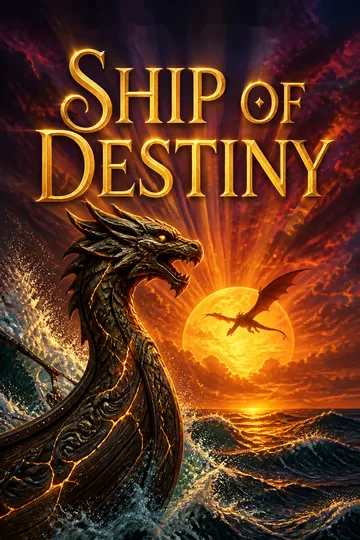
Ship of Destiny concludes the Liveship Traders trilogy with epic sea battles, political intrigue, and character development. Readers praise Hobb's masterful storytelling, complex characters, and world-building. The book ties up loose ends, revealing secrets hinted at earlier. Some found it overly long and politically heavy, while others considered it a satisfying conclusion. Many readers were moved emotionally, with some criticizing the handling of sensitive topics. Overall, the trilogy is highly recommended for fantasy fans, with many considering it superior to Hobb's Farseer Trilogy.
People Also Read







Characters
Althea Vestrit
The ship's stubborn heirAlthea is Captain Ephron Vestrit’s younger daughter, fiercely attached to the family liveship and impatient with the limits placed on her because she is a woman. Her courage is practical rather than effortless: she learns command at sea, makes hard decisions under pressure, and recognizes that love does not excuse control. She is drawn to Brashen2 because he respects her competence, yet her loyalty to Vivacia6 complicates any simpler future. Her emotional strength lies in continuing to act while frightened, though her pride can make it difficult to ask for help or admit how deeply she has been hurt.
Brashen Trell
The exiled captainBrashen is a capable sailor disowned by his Bingtown family, who becomes captain of Paragon7 and partner in Althea’s1 effort to find Vivacia6. His past as a pirate and his experience under bad commanders make him pragmatic, sometimes too willing to bear every burden alone. He tries to balance affection for Althea1 with the authority his crew needs from him. His central conflict is whether he can accept a life that is not organized around proving his worth to the family that rejected him.
Wintrow Vestrit
The reluctant priestWintrow is Keffria’s son3, raised for the priesthood before his father forces him to sea. Gentle, observant, and hungry for meaning, he learns to survive among sailors without surrendering his interest in faith or learning. His bonds with Vivacia6 and Kennit5 pull him toward competing loyalties. Wintrow often mistakes endurance for wisdom, and obedience for service, but his capacity for self-examination gives him a path back from those errors. He seeks a vocation that can hold both the life he imagined and the difficult world he has actually entered.
Malta Vestrit
The quick-learning negotiatorMalta is Keffria’s daughter4, quick-witted and ambitious, with a sharp sense of how status and appearance shape opportunity. She begins by dreaming of influence in Bingtown society, but hardship forces her to use her intelligence for survival rather than display. She can be vain and cutting, yet she also recognizes other people’s needs and adapts rapidly when the rules change. Her family, her connection to Reyn12, and her longing to choose her own future pull her in different directions. She resists being reduced to either a beautiful face or a victim.
Kennit
The pirate kingKennit is a charismatic pirate captain whose campaigns against slavers have won him loyalty across the Pirate Isles. He is ambitious, strategic, and skilled at making people feel that their hopes align with his. Beneath his polished manners lies a deep need to control how others see him and to keep painful memories buried. He values loyalty intensely, but often treats it as something he can demand rather than earn. His relationship with Wintrow3, Vivacia6, and Etta11 reveals both genuine attachment and the manipulations he uses to protect his authority.
Vivacia
The liveship becoming herselfVivacia is the Vestrit family liveship, a vessel whose carved figurehead carries a living presence. For generations she has been bound to the family and shaped by their memories, especially her bond with Wintrow3. Her identity is changing as buried dragon memories rise to the surface. She wants connection, yet she must confront the difference between being loved and being claimed. Her attachments to Wintrow3, Althea1, and Kennit5 are sincere but not interchangeable, and her choices increasingly reflect a self that the humans around her do not fully understand.
Paragon
The blind, divided liveshipParagon is a damaged liveship whose blindness and past violence have left him unpredictable and difficult to trust. He longs for companionship but fears abandonment, and his memories contain more than any single human history can comfortably hold. Brashen2 and Althea1 approach him with affection, though neither can simply make him behave. His connection to Kennit5 reaches back to the pirate’s childhood and binds them through shared pain. Paragon’s fierce need to be recognized as a person, not a tool or a monster, shapes his volatile choices.
Tintaglia
The last hatched dragonTintaglia is a young dragon who emerges into a world that has changed beyond her ancestral memories. Proud, hungry, and accustomed to being treated as a ruler, she initially views humans as small creatures whose concerns should yield to hers. Her intelligence and power are undeniable, but so is her self-absorption. Reyn’s12 bond with her exposes both her capacity for loyalty and her difficulty understanding human attachments. She seeks her surviving kind and believes restoring them will reorder the world, whether or not humanity welcomes the consequences.
Ronica Vestrit
Bingtown's stubborn matriarchRonica is Ephron’s widow and the family elder who remains in Bingtown when violence drives the others away. She values the city’s traditions of mutual obligation, but does not confuse those traditions with the interests of the old ruling families alone. Her courage is persistent rather than theatrical: she returns to a devastated home, challenges false accusations, and pushes the Traders to govern alongside people they had excluded. Grief narrows her world, yet civic work gives her a way to keep acting without pretending that what she has lost can simply be restored.
Keffria Vestrit
The reluctant family leaderKeffria is Ronica’s daughter10 and the mother of Malta4, Selden13, and Wintrow3. For much of her life she has expected a husband or family elder to make decisions, but upheaval forces her to manage the Vestrit interests herself. She discovers that competence can feel burdensome and liberating at once. Keffria is tender toward her children4, though fear sometimes tempts her to protect them by keeping them close. Her growing political judgment helps her distinguish care from control and accept that each child may need a different home.
Etta
Kennit's sharp-eyed partnerEtta is a former prostitute who has built a place beside Kennit5 through loyalty, courage, and hard-earned knowledge of human motives. She is frank about desire and unsentimental about survival, yet her feelings for Kennit5 are deep. Wintrow’s3 friendship challenges her to think beyond the role others assign her, while the ship’s6 changing identity offers her another way to imagine herself. She wants to matter in her own right, not only as a captain’s woman, and she is alert to the costs of loving a powerful man.
Reyn Khuprus
The Rain Wild heirReyn is a Rain Wild Trader who loves the buried Elderling city and Malta4, though he is often more comfortable with ancient mysteries than ordinary human relationships. His changing body makes him feel exposed and uncertain, especially around someone he hopes will accept him. He can be idealistic about dragons and blunt when his convictions are challenged. His growing connection with Tintaglia8 gives him a purpose beyond excavation, but his loyalty to Malta4 remains a powerful measure of what the dragon’s grand plans cost real people.
Selden Vestrit
The dragon-dreaming boySelden is Malta’s younger brother13, an observant child who is captivated by the dragon8 and the buried world of the Rain Wilds. He is more adventurous than his mother10 expects and more perceptive than adults often assume. His dreams and the changes appearing in his body pull him toward the Rain Wild Traders. He wants to be treated as someone capable of choosing, not merely as a child to be protected.
Serilla
The displaced court companionSerilla is the Satrap’s Companion and a politically educated woman who arrives in Bingtown believing legal authority will give her security. Her knowledge of Jamaillian politics is real, but fear and past abuse make her defensive and hungry for control. Ronica’s9 example unsettles her assumptions about power and self-sufficiency. Serilla is neither a simple villain nor a natural ally: she has to decide whether she will serve an inherited system or become responsible for a community that does not automatically accept her.
Jani Khuprus
The Rain Wilds' advocateJani is Reyn’s mother15 and a practical leader among the Rain Wild Traders. She knows the hazards of the river and the difficult bargains her people must make to survive. Her pride can make cooperation hard, but she understands that isolation is no longer possible. Jani balances maternal concern with political duty, seeking terms that protect Rain Wild autonomy while accepting that the future will require new labor and new alliances.
Dujia
Voice of the TattooedDujia speaks for the Tattooed, people branded and enslaved by the New Traders. She insists they be treated as residents with political rights, not as a workforce whose fate others may negotiate. Her experience makes her suspicious of offers that sound generous but preserve dependence. She is willing to consider the Rain Wilds, but only if the opportunity includes land, freedom, and a real future for her people.
Rache
Ronica's steadfast allyRache is a former slave who remains beside Ronica9 when she could seek safety elsewhere. She knows the hidden communities of the Tattooed and helps Ronica9 understand that Bingtown’s excluded residents are part of its future. Her own losses have taught her to judge promises carefully. She supports Ronica9 without surrendering her independent perspective, and names the injustices that even sympathetic Traders can overlook.
Captain Red
The Motley’s calculating captainCaptain Red commands the Motley, a pirate vessel whose crew includes former performers and sailors. He is theatrical, perceptive, and alert to the political value of the Satrap. He treats Malta4 as a bargaining partner when she proves useful, while also testing the limits of her independence. His courtesy does not erase the danger of her captivity, but it gives Malta4 room to negotiate and reveals the varied codes that govern the Pirate Isles.
She Who Remembers
The serpent's living archiveShe Who Remembers carries the memories of generations of dragons and understands her existence as a duty to guide the serpents home. Her long captivity has left her physically weakened, but her purpose remains strong. She can share memories through her toxins, though she cannot make others welcome what they learn. Her relationship with Maulkin and the other serpents is grounded in collective survival rather than human ideas of ownership or rank.
Plot Devices
Wizardwood memories
A past inside the hullWizardwood is the material of liveships, but it also carries memories from the dragons whose cocoons were cut apart to make it. Those memories shape the ships’ personalities and can surface through contact, blood, or the presence of serpents. The device links family history to a buried crime: each liveship is both a beloved companion and evidence of what the Rain Wild Traders unknowingly did. It also explains why a ship may remember people and events that its human crew has forgotten.
The liveship bond
A relationship made tangibleA liveship’s connection to people is shaped by the memories and blood shared with it. The bond can provide comfort, transmit emotion, and blur the distinction between a ship’s will and that of its human companions. Because it is intimate, it can also be exploited: a human may mistake love for ownership, or a ship may be pulled between different attachments. The bond makes emotional conflict visible through the ship’s actions rather than leaving it only inside a character’s thoughts.
Dragon toxins
Memory, venom, and commandSerpent toxins can carry ancestral memories and alter how another creature thinks or remembers. She Who Remembers19 uses them to awaken Maulkin and his tangle, while the same venom can burn human flesh, damage ships, or become a weapon in battle. Its varied effects make it more than a magical poison: it is a medium for communication, a biological inheritance, and a source of power that creates ethical choices about who may use it.
The Bingtown Charter
A law under renegotiationThe Charter defines the original relationship between Bingtown, Jamaillia, and the Trader families. Ronica9 and Serilla14 appeal to its authority, but the crisis reveals gaps between legal grants and legitimate claims. The Three Ships families and the Tattooed challenge the assumption that political voice belongs only to the established Traders. As the city rebuilds, land, labor, freedom, and voting rights become connected questions. The Charter therefore serves both as a legal tool and as the object of a wider argument over who belongs.
The Satrap's ransom
A captive becomes leverageCosgo’s identity makes him valuable to pirates, nobles, and conspirators, but his authority is weakened by his dependence on others. Malta4 protects him because his status can shield them, then begins to use his political value as leverage. Kennit5 sees the Satrap as a means to formal recognition and trade, while Jamaillian nobles see him as a threat or bargaining piece. The shifting custody of Cosgo turns personal survival into a contest over who can claim the future of Bingtown and Jamaillia.
FAQ
Synopsis & Basic Details
What is Ship of Destiny about?
- Concluding the Liveship Saga: Ship of Destiny is the third book in Robin Hobb's Liveship Traders trilogy, bringing the complex narratives of the Vestrit family, their sentient liveship Vivacia, and the wider world of the Cursed Shores to a dramatic climax.
- Multiple Intertwined Conflicts: The story follows several converging plotlines: the Vestrit family's struggle to reclaim Vivacia from the pirate king Kennit, the political and social upheaval in Bingtown amidst Chalcedean invasion and internal strife, the mysterious journey of the sea serpents seeking their ancient home, and the awakening of a dragon.
- Characters Face Profound Change: Central characters like Althea, Wintrow, Malta, and Ronica Vestrit, along with the liveships Vivacia and Paragon, undergo significant personal transformations and confront the true, often horrifying, nature of their world and themselves.
Why should I read Ship of Destiny?
- Masterful Character Arcs: Hobb excels at depicting deep psychological complexity and emotional growth, bringing years of character development to powerful, often unexpected, conclusions. Readers witness characters grappling with trauma, identity, and destiny.
- Epic Scale and Worldbuilding: The novel expands the world of the Cursed Shores, revealing ancient histories, the true nature of magic (wizardwood, dragons, serpents), and the interconnectedness of seemingly disparate species and cultures.
- Satisfying, Yet Complex Resolution: While providing closure for major plotlines, the book avoids simple answers, exploring themes of sacrifice, compromise, and the messy reality of change, leaving a lasting impact on the reader.
What is the background of Ship of Destiny?
- Setting on the Cursed Shores: The story takes place primarily in the Bingtown region and the Pirate Isles, coastal areas marked by unique geography (acidic Rain Wild River, treacherous islands) and a society built on trade, particularly in the magical substance known as wizardwood.
- Legacy of the Elderlings: The narrative delves deeply into the ancient history of the Elderlings and dragons, revealing their symbiotic relationship and the catastrophic events that led to the dragons' near-extinction and the creation of liveships from their cocoons.
- Political and Social Tensions: Bingtown society is rigidly stratified by old Trader families and challenged by newer arrivals and the slave trade, creating internal conflict exacerbated by external threats from the expansionist Chalcedean Empire and the rise of pirate power.
What are the most memorable quotes in Ship of Destiny?
- "Death does not conquer. It threatens, but it cannot subdue the future.": This quote, spoken by Amber, encapsulates a core theme of resilience and hope in the face of overwhelming loss and despair, suggesting that life and destiny persist despite individual tragedies.
- "Perhaps people have a right to their pain... Perhaps they even need it.": Paragon's musing reflects the complex relationship characters have with their trauma and suffering, hinting that pain, while destructive, can also be integral to identity and growth.
- "Love can exist without need.": Vivacia's profound statement to Althea challenges the conventional understanding of relationships, suggesting a mature form of love that is not based on dependence or utility, but on inherent value and connection.
What writing style, narrative choices, and literary techniques does Robin Hobb use?
- Multiple Third-Person Perspectives: Hobb employs a shifting third-person limited perspective, primarily focusing on the internal thoughts and feelings of key characters (Althea, Wintrow, Malta, Ronica, Kennit, Paragon, Tintaglia), allowing for deep psychological exploration and building suspense as different viewpoints reveal partial truths.
- Detailed Internal Monologue: A significant portion of the narrative is dedicated to characters' inner thoughts, fears, and rationalizations, often revealing motivations and emotional states that contradict their outward actions or dialogue. This technique creates complex, relatable characters.
- Symbolism and Foreshadowing: Hobb weaves recurring symbols (scars, water, wood, eyes, specific animals like serpents and birds) and subtle foreshadowing throughout the text, enriching the narrative with layers of meaning and hinting at future events or thematic connections.
Hidden Details & Subtle Connections
What are some minor details that add significant meaning?
- The Persistence of Scars: Beyond Malta's prominent facial scar, characters like Wintrow (tattoo, serpent scalds), Brashen (sword cut, serpent scalds), Amber (serpent scalds), and even Paragon (venom pits, broken nose) bear physical marks. These aren't just injuries; they symbolize the indelible impact of trauma and the past, suggesting that while characters may heal or change, the experiences that shaped them leave permanent traces, connecting their individual struggles to a shared theme of enduring hardship.
- The Smell of the Rain Wild River: The constant description of the river's "milky," "chalky," or "acid" water, and the resulting damage it does to wood and flesh, is more than environmental detail. It symbolizes the inherent danger and transformative power of the Rain Wilds, hinting at why its inhabitants are marked and why the ancient Elderlings built cities of stone, foreshadowing the river's role in both destroying and enabling the serpent's metamorphosis.
- The Significance of Hands: Repeated descriptions of characters' hands – Ronica's garden-stained hands, Brashen's clean hands, Malta's scalded hands, Paragon's carved hands, Reyn's scaled hands, Kyle's broken hands, Etta's hands on Kennit's charm – highlight their roles and transformations. Hands are tools for work, connection, violence, and identity, subtly emphasizing the physical reality of their lives and the ways they interact with the world and each other.
What are some subtle foreshadowing and callbacks?
- Paragon's Early Madness: Paragon's initial erratic behavior, his fear of the sea, and his violent outbursts aren't just character quirks; they foreshadow the deep internal conflict of the dragons within him and the trauma he absorbed from Igrot's reign. His seemingly random philosophical musings about identity ("whether a person was what other people thought of him or what he thought of himself") directly callback to the core struggle of the liveships/dragons to define themselves against imposed identities.
- The White Serpent's Despair: The white serpent's initial despair and anger after receiving memories from She Who Remembers ("Why now? When it is too late... Why couldn't I die ignorant?") foreshadow the potential negative consequences of the serpents' awakening and the immense challenge of adapting ancient dragon memories to a changed world, hinting that knowledge of the past isn't always a blessing.
- Malta's "Moment of Beauty": The Satrap's cruel remark about Malta's fleeting beauty being ruined by her scar ("There is nothing more freakish than a beautiful woman whose face has been spoiled") is a callback to Malta's earlier vanity and foreshadows her journey to redefine her self-worth based on resilience and capability rather than appearance, ultimately culminating in Reyn's acceptance of her scaled face as beautiful.
What are some unexpected character connections?
- Paragon and Kennit's Shared Trauma: The revelation that Paragon absorbed Kennit's pain and memories during Igrot's torture creates a deep, disturbing bond between the ship and the pirate. This connection, rooted in shared abuse and survival, explains Paragon's complex loyalty to Kennit and his eventual willingness to sacrifice himself, highlighting how trauma can forge unexpected and powerful links.
- Malta and the Satrap's Codependent Survival: Malta's forced captivity with Satrap Cosgo leads to an unexpected codependency. Malta's cunning and resilience are essential for the Satrap's physical survival and maintaining his facade of authority, while his status provides Malta with a degree of protection and a bargaining chip, demonstrating how shared adversity can create unlikely alliances and reveal hidden strengths in both characters.
- Amber's Connection to the Dragon/Liveship Essence: Amber's seemingly intuitive understanding of Paragon's internal struggles, her ability to "feel" the dragons within him, and her eventual role in carving his new face suggest a deeper, perhaps Elderling-related, connection to the liveship/dragon essence than initially apparent. Her final decision to seek out her friends in the north to "interfere in their lives some more" hints at a larger, possibly destined, role beyond the immediate narrative.
Who are the most significant supporting characters?
- Amber: More than just a carpenter, Amber serves as a bridge between the human and liveship/dragon worlds. Her unique sensitivity allows her to communicate with Paragon on a deeper level, and her pragmatic wisdom often cuts through human emotional turmoil. Her role in carving Paragon's new face and her mysterious past hint at a destiny intertwined with the re-emergence of dragons.
- Etta: Initially appearing as a simple whore, Etta evolves into a complex figure defined by fierce loyalty and unexpected depth. Her unwavering devotion to Kennit, her belief in his destiny, and her eventual pregnancy with his heir position her as a potential queen. Her ability to see truth through emotional turmoil (recognizing Althea's trauma) and her bond with Wintrow make her a crucial emotional anchor and political player.
- The Satrap Cosgo: While often portrayed as weak and self-indulgent, the Satrap's survival and eventual political maneuvering are central to the plot's resolution. His journey from pampered ruler to captive and back reveals the complex nature of power and the surprising resilience of even the most flawed individuals when faced with existential threats. His interactions with Malta are key to her development.
Psychological, Emotional, & Relational Analysis
What are some unspoken motivations of the characters?
- Ronica's Need for Purpose: Beyond protecting her family, Ronica's relentless drive to restore Bingtown and clear her name is fueled by a deep-seated need for purpose after the loss of her husband and the disruption of her life. Her return to the vandalized house and her efforts to rebuild aren't just practical; they are symbolic acts of reclaiming control and meaning in a world that has taken everything from her.
- Kennit's Pursuit of Validation: Kennit's ambition to be King of the Pirate Isles and his need for Vivacia's loyalty are deeply rooted in his traumatic past. His desire for power isn't just about control; it's a desperate need for validation and recognition, a way to erase the memory of the helpless, abused boy he once was. His actions are often driven by a need to prove his strength and worthiness to himself and the world.
- Malta's Desire for Acceptance: Malta's transformation from a vain social climber to a cunning survivor is underscored by her persistent desire for acceptance, particularly from her family and Reyn. Her efforts to prove her worth through her actions (saving the Satrap, negotiating the treaty) are driven by a deep fear that her physical and emotional scars have made her unlovable and unworthy of her former life.
What psychological complexities do the characters exhibit?
- Trauma and Dissociation: Characters like Paragon, Kennit, and Althea exhibit complex responses to trauma, including dissociation and compartmentalization. Paragon absorbs and hides memories, Kennit attempts to erase his past self, and Althea struggles with the reality of her assault, highlighting how the mind attempts to cope with unbearable pain, often with unintended consequences.
- Identity Formation and Fluidity: The concept of identity is fluid and contested throughout the book. Characters grapple with who they are versus who others perceive them to be (Paragon, Wintrow, Malta), or who they were versus who they have become (Kennit, Althea, Reyn). The physical changes in Rain Wilders and liveships force a confrontation with identity that transcends human experience.
- The Nature of Love and Loyalty: The book explores various forms of love and loyalty – familial bonds (Vestrit family), romantic love (Althea/Brashen, Reyn/Malta), loyalty forged through shared hardship (Paragon/crew, Kennit/crew), and the complex, often painful, loyalties between liveships/dragons and humans. These relationships are tested by betrayal, sacrifice, and the characters' evolving identities.
What are the major emotional turning points?
- Ronica's Return to Bingtown: Ronica's decision to turn back to Bingtown after witnessing the murder of the tea shop woman and her daughter marks a turning point from personal survival to active resistance and a commitment to rebuilding her community, fueled by outrage at the senseless violence.
- Wintrow's Acceptance of Vivacia's Dragon Nature: Wintrow's confrontation with the dragon within Vivacia and his eventual acceptance of her true, complex identity is a pivotal emotional moment, shifting his relationship with the ship from one of simple devotion to a more nuanced understanding of her pain and purpose.
- Althea's Healing from Trauma: Althea's dream encounter with Paragon, where he helps her release the pain of her assault, is a crucial emotional turning point, allowing her to begin healing and move forward from the trauma that had threatened to define her.
How do relationship dynamics evolve?
- The Vestrit Family's Fractured Reunion: The Vestrit family's relationships are strained by distance, trauma, and individual transformations. Their eventual reunion is marked by both relief and awkwardness, as they grapple with the changes in each other (Malta's scar and Rain Wild traits, Selden's scaling and dragon connection, Wintrow's maturity and pirate ties), forcing them to redefine their bonds based on acceptance rather than shared history or expectations.
- Liveship-Human Bonds Transform: The relationships between humans and liveships evolve dramatically as the liveships' dragon natures assert themselves. The simple, often familial, bonds are complicated by the liveships' alien perspectives and priorities, forcing humans to adapt their understanding of these sentient vessels and their place in the world.
- Alliances Forged in Adversity: The chaos in Bingtown and the Pirate Isles forces unlikely alliances between disparate groups – Old and New Traders, Three Ships folk, Tattooed, and even pirates and dragons. These relationships, born out of shared threats and mutual need, challenge established social hierarchies and redefine community based on cooperation rather than tradition.
Interpretation & Debate
Which parts of the story remain ambiguous or open-ended?
- The Full Extent of Dragon/Elderling Re-emergence: While Tintaglia leads serpents to cocoon and hints at other buried dragons, the ultimate scale of the dragon population's return and the future relationship between dragons and humans/Elderlings remains open-ended. The epilogue suggests a new era, but the challenges and potential conflicts of this co-existence are left for the future.
- The Fate of the Jamaillian Fleet and Satrap's Reign: The outcome of the confrontation between the Pirate Isles ships and the Jamaillian fleet, and the long-term stability of Satrap Cosgo's reign after his return, are not definitively resolved. The treaty is signed under duress, and the loyalty of the nobles is questionable, leaving the political future of Jamaillia and its relationship with the Pirate Isles and Bingtown uncertain.
- The Nature of Amber and Her Destiny: Amber's mysterious past, her unique connection to liveships and dragons, and her final decision to travel north to "interfere" in her friends' lives leave her personal destiny and the full extent of her abilities ambiguous. She seems to embody a force beyond ordinary human understanding, but her ultimate purpose remains undefined.
What are some debatable, controversial scenes or moments in Ship of Destiny?
- Kennit's Rape of Althea: This scene is highly controversial due to its graphic nature and the subsequent narrative treatment. Readers debate the author's intent, whether it was a necessary exploration of trauma and power dynamics or gratuitous violence. The ambiguity surrounding Althea's drug-induced state and the ship's perception of the event adds layers to the debate about the reality and impact of the assault.
- Paragon's Decision to Sink: Paragon's choice to scuttle himself and his crew is debatable. Was it a selfless act to protect Kennit's secrets and end his own suffering, or a final act of madness and betrayal? The scene forces readers to question the nature of sacrifice and the complex motivations of a sentient being shaped by trauma.
- The Serpents' Cannibalism: The depiction of serpents feeding on their dead kin is a stark and unsettling moment. While presented as a pragmatic survival strategy by Tintaglia, it challenges human notions of morality and kinship, prompting debate about the inherent nature of different species and the lengths to which beings will go to survive.
Ship of Destiny Ending Explained: How It Ends & What It Means
- A New World Order Emerges: The novel concludes with a fragile new order established through negotiation and sacrifice. Bingtown and the Rain Wilds assert their independence, allied with the Pirate Isles under Wintrow's command. Dragons begin their return, guided by Tintaglia and aided by humans. The Satrap is returned to Jamaillia with a treaty, but his future and the stability of his realm are uncertain.
- Characters Find Their Paths (For Now): Major characters find resolution, though often not the ones they initially sought. Althea accepts her place on Paragon with Brashen, letting go of Vivacia and her trauma. Malta embraces her Rain Wild heritage and her role as Reyn's partner and dragon-friend. Wintrow steps into leadership, balancing his priestly past with his pirate present. Ronica and Keffria begin rebuilding Bingtown, embracing a more inclusive future.
- Meaning of the Ending: The ending signifies that destiny is not predetermined but shaped by choices, compromises, and the complex interplay of different beings. It highlights themes of adaptation, resilience, and the possibility of forging new identities and alliances from the ashes of the old. The return of dragons and the rise of the Pirate Isles represent a shift in the balance of power and a world forever changed, where ancient magic and human ambition must find a way to coexist.
The Liveship Traders Series
About the Author





Download PDF
Download EPUB
.epub digital book format is ideal for reading ebooks on phones, tablets, and e-readers.








