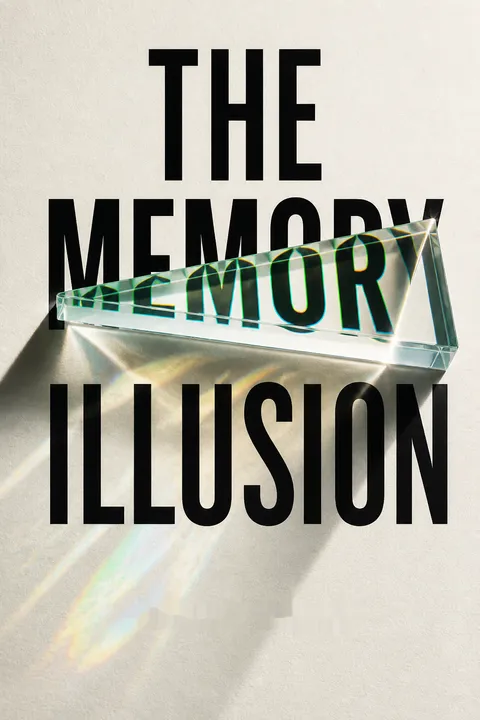


Key Takeaways
Treat autobiographical memory as a working story, not a private recording
Memory helps make a self. Episodic memory is recollection of personal events tied to a time and place. These memories give life a sense of continuity, but they are reconstructed, not replayed exactly. People who describe memories of birth or infancy cannot have retained those experiences as adult autobiographical memories: the relevant brain systems were still developing. Later stories, photographs, and imagination can supply fragments that feel like firsthand recollection.
Imagination can fill gaps. In a study, adults heard about a plausible childhood mishap involving a spilled punchbowl and repeatedly imagined it. After three sessions, 25 percent were judged to have a clear false memory, while others recalled partial details. Early experience still matters even when it is not consciously remembered. Forgetting an event does not mean it left no mark.
The distinction between a life story and a literal record is useful far beyond psychology. Autobiographical memory organizes experience into a usable account of who someone is, much as a map simplifies a landscape without reproducing every tree. That simplification can support identity and planning. It also means that confidence in a personal narrative should not be confused with evidence for each scene inside it. The account does not make a person or their history unreal; it clarifies why external records and other witnesses matter when factual accuracy has consequences.
Check the scene your senses constructed before trusting what you remember
Perception makes informed guesses. In the famous photograph of a dress, some viewers saw white and gold, while others saw black and blue. The image was ambiguous, and viewers unconsciously made different assumptions about its lighting. Their visual systems used prior experience to decide what the photograph meant. The same process helps people navigate quickly, but it can also build an error into a memory before it is stored.
Emotion and time distort, too. In one experiment, people who heard an emotional version of a story later recalled an average of 18 details, compared with 13 for a neutral version. Arousal can strengthen memory for salient elements while weakening context, as when a witness fixates on a weapon instead of a face. Time estimates also depend on memory: people misdated major events and often misjudge how long tasks take.
The dress example captures a basic feature of perception: the brain must interpret incomplete sensory input, rather than simply receive a finished picture of reality. That strategy is efficient, not defective by design. It resembles inference in science, where observations acquire meaning through a model, and models can be revised when evidence changes. The caution is that different interpretations do not imply every perception is equally accurate. When precision matters, useful checks include varied viewing conditions, independent observations, and records made close to the event.
Every act of recall can strengthen a memory and alter its contents
Memories are connected traces. Experiences are encoded through changing networks of brain cells, with links strengthened through repeated or intense activation. This associative design helps connect related ideas, but it can also blend them. In an experiment, bees learned that two differently patterned flowers contained nectar. A day or three later, about half preferred a new flower combining both patterns, although they had never seen it before. Their learned features had merged into a useful-seeming but inaccurate choice.
Recall can invite revision. A memory is not simply pulled intact from storage. In a human experiment, people who recalled a video detail and then received misleading information later reported the incorrect detail more often. Fuzzy trace theory helps explain such errors: people may retain a general meaning separately from exact details, then supply specifics that fit the gist. Repeated recollection can therefore preserve a story while changing its particulars.
The bee experiment makes memory error look less like a glitch and more like a cost of flexible learning. Combining features can help an animal generalize from past encounters to a new situation, even if the new combination proves misleading. In humans, the same flexibility supports inference, creativity, and learning from partial information. The practical question is not whether recall should be avoided, since remembering is necessary, but whether precision is required. High-stakes accounts benefit from timely documentation that can be compared with later recollection.
Even extraordinary autobiographical memory cannot protect anyone from suggestion
A remarkable memory is not infallible. People with highly superior autobiographical memory, or HSAM, can recall personal dates and events with unusual detail. Yet tests of 20 HSAM individuals found that they were as susceptible as ordinary participants to false associations in one task, and more likely to incorporate misleading details in another. Some also described a nonexistent video of the September 11 attacks. Their exceptional strength was autobiographical recall, not perfect accuracy across all information.
Forgetting has a function. The brain filters and weakens less useful information, helping attention focus on what matters now. Research on memory retrieval found that suppressing competing details can make relevant information easier to access. Some people with PTSD have difficulty setting aside unwanted memories, though the research does not establish whether this difficulty precedes trauma or results from it. Remembering everything would not necessarily make someone wiser or more effective.
The contrast between HSAM and ordinary memory separates vividness from truth. A detailed recollection can reflect strong access to a personal timeline while remaining vulnerable to suggestion about what happened within it. This distinction is important in settings where memory ability is treated as a single general skill. Forgetting also resembles selective attention: a system that retained every signal equally would struggle to prioritize. Still, not all forgetting is beneficial. The challenge is to preserve information that matters without assuming that maximum retention is the same as accuracy.
Give attention one job, then sleep before expecting learning to stick
Attention is a narrow gate. In a well-known experiment, nearly half of viewers counting ball passes failed to notice a person in a gorilla costume crossing the scene. Information outside attention may never be encoded well enough to remember. This is one reason switching between schoolwork and messages is costly: the mind repeatedly shifts tasks instead of doing both demanding activities at once. A study of university students found that frequent Facebook use and instant messaging while studying were associated with worse academic performance.
Sleep consolidates, not crams. Sleep helps stabilize and reorganize memories formed while awake. A study found that sleepers exposed to a scent associated with a task did not gain complex factual knowledge during REM sleep. Other research found simple associations can form during sleep, but that is not the same as learning a language or course overnight. Baby videos likewise did not outperform ordinary interaction for teaching words.
The gorilla study is a vivid demonstration of the gap between looking and noticing. In workplaces, classrooms, and driving, attention is a limited resource with real performance costs, not a character trait that can be summoned at will. Sleep adds a complementary lesson: learning requires both focused input and time for consolidation. The evidence argues against effortless cognitive shortcuts, but it does not mean technology or sleep are inherently harmful. Their effects depend on whether they support attention and practice or continually interrupt them.
In court, corroboration beats confidence, vividness, and a clean story
Confident witnesses can be wrong. The Innocence Project had helped free at least 337 people in the United States who were wrongfully convicted; faulty memory played a role in at least 75 percent of those cases. In a street-identification study, participants selected the correct person from a photo lineup 60 percent of the time when tested immediately and 54 percent after a week. Confidence was especially misleading under difficult conditions, including brief viewing and divided attention.
A coherent account is not independent proof. Investigators can develop tunnel vision, favoring evidence that supports an early theory and discounting contradictions. Police officers, like other people, also hold psychological misconceptions and can be confidently mistaken about memory. For eyewitness accounts, the practical safeguard is independent corroboration: records, physical evidence, and separate witness accounts. Avoid treating repeated details or certainty alone as confirmation.
Legal decision-making is a useful stress test for the book's central warning because the costs of error fall on identifiable people. Corroboration does not make memory worthless; it places testimony within an evidence system that can catch mistakes no individual observer can detect alone. The same principle appears in reliable science, where claims gain strength through independent measurement rather than rhetorical certainty. Caution must work in both directions: a memory can be distorted, and that possibility alone does not show that a witness is wrong.
Treat vivid trauma testimony as a lead to investigate, not proof
Strong emotion does not certify accuracy. Research does not support the simple idea that trauma always shatters memory into fragments. Some longitudinal findings suggest traumatic memories can remain more stable than ordinary memories, but emotional importance does not make them immune to error or suggestion. In a highly stressful military training exercise, participants were shown a photograph of the wrong interrogator. Later, 84 to 91 percent identified the false photograph as the person who had questioned them.
Questioning can shape recollection. In a laboratory study, researchers told ordinary university students about a false emotional event and repeatedly encouraged them to imagine it. At least 70 percent developed full false memories under the study's criteria. This does not establish that any particular allegation is false. It shows why leading questions, repeated suggestion, and pressure to produce detail can contaminate an account. Careful, neutral interviewing protects both genuine victims and the falsely accused.
The central ethical balance is easy to lose when an allegation describes something horrifying. Taking a report seriously means investigating it carefully, not assuming either that every detail is accurate or that memory research discredits the speaker. Trauma-informed practice can offer support without supplying a narrative, and investigative practice can seek corroboration without treating uncertainty as evidence of dishonesty. The distinction between possibility and verdict is essential: experiments establish that false recollection can occur, not whether a specific event occurred.
Write your account before other people and platforms rewrite its details
Other people become part of memory. In an eyewitness experiment, people who discussed an event with a partner later reported details that only the partner had seen. Seventy-one percent of those in the paired condition included information acquired through discussion. Social pressure can lead people to agree to maintain harmony, while genuine belief that another person knows better can also reshape recall. Online posts, photographs, and news coverage create many more opportunities for such post-event influence.
Digital storage changes what gets remembered. In a study of trivia, participants remembered fewer facts when told that the information would be saved for later. They often remembered where information could be found instead of its content. Digital records can be valuable checks, but photos can also make people believe they performed tasks they never did. A useful precaution is to make a brief, private record of an important event before discussing it or reviewing posts about it.
The internet acts as both archive and social environment. It can preserve timestamps and independent traces, yet it can also make a popular interpretation feel like personal recollection through repeated exposure. This resembles distributed cognition: people and devices collectively store information that no individual retains alone. The tradeoff is not solved by rejecting technology, but by distinguishing a contemporaneous record from a later account shaped by other sources. In legal or personal disputes, preserving original notes and metadata can help make that distinction visible.
Use strange images and external records to remember, not to certify truth
Metamemory is useful but imperfect. Metamemory means knowing about and monitoring one's own memory. A feeling that an answer is familiar can help predict recognition, but it does not guarantee accurate recall. For tasks and commitments, external reminders are safer than confidence that the item will come to mind later. For factual accuracy, records and corroboration are more useful than a vivid mental picture.
Make information memorable on purpose. Mnemonics improve access by adding distinctive associations. The method of loci, also called a memory palace, places imagined items along a familiar route through a known location. Unusual, interacting images tend to be easier to retrieve than plain lists. But brain-training games should not be mistaken for broad intelligence training: a meta-analysis found no convincing evidence that working-memory exercises reliably produce general cognitive gains. Memory aids help retrieval, not truth verification.
This closing distinction turns skepticism into a practical skill rather than a reason for paralysis. A mnemonic can make a shopping list easier to retrieve, while a dated note can preserve what someone reported before later conversations. Those tools solve different problems: one improves access, the other supports verification. Treating them as interchangeable invites false confidence. The broader lesson is that memory can be engineered for usefulness, but its outputs still need evaluation when accuracy matters.
Analysis
The book's strongest contribution is not merely the claim that memory makes mistakes. It shows how errors arise across a chain: perception interprets an event, attention selects fragments, memory links those fragments, later recall reconstructs them, and social retelling supplies fresh material. Each stage is normally adaptive. The same shortcuts that let people understand an ambiguous image or generalize from past experience also leave recollection open to change. This framing avoids treating false memory as an exotic disorder or a moral failure.
The consequences depend on context. A mistaken childhood scene may have little practical effect; a confident eyewitness identification can cost someone years of freedom. That difference implies a useful principle: skepticism should scale with the stakes. Everyday memory can remain a workable guide, while consequential claims deserve independent evidence, careful documentation, and interviewing that does not suggest the answer.
The argument also resists two attractive extremes. Memory is not a camera, but neither is it useless fiction. A reconstruction can preserve broad meaning while losing exact details, and many ordinary memories remain good enough for relationships, learning, and navigation. The book's examples demonstrate susceptibility to distortion, not that every recollection is unreliable in the same degree. Laboratory demonstrations establish possible mechanisms, but they cannot decide the truth of a particular historical allegation.
A further implication concerns institutional design. People cannot simply will themselves into perfect neutrality, especially when emotion, group loyalty, or professional pressure is involved. Better systems reduce avoidable contamination: record initial accounts promptly, keep witnesses from exchanging details before interviews, distinguish confidence from accuracy, and seek evidence that was not generated by the same source. These practices acknowledge cognitive limits without making cynicism the default. The humane position is neither automatic belief nor automatic disbelief. It is careful attention to how a claim was formed and what independent evidence can support it.
Review Summary
The Memory Illusion receives mostly positive reviews, with readers praising its accessible writing style and fascinating insights into memory's fallibility. Many found the book eye-opening, discussing how easily false memories can be implanted and how unreliable our recollections truly are. Some readers appreciated the scientific backing and real-world examples provided. Critics felt certain sections were oversimplified or lacked depth. Overall, the book challenged readers' perceptions of memory and its role in shaping identity and legal proceedings.
People Also Read


Glossary
Episodic memory
Personal event recollectionMemory for autobiographical experiences associated with particular times and places. It can include sensory and emotional details, such as recalling a visit, conversation, or important life event. Unlike semantic memory, which stores general knowledge and facts, episodic memory contributes directly to a person's remembered life story.
Source confusion
Misidentifying where information came fromA memory error in which a person remembers information but misattributes its origin. A detail heard from a parent, seen in a photograph, or imagined later may be experienced as a firsthand recollection. Source confusion helps explain why reconstructed childhood scenes can feel personally remembered despite having come from other sources.
Childhood amnesia
Few lasting early-life memoriesThe common inability of adults to retrieve autobiographical memories from infancy and most of the earliest childhood years. Young children can learn and remember, but the developing brain, language, and sense-making abilities make many early experiences unlikely to persist as accessible adult memories. The phenomenon does not mean early experiences have no lasting effects.
Metamemory
Knowledge about one's memoryA person's awareness and monitoring of their own memory abilities. Metamemory includes judgments about what is likely to be remembered, recognition of memory limits, and knowledge of strategies that may support recall. It can help someone notice that a recollection is implausible, but it is not perfectly reliable and can itself be misled.
Fuzzy trace theory
Meaning and detail stored separatelyA theory proposing that experiences are represented through both gist traces, which preserve general meaning, and verbatim traces, which preserve specific details. These forms of information can be retrieved separately. A person may remember the broad sense of an event but supply a plausible detail that was not present, or remember specifics while losing the event's meaning.
Highly superior autobiographical memory
Exceptional personal-event recallA rare ability, also called HSAM, involving unusually strong recall of personal events and dates, often including the day of the week on which an event occurred. It is distinct from general memory skill for facts, numbers, or newly learned material. Research described in the book shows that people with HSAM remain vulnerable to suggestion and false details.
Flashbulb memories
Vivid memories of learning major newsDetailed recollections of the circumstances in which someone learned about a surprising, consequential, and emotional public event. People may remember where they were, who told them, and how they reacted. Such memories often feel exceptionally clear, but research finds that confidence can remain high even as reported details change.
Verbal overshadowing
Words impair some visual recallA phenomenon in which describing a visual experience verbally can make later recognition of it less accurate. In research, people who wrote descriptions of a face were less successful at selecting that face from a lineup than people who had not described it. The effect is especially relevant when the original information is difficult to capture in words.
Digital amnesia
Relying on devices for informationA tendency to remember where information can be accessed digitally rather than retaining the information itself. Experiments described in the book found that participants recalled fewer facts when they expected those facts to be saved. External storage can free memory for other tasks, but it also changes what people choose to encode.
Method of loci
Place images along a familiar routeA mnemonic technique that uses a familiar location as an imagined structure for remembering information. The person mentally travels through a known route and places distinctive images representing items at particular points. Revisiting the route in imagination can cue recall. The technique can improve access to information, but does not establish whether a memory is factually accurate.
FAQ
What's The Memory Illusion about?
- Exploration of Memory Fallibility: The Memory Illusion by Julia Shaw examines the unreliability of human memory, showing how memories can be distorted or fabricated.
- Connection to Identity: The book discusses how memory shapes our identity, raising questions about the accuracy of our self-perception.
- Scientific Insights: Shaw presents scientific studies and theories on memory, including false memories and the effects of trauma.
Why should I read The Memory Illusion?
- Understanding Memory Errors: The book helps readers understand common memory errors and biases, relevant in both personal and legal contexts.
- Practical Applications: Shaw offers insights on improving memory awareness, enhancing decision-making, and interpersonal relationships.
- Engaging Narrative: The book combines personal anecdotes with scientific research, making complex topics accessible and interesting.
What are the key takeaways of The Memory Illusion?
- Memory is Constructive: Memory is a reconstructive process, not a perfect recording, and can be altered by new information.
- False Memories Exist: False memories can be easily created, impacting personal recollections and legal testimonies.
- Awareness of Memory Limitations: Readers are encouraged to recognize memory's fallibility for a nuanced understanding of experiences and identity.
What are the best quotes from The Memory Illusion and what do they mean?
- “Our memories are constructive. They’re reconstructive.”: This highlights that memories are actively shaped over time, influenced by external information and biases.
- “If our memory is gone, what do we have left?”: Reflects the deep connection between memory and identity, questioning self-definition without memories.
- “Memory is like a video camera.”: Debunks the misconception that memories are exact recordings, emphasizing their interpretative nature.
How does The Memory Illusion explain false memories?
- Mechanisms of False Memories: False memories arise from suggestion, confabulation, and source confusion, leading to belief in non-existent events.
- Research Examples: Studies like the “spilling the punchbowl” experiment show how easily memories can be manipulated.
- Impact on Legal Contexts: False memories affect legal settings, particularly eyewitness testimony, risking wrongful convictions.
What is hyperthymesia as discussed in The Memory Illusion?
- Definition of Hyperthymesia: A condition where individuals recall personal life events with extraordinary detail, known as Highly Superior Autobiographical Memory (HSAM).
- Case Studies: Shaw discusses cases like AJ, who remembers life events with remarkable accuracy, illustrating hyperthymesia's unique nature.
- Implications of HSAM: While seemingly a gift, individuals with HSAM often find it burdensome, unable to forget past experiences.
What is the relationship between memory and identity in The Memory Illusion?
- Memory Shapes Identity: Memories influence our sense of self, affecting perceptions of past and future.
- Fear of Memory Loss: Memory loss impacts identity, as memories contribute to personal narratives and self-coherence.
- Cognitive and Emotional Links: Emotional experiences tied to memories solidify their role in shaping identities.
How does The Memory Illusion address the concept of childhood amnesia?
- Definition of Childhood Amnesia: Refers to the lack of memories from early childhood, typically before age three, due to underdeveloped brain structures.
- Research Findings: Most earliest memories occur between ages two and four, with significant gaps before that age.
- Implications for Identity: Raises questions about how unremembered early experiences shape identity and development.
What role does attention play in memory formation according to The Memory Illusion?
- Attention as a Prerequisite: Attention is crucial for encoding experiences into memory, emphasizing the importance of being present.
- Selective Attention: Our brains filter irrelevant information, leading to memory gaps but ensuring efficient storage.
- Implications for Learning: Understanding attention's role can improve learning strategies and memory retention.
How does The Memory Illusion explain the neuroscience behind memory?
- Neuronal Plasticity: The brain's ability to change and adapt is fundamental for memory formation and retention.
- Biochemical Processes: Involves long-term potentiation and neurotransmitters, essential for creating memory connections.
- Memory Networks: Memories are stored as interconnected neuron networks, explaining their influence and alteration over time.
What are the implications of memory research for the legal system as discussed in The Memory Illusion?
- Eyewitness Testimony Issues: Memory malleability can lead to wrongful convictions, necessitating caution in legal reliance.
- Training for Law Enforcement: Advocates for training on memory complexities to improve investigative practices.
- Reforming Legal Practices: Suggests reforms to account for memory limitations, using corroborating evidence over recollections.
What techniques does The Memory Illusion suggest for improving memory?
- Use of Mnemonics: Mnemonic devices enhance memory retention through vivid and unusual associations.
- Memory Palaces: The method of loci organizes and recalls information by associating it with familiar locations.
- Practice and Retrieval: Regular retrieval practice strengthens memory and improves retention over time.
About the Author

Download PDF
Download EPUB
.epub digital book format is ideal for reading ebooks on phones, tablets, and e-readers.








