

Key Takeaways
Do not mistake a rise in diagnoses for an equal rise in illness.
The signals diverge. UK antidepressant prescriptions nearly doubled between 2008 and 2018, from 36 million to 70.9 million. But prescriptions reflect more than illness rates: awareness, access to care, doctors’ decisions, and a shortage of alternatives such as therapy all matter. A review of 42 studies involving more than one million adults found a statistically significant but small increase in mental illness and distress over time. In England, the proportion of children aged five to fifteen with a diagnosable disorder rose from 9.7 percent in 1999 to 11.2 percent in 2017. Those figures do not support the scale of crisis often implied by headlines.
Some changes stand out. Self-harm rose much more sharply among young women: in one English survey, lifetime reports among females aged sixteen to twenty-four increased from 6.5 percent in 2000 to 19.7 percent in 2014. Greater willingness to disclose distress may also raise reported rates. The trend is real, but varied, and its causes remain unsettled.
What's striking is that the same social change can improve lives and complicate measurement. If stigma falls, more people may seek care and answer surveys honestly, which is a success even if the resulting statistics look alarming. Good interpretation therefore separates different indicators: prescriptions, symptoms, clinical diagnoses, self-harm, and suicide do not measure the same thing. At the same time, uncertainty should not become an excuse for complacency. The steep rise in self-harm among young women deserves attention even if broader claims of a sweeping epidemic are overstated.
Judge distress by its pattern and impact, not a single symptom.
Symptoms have neighbors. Low mood, worry, and intrusive thoughts occur in ordinary life as well as in mental disorders. A worldwide study found that 94 percent of participants had experienced at least one intrusive thought in the previous three months. OCD is not simply having an unwanted thought. It involves persistent obsessions and compulsions, such as repeatedly washing to reduce fear, that can consume time, cause injury, or prevent someone from leaving home.
The pattern matters. Clinicians consider how severe and frequent symptoms are, how long they last, whether a person can control them, and how much they disrupt daily life. A depression diagnosis, for instance, requires a combination of symptoms over time, not merely feeling sad. Screening questionnaires can flag possible difficulty, but they cannot provide context or replace a careful assessment.
This approach resembles diagnosis in other areas of medicine, where a measured value becomes meaningful through symptoms, history, and function rather than in isolation. It also protects against two errors: treating every difficult emotion as illness, and dismissing serious suffering because one threshold has not been crossed. The difficulty is that functional impact is not perfectly objective. A person may appear to be coping while paying an enormous private cost. Clinical judgment should therefore ask not only whether someone is still performing, but what it takes to keep performing.
Use psychiatric labels as practical maps, not timeless biological facts.
Categories change. The first edition of the Diagnostic and Statistical Manual of Mental Disorders listed 106 disorders. The fifth edition contains hundreds, although the exact count depends on how categories are grouped. Psychologist Nick Haslam calls the widening of what counts as harm or disorder concept creep. It can happen vertically, when milder symptoms qualify, or horizontally, when more kinds of experience are included. Social anxiety, once focused on public performance, came to include many situations involving possible scrutiny. PTSD criteria expanded to cover some indirect exposure to traumatic events.
Expansion can help or mislead. New categories such as binge-eating disorder helped recognize people who needed care but did not fit older criteria. Other changes can blur the distinction between illness and ordinary distress. The removal of homosexuality from the DSM also shows that psychiatric classifications can reflect revisable human judgments, not fixed discoveries of nature.
A map is useful precisely because it simplifies a more complicated terrain. Diagnostic categories can coordinate research, guide treatment, and help people qualify for services. Their practical value does not prove that each category marks a distinct biological disease. This distinction matters especially when institutions make access to care depend on a label. A thoughtful system should keep categories revisable while making sure that skepticism about classification does not become another barrier for people seeking help.
Trace mental illness through interacting causes, not one broken part.
Causes connect. Mental disorders are influenced by genes, brain function, experience, and surroundings, but none alone explains every case. Genetic studies suggest that disorders are polygenic, involving many genetic differences with small effects, and the same genetic risks can be associated with multiple diagnoses. Symptoms can also reinforce one another. A stressful event may disrupt sleep; fatigue can worsen mood; low mood may undermine self-worth, creating additional symptoms even after the first stressor has passed.
Brains work in networks. The triple network model describes three interacting systems: the default mode network supports self-focused reflection, the salience network flags what seems important, and the central executive network supports attention and planning. Disruptions in these systems appear across different disorders. Yet brain scans cannot currently diagnose most common mental illnesses, and some observed differences may result from the illness rather than cause it.
The strength of this account is its refusal to treat biology and biography as competing explanations. A brain is not separate from its history: stress changes bodily processes, symptoms alter behavior, and behavior changes what happens next. The network picture also makes room for feedback loops that a single-cause story misses. Its limitation is that a plausible mechanism is not automatically a useful clinical test. Models of brain networks can organize research, but they do not yet tell clinicians which treatment will work for a particular person.
Ask what made a person vulnerable, then what stress set it off.
Risk is not destiny. Difficult events increase the chance of mental illness, but most people exposed to severe adversity do not develop PTSD. In one Detroit study, 89.6 percent of participants had experienced at least one event meeting the study’s trauma definition, while 9.2 percent met criteria for PTSD in response to an event. Outcomes depend on many factors, including prior vulnerability, support, and how a person interprets and responds to what happened.
Coping can shape the path. Active coping includes seeking support, discussing a problem, and looking for solutions. Passive coping includes avoidance, suppressing thoughts, rumination, and using substances to escape feelings. These strategies may reduce distress temporarily while making it harder to process a problem over time. The same event can also feel more or less threatening depending on whether a person sees it as controllable, humiliating, or without an end.
This account rejects the tempting moral ranking in which people who recover quickly are strong and those who struggle are weak. Responses reflect temperament, history, circumstances, and available support, not simply willpower. It also clarifies why asking what happened can be clinically important without assuming that every symptom is a direct or inevitable response to trauma. A person’s interpretation matters, but that does not mean the distress is imaginary or that the person is responsible for having it.
Treat adolescence as a sensitive transition, not a generation-wide diagnosis.
The timing is real. Two major studies found that most mental disorders begin young. In a New Zealand cohort tracked from childhood, 50 percent of people who had a disorder by age twenty-six had met criteria by age fifteen, and 74 percent by age eighteen. A large US study found that half of adults with a disorder reported onset by age fourteen. Researchers commonly describe adolescence as extending roughly from age ten to twenty-four, since brain development and social transitions continue beyond the eighteenth birthday.
Development brings pressures. Puberty changes the body and brain, while peer relationships, identity, romantic interest, risk-taking, and sleep patterns all shift. Rejection can weigh heavily as young people become more attentive to others’ judgments. Early puberty can increase risk for some girls, including for eating disorders. These changes create vulnerabilities and stressors, but they are not signs that every teenager is ill.
Adolescence is a period when ordinary developmental tasks can become unusually consequential. Peer judgment may help young people learn social skills and independence, yet also intensify shame or exclusion for someone already vulnerable. This is a reason to support young people without turning every mood swing into a diagnosis. It is also a reason to take persistent impairment seriously rather than dismissing it as teenage drama. Both overreaction and neglect can arise when age is used as a substitute for understanding the individual.
Measure social media by what people do, not hours alone.
Time is a blunt measure. A large US study found an association between screen time and depressive symptoms, but because it measured both at one point, it could not show that screen use caused depression. A stronger UK longitudinal study found that social media use had only a tiny relationship with girls’ life satisfaction: it accounted for 0.4 percent of the variation. Another eight-year study found no relationship between an individual’s changes in social media use and later anxiety or depression.
Activities differ. Posting and tracking likes can intensify appearance concerns or make approval feel like a public score. Harmful material can normalize self-harm or eating disorders, while online groups can also offer support and connection. Cyberbullying may extend abuse beyond school, although most young people bullied online are also bullied offline. The effect depends on the person, the content, and the social situation.
The useful shift is from asking whether social media is good or bad to asking what a person is doing, seeing, and feeling there. The same platform can provide companionship to one user and amplify insecurity for another. This avoids the mistake of treating screen time as a single exposure with a uniform effect. It also makes the evidence harder to summarize neatly: personal patterns, platform design, and offline experience interact, while observational studies cannot easily isolate one cause.
Protect severe illness language without dismissing ordinary human pain.
Words shape response. Calling grief, everyday worry, or a brief low mood a disorder can make normal suffering seem pathological. But using diagnostic words casually can also make it harder to recognize people whose symptoms are persistent, disabling, or dangerous. The problem is not that distress outside a diagnosis is trivial. It deserves care, understanding, and practical support, even when it is not a mental illness.
Both errors coexist. Some people may be overdiagnosed, while others with severe illness remain untreated or unheard. A label can validate experience and open access to treatment, but it can also bring stigma or hopelessness. The distinction between illness and ordinary distress is therefore imperfect but important. Careful language leaves room for sadness and grief while still making space for people whose lives have been overtaken by symptoms.
This is a difficult balance because language has consequences in both directions. A broad label may help someone recognize a problem and ask for care; a narrow label may preserve meaning but leave a person outside services. The practical aim is not to police how individuals describe themselves. It is to avoid assuming that a familiar word establishes a diagnosis, and to ask about duration, severity, impairment, and safety. Those questions are more useful than either automatic medicalization or reflexive dismissal.
Listening is support, but it cannot replace accessible treatment.
Be present, not performative. Active listening means showing attention, reflecting what someone says, and asking open questions to check understanding. In a study of 301 students discussing stressful events, those paired with trained active listeners were more likely to feel understood and to report a better mood. If suicide is a concern, asking directly about suicidal thoughts does not appear to increase risk; it can open a route to support. Listen without judgment, ask whether there is an immediate plan, and involve professional or emergency help when safety is at risk.
Treatment takes many forms. Therapy such as CBT can help people examine thoughts and test feared situations gradually. Antidepressants have benefits beyond placebo for some patients, though response and side effects vary. Combined medication and therapy can help, but access is uneven. Long waits mean a caring conversation is valuable, not a substitute for services that a seriously unwell person needs.
The emphasis on listening turns awareness into a practical skill. It asks more of a friend or colleague than offering a slogan, but less than expecting them to become a therapist. Direct questions about suicide can clarify danger and reduce isolation. At the same time, informal care has limits: placing responsibility on friends and families without funding professional services can leave both the person in crisis and their supporters overwhelmed. Compassion matters, and so does a functioning care system.
Aim for manageable life and relapse skills, not perfect happiness.
Recovery has shape. Treatment may reduce symptoms, help someone return to work or relationships, and build skills for future episodes without making every difficulty disappear. Improvement is often uneven, with setbacks alongside longer and more stable periods of relief. Time can matter: a review of untreated depression found that 23 percent of adults fell below the diagnostic threshold within three months, and 53 percent within a year. That finding is not a reason to avoid care; it is evidence that symptoms can change.
Use the body, too. Exercise has evidence of benefit for depression and anxiety, while relaxation practices can help some people reduce physical tension. Sleep problems can worsen symptoms and symptoms can disrupt sleep, creating a cycle. Manageable challenges may also build coping skills, a process called stress inoculation. None of these strategies works for everyone, and severe illness may require sustained professional support.
A realistic account of recovery protects people from interpreting every setback as failure. It also challenges the assumption that health means feeling positive all the time. Exercise, sleep, and relaxation are useful options, but they should not become tests of character or substitutes for care when someone cannot manage alone. The idea of stress inoculation likewise depends on stress being manageable and followed by recovery. Adversity is not automatically strengthening; support and context help determine what a challenge teaches.
Analysis
The book’s central achievement is to make uncertainty informative rather than paralyzing. Foulkes begins with personal distress, then widens the lens to research methods, diagnostic rules, biology, social conditions, development, media, treatment, and everyday support. That route matters: the reader first encounters the human cost of being unwell, then learns why the categories used to describe that cost are imperfect.
The most useful distinction is between reality and classification. A diagnosis is not a natural boundary that can always be found by measuring symptoms. It is a practical decision made from patterns, duration, impairment, context, and available evidence. That does not make diagnoses arbitrary or useless. It means they should be treated as tools whose benefits and harms depend on how they are used. The book’s examples show why a questionnaire score, an expanding diagnostic manual, or a rising prescription count cannot stand in for a full account of population health.
Its causal model is similarly valuable because it resists the familiar contest between biology and life experience. Genetic vulnerability, brain processes, stress, social support, behavior, and symptoms can influence one another. This makes personal stories clinically relevant without treating them as proof of a single cause. It also explains why two people facing apparently similar events can have different outcomes.
The argument has a productive tension: clearer boundaries can protect severe illness from dilution, while flexible boundaries can prevent people who need care from being excluded. No formula resolves that tension. The practical response is better measurement, careful language, individualized assessment, and services that can respond across a spectrum of need. The book’s final turn from public debate to listening, treatment, sleep, exercise, and time gives its scientific caution a humane purpose: complexity should sharpen care, not excuse inaction.
Review Summary
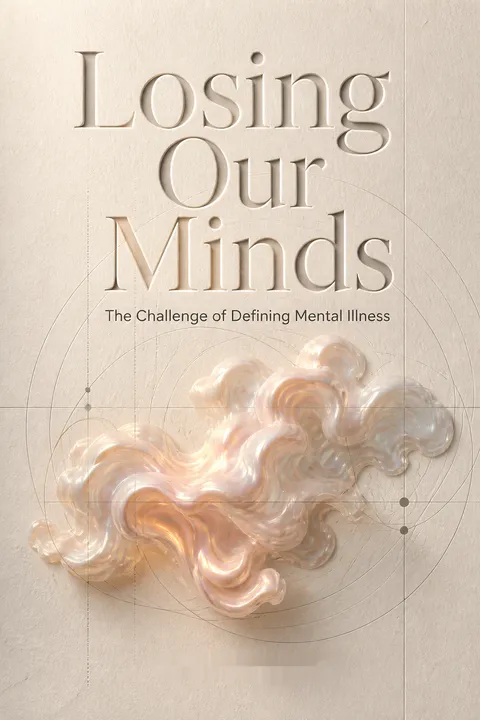
Losing Our Minds explores the complexities of defining and understanding mental illness. Foulkes provides a balanced, evidence-based perspective on topics like social media's impact, overdiagnosis concerns, and the challenges of treatment. Readers appreciate her nuanced approach, personal insights, and accessible writing style. The book debunks myths, examines current mental health trends, and offers practical advice for supporting those with mental illness. While some found certain sections dry or lacking in specific areas, most reviewers highly recommend it for anyone seeking a comprehensive overview of mental health issues.
People Also Read

Glossary
Concept creep
Expanding meanings of harmA change in which concepts such as harm, trauma, or mental disorder come to cover more experiences than before. Expansion may be vertical, when milder forms qualify, or horizontal, when new kinds of experience are included. It can bring previously overlooked people within reach of support, but may also blur distinctions between severe illness and common distress.
Gene-environment correlation
Genes linked to surroundingsA relationship in which genetic tendencies are connected to the environments a person experiences. For example, a parent’s inherited vulnerability to depression may also influence how they parent. A child may inherit some of the same vulnerability while being raised in an environment shaped by it. This overlap makes it difficult to separate biological and environmental contributions to mental health.
Network theory of mental disorders
Interacting symptoms sustain illnessAn account of mental disorders as interconnected symptoms and processes that can trigger and reinforce one another. A stressor may begin with one problem, such as insomnia, which contributes to fatigue, low mood, and reduced self-worth. Biological, psychological, and environmental factors can all enter the network. Once the links become strong, symptoms may persist even after the original trigger has eased.
Looping effects
Labels change labeled peopleThe process by which a category used to describe people also changes how they understand and behave. People may recognize themselves in a diagnosis, seek care under that label, or alter their expectations. Those changes then influence clinicians and researchers, who may revise the category. The classification and the people classified can therefore shape each other over time.
Latent vulnerability hypothesis
Adaptations can carry later costsAn account of how adversity, such as childhood maltreatment, can tune psychological and neural responses to danger. Heightened threat detection may help a child respond to an unsafe environment. The same adaptation can remain after the danger has passed, increasing vulnerability to later psychological difficulties. The response may have been useful in its original context while carrying costs in a safer one.
Social jetlag
Mismatch between sleep schedulesThe mismatch created when a person’s biological sleep timing differs from the schedules imposed by social life. Adolescents often become sleepy later and need more morning sleep, yet school requires an early start. Sleeping much later on weekends can then create repeated shifts between weekday and weekend rhythms, much like moving across time zones.
Stress inoculation
Practice coping with manageable stressThe idea that limited, manageable stress followed by recovery can help people develop skills and confidence for future challenges. It is not a claim that all adversity is beneficial. Severe or repeated hardship can be damaging, while shielding someone from every difficulty may leave them with fewer opportunities to practice coping. The degree of stress and the support available both matter.
Active listening
Show attention and understandingA way of listening that makes attention, empathy, and understanding visible. It includes nonverbal attention, reflecting the speaker’s meaning or feelings, asking open questions, and checking whether the reflection is accurate. In informal support, it helps a person feel heard without requiring the listener to diagnose or solve the problem.
Download PDF
Download EPUB
.epub digital book format is ideal for reading ebooks on phones, tablets, and e-readers.








