

Plot Summary
Prologue
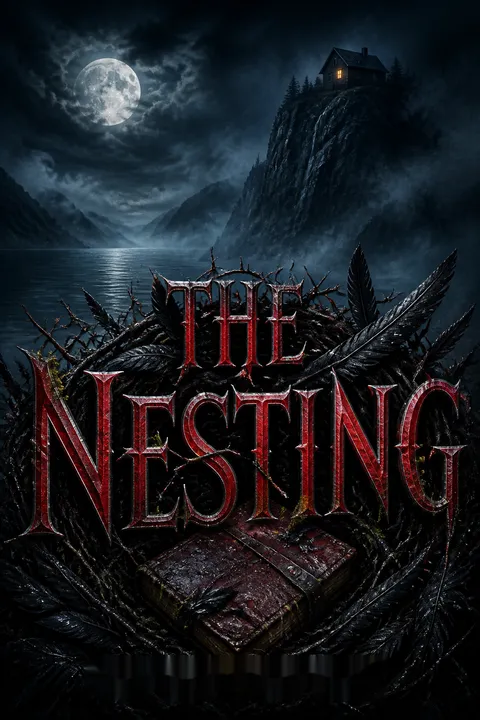
Aurelia runs through a Norwegian forest in her nightdress, trying to draw a pursuer away from her daughters, Gaia and Coco. At the edge of a cliff above the fjord, she dodges him, but his shoulder strikes hers and sends her over.
The book opens on a fall whose cause is not yet clear, then sets it against a folktale about a river that resists human interference and exacts a price. Both images prepare the reader to question what is natural, what is imagined, and what people choose to do when they believe they have no other way to protect those they love.
The prologue makes maternal protection feel both fierce and perilous: Aurelia acts to keep danger from reaching her children, yet the act leaves her at the cliff’s edge. Its withheld context turns the fall into a question rather than an answer. The river tale widens that question beyond individual motive, suggesting that the landscape may have its own agency and memory. Together, the images establish the novel’s central uncertainty: whether catastrophe comes from human choices, psychological distress, supernatural force, or some unstable combination of all three.
A Life Left Behind
Meg finds Lexi Ellis bleeding after she has cut her arms and taken pills. Lexi survives, but loses her care-home job while recovering, and her partner David ends their eight-year relationship and demands she leave his flat. With little money and no plan, she rides a train away from Newcastle, then realizes she has left her medication behind and has nowhere to go.
The prospect of dying returns. In the train window, however, she sees a stranger she can bear to look at and remembers the novel she has begun writing. Finishing it becomes a reason to stay alive, even as her old life disappears behind her.
Lexi’s crisis is shaped by more than a single breakup: job loss, depression, medication, and long-standing maternal rejection have stripped away her ability to argue for herself. Writing offers a small but consequential form of futurity. The imagined book does not cure her; it interrupts the belief that her life has already reached its final page. The train is both escape and exposure, carrying her away from a home while forcing her to decide whether motion can become a beginning.
Borrowed Credentials
On the train, Lexi overhears nanny Sophie Hallerton discussing a well-paid job in Norway. Sophie abandons the application to support her pregnant friend Seren, leaving her laptop unattended long enough for Lexi to photograph the form, copy Sophie’s work history and reference, and apply under her name. The employers invite her to interview.
At their Hampstead home, Lexi learns the job involves caring for Tom Faraday’s daughters, Gaia and baby Coco, whose mother Aurelia recently died. Their current nanny cannot travel. Gaia’s grief and Coco’s warmth make Lexi hesitate to run from the lie, and Tom soon offers her the position. She accepts before she can decide whether desperation excuses the deception.
The impersonation is a survival strategy that immediately becomes an ethical burden. Lexi does not choose a false identity for profit alone; she has no shelter, money, or reliable support, and the application presents a door where none existed. Yet the family’s bereavement makes the fraud unusually intimate. Her desire to care for the girls grows alongside the knowledge that she has entered their home by concealing who she is.
A Refuge and a Farewell
When her phone dies and a train breaks down at York, Lexi tells a police officer she is homeless and has recently tried to kill herself. He takes her to a women’s refuge, where volunteers find her clothes, a doctor renews her medication, and its manager Jill helps her prepare for the interview.
After accepting the job, Lexi asks her friend Meg for a place to stay. Meg admits she and David are moving in together, then packs Lexi’s belongings and drives her to the airport. Lexi leaves her mother a firm goodbye and flies to Norway in borrowed confidence, carrying a suitcase of recovered clothes and the name Sophie Hallerton.
The refuge gives Lexi practical care without demanding that she first become easy to help. Meg’s betrayal complicates that brief experience of support: she offers shelter while revealing that she has joined the man who expelled Lexi. Lexi’s departure is not a clean transformation into a new person. It is a fragile attempt to borrow the stability she lacks, supported by strangers and burdened by a secret.
Granhus in Winter
At the airport, Tom’s business partner Clive and Clive’s wife Derry collect Lexi and drive her through the fjord country to Granhus, an old red lodge surrounded by forest. A large elk charges the construction site, and Tom fires a rifle into the air to drive it away. Inside, Gaia greets Lexi as if they are already close, while Coco reaches for her.
Housekeeper Maren lays out a punishing schedule and warns Lexi to avoid the locked basement, where Aurelia’s room remains untouched. The new home, Aurelia’s Nest, is being built on a cliff. Lexi settles into her small room, unaware how many kinds of danger surround it.
Granhus functions as both refuge and trap. Its warmth and the girls’ welcome promise the family life Lexi has never had, while the rifle, the elk, the cliff, and the forbidden basement make safety feel provisional. The adults’ confidence contrasts with the precarious construction and the children’s unprocessed grief. Lexi has reached shelter, but not a place she can understand or control.
The Girls Need Her
Lexi’s first weeks as a nanny are chaotic: Coco rejects flash cards, food ends up on the floor, and Gaia’s drawings feature a woman with empty eyes who lives below the house. At night, Gaia wakes screaming and climbs into Lexi’s bed, asking whether Lexi will die too. Lexi promises to stay, then comforts her through the night.
Strange signs deepen the unease: muddy elk prints appear beside Lexi’s bed, and Gaia says she has seen her mother since Aurelia died. Though exhausted and frightened, Lexi begins learning the children’s routines and making activities that suit them. Their dependence turns her job from a temporary escape into a relationship she cannot dismiss.
Care here is made of repetitive, physical acts: lifting Coco, settling Gaia, and returning after each frightened waking. Lexi’s promise matters because it answers the girls’ abandonment anxiety while confronting her own history of being passed between adults. The supernatural details remain uncertain, but grief is not. Gaia’s fear gives Lexi a role that feels real before her identity does, making the lie harder to leave.
The River Answers
In the earlier timeline, Tom diverts the river without waiting for environmental approval so he can build Basecamp on the preferred cliffside site. The water grips his hand, and he sees a woman’s reflection where no one stands. He dismisses Maren’s warning about the Norwegian water spirit, the nøkk.
Tom also cuts down an old tree at Aurelia’s suggestion; she later finds nests and displaced animals among its branches and feels responsible. When the diverted river’s makeshift lining leaks chemicals, animals die and the water turns foul. Aurelia’s postnatal exhaustion and fear intensify as she senses the woods watching her. A storm finally destroys Basecamp, giving Tom a chance to reconsider his design, but not the damage already done.
The environmental harm is not scenery for the haunting; it is the first tangible consequence of treating a living system as a design problem. Tom’s intentions are partly idealistic, but urgency and ambition make him override consent and ecological knowledge. Aurelia’s distress grows in the space between her guilt and the family’s dream project. The river’s apparent agency makes that conflict harder to keep safely in the realm of metaphor.
Voices Beneath Granhus
After spotting a drenched woman in the kitchen, Lexi investigates Maren’s email and finds an application from the real Sophie. She blocks the message and its reference, then sends a rejection in Maren’s name. The same night, a voice calls Lexi by her real name and the woman disappears.
Lexi responds by studying childcare and building a learning record for Gaia, hoping better work will quiet Maren’s suspicions. Later, a basement door stands open. Lexi goes down looking for Gaia, hears a stranger refuse her approach, and is trapped in darkness until Tom opens the door. Tom’s fury falls on Maren, though Maren denies entering the basement.
Lexi’s deception becomes active maintenance: she falsifies records, monitors the household, and tries to earn the trust she has already compromised. The apparition’s use of her real name collapses the boundary between performance and private identity. The basement incident adds a second uncertainty. Tom’s disproportionate anger may expose guilt, but it also resembles the ordinary volatility that makes frightened observers search for a single explanation.
Ingrid’s Other Face
Maren tells Lexi that Aurelia drowned after leaving a note, though she doubts Aurelia chose to die. She also says the construction workers fear Granhus is haunted and questions Tom’s decision to build near the place his wife vanished. Derry counters that Maren is an artist who became obsessed with Aurelia and once kept her belongings.
Lexi finds Maren’s attic box of photographs and clippings about Ingrid Olsen, a young Norwegian woman murdered in 1983 who looks strikingly like Aurelia. When Lexi confronts her, Maren reveals Ingrid was her sister and explains that serving Aurelia helped her feel close to the life Ingrid never lived. Lexi’s suspicion softens, but the resemblance remains unexplained.
Maren’s attachment is neither simple devotion nor simple theft. She has used Aurelia’s likeness to keep a murdered sister psychologically present, an act that offers comfort while blurring the distinction between two women. Lexi’s own search for truth is similarly unstable: each clue opens another emotional history rather than resolving the mystery. The resemblance makes identity itself feel haunted, while Maren’s confession exposes how grief can turn care into possession.
A Diary of Violence
At Coco’s birthday, Lexi organizes an octopus party that gives the otherwise distracted household a rare moment of play. That night she finds Aurelia’s red diary in her room. Its entries describe Tom beating and threatening Aurelia, and Lexi concludes he may have driven her to death.
Meanwhile, Tom’s cliffside project endangers young Dag, the contractor Erik’s son: a drill strikes Dag’s head, leaving him in critical condition. Tom travels north with the girls and Lexi for Christmas, where he attends to them and grieves more openly than before. His tenderness unsettles Lexi’s certainty, but she hides the diary and remains determined to protect Gaia and Coco.
The diary converts private writing into apparent evidence, and Lexi’s history of abuse makes its account immediately legible to her. Yet Tom’s behavior complicates the portrait: his care for the girls is real, even if it cannot disprove what the diary claims. The accident forces him to face the cost of his uncompromising methods, while the Christmas trip briefly loosens his grip on work. Lexi remains caught between suspicion and the family she has come to love.
Gaia Follows the Prints
After Christmas, Gaia dreams that her mother has gone outside and follows muddy hoofprints from her bedroom through the kitchen door. She wanders barefoot into the snow before the adults realize she is missing. Lexi, Tom, Maren, Clive, and Derry search the woods and the fjord. Lexi finds Gaia unconscious beneath a tree, dangerously cold but alive.
When Gaia wakes, she says she was dreaming about her mother swimming. Lexi sees a link to Aurelia’s death that the child cannot fully explain. Tom warns Lexi that another failure to keep Gaia safe will cost her the job. The search leaves Lexi more protective and more afraid of what Granhus can do.
Gaia’s wandering turns grief into action: she follows the image of her mother rather than merely speaking about her absence. The tracks connect her private dream life to the land’s recurring animal signs, leaving adults unable to separate danger from supernatural suggestion. Lexi’s discovery of Gaia proves her value to the family, but Tom’s warning reminds her that affection cannot erase professional responsibility or the original lie.
The Body Beneath the Build
As construction advances, diggers uncover a human body in the earth, likely connected to Granhus’s vanished former owner. Tom is shaken, but Clive pours wet concrete over the remains rather than report the discovery, then covers the site with soil. Erik and most of the workers refuse to return.
Despite the scandal and danger, Tom completes Aurelia’s Nest, a glass lift descending to a home built into the cliff. Lexi sees Tom’s excitement and the girls’ delight, but completion means her nanny job may end. Her own position collapses when her mother calls the house and identifies her as Lexi, exposing the stolen Sophie identity. Tom orders her to leave.
The buried body makes the build’s moral compromise literal: Clive protects a structure by burying the evidence that should stop it. Tom’s achievement is genuine, but it rests on a concealed crime and cannot be treated as uncomplicated triumph. For Lexi, the moment of completion coincides with exposure. The household she helped sustain has become real to her, while the identity that secured her place proves impossible to maintain.
Derry’s Confession
As Derry drives Lexi toward the airport, she accuses Lexi of wanting her husband, then reveals knowledge of Aurelia’s diary. Derry admits she removed pages and rewrote them, so the diary’s abuse account cannot be trusted as a record of Tom’s actions. A figure appears in the road. Derry swerves, crashes through the barrier, and the car rolls into the fjord.
Lexi escapes the wreck but is swept along the current, where the eyeless water creature attacks her ankle. Gaia has followed them down the cliff. Lexi throws a rock to draw the creature away, then recalls the folktale rule: naming a nøkk can banish it. She whispers the fjord’s name, Hjørund, before the water closes over her.
Derry’s confession dismantles the apparent evidence just as physical danger removes any chance for a calm investigation. Her culpability is layered: she has falsified the diary, and her earlier failure to help Aurelia remains hidden beneath the story of suicide. The crash places Lexi in the same lethal landscape that claimed Aurelia, but Lexi’s response is different. She wants to live, and that desire gives her the nerve to act for Gaia.
A Guest, Not a Nanny
Lexi wakes in hospital with Gaia beside her. Derry has died; Lexi survives her injuries, and Gaia has raised the alarm. Clive says Derry watched Aurelia drown but froze rather than help, while Maren believes the nøkk’s influence may have distorted Derry’s actions and dreams. Tom invites Lexi back, not as an employee but as a guest in the finished house.
Lexi tells him about Mia, the daughter she relinquished as a teenager, and begins to imagine contacting her when she is older. She finishes her novel, then helps Gaia release Dora, the raven she rescued. Dora joins another bird and flies into the forest, leaving Lexi with a life she can choose to keep building.
The ending replaces employment with belonging freely offered. Lexi no longer needs to impersonate a qualified stranger to remain near the girls, and Tom’s invitation recognizes the care she has already given. Her disclosure about Mia reconnects survival to an older grief she had concealed even from herself. Releasing Dora completes a different kind of care: loving the bird means allowing it to leave, just as Lexi’s new life depends on moving beyond the identities and losses that once confined her.
Analysis
The Nesting makes its central mystery inseparable from the conditions that produce competing stories. Lexi enters the Faraday home under a false name, while Aurelia’s life is reconstructed through photographs, memories, folklore, and a diary whose apparent authority proves unreliable. The reader shares Lexi’s vulnerability to a persuasive account: the diary’s allegations fit what she knows about abuse, and Tom’s anger seems to confirm them. Later revelations do not simply replace one culprit with another. They expose how grief, guilt, and supernatural influence can distort testimony without erasing human responsibility.
The book’s ecological conflict gives that uncertainty material weight. Tom’s project treats the river as an obstacle, then suffers consequences that range from damaged foundations and poisoned water to uncanny encounters. His environmental principles matter, but the novel is unsentimental about the gap between good intentions and responsible action. Building a house that claims to give back to nature does not undo the harm caused by building it.
Care offers the story a counterforce to possession and control. Lexi’s work with Gaia and Coco begins as a lie, yet becomes meaningful through repeated attention to their needs. Gaia’s grief cannot be managed by a convenient explanation, just as Aurelia’s death cannot be reduced to a single clean account. Lexi’s own history of abandonment makes her fiercely protective, but the rescue of Dora teaches her that love is not the same as keeping someone close forever.
The ending does not erase loss: Derry is dead, Aurelia remains gone, and Lexi’s future with Mia is only a possibility. Instead, it gives Lexi a place where she no longer has to impersonate someone else to be wanted. Survival here is not a sudden cure. It is the gradual discovery that she can make choices, accept care, and remain present for the next chapter of her life.
Review Summary
The Nesting is a gothic thriller set in Norway, blending elements of Nordic folklore, supernatural horror, and domestic suspense. Readers praised its atmospheric setting and creepy ambiance, though some found the plot predictable or slow-paced. The story follows Lexi, who impersonates a nanny to care for two children whose mother recently died. Many reviewers enjoyed the folklore aspects and environmental themes but felt the characters lacked depth. Overall, opinions were mixed, with some finding it captivating while others felt it fell short of expectations.
People Also Read









Characters
Lexi Ellis
A desperate, devoted outsiderLexi is a young woman in northern England whose depression, childhood neglect, and fragile finances have made it difficult for her to ask others for help. Wry and sharply observant, she turns to writing when ordinary life becomes impossible to manage. Her decision to take a nanny job under someone else’s name is both a moral compromise and an attempt to survive. Around Gaia and Coco, Lexi discovers that care can be a practice rather than a quality one either possesses or lacks. Her empathy is strongest when she recognizes another person’s fear, though that sensitivity can also make her vulnerable to suspicion and self-blame.
Aurelia Faraday
A mother under strainAurelia is Tom’s wife, Gaia and Coco’s mother, a photographer, and a woman with Norwegian family ties. She imagines their summer home as a way to give her daughters a life close to nature, but the remote setting, new baby, ecological damage, and worsening mental health place that ideal under pressure. Her photographs and folktales express an attentive relationship with the landscape, while her private distress resists the polished image others see. Aurelia’s story reaches Lexi through memories, photographs, and conflicting accounts, making her both a person in her own right and the absence around which the household has formed.
Tom Faraday
A grieving architectTom is an architect and father to Gaia and Coco, devoted to building an ambitious home in the Norwegian landscape. He is imaginative, environmentally minded, and intensely committed to his vision, but his determination can harden into impatience with people and practical limits. Since Aurelia’s death, he has thrown himself into work while struggling to respond to his daughters’ grief. His reserve makes it difficult for others to know what he feels, and his moments of anger complicate the gentleness he also shows. Tom’s choices reveal the tension between wanting to honor someone and knowing how to care for the living.
Gaia Faraday
A watchful grieving childGaia is Tom and Aurelia’s six-year-old daughter, an observant child who draws, asks unsettlingly direct questions, and clings to her mother’s memory. She is bright and imaginative, but her grief emerges through night terrors, stories, and persistent images of a woman in the house. Gaia’s attachment to her teddy Louis and her efforts to care for a vulnerable bird give her ways to manage feelings she cannot yet name. She is often more perceptive than the adults around her realize, especially when they try to soften or conceal the truth.
Coco Faraday
A lively infantCoco is Tom and Aurelia’s baby daughter. Curious, physical, and quick to laugh, she explores her surroundings by crawling, grabbing, and putting objects in her mouth. Her needs keep Lexi constantly alert and bring moments of unguarded warmth into the strained household. Coco cannot understand the family’s grief, but her dependence gives the adults a daily reason to keep caring for one another.
Maren Larsen
The keeper of old griefMaren is Tom’s longtime housekeeper, a Norwegian woman who knows the Faraday family and the customs surrounding the remote house. Practical but emotionally guarded, she tends to retreat into household routines and traditional stories rather than explain what she feels. Her loyalty to Aurelia runs deeper than an employer’s obligation, and her own history of loss shapes how she understands the landscape and its spirits. Maren can be stern with the children and wary of Lexi, yet she is also capable of compassion when she recognizes pain in someone else.
Derry Boydon
A charismatic designerDerry is an interior designer, Clive’s wife, and a longtime acquaintance of Tom and Aurelia. Athletic, sociable, and outwardly buoyant, she often meets difficulty with polished confidence and spiritual optimism. Her struggle to build the family she imagined gives her a private vulnerability beneath that performance. Derry is deeply involved in the project and household, but her relationships contain tensions she rarely discusses plainly. To Lexi, she first appears as a helpful guide to Norway and later becomes a source of unease.
Clive Boydon
Tom’s pressured business partnerClive co-runs the architecture firm with Tom and helps manage the Norwegian construction project. He is practical, sociable, and often sarcastic, with a sharper eye for budgets and logistics than his partner. His marriage to Derry and his business relationship with Tom are both under strain, though he tries to hide anxiety behind humor. Clive’s instinct is to solve immediate problems, sometimes without considering the consequences beyond the project.
Meg
Lexi’s conflicted friendMeg is Lexi’s longtime friend, a tattoo artist who knows her history and offers practical help after Lexi’s crisis. Their closeness is real, but resentment has accumulated around Lexi’s cancellations, debts, and emotional withdrawal. Meg’s attempt to be helpful does not erase the hurt between them, and her choices reveal how affection can coexist with self-interest.
David
Lexi’s distant former partnerDavid is Lexi’s partner of eight years, a schoolteacher whose emotional reserve once attracted her and later leaves her isolated. He offers little support during her recovery and handles their breakup as a practical separation, asking her to leave quickly. His relationship with Lexi reflects her tendency to accept distance as stability.
Erik
A widowed contractorErik is a contractor on Tom’s building project and the father of Dag. Having suffered a profound loss himself, he is sensitive to the grief Tom tries to hide. He values loyalty and hard work, but his concern for his son and the other workers puts him at odds with the risks Tom takes.
Dag
A young architecture traineeDag is Erik’s son, a shy and diligent aspiring architect who earns a place on Tom’s construction team. He is eager to learn and proud to be trusted with demanding work, but his inexperience leaves him exposed to the project’s hazards.
Plot Devices
The false application
A borrowed identityLexi copies Sophie Hallerton’s employment details and uses her name to secure a nanny position in Norway. The deception gives Lexi shelter and a route out of her crisis, but it also makes genuine attachment to the Faraday girls ethically unstable. References, emails, and the eventual phone call from Lexi’s mother keep the lie active until the household discovers who Lexi is.
Aurelia’s diary
Evidence with a false historyThe red diary appears to preserve Aurelia’s dreams and private fears, then seems to record violence by Tom. Lexi treats it as evidence that Tom may have caused Aurelia’s death. Its missing pages and altered contents eventually expose how easily written testimony can be manipulated, particularly when a reader’s own painful history makes one interpretation feel certain.
The nøkk
Folklore made dangerousThe Norwegian water spirit is introduced through Maren’s stories and a folktale about a creature that can punish people who interfere with nature. Its presence is suggested by impossible encounters, water, hoofprints, and the figure with hollow eyes. At the climax, the folktale’s rule that a person can banish a nøkk by naming it gives Lexi a chance to protect Gaia.
The altered river
Nature’s disrupted balanceTom diverts a river to make room for his first design, despite the ecological risks. The intervention contributes to toxic runoff, dead animals, a ruined house, and the return of the river to its old course. It connects the construction plot to the supernatural one without settling whether the land is literally retaliating or whether human guilt and grief shape what the characters perceive.
Dora the raven
Care that learns releaseGaia finds a fallen nestling, and Lexi helps her care for it in secret. Dora gives Gaia a concrete task during her grief and draws Lexi deeper into the household. When the raven grows strong enough to fly, the girls must let it join the wild rather than keep it as a permanent source of comfort.
About the Author
Other books by C.J. Cooke



Download PDF
Download EPUB
.epub digital book format is ideal for reading ebooks on phones, tablets, and e-readers.








