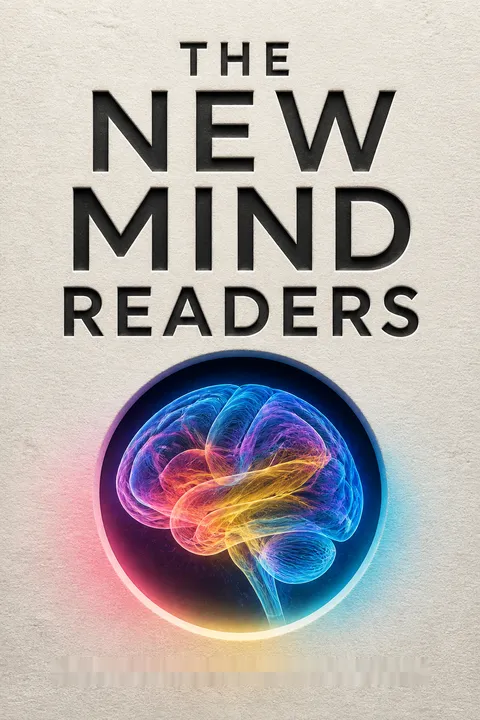


Key Takeaways
A colorful brain scan cannot tell you what someone feels.
Activation is not a label. A brain region can become active during many different mental activities. Inferring a specific thought or emotion from activity in one region is called reverse inference. It is like diagnosing an illness from a fever: many causes can produce the same sign. Poldrack found that the anterior cingulate cortex, often linked to conflict, appeared in about one-quarter of thousands of neuroimaging studies involving very different tasks. Its activation alone cannot establish that someone feels conflicted. Mental activities are supported by patterns across interacting brain regions, not by a neat map in which each region names one feeling.
Read patterns cautiously. Brain imaging can still inform psychological questions, but the claim must fit the evidence. A location that participates in a process is not necessarily unique to it, and a colorful image does not make an interpretation more specific.
What's striking is how easily visual precision can masquerade as psychological certainty. A scan may locate a signal precisely while leaving its meaning ambiguous. This distinction matters far beyond neuroscience: a measurement is not an explanation, and an explanation is not proof of a particular person's inner state. The book's fever analogy is especially useful because it directs attention to competing causes. Strong interpretation requires asking what else could produce the same observation, rather than choosing the explanation that best fits a headline.
Remember fMRI sees oxygen's slow shadow, not neurons thinking in real time.
A proxy, not a microphone. The path to modern brain imaging began in 1877, when physician Angelo Mosso measured changes in the brain's blood pulsations through a hole in a patient's skull. Later, PET studies used blood-flow changes to compare mental tasks. fMRI made the approach safer and easier to repeat by detecting changes in blood oxygenation, called BOLD contrast. Active neural tissue prompts nearby blood vessels to deliver oxygen, and fMRI measures the resulting magnetic signal. It does not record thoughts or directly count neurons firing.
Useful, with limits. Experiments that measured fMRI and neural activity together found a meaningful relationship, especially with inputs to neurons. But blood flow unfolds more slowly than neural events and spreads beyond their precise location. fMRI therefore offers a blurred, delayed view of brain activity, not a live transcript.
The method's power comes from an indirect biological link, not from a technological shortcut into the mind. That is a familiar pattern in science: climate researchers infer past conditions from ice, while astronomers infer distant events from light. The inference can be robust when the chain from signal to phenomenon is tested. But the intermediate steps should remain visible, especially when a conclusion is applied to a person rather than a controlled experiment.
Decoding can identify constrained thoughts, not translate an unrestricted inner monologue.
Patterns carry information. Researchers can use machine learning to compare whole patterns of brain activity with patterns previously linked to known experiences. This approach, called decoding, moved beyond asking whether one area became more active. In studies, it distinguished categories of viewed objects, predicted whether a person would add or subtract before seeing the numbers, and identified broad task types in people whose data were not used to train the model. These are real achievements, but each depends on a defined set of possibilities and careful statistical testing.
Context sets the ceiling. Some visual studies reconstructed images by selecting the closest match from millions of existing pictures, using those pictures as prior information. In another application, a person diagnosed as vegetative showed different brain patterns when asked to imagine playing tennis or navigating a familiar place. Such findings can reveal awareness that behavior cannot show, but they do not amount to free-form mind reading.
The key distinction is between decoding a choice among known alternatives and discovering a thought that researchers never specified. The first is a tractable prediction problem. The second requires a far richer model of context, memory, language, and personal meaning. This distinction helps prevent genuine technical progress from becoming science fiction in the public imagination. The clinical example also shows why decoding has value even when it remains limited: a narrow signal can matter greatly when ordinary communication is unavailable.
Demand independent tests before trusting striking brain-behavior correlations.
More measurements create more chances to be wrong. An fMRI image can contain data from tens of thousands of brain locations. If researchers test each location without correcting for multiple comparisons, some will appear significant by chance. The famous dead-salmon demonstration made the point: an analysis that failed to control this problem seemed to find brain activity in a dead fish. The lesson was about statistics, not fish consciousness.
Do not select and confirm on the same data. Poldrack's team initially reported a very strong relationship between brain signals and loss-averse choices. The analysis had used the same data to find and display the strongest relationship, inflating its apparent size. An independent reanalysis preserved the finding but reduced the correlation by about 40 percent. Small samples, flexible analyses, and weak replication can make discoveries look surer than they are.
The salmon story is memorable because it turns an abstract statistical warning into a vivid absurdity. Its deeper lesson is that a plausible-looking result can emerge from a flawed pipeline even when the underlying instrument works. Independent testing is not bureaucratic caution; it asks whether a pattern survives outside the process that selected it. This standard is especially important when studies are expensive, since cost can create pressure to extract a dramatic claim from a small amount of data.
Scan people repeatedly if the question is how one brain changes.
A brain is a moving target. Neural plasticity means that experience can alter connections between neurons. It supports learning, skill, recovery, and adaptation. After Lisa underwent surgery removing her left cerebral hemisphere to control severe seizures, her remaining right hemisphere gradually supported some language abilities, though her recovery was incomplete. Studies of musicians also find brain differences associated with years of practice.
One scan is a snapshot. To examine change over weeks and months, Poldrack scanned himself 104 times over 18 months. His brain's day-to-day connectivity fluctuations differed from the differences seen between people, suggesting that group averages can hide meaningful personal variation. Caffeine, food, mood, and whether his eyes were open also affected measurements. The study offered a first view of an individual brain changing over time, while showing how hard it is to separate a cause from correlated changes in daily life.
This section challenges a quiet assumption behind much research: that a person can be represented by one measurement. Repeated measurement can reveal an individual's stable signature and ordinary fluctuations, which are different questions from comparing one person with another. The distinction resembles the difference between weather on one day and a region's climate. Dense observation is costly, however, and a single intensely studied person cannot stand in for everyone. It is a powerful method for generating questions, not a shortcut to population-wide conclusions.
Keep population brain averages out of individual verdicts about guilt or truth.
Group trends do not decide cases. Brain development research helped courts recognize that adolescents, on average, have less mature systems for control and heightened reward sensitivity. But an average difference cannot determine how responsible a particular teenager was. Science can inform a legal judgment; it cannot choose where society draws a moral boundary.
Promising tests still need real-world validation. Laboratory fMRI lie-detection studies reported high accuracy, but participants were usually healthy young adults instructed to lie in low-stakes settings. A criminal defendant may have different motivation, history, and strategies. In the Semrau fraud case, the court excluded fMRI evidence because reliability and scientific acceptance were inadequate. A brain measure used to predict rearrest improved prediction by only about five percent beyond age. Even useful risk estimates raise fairness questions when social conditions shape both risk and opportunity.
The central problem is a mismatch of scale. Science estimates patterns across groups, while courts must make consequential decisions about individuals. A statistical association can support a question without settling the answer. The same caution applies to risk prediction: accuracy is not the only standard when liberty is at stake. Any such tool should be judged not just by whether it predicts outcomes, but by the costs of false positives, the fairness of its inputs, and who has authority to act on its results.
Use brain signals to refine choice models, not invent a buy button.
Choices combine value and learning. Prospect theory describes two recurring features of decisions: losses often weigh more heavily than equivalent gains, and framing can change choices. In a study of monetary gambles, activity in the ventral striatum and ventromedial prefrontal cortex tracked gains and losses, with individual brain responses related to individual choices. Dopamine also helps update expectations when outcomes are better or worse than predicted, shaping learning and habits.
Marketing claims need the same scrutiny. Early claims that brain scans could identify the winning Super Bowl ad or prove that people loved their phones leaned on reverse inference. More careful studies found that brain responses could help forecast population responses to some campaigns, sometimes complementing surveys and image ratings. That is a modest forecasting advantage, not a hidden neural button that reliably reveals what any one customer will buy.
Neuroscience can add value when it tests a specific behavioral model against observable choices. Its contribution is weaker when a brain area is treated as a decoder ring for a consumer's motives. The distinction resembles the difference between predicting aggregate demand and knowing why one individual bought one product. Population forecasting can still matter commercially, but its success does not validate the story told about each participant's brain.
Treat diagnoses as imperfect maps of overlapping brain and life processes.
Categories do not neatly match biology. Mental disorders are influenced by genes, but complex conditions such as schizophrenia do not arise from one simple gene. Genome studies find many small genetic contributions and overlap among diagnoses. Imaging meta-analyses likewise found some shared brain differences across conditions, including in regions associated with control and emotional processing. These findings challenge the idea that every diagnosis has one distinct biological signature.
A disorder has more than one level. Research Domain Criteria, or RDoC, encourages researchers to study underlying systems and behaviors rather than relying only on diagnostic checklists. Computational psychiatry uses mathematical models to investigate which computations may be disrupted. Addiction further complicates the disease label: brain adaptation matters, but context matters too. Many Vietnam veterans who had become addicted to heroin did not return to heroin use after coming home, showing that behavior can change with environment. Calling a condition biological may reduce blame, yet can also deepen beliefs that people are dangerous or beyond help.
A diagnosis can be clinically useful without being a perfect description of cause. That distinction is common in medicine: a symptom-based category may guide care while biology cuts across its boundaries. The challenge is to avoid replacing one oversimplification with another. Brain mechanisms matter, but so do treatment, relationships, material conditions, and personal agency. The addiction example is particularly clarifying because it resists both moralizing and biological determinism.
Make neuroscience more trustworthy by sharing data and exposing analysis choices.
Better tools will not erase basic limits. Stronger MRI magnets can sharpen spatial detail enough to study fine-grained brain organization, but they still largely measure blood oxygenation, which is slow. EEG and MEG capture faster electrical activity but have difficulty pinpointing its source. Each method trades one kind of resolution for another, so combining tools may offer a fuller picture than expecting one scanner to answer everything.
Open methods strengthen claims. Large shared projects, including the Human Connectome Project, let researchers examine data beyond a single laboratory. Preregistration makes planned hypotheses and analyses visible, while sharing data allows others to check results and ask new questions. Neither practice guarantees truth, but both make errors easier to find. The book's final point is not that neuroscience has reached its destination, but that transparent self-correction is part of how the field earns trust.
The future of neuroimaging depends as much on research culture as on magnet strength. More detailed instruments can produce richer data, but richer data also create more analytic choices and more opportunities for selective interpretation. Shared data and transparent plans make those choices inspectable. They also redistribute scientific opportunity by letting researchers without expensive scanners work with existing evidence. Openness cannot eliminate bias or settle ethical disagreements, but it makes the path from measurement to claim less mysterious.
Analysis
The book's central argument is not that brain imaging fails to reveal the mind, nor that a scan can expose a person's private thoughts. It is that neuroimaging earns its authority only when the inference connecting signal to claim is made explicit. A measured blood-oxygen change, a statistical pattern, a psychological interpretation, and a decision about a person are separate steps. Each step adds assumptions, and the assumptions become more consequential as findings move from laboratories into courts, clinics, and markets.
This makes the book both a history of a technology and a case study in scientific reasoning. Mosso's crude balance and contemporary fMRI share the same intellectual wager: mental activity changes the body's circulation. The modern scanner dramatically improves the measurement, but it does not abolish the inferential gap. Pattern decoding, longitudinal scanning, and computational models narrow that gap by asking better specified questions. They do not turn correlations into causes or group regularities into individual truths.
The most valuable tension is between promise and restraint. Imaging can disclose awareness in a patient who cannot respond, identify shared features across disorders, and test theories of choice. Yet the same apparent authority can lend unwarranted confidence to claims about deception, risk, emotion, or consumer desire. The book therefore treats methodological humility as a practical safeguard, not a refusal of progress.
Its strongest broader lesson is institutional: reliable knowledge depends on conditions that make correction possible. Adequate samples, independent validation, transparent analysis, and shared data are not technical afterthoughts. They determine whether a striking result becomes dependable evidence. Neuroimaging's future will be measured not only by sharper images, but by whether researchers and institutions resist turning probabilistic findings into verdicts they cannot support.
Review Summary
The New Mind Readers receives mixed reviews, with an average rating of 3.89/5. Readers appreciate its overview of fMRI technology and neuroimaging, praising the author's commitment to science and impartial approach. Some find it informative and accessible, while others consider it too technical for lay readers or not novel enough for experts. The book is commended for addressing current issues in neuroscience and providing historical context. However, some reviewers note that it may lack depth in certain areas and criticize its focus on individual researchers rather than collaborative efforts.
People Also Read








Glossary
Blood oxygenation level dependent (BOLD) contrast
Oxygen-sensitive MRI signalBOLD contrast is the MRI signal change caused by differences in oxygenated and deoxygenated blood. When neural activity increases, local blood flow changes, altering the magnetic properties measured by the scanner. It is the standard basis for functional MRI, but it is an indirect, delayed measure of neural activity rather than a direct recording of neurons.
Reverse inference
Inferring thought from activationReverse inference means using activity in a brain region to infer a specific mental process. The inference is weak when many different processes activate the same region. For example, activity in an area associated with conflict does not, by itself, prove that a person is experiencing conflict, just as a fever alone does not identify one disease.
Decoding
Predicting mental state from patternsDecoding uses statistical models to predict a person's mental state from patterns of brain activity. Researchers train a model on examples linking known tasks or experiences with brain signals, then test its predictions on new data. It can distinguish defined alternatives, such as viewed object categories, but does not automatically translate unrestricted thoughts into ordinary language.
Cross validation
Testing predictions on held-out dataCross validation estimates how well a statistical model will perform on data it has not used for training. Researchers divide observations into portions, fit the model on some portions, and test it on the held-out portion, repeating the process. This helps reveal whether a result generalizes, rather than merely fitting the sample used to discover it.
Functional connectivity
Co-fluctuation between brain regionsFunctional connectivity describes how strongly activity in different brain regions fluctuates together over time. It can be measured with resting-state fMRI, even when a person is not performing a task. Correlated activity does not establish that regions are directly wired together or that one causes the other; it describes a statistical relationship.
Connectome
Map of brain connectionsThe connectome is a catalog or map of connections in the brain. Neuroimaging research commonly studies large-scale connections among brain regions, using functional connectivity and diffusion-weighted MRI to estimate structural pathways. This macroscopic map differs from a microscopic account of individual neuron-to-neuron connections, which remains much harder to measure in living humans.
Neural plasticity
Experience-driven brain changeNeural plasticity is the brain's capacity to change its structure or function in response to activity and experience. Changes in connections between neurons support learning and memory, while plasticity can also help the brain reorganize after injury. The location and form of change matter: different brain systems support different kinds of learning and recovery.
Prospect theory
Model of choices under riskProspect theory describes ways people depart from decisions based on expected value. It emphasizes that losses often have greater psychological impact than equivalent gains, a pattern called loss aversion, and that the wording or framing of a choice can alter decisions. The theory provides a framework for studying how people evaluate risky options.
Research Domain Criteria (RDoC)
System-based mental health research frameworkResearch Domain Criteria is a framework developed to study mental health through underlying behavioral and biological systems rather than relying exclusively on traditional diagnostic categories. It organizes research around processes such as threat response, reward, and cognitive control, and asks how these relate to genes, brain systems, behavior, and symptoms.
Computational psychiatry
Modeling mental processes in illnessComputational psychiatry applies mathematical models of cognition and learning to investigate how mental processes may differ in psychiatric conditions. For example, reinforcement-learning models can describe how people learn from positive or negative feedback, then help researchers test whether a particular learning pattern is associated with a disorder or symptom.
Neural focus group
Brain-based population response forecastA neural focus group uses brain responses from a relatively small set of participants to help predict how a larger population may respond to media, advertisements, or requests for support. Studies have compared these predictions with surveys and real-world outcomes. The method can improve some forecasts, but it does not reveal each viewer's private reason for responding.
FAQ
What's The New Mind Readers about?
- Exploration of Neuroimaging: The book examines how neuroimaging techniques, especially fMRI, allow scientists to visualize brain activity and understand cognitive functions.
- Mind Reading Concept: It discusses the potential and limitations of "mind reading" by decoding brain activity, highlighting both the power and constraints of these technologies.
- Broader Implications: Russell A. Poldrack addresses philosophical questions about consciousness and decision-making, and the implications of neuroimaging in mental illness and criminal justice.
Why should I read The New Mind Readers?
- Cutting-Edge Science: The book offers insights into the latest advancements in neuroscience, reshaping our understanding of the human mind.
- Interdisciplinary Approach: It combines neuroscience with psychology, ethics, and law, appealing to readers interested in multiple fields.
- Thought-Provoking Questions: Poldrack raises questions about identity, responsibility, and consciousness, encouraging critical thinking about scientific discoveries.
What are the key takeaways of The New Mind Readers?
- Neuroimaging's Power and Limits: While neuroimaging can reveal brain activity linked to thoughts and feelings, it cannot definitively interpret those thoughts.
- Brain as a Complex System: The brain functions as an integrated network, challenging simplistic views of brain localization.
- Ethical Considerations: The book discusses the ethical implications of using neuroimaging in legal contexts, especially concerning juvenile justice and mental illness.
What are the best quotes from The New Mind Readers and what do they mean?
- Complexity of the Brain: "Understanding how the brain works is almost certainly the most challenging scientific problem of our time." This highlights the brain's complexity and the ongoing quest to unravel its mysteries.
- Biological View of Thought: "If thinking is just a biological function that we can visualize with MRI, then what becomes of the mystery of human consciousness?" This challenges readers to consider the essence of consciousness.
- Interpreting Neuroimaging Data: "There is no simple one-to-one mapping between psychological states and activity in specific brain areas." This cautions against oversimplified interpretations of neuroimaging data.
How does fMRI work according to The New Mind Readers?
- Blood Flow Measurement: fMRI measures changes in blood flow related to neural activity, as active brain regions require more oxygenated blood.
- BOLD Signal: It relies on the Blood Oxygen Level Dependent (BOLD) contrast, detecting variations in blood oxygenation levels to infer brain activity.
- Spatial and Temporal Resolution: fMRI provides high spatial resolution images but has limitations in temporal resolution, capturing where activity occurs but not precisely when.
What are the limitations of neuroimaging discussed in The New Mind Readers?
- Reverse Inference Problem: Inferring specific thoughts or feelings from brain activity is problematic, as different mental states can activate the same brain regions.
- Generalizability Issues: Neuroimaging findings often do not generalize well across individuals, complicating universal application of results.
- Ethical Concerns: Potential misuse in legal contexts raises ethical questions about privacy, consent, and brain data interpretation.
How does The New Mind Readers address mental illness?
- Brain Disease Perspective: Poldrack discusses whether mental illnesses should be viewed strictly as brain diseases, advocating for a nuanced understanding.
- Neuroimaging Insights: The book highlights how neuroimaging has identified brain dysfunctions associated with conditions like depression and anxiety.
- Implications for Treatment: Understanding the brain's role in mental illness can inform treatment approaches, but oversimplification of these conditions is cautioned against.
What is the significance of the "default mode network" in The New Mind Readers?
- Resting State Activity: The default mode network shows increased activity when a person is at rest, often linked to introspective thought.
- Cognitive Functions: It is involved in self-referential thinking, memory retrieval, and future planning.
- Individual Variability: The network's organization varies significantly between individuals, highlighting the need for personalized approaches in neuroscience.
How does The New Mind Readers relate neuroimaging to decision-making?
- Decision Neuroscience: Neuroimaging has advanced understanding of neural mechanisms underlying decision-making, including risk assessment and reward evaluation.
- Dopamine's Role: Dopamine is crucial for signaling prediction errors, essential for learning and adaptive decisions.
- Implications for Behavior: Insights into decision-making processes inform fields like marketing and behavioral economics, raising ethical questions about manipulation.
What future directions for neuroimaging does Poldrack suggest in The New Mind Readers?
- Technological Advancements: New techniques could overcome current limitations, such as improved temporal resolution and capturing dynamic brain processes.
- Integration with Other Data: Combining neuroimaging with genetic, behavioral, and environmental data could create a comprehensive understanding of brain function.
- Personalized Neuroscience: Future neuroimaging may involve personalized approaches, allowing tailored interventions based on individual brain characteristics.
What are the ethical implications of neuroimaging discussed in The New Mind Readers?
- Legal Applications: The use of neuroimaging in legal contexts, like lie detection, raises concerns about reliability and ethical implications.
- Privacy Concerns: Neuroimaging could infringe on personal privacy, revealing sensitive information about thoughts and intentions.
- Stigmatization of Mental Illness: Labeling mental disorders as brain diseases may reduce stigma but could also lead to negative perceptions of individuals with mental health issues.
How does the author suggest improving neuroimaging research in The New Mind Readers?
- Transparency in Research: Poldrack advocates for open data sharing to enhance reproducibility and collaboration, building trust in research findings.
- Preregistration of Studies: Emphasizing preregistration of methods and hypotheses prevents questionable research practices, ensuring rigorous studies.
- Combining Techniques: Integrating different neuroimaging methods could provide a comprehensive understanding of brain function, overcoming individual technique limitations.
About the Author
Other books by Russell A. Poldrack

Download PDF
Download EPUB
.epub digital book format is ideal for reading ebooks on phones, tablets, and e-readers.








