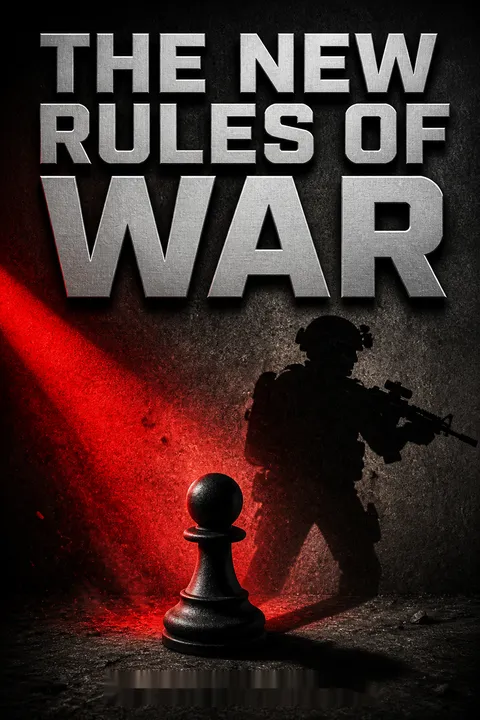


Key Takeaways
Judge victory by the political end state, not the battlefield score.
The outcome is political. McFate’s opening diagnosis is that Western forces often win firefights yet fail to achieve the purpose for which a war began. He defines victory by whether the original objectives are achieved, not by enemy body counts, territory seized, or a triumphant announcement. In Iraq, the rapid defeat of Saddam Hussein’s army did not settle what followed. The conflict continued for years, while American leaders struggled to articulate a workable end state.
Tactics are not strategy. McFate calls the habit of confusing battlefield success with political success the “tactization” of strategy. His Iraq example echoes his account of the special-operations campaign against al-Qaeda in Iraq: effective missions, but no shared national plan sufficient to turn them into a durable outcome. Without a clear political purpose, operational competence can make a failing war look successful for longer.
This distinction is useful well beyond military affairs: an organization can hit its performance targets while missing the reason those targets matter. The hard question is whether stated objectives are coherent, achievable, and still worth their cost. McFate rightly resists redefining success after the fact, but objectives can change as circumstances change. Honest reassessment is not necessarily evasion. The essential discipline is to make changes explicit and judge them against consequences, rather than treating activity as evidence of progress.
Prepare for durable disorder, not a replay of 1945.
Conflict persists without closure. McFate calls the emerging condition “durable disorder”: a world in which armed conflicts endure, spread, or recur rather than resolving neatly through a peace treaty. He points to rising numbers of conflicts and to research cited in the book suggesting that half of peace agreements fail within five years. In this account, disorder does not mean universal collapse. It means that authorities often contain violence without settling its causes.
The familiar model is recent. The state-centered order associated with the Peace of Westphalia, and the conventional state-versus-state warfare later idealized through World War II, are not timeless templates. The War of Eight Saints in fourteenth-century Italy, fought by religious factions and mercenary forces, resembles modern conflicts more than a tidy national campaign. McFate’s warning is that treating the exceptional period of state dominance as the permanent norm leaves strategists unprepared.
The value of this historical comparison is not that today’s wars are identical to medieval conflicts. It is that categories such as state, peace, and legitimate combatant have changed before, and can change again. Historical analogy works best as a prompt to examine assumptions, not as proof that history is repeating itself. “Durable disorder” also risks sounding inevitable. Seeing conflict as persistent should encourage prevention and resilience, not resignation to endless violence.
Invest in adaptable people before buying another spectacular weapon.
Technology cannot choose the purpose. McFate challenges the belief that increasingly advanced weapons will solve political problems. His main example is the F-35, a costly, technically complex aircraft designed to serve several military branches. He cites test problems and the plane’s absence from combat in the wars discussed in the book to question whether its price and design match actual needs. Cheap drones and improvised bombs, meanwhile, have proved difficult for powerful militaries to counter.
Basic skill still matters. The collisions involving the USS Fitzgerald and other US Navy ships illustrate the risk of neglecting training and seamanship while investing in sophisticated platforms. McFate argues for better-trained personnel, stronger support capabilities, and more adaptable forces. His point is not that technology is useless, but that hardware cannot replace judgment, local knowledge, or competence when systems fail.
The deeper issue is opportunity cost: a defense budget spent on one capability cannot be spent on training, maintenance, intelligence, or diplomacy. This is a stronger argument than simply declaring a particular technology obsolete. At the same time, a weapon’s value cannot be measured only by whether it has recently seen combat. Deterrence and preparation matter too. The useful test is whether a system contributes to a plausible strategy at a defensible cost, including the skills and institutions needed to operate it.
Treat peace and conflict as overlapping conditions, not separate switches.
Pressure can stay below combat. McFate argues that adversaries exploit the space between declared war and ordinary peace. China’s South China Sea strategy, as presented in the book, combines military presence with economic pressure, public messaging, and legal claims. This “Three Warfares” approach aims to change what others accept without triggering a response designed for open battle. Russia’s actions in Ukraine provide another example of conflict conducted through covert forces and denial.
Strategy must cross departments. The book’s definition of grand strategy is a long-term policy that coordinates a country’s military, economic, diplomatic, and informational tools around security interests. McFate contrasts that with vague wish lists and bureaucratic documents that lose practical meaning as they pass through layers of review. He urges a flexible, durable approach that recognizes conflict can continue even when no formal war has been declared.
This is a valuable correction to crisis-driven thinking. If policymakers recognize only declared war, they may miss coercion that accumulates through small, ambiguous moves. Yet treating every political dispute as warfare can be dangerous too: it can inflate threats, militarize ordinary competition, and make escalation easier to justify. A sound strategy needs thresholds, evidence, and a clear account of what response serves the public interest. Ambiguity demands judgment, not automatic suspicion.
Use information and economic pressure where another missile would miss.
Influence can be a weapon. McFate argues that the most consequential tools of modern conflict may not fire bullets. He describes Russia’s use of refugee flows as pressure on Europe and China’s use of media, commercial leverage, and legal claims to advance its interests. The point is that an adversary can weaken resolve, divide allies, or shape public interpretation without winning a conventional battle.
Narrative shapes choices. The book uses Apple’s “Get a Mac” advertising campaign to illustrate how framing and ridicule can affect an audience more effectively than a dry correction. It recommends monitoring messages, exposing falsehoods, and developing persuasive counter-messaging. McFate also proposes more aggressive influence operations. His examples show why information matters, but they raise a difficult distinction between communicating truth persuasively and manipulating an audience through deception.
Information is not a magic substitute for force. Its influence depends on trust, attention, and whether people’s lived experience matches the message. A campaign that wins short-term attention by misleading its audience can damage the credibility it needs for future persuasion. The strongest application of McFate’s insight is therefore not to imitate every tactic he describes, but to treat public understanding as a strategic resource and build communication that remains credible under scrutiny.
Don't mistake population services for political legitimacy.
Aid does not buy allegiance. McFate challenges the counterinsurgency doctrine associated with David Petraeus, which emphasizes protecting civilians and gaining their trust. He argues that the approach often assumes foreign populations define legitimate government as Western voters do: through elections and public services. In Iraq and Afghanistan, he says, this “mirroring” overlooked local beliefs and political structures. People may accept roads or hospitals without accepting the ideology or government attached to them.
Effectiveness is not morality. To show the brutality of coercive counterinsurgency, McFate recounts Rome’s suppression of the Jewish revolt, including the destruction of Jerusalem and the siege of Masada. He argues that force and population displacement have sometimes defeated insurgencies, but these methods inflict immense harm. He presents an American foreign legion, recruited internationally and led by US officers, as one way to maintain a long-term presence without relying so heavily on American troops.
The warning against assuming that material assistance creates legitimacy is persuasive: public goods and political consent are different things. But rejecting one oversimplified theory does not establish that coercive destruction is a sound alternative. A campaign can suppress armed resistance while producing grievances, trauma, and future instability. The Roman example demonstrates a possible outcome, not a policy recommendation that can be transferred without cost. Any counterinsurgency argument must weigh effectiveness against civilian protection and long-term political consequences.
Renting armies lowers the political barriers to war, and raises its risks.
Private force is returning. McFate uses “mercenary” for armed civilians paid to perform military tasks abroad, including workers in modern private military companies. Contractors made up more than half of military personnel in the Iraq and Afghanistan wars at some points, according to the figures cited in the book. The Nisour Square killings by Blackwater contractors and the Haditha killings by US Marines expose a double standard in how similar abuses are judged.
Markets change incentives. Private warfare can provide needed capabilities, but it can also shield political leaders from domestic costs, weaken accountability, and create financial incentives to prolong conflict. McFate describes this as moral hazard: decision-makers may take greater risks when others bear the danger. He proposes foreign legions as a more accountable alternative to contractors and unreliable proxy forces, with formal military discipline and a path to citizenship for recruits.
The comparison between contractor and military misconduct is a useful demand for consistent accountability. The more important institutional question is who authorizes force, who supervises it, and who bears responsibility when it goes wrong. A formal foreign legion might clarify command and legal status, but it would not remove the political temptation to send noncitizens into danger. Lower domestic visibility can make force easier to use, which is precisely why oversight must be designed before deployment.
Expect power to migrate from states to companies, cartels, and institutions.
A flag does not guarantee control. McFate describes countries whose governments exist formally but cannot reliably govern their territory. In Liberia, he recounts how warlords and a predatory president exercised power despite the country’s official institutions. In Acapulco, drug cartels fought over territory while the Mexican government struggled to control events. The book calls these conflicts wars without states, because the main armed actors are not always governments.
New centers compete for authority. Multinational companies, criminal organizations, religious groups, and mercenary forces can wield resources once associated mainly with states. McFate also uses “deep state” for institutions that, in his account, serve their own interests rather than elected leaders or citizens. These forces do not make states disappear, but they can hollow them out or make them one actor among several.
This framework helps separate legal sovereignty from practical control. It also warns against treating a country’s map and government title as evidence that its institutions can enforce decisions. Still, the label “deep state” needs care: institutional resistance can reflect self-interest, but it can also arise from law, professional norms, or legitimate checks on executive power. Analysts should specify which institutions act, what interests they pursue, and what evidence distinguishes coordination from ordinary bureaucratic friction.
In shadow wars, control what can be known before controlling territory.
Ambiguity buys time. McFate defines shadow wars as armed conflicts where plausible deniability and control of information matter more than visible firepower. In Ukraine, the use of unmarked Russian forces and proxy militias complicated the international response while facts were disputed. The book also describes the competing accounts surrounding the downing of Malaysia Airlines Flight 17, showing how obstruction and confusion can outlast the immediate event.
Deception has strategic effects. McFate connects these conflicts to older practices of military disguise and to the Russian concept of maskirovka. He also recounts the CIA’s covert campaign against Guatemala’s president Jacobo Árbenz, which used propaganda and staged appearances to create the impression of a growing revolt. The episode illustrates both the effectiveness of covert influence and its risks: the intervention helped trigger decades of political violence.
The emphasis on uncertainty captures a real strategic problem: an opponent can delay collective action simply by making attribution contested. But the answer cannot be to treat transparency as weakness or deception as the default. Covert operations may achieve immediate objectives while creating long-lived distrust and blowback, as Guatemala demonstrates. Democracies face a particular tension: they need secrecy for some operations, yet their legitimacy depends on public accountability and a factual basis for decisions.
Win politically, and train strategists to see beyond tactics.
Victory has many forms. McFate’s example of German diplomat Richard von Kühlmann arranging Lenin’s journey to Russia shows an attempt to weaken an enemy by political subversion rather than battlefield force. The Tet Offensive provides the opposite kind of case: North Vietnamese forces suffered a military defeat, yet the attack helped erode American public confidence and advance their strategic aims. A weaker side can also use time, local support, and the cost of occupation to outlast a stronger one.
Strategy needs distinct training. McFate separates tactical skill, the conduct of engagements, from strategy, the coordination of political and military means toward national objectives. He argues for developing “war artists,” strategists trained to understand complexity, adapt, and draw on more than conventional military theory. The Israeli-Hezbollah war of 2006 is his closing example: Israel’s battlefield superiority could not compensate for political objectives that its military could not deliver.
These cases make victory a question of whose objectives survive, rather than who dominates the most visible encounter. They also show that political outcomes are shaped by many actors, including citizens and allies, not simply by the combatants. McFate’s call for creative strategic education follows logically. Yet creativity needs disciplined evidence and ethical constraints; otherwise, “cunning” can become an excuse for wishful thinking or manipulation. Strategic judgment requires imagination, accountability, and a willingness to revise plans.
Analysis
McFate’s central achievement is to change the reader’s unit of analysis. Instead of viewing war as a contest between uniformed armies, he asks who can organize violence, shape political choices, and make an opponent’s preferred response costly or impossible. That shift connects his discussions of cartels, contractors, covert influence, and state fragility. They are not merely peripheral complications to conventional warfare in his account. They expose the limits of a model that treats battlefield force as the decisive instrument and states as the only meaningful actors.
The book is strongest when it diagnoses institutional lock-in. The F-35, Cold War force structures, and repeated faith in population-centric counterinsurgency all illustrate how organizations can interpret new problems through familiar tools. This is not simply a failure of forecasting. It is a failure of incentives: budgets, promotion pathways, doctrine, and bureaucratic authority reward continuity. McFate’s stories make this abstract mechanism vivid, especially where a tactical victory masks a strategic failure.
Its chief weakness is the temptation to replace one rigid orthodoxy with another. “Conventional war is dead” is memorable, but the book’s own examples show conventional capabilities retaining value as deterrents, sources of leverage, or components of mixed campaigns. Historical episodes also demonstrate possibility more clearly than probability. Rome’s brutal suppression of revolt cannot by itself establish a generally effective counterinsurgency model, and successful covert operations may leave consequences that are invisible at the moment of apparent success.
The ethical tension is central, not incidental. McFate argues that democracies must learn to operate in deception and shadow while acknowledging that secrecy can corrode democratic accountability. His proposed influence tactics sharpen that dilemma. If a state manipulates other societies in the name of protecting its own, it may weaken the norms and credibility that make its power legitimate. The most durable lesson is therefore methodological: define the political objective, identify the adversary’s incentives, and test whether each tool advances the objective without creating a larger strategic liability.
Review Summary
The New Rules of War presents a provocative analysis of modern warfare, arguing that conventional military tactics are obsolete. McFate contends that future conflicts will be dominated by mercenaries, shadow wars, and non-state actors. While some readers praise the book's fresh perspective and thought-provoking ideas, others criticize its inconsistencies and perceived arrogance. The author's emphasis on adapting to new forms of warfare and investing in unconventional strategies resonates with many, though some question the validity of completely abandoning traditional military approaches.
People Also Read



Glossary
Durable disorder
Persistent, contained conflictMcFate’s term for a global condition in which armed conflicts persist, spread, or recur without being decisively resolved. It does not mean that the world collapses into total anarchy. Rather, existing institutions often contain problems without settling them, while authority weakens in some places and other armed or political actors fill the gap.
Strategic atrophy
Decline in strategic adaptationThe weakening of a country’s ability to understand changing forms of conflict and align its objectives, institutions, and resources accordingly. McFate applies the term to Western reliance on familiar models of state-on-state warfare despite repeated difficulties against opponents who use different methods. It describes a failure of strategic thinking, not a failure of individual soldiers’ skill.
Westphalian Order
State-centered world systemMcFate’s name for the international system in which states hold sovereignty, maintain national armies, and dominate diplomacy and the recognized use of force. He links this state-centered order to the decline of privately raised armies after the seventeenth century. In his account, weakening states and stronger nonstate actors are challenging that arrangement.
Three Warfares
Chinese nonmilitary pressure strategyA Chinese strategic approach described in the book as combining psychological, media, and legal methods to influence an opponent and advance national aims. It uses pressure, narratives, and competing legal interpretations alongside military power. McFate presents it as a way to shape decisions while staying below the threshold that might trigger open war.
Shadow wars
Conflict built on deniabilityArmed conflicts in which secrecy, deception, and plausible deniability are central strategic tools. Participants may use covert forces, proxy groups, or disinformation to obscure who is acting and what is happening. In McFate’s account, confusion can delay an opponent’s response, weaken alliances, and make attribution itself a major part of the conflict.
Market for force
Commercial market for military servicesThe supply of private armed capabilities and the demand from states, companies, wealthy individuals, and other groups seeking security or military action. McFate argues that this market expands when governments and other clients hire private military companies. It can provide flexible services, but its profit incentives may encourage conflict, reduce accountability, and lower the political barriers to using force.
War artists
Creative strategic thinkersMcFate’s label for strategists who can think beyond established doctrine and combine military knowledge with political, economic, cultural, and informational analysis. He argues that war involves complex problems that cannot be solved through tactical expertise alone. Developing such thinkers requires earlier strategic education and exposure to perspectives beyond conventional Western military theory.
Bifurcated victory
Claimed battle wins, lost warThe misleading idea that a country can win militarily while losing the war politically. McFate uses the phrase to challenge claims that success in individual engagements counts as victory when the original war aims remain unachieved. For him, military performance matters only insofar as it contributes to a political outcome.
Tactization of strategy
Mistaking tactics for strategyMcFate’s term for reducing strategic problems to tactical activity. Tactics concern actions in particular engagements, while strategy coordinates military and other national tools to achieve political aims. A campaign can therefore produce repeated tactical successes, such as strikes or battlefield victories, while failing to change the political conditions that sustain the conflict.
FAQ
What is The New Rules of War by Sean McFate about?
- Modern warfare redefined: The book explains how warfare has fundamentally changed, moving away from conventional state-on-state battles to complex, persistent conflicts involving nonstate actors, mercenaries, and shadow wars.
- Durable disorder concept: Sean McFate introduces "durable disorder," a global state of ongoing instability where traditional state power is declining and new forms of conflict dominate.
- Ten new rules: The author presents ten new rules of war, challenging outdated military thinking and offering a framework for understanding and navigating 21st-century conflict.
- Strategic adaptation needed: McFate argues that Western militaries and policymakers must adapt to these new realities or risk continued failure in modern wars.
Why should I read The New Rules of War by Sean McFate?
- Critical for understanding conflict: The book provides essential insights into why Western powers struggle in modern wars despite technological and numerical superiority.
- Actionable strategic advice: McFate offers practical strategies and frameworks for military professionals, policymakers, and anyone interested in global security.
- Relevance to current events: The analysis is highly relevant to ongoing conflicts in places like the Middle East, Africa, and Ukraine, helping readers make sense of contemporary warfare.
- Challenges conventional wisdom: The book encourages readers to rethink traditional views of war, peace, and victory, making it valuable for both experts and general audiences.
What are the key takeaways and new rules from The New Rules of War by Sean McFate?
- Conventional war is obsolete: Traditional state-on-state warfare is rare; modern conflicts involve nonstate actors, mercenaries, and ambiguous battlefields.
- Victory is multifaceted: Winning wars now depends on political, informational, and economic strategies, not just battlefield dominance.
- Rise of private and shadow wars: Mercenaries and covert operations are increasingly central, complicating conflict dynamics and requiring new approaches.
- Information is a weapon: Controlling narratives and engaging in information warfare are often more decisive than firepower.
What does Sean McFate mean by "durable disorder" in The New Rules of War?
- Persistent global instability: Durable disorder describes a world where conflicts smolder indefinitely, with no clear resolution or return to peace.
- Decline of state power: Traditional state authority is eroding, replaced by a chaotic system involving nonstate actors, criminal cartels, and private armies.
- New conflict landscape: Nearly half the world experiences some form of ongoing conflict, with peace agreements often failing quickly.
- Strategic implications: This environment demands new strategies and tools, as old models of war and peace no longer apply.
How does The New Rules of War by Sean McFate explain the failure of Western militaries in recent conflicts?
- Strategic atrophy: Western militaries are stuck in outdated models, preparing for wars that no longer exist, such as large-scale tank battles.
- Overreliance on technology: Heavy investment in high-tech weapons often proves irrelevant against adaptive, low-tech enemies.
- Lack of grand strategy: Western powers frequently lack coherent, flexible strategies that address the complexities of modern conflict.
- Tactical success, strategic failure: Successes on the battlefield do not translate into lasting political victories, as seen in Iraq and Afghanistan.
What is the significance of mercenaries and private military companies in The New Rules of War by Sean McFate?
- Resurgence of mercenaries: Private military companies are now central players in modern warfare, providing flexible and deniable military power.
- Changing power dynamics: The rise of mercenaries allows billionaires, corporations, and nonstate actors to wield military force, challenging state monopolies.
- Legal and ethical dilemmas: International law struggles to regulate mercenaries, raising questions about accountability and the future of warfare.
- Potential for instability: Mercenaries can both stabilize and destabilize regions, depending on their clients and missions.
How does Sean McFate define and explain "deep state" in The New Rules of War?
- Institutional power brokers: The deep state consists of military, intelligence, and judicial institutions that operate independently of elected governments.
- Not mere conspiracy: Unlike secretive plots, deep states are institutional and act with tacit consensus, often openly influencing national policy.
- Global examples: Countries like Turkey, Iran, Egypt, and Russia exemplify deep states, while the U.S. military-industrial complex is cited as a Western variant.
- Strategic impact: Deep states can undermine democratic control and shape the direction of national security and warfare.
What are "private wars" and how do they affect modern warfare according to The New Rules of War by Sean McFate?
- Marketization of conflict: Private wars are fought by mercenaries and private military companies for profit, turning war into a commodity.
- Lower barriers to conflict: The availability of hired guns makes it easier for various actors to initiate and escalate conflicts.
- Moral hazard and escalation: Clients may take greater risks, and mercenaries may prolong wars for financial gain or switch sides.
- Strategic management needed: Understanding the dynamics of private wars is crucial for both buyers and providers to avoid exploitation and instability.
What are "shadow wars" and why will they dominate future conflicts according to The New Rules of War by Sean McFate?
- Covert and deniable operations: Shadow wars are fought through deception, plausible deniability, and covert actions rather than open battles.
- Information warfare central: Disinformation, propaganda, and narrative control are key tactics in shadow wars.
- Examples in practice: Russian operations in Ukraine and covert CIA missions illustrate the effectiveness of shadow war strategies.
- Democratic challenges: Democracies struggle with shadow wars due to transparency and accountability, requiring new capabilities to compete.
How does Sean McFate in The New Rules of War redefine the concept of victory in modern warfare?
- Victory is fungible: Success can be achieved through political, economic, informational, or subversive means, not just military triumph.
- Narrative control matters: Winning the information war can be more decisive than battlefield victories, as seen in the Tet Offensive.
- Multiple paths to success: Strategic subversion, influence operations, and indirect actions can all lead to victory.
- Need for creative strategists: Militaries must develop "war artists" who can think beyond traditional tactics to achieve strategic goals.
What role do information and disinformation play in modern warfare according to The New Rules of War by Sean McFate?
- Information as a weapon: Propaganda, fake news, and strategic storytelling are central to shaping public opinion and political outcomes.
- Disinformation campaigns: State actors like Russia use media outlets and troll farms to manipulate perceptions and sow discord.
- Vulnerability of democracies: Open societies are particularly susceptible to information warfare, often pressured by public opinion shaped by manipulated narratives.
- Countermeasures required: Effective defense demands aggressive and creative influence operations to counter adversaries' information campaigns.
What strategic education reforms does Sean McFate propose in The New Rules of War?
- Early strategic training: McFate advocates for introducing strategic thinking early in military careers, not just at senior levels.
- Developing "war artists": He calls for cultivating leaders who combine creativity, moral judgment, and strategic insight, drawing from diverse traditions.
- Bridging tactical and strategic gaps: The book warns against confusing tactical success with strategic victory and urges integrated thinking across all levels of war.
- Incorporating liberal arts: Broader education, including the study of Sun Tzu and other non-Western strategists, is recommended to foster adaptable and innovative leaders.
What are the best quotes from The New Rules of War by Sean McFate and what do they mean?
- "War is armed politics." This quote encapsulates the book’s central thesis that war is fundamentally about achieving political objectives, not just military victories.
- "Conventional war is dead." McFate stresses that traditional state-on-state warfare is obsolete, urging readers to rethink how wars are fought and won.
- "Victory is fungible." The author highlights that success in war can take many forms, including information dominance and strategic subversion.
- "Mercenaries will return." This prediction underscores the resurgence of private military actors and their impact on global conflict.
- "There is no such thing as war or peace—both coexist." McFate challenges the binary view of conflict, emphasizing the persistent ambiguity of modern warfare.
Download PDF
Download EPUB
.epub digital book format is ideal for reading ebooks on phones, tablets, and e-readers.








