

Key Takeaways
Read the Great Seal as Epperson’s alleged blueprint, not self-proving evidence.
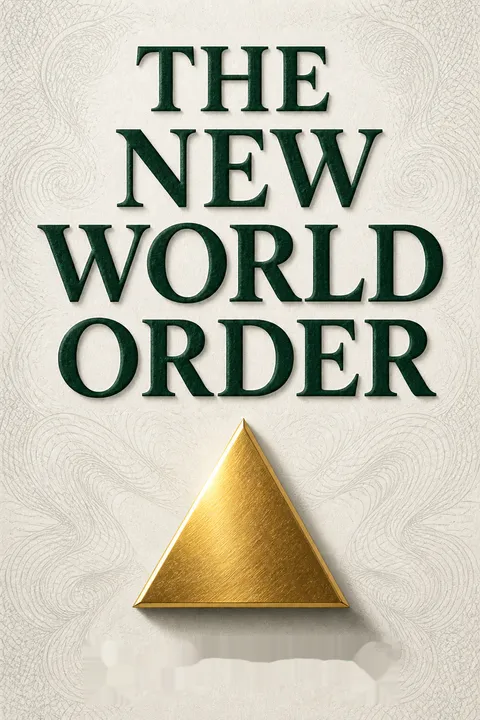
A symbol becomes a thesis. Epperson starts with the Great Seal printed on the dollar bill: a pyramid, an eye, an eagle, and a Latin motto. He interprets these not as decorative or historical emblems, but as clues to a concealed plan for America and the world. The phrase beneath the pyramid, which he translates as “New World Order,” becomes the book’s central key. From there, he builds a narrative in which America’s founders encoded a future political and religious transformation into national symbols.
Interpretation is not proof. Epperson treats Masonic writing as a decoder for the Seal, linking the eye and pyramid to secret religious meanings. That reading is his claim, not an established conclusion demonstrated by the symbols themselves. The book asks readers to see the Seal as evidence of a hidden agenda, but the reader must also ask whether the evidence supports that interpretation independently.
The Seal is a powerful prompt for asking how nations turn symbols into stories about identity and destiny. Political imagery can carry several meanings at once, and later readers often project new concerns onto old designs. A useful test is to ask what evidence would distinguish a deliberate hidden message from an interpretation imposed after the fact. The Latin motto is also commonly rendered as “a new order of the ages,” rather than Epperson’s “New World Order,” a translation difference that matters because so much of his argument rests on those words.
Treat shared political language as a lead, not proof of a unified plot.
A phrase gathers speakers. Epperson collects statements by politicians, writers, and activists who used the expression “new world order.” His examples include Nelson Rockefeller, Henry Kissinger, George H. W. Bush, and advocates of international cooperation. He presents the repeated phrase as evidence that influential people share a plan to replace national independence with world government.
Context changes meaning. In the book, remarks about international cooperation, economic reform, or a “family of nations” are assembled into one political program. Epperson argues that gradual change would conceal the real objective, with institutions altered piece by piece. His narrative therefore asks readers to connect statements across decades and political camps. The recurring phrase is a genuine subject for scrutiny, but the book treats recurrence as stronger evidence of coordination than the excerpts alone can establish.
Language can reveal a shared policy vocabulary, but it does not automatically reveal shared intent. In diplomacy, “world order” can mean rules among sovereign states, not a single government directing them. Researchers testing a coordination claim would look for more than similar wording: evidence of communication, joint decisions, or a traceable institutional plan. This distinction preserves a legitimate question about global governance while avoiding a common reasoning trap, where a phrase’s repetition is mistaken for proof that every speaker means the same thing.
Let symbols suggest questions, then demand evidence beyond the symbolism.
The book builds a code. Epperson interprets the sun, serpent, star, obelisk, and pyramid as signs of an ancient religious tradition. He draws heavily on Masonic authors such as Albert Pike and Manly P. Hall, who discuss symbolism and the ancient Mysteries. In Epperson’s reading, references to light and the sun point to Lucifer, while the pyramid on the Great Seal signals the future completion of a hidden project.
The code is the author’s. Epperson links symbols across ancient Egypt, Freemasonry, the Great Seal, and modern political life. The pattern makes the book’s far-reaching argument feel coherent: the same concealed belief appears to recur through history. Yet the meanings are not self-evident. The book offers interpretations of symbols, not independent proof that every designer or organization shared those interpretations or acted together.
Symbolic analysis is useful because images often carry political and religious meaning that ordinary prose does not. The difficulty is that symbols are polysemous: a sun can signify life, authority, divinity, or simply the sun. A strong interpretation gains credibility when it is supported by contemporary records showing how the people who used the symbol understood it. Without that check, the method risks circularity: symbols prove the hidden system because they are read through the hidden system. Epperson’s symbolism is best treated as a set of questions for historical investigation.
Notice Epperson’s proposed lineage, but test each historical link separately.
A long chain explains much. Epperson connects the Bavarian Illuminati, founded by Adam Weishaupt in 1776, with Freemasonry, revolutionary movements, Marxism, and Nazi occult groups. He cites writers who describe secret societies, quotations attributed to their leaders, and claims about Adolf Hitler’s ties to the Thule Society. He presents these connections as evidence of a continuing effort to overturn existing institutions and establish a new order.
Similarity does not equal succession. The book’s historical narrative gains force by gathering many people and organizations under one umbrella. But a shared interest in social change, secrecy, or symbolism does not by itself show that one group directed another. Each claimed link requires its own evidence, including reliable sourcing and proof of organizational continuity. Epperson’s account presents a sweeping synthesis; readers should distinguish what a source directly documents from what the author infers from it.
The book’s broad sweep is part of its appeal: it offers one explanation for political upheaval across centuries. Historical analysis, however, separates resemblance, influence, and direct coordination. Those are different claims and require different kinds of evidence. A movement may borrow ideas from another without being controlled by it, and a quotation may express an individual’s view rather than an organization’s policy. Keeping these categories distinct does not dismiss the possibility of influence; it makes any genuine connection easier to establish and harder to exaggerate.
Judge proposed reforms by their actual effects on family, faith, and property.
A feared future takes shape. Epperson describes the New World Order as a system in which governments would control family life, education, religion, and property. He warns that parents could lose authority over their children, private ownership could be curtailed, religious practice could be restricted, and national borders could weaken. He interprets social and political changes in these areas as gradual steps toward authoritarian global control.
The concern is concentrated power. These chapters turn the book’s symbolic argument into a political warning: institutions that limit individual choice may be presented as protecting the public while shifting authority to the state. Epperson urges readers to defend religious freedom, family autonomy, private property, and national self-government. His account often treats changes in policy as evidence of a single concealed agenda, however, rather than weighing each policy’s stated purpose, operation, and consequences on its own.
The strongest version of this warning is not that every public reform hides a conspiracy, but that concentrated authority deserves scrutiny wherever it affects intimate life. Political theory and constitutional design both ask how power is limited, who can challenge it, and whether people retain meaningful choices. Those questions remain useful even when the book’s alleged coordinating plot is unproven. A careful assessment should also distinguish regulation from abolition: a rule affecting schools or property may constrain freedom without demonstrating a plan to eliminate either institution.
Separate context-sensitive ethics from the claim that morality has vanished.
Morality becomes a battleground. Epperson argues that Humanism, Communism, and some Masonic teachings reject fixed religious moral rules in favor of human reason or situation-dependent judgments. He focuses on Situation Ethics, a named approach in which the circumstances of a particular choice help determine what is morally right. In his account, this flexibility can be used to excuse coercion or violence in the name of a supposedly greater good.
The argument has a limit. Epperson connects secular ethics to the idea that any means are acceptable if the desired political end is achieved. He cites revolutionary violence and claims that this reasoning can justify sacrificing individuals. The book presents a sharp contrast between divine moral absolutes and human judgment, but it does not establish that all nonreligious ethical systems permit cruelty or that religious belief alone prevents it.
This section raises a real philosophical tension: moral rules can conflict, and context can matter when applying them. But context-sensitive ethics need not mean “anything goes.” Many secular traditions defend duties, rights, and limits on harm, while religious communities also disagree about how principles apply in particular cases. The relevant question is not simply whether an ethic is religious, but what constraints it places on power and how it protects vulnerable people. That framing keeps Epperson’s concern about ends justifying means while avoiding a false choice between faith and moral restraint.
Protect civil liberties without treating every regulation as evidence of conspiracy.
Education becomes a front line. Epperson recounts conflicts over church-run schools, home education, state licensing, and parental authority. He portrays cases such as Pastor Everett Sileven’s dispute with Nebraska officials as examples of government pressure on religious communities. He also objects to policies and court rulings that, in his view, limit private groups’ freedom to choose their members or teach their beliefs.
Rights can collide. The book frames these episodes as parts of a campaign to transfer control from families and voluntary associations to the state. Its organizing question is whether people can practice their religion, educate their children, and associate freely without government interference. But the cases arise in different settings and involve competing legal claims. Their existence alone does not establish a coordinated program, and each dispute needs to be assessed on its specific facts and law.
Epperson is strongest when he directs attention to the practical stakes of civil liberties: who makes decisions for children, how far licensing reaches, and whether private associations retain meaningful independence. These questions are clearer than claims about a unified hidden plan because they can be assessed through statutes, court records, and outcomes. Rights also require balancing; protecting a school’s autonomy does not settle every concern about safety or educational standards. The productive approach is to examine whether a particular restriction is lawful, proportionate, and open to challenge.
Test alarming timelines against outcomes before accepting the larger theory.
A deadline anchors the story. Epperson’s account predicts a world transformation near the turn of the millennium. He discusses New Age expectations surrounding Lord Maitreya, interprets the Great Seal and the Giza pyramid as signs of a planned future, and treats public language from Ronald Reagan and George H. W. Bush as possible clues. He also highlights a reported plan for a 1999 gathering near the Great Pyramid, linking it to the anticipated new era.
Forecasts need scorecards. The book presents the late 1990s and year 2000 as an expected turning point, while allowing that change might arrive gradually. This flexibility makes the prediction difficult to disprove unless its claims are stated precisely. Its proposed transformation into the described global religious and political order did not occur on that timetable. The forecast is therefore essential to evaluating the book’s central case, not a decorative detail.
A dated prediction can make an expansive theory testable, but only if success and failure are defined in advance. If a forecast can be reinterpreted as either an imminent event or a slow process, almost any outcome can be made to fit. The turn-of-the-millennium prediction did not materialize as described, which weakens the book’s timetable and illustrates why readers should record forecasts before judging them. This is not proof that every concern about globalization is mistaken; it is a reason to reassess the evidence supporting this particular account.
Analysis
The New World Order is a thesis-driven work of political conspiracy writing, built as an expanding chain of interpretations. It begins with a familiar national emblem, then moves through Masonic symbolism, secret societies, religious conflict, revolutionary politics, education, family life, property, and predictions for the millennium. Its core persuasive technique is accumulation: a long list of quotations and historical references makes separate events appear to be parts of one design. The result is a vivid narrative of hidden continuity, with the Great Seal serving as its opening clue and its proposed global transformation as the destination.
The method’s main weakness is the gap between evidence and inference. Quotations can establish that an individual used certain language, but not necessarily that the speaker belonged to a coordinated plan. Similar symbols do not establish a shared interpretation, and ideological resemblance does not prove organizational succession. The narrative frequently treats these distinctions as settled, when they are precisely what would need to be demonstrated. Its reading of “New World Order” also depends on a contested translation and on interpreting political phrases in their most alarming sense.
The book nevertheless raises durable questions about power: how governments regulate schools, families, religious communities, and private associations, and what safeguards protect individual choice. Those concerns can be examined without accepting its claims about Lucifer worship or a centuries-long conspiracy. The most responsible reading therefore separates its political questions from its explanatory story. The book is useful as a case study in how symbols, quotations, and anxieties can be assembled into a totalizing theory. Its millennium forecast also offers a concrete check: the predicted transformation did not occur as described, a fact that should prompt a reassessment of the confidence placed in its broader conclusions.
Review Summary
The New World Order by Ralph Epperson receives mixed reviews (3.81/5). Critics highlight failed predictions, conspiracy theories about "Lord Maitreya," and reliance on capital letters for emphasis. Positive reviewers praise the book's prescience, claiming many predictions have materialized. Common criticisms include weak evidence, poor structure, excessive focus on Freemasons, and omission of key figures like Rothschild. Some find it boring or amateurish, while supporters believe it accurately describes current events and urge others to read it, viewing it as prophetic regarding societal changes.
People Also Read


Glossary
New World Order
proposed global systemIn Epperson’s usage, the New World Order is a projected international political and religious system that would weaken national sovereignty, expand centralized control, and reshape family life, education, property, and worship. He interprets the phrase on the Great Seal as a coded reference to this future. The book presents the system as a coordinated plan, a claim that is disputed rather than established by the phrase itself.
Ancient Mysteries
secret initiatory worshipEpperson uses this term for ancient religious traditions whose teachings, rituals, and symbols were supposedly reserved for initiates. Drawing on Masonic writers, he describes a public form of worship and a concealed inner meaning. He argues that these traditions influenced later secret societies and Freemasonry, and interprets their sun and serpent symbolism as evidence of Lucifer worship.
Situation Ethics
context-dependent moral judgmentSituation Ethics is an ethical approach in which the circumstances of a particular choice help determine what is morally right, rather than applying rules identically in every case. Epperson portrays it as a rejection of fixed moral standards and argues that it can be used to justify harmful acts for political ends. The term names a real ethical debate, but his characterization does not represent every context-sensitive moral theory.
Order of the Quest
Hall’s alleged secret orderManly P. Hall uses the name Order of the Quest for a purported hidden body of initiates who, he says, worked behind historical events and helped shape America’s founding. Epperson adopts Hall’s account to argue that the Great Seal carries this group’s signature and that the United States has a concealed destiny. The book provides this as an interpretation, not as independently established historical fact.
All-Seeing Eye
watchful divine emblemThe All-Seeing Eye is the eye symbol shown above the pyramid on the reverse of the Great Seal. Epperson cites Masonic sources that associate the eye with divine watchfulness, and then links it to the sun and to Lucifer through his interpretation of Masonic symbolism. The emblem’s presence is verifiable; the claim that it encodes that specific religious allegiance is an interpretation, not a demonstrated fact.
Download PDF
Download EPUB
.epub digital book format is ideal for reading ebooks on phones, tablets, and e-readers.








