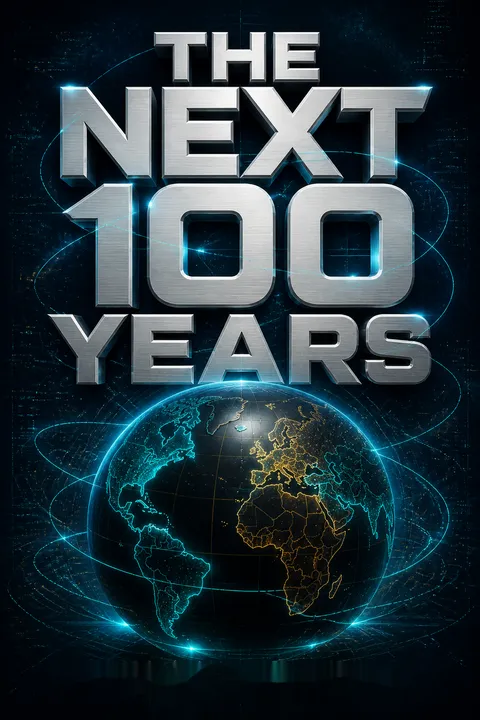


Key Takeaways
Forecast the constraints nations cannot escape, not the events they cannot predict
Start with the board. Friedman’s method, which he calls geopolitics, asks how geography, resources, population, and national interests limit a country’s choices. Leaders may pursue immediate goals, but their actions are shaped by circumstances, and often produce outcomes they never intended. Like chess players, nations have fewer viable moves than a glance at the board suggests.
Trace the consequences. The book’s central exercise is to infer broad patterns from those constraints, rather than pretend to know every future event. The United States’ location between two oceans, for example, helps explain its global position more reliably than any one president’s intentions. The method promises outlines, not certainty about dates, battles, or individual decisions.
The framework resembles structural realism in international relations: states face pressures that persist even as leaders change. It is useful because it directs attention from headlines to geography and incentives. Yet states are not chess pieces with fixed preferences. Institutions, public opinion, and misperception can change which options appear viable. A forecast built from structural constraints is strongest when it identifies several plausible paths, rather than treating one chain of events as inevitable.
Treat control of both oceans as America’s structural advantage
The center shifts. Friedman argues that the European Age gave way to an American Age because North America sits between the Atlantic and Pacific. In the early 1980s, transpacific trade reached the level of transatlantic trade, signaling that the Atlantic was no longer the single highway connecting the world’s major markets. A power able to project force into both oceans could influence global shipping and trade.
Power rests on geography. In 2007, the United States produced about 26 percent of global output while holding roughly 4 percent of the world’s population. Its protected continental position and dominant navy, Friedman argues, underpin both its wealth and security. He sees this geographic advantage, not a passing political mood, as the foundation of the century’s international order.
This is a powerful application of network thinking. Sea lanes connect producers, consumers, and resources, so a state that can protect or interrupt those routes gains influence beyond its own borders. The argument also helps explain why allies may depend on American security even while resenting American power. Still, naval dominance is not identical to control over every commercial decision. Trade can reroute, and partners can build institutions or capabilities that reduce dependence.
Expect Washington to disrupt Eurasian challengers, not build stable peace
Prevent the rival. Friedman describes five enduring American strategic goals, each built on the previous one:
1. Secure dominance of North America.
2. Prevent outside powers from threatening the Western Hemisphere.
3. Control the maritime approaches to the continent.
4. Maintain command of the world’s oceans and trading system.
5. Stop any power from dominating Eurasia.
Disruption can suffice. This logic, he argues, explains why American interventions may look inconsistent or fail to produce lasting settlements. Their strategic purpose is often to prevent a rival from consolidating power, not to create a peaceful, unified region. In the book’s reading of the post-9/11 wars, a fragmented Islamic world unable to form a powerful state could count as an American success, even if the fighting ended inconclusively.
The distinction between defeating an opponent and preventing its consolidation clarifies why limited interventions can serve long-term strategy. It also illuminates the security dilemma: one state’s defensive move can look like aggression to another, prompting countermeasures. The framework deserves a legitimacy test, too. Destabilization may block a rival, but it can also create humanitarian harm, strengthen anti-American movements, and produce threats that are harder to manage than the original one.
Falling birthrates will remake labor markets, families, and political conflict
The population boom reverses. Friedman treats declining fertility as a major force shaping the century. A stable population requires about 2.1 children per woman; the global average fell from 4.5 in 1970 to 2.7 in 2000. The book uses United Nations projections to suggest that global growth could stall or reverse during the century. These are forecasts available in 2008, not certainties.
Children change economic roles. In agrarian economies, children could contribute labor and support parents in old age. In modern economies, they require years of costly education before earning. As families have fewer children and women spend less of life bearing and raising them, older gender roles lose their economic basis. Friedman links this shift to changing marriage patterns and conflict between social traditionalists and new ways of living.
The demographic transition offers a strong bridge between household economics and national power: fertility affects the future workforce, while longer lives alter the ratio of workers to retirees. The book is also right to connect material change with moral conflict. Its account becomes too deterministic, however, when it treats demographic pressure as the main engine of feminism and changing family norms. Laws, education, contraception, and cultural movements shape how societies respond to the same demographic conditions.
Do not confuse China’s export boom with durable strategic power
Growth hides vulnerabilities. Writing in 2008, Friedman argues that China’s rapid export-led expansion may conceal weak investment decisions, bad debts, and an enduring divide between prosperous coastal cities and poorer interior regions. He compares the pattern to Japan’s earlier growth model, in which cheap credit and high exports masked financial weaknesses before a prolonged slowdown.
Russia poses a different test. Friedman expects Russia, not China, to become the nearer-term challenge to the United States. Russia’s exposed western frontier creates pressure to rebuild a buffer zone, while energy exports provide money and leverage over European customers. He also emphasizes Russia’s declining population and weak infrastructure as limits on its long-term strength. The contrast is a reminder to assess institutions, geography, and demographics alongside headline growth.
The chapter usefully separates economic size from the ability to project power. Geography, military readiness, and financial resilience matter, not just growth rates. But the forecast also illustrates how quickly structural analysis can overreach: China’s subsequent rise into a major economic and military power challenges the book’s confident dismissal of its potential. That does not make the diagnostic questions useless. It does show why forecasts should attach confidence levels to claims and be revised when evidence changes.
Prepare for immigration to become a labor-scarcity policy
The labor problem flips. Friedman forecasts that aging populations and low birthrates will leave advanced economies short of workers. He expects the United States to face mounting pressure around 2030, when retirees continue consuming while fewer workers enter the labor force. This reverses the twentieth-century political fear that immigration would depress wages by adding too many workers.
Recruitment becomes policy. In his projected response, the United States competes with other wealthy countries to attract immigrants, using employment offers and streamlined entry procedures. This shift is part of a broader American cycle in which a new economic problem eventually makes old solutions ineffective. Friedman expects a crisis-era president to struggle with remedies from the previous period before policy turns toward immigration and stronger federal coordination.
The forecast usefully reframes migration as economic infrastructure, not simply a border question. Labor shortages can affect care work, health services, tax revenues, and productivity, while immigration policy determines who can fill those roles. Yet recruiting workers is not enough: housing, credential recognition, labor protections, and political belonging influence whether newcomers can contribute and stay. Migration can also drain skilled workers from sending countries, making the policy’s domestic benefits only part of its wider cost.
A fragmented Eurasia can produce new powers, then new American resistance
A vacuum invites competitors. Friedman predicts that Russian and Chinese instability could leave a vast Eurasian region open to outside influence. He identifies three states positioned to exploit the opening: Japan, seeking labor and raw materials; Turkey, seeking security and influence across neighboring regions; and Poland, seeking protection from Russia and a stronger position in Europe.
Allies can become rivals. In the book’s forecast, the United States initially supports these powers because they help prevent a Russian resurgence. As their influence grows, however, Washington becomes wary of any regional power that might consolidate control. This recurring shift, from assistance to containment, sets the stage for escalating tensions in the 2040s. The sequence is a scenario derived from the book’s geopolitical assumptions, not a record of events.
This is a classic security-dilemma story: support intended to create a counterweight can help build a future competitor. The insight applies beyond military alliances, since trade, technology, and infrastructure can also create durable dependencies and influence. The scenario is less persuasive when it makes several national trajectories unfold in synchrony. Regional powers have internal disagreements and competing interests, which can disrupt even a seemingly logical coalition.
Precision weapons shift war from mass armies toward space command
Information becomes firepower. Friedman argues that precise weapons can destroy targets with far fewer aircraft, troops, and munitions than the mass warfare of the twentieth century. He projects that hypersonic aircraft, satellites, robotic systems, and space-based command stations will make it possible to detect and strike targets across great distances. Occupying territory, by contrast, still requires people who can distinguish combatants from civilians.
A future war tests the thesis. His imagined conflict around 2050 begins with Japan destroying three American space command platforms, followed by attacks on military assets. The United States rebuilds its capability, and the fighting shifts toward precision strikes and technologically enabled ground combat. Friedman estimates about 50,000 deaths, compared with perhaps 50 million in World War II. This is an illustrative forecast, not a reliable prediction of a particular war.
The scenario makes a persuasive point about dependence on information systems: the force that sees and coordinates effectively gains a major advantage. It also exposes a vulnerability. Centralized command platforms can become critical points of failure, so redundancy and autonomous operation matter as much as striking power. Precision may reduce unintended destruction, but it cannot erase political miscalculation, escalation, or civilian harm. The book’s exact battle sequence is far less robust than its broader claim about technology reshaping warfare.
A borderland can turn migration into a contest over sovereignty
Proximity changes migration. Friedman distinguishes ordinary immigration from movement across a borderland, where people can remain closely connected to their homeland. He applies this idea to the U.S.-Mexico border and the territories Mexico lost in the nineteenth century. In his projection, U.S. labor recruitment after 2030 draws many Mexicans north, strengthening communities that already have deep cultural and economic ties across the border.
Demography becomes politics. Friedman imagines Mexico growing into a major economic power while the American Southwest becomes increasingly Mexican in population and culture. If the United States later tries to remove temporary workers or restrict their ties to Mexico, he foresees conflict over representation, identity, and regional autonomy. The forecast’s core point is that borders can remain legally fixed while social and economic life across them changes.
The borderland concept captures a real analytical distinction: nearby migration can sustain cross-border families, commerce, and political attention in ways that distance often weakens. It is not, however, a prediction of secession. Shared identity can coexist with national citizenship, and institutions can recognize regional difference without treating it as disloyalty. The outcome depends heavily on policy choices, including whether residents receive equal rights and whether political leaders turn demographic change into a security threat.
Analysis
The book’s strongest contribution is not its calendar of future events. It is the habit of asking what geography, demography, and economic dependence make difficult for states to avoid. Sea access, vulnerable borders, labor supply, and the political need for buffers are durable sources of pressure. That lens produces a coherent narrative: American maritime dominance shapes global reactions, demographic change alters societies, and alliances created to manage one threat can generate another.
Its weakness is the distance between structural insight and confident prediction. The argument often moves from a plausible constraint to a very specific outcome, such as a particular state fragmenting, a rival coalition forming, or a war beginning with a precise technical surprise. Each step depends on choices, institutions, and contingencies that are harder to forecast than the underlying pressures. A century-long forecast is especially exposed to compounding error: if each link in a causal chain is only moderately likely, the entire scenario may be unlikely.
The narrative is best read as a set of strategic hypotheses, not as a timetable. Its claims can be separated into three levels: relatively durable conditions, such as North America’s ocean access; conditional expectations, such as labor shortages under low fertility; and highly speculative episodes, such as the imagined space war. This distinction preserves the book’s value while preventing vivid detail from masquerading as certainty.
The work also illustrates a broader challenge in geopolitical analysis. Structural accounts can explain why a state feels insecure, but they can make that state’s actions seem inevitable and understate human agency. The same pressure can produce restraint, cooperation, or escalation. The most useful reader response is therefore to ask both what a country is constrained to want and what institutions might let it pursue that interest differently. That question turns the book from prophecy into a tool for thinking.
Review Summary
The Next 100 Years receives mixed reviews. Some praise its geopolitical analysis and thought-provoking predictions, while others criticize its speculative nature and focus on military conflicts. Readers appreciate Friedman's historical context and short-term forecasts but find long-term predictions less credible. The book's strengths include its accessible writing and unique perspective on global trends. However, critics note omissions of climate change, technology, and certain countries. Overall, it's seen as an entertaining read that encourages long-term thinking, despite potential inaccuracies.
People Also Read




Glossary
Geopolitics
Geography and national behaviorFriedman uses geopolitics as a method for explaining and forecasting how geography and other impersonal conditions constrain nations. It assumes that states pursue interests within limited choices, while the outcomes of their actions often differ from what leaders intend. The method focuses on broad pressures rather than the virtues or failings of individual politicians.
American Age
U.S.-centered global eraThe book’s name for the period after Europe ceased to be the center of the international system and the United States became the dominant global power. Friedman grounds this shift in North America’s position between the Atlantic and Pacific, U.S. naval strength, and the decline of European empires. He argues that major international events will increasingly revolve around American power.
Grand strategy
Long-term national prioritiesA country’s enduring strategic aims, which shape policy across governments and individual conflicts. In Friedman’s account, a grand strategy is rooted in a nation’s geography and security needs, so leaders have limited freedom to abandon it. U.S. priorities include securing North America, controlling maritime approaches, and preventing another power from dominating Eurasia.
Margin of error
Room to absorb mistakesFriedman’s measure of how much foreign-policy risk a country can tolerate before a mistake becomes disastrous. It depends on the kinds of threats a country faces and the power available to respond. A geographically secure, powerful state such as the United States has a wide margin, while a small, exposed state has far less room to miscalculate.
Borderland
A cross-border cultural zoneA region where neighboring countries’ cultures, economies, and political loyalties overlap, even when a formal boundary divides them. Friedman distinguishes this from ordinary immigration, where distance can weaken ties to a homeland. In his analysis of the United States and Mexico, the borderland can extend on both sides of the legal border and become a source of political tension.
Battle Star
Space-based command platformFriedman’s name for a projected military platform in geosynchronous orbit that combines surveillance, communications, and command functions. In his mid-century war scenario, Battle Stars coordinate satellites and hypersonic weapons, allowing the United States to monitor and strike targets across the globe. Their central role also makes them potential high-value targets.
Poacher’s paradise
A power vacuum inviting expansionFriedman’s description of a fragmented Eurasia in which weakened central governments leave resources, labor, and territory open to influence from neighboring powers. He expects states on the region’s periphery, particularly Japan, Turkey, and Poland, to exploit the resulting openings. The phrase captures his forecast that disorder can create opportunities for expansion without a single conqueror taking control.
FAQ
What's The Next 100 Years about?
- Future Forecasting: The book offers a forecast for the 21st century, focusing on geopolitical, technological, and demographic trends. George Friedman uses historical patterns to predict future events and shifts in power dynamics.
- American Dominance: Friedman argues that the United States will remain the dominant global power throughout the century, emphasizing the importance of geography and military strength.
- Emerging Powers: The book discusses potential rising powers, including Turkey, Japan, and Mexico, and how their roles may evolve in the global landscape.
Why should I read The Next 100 Years?
- Insightful Analysis: The book provides a unique perspective on global trends and the future of international relations, valuable for anyone interested in geopolitics.
- Long-term Perspective: By forecasting events up to 2100, it encourages readers to think beyond immediate concerns and consider broader implications.
- Engaging Narrative: Friedman's accessible writing style makes complex geopolitical concepts easier to understand, offering a thought-provoking read.
What are the key takeaways of The Next 100 Years?
- American Age: The 21st century is described as the "American Age," with the U.S. as the central power influencing global events.
- Geopolitical Fault Lines: Key regions like the Pacific Basin and Eurasia are identified as potential sources of conflict.
- Demographic Shifts: Declining birth rates in advanced countries will impact labor markets and social structures, leading to political and economic challenges.
What are the best quotes from The Next 100 Years and what do they mean?
- "Common sense will be wrong." This highlights the unpredictability of historical events and the limitations of conventional wisdom in forecasting.
- "The United States is the pivotal actor of the twenty-first century." This underscores the central role of the U.S. in shaping global dynamics.
- "The end of the population explosion." Reflects Friedman's view that declining birth rates will fundamentally alter global demographics and economies.
How does George Friedman forecast in The Next 100 Years?
- Geopolitical Analysis: Friedman uses geopolitics to examine the relationship between geography and power dynamics, identifying trends and predicting future events.
- Historical Context: By analyzing past events, he uncovers underlying forces that shape international relations, allowing informed predictions.
- Rational Behavior of Nations: Assumes nations act rationally based on self-interests, crucial for understanding responses to changing geopolitical landscapes.
How does The Next 100 Years address the rise of China?
- China as a Paper Tiger: Friedman argues that China faces significant internal challenges that may prevent it from becoming a global leader.
- Economic Vulnerabilities: Highlights China's reliance on exports and potential for economic instability due to bad debts.
- Limited Military Capability: Asserts that China's military is not yet capable of challenging U.S. dominance in the Pacific.
What does The Next 100 Years say about the future of Russia?
- Resurgence of Russian Power: Predicts Russia will reassert its influence in Eastern Europe and Central Asia, driven by a desire for buffer zones.
- Demographic Challenges: Discusses Russia's declining population and its implications for military and economic power.
- Geopolitical Maneuvering: Suggests Russia will use covert operations and economic pressure to maintain influence in neighboring countries.
How does The Next 100 Years view the Islamic world?
- Fragmentation and Instability: Argues that deep divisions and instability will prevent the emergence of a unified power.
- Role of Nationalism: Emphasizes that nationalism will shape the future of the Islamic world, hindering unity against external threats.
- U.S. Strategy: Posits that the U.S. will focus on disrupting potential threats rather than seeking outright victory.
What are the potential conflicts outlined in The Next 100 Years?
- Pacific Basin Tensions: Identifies the Pacific as a potential flashpoint for conflict, particularly between the U.S., China, and Japan.
- Eurasian Power Struggles: Predicts Russia will seek to reassert influence, leading to confrontations with NATO and the U.S.
- Mexican-American Relations: Highlights potential conflict as demographic shifts and economic pressures create tensions.
How does The Next 100 Years address demographic changes?
- Declining Birth Rates: Emphasizes that declining birth rates in advanced countries will lead to labor shortages and social challenges.
- Impact on Immigration: Argues that the U.S. will need to attract immigrants to fill labor gaps as its population ages.
- Social Consequences: Suggests demographic changes will lead to increased political tensions as societies grapple with evolving family structures.
What role does technology play in The Next 100 Years?
- Military Advancements: Emphasizes the importance of technological innovations in military capabilities, such as hypersonic weapons.
- Economic Growth: Argues that technological advancements will drive economic growth, particularly in the U.S.
- Energy Solutions: Discusses the potential for space-based solar power to revolutionize energy production.
How does Friedman envision the geopolitical landscape in 2080?
- Multipolar World: Suggests a world characterized by multiple powers, including a resurgent Mexico and a dominant United States.
- Regional Conflicts: Anticipates ongoing regional conflicts, particularly in Europe and Asia, as emerging powers assert influence.
- U.S. Adaptation: Believes the U.S. will adapt to changes, maintaining its position as a global leader while navigating complex dynamics.
About the Author


Download PDF
Download EPUB
.epub digital book format is ideal for reading ebooks on phones, tablets, and e-readers.








