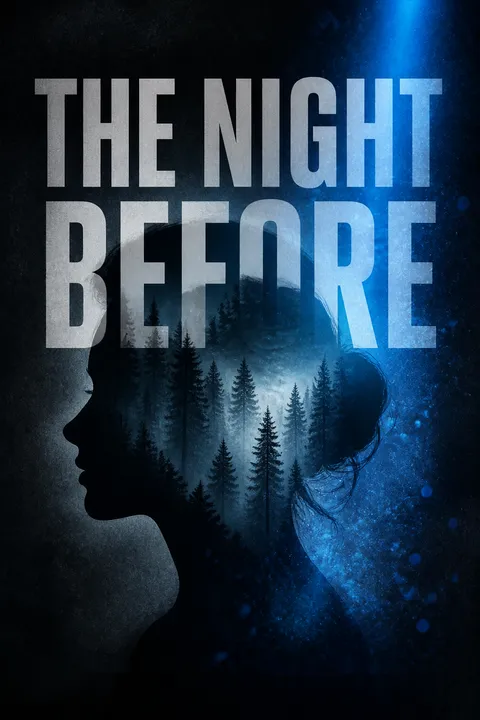


Plot Summary
Laura Comes Home
Months of therapy have forced Laura Lochner to examine why she pursues men who seem unable to love her. After a man she calls Kevin ends their relationship by text, Laura leaves her New York job and moves into her sister Rosie’s Connecticut home. She has not lived there since the night, eleven years earlier, when her high-school boyfriend Mitch Adler was killed in the woods and she was found beside his body with the bat.
On Thursday evening, Laura dresses for a date with Jonathan Fields, a man she found on a serious dating site. Rosie and her husband, Joe, try to welcome her without pressing for explanations. Laura hides her real surname and believes that getting this date right might finally quiet her old doubts.
The opening makes homecoming an act of exposure rather than comfort. Laura returns to the place where her identity was fixed by an unresolved death, while presenting her family with a tidier explanation: a painful breakup. Her preparation for the date shows how she has learned to treat femininity as a performance that might earn affection. Yet the family’s unasked questions and her concealed name make clear that belonging is conditional in her own mind. Therapy supplies a language for her patterns, but knowledge has not yet become reliable judgment. Laura understands that she is repeating something; she does not yet trust herself to stop.
The Date Turns Sideways
Jonathan meets Laura at a crowded pub, then quickly moves her away from a woman calling after him. He drives a new Toyota with an old-fashioned dashboard instead of the BMW he described, takes an indirect route, and asks pointed questions about Laura’s childhood and return to town.
She notices each discrepancy, then talks herself out of suspicion. At a waterfront bar, Jonathan describes his divorce, fertility treatments, and grief for his mother. His attentive manner reaches Laura precisely where she feels most deprived: she wants someone to understand her without making her beg to be seen.
He explains the woman as a former date who became intrusive, and Laura accepts the account. When he reveals he has discovered her real identity and read about Mitch’s death, her hope is suddenly entangled with the past she came home to face.
Laura’s perception is active, not absent. She gathers evidence: the wrong car, the detour, the stranger’s call, the questions that seem unusually focused. The danger lies in how she interprets those facts. Because she fears being unfair or self-sabotaging, she treats self-doubt as proof that her suspicions are worthless. Jonathan’s emotional fluency becomes persuasive partly because it answers a real deprivation, not because Laura is foolish. The scene exposes the difference between noticing a warning and believing one’s right to act on it. Her longing does not erase her intelligence; it recruits that intelligence to defend the story she wants.
An Empty Attic Bed
At dawn, Rosie wakes to find Laura’s attic room empty and the minivan missing. Laura had promised to return after her date, and her phone now goes straight to voicemail. Rosie searches the room, finds no useful clue, and sees an old childhood photograph that reminds her how often Laura seemed to seek their father’s attention.
Joe thinks Laura may simply have stayed out, but Rosie’s memory of Mitch’s bloody body makes waiting impossible. With childhood friend Gabe Wallace’s help, she tracks Laura’s phone to the waterfront and searches dating profiles for a likely match.
A bartender recognizes one man, screen name here4you, as a regular who brings a different woman every Thursday. Rosie fears he is Laura’s date, though the clue will lead them toward the wrong man.
Rosie’s alarm comes from accumulated history, not from the missing car alone. She has spent years acting as Laura’s protector, and the old crime has trained her to imagine the worst before evidence arrives. The childhood photograph complicates that role: Rosie sees Laura’s longing for their father and begins to recognize how little she understood of her sister’s private pain. The search also turns affection into investigation. Rosie and Gabe use technical access and local knowledge, but their first apparent lead gives them the relief of a concrete suspect before it gives them the truth. The thriller’s misdirection grows from an understandable need to act.
Mitch’s Last Night
In Jonathan’s apartment, Laura tells the story she has avoided for years. Mitch had brought his actual girlfriend, Britney, to the party, though Laura believed she was his partner. After secretly kissing Laura, he demanded sex as proof of her devotion.
She went with him to his car, still hoping she could make him choose her, and they were interrupted by a figure who dragged Mitch outside. Laura hid in the brush, heard the attack, then found Mitch dead and picked up the bat in fear.
Friends arrived to see her standing over him, and the police treated her as a possible killer. Jonathan listens closely and argues that Laura was a victim too, a view she has rarely heard. The story draws her closer to him even as his intense interest in the case unsettles her.
Laura’s account reveals how shame can make a person claim responsibility for events they did not control. She interprets going to Mitch’s car as the choice that caused his death, even though an attacker intervened and she fled to survive. The police discovery of her beside the body hardened that self-accusation into public suspicion. Jonathan’s compassion offers a new interpretation, but it also becomes part of the intimacy she craves. His understanding feels like evidence of love before she can know whether it is trustworthy. The section holds two truths together: Laura has been harmed, and she still judges herself as though wanting love were a crime.
The Wrong Man
While Laura remains with Jonathan, Rosie and Gabe pursue the bartender’s lead. A waitress connects the profile to Sylvia Emmett, who explains that the man used false names, drew her into emotional intimacy, then humiliated her during sex and vanished.
Another user, Kimmie Taylor, identifies him as Edward Rittle, a married window salesman who disguises his life with a rented apartment and invented financial credentials. Their accounts match the profile and Thursday-night routine, so Rosie becomes convinced Rittle took Laura.
Meanwhile, she travels to New York and learns Laura’s recent boyfriend was Dr. Kevin Brody, a psychologist who died in a robbery. Laura had thought he simply abandoned her. Rosie also discovers that her husband Joe had called and visited Laura in secret, adding a new, painful suspicion to the search.
The women’s testimony broadens the novel’s account of manipulation beyond Laura’s private history. Sylvia and Kimmie are not merely clues; they describe how a practiced deceiver turns attention into leverage, then leaves each woman doubting her own judgment. Their stories make Rosie’s certainty about Rittle emotionally compelling, but not accurate. At the same time, Kevin’s death reframes Laura’s New York heartbreak as a possible danger, while Joe’s hidden contact opens a second mystery inside the family. The section shows how investigation can reproduce the very habits it seeks to correct: Rosie assembles real details, then forces them into a story that fits her fear.
A Ring in the Medicine
After Laura and Jonathan have sex, she finds a wedding ring hidden inside a bottle of painkillers. She confronts him, and he admits several details were false: he recently returned to Branston, the Toyota is a loaner, and his apartment is newly rented.
He explains the ring as a remnant of his real marriage and offers evidence for the rest. Laura cannot settle on whether his partial truths are honesty or skillful cover. Later, he presses for rougher sex just after she has described her vulnerability, and she decides to leave.
A threatening note appears in her purse, apparently making him a suspect. Before she can escape, Gabe bursts in and strikes Jonathan repeatedly with the apartment door, leaving him gravely injured. Gabe takes Laura away before she can call for help.
The ring turns ambiguity into a physical object, but it does not immediately produce clarity. Jonathan’s explanations are largely true, yet Laura has been trained by past experiences to read disclosure as another possible tactic. Her confusion is intensified by her desire to believe him and by his abrupt shift from tenderness to aggression. The planted note makes suspicion feel confirmed at exactly the moment she might otherwise leave. Gabe’s attack then converts private uncertainty into bodily danger. The section’s central tension is not whether Laura notices inconsistencies, but whether she can distinguish genuine imperfection from predation before someone else seizes control of the situation.
Joe’s Hidden Kinship
Rosie’s evidence against Rittle collapses when surveillance shows that he spent Thursday with another woman, not Laura. Phone records point instead to Jonathan Fielding, the real man Laura called Jonathan Fields. Rosie also discovers that Fielding was never at the apartment when she assumed Laura had been there.
The search has followed a false trail built from authentic facts about Rittle’s deception. Before the police can clarify everything, Rosie sees Joe’s number repeatedly on Laura’s records and suspects an affair.
Joe explains that his late father revealed Laura is his biological half-sister: their mothers had an affair, and Laura’s legal father knew she was not his child. Joe told Laura after his father’s death, then kept the secret at his mother’s request. The disclosure explains their private contact but deepens Rosie’s sense of exclusion.
The false lead matters because it is not fabricated from nothing. Rittle really deceives women, and the women accurately identify him; the error is the assumption that proximity makes him Laura’s attacker. The police records expose the cost of letting a convincing pattern stand in for verified connection. Joe’s revelation shifts the family mystery from suspected betrayal to inherited secrecy. His silence was meant to spare his mother, but it repeats the adults’ old decision to protect themselves by keeping the sisters uninformed. Rosie’s anger is therefore not simply jealousy. It is grief at discovering that her family’s most consequential truths were managed around her.
Gabe Locks the Basement
Gabe hides Laura in his basement, locks the doors from outside, and tells her the police are searching for her because Jonathan may have accused her. While he is away, Laura searches for a way out and finds his wife Melissa’s body stuffed into a duffel bag.
The discovery shatters Gabe’s story that he is protecting her. She remembers that Gabe had been abused by his older brother Rick, not that Rick had attacked her as Gabe now claims. Laura had once stopped Rick with a branch; Gabe later described the event as if she herself had been his victim.
She also recognizes that Gabe knew details about Mitch and Kevin that he should not have known. The same friend who seemed to rescue her has trapped her, and his childhood devotion has become something possessive and lethal.
The basement reverses the meaning of rescue. Gabe’s care has practical tenderness, food, blankets, remembered preferences, but those gestures occur inside a locked room. Laura must read affection alongside coercion rather than allowing one to cancel the other. Finding Melissa’s body forces her to revise the story of Gabe’s childhood too. His account casts him as her guardian, while Laura remembers being the one who defended him from Rick. This reversal exposes how a person can build an identity around a distorted memory that serves an emotional need. Laura’s perceptiveness finally becomes useful when she treats unease as evidence rather than a flaw.
The Basement Showdown
Rosie follows a clue to Gabe’s house and spots the purse Laura carried on her date. She senses that Gabe is lying, pretends to leave, then hears Laura struggling to escape through the basement hatch. Joe warns Rosie that Gabe used his knowledge of Rittle to stage the false search and isolate Laura.
Rosie returns through the garage and finds her sister below. Gabe tries to overpower Laura and insists he has always protected her, revealing that he killed Mitch after seeing Laura with him and later eliminated Kevin to keep her unattached.
He also admits he manipulated the threats and the search. Laura raises a bat but cannot strike him. In that pause, she realizes she did not kill Mitch. Rosie reaches her, and the police arrive to arrest Gabe.
The climax makes the bat a test of inherited guilt. For years, Laura has treated the weapon in her hands as proof that she killed Mitch; facing Gabe, she sees that possession is not action and fear is not culpability. Her refusal to swing is not passivity. It is a break from the violent script Gabe has written for her and from her own habit of punishing herself. Rosie’s return matters because protection becomes reciprocal: the sister who once tried to shield Laura now risks confronting Gabe directly. Their bond, long strained by silence and overprotection, becomes an actual rescue rather than a story either sister tells herself.
Learning to Leave Guilt
After Gabe is taken into custody, investigators connect him to Mitch’s murder, Kevin’s death, Melissa’s killing, the threatening notes, and the fake breakup message sent from Kevin’s phone. His history of abuse and mental illness helps explain his fixation on Laura but does not erase the harm he caused.
Laura learns that Kevin had loved her and had not ended their relationship; Gabe had impersonated him to drive her away. Joe’s family connection to Laura is now known, and Rosie must reckon with the fact that her husband kept it from her.
Laura asks to visit Jonathan Fielding, who is expected to recover physically, because she wants to face the harm done to him and seek forgiveness. She leaves the story not absolved of grief, but no longer responsible for Gabe’s choices.
Resolution does not offer Laura a clean division between innocence and pain. She is alive, while Mitch, Kevin, and Melissa are not, and Jonathan must carry the effects of Gabe’s attack. Laura’s guilt is understandable, but the novel distinguishes emotional responsibility from causal responsibility: Gabe used her name and history to justify his violence, yet she did not choose his acts. Her wish to see Jonathan is a concrete first step toward repair, not a demand that he comfort her. The family’s revelations also remain consequential. Forgiveness here is not forgetting or restoring the old arrangement; it is the difficult work of living truthfully after secrecy.
Analysis
The Night Before builds suspense by making perception itself unstable. Laura notices meaningful details, but her history of being dismissed has taught her to distrust the conclusions she draws from them. Rosie, by contrast, trusts her fear so completely that she mistakes a coherent cluster of facts about Edward Rittle for proof that he is Laura’s date. The two sisters embody opposite risks: self-doubt that delays action, and certainty that outruns verification.
The novel’s shifting chronology makes memory an active force. Therapy sessions gradually reinterpret Laura’s childhood, the night Mitch died, and her pursuit of emotionally unavailable men. The revelations do not simply replace one explanation with another; they show how incomplete stories become psychologically useful. Laura believes she is responsible for her father’s inability to love her, then for Mitch’s death, and later for men who leave. Gabe weaponizes that pattern by presenting himself as the person who can protect her from the consequences of her own supposed failures.
The book also distinguishes care from control. Rosie’s vigilance sometimes crowds Laura, but it remains responsive to Laura’s independent personhood. Gabe’s attention, by contrast, makes Laura an object to be kept safe, isolated, and available. His abuse-driven attachment may be psychologically legible, but the novel does not treat explanation as absolution. His violence is his responsibility, even when he frames it as devotion.
Finally, the family’s hidden paternity secret echoes the novel’s central problem: people conceal truths to manage pain, then leave others to build identities around what they do not know. Laura’s recovery begins not with perfect certainty or a clean escape from grief, but with a more accurate allocation of responsibility. She can mourn the dead, acknowledge harm, and seek repair without claiming that another person’s choices were hers. Forgiveness remains difficult, but it becomes possible once guilt stops masquerading as love.
Review Summary
Most readers found The Night Before to be a gripping, fast-paced psychological thriller told through alternating perspectives of two sisters, Laura and Rosie. Reviewers praised its compulsive readability, well-crafted tension, and surprising twists, with many finishing it in a single sitting. The unreliable narrator and dual timelines were frequently highlighted as strengths. Some criticisms included predictable red herrings, underdeveloped characters, and occasionally hollow execution. Overall, the majority considered it a standout thriller, with several calling it Walker's best work yet.
People Also Read








Characters
Laura Lochner
Wary returning analystLaura is an intelligent financial analyst whose sharp attention to other people coexists with deep uncertainty about her own romantic judgment. She grew up feeling overlooked by her father and learned to pursue affection from men who offered it inconsistently. Her old connection to a boy’s death has shaped how she understands risk, anger, and responsibility. Returning to Branston after a painful breakup, she tries to use therapy and family support to change her patterns, yet she fears that acting on suspicion may be another way of sabotaging herself. Her courage is real, but so is her need to be seen and chosen. Laura’s central struggle is learning to trust observation without turning every uncertainty into proof that she is unlovable.
Rosie Ferro
Protective older sisterRosie is Laura’s older sister, married to Joe and mother to Mason. She has built a settled family life and often acts as the practical, watchful counterweight to Laura’s risk-taking. Her protectiveness began in childhood and has hardened into vigilance, especially around the unresolved night when Mitch died. Rosie loves Laura fiercely but does not always understand the private forces driving her, and her instinct to manage danger can become a substitute for listening. She also carries unexamined assumptions about her parents, her marriage, and her place in the family. When crisis forces her to search rather than supervise, Rosie has to confront both the limits of what she knows and the damage caused by secrets kept in the name of protection.
Gabe Wallace
Childhood friend and fixerGabe grew up beside Laura and Rosie and remained close to the childhood circle even after the others moved into adult lives. He is technically skilled, observant, and inclined to solve problems for the people he loves. His history with his volatile older brother shaped his sense of safety and his reliance on Laura’s courage. As an adult, he works in IT and forensic investigations, using patience and technical knowledge to uncover concealed information. Gabe is less forceful socially than Joe, but his loyalty gives him a lasting place in the group. His helpfulness can appear selfless, and his attachment to Laura is difficult for others to measure because it is woven through decades of shared history.
Joe Ferro
Rosie’s lifelong partnerJoe grew up with Laura, Rosie, and Gabe on Deer Hill Lane, where his confidence and practical steadiness often made him a natural organizer. He married Rosie and is devoted to her and their young son, Mason. His closeness with Laura is rooted in a lifetime of friendship, though the family’s history gives that bond complications none of them initially understands. Joe tends to approach crises through action and reassurance, while Rosie is more alert to what remains unsaid. He believes he is protecting the people he loves when he withholds painful information, a choice that reflects the older generation’s habits as much as his own. His emotional challenge is recognizing that concealment can undermine the trust it was meant to preserve.
Jonathan Fielding
Laura’s online dateJonathan is a recently divorced hedge-fund employee trying to rebuild a life after the end of his marriage and the death of his mother. He meets Laura through an online dating site and brings to their first encounter a mixture of vulnerability, attraction, and imperfect judgment. His questions about Laura’s past can feel unusually probing, especially because she is already struggling to separate intuition from fear. Jonathan’s real life is less polished than his dating profile suggests: he is unsettled by work, housing, and the prospect of dating again. His character challenges Laura’s assumption that every inconsistency signals a dangerous man, while the events around their meeting make the cost of misreading both danger and sincerity painfully concrete.
Dr. Kevin Brody
Laura’s therapistKevin is a clinical psychologist who helps Laura examine the patterns that have shaped her relationships and her interpretation of childhood. He asks her to consider emotional neglect, unresolved guilt, and the possibility that familiar pain can feel safer than unfamiliar care. Their sessions give the novel a second timeline and a vocabulary for Laura’s memories, though therapy does not instantly make her judgment certain. Kevin’s role is complicated by the intimate history he shares with Laura, which places questions of professional boundaries and emotional dependence close to the heart of her recovery. He represents both the value and the limits of insight: naming a pattern can clarify it, but Laura still has to decide what to do when she encounters it.
Mitch Adler
Laura’s first obsessionMitch is a popular high-school boy whose intermittent attention leaves Laura trying to earn a devotion he does not offer consistently. He has a girlfriend Laura does not know about and treats romantic loyalty as something he can demand without returning. His relationship with Laura becomes central to her understanding of desire, power, and self-blame. The memory of their final night shapes the way she interprets every later heartbreak and helps explain why she sees herself as responsible for events beyond her control.
Richard Lochner
Laura’s absent fatherRichard is Laura and Rosie’s father, a man whose departure for another relationship fractures the family’s sense of safety. Laura remembers him as a father who favored Rosie and could not give her the attention she wanted. His choices shape her early ideas about love, loyalty, and what a daughter must do to be chosen. The family’s memories of him are incomplete, and what the sisters believe about his departure has long influenced their different ways of seeking attachment.
Laura and Rosie’s mother
Keeper of family historyThe sisters’ unnamed mother is remembered as beautiful, emotionally wounded by her marriage, and often preoccupied with adult troubles that her daughters could sense but not understand. She confides in neighbors, moves away after the family breaks apart, and leaves her children with competing impressions of their father and their childhood. Her silences and disclosures both affect Laura and Rosie, demonstrating how children build lasting explanations from fragments they overhear.
Edward Rittle
Dating-site misdirectionEdward Rittle uses false profiles and aliases to meet women while concealing his marriage, family, and ordinary sales job. His behavior provides Rosie with a convincing but misleading trail during Laura’s disappearance. The women he dates describe how carefully he studies their needs before discarding or degrading them. Rittle’s role shows that real deception can lead investigators toward the wrong explanation when a profile match is mistaken for proof of who met Laura.
Melissa Wallace
Gabe’s wifeMelissa moved to Connecticut to build a life with Gabe after an earlier marriage ended. She is an outsider to the old Deer Hill Lane circle, and Rosie finds it difficult to welcome her fully. Melissa is perceptive about Gabe’s attention to Laura and uneasy about the social world surrounding her husband. Her perspective exposes the strain between a tight childhood friendship group and the adults who have joined it later.
Rick Wallace
Gabe’s troubled brotherRick is Gabe’s older brother, remembered by the neighborhood children as volatile and intimidating. His behavior leads his parents to send him away to military school, but the family never fully explains what happened inside their home. Rick’s presence haunts Gabe’s childhood and helps shape the group’s memories of danger in the woods. His story is one of the secrets that the adults around the children failed to address openly.
Sylvia Emmett
Witness to Rittle’s methodsSylvia is a waitress who meets Edward Rittle through a chance encounter and becomes caught in his careful seduction. She has a boyfriend and is already questioning what she wants from her future when Rittle offers attention and emotional fluency. After their encounter, she carries shame and anger but also a clearer appreciation of the honest relationship she already has. Her willingness to speak with Rosie turns private humiliation into useful evidence.
Kimmie Taylor
Profile investigatorKimmie is an experienced online dater who notices that Edward Rittle’s claims do not fit the car he drives, his habits, or his apparent means. She investigates his wallet and discovers the life he has concealed. Her account helps Rosie identify the man behind the fake profile, while her bitterness reflects the exhaustion of repeatedly encountering deception in a space meant to create connection.
Kathleen
Laura’s former roommateKathleen shared a New York apartment with Laura but was more a considerate housemate than a close friend. She respected Laura’s privacy and grew accustomed to her irregular hours and abrupt plans. When Rosie visits, Kathleen recalls Laura’s withdrawal after a breakup and supplies a memory that links Joe to Laura’s life in the city. Her account reveals how Laura could live among people without letting them know when she was in trouble.
Mason Ferro
Rosie’s young sonMason is Rosie and Joe’s toddler, affectionate with Laura and too young to understand the adults’ fear. His presence gives the house its daily warmth and reminds Rosie what is at stake when family safety is threatened.
Lionel Casey
The woods’ feared hermitLionel is a mentally ill man who lived in the nature preserve and frightened neighborhood children with his strange clothes and unpredictable behavior. After Mitch’s death, he becomes the public explanation for the crime, though the circumstances around him remain contested.
Britney
Mitch’s unseen girlfriendBritney is the girl Mitch brings to the party, though Laura does not know she has been his girlfriend for over a year. Her presence makes visible the deception Laura has been trying not to see.
Officer Conway
Cautious investigatorConway is the senior officer assigned to Rosie’s missing-person report. He follows the limits of evidence and procedure, frustrating Rosie when she wants immediate action, then helps connect the phone records and surveillance footage.
Officer Pearson
Procedural investigatorPearson works with Conway on Laura’s disappearance. She gathers information, manages Rosie’s escalating fear, and helps coordinate the police response as the mistaken trail gives way to the real danger.
Plot Devices
Therapy Sessions
Reframe Laura’s memoriesSessions with Dr. Kevin Brody appear out of sequence among the present-day events. Each fragment reveals a piece of Laura’s understanding of her relationships, childhood, and guilt, while leaving important context unclear. Their gradual accumulation invites the reader to revise earlier assumptions alongside Laura. The device also shows the difference between insight and action: Laura can identify her habits in therapy and still struggle to respond to danger in real time.
Dating Profiles and Aliases
Create credible false leadsOnline profiles allow men to conceal their identities and present tailored versions of themselves. Edward Rittle uses this system to lure women, while Rosie’s search through dating profiles makes him appear connected to Laura. The genuine history of his deception creates a misleading trail that feels persuasive because it is true in every detail except the crucial link to Laura. Jonathan’s own false surname and incomplete profile further complicate Laura’s ability to distinguish ordinary insecurity from deliberate manipulation.
The Threatening Notes
Turn fear into evidenceTyped warnings appear on Laura’s car, in a delivered package, beneath her pillow, and in her purse. They imply that someone knows about Mitch’s death and wants Laura to pay for it. At first, they seem to point toward old enemies or the man she meets online. Their placement also makes Laura question her family and her own judgment. The notes are not merely atmosphere: they help create the urgency and confusion that allow the real danger to present itself as protection.
Phone and Car Records
Track a mistaken searchThe missing minivan, parking tickets, and phone-location information give Rosie a practical route into the investigation. Yet an inaccurate location relayed through Gabe sends her toward the waterfront and Edward Rittle. Later records point to Jonathan Fielding, while repeated calls to Joe seem to suggest a different betrayal. The records demonstrate that data can be precise without being self-explanatory: investigators still need to verify who used a phone, where it was, and what a pattern means.
The Bat in the Woods
Carry Laura’s guiltThe baseball bat links the high-school murder to the present-day confrontation. Laura remembers being found with it and assumes that this makes her responsible for Mitch’s death, even though she had fled the attack and later picked it up in fear. In the climax, she faces another chance to use a bat and cannot strike. That hesitation clarifies the distinction between handling a weapon and committing violence, allowing Laura to revise the memory that has governed her life.
Download PDF
Download EPUB
.epub digital book format is ideal for reading ebooks on phones, tablets, and e-readers.








