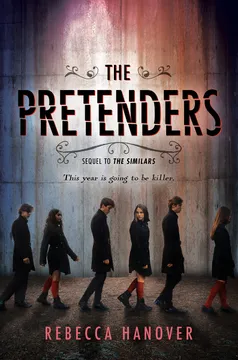


Plot Summary
Prologue
A message sent to Levi after months of silence admits what Emma cannot say aloud: she misses him and hopes he is safe. The note gives her a small thread of connection to the boy left behind on Castor Island.
But it never reaches him. When school resumes, Augustus Gravelle reveals that he intercepted it, turning Emma’s private longing into leverage over both her and Levi.
The message begins as an intimate confession, but its interception establishes the novel’s central danger: private feeling is never private in a world managed by Gravelle. Emma believes writing can bridge the distance between herself and Levi; instead, the message exposes how thoroughly their choices are monitored. The opening also gives the plot an emotional measure. Emma is not simply trying to solve a cloning conspiracy. She is trying to know whether someone she loves is safe, and whether he still wants her.
The Message Intercepted
As Emma’s family car approaches Darkwood Academy, Gravelle calls her and reveals that he has read her message to Levi. He claims Levi wants no further contact, then sends Emma a photograph of Levi’s bruised face with a warning that further messages will bring worse punishment. Emma arrives shaken, with Oliver Ward, her childhood best friend, beside her and her father, Colin Chance, in the front seat.
Outside the entrance, students protest against clones. Emma joins her friends, the Similars, and learns that Levi has not returned. Maude Gravelle announces that the Ten will become the Nine, suspending hazing and refusing to replace the absent senior. That night, Harlowe Shaw, a new junior member, challenges the change.
Gravelle’s first move is not simply to threaten physical harm. He converts Emma’s hope into evidence that can be used against her, making affection feel dangerous. The bruised photograph gives his control a visible cost, while his claim that Levi rejected her attacks Emma’s confidence in her own memories. At school, Maude’s decision to suspend hazing offers a counter-model of authority: leadership can protect rather than humiliate. Yet the protest at the gate shows that legal and social hostility have grown since the Similars first arrived. Emma begins senior year caught between a private threat and a public campaign.
The Roadside Escape
Harlowe messages Emma after Maude cancels initiation, claiming that she and Ivy Li and Graham Rosen have abducted Maude, Theodora, and Pippa. Harlowe shows Emma a photograph of the three bound, then lures her into her father’s vintage Volvo. She drives away from campus but admits the trip is meant to frighten Emma, not take her to the captives.
When Harlowe refuses to turn back, Emma jumps from the moving car, survives with injuries that begin healing unusually fast, and steals the vehicle. Driving by instinct and Dash’s clumsy directions, she suddenly hears Harlowe’s thoughts and learns the captives are hidden in Darkwood’s abandoned pump house. Emma reaches the building before Harlowe and finds her friends.
Emma’s leap is an act of desperate agency, but it also exposes how little she understands about her own body. She accepts serious physical danger because Harlowe has made delay feel morally impossible. The unexpected healing and mental access complicate that courage: Emma may be gaining capacities that help her protect others, yet she has no control over when they appear. Harlowe’s taunt becomes an unintended clue, so Emma’s first glimpse of telepathy is useful precisely because it is involuntary. Her rescue begins with loyalty, but the experience forces her to question what she is.
The Pump House Pictures
Inside the pump house, Harlowe presents a slideshow designed to wound each captive. Images of Pru’s family recall her mother, who has recently died; photographs of the Huxleys and news coverage of Tessa Leroy’s imprisoned father target the Similars’ painful ties to their DNA families. The final image shows Emma kissing Levi, exposing the relationship she has kept from Ollie.
Harlowe demands that Maude surrender leadership of the Nine. Instead, Maude, Theodora, and Pippa break their handcuffs by force, stunning their captors. Pippa frees the still-groggy Ollie, and he leaves after seeing the photograph. Maude keeps the Nine, bans further humiliation, and refocuses the group on kindness. Emma later finds her own road injuries almost gone.
Harlowe understands that humiliation works best when it makes a person’s private grief public. Her slideshow treats family resemblance as a weapon, forcing the Similars to confront the affection and exclusion attached to their origins. The kiss exposes Emma’s divided loyalties to Ollie, but the scene’s deeper rupture is that Harlowe chooses what he learns and when. Maude’s answer is not a counterattack but a refusal to let the Nine reproduce the cruelty imposed on them. The Similars’ strength saves them physically, while Maude’s leadership insists that power need not become domination.
The School Without Adults
At the masquerade ball, Emma repeatedly hears the thoughts of people around her, including Ollie’s plan to tell her he loves her. Before he can explain, Archer de Leon interrupts with a drunken toast.
Emma then hears Headmaster Ransom intend to inject himself with plasma taken from the Similars, and she confronts him in his office. Ransom injects the experimental mixture anyway. The next morning he collapses, and the teachers disappear from campus. During the resulting unsupervised party, Emma spots Jake Choate arguing with another Jake.
She and Ollie find the real Jake locked in a closet, but the impostors posing as Tessa, Archer, and Jake capture them. The teachers return after students trigger a fire alarm, and guards remove the three impostors.
The school’s apparent celebration becomes a study in unstable identity. Masks at the ball are chosen disguises, but the look-alikes are built to replace people without their consent. Emma’s mind-reading gives her warnings, not clarity: she can hear what others think but cannot reliably tell what those thoughts mean. Ransom’s decision to use stolen plasma also links institutional ambition to bodily exploitation. His collapse and the teachers’ absence leave authority vacant, allowing the impostors to exploit the students’ trust. Darkwood is no longer merely a school with prejudice; it is a place where familiar faces may conceal an organized intrusion.
Seymour Names the Copies
After guards seize the three impostors, Emma and Ollie recognize Albert Seymour, the scientist who helped create the Similars and is Gravelle’s half brother. Seymour meets them at Fillmore Park and explains that he and Gravelle made the fast-grown Duplicates, loading them with memories so they could imitate originals.
The first was the boy killed in Oliver’s place. The three who invaded Darkwood escaped from Pollux, an island hidden from Castor, where the Duplicates are raised.
Seymour insists the project should be controlled and says the escape was a mistake. He plans to return them to Pollux. Ollie challenges Seymour for withholding the truth about his biological father, while Maude rejects the idea that the Similars’ childhood supplied everything they needed.
Seymour’s explanation widens the story from an isolated school scandal to a second, concealed system of human manufacture. The Duplicates’ borrowed memories make imitation technically possible, but their escape shows that memory does not guarantee judgment or consent. Seymour regrets the first Duplicate’s death, yet his language still places scientific progress ahead of the created person’s independent worth. Maude’s objection exposes the gap between material provision and care: education and training cannot substitute for a childhood in which a child is loved rather than prepared for use. The hidden Pollux also signals that Darkwood has seen only a fraction of Gravelle’s design.
The Roof Confirms It
Jane Ward, Ollie’s mother, becomes Darkwood’s interim head after Ransom’s illness keeps him away. Harlowe responds to Maude’s leadership by publishing an anti-clone essay that calls the Similars dangerous, and students begin leaving threats on their doors.
Emma tests her own rapid healing by jumping from the boathouse roof; her injured ankle recovers before she reaches campus. Harlowe sees the jump and later uses it to threaten Emma’s college applications. As Emma struggles with her growing closeness to Ollie, he kisses her after confessing how much the past year has shaken him.
Levi then returns to Darkwood. He explains that Gravelle released him only to deliver a new assignment: the Similars must grow closer to their DNA families, while a dormant virus in their genes gives Gravelle a way to kill them.
The roof turns suspicion into evidence, but Emma’s experiment is also a response to a world in which other people define her body and identity. She risks injury to learn what Gravelle may already know. Harlowe transforms that private test into public leverage, framing unexplained ability as proof of danger. Meanwhile, Emma’s kiss with Ollie emerges from shared grief and dependence, not a clean romantic decision. Levi’s return intensifies that uncertainty, then brings a more immediate threat: Gravelle has made the Similars’ bodies into instruments of coercion. Their strength offers freedom in one moment and makes them vulnerable to control in the next.
The Legacy Project
Levi tells the group that Gravelle’s new Legacy Project is another demand to manipulate their DNA families, continuing the damage they caused under pressure the previous year. He warns that Gravelle can activate a stealth virus embedded in the Similars’ genes.
The group connects it to Ransom’s collapse: when Ransom injected their plasma, he also took in the dormant virus, which Gravelle then activated. Soon after, Gravelle contacts Emma and confirms that she is a Similar named Eden, created to replace the Chance family’s daughter, who died as a child.
Emma tells Levi the truth she has begun to suspect about herself. They kiss, but Levi admits he knew her origins before they met and kept them secret, hoping she could have a more ordinary life. Feeling betrayed, Emma leaves him.
The virus makes Gravelle’s authority intimate and internal: distance cannot protect the Similars from a command written into their biology. The Legacy Project likewise turns family connection into an assignment, making affection suspect because it may be serving someone else’s revenge. Emma’s disclosure to Levi briefly creates the recognition she craves, but his earlier silence reproduces the pattern of adults deciding what truths she can bear. His motive is protective rather than cruel, yet the effect is still a breach of trust. The novel distinguishes care from control by showing that good intentions do not erase the harm of withholding someone’s own history.
A Case for Clones
Emma writes a college essay arguing that a shared genetic code does not make a clone interchangeable with an original, then sends it to Ollie and publishes it in the student blog. Her friends welcome her, but Harlowe answers with another attack, while anti-clone threats spread.
Emma also learns that Jane cannot simply protect the Similars from a worsening political climate. Before Christmas, Ollie confesses his lasting love for Emma, and she kisses him before realizing she cannot return it in the same way.
At home, Emma confronts her father, who criticizes her public essay instead of explaining why he hid her origins. He leaves for a business trip without resolving their conflict. His gift of European plane tickets offers a tentative invitation to repair their relationship, but no apology.
Publishing the essay is Emma’s first deliberate effort to define herself in public rather than let Harlowe’s rhetoric name her. Her argument is personal because she has begun to see that identity is not settled by resemblance, but the act also carries political risk for the people she wants to defend. Her relationships remain harder to define. Ollie’s love is real, and her response is tender, but affection does not make her feelings interchangeable with Levi’s. The confrontation with her father reveals the cost of a family built on omission: even his attempt at reconciliation arrives as a gift rather than the explanation she needs.
Ollie’s Five-Minute Window
After returning to Darkwood, Emma finds Ollie increasingly abrupt. One afternoon, she catches him sending a cryptic report to Pollux during a brief interval when he seems unlike himself. His thoughts refer to an installation, an infrared timestamp, and a message to the island.
Emma recognizes the numbers as matching the labels on the earlier Duplicates and concludes that the person beside her is not Ollie, but another copy. She gathers the Similars and Pru; Maude scans their wrists and finds no timestamps.
At a later dinner, Maude checks Emma’s father and discovers one on his wrist. Jane has disappeared to California, and the group suspects she is being taken too. The adults they trust may have been replaced, so they conceal what they know.
The five-minute interval gives Emma’s involuntary mind-reading a new function: it lets her notice a seam in an otherwise convincing performance. Yet the discovery is emotionally cruel because the Duplicate believes himself to be Ollie. Emma must separate the person she loves from the copy who carries his memories, without treating that copy as disposable. The infrared timestamp offers a crude way to distinguish bodies, but it cannot settle who deserves a life or a name. Once Emma finds the mark on her father, the conspiracy changes scale. The danger is no longer an enemy on an island; it is the replacement of trusted people inside their own homes.
The Candidate in the Tent
Pru learns that her father, Jaeger, is helping protect Bianca Huxley, a presidential candidate who is due to appear at a major New York rally. The group travels to the city to prevent Gravelle from replacing Bianca.
At the event, Maude scans Jaeger’s wrist and finds a timestamp: the man with them is already a Duplicate. The students force their way into Bianca’s campaign tent and find the real Bianca and Jaeger bound beside Bianca’s prepared copy. Guards overpower the group, however, and carry them to a helicopter.
From the glass floor, Emma recognizes Castor Island below. The capture brings them to Gravelle’s base, but Levi notices that the compound’s corridors are reversed. They have been taken to Pollux, the hidden island where the Duplicates are made.
The rally forces the group to protect someone whose politics threaten their own rights. Their intervention is not an endorsement of Bianca; it is a refusal to let Gravelle seize political power by substituting a manufactured candidate. Jaeger’s timestamp makes the threat painfully immediate: even a trusted ally may be a copy. The failed rescue also moves the protagonists from suspicion to direct captivity. The mirrored layout of Pollux gives Levi’s knowledge of the old island practical value, while making clear that Gravelle has built a second world around the first. The students are now inside the machinery that has been taking people from their lives.
The Cage on Pollux
Gravelle displays feeds of the people he has replaced and demands obedience to the Legacy Project, threatening the stealth virus. Theodora refuses. While guards hold the captives, Emma reaches toward Ollie through her mind-reading and catches his thoughts about a windowless cage.
Levi identifies a restricted laboratory, and the friends break free. Jago is captured and injected into Gravelle’s virtual-reality portal, but the others reach the cell and find Ollie, Colin Chance, Jane, and the stolen originals starved and shackled. They begin freeing them.
Theodora collapses after Gravelle activates her virus. Seymour appears and orders her body removed, then admits the Duplicates are his creation. He and Gravelle plan to replace influential people, exploit their memories, and eventually dispose of the originals.
The cage gives physical form to what the story has argued about identity: originals are reduced to bodies while their public lives are copied elsewhere. Emma’s mental link reverses that separation by finding Ollie through the very interiority the captors cannot fully control. But rescue does not bring safety. Theodora’s collapse shows that Gravelle can make refusal lethal, and Seymour’s calm description of the project reveals a second motive beyond revenge: he wants replacement to become a system for extending and improving human life. His language of progress erases the consent of those being copied and imprisoned. The protagonists must resist both a tyrant’s grievance and a scientist’s supposedly rational vision.
The Number on Emma
As the Similars fight their way toward the boats, Emma tries to stop the Duplicates from attacking by sending them thoughts of lives they could choose for themselves. Seymour breaks her connection.
Gravelle then reveals that the narrator is not the Similar who grew up with the other clones, but a Duplicate made from her memories and installed at Darkwood. The real Emma is nearby, and Colin dies before they can escape. The narrator discovers her own timestamp and understands that her memories are genuine experiences, even if her body was engineered to copy someone else.
She and Levi are both revealed as Duplicates. Maude and the others keep moving the prisoners toward safety, while Emma decides that the only way to free the replacements at home is to reset them through Pollux’s central system.
The timestamp turns the book’s central question inward. Emma has spent the story defending clones against the claim that they are lesser copies; now she must apply that argument to herself. Her memories are not fabricated merely because they were transferred, and the life she lived still shaped her. Yet the revelation is not a neat liberation. Her father’s death and the knowledge that the original Emma is present make her identity feel both real and stolen. Choosing the reset means risking the very memories that prove she has become a person. The ethical conflict is no longer whether copies deserve recognition, but whether saving others can justify erasing one’s own selfhood.
The Reset and the Fire
In the server room, Maude discovers that resetting the Duplicates will also trigger bombs on both islands. The narrator chooses to stay and execute the reset after the others escape. Seymour enters with a gun, but Emma uses her mental ability not only to read his thoughts but to control his actions.
She makes him enter the commands, releasing the Duplicates from their assigned roles and disabling the implants in the originals. The island begins to explode. Duplicate Levi stays with her, and the two watch the real Emma and Levi reach a boat. Smoke overtakes the room before they can escape. The reset frees the people whose lives Gravelle stole, but Emma and Duplicate Levi die as the islands burn.
Emma’s final act converts a capacity Gravelle designed as an instrument of control into an act of self-determination. She does not merely overpower Seymour; she makes him experience the loss of agency he imposed on others. The reset remains morally costly, because it destroys the laboratory’s system by destroying the islands and the lives of the two Duplicates who remain behind. Emma’s choice cannot be made clean by calling it noble. It is an emergency decision shaped by the certainty that the originals will otherwise remain trapped and unrecognized. The rescue succeeds because a person treated as a replaceable model chooses, freely, to protect other lives.
Epilogue
The real Emma and Levi return to Darkwood after spending nearly a year imprisoned on Castor and Pollux. Their Duplicates died triggering the reset, while the originals and DNA parents return to their families. The freed Duplicates at home abandon their assigned roles and begin searching for lives of their own.
Emma mourns her father and Theodora, and Ollie returns to school, accepted into NYU’s film program. At Theodora’s memorial, Emma and Ollie share a tender kiss that honors their lasting friendship without promising a romance. Later, Emma reunites with Levi by the lake and chooses a future with him. Ollie’s film of the rescue helps Darkwood see what the Similars risked to stop Gravelle and Seymour.
The ending refuses to treat survival as a return to the life that existed before. The real Emma comes home, but she has lost a year, her father, and the counterpart who lived that year in her place. The reset rescues the originals while leaving the freed Duplicates with the difficult work of forming identities without assigned roles. Emma and Ollie’s farewell kiss gives their history dignity without forcing it into the shape of romance, while her reunion with Levi offers a chosen future rather than a guaranteed cure for grief. Ollie’s film makes testimony public, countering the propaganda that had made copies seem less human.
Analysis
The novel treats cloning not as a puzzle of who looks like whom, but as a test of whether personhood can survive other people’s claims over it. Gravelle turns genetic origin into obligation, Seymour turns memory into a transferable asset, and Harlowe turns difference into a public threat. Each offers a different justification for controlling another person. The story resists them by making identity depend on lived experience, relationships, and choice, not on priority of birth or technical authenticity.
Emma’s position makes that argument unstable in productive ways. She begins by fearing that Levi’s resemblance to Ollie makes him a replacement, then must face the possibility that she herself has been built from another person’s memories. Her discovery does not cancel the life she remembers; it forces her to ask whether a copied history can still become an individual life. The answer is not abstract. She develops loyalties, makes mistakes, loves, grieves, and finally chooses to save people who might never recognize what she has done.
The novel also distinguishes protection from possession. Levi withholds Emma’s origins to spare her, and Colin hides them because he fears losing her, but both forms of silence leave Emma alone with a story about herself written by others. Gravelle’s protection is more openly coercive, yet the emotional logic is related: adults assume that love or expertise gives them the right to decide what a young person can know. Against this pattern, Maude’s leadership and Emma’s public essay insist that respect requires agency, not merely good intentions.
The ending refuses an easy technological solution. Resetting the Duplicates saves the originals but costs the two copies who choose to remain behind. Their sacrifice does not prove they were disposable; it proves the opposite, because the decision is theirs. The surviving characters inherit grief, uncertainty, and the work of building a fairer life for freed Duplicates. Recovery is not restoration. It is the difficult act of allowing each person, original or copy, to become more than the role someone designed.
Review Summary
People Also Read

Characters
Emma Chance
The searching storytellerEmma is a sharp, self-questioning senior whose loyalty to her friends often outruns her caution. She is still carrying the grief of believing Ollie died, the ache of leaving Levi, and a strained relationship with her father. Sarcasm gives her a way to keep painful feelings at arm’s length, but it also makes her observant and quick to challenge authority. Emma wants to understand where she belongs without allowing other people to define her by her family, her memories, or her biology. Her affection for Ollie and Levi draws out different parts of her: comfort rooted in shared history, and a fierce connection shaped by discovery and risk.
Levi Gravelle
The guarded island boyLevi is one of the Similars, raised on Castor Island under Gravelle’s control and later sent to Darkwood. Reserved and watchful, he uses dry humor and emotional restraint to protect himself from disappointment. His attachment to Emma is complicated by his fear that closeness will expose her to the life he and the other Similars have endured. He also carries obligations imposed by Gravelle, even when those tasks conflict with his own moral judgment. Levi’s loyalty to his friends is steady, but his instinct to make decisions for their protection can become a form of silence that strains the trust he wants to preserve.
Oliver Ward
Emma’s returned best friendOllie is Emma’s closest friend since childhood, quick with jokes and attentive to the small habits that make their friendship feel like home. His return after Emma believed he had died gives their bond renewed urgency, but he is also coping with captivity and the discovery that Gravelle is his biological father. Ollie’s instinct is to absorb blame, even for choices and harms that were never his to control. His affection for Emma is sincere, yet he must face that their shared history does not guarantee they want the same future. His warmth and loyalty make him a refuge, but also someone who needs care of his own.
Augustus Gravelle
The controlling guardianGravelle created and raised the Similars, presenting himself as their guardian while directing their lives toward his own plans. His resentment of the families and schoolmates who rejected him feeds a conviction that he is correcting old wrongs. He can describe coercion as protection and revenge as justice, revealing how thoroughly he has fused his own injuries with the children’s needs. Gravelle prizes intelligence, strength, and obedience, but cannot accept that the people he raised might choose values different from his. His power comes not only from technology and legal isolation, but from making dependence feel like love.
Maude Gravelle
The principled strategistMaude is a Similar and the chosen leader of Darkwood’s Ten, later called the Nine when Levi is absent. She is disciplined, technically gifted, and willing to challenge authority without confusing anger with leadership. Maude knows the Similars’ legal position leaves them vulnerable, so she weighs resistance against the danger of losing their tenuous place in the United States. She rejects hazing and humiliation even when retaliation would be easy, and she often thinks several moves ahead of her friends. Her strength lies in combining practical judgment with a firm moral boundary: survival matters, but not at the cost of becoming like the people who exploit them.
Theodora
The uncompromising friendTheodora, usually called Thea, is a Similar whose quiet reserve can harden into fierce resolve when friends are threatened. She is connected to Tessa Leroy through their DNA, but that relationship carries painful history and conflicting loyalties. Theodora understands that doing what Gravelle demands can injure people she cares about, even when he frames the task as a birthright. She is not easily persuaded by promises of status or belonging, because she has seen how conditional those promises can be. Her dry humor and directness make her an honest presence in the group, particularly when others are tempted to excuse cruelty as strategy.
Prudence Stanwick
The grieving loyalistPru is Emma’s close friend, a rower whose steadiness often helps the group keep moving through crisis. She has recently lost her mother and must learn how to live with a grief that cannot be reversed by technology or rescue. Her bond with Pippa, her Similar, develops within the complicated space between genetic connection and chosen family. Pru is compassionate but not passive; she speaks up when danger threatens her friends and acts decisively when her father, Jaeger, is involved. Her grief deepens her empathy without making it her only defining feature, and she remains attentive to the needs of others even when she is struggling herself.
Pippa
The gentle bridge-builderPippa is a Similar who is thoughtful, gentle, and more open than some of her friends to meeting their DNA families. She spends time with Pru and Pru’s father, Jaeger, and tries to approach that connection without claiming a place that has not been offered. Her sensitivity makes her alert to how family histories can both comfort and wound. Pippa is not defined by softness alone: when the group is in danger, she acts with physical courage and stays close to the people who need help.
Jane Ward
The protective school leaderJane is Ollie’s mother and a former Darkwood student who becomes the school’s interim head. After believing she had lost her son, she is grateful to have him back and determined to protect the students in her care. Her warmth offers Emma a rare experience of maternal steadiness, though her history with Levi makes that relationship difficult. Jane’s sense of responsibility is both a strength and a burden: she wants to defend the Similars’ rights while navigating political pressure and the limits of her authority.
Colin Chance
Emma’s distant fatherColin is Emma’s father, a successful business executive who often retreats into work rather than emotional conversation. He has raised Emma in California and remains protective of her, but the distance between them makes it difficult for her to know what he feels or why he withholds information. His reserve is not simple indifference; fear and grief shape his decisions, though he does not always recognize the damage caused by keeping silent. He represents the painful gap between loving someone and helping them feel loved.
Albert Seymour
The scientist uncleSeymour is Ollie’s uncle and Gravelle’s half brother, a scientist who helped develop the technology behind the Similars and Duplicates. He presents himself as awkward and cautious, and he speaks as though careful research can be separated from the choices made with it. His attachment to scientific possibility can make him underestimate the personhood of his subjects. Through his relationship with Ollie, the story shows how family loyalty can become an excuse for withholding truth, even when someone believes the silence is protective.
Harlowe Shaw
The anti-clone agitatorHarlowe is a high-ranking junior at Darkwood who organizes against the Similars and treats their presence as a threat to inherited privilege. Competitive and confident, she wants influence within the school’s elite Ten and resents a leadership structure she believes should belong to students like herself. She uses public humiliation, political language, and personal information to pressure her targets. Harlowe’s certainty makes her effective at recruiting others, but it also blinds her to the difference between defending human rights and narrowing who counts as human.
Madison Huxley
The powerful originalMadison is the original whose DNA was used to create Maude. She comes from an influential political family and supports an anti-cloning movement, bringing public power to the hostility the Similars face at school. Her confidence and access to prominent adults make her a formidable opponent. Madison’s relationship with Maude is shaped by the uncomfortable fact that they look alike but have been granted radically different lives and social standing.
Tessa Leroy
The wounded originalTessa is Theodora’s original and the daughter of a prominent family whose public scandals have made her a target of scrutiny. She has acted violently toward Pru and later faces court-ordered treatment, but she is also a teenager living under intense family expectations. Her connection to Theodora unsettles the usual distinction between original and copy: they share a genetic beginning without sharing the same experiences, choices, or responsibilities.
Ansel de Leon
The quiet family-seekerAnsel is a Similar whose reserved manner gradually gives way to greater ease around his original, Archer, and Archer’s family. He is thoughtful and observant, often helping the group make sense of events without demanding attention for himself. His summer with the de Leons gives him a chance to build a relationship through shared work and ordinary time, rather than through DNA alone. Ansel’s path shows that connection can be chosen, but it cannot be demanded.
Jago
The steady defenderJago is a Similar and the DNA counterpart of Jake Choate. He is physically capable, loyal to his friends, and often more measured than Jake, whose impulsiveness can draw trouble. Jago’s presence helps anchor the group during dangerous confrontations, while his relationship with Maude offers a quieter intimacy within their shared life on the island and at school.
Jaeger Stanwick
The activist fatherJaeger is Pru’s father and a leader in the Quarry, an underground group working to protect clones. He is practical and politically committed, but his first priority remains his daughter’s well-being, especially after the death of his wife. Jaeger’s support for the Similars comes from both personal loyalty and a conviction that public institutions are failing them.
Archer de Leon
The celebrated originalArcher is Ansel’s DNA original, a rising actor whose fame changes how people respond to him. Charming and socially confident, he can be careless about the effect his attention has on Ansel. Their relationship tests whether family resemblance can become a real bond, especially when fame and performance threaten to overwhelm sincerity.
Jake Choate
The reckless soccer starJake is Jago’s original, a talented soccer player staying at Darkwood for an extra year. He takes his athletic future seriously but enjoys attention and can be immature when he feels behind his peers. His encounter with a look-alike exposes the danger of treating another person’s identity as a convenient disguise.
Bianca Huxley
The presidential candidateBianca is Madison’s mother and a presidential candidate whose politics oppose the rights of clones. Her campaign gives Gravelle’s ambitions a possible route into national power. She is confident and accustomed to managing public image, but her position also makes her vulnerable to a conspiracy designed to control what the public sees.
Headmaster Ransom
The compromised headmasterRansom runs Darkwood and presents himself as an advocate for the Similars while secretly using them in research. His ambition and willingness to exploit students make him a warning about institutions that praise inclusion while treating vulnerable people as resources.
Principal Fleischer
The rigid administratorFleischer is Darkwood’s principal, a strict administrator who enforces rules and serves as Ransom’s deputy. She values order, though her choices sometimes allow prejudice to pass under the cover of procedure.
Ivy Li
The uncertain recruitIvy joins Harlowe and Graham in their hazing scheme, but her willingness to follow the group is not the same as deep conviction. She reflects how the desire to belong can draw a student into cruelty before she has fully reckoned with its consequences.
Graham Rosen
Harlowe’s fellow instigatorGraham helps Harlowe and Ivy stage the attack on the Nine. He is less vocal than Harlowe, but his participation makes clear that group cruelty depends on more than its loudest advocate.
Willa Stone
The principled juniorWilla is a junior member of the Ten and an accomplished athlete. She refuses to join Harlowe’s initial hazing and later finds the confidence to challenge the anti-clone campaign in public.
Plot Devices
Similar abilities
The body’s hidden evidenceThe Similars develop exceptional strength, endurance, and rapid healing during adolescence. Emma begins to show these traits after injuries from a road jump and a fall from the boathouse roof fade far faster than they should. These abilities help the group survive physical threats, but they also supply Harlowe with material for anti-clone propaganda. Their function is therefore double-edged: they are evidence of engineered biology, yet they do not define a person’s character or moral worth.
Mind-to-mind access
A weapon that needs restraintEmma can hear other people’s thoughts and, eventually, influence them. At first the ability arrives without warning, revealing Harlowe’s hidden location for the captives and exposing Ollie’s feelings. Later, Emma learns to focus it deliberately, using it to identify a Duplicate’s brief communication window, reach the imprisoned Ollie, and control Seymour. The power creates an ethical problem as well as a tactical advantage: knowing another person’s private thoughts can protect friends, but using that knowledge without consent can also become a form of intrusion.
Timestamps and implants
A counterfeit identity markerThe Duplicates carry hidden timestamps visible under infrared light, while brain implants transmit memories and help them perform the lives they have been assigned. Emma and Maude use the timestamps to distinguish some originals from their replacements, first discovering a mark on Colin Chance and later uncovering the larger substitution scheme. The marker provides evidence, but not a simple moral answer: many Duplicates sincerely believe they are the people they copy. Memory and appearance make the deception persuasive, while the hidden number reveals the machinery underneath it.
The stealth virus
Gravelle’s remote threatGravelle has embedded a dormant virus in the Similars’ biology, giving him a way to threaten them even when they are far from Castor Island. Ransom’s experiment with their plasma brings the virus into his own body, and his collapse foreshadows its danger. Gravelle uses the threat to force the Similars toward the Legacy Project. The virus makes biological engineering a system of political control: the body itself becomes a leash, and refusal carries consequences beyond ordinary punishment.
Pollux’s reset system
A rescue with a priceThe central server on Pollux manages the Duplicates’ instructions and the implants transmitting memories to them. Maude discovers that resetting the Duplicates could free them from their assigned roles and disable the implants in the originals. The same command is wired to explosives on the islands, however, so using it will destroy the research and put anyone left behind at risk. The system turns the climax into a moral choice: there is a route to release the prisoners, but only if someone accepts an extreme cost.
Download PDF
Download EPUB
.epub digital book format is ideal for reading ebooks on phones, tablets, and e-readers.








