

Plot Summary
Back to Hades Point
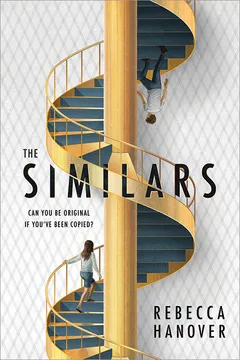
Emmaline Chance arrives at Darkwood Academy for junior year carrying the loss of Oliver Ward, her closest friend, and a bottle of prescription pills meant to blunt her grief. She has imagined jumping from Hades Point, the campus cliff, but keeps going.
The school is buzzing about six cloned teenagers, called Similars, who have joined the junior class. Emmaline initially treats the news as background noise. Then she spots a girl who looks like senior Tessa Leroy, a second girl who resembles her roommate Prudence Stanwick, and a boy who shares junior Jake Choate’s face.
Pru admits that her look-alike, Pippa, stayed with her family before school began. Emmaline follows the strangers to their lakeside meeting, newly compelled to know who they are.
Grief has narrowed Emmaline’s attention to survival by numbness, so the clones first register as public spectacle rather than people. Seeing them privately changes that. Their unguarded presence interrupts her rehearsed indifference, while Pru’s concealed meeting with Pippa introduces the book’s central tension: a shared origin does not guarantee a shared life. The lake, at once a place of memory and a possible means of escape, quietly binds mourning to the new mystery.
Oliver's Face at Assembly
At assembly, Headmaster Ransom introduces the six Similars by their new names: Jago, Theodora, Pippa, Ansel, Maude, and Levi Gravelle. Madison Huxley, who had claimed her own clone would stay away, watches Maude accept a Darkwood key instead. Then Levi steps forward, and Emmaline recognizes Oliver’s face.
She knows Levi cannot carry Oliver’s memories, but that knowledge offers little protection from the sight. The school pauses to honor Oliver, dead since summer, while his genetic copy stands among the new students. Emmaline flees the chapel and finds Levi outside. Overwhelmed by anger and grief, she slaps and attacks him, then demands that he disappear from Darkwood.
The assembly makes identity a public performance: the school grants each Similar a name and key, then places Levi beside the memory of the boy he resembles. Emmaline’s violence is not a considered judgment of Levi so much as an attempt to defend grief from an unbearable visual contradiction. Yet her attack also reveals how readily she treats a living person as an extension of the dead. Levi’s presence will force her to distinguish resemblance from relationship.
The Ten's First Trial
Darkwood ranks its juniors by stratum, and Emmaline places fifth, earning entry to the elite Ten alongside Pru, Pippa, Maude, Theodora, and Levi. The group’s senior leader, Madison, uses the first midnight meeting to reveal its hidden rites. Pru admits she threw Emmaline into Dark Lake with a weight tied to her ankle, then rescued her as part of the initiation.
The next task forces Emmaline to cut Theodora’s hair while she sleeps. Emmaline complies under threat of losing her rank, then cuts her own hair in remorse. Madison orders every new member to identify a student to drive out. Emmaline flushes her pills rather than let them keep her unconscious, then follows Maude and sees the Similars perform astonishing acrobatics.
The Ten converts achievement into leverage. Its members have earned their status through academic rankings, yet Madison uses that status to make cruelty look like tradition and dissent look like self-sabotage. Pru’s participation wounds Emmaline precisely because their friendship has felt secure. Cutting her own hair cannot undo the harm to Theodora, but it marks Emmaline’s first attempt to accept responsibility rather than hide behind coercion. Her decision to discard the pills is another small act of reclaiming agency.
A Body in the Boathouse
After Emmaline and Levi clash in American history over whether clones deserve equal treatment, Ransom assigns them a week of repainting the boathouse together. Their silence breaks when they hear a scream inside. Searching between stacked boats, they find Pru unconscious in a canoe, her head badly injured. Emmaline’s plum has run out of power, so Levi uses his device to summon help and carries Pru toward campus.
At the hospital, the school sends Emmaline and Levi away rather than let them accompany her. Emmaline wants to believe Pru fell, but the circumstances feel wrong. Her second encounter with a body recalls finding Oliver, and Levi’s practical help becomes the first evidence she has seen that he is more than Oliver’s face.
The boathouse collapses Emmaline’s two griefs into one emergency. She has already learned what it means to find Oliver dead; now Pru’s stillness threatens to make that history repeat. Levi’s physical rescue complicates her hostility without erasing it. The scene also turns Darkwood’s secluded campus into a place where danger can occur beyond the view of its reassuring ceremonies, leaving the students dependent on institutions they do not yet trust.
The Missing Roommate
Pru has vanished from the hospital by the time Emmaline and Levi go looking for her. Pippa, who has begun to feel like a friend in her own right, shares their alarm. Jaeger Stanwick, Pru’s father, eventually explains that surgeons treated her skull fractures and brain bleed, then placed her in a medically induced coma near her sick mother in Massachusetts.
He confirms that the injuries suggest an attack, not a fall. Meanwhile, Emmaline receives a package from Oliver’s mother, Jane Ward: Oliver’s old key and a brief note suggesting it can explain something about a person he never names. Emmaline keeps the note unread for a time, afraid that opening it will make her loss newly immediate.
The uncertainty surrounding Pru is intensified by systems that deliver fragments instead of care: a hospital cannot explain her departure, and Jaeger withholds information for reasons Emmaline cannot know. The result is an anxious return to her familiar role as investigator, but now the evidence carries personal cost. Oliver’s key offers a second, quieter mystery. Emmaline is not ready to open it because knowledge may clarify the past without giving her the person she has lost.
Secrets Under the Influence
Madison drugs the junior Ten members with an injective and demands their private fears as proof of loyalty. Theodora admits she misses the island where the Similars grew up; Pippa reveals her terror that Pru may die. Emmaline, unable to control her words, tells the group that Oliver had confessed romantic love and that she had pushed him away.
Afterward, she reads his note: the key, he indicated, would explain something about him. Emmaline asks Levi to help unlock Oliver’s empty old room, since their matching DNA lets him use the key. They find nothing. On the walk back, Levi explains that his guardian told him Oliver’s parents did not want to meet him, leaving Levi convinced he has no family.
The injective turns intimacy into institutional property. Madison calls forced disclosure bonding, but the confessions instead expose what each student fears losing: home, family, and the possibility of being loved. Emmaline’s guilt over rejecting Oliver becomes public before she has made sense of it herself. Levi’s account of supposed rejection then reframes his reserve as self-protection. The unsuccessful room search does not solve the mystery, but it gives Emmaline and Levi a reason to trust one another with painful information.
Shares Bought with Grief
At Oliver’s memorial dedication, Emmaline introduces Levi to Jane and Booker Ward, who are shocked to learn that he exists. They welcome him and grant him the company shares that would have belonged to Oliver. Soon afterward, their lawyer reports that Levi has transferred those shares to his guardian, Augustus Gravelle, giving Gravelle power in Ward, Inc. Emmaline cannot reconcile the apparent betrayal with the Levi who helped save Pru.
She also learns that Madison is building DAAM, a school anti-cloning movement, and that Pru’s absence has moved Pippa into the Ten. The Similars remain under scrutiny from classmates, while Emmaline begins to suspect that their arrival has brought hidden assignments as well as a chance at family.
The Wards’ welcome is sincere, but it is entangled with grief: Levi receives a place in a family through assets once meant for a dead son. His transfer of the shares turns that fragile gesture into a transaction, making Emmaline question whether intimacy is being used as a route to power. At the same time, Pippa’s promotion shows how institutions convert absence into rank. Both family and school offer belonging, but each attaches conditions that the Similars cannot easily refuse.
Levi Becomes a Suspect
After secretly watching the Similars dive for minutes and leap from trees, Emmaline confronts Levi about their abilities and Gravelle’s stock scheme. Levi admits the group came to Darkwood with tasks; his was to secure the Wards’ trust so Gravelle could take the shares.
When Emmaline tells Headmaster Ransom about her suspicions over Pru’s attack, Ransom alerts the police. Officers question Emmaline, then escort Levi for questioning, though they do not arrest him. Emmaline apologizes and asks him for the truth.
Levi explains that the Similars have unusual physical traits, including rapid healing. In the charged conversation that follows, Emmaline strikes him, then kisses him. Levi stops her from mistaking their intense moment for a settled relationship.
Emmaline’s appetite for certainty produces a damaging chain: fear leads her to Ransom, and Ransom turns her uncertainty into police scrutiny of Levi. Her mistake is psychologically credible because the visible facts are alarming, but she still has to face the consequences of treating suspicion as protection. Levi’s explanation gives her a more accurate account of his body, while their kiss exposes a different confusion: she is beginning to desire the person she once saw only as Oliver’s replacement.
The Rally Turns Hostile
Madison turns DAAM into a public campaign, arguing that clones threaten individual identity and should not share the rights of other citizens. She uses Levi’s unresolved role in Pru’s attack to make suspicion feel like proof.
The rally fills the gym with students chanting against clones, while Ransom watches without intervening. Outside school, anti-clone laws and restrictions are gaining support. Emmaline sees how quickly classmates join a cause that gives their discomfort a respectable vocabulary.
Her own doubts about the Similars do not make her accept Madison’s claims, but the division leaves her increasingly isolated. Tessa, meanwhile, is absent from school after her father is convicted of financial fraud, a crisis that will later sharpen her resentment toward the clones.
Madison’s argument works by translating a real ethical question, who controls the use of DNA, into a claim that living clones are inherently threatening. That move lets fear masquerade as principle. The rally’s crowd matters because most students need not know the Similars to condemn them; repetition supplies the certainty that evidence has not. Ransom’s nonintervention is especially unsettling, since the school’s stated commitment to inclusion now offers no practical shelter.
The Hologram Archive
Emmaline follows Madison, Tessa, and Jake into an abandoned research building and discovers a hologram of herself behind a locked laboratory door. With Maude’s programming skill, she later uses an injective on Madison to gain access.
The holograms contain students’ grades, locations, and medical statistics, including signs of the Similars’ unusual physiology. Madison’s drugged explanation clears her of Pru’s attack that afternoon: she had met with a virtual tutor.
While examining Oliver’s profile, Emmaline finds his birth certificate listing Jane Porter and John Underwood as his biological parents. Underwood, expelled years earlier and supposedly dead, connects Oliver to Albert Seymour, the scientist whose cloning work created the Similars.
The archive turns Darkwood’s gold keys from symbols of admission into instruments of surveillance. What students treat as a private token quietly stores the institution’s power to watch them. Maude’s discovery also shifts the mystery from individual wrongdoing toward an organized system of observation. Oliver’s birth record links that system to a family secret, suggesting that his final note was not merely a keepsake but a warning encoded in information the school had preserved.
A Dinner of Old Wounds
At a Ten dinner with alumni and parents, Tessa confronts Theodora for uncovering documents that helped journalist Jaeger expose Damian Leroy’s fraud. Theodora had treated the files as evidence of wrongdoing, while Tessa sees her actions as betrayal by someone invited into the family.
The confrontation reveals that the Similars’ tasks reach beyond school life and can reshape their DNA families. Emmaline presses the adults about John Underwood and learns he was expelled after a laboratory incident, then reported dead in a car crash.
She also notices Headmaster Ransom speaking privately with Madison’s parents about a project in the research building. The dinner leaves Emmaline with two linked questions: what Gravelle wants, and what Darkwood is doing to the clones.
The dinner places private loyalties in the same room as public power. Theodora’s ethical decision has harmed Tessa’s family, but Tessa’s grief and anger do not erase the fraud she helped expose. The scene resists simple moral sorting: the clones can act with agency and still become instruments of Gravelle’s designs. Ransom’s quiet coordination with the Huxleys further unsettles the school’s public image, making its respectable traditions feel like cover for interests students cannot see.
Oliver's Hidden Recording
When Emmaline learns that Darkwood’s old keys can store recordings, she asks Maude to unlock Oliver’s key using her name as his passcode. Oliver’s hologram recounts how he found his birth record, traced John Underwood’s supposedly current vital signs through the school’s system, and discovered that Underwood had faked his death.
Underwood had become Augustus Gravelle, the guardian who raised the Similars. Oliver planned to travel to Castor Island and confront him. The recording ends before explaining what happened afterward. Emmaline now understands why Oliver’s note urged her to investigate the man, but not why Oliver died. His discovery gives her a direction, and it makes Gravelle’s connection to the Similars far more personal.
Oliver’s recording restores a measure of his curiosity without restoring his presence. His investigation shows how affection and inquiry were intertwined for him: he searched the school’s hidden records because he wanted to understand his own origins. The revelation that Gravelle is Underwood collapses the distance between guardian, scientist, and family secret. Yet the recording withholds its most painful answer, keeping Emmaline’s need for explanation alive rather than resolving her grief through information alone.
Five Subjects in the Lab
During spring break, Jaeger contacts Emmaline with the truth he had withheld: Pru survived the boathouse attack, recovered, and traveled to Castor Island to seek an alliance with Gravelle. Jaeger has lost contact with her and fears she is in danger.
Emmaline reaches the research building and finds Maude, Pippa, Theodora, Ansel, and Jago unconscious in chairs, their blood connected to machines. Principal Fleischer is overseeing the procedure.
Emmaline realizes that Ransom and the Huxleys are studying the Similars’ bodies through health data secretly collected by their keys. Levi confirms that his friends agreed to cooperate while planning to expose Ransom later. Emmaline asks Levi to help her find Pru, and he agrees to return to the island.
Two forms of exploitation converge here. Gravelle has assigned the Similars tasks that manipulate their families, while Ransom’s research treats their bodies as institutional property. Their agreement to participate does not make the arrangement free; staying at Darkwood is bound to the work they came to do. Emmaline’s choice to help Pru shifts her from watcher to participant. She now accepts danger not to solve a puzzle, but because someone she loves may be trapped.
Gravelle's House of Memory
Emmaline and Levi travel by bus, ferry, and fishing boat to Castor Island, using Levi’s knowledge of the compound to enter. Gravelle captures them and confines Emmaline in an advanced virtual reality system that turns memories into an inescapable world. She witnesses Underwood arriving at Darkwood as a poor scholarship student and trying to belong among wealthy classmates.
Later memories show him taking sole blame after he and friends freed experimental animals, then being expelled while the others stay silent. Levi explains that Underwood’s marriage to Jane ended and that he later faked his death. Emmaline recognizes the roots of Gravelle’s resentment, but understanding his injuries does not excuse the revenge he has built around them.
The memory simulation makes history bodily rather than safely retrospective: Emmaline is forced to inhabit scenes whose consequences still shape the present. Underwood’s expulsion exposes the class hierarchy he later turns into a grievance, but the account also shows his choice to protect friends who did not protect him. The past explains Gravelle’s fixation on restitution without legitimizing his methods. His technology can preserve memory, yet it uses memory as coercion.
The Dead Boy Returns
Gravelle reveals that the body Emmaline found in Oliver’s room was a clone, created to make his family believe Oliver had died. The real Oliver has been held on the island and drugged for months. Gravelle also exposes Pru, shackled in his laboratory and used as a test subject. Pru identifies Tessa as the person who struck her with a rowing oar after Pru tried to stop Darkwood’s experiments.
Levi attacks the guards while Emmaline frees Pru; a gunshot wounds Oliver. Emmaline injects Gravelle with a stolen drug and escapes the virtual reality he uses against her. Pru and Oliver reach the boat, but Levi stays behind when guards seize him, giving Emmaline time to get the others away.
The revelations overturn the story’s apparent losses without making them painless. Oliver’s survival is a rescue from deception, but he has endured months of captivity and drugging; Pru’s return also comes with evidence of calculated violence. Tessa’s attack grows from accumulated grievance, yet it remains her choice. Most painfully, Levi’s knowledge of the compound lets him protect the others by staying behind. The escape is therefore a victory measured by who can leave, not by everyone’s safety.
A Different Emmaline
As Emmaline, Pru, and the wounded Oliver leave the island, she finds a letter from Gravelle claiming that she, too, is a clone. He says the original Emmaline died as a child and that he created a replacement for her grieving father, giving her the name Eden Gravelle. Emmaline tears up the letter and tells no one.
Oliver reunites with Jane and Booker, and Pru eventually returns to Darkwood, but Levi remains captive. Two weeks later, Emmaline sits with Oliver, Pru, Pippa, and the other Similars while her father visits. She tells Oliver that everything can return to normal, though she knows it cannot. Her friends are alive; her identity and Levi’s fate remain uncertain.
The final revelation turns the novel’s central question back on its narrator: if DNA does not determine a person’s identity, what does it mean to have been created as someone else’s replacement? Emmaline hides the letter not because she has disproved it, but because she cannot yet bear to make its claim part of her life. Oliver’s return repairs one absence while Levi’s captivity creates another. Her reassurance that life is normal is a protective lie, not a resolution.
Analysis
The Similars frames identity as a conflict between what can be measured and what must be lived. DNA, keys, stratum scores, and medical readings make people legible to institutions, but none can determine loyalty, temperament, grief, or love. Emmaline’s first response to Levi shows the danger of letting appearance stand in for personhood: because he carries Oliver’s face, she initially treats him as an intrusion into memory rather than as a teenager with his own history. Her gradual recognition of Levi requires her to surrender the comfort of a simple replacement story.
The school’s hierarchy sharpens this conflict. Darkwood praises inclusion while ranking students, surveilling them, and allowing the Ten to disguise coercion as tradition. Ransom’s research and Madison’s anti-clone campaign appear opposed, yet both reduce the Similars to categories that serve someone else’s aims. Gravelle’s treatment of them is more intimate but no less controlling. He calls his plans protection or justice, even as he turns the young people he raised into instruments of revenge. The novel therefore asks whether benevolent language can conceal domination as effectively as open prejudice.
Grief is the emotional engine of the mystery, not merely its atmosphere. Emmaline wants to understand Oliver’s death because uncertainty feeds her guilt, while Levi wants to know whether his existence has meaning beyond an accident. Their parallel questions bring them together, but neither can answer the other’s pain by becoming a substitute. Oliver’s return does not restore the old friendship unchanged, and the final claim that Emmaline herself was made as a replacement deepens the book’s challenge to inherited identity. The ending grants reunions, but refuses the false comfort of a complete return to normal.
Review Summary
People Also Read

Characters
Emmaline Chance
Grieving truth-seekerA sharp, mathematically gifted Darkwood junior, Emmaline uses sarcasm to keep others from seeing how deeply Oliver’s death has destabilized her. She feels safest with Pru and resents her father’s emotional distance, while her habit of turning distress into investigation gives her a way to act when grief makes ordinary life feel impossible. Her attention to the Similars begins in anger and curiosity, then becomes entangled with the school’s secrets and her complicated feelings about Levi. Emmaline’s central struggle is to distinguish loyalty to the dead from care for the living.
Levi Gravelle
Guarded genetic doubleA Similar raised with five others on an isolated island, Levi enters Darkwood carrying an unusual education, formidable physical training, and a face that unsettles Emmaline because it resembles Oliver. He reads constantly and often answers pain with dry humor, but his apparent detachment masks years without ordinary friendships or family life. Levi wants to understand why he exists and what his resemblance means, while resisting the idea that he must become someone else’s replacement. His bond with the other Similars is intimate, complicated, and shaped by their shared upbringing.
Oliver Ward
Absent best friendEmmaline’s closest friend since childhood, Oliver was a curious filmmaker who found stories in history, astronomy, and everyday life. His optimism and easy generosity gave Emmaline a sense of being understood without explanation. Their friendship became strained when Oliver revealed deeper feelings, leaving Emmaline with unresolved guilt after his reported death. Even in his absence, his recordings, key, and memories guide her investigation. Oliver represents the past Emmaline wants to preserve, but his story also forces her to confront how little grief can tell her about another person’s private pain.
Prudence Stanwick
Loyal roommate and rowerEmmaline’s roommate and closest friend at Darkwood, Pru is an athletic rower whose warmth is matched by a strong sense of duty. She cares for her seriously ill mother and carries pressure from her father’s public advocacy for clones. Her affection for Emmaline is practical as well as tender: she watches over her, draws her back into daily routines, and expects her to keep going. Pru’s arrival as a familiar anchor helps Emmaline survive the first shock of school, while her choices reveal the costs of loyalty when a friend is in danger.
Pippa Gravelle
Pru's thoughtful doublePippa is Pru’s genetic double and one of the six Similars raised together on Castor Island. She is observant, composed, and more openly formal than Pru, though the two share a capacity for care. Pippa becomes a bridge between Emmaline and the Similars, offering context without demanding that Emmaline overcome her grief on command. Her closeness to Pru matters because it grows from mutual recognition rather than shared DNA alone. Pippa’s reserve reflects a childhood organized around tutors, skills, and limited contact with the wider world.
Maude Gravelle
Strategic SimilarMaude is the Similar of Madison Huxley, but her restrained manner and plain style make her seem unlike her polished original. She is intelligent, technically gifted, and difficult to intimidate. Maude has a clear sense of purpose and tends to weigh what information should be shared, sometimes frustrating Emmaline by withholding details. Her close relationship with the other Similars reflects the family they formed on Castor Island. She is also capable of adapting quickly to new situations, a skill that makes her both a useful ally and a person Emmaline cannot easily read.
Theodora Gravelle
Principled Tessa doubleTheodora is the Similar of Tessa Leroy. Quiet, deliberate, and homesick after leaving Castor Island, she struggles to feel kinship with the family that shares her DNA. She writes carefully, observes more than she says, and is willing to act when she believes wrongdoing must be exposed. Her moral seriousness distinguishes her from Tessa, but it also places her in conflict with the people whose trust she is expected to accept.
Madison Huxley
Ten's ambitious leaderA senior and the leader of Darkwood’s Ten, Madison is polished, persuasive, and accustomed to having her status reinforced by wealth and social attention. She believes her own clone threatens the individuality she prizes, and she turns that fear into a campaign against the Similars. Madison is skilled at making coercion appear like school tradition and prejudice sound like a defense of personal rights. Her need to remain exceptional helps explain her hostility toward students who challenge the hierarchy that has rewarded her.
Tessa Leroy
Resentful originalTessa is a senior whose family name and place in the Ten once gave her security. Less showy than Madison, she often appears detached, but her family’s scandals and her complicated relationship with Theodora bring buried anger into view. Tessa is deeply protective of her family and sees her Similar’s independent choices as personal disloyalty. Her sense of betrayal shapes how she treats the other clones and reflects the fear that shared identity can make private family loyalties public.
Augustus Gravelle
The Similars' guardianThe wealthy guardian who raised the six Similars on a private island, Gravelle is secretive, controlled, and convinced that he has a larger purpose for them. He provides advanced education and training, but the children’s isolation leaves them dependent on his version of the world. His careful management of information makes it difficult for them to distinguish care from control. Gravelle’s insistence that he is acting for the Similars’ benefit reveals a person who can interpret his own desires as justice, especially when old injuries remain unresolved.
Jaeger Stanwick
Pru's activist fatherJaeger is a journalist and outspoken advocate for clone rights, as well as Pru’s father and Pippa’s DNA parent. He is intellectually forceful and guided by a strong belief that clones should be treated as people, not legal anomalies. His reporting and political commitments place him in conflict with powerful families and institutions. Jaeger’s private worry for Pru sits beneath his public confidence, while his reluctance to share information shows how an activist’s efforts to protect others can also leave them feeling shut out.
Colin Chance
Emmaline's distant fatherColin is Emmaline’s father and a Darkwood alumnus who built a career in pharmaceuticals. He provides for his daughter but struggles to meet her grief with emotional presence, partly because the family has endured earlier losses. His instinct is to solve distress through practical help, which often leaves Emmaline feeling managed rather than understood. Colin’s history at Darkwood connects him to the school’s alumni network, even as his relationship with Emmaline remains strained by what neither of them knows how to say.
Jane Ward
Oliver's devoted motherJane, born Jane Porter, is Oliver’s mother and a former Darkwood student. Emmaline remembers her as kind, perceptive, and unusually able to make people feel welcomed. Her grief over Oliver’s reported loss alters her daily life, while her enduring affection for Emmaline gives the teenager a connection to the family she has long considered her own. Jane’s past at Darkwood links her to several of the adults whose choices continue to shape the present.
Booker Ward
Oliver's adoptive fatherBooker raised Oliver as his son and has a close, long-standing relationship with Jane. A Darkwood alumnus and successful television producer, he is protective of his family and often speaks through practical action rather than emotional elaboration. His bond with Oliver shows that parenthood is made through commitment, not biology alone. Booker’s guarded response to painful information reflects the difficulty of protecting a grieving family while remaining open to a complicated truth.
Headmaster Ransom
Progressive school leaderRansom leads Darkwood Academy and publicly argues that the Similars deserve safety, privacy, and equal treatment. His decision to admit them makes the school a national focus and places him at odds with influential families. He speaks with confidence about inclusion and tradition, but his authority also gives him control over student discipline, access, and information. Emmaline initially regards him as a potential ally because his stated values resemble her own.
Principal Fleischer
Darkwood's strict disciplinarianFleischer oversees daily operations at Darkwood and enforces rules with uncompromising precision. Students find her difficult to approach, and she has little patience for disorder or excuses. Her position places her between the school’s polished public ideals and the practical systems used to control its students. She is a formidable presence whenever Emmaline steps beyond the boundaries set by the administration.
Jago Gravelle
Similar to Jake ChoateJago is Jake Choate’s Similar and one of the six teenagers raised together on Castor Island. More serious and studious than Jake, he is physically capable and close to Maude. Jago’s reserve reflects a childhood with few peers beyond the other clones, while his loyalty to the group shapes his choices at Darkwood.
Ansel Gravelle
Similar to Archer de LeonAnsel is the Similar of Archer de Leon. He is shy in public and uncomfortable with the attention that follows his counterpart’s fame, despite sharing Archer’s striking appearance. His early awkwardness contrasts with the discipline the Similars received on their island. Ansel’s connection with Archer offers a glimpse of how an original might choose to welcome a genetic double.
Archer de Leon
Actor and Ten alumnusArcher is a popular student and former child actor whose easy confidence attracts attention. He responds more warmly than some classmates to his Similar, Ansel, and describes him as family. Archer’s openness is notable in a school where social rank often dictates who is permitted to belong.
Jake Choate
Popular Darkwood originalJake is Jago’s original and a member of Madison and Tessa’s social circle. He is relaxed, popular, and accustomed to attention, while Jago’s serious habits make their differences immediately visible. Jake’s response to his Similar exposes how little shared DNA predicts shared temperament.
Mr. Park
History teacher and allyMr. Park teaches American history and encourages students to examine current events rather than accept convenient explanations. He knows more about cloning science and Darkwood’s systems than he first reveals. His classroom discussions help Emmaline recognize that legal arguments about cloning cannot settle the question of how existing clones should be treated.
Sarah Baxter
Madison's eager lieutenantSarah is a junior who wants a place among Darkwood’s elite and resents missing the Ten. She becomes one of Madison’s visible supporters, helping organize DAAM and its campus campaign.
Albert Seymour
Cloning pioneerSeymour is a brilliant, socially awkward scientist whose research changes the possibilities of reproductive cloning. His family connection to the Darkwood community and his work with experimental techniques tie the school’s past to the Similars’ origins.
Plot Devices
The Similars
DNA without shared identityThe six clones share the DNA of Darkwood students but were raised together by a guardian on Castor Island. Their arrival lets the novel test the distance between biological similarity and personal identity. Each original and Similar pair looks related while displaying distinct habits, loyalties, and temperaments. The device also gives the school a public controversy through which private fears about family, ownership, and belonging become visible.
Darkwood's gold keys
Access becomes surveillanceEach student’s key opens campus doors and is linked to the student’s DNA. The system later proves more intrusive than students realize: it can track location and preserve grades, medical information, and other personal records. Oliver’s key also holds a hidden recording. The key therefore moves from an emblem of belonging to a tool for uncovering how the school watches and controls its students.
The Ten
Prestige used as leverageThe Ten is Darkwood’s elite student society, awarded through the junior class stratum rankings. Its members receive status and access, but Madison’s leadership turns its traditions into coercion. Hazing, forced disclosure, and pressure to target other students reveal the distance between the society’s public role as a model of excellence and its secret use of power.
Injectives
Control disguised as medicineThe novel’s pharmaceutical injections can alter mood, lower resistance, or induce vivid virtual experiences. Madison uses an injective to make Ten members disclose private thoughts; Emmaline and Maude later use one to question Madison and access the research building. Gravelle uses the technology to confine people inside emotionally manipulative simulations. Each use shows how treatment and coercion can share the same tools.
Virtual memory systems
The past becomes a prisonHolograms stored through Darkwood’s key system preserve student data, while Gravelle’s more advanced virtual reality makes memories feel physically present. The systems move the plot from speculation to evidence: Emmaline discovers Oliver’s records, then experiences scenes that explain Gravelle’s history and expose the limits of her own assumptions. The technology is not neutral; whoever controls the archive or simulation controls what others can know and endure.
Download PDF
Download EPUB
.epub digital book format is ideal for reading ebooks on phones, tablets, and e-readers.








