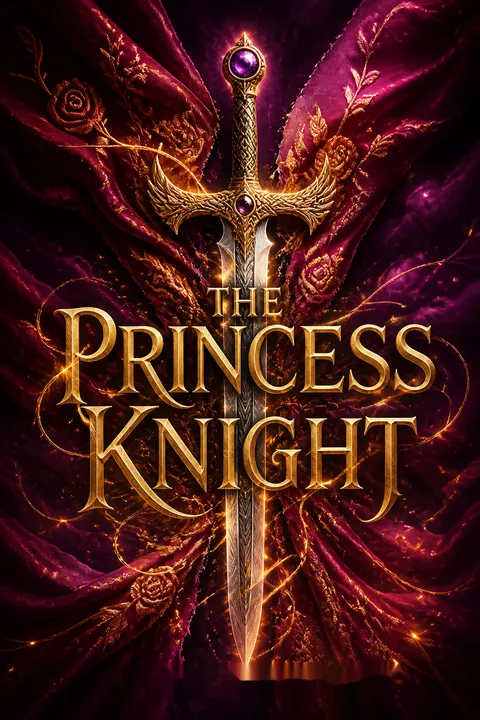


Plot Summary
A Dress for the Alliance
Princess Clíodhna Fionnáin, called Clía, is expected to marry Prince Domhnall of Scáilca, binding two kingdoms and reassuring the powerful Draoi that Álainndore deserves their support. As nobles prepare for his arrival, Clía remakes her uncomfortable betrothal gown with palace tailor Sárait, calming herself through sewing.
Her mother, Queen Eithne, reminds her that Tinelann has already lost Draoi favor and now suffers failing harvests, so this marriage cannot falter. Clía also overhears a warrior report that supplies have vanished from a northern village, with Tinelann suspected.
Chief Ó Connor dismisses the report as a minor matter. The celebration proceeds, but the warning suggests that the court's polished plans are unfolding beside dangers its rulers would rather ignore.
The gown makes Clía's private coping strategy visible: when political expectations feel shapeless and immense, she can alter fabric with exacting hands. Her skill is not trivial decoration; it is evidence of attention, judgment, and a need for agency that the court has trained her to conceal. The stolen supplies establish a parallel failure of attention. While Eithne treats marriage as the kingdom's safeguard, a concrete threat already goes unanswered. The opening therefore makes Clía's coming crisis more than romantic disappointment. It begins in a political culture that prizes appearances while discounting the small warnings that reveal a kingdom's actual condition.
The Betrothal Breaks
On the road to Álainndore, Ionróiran raiders attack Domhnall's party. His new guard captain, Ronan Ó Faoláin, spots the ambush, kills an attacker, and protects the prince as Scáilcan soldiers repel the force. The attack makes Domhnall fear that war is near.
Once he reaches Álainndore, he privately tells Clía he will not marry her, arguing that Scáilca needs a warrior queen. His blunt rejection wounds the princess and turns a lifelong friendship into a political rupture.
Domhnall's warning about Tinelann and the Ionróirans meets resistance from Álainndore's rulers, who refuse to investigate. Clía decides she must prove her own capacity and persuade Domhnall to reconsider. With Ó Connor's help, she secures a place at Caisleán Cósta, the severe military academy he and Ronan once attended.
The attack gives Domhnall a defensible political reason to rethink the marriage, but his choice to define Clía's abilities for her makes the rejection personal as well as strategic. His failure is not simply that he withdraws from an alliance; he withholds the chance for Clía to decide what risks she can accept. Ronan's instinctive protection of Domhnall, meanwhile, establishes a different model of loyalty, one expressed through action rather than royal calculation. Clía's decision to train is born from injury and ambition mixed together. It is not yet freedom from external approval, but it moves her out of the court where others have already judged her.
Blood on the First Day
At Caisleán Cósta, Clía discovers that her title earns no special treatment. General Kordislaen pairs her with Niamh Morrigan, a confident, experienced dalta, and orders an immediate duel with sharp weapons. Clía refuses to attack until Niamh charges; she loses her sword and takes a cut to the arm.
Kordislaen publicly dismisses her performance as unworthy. The next day, Ronan notices that she has not had the wound treated and cleans and bandages it himself.
Their conversation reveals that she came to prove herself, while his own place at the academy is the result of years of training and the general's faith in him. Together they research Tinelann's movements and the lost gifts of the gods, beginning to suspect the Diamhair Mountains conceal more than a forbidden route.
Clía's first failure strips away the courtly protections that once softened judgment. At the academy, good intentions do not substitute for the physical habits she was never allowed to build. Yet the scene does not establish incompetence as identity. Ronan treats the injury without condescension, then takes her curiosity seriously, offering a kind of attention she has rarely received. Their research begins to convert humiliation into inquiry: instead of accepting that she is weak, Clía asks what the political situation actually means. Her first step toward competence is intellectual. She can see patterns before she can wield a blade.
Into the Ghostwood
Kordislaen sends Clía, Ronan, Domhnall, Niamh, and the Oileánstran noble Kían Horgan into the Ghostwood to kill an onchú, a dangerous Otherworld beast. Ronan leads the party and begins teaching Clía sword basics before dawn, while their conversations expose the distance between her palace life and his childhood in a coastal village.
They find the onchú beside a lake, where it injures Ronan and Niamh before the group brings it down. Clía joins the attack rather than freeze, striking the beast as Ronan wounds it and Niamh lands the final shot. The party carries the head back as proof, but the victory offers little comfort. The forest remains perilous, and the task has taught Clía that survival may demand choices she finds morally troubling.
The hunt changes Clía's relation to violence from an abstract matter of royal duty into a bodily fact. She sees an animal killed because it threatens people, yet cannot easily separate necessity from cruelty. The uncertainty is psychologically important: becoming a warrior does not require her to stop feeling the cost of force. Ronan's instruction also establishes a more useful form of intimacy than the court's rehearsed affection. He teaches through patience and physical grounding, while Clía begins to trust her own response under pressure. Her contribution is small beside the others' experience, but it is voluntary, consequential, and hers.
The Mountain's Hidden Light
The group camps in the Ghostwood, where a flock of Sluagh, creatures of the wandering dead, attacks after the fire draws them in. Clía is clawed while defending Niamh, but she kills her attacker and escapes with Ronan and Domhnall.
Rather than risk returning through the forest, the three climb into the treaty-protected Diamhair Mountains. Domhnall argues that the princess's presence makes their investigation politically defensible. Clía encounters a keening bean sídhe, then stumbles into a cave and finds a luminous pink crystal, breaking off a piece.
Ronan and Domhnall return from a nearby camp with letters and supply fragments proving Tinelann has violated the treaty. The party's dangerous detour gives them the first tangible evidence that Tinelann is preparing to move through the mountains.
The Sluagh attack collapses the distance between Clía's lessons and their stakes. She acts before she can perfect a plan, and that instinct saves Niamh. The resulting mountain crossing turns a survival decision into political trespass, but Domhnall's reasoning shows how law can be used as a tool rather than merely obeyed. Clía's crystal discovery is similarly double-edged: she finds something beautiful while fleeing a death omen, without knowing its value. This section links the book's magical and military plots through geography. The mountains are not just a border. They are the concealed space where old power and present ambition converge.
A Princess in Armor
Back at Caisleán, Clía tries to repair her relationship with Domhnall, only to learn at a formal banquet that he intends to marry Niamh. His earlier explanations and new silences make the rejection harder to interpret, while Niamh treats Clía as a rival whose presence threatens her own future.
Ronan finds Clía after she leaves the feast and listens as she admits that she came north hoping to win Domhnall back. He challenges her to pursue the academy for herself instead. Clía shares the story of Ronan's mother, killed in an Ionróiran raid, and the survivor's guilt he has carried since childhood.
They dance privately, and he offers to continue training her. Later, when exhaustion and grief bring them close, they share their first kiss, then step back because Clía remains entangled in her original purpose.
The banquet exposes how thoroughly Clía has confused being chosen with being valued. Domhnall's prospective marriage makes clear that she is not simply waiting for a decision to reverse; she must decide whether the life she pursued was ever truly hers. Ronan does not replace Domhnall as a new source of approval so much as challenge the terms of her striving. Their kiss complicates the challenge, because attraction may also become another route into dependency. The restraint that follows matters: both characters recognize that desire does not erase political obligations, even as their growing trust gives Clía a glimpse of a relationship not organized around performance.
The Curadh's Pin
When Kordislaen tests the remaining daltas, Clía chooses Domhnall as her opponent. She defeats him by reading his feints, disarming him, and using the arena's loose dirt to gain the opening she needs.
Kordislaen keeps her among the few permitted to remain at Caisleán and grants her the title of curadh, a champion of Ríoghain. Domhnall's engagement to Niamh is later formally approved, but Clía finds that the news no longer defines her future. Ronan commissions a sword using the pink crystal Clía found in the mountains, though neither understands its full power.
He presents it as a mark of her achievement, and she names it Camhaoir. As the academy shifts from lessons toward wartime service, Clía begins to value her own skill more than the marriage she once thought she needed.
Clía's victory is meaningful not because it proves she can imitate a conventional warrior, but because she adapts. She observes Domhnall's habits, chooses an opponent she understands, and turns an imperfect arena into an advantage. The tactics are a continuation of the intelligence she displayed before she could fight. Earning the curadh title gives institutional recognition to work she has begun to claim as her own. At the same time, the jewel in Camhaoir introduces a dangerous ambiguity: Clía's new confidence may arise from practice, divine power, or both. The story lets achievement remain real without pretending that talent develops in isolation from circumstance.
Poison in the Castle
During a night patrol, Clía takes the wrong passage through Caisleán's underground tunnels and overhears an officer ordering a task completed before dawn to protect classified information. The next morning, she finds Sárait collapsed in a corridor, her skin gray and her lips blue.
Kían kneels beside the unconscious tailor, while Kordislaen argues that the academy cannot spare resources for her. Clía and Kían refuse to let the healer be turned away, forcing the general's soldiers to lower their weapons.
A Draoi healer gives Sárait a limited dose of cneasú extract, which stabilizes her but does not cure her. Clía realizes that the poisoning may be connected to the secret order she heard. Her friend's vulnerable state makes the academy's chain of command feel newly dangerous.
Sárait's poisoning changes the moral scale of Caisleán's strictness. Kordislaen's priorities may be legible as wartime triage, but Clía sees that institutional efficiency can become a way to abandon people who lack military rank. Her defiance is strategic as well as emotional: she does not attack the general, but refuses to let his authority convert indifference into procedure. The overheard order becomes a test of interpretation. Clía has learned that court whispers can reveal what formal statements hide, and now she must decide whether to trust her own reading even when the consequences reach beyond her friendship.
Venom Names the Traitor
As Sárait remains unconscious, Kían searches healing texts for a cure. Clía spots a fresh puncture on her friend's wrist and recognizes the likely cause: venom from the onchú whose head the recruits brought back. Kían recalls an antidote, gathers the ingredients, and directs the healer to prepare it.
Sárait wakes after drinking the mixture and remembers finding a letter in Kordislaen's clothes while mending them. Its signature belonged to Chief Cuilinn of Tinelann, and its contents concerned troop movements toward Caisleán.
Clía recognizes the name from her studies and concludes that Kordislaen is collaborating with Tinelann. The clue gives her a motive for the poisoning: Sárait had seen evidence that could expose the general's plans. Clía and Niamh begin considering how to protect the castle's noncombatants.
This revelation arrives through skills the military hierarchy might dismiss. Kían's memory and reading, Clía's attention to a tailor's familiar wrists, and Sárait's knowledge of what she found in a pocket together solve what brute force could not. The sequence also revalues care work. Sewing, bedside vigilance, and medical study become forms of intelligence that keep the institution alive. Sárait's awakening does not restore safety; it confirms that someone within the keep is willing to silence witnesses. The threat is therefore both external and intimate, and the characters must stop treating loyalty to an institution as proof that the institution deserves it.
Ó Connor's Other Allegiance
Kordislaen sends a small party, including Clía, Ronan, Niamh, and Commander Ó Dálaigh, to find missing scouts near the Tinelann border. The scouts are captured, and Ronan, Ó Dálaigh, and Niall MacCraith soon become prisoners too.
Clía rejects a plan to abandon them and returns with Niamh and the surviving commander. They free the captives, but the alarm brings a fight. Chief Ó Connor appears with Tinelann's forces and admits he wants to replace Clía's neglectful parents with a stronger regime.
He attacks Ronan, and Clía steps between them. When Ó Connor prepares to kill Ronan, she strikes him with Camhaoir. He dies at her feet. Clía and the survivors escape with Ó Dálaigh's body, carrying both proof of betrayal and the trauma of her mentor's death.
The rescue forces Clía to choose loyalty by action, not sentiment. Ó Connor's betrayal is especially destabilizing because he helped raise her and has represented a reliable refuge from her parents' neglect. His political diagnosis may contain truth, but his method makes the people of Álainndore objects to be managed rather than lives to be protected. Clía's fatal strike is not a clean triumph: she saves Ronan and stops an immediate threat, yet loses someone who mattered to her. The scene breaks the fantasy that moral clarity will spare her grief. Her agency is real, and so is its cost.
Ronan Follows the General
After the mission, Kordislaen tells Clía that he kept her at Caisleán for her title, not her ability, and dismisses her as a nuisance. Convinced she has been used by everyone she trusted, she packs to return home and shuts Ronan out, even after he admits his love. Ronan then accompanies Kordislaen away from the keep, hoping to learn the general's plans.
In a Tinelann camp, he sees Chief Cuilinn welcome Kordislaen and hears that their invasion force will attack Caisleán. The general has also positioned Ronan near Domhnall to exploit his access to the prince. Ronan slips out at night, but Kordislaen catches him. Ronan wounds his mentor and escapes, refusing to kill the man who shaped his life.
Kordislaen's cruelty works because it targets the exact wound Clía has been trying to heal: the fear that others tolerate her only for what her title can provide. Ronan's disclosure of love cannot reach her through the accumulated evidence of betrayal. His own choice to follow Kordislaen repeats the old pattern of accepting the mentor's authority, but this time he gathers information for himself and eventually acts against him. The escape marks a break from gratitude as an obligation. Ronan can recognize what Kordislaen gave him without granting the general ownership of his future.
The Keep Chooses Clía
Niamh finds Clía preparing to leave and insists that her rescue of the prisoners proves her worth more clearly than Kordislaen's insult can erase it. Clía agrees to stay hidden in Sárait's fabric room while Niamh updates her on the growing danger.
Ronan returns wounded from the enemy camp and finds Clía still at Caisleán. They apologize for their mistrust and reconcile, then bring his intelligence to Draoi Griffin, Head Commander Brecc, and Captain Duinn.
Ronan confirms the planned attack, while Clía argues that the castle must evacuate its noncombatants and defend its hidden entrances. The leaders accept their warning and begin preparations. Clía stays not because Kordislaen approves of her, but because her choices have already helped keep people alive.
Niamh's intervention offers Clía a form of recognition distinct from romance or family approval: a fellow warrior evaluates what she has done and refuses to let a powerful man's verdict define it. The change is not instantaneous confidence. Clía still needs shelter and time, but she can separate Kordislaen's motive from the concrete consequences of her actions. Ronan's return then restores trust through accountability rather than persuasion. Together they persuade the academy's remaining leaders, and Clía's political voice acquires practical force. The keep begins to treat her as a participant because she brings usable judgment, not merely because she is a princess.
The Castle's Hidden Door
When Tinelann's troops approach, Draoi Griffin hides Clía and Domhnall in a secret storage chamber to protect the heirs. The battle begins while they are shut inside. Clía calls for Murphy, her now enormous dobhar-chú, who breaks the closet door and helps her locate the hidden release in the wall.
She and Domhnall leave hiding to arm themselves. Clía retrieves Camhaoir and wears the lightweight protective garment she made with Sárait's help. At the front, she fights through the invading soldiers and feels the jewel's strange energy sharpen her strength.
A tunnel collapses, trapping Ronan's troop beneath the castle. Clía finds Ronan among the wounded and learns his men brought the passage down to stop Tinelann from entering. She leaves him with the healers and heads for Kordislaen.
The hidden room embodies the protection that royal status can provide, but Clía refuses to mistake shelter for responsibility fulfilled. Murphy's blunt solution, breaking the door rather than understanding its mechanism, contrasts with her careful effort to find the concealed release; both forms of resourcefulness matter. Her self-made garment and the magical sword also bring domestic craft and divine power into the same battle, refusing the idea that preparation belongs only to formal military training. The tunnel collapse protects the keep while injuring its defenders, a stark reminder that every strategic choice has a human cost.
The Jewel Turns the Battle
On the western cliffs, Clía finds Kordislaen directing the battle from horseback as Ionróiran reinforcements approach by sea. She taunts him into dismounting, then fights him in the protective garment she designed from Draoi-blessed iron-thread fabric. His blade cannot pierce it.
Clía breaks his wrist, pins him, and kills him, ending his command of the invasion. Meanwhile, Ronan and Domhnall lead warriors into the cliffside passage to stop the Ionróirans from entering the keep. Murphy attacks their boats from the water.
Ronan's sword swings with the same uncanny force Clía felt from Camhaoir, but MacCraith dies protecting Domhnall. Kordislaen's defeat weakens Tinelann's resolve, and the invaders retreat. Clía returns to the battlefield to help carry the dead, including MacCraith, into the castle.
The climax resolves the book's central conflict over who gets to define strength. Kordislaen has used authority, reputation, and manipulation to control the people he claims to serve; Clía defeats him through preparation, tactical provocation, and a garment made from knowledge others might call ornamental. The jewel amplifies her, but it does not make the choices for her. At the same time, victory cannot be measured by the general's death alone. MacCraith's sacrifice and the many bodies Clía helps carry refuse a triumph without remainder. The battle ends one assault, not the grief or political labor that follows.
A Future Without Permission
After the battle, Clía and Ronan help Caisleán recover while the surviving leaders wait for Scáilca's response. Sárait returns, reunited with Kían, and Domhnall prepares to marry Niamh. Though Clía must return to Álainndore, she no longer sees that journey as defeat. Domhnall gives her a Caisleán curadh pin and urges her not to let fear keep her from Ronan.
On the morning of her departure, Clía gives Ronan his own pin and tells him she is leaving. He accepts her duty to her kingdom, then agrees to go with her when she asks. She offers him the vacant chief of war role in Álainndore. They depart together, with Camhaoir and Murphy, carrying grief, hard-won trust, and a shared political future.
The resolution returns Clía to the kingdom she left, but not to the self she performed there. She can now choose departure without interpreting it as surrender, and invite Ronan without assuming his answer. Domhnall's support matters because it closes their old conflict through recognition rather than romantic rivalry. The two cloak pins make achievement portable: Caisleán's training and its community will travel with them into Álainndore's political work. Their partnership is not an escape from duty. It is a proposal to distribute duty differently, joining personal desire to the repair of a kingdom.
Epilogue
Three months later, Ronan and Clía sit by a quiet palace lake while Murphy splashes nearby. As they prepare to welcome Ronan's father, Clía gives Ronan a cane fitted with a concealed sword, designed to support his chronic pain without taking away his ability to defend himself. He accepts the gift as evidence that she has listened to what his body needs.
Their new life is busy with court meetings and preparations for war, but they still train together and steal quiet hours. Tinelann and the Ionróirans have not returned, though Ronan doubts the peace will last. For now, he and Clía walk toward family and an uncertain future side by side.
The concealed sword makes the epilogue's tenderness practical. Clía does not praise Ronan for overcoming pain or ask him to hide it; she gives him a tool that accommodates his body while preserving his chosen work. The gift reverses their earlier exchange of Camhaoir, but it is not simply a romantic token. It embodies a more sustainable model of care, where intimacy means noticing constraints and designing around them. The reunion with Ronan's father also begins to repair a family bond long strained by guilt and distance. Peace remains provisional, yet the characters now approach uncertainty with support rather than solitary endurance.
Analysis
The Princess Knight makes competence a conflict over who is allowed to define it. Clía enters the story surrounded by judgments that equate femininity, beauty, and courtly skill with weakness. The academy appears to offer a simple alternative, but Kordislaen's hierarchy is no more neutral than her parents' court. It values discipline while using humiliation and secrecy to control the people it trains. Clía's development therefore does not consist of abandoning fashion, sewing, or sensitivity in favor of violence. She brings observation, design, memory, and emotional perception into martial life, then learns to combine those capacities with physical skill.
The romance works best when it tests the same problem. Clía initially treats Domhnall's approval as a route to safety and public worth. Ronan matters because he recognizes her without demanding that she perform a role, but their attraction does not automatically solve the pressures between them. Both must learn that loyalty is not self-erasure. Ronan's devotion to Kordislaen becomes dangerous when gratitude turns into obedience, just as Clía's devotion to Álainndore becomes dangerous when she refuses to acknowledge her own wishes. The story allows duty to remain meaningful while arguing that duty without consent can become another form of coercion.
Its magical objects and creatures make that argument material. Camhaoir's power reinforces Clía's fighting, but the jewel does not choose her tactics or spare her from grief. Murphy's transformation from a rescued pup into a battle ally likewise grows from an earlier act of care. The novel repeatedly connects attention to survival: Clía notices a missing supply report, a puncture on Sárait's wrist, and the meaning of an enemy's movements. What courts dismiss as peripheral knowledge becomes indispensable. The ending's promise is not that war has ended or that grief can be repaired. It is that Clía and Ronan can face uncertain politics without surrendering either their judgment or their capacity to care for one another.
Review Summary
The Princess Knight receives mixed reviews averaging 3.67/5 stars. Readers praise its Legally Blonde-inspired premise, diverse representation, chronic pain portrayal, and protagonist Clía's character growth. Many appreciate the Irish folklore elements and found family dynamics. Common criticisms include the romance lacking chemistry and tension, juvenile writing style despite adult marketing, slow pacing, and Clía's unpreparedness for military academy. Several reviewers note difficulty pronouncing Irish names and wish for a pronunciation guide. The ending feels incomplete to many, who hope for a sequel.
People Also Read




Characters
Clíodhna Fionnáin
The self-made princessClía is Álainndore's heir, raised in a court that prizes polished appearance and political usefulness. She reads rooms closely, remembers what people reveal when they think she is not listening, and uses clothing design and sewing to regulate her thoughts. Her sensitivity to noise, texture, and scrutiny shapes how she navigates court life, but it does not make her passive. Clía wants to be admired and to protect her kingdom, and at first she treats Domhnall's approval as proof that she can do both. Her curiosity, persistence, and willingness to revise her plans become as important as sword training. She is most herself when she stops performing certainty and makes decisions from her own observations.
Ronan Ó Faoláin
The relentless captainRonan is a young Scáilcan warrior, newly appointed captain of Prince Domhnall's guard. He has trained since childhood and is known for quick judgment, tactical discipline, and a habit of pushing past pain. An Ionróiran raid killed his mother when he was a boy, leaving him with grief, guilt, and chronic physical pain that he rarely discusses. Kordislaen's mentorship gives Ronan a path to advancement, but also teaches him to measure his worth through service and achievement. His loyalty to Domhnall is deep, and his growing trust in Clía asks him to distinguish care from obedience. Ronan's courage is real, though his self-neglect can endanger him and those who rely on him.
Domhnall Lochlainn
The duty-bound princeDomhnall is the prince of Scáilca and Ronan's closest friend from childhood. He is witty, socially deft, and ambitious about becoming a capable ruler, but he can use charm to evade difficult honesty. His longstanding friendship with Clía gives their political arrangement a personal history, which makes his decisions harder for both of them. Domhnall believes a ruler must place the kingdom first, yet he does not always recognize when that conviction becomes a way to deny other people agency. His bond with Ronan is built on shared work and mutual dependence. Beneath the confident prince is someone uncertain whether sacrifice makes him responsible or simply leaves him lonely.
Niamh Morrigan
The formidable warriorNiamh is a Scáilcan noble and an accomplished fighter, trained from childhood by a father who expected her to protect her family. She enters Caisleán with a guarded manner and a clear sense of what she must accomplish. Niamh can be intimidating because she treats vulnerability as a liability, but her severity is not the same as indifference. She watches people carefully, changes her judgments when their actions warrant it, and understands the political bargains involved in royal life. Her rivalry with Clía begins in suspicion, then develops into a frank and consequential respect. Niamh's strength lies in decisiveness, though she must also live with the desires she places beneath duty.
General Kordislaen
The iron-handed mentorKordislaen is the renowned Scáilcan general who runs Caisleán Cósta, where he trains selected warriors to serve Inismian. He is severe, demanding, and convinced that discipline is inseparable from survival. His reputation carries enormous weight, especially for Ronan, whose future he helped shape. Kordislaen understands how to motivate people through praise as well as fear, and he expects loyalty to flow upward without question. His view of leadership leaves little room for tenderness or dissent. The academy's students must decide whether his standards are a necessary response to danger or a way of making his own authority seem beyond challenge.
Sárait Gráinne
The palace-born tailorSárait is a gifted tailor who leaves her family to pursue her own work and becomes Clía's friend at the Álainndoran palace. She is observant, funny, and direct about the emotional realities Clía tries to disguise. Her craft gives her both a livelihood and a language for self-expression, while her practical kindness helps Clía feel less alone at Caisleán. Sárait is not a warrior, but she understands that skill and courage take many forms. Her attraction to Kían draws out a shyer side of her, without diminishing her independence or professional competence.
Chief Ó Connor
Clía's trusted guardianÓ Connor is a veteran of Caisleán and a close friend of Clía's father, having helped raise the princess while her parents focused on court. He offers her affection, frank advice, and the grounding ritual of fidchell. His practical knowledge of Álainndore's affairs makes him a bridge between Clía and the work of governing. He can be protective, but his loyalty to the royal family does not prevent him from seeing the kingdom's weaknesses. To Clía, he represents a rare kind of family: chosen, reliable, and built through years of attention.
Kían Horgan
The irreverent nobleKían is an Oileánstran noble and dalta whose humor can fill a tense room, though their lightness does not prevent serious commitment. They are a capable warrior with a keen memory and a strong interest in the history and legends of Caisleán. Kían is attracted to Sárait but initially hesitates to reveal it, wary of making a delicate connection uncomfortable. Their loyalty becomes especially visible when they defend Sárait and search for a cure. Kían's warmth is not mere comic relief; it is a social skill that helps people endure fear without pretending the danger is gone.
Draoi Griffin
The keeper of knowledgeGriffin is a Draoi scholar and instructor at Caisleán Cósta, teaching military history alongside the religious and magical traditions of Inismian. He values the knowledge preserved in texts and helps students connect old myths to present dangers. Unlike Kordislaen, Griffin's authority comes through explanation and institutional service rather than intimidation. He is a steady presence when the academy's leadership is in question, and he takes Clía's observations seriously. His role links the training ground to the broader responsibilities of the Draoi and the fragile balance between the kingdoms.
Murphy
The growing dobhar-chúMurphy is a young dobhar-chú whom Clía rescues from the shore near the palace. Though his kind can be dangerous, he is affectionate with her and quickly becomes part of her daily life. He grows far larger than she initially expects, and his appetite and enthusiasm create small disruptions at court and at Caisleán. Clía's decision to care for him reflects her tendency to notice a vulnerable creature where others see only a threat. Murphy's loyalty is unmistakable, even when his idea of helping involves force rather than finesse.
Queen Eithne
The image-conscious queenEithne is Clía's mother and queen of Álainndore. She is polished, commanding, and skilled at holding the court's attention. She views the proposed marriage to Domhnall as a safeguard for the kingdom and expects her daughter to fulfill her public role with grace. Eithne's standards give Clía a powerful model of royal competence, but also make approval feel conditional on flawless performance. She tends to prioritize symbolic gestures and political alliances over the small daily responsibilities that a kingdom requires. Her relationship with Clía is marked by both admiration and pressure.
King Tighearnán
The gentle kingTighearnán is Clía's father and the king of Álainndore. He is patient and warm, especially beside Eithne's sharper public presence, and he shares Clía's love of fidchell. He often tries to ease conflict rather than confront it directly, a habit that can leave harder decisions to others. Tighearnán cares for his daughter but does not consistently give her a meaningful voice in the political arrangements made around her. His gentleness is sincere, yet good intentions alone cannot compensate for a ruler's distance from the kingdom's practical needs.
Niall MacCraith
The watchful LiricranMacCraith is a Liricran warrior and dalta, known for choosing his words carefully and questioning assumptions others accept. He observes the behavior of Caisleán's leadership and takes the possibility of compromised information seriously. His marriage and ties to Liricnoc give his choices a life beyond the academy's military hierarchy. MacCraith values loyalty, but he does not confuse loyalty with silence when he believes a commander is endangering others. His skeptical intelligence makes him a useful counterweight to Ronan's trust in the general.
Commander Ó Dálaigh
The steady field leaderÓ Dálaigh is an experienced commander assigned to lead the recruits on their Ghostwood quest and later on a dangerous border mission. He is practical, disciplined, and accustomed to making decisions with incomplete information. His manner is less theatrical than Kordislaen's, and he offers the younger warriors a model of leadership rooted in field experience. Ó Dálaigh's presence gives the missions structure, while his willingness to work alongside less experienced soldiers makes his authority feel earned.
Chief Cuilinn
Tinelann's military chiefCuilinn is a prominent Tinelannian leader whose authority and strategic judgment shape the kingdom's military efforts. She is confident among her soldiers and speaks as someone accustomed to command. Her priorities reflect a kingdom under pressure, where expansion and survival have become closely entangled. Cuilinn's dealings with other powers show how political desperation can turn old agreements into obstacles rather than safeguards.
King Cathal
Scáilca's distant kingCathal is Domhnall's father and king of Scáilca. He rarely appears directly, but his expectations shape Domhnall's decisions about succession, marriage, and the defense of their kingdom. His authority reaches the story through letters, policies, and the pressure to secure a future ruler. For Domhnall, the king's approval is both a political necessity and a measure of whether he is ready to inherit the throne.
Chief Lyons
Scáilca's senior commanderLyons is a senior Scáilcan leader and a former Caisleán figure with ties to Kordislaen. His visits and decisions connect the academy to the royal chain of command. Lyons represents the strategic authority that must coordinate Scáilca's response to threats, even when information is incomplete and the kingdom's forces are spread thin.
Plot Devices
The Diamhair Treaty
A peace with a fault lineThe treaty forbids the kingdoms from using the Diamhair Mountains as a route for military movement, preserving a long peace among Inismian's five kingdoms. Reports of Tinelannian activity near the range and evidence found in an abandoned camp turn that agreement into the story's central geopolitical pressure point. The treaty also shapes Domhnall's proposal to investigate: the heirs of Scáilca and Álainndore can make the mission politically defensible. Its protections prove fragile when a kingdom can use foreign allies to move where its own soldiers are forbidden.
The Treibh Anam's gifts
Myth made materially dangerousThe gods of Inismian left powerful gifts associated with the kingdoms, though some have been lost for centuries. The missing Ríoghain's Jewel is believed to have been hidden in the Diamhair Mountains after an ancient king tried to claim divine power. Clía finds a pink crystal there, and Ronan later mounts it in Camhaoir. The weapon's uncanny force becomes important in battle, giving the old stories immediate political consequences. The gifts are not simply lore: they raise the stakes of who can find, wield, or exploit power.
Caisleán Cósta
A school becomes a fortressCaisleán trains warriors under Kordislaen and preserves Draoi learning, but its role shifts as war approaches. The academy's trials expose Clía to physical danger, while its cull determines who is trusted to remain. Its hidden passages and escape routes later become essential to the defense of the keep. This transformation makes the setting more than a training ground: the institution that shapes the characters also becomes the prize Tinelann hopes to seize and the place where their competing loyalties are tested.
Camhaoir
A jewel becomes a bladeClía's mysterious crystal is first a small souvenir from the mountains, then a gem fitted into a sword Ronan has made for her. Its magical force emerges under the pressure of combat, strengthening the person who wields the weapon. Camhaoir links Clía's discovery, Ronan's care, and the myth of Ríoghain's Jewel. Its power does not replace skill or choice, but it changes the balance of particular fights and makes secrecy essential. If the kingdoms learn that the lost gift has resurfaced, the jewel could become another cause for war.
Murphy the dobhar-chú
A rescued creature returnsClía rescues Murphy when he is small and vulnerable, despite warnings about the danger of his species. As he grows, he remains attached to her and becomes both companion and formidable protector. His presence reflects Clía's willingness to look beyond a frightening reputation, while his later actions affect the battle in concrete ways. Murphy also brings domestic life into the academy's harsh routines: he swims, hunts, disrupts training, and offers Clía a continuing bond with home as the political world grows more violent.
Download PDF
Download EPUB
.epub digital book format is ideal for reading ebooks on phones, tablets, and e-readers.








