

Plot Summary
Prologue
Maris Casperia frames the tale as a story whose beginning may lie in the Philosopher, the failing harvests, or an ancient war. She chooses a more intimate starting point: the shadow of wings crossing a temple floor, beside ink and parchment and the first trace of a secret.
The prologue promises that the city’s collapse is only part of what must be explained. The deeper mystery concerns who set its final events in motion, and what Maris herself will become before the story ends.
The prologue makes storytelling itself part of the plot. Maris knows the ending has already altered how the beginning should be understood, but she resists turning the city’s ruin into a simple legend about war or divine punishment. By locating the first clue in a temple, beside records and a winged shadow, she links political history to sacred authority and hidden information. Her choice to tell the story from the point where her own ending began also signals that private experience will contest the official histories Isara writes about itself.
Three Bodies at Dawn
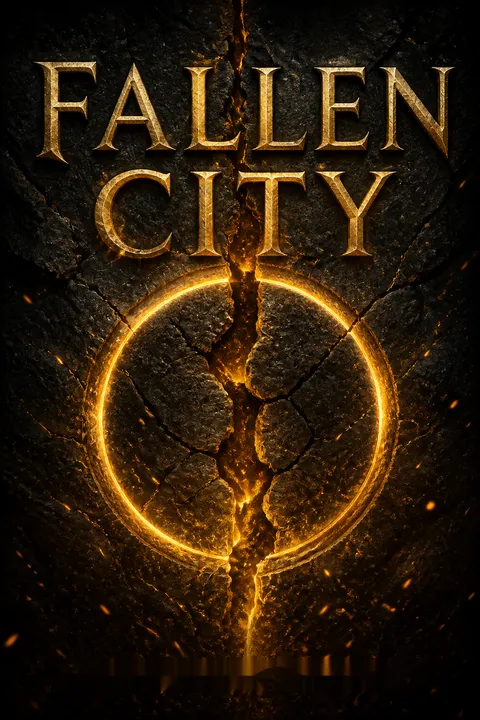
Six months into Isara’s rebellion, Centurion Luca Matius trains recruits whose cheap blades and desperate need for rations make them unlike the privileged soldiers he once knew. A glowing ring above his head marks him as chosen by the gods, though he has little faith that the mark can save anyone. Then the camp empties as soldiers rush toward the Sophanes River.
Three magistrates and a daughter have been hanged beneath the south bridge by Centurion Roskia, whose private executions are feeding the rebels’ appetite for vengeance. Luca searches the dead women for Maris, the woman he left across the river. She is not there, but the crowd’s chant makes clear that the remaining magistrates are being counted down.
The bridge turns political conflict into a public arithmetic of death: every corpse reduces the number of ruling families while increasing the rebels’ sense that violence is already law. Luca’s panic is intensely personal, but his rank makes it politically consequential. His visible divine mark inspires reverence among people he is supposed to lead, even as he doubts that any god will protect them. The scene establishes the novel’s central instability: Luca must command a revolution whose symbols are becoming more powerful than his intentions, while the person he most wants to protect remains on the opposing bank.
The First Feast
Before the rebellion, sixteen-year-old Luca arrives at the First Feast with his dying uncle, Kastor Matius, who presents him as a future political asset and possible marriage partner. Luca has been raised in the Lower City, but Kastor expects him to inherit a powerful Forum seat. Across the crowded villa, Luca notices Maris, the daughter of Magistrate Casperia, whose jeweled clothes conceal a life managed by political expectations.
When Luca defends his teacher, the Philosopher Vitrasian, Maris follows him into the garden and sees Kastor strike him. She gives Luca her green scarf for his split lip, then leads him down the garden wall and away from the feast. Their first private exchange begins with suspicion, not trust.
Their attraction begins in a scene where both are being displayed as political property. Kastor treats Luca as a useful heir, while Maris’s expensive clothing and public role conceal how little freedom she has. Her response to Luca’s beating is not simply romantic sympathy. She recognizes the violence that power can hide behind polished manners. Luca, however, initially reads her privilege as evidence that she is complicit in the system. Their connection starts through a misreading that each must revise, giving the romance an intellectual and political foundation rather than making desire a refuge from the city’s conflicts.
Saltwater and Schemes
Luca returns Maris’s scarf, and she keeps seeking him out despite her mother’s political rivalry with Kastor. Away from the villa, Luca takes Maris to a secluded beach and teaches her to enter the sea, a world beyond the Citadel’s walls that she has never known. In the water, they admit what they would change: Luca would end inherited seats in the Forum, while Maris would dissolve its factions.
Their shared political hopes deepen their attraction, but Luca’s questions about messages between Vitrasian and Priestess Ophelius make Maris suspect that he has approached her for information. He insists his concern is for Vitrasian, not for leverage. When he asks to know her given name before kissing her, Maris tells him it is Maris.
The beach offers a temporary space outside the institutions that have assigned both characters their identities. Luca’s proposal to end inherited office and Maris’s wish to dissolve factions are not abstract ideals: each targets the mechanism that keeps Isara’s ruling families in power. Yet even here, intimacy is vulnerable to political suspicion. Luca’s questions make Maris fear she is being used, while his bluntness exposes how little he knows how to perform courtly manipulation. Her given name becomes an act of trust, marking a private bond that the city’s family names will later make dangerous.
The Empty Harvest
An unauthorized leaflet reveals that Isara’s harvests have failed for years, though the Consul and senior magistrates have concealed the dwindling grain. At a crowded tribunal, the Forum admits the deception and votes to cut the ration dole, reducing the Lower City’s share by half while the Citadel’s falls by a quarter.
Maris’s mother, Magistrate Casperia, unexpectedly supports the measure, and the unanimous vote helps the Consul present elite control as collective responsibility.
The crowd outside erupts, and the city’s fragile order breaks into violence. Luca and Maris understand that the ballot has not solved famine; it has made the injustice visible. Their reform plans now face a crisis larger than factional politics, with war becoming the likely answer to hunger.
The grain vote makes scarcity political rather than natural. Isara’s rulers have not merely failed to feed the city; they have managed information so that the poor cannot judge the danger or prepare for it. The ration cuts expose how the language of shared sacrifice preserves unequal protection. The unanimous decision is especially corrosive because it creates the appearance of consent while directing the heaviest cost toward the Lower City. For Luca and Maris, the event punctures their confidence that good intentions can reform the Forum from within. The rebellion grows from a material betrayal that official procedure cannot repair.
Vows Before the Fire
As Kastor’s illness worsens, Luca rejects the future his uncle has arranged and tells Maris he will not inherit the Matius seat. Maris sees a chance to break the Forum’s entrenched alliances: if they marry, one family line and its seat will disappear, weakening the faction system.
Luca agrees only if their vows are genuine, not merely a political maneuver. They marry secretly at the Illyrium, where Priestess Ophelius oversees the ceremony and Luca takes Maris’s family name.
The act binds them emotionally and changes the legal structure they hoped to challenge. Luca later confronts dying Kastor with the new name, making clear that the Matius line will end with him. Their private reform is brave, but it cannot stop the public crisis gathering around them.
The marriage makes political identity bodily and intimate. A family name is not just a label in Isara; it determines citizenship, inheritance, and access to power. By changing his name, Luca turns their romance into a direct intervention in the Forum’s structure. Yet the ceremony also reveals the limits of personal solutions. They can alter one lineage, but the larger institutions remain intact, and their vows place them in greater danger as the crisis intensifies. Their choice holds both meanings at once: a sincere commitment to each other and an attempt to make love perform political work.
Vitrasian’s Last Lesson
Vitrasian stages a play that portrays the dying fields as evidence that Isara’s rulers have lost divine favor. The Consul answers by accusing her of treason and asking the Forum to condemn her.
Maris’s mother turns her judgment stone in favor of execution, and a legionnaire kills Vitrasian before the packed gallery. Luca reaches her too late, then takes a sword and kills two soldiers. A golden mark appears above his head as the Forum watches.
Vale, the Consul’s son and Luca’s closest friend, frees Luca from the catacombs with a band of legionnaires; they kill guards and flee across the Sophanes. Maris visits Luca in prison before he escapes, but he leaves without taking her. His choice to cross the river begins the rebellion and breaks their shared future.
Vitrasian’s death converts the conflict from institutional dissent into irreversible violence. Luca’s response is both grief and political action, but the divine mark that follows gives the act a meaning he cannot control. The rebels interpret him as a sign, even though he had no plan to become their emblem. Vale’s rescue turns personal loyalty into organized defection, while Luca’s departure leaves Maris on the side of the institution that condemned her mentor. The scene binds the novel’s central motifs: blood becomes both the price of political change and the material from which competing claims of divine favor are made.
A Seat Across the River
Months into the siege, Maris’s mother dies by suicide, and Maris is required to take her vacant magistrate seat. Her uncle Nej, the Consul’s senior scribe, prepares her for the tribunal, where she swears her oath beneath the eyes of the remaining Forum. Across the river, Luca has risen to centurion while Vale commands the New Legion.
Luca’s new tribune, Théo, notices how closely he watches Maris’s villa for its evening lamp. Vale tries to restrain Roskia, whose soldiers keep killing magistrates fleeing the Citadel. Meanwhile, falcons carrying blank, godsblood-coated messages leave the Citadel’s aviary. Luca and Vale suspect the Consul is communicating with someone beyond the city, even as the rebellion approaches its final river crossing.
The paired political promotions sharpen the lovers’ separation: Maris gains a seat in the institution Luca is trying to overthrow, while Luca gains military authority inside a movement he increasingly struggles to control. Their new titles do not restore their old agency; they make both more visible targets. The falcons introduce a second, concealed channel of power, suggesting that the war’s apparent two-sidedness may be misleading. Théo’s attention to Luca also begins to turn protection from a formal duty into a relationship built on observation and trust. The city’s siege is no longer only about who controls the river, but about what its leaders are hiding.
The Consul Says No
At a private dinner marking her induction, Maris asks Consul Saturian to negotiate a peaceful transfer of power with the New Legion. The Consul refuses, treating the rebels’ cause as treason and insisting the gods will deliver victory to the Citadel. He probes Maris about her temple training and the rituals she learned from Ophelius, questions that leave her uneasy.
Her uncle Nej offers no help, and Maris recognizes that the Consul will not save Luca or the city through negotiation. Instead of accepting the role of a compliant Magistrate, she decides to act without permission. She removes her jewels and crosses into the Lower City, bribing Zuri, Iola’s brother, to help her reach the people and information she needs.
Maris’s failed appeal marks a shift from inherited political participation to deliberate disobedience. She has entered the Forum hoping that its procedures might still prevent a massacre, but the Consul treats procedure as a tool he can invoke or discard. His interest in ritual knowledge hints that her temple training has made her useful for reasons beyond her vote. Nej’s silence leaves her with no trustworthy guide inside the Citadel. Crossing the river is therefore both a practical mission and a rejection of the identity the Forum has just assigned her. Her first act as Magistrate is to move beyond its permission.
Iola’s Hidden Household
Zuri guides Maris beneath the bridge and through Lower City streets to Iola, the servant who raised her. Maris finds Iola living with a newborn daughter, Muriel, and understands that Iola has built a family beyond the Citadel household. Maris asks for help entering the New Legion’s camp to see Luca. Iola initially refuses, fearing the soldiers will kill them both, but relents when Maris will not leave.
Before Iola can escort her, a patrol spots Maris without a medallion and pursues her through the streets. Soldiers drag her to the Illyrium, where Luca recognizes her. He orders Théo to hide and tend to her, risking discovery while Roskia arrives for a meeting. Maris has crossed the river, but now she is trapped among Luca’s soldiers.
Iola’s baby gives Maris a vivid glimpse of a future not organized around the Citadel’s bloodlines. The discovery unsettles her because the woman who mothered her has become a mother in her own right, with a household that can survive without Maris’s protection. Yet Iola still chooses to help, and that choice makes care an active risk rather than a sentimental memory. Maris’s capture also reverses the river crossing: she has entered Luca’s world, but the New Legion’s suspicion means she cannot simply resume their relationship. Luca’s decision to conceal her tests whether loyalty can survive inside a military hierarchy.
The Blank Falcon Messages
In Luca’s tent, Maris asks him to negotiate a peaceful transition for the Citadel. He explains that the New Legion has already prepared terms and asks whether she knows why the Consul’s falcons carry blank parchment. Luca sends her back with Zuri after she agrees to help uncover the messages. In the Hall of Scribes, Maris traces repeated requests for a myth about Hermaus, then steals the old scroll that can serve as a cipher key.
She copies the hidden text and learns from Ophelius that the message announces Valshad’s approach. The revelation changes the war’s scale: the Consul is not waiting for divine rescue but summoning Isara’s old enemy. Maris’s knowledge is now a possible bargaining chip, and a danger to everyone who knows it.
The blank parchment turns literacy into a form of power. The messages are not invisible because they contain nothing; they are hidden behind a cultural system of sacred texts, language, and access to archives. Maris’s years as a temple novice give her the interpretive tools that the military cannot supply. Her investigation also complicates her return to Luca: she becomes valuable to the New Legion, but only by using the knowledge cultivated inside the regime she opposes. The discovery of Valshad reframes the civil war as a possible prelude to invasion, making the old conflict between Isara and its conquered rival active again.
The Gifted Scribe
The Consul calls a tribunal and proposes blood rites to force Ophelius to transfer her godsblood. He appoints Maris to perform them, exploiting her temple training and putting her under public pressure.
Maris casts her judgment stone in favor, then confronts Nej and discovers a luminous divine stylus hidden among his possessions. The stylus explains how the Consul’s secret messages were written, and it reveals that Nej, not merely the Consul, has been shaping events. Maris brings the decoded message to Ophelius in the catacombs.
Ophelius confirms that Valshad is coming. Maris gives her the ceremonial knife rather than help the Consul perform the rites, allowing the dying Priestess to choose her own death and leaving Isara without its last living source of godsblood.
The chapter’s moral hinge is Maris’s choice to let Ophelius die rather than let the Consul turn her into a resource. That choice is not clean or consequence-free; it removes the last possible source of godsblood and may cost Isara its leverage. Yet the rites themselves are a form of state violence disguised as sacred duty. Maris’s action distinguishes consent from extraction, while the divine stylus complicates her old belief that gifts necessarily validate their bearers. Nej’s possession shows that a sacred object can magnify ambition just as readily as wisdom.
Valshad Over the Walls
As Maris returns to her villa, New Legion soldiers search for her. Théo kills the men who break into the house, then helps her prepare to flee. Before she can cross back to Luca, horns sound beyond the city walls.
Valshad’s army fires ballistae into the Lower City, damaging buildings and killing civilians. Luca and Vale organize the defense while the New Legion’s archers and scorpios answer from the walls. Luca is wounded by an arrow, but keeps fighting.
When Valshad’s assault pauses and its troops begin constructing a siege camp, he understands that the army intends to conquer Isara, not merely weaken the rebels. The attack lands while the New Legion and the Citadel are still fighting over surrender, turning their civil war into a desperate defense of the city.
The attack from beyond Isara’s walls exposes the strategic cost of the Consul’s secrecy. The New Legion believed it was seconds from victory, while the Citadel believed it could still bargain from strength; Valshad has prepared for both sides to be exhausted. Théo’s violence protects Maris, but it also shows how quickly the rebellion’s soldiers have made killing ordinary. Luca’s wound makes the larger crisis bodily: he is no longer simply directing violence from a symbolic distance. The pause in Valshad’s attack is more frightening than a retreat, because it reveals a deliberate siege designed to outlast Isara’s depleted forces.
The Citadel’s Red Harvest
As Valshad presses the outer defenses, Roskia’s cohort crosses into the Citadel and massacres magistrates and their families, displaying the bodies beneath their portraits. The Consul and Ophelius are dead, while Maris realizes Nej has used her loyalty to further his own claim to power. When soldiers close in, Maris throws away her magistrate robe and medallion and jumps from a high window into the river.
A golden winged cuff appears on her arm, and she survives the fall. Luca enters the district after the killing, finds blood on Maris’s windowsill, and fears she is dead. At Villa Matius, he discovers her hiding from the New Legion and kills the soldier who has found her. Maris is alive, but the city has made her family name a sentence.
The purge turns the rebellion’s founding grievance into a grim repetition: the New Legion condemns inherited power, then enacts collective punishment against entire families. Maris’s discarded medallion is therefore more than camouflage. It is a refusal to let citizenship and bloodline dictate whether she deserves to live. Her survival through the river depends on a divine intervention that she has no framework to trust, especially after Nej has used a gift as a political weapon. Luca’s frantic search makes the cost of his rebellion intimate again, but Maris’s accusation that he helped create this violence prevents reunion from becoming absolution.
Roskia Claims the Forum
After saving Maris, Luca confronts Roskia in the Forum, where the centurion sits in the Consul’s chair. Roskia admits that he ordered the executions, arguing that the New Legion needed vengeance and that Luca’s restraint endangered its loyalty.
Vale reveals that the Consul died in a fire he set in the granary, taking the city’s grain and the remaining prospect of an easy settlement with him. Roskia’s certainty falters, but Luca cannot undo the massacre by threatening him.
Valshad’s General Viria then demands the Priestess the Consul promised, only to learn that Ophelius is dead. Vale offers the one remaining leverage he has: safe passage for Isarians in exchange for a chance to leave the city. Valshad accepts, while warning that its conquest is not over.
Roskia is not an aberration outside the rebellion; he is the consequence of a movement that has treated vengeance as proof of political authenticity. His accusation wounds Luca because it identifies a real contradiction: Luca has helped unleash force without being able to control what its followers do with it. Vale’s revelation of the Consul’s death removes the old authority but does not restore food or safety. The bargain with Valshad is therefore made from weakness, using the empty promise of a Priestess as leverage. The scene rejects triumphal closure: removing one ruler cannot dissolve the violence and scarcity built into the city.
The Last Crossing
At Villa Matius, Luca and Maris find a brief tenderness again. Maris sees the braid of her hair tied around his wrist, and Luca admits that she is the only faith he trusts. They decide to leave together when Valshad opens the gates, but Luca later tells Vale he will remain with the New Legion and asks him to get Maris out.
At the gates, Vale presents himself as acting Consul and strips Maris of citizenship, forcing her to surrender her medallion. Théo gives up his own medallion and chooses to accompany her. Maris leaves believing Luca has abandoned her again, though his message makes clear how deeply he loves her. Twenty-six days later, she sees Valshad recruiting exiles and raises her hand, choosing a route back toward Isara and Luca.
The resolution gives Maris neither a secure home nor a settled romance. Luca sends her out because he believes staying is necessary, but his unilateral choice repeats the wound that has defined their separation. Vale’s formal expulsion converts the departure into a political act, while Théo’s voluntary renunciation of citizenship shows that allegiance can be chosen rather than inherited. Maris’s later decision to answer Valshad’s recruitment call is not a simple endorsement of conquest. It is a strategy shaped by the life she still wants and the city she refuses to surrender entirely.
Epilogue
Twenty-six days after leaving Isara, Maris lives among displaced Isarians in a camp beyond the walls, where Valshad supplies food and recruits people for its siege. Théo stays close, wary of the Valshadi commander’s promises.
When the commander calls for exiles to join the campaign to retake their city, Maris raises her hand. She does not do so out of faith in the gods or trust in Valshad. She sees a possible path back to Luca and chooses to take it, even as Théo tries to pull her away.
The epilogue transforms exile from a final punishment into a new political position. Maris has lost her citizenship and the protection of her family name, but she is no longer waiting for the institutions of Isara to recognize her. By volunteering for Valshad’s campaign, she risks becoming part of another power’s project, a choice that echoes the novel’s persistent warning about causes that promise liberation while seeking control. Her motive remains intimate as well as political: she wants to return to Luca. The ending closes on a decision, not a reunion, leaving Maris responsible for what she joins.
Analysis
Fallen City treats revolution not as a clean transfer of power but as a test of whether the oppressed can build a different moral order while still using the tools of the old one. The Forum’s inherited seats, factional bargains, and ration decisions convert public life into a structure that protects the Citadel first. The New Legion rises in response to that injustice, yet Roskia’s executions show how quickly a movement can make vengeance feel like justice. Luca’s restraint does not absolve him: he helped unleash the rebellion and cannot fully control what it becomes. Maris, meanwhile, discovers that access to power does not guarantee the ability to use it well. Her vote, her choices around Ophelius, and her rejection of the Casperia identity all carry costs that cannot be reversed.
The novel’s sacred system sharpens this political critique. Godsblood sustains the city, but it also records a history of conquest and turns divine favor into a commodity. The gods’ gifts do not settle moral questions; they make those questions harder. A halo can become a rebel emblem, a stylus can conceal a state’s plans, and a priestess can be treated as a reservoir rather than a person. The crucial ethical divide is therefore not simply between faith and skepticism. It is between relationships based on consent and systems that claim ownership over bodies, names, knowledge, or food.
Romance offers no escape from history. Luca and Maris love each other, but each repeatedly makes choices for the other in the name of protection. Their final separation exposes the tenderness and harm within that impulse. The story’s ending keeps its politics unresolved because its central question is not whether Isara can be restored, but whether any return can avoid recreating the violence that destroyed it. Maris’s choice to join Valshad’s campaign gives her agency, while leaving open whether liberation can survive the power that promises it.
Review Summary
Fallen City by Adrienne Young receives mixed reviews, with a 3.78/5 rating. Readers praise the evocative Greco-Roman setting, political complexity, and beautiful prose, but many struggle with the non-linear dual timeline structure that switches between past and present POVs. Common complaints include confusion in early chapters, underdeveloped romance between protagonists Maris and Luca, and insufficient world-building regarding the magic system and gods. Some readers found the political intrigue compelling once they adjusted, while others remained lost throughout. The pacing polarizes readers—those who persevere often appreciate the layered plot, but many DNF due to difficulty connecting with characters and understanding the rebellion's stakes.
People Also Read







Characters
Maris Casperia
Magistrate with a conscienceMaris is the daughter and heir of a powerful magistrate, raised inside Isara’s political rituals but educated in the Illyrium as Priestess Ophelius’s novice. That combination gives her access to the Forum’s machinery and a moral vocabulary that its officials often lack. She is observant, proud, and wary of being treated as an instrument, whether by her mother, her uncle, or the man she loves. Her impulse is to make institutions answer for the lives they govern, though she sometimes mistakes knowledge for control. Maris’s inner conflict centers on the gap between inherited identity and chosen responsibility: she wants to act with integrity without pretending that any choice in Isara is free of cost.
Luca Matius
Rebel centurion and loverLuca is born in the Lower City and later adopted into the Matius family, leaving him suspended between common hardship and noble inheritance. He studies with Philosopher Vitrasian while training as a legionnaire, drawn to learning that explains how power is built rather than merely how it is wielded. Quiet, disciplined, and more tender than his military reputation suggests, Luca distrusts the gods while remaining shaped by the religious world around him. His loyalty to Maris competes with his belief that Isara must change, and he often answers that conflict through self-denial rather than honest negotiation. His defining psychological struggle is the fear that any attempt to protect one person will betray everyone else.
Vale Saturian
Commander against inheritanceVale is the Consul’s son and Luca’s closest friend, a gifted soldier who becomes a leader through discipline and an ability to read people. His family position gives him authority among the highborn, while his choice to stand with the Lower City makes that authority politically fraught. Vale is more patient and pragmatic than Luca, yet he carries the burden of making decisions that affect thousands. He tries to hold a coalition together without letting its hunger for revenge dictate every outcome. Beneath his command is a fierce loyalty to Luca and a complicated desire to prove that inherited power can be used differently from the power that raised him.
Nej
Scribe at the centerNej is Maris’s uncle and the Consul’s senior scribe, a socially agile man whose official position appears modest beside the magistrates he advises. He is attentive to language, timing, and the shifting alliances of the Forum, and he knows how to make support feel like affection. Maris trusts him because he offers a form of family loyalty she rarely receives elsewhere, but she also recognizes his habit of keeping his real intentions obscured. Nej’s charm is not merely a mask; it is a political skill that lets him move between powerful people without appearing to belong wholly to any one faction. His influence makes him difficult to read and harder to dismiss.
Rhea Vitrasian
Philosopher against the ForumKnown publicly as Philosopher Vitrasian, Rhea is Isara’s most accomplished scholar, with work spanning mathematics, medicine, science, and the arts. She teaches Luca to question the moral neutrality of invention, showing him how knowledge can become an instrument of conquest. Independent and intellectually restless, she refuses to make herself comfortable for the magistrates who benefit from her work. Her relationship with Luca is both demanding and affectionate: she expects him to think beyond the role his family has assigned him. Rhea’s skepticism toward divine favor does not make her politically passive. She studies systems closely enough to see how their choices produce predictable human suffering.
Consul Saturian
Isara’s unyielding rulerThe Consul holds the highest political office in Isara and treats the city’s laws, rituals, and military as instruments of government. His relationship with his son Vale is shaped by a long-standing fracture, but he does not let that private history soften his public authority. He speaks in the language of order and divine purpose, and he expects the Forum to accept his interpretation of both. The Consul is difficult to read because he rarely exposes uncertainty, a quality that makes others mistake confidence for madness or invulnerability. His insistence on preserving the Citadel’s power places him in direct opposition to those demanding a different distribution of food, citizenship, and political voice.
Ophelius
Priestess holding old knowledgeOphelius is the senior Priestess of the Illyrium and Maris’s demanding teacher. She preserves the myths, rites, and history through which Isara explains its relationship with the gods, while quietly questioning the uses to which the Citadel has put that knowledge. Her manner is austere and often cryptic; she prefers stories and pointed questions to easy instruction. As a keeper of godsblood, she is both a spiritual authority and a political resource in a city that has built its prosperity around sacred magic. Her care for Maris is real but not sentimental, and she expects her novice to face the consequences of choosing a side.
Centurion Roskia
Revenge in uniformRoskia is a charismatic soldier from the Lower City whose battlefield record earns him a devoted cohort. He speaks for the anger of people who have endured generations of deprivation, and he understands how to turn that anger into loyalty. His bluntness contrasts with Vale’s careful diplomacy, but beneath the soldier’s discipline lies a hunger for influence in whatever order follows the war. Roskia’s appeal is difficult to separate from his capacity for brutality. He believes the rebellion must prove that the powerful can no longer escape consequences, while his methods risk making punishment indistinguishable from the old regime’s violence.
Théo
Watchful tribuneThéo is a young legionnaire assigned as Luca’s tribune, responsible for protecting his commander in battle and in camp. Quiet and observant, he notices Luca’s habits before Luca realizes he is being watched, including the nightly ritual of checking whether Maris’s lamp is lit. Théo is practical without being deferential, and he is willing to challenge Luca when the commander’s choices endanger others. His sense of duty begins with a formal post but is shaped by personal attachments and the individual lives caught inside the rebellion. He offers a steady presence in a military world that often treats people as expendable.
Iola
Maris’s chosen motherIola is the Lower City woman who raised Maris while serving in the Casperia household. She offers the girl a kind of practical affection that Maris does not receive from her own mother, but she also insists on boundaries and consequences. Iola understands how little protection wealth provides when soldiers control the streets, and her decisions are guided by the safety of her family. Her bond with Maris carries both tenderness and strain: she loves the woman she helped raise, yet she cannot make Maris’s choices for her. Iola’s life beyond the villa represents a future grounded in care rather than political inheritance.
Zuri
Bridge between districtsZuri is Iola’s younger brother, a young Lower City resident who knows the streets and hidden routes through Isara. His exchanges with Maris begin as practical bargains, but the danger of crossing the river makes clear that each favor can place his family at risk. Zuri is wary of both sides of the war and resents being treated as a servant by the Citadel’s elite. He is protective of Iola and loyal to the household she has built, even when that means helping Maris against his better judgment.
Kastor Matius
Luca’s dying benefactorKastor is Luca’s uncle and adoptive guardian, a powerful magistrate who takes Luca into his household to secure an heir for the Matius seat. He values legacy, factional advantage, and public standing, and he expects Luca to become an extension of his political ambition. His treatment of Luca is controlling and often cruel, though the family relationship binds them in ways neither can simply ignore. Kastor represents the system’s capacity to turn kinship into an instrument of succession, making Luca’s desire for a different life inseparable from his rejection of the name he inherits.
Asinia
Vale’s steadfast protectorAsinia serves as Vale’s tribune, a disciplined soldier entrusted with the Commander’s safety. He is a man of few words who values directness over political performance, which earns Luca’s trust. Asinia is protective of Vale and alert to the way command can expose a person to danger from allies as well as enemies. His loyalty is not blind obedience; he pays attention to the private relationships and shifting allegiances that shape the New Legion.
Demás
Roskia’s quiet adviserDemás is Roskia’s tribune, a reserved soldier who serves as both protector and trusted confidant. He listens closely, speaks sparingly, and helps Roskia maintain the authority of his cohort.
Drakon
Keeper of the archivesDrakon is a young scribe whose careful record keeping gives Maris access to the Hall of Scribes. He takes the library’s rules seriously, embodying the fragile continuity of civic knowledge amid the city’s collapse.
Viria
Valshad’s generalViria commands Valshad’s army and approaches Isara as a representative of a people whose resources and magic were taken generations earlier. He is controlled and formal, but his terms reflect the confidence of a power that has waited a long time to return. His presence forces Isara’s leaders to confront the history their own official stories have softened.
Muriel Rullias
Iola’s newborn daughterMuriel is Iola’s infant daughter, a new member of the Rullias family. Her presence gives Maris a glimpse of a life shaped by care and continuity rather than the inherited rivalries of the Citadel.
Plot Devices
Godsblood
Magic made materialGodsblood is the inherited magical substance taken from Valshad in the ancient war. Isara uses it in food production, medicine, weapons, official medallions, and luxury goods, making the city’s prosperity materially dependent on a theft its rulers rarely acknowledge. The blood belongs to Priestesses until it is given to another, though the forbidden blood rites offer a violent alternative. Its scarcity accompanies the failing harvests, while its presence authenticates objects and messages. Godsblood makes the divine part of the economy and the state, exposing how religious claims can legitimize both public welfare and private extraction.
Judgment Stones
Votes with visible facesEach magistrate casts a smooth stone with a white side and a black side to record a vote in the Forum. The stones make political choices legible, turning abstract allegiance into a public ritual that can shift the balance between factions. Their formal simplicity conceals how much pressure and bargaining shape a decision before a hand turns. Maris inherits her mother’s stone along with her seat, while the unanimous vote over grain demonstrates how a room full of individual objects can still produce collective injustice. The device anchors the novel’s question of whether procedure can be ethical when the system controls who has a voice.
The Falcon Cipher
Messages hidden in mythThe Consul’s falcons carry parchment that appears blank because its writing is concealed through godsblood and a cipher. Repeated requests for a particular myth lead Maris to the scroll needed to interpret the message. This device connects the Citadel’s sacred archive to military intelligence: knowledge of language and ritual becomes as consequential as a sword or a vote. The hidden messages gradually reveal that the civil war is not the only threat to Isara. Their secrecy also exposes how leaders who claim to represent the whole city can pursue plans without informing the Forum or the people who will bear the consequences.
Medallions and Names
Identity made officialEvery Isarian’s godsblood-forged medallion records a family name and citizenship. It grants access, confirms identity, and ties the wearer to an inherited place in the city’s social order. Marriage can change a name, while exile strips the wearer of civic standing and property rights. The medallions therefore make private identity inseparable from public law. Luca’s relationship to the Matius and Casperia names and Maris’s decisions about her own medallion show how a small metal object can carry the weight of ancestry, political legitimacy, and belonging. It is both a credential and a claim the authorities can revoke.
The Divine Gifts
Marks that invite allegianceA golden mark or sacred object indicates that a mortal has received a gift from the gods. Luca’s halo makes him a powerful symbol to the New Legion, while the divine stylus gives its bearer a means to write hidden messages. Such gifts appear to confirm divine attention, but the story refuses to treat them as proof of moral worth. A mark can inspire followers, and an object can serve political ambition, without revealing what the gods intend. The gifts complicate the difference between faith and propaganda, leaving characters to decide whether divine power should be obeyed, interpreted, or resisted.
About the Author


Download PDF
Download EPUB
.epub digital book format is ideal for reading ebooks on phones, tablets, and e-readers.








