


Plot Summary
Prologue
As a child aboard the Lark, Fable makes her first reef dive under her mother Isolde’s watch. Her father Saint and the navigator Clove welcome her back aboard, and Saint marks the frightening milestone with a swallow of rye.
The memory holds the warmth of a family that once made the ship feel like home. Then the story snaps to the present: Fable wakes captive on another vessel, far from the Lark and the people she remembers.
The childhood memory gives Fable’s maritime skill an intimate origin: diving is not merely work, but a lesson shared with her mother and a source of belonging. Saint’s rye turns danger into a family ritual, though the adult Fable will inherit more than his nerve. The abrupt break from the Lark to captivity makes the past both refuge and wound. It establishes the emotional question beneath the adventure: whether home is a place, a crew, or a bond that survives abandonment.
The Luna's Unwelcome Passenger
Fable wakes bound aboard the Luna, the ship helmed by Zola, an enemy of the Marigold’s owner, Saint. When a crewwoman cuts her loose, Fable attacks her and breaks her hand, but Zola stops Fable by crushing her against the rail and choking her until she drops West’s knife. The navigator at the helm is Clove, the man who once helped Saint leave Fable behind on Jeval.
His refusal to meet her eyes makes the old abandonment feel immediate. Zola returns her knife and West’s ring, then sends her below to sleep among the crew. Fable has no proof that West will come looking, and she decides she must learn what Zola wants before the Luna reaches land.
Fable’s first response is physical resistance, a form of agency that works only until Zola demonstrates his control over the ship and its crew. Clove’s presence makes the danger more intimate than simple imprisonment: someone she once trusted has become part of the machinery holding her. Her uncertainty about West also reveals how quickly attachment can turn into a risk calculation. Survival requires her to observe before she acts, but she refuses to let the crew’s treatment define her identity.
Jeval's New Dredgers
Over dinner, Zola makes clear that the Luna is heading into the Unnamed Sea and that he knows Fable is Saint’s daughter. He needs her knowledge of gems, though he withholds the purpose of the voyage. At Jeval, Fable recognizes the island where she spent four years surviving alone.
Zola signs an agreement with the local harbor agent and selects dredgers from the docks, including Koy, the dangerous man Fable once left to drown and then saved. The new recruits board beside Zola’s own dredgers, Ryland and Wick. Fable realizes the Luna has come for people who can dive, not supplies. When the ship raises an unfamiliar crest and leaves Jeval, she understands Zola is hiding his identity as well as his destination.
Jeval forces Fable to confront a past she had treated as a finished chapter. The island is both the place of her abandonment and the source of the skills now making her valuable. Zola’s recruitment turns people into inventory, while Fable’s practical recognition of his purpose shows how sharply experience has trained her. Koy’s presence complicates the simple division between ally and enemy: their history contains both cruelty and an act of rescue, making trust a question of behavior rather than labels.
The Cut Rope
Zola puts Fable in charge of a hurried dive, demanding more gemstones than the Jevali crew can safely collect. Ryland resents her authority, and during an exhausting descent he cuts her dredging belt, pins her against the reef, and waits for her air to run out. Fable’s safety line catches her as she struggles upward, but she has no knife to free herself.
Koy is the last person she sees beneath the surface. A Luna deckhand hauls her up, and Fable discovers the line has been severed by a blade. Koy denies helping her. Later, Clove quietly removes Ryland from the crew, and the next roll call records him as missing. Fable begins to suspect both men protected her, for reasons neither will admit.
The dive converts the crew’s unspoken hostility into a literal fight over who gets to surface. Fable’s exhaustion matters because competence cannot erase the body’s limits, and the attack exposes the cost of Zola’s impossible schedule. Koy’s denial preserves his pride and keeps Fable from turning rescue into a debt. Clove’s intervention offers a different kind of protection, one that remains hidden behind the same silence that wounded her. Trust begins here not as reassurance, but as evidence she must interpret.
Fire Reaches Bastian
After the Jeval dives meet Zola’s quota, he takes the Luna to Sagsay Holm to have the stones cut and authenticated. Fable accompanies Clove to watch the merchant, while rumors spread that ships in the Narrows are burning and the Luna is being sought. Fable initially hopes Saint is searching for her, but a hidden glimpse of Clove and Zola’s discussion points to West as the one setting fires.
She learns the Luna is bound for Bastian, not home. Zola is carrying the gems to Holland, the powerful trader whose hostility has kept him out of the Unnamed Sea for years. Clove’s abrupt demand for a formal gown confirms that the gem sale is only one step in a larger plan.
The voyage’s mystery shifts from where Zola is going to what his cargo can buy. Fable’s hope that Saint or West is coming for her is immediately complicated by the violence of the search, linking love to the danger she fears in both men. The false crest, hurried gem work, and formal clothing are concrete signs that Zola is staging an appearance. Fable’s talent lies not only in hearing stones, but in reading the small inconsistencies people leave behind.
Isolde's Face in Bastian
At Holland’s grand gala, Fable is dressed for a world that feels nothing like the Narrows. West appears among the guests, and their reunion is cut short when an elderly woman sees Fable and mistakes her for Isolde. The woman is Holland, whose guards separate the pair from the crowd and bring them into her private rooms.
Holland recognizes Fable as Isolde’s daughter, while Zola arrives with his gemstones and the promise that he has brought something more valuable. Holland refuses to forgive him. She orders him taken away, and moments later his blood runs across the marble floor. Fable watches Clove remain composed, realizing that Zola’s apparent plan to settle a trading debt has delivered him into a trap.
The gala makes resemblance a force that can reorganize Fable’s life without her consent. Holland sees Isolde before she sees the young woman standing in front of her, turning family history into a political claim. West’s arrival offers emotional relief, but the sudden killing prevents reunion from becoming escape. Zola’s death also exposes the limits of wealth: his gemstones cannot purchase absolution for a history he has chosen to reopen.
The Missing Midnight
The next day, Holland confirms that she is Isolde’s mother and tells Fable that her daughter fled Bastian decades earlier. Isolde had found a legendary stone called midnight, then disappeared with it; Holland believes the theft cost her both a daughter and her standing with Zola. Holland now wants Fable, a gifted dredger and possible gem sage, to inherit her trading empire.
Fable refuses the offer, but after learning Holland intends to target Saint, she proposes a bargain: she will find midnight if Holland spares him and his trade. Holland agrees. The deal binds Fable to the woman who knows more about Isolde than she does, while giving Fable a way to protect a father who has repeatedly failed to protect her.
Holland frames inheritance as both welcome and leverage. Her account gives Fable access to a maternal history she has been denied, but every revelation arrives from someone with an agenda. Fable’s bargain is emotionally revealing: she chooses responsibility for Saint despite their fractured relationship, not because she believes he deserves it, but because she cannot bear to lose him. Her decision also places her inside the same long-game thinking that has governed the adults around her.
West's Buried Work
Before leaving Bastian, West tells Fable how Saint recruited him. As a boy, West killed a crewman who had been abusing his mother and sister; Saint witnessed the killing and offered him a place aboard his ship. West later carried out Saint’s punishments, sabotage, and attacks, including the fire at a Sowan warehouse where someone died.
He admits he would make the same choices again to protect his family and keep his place on the crew. Fable realizes West’s danger is not simply a role Saint imposed on him. They still choose one another, but she cannot pretend his past is harmless. When Holland’s threat to Saint becomes immediate, West wants to leave the conflict behind; Fable cannot.
West’s honesty removes the comfort of treating violence as a misunderstanding or an imposed disguise. His actions came from loyalty and survival, but those motives do not cancel their consequences. Fable responds with love while resisting the temptation to turn love into absolution. Their conflict is therefore ethical as well as romantic: they must decide whether intimacy can survive when neither person is willing to soften the truth about what they have done.
A Crew Divided
When Fable and West return to the Marigold, the crew learns that she has promised Holland a search for midnight in Yuri’s Constellation. West orders the ship there despite the crew’s anger, breaking the shared decision-making he had promised. Fable recruits Koy, whose skill could make the dive possible, and asks Auster to take them to the Roths, a family with a history of counterfeiting gems.
Auster reveals that Ezra, a gifted silversmith working for Holland, is connected to his past. Fable offers Henrik Roth a Narrows merchant’s ring in exchange for a commissioned set of fake gems. The arrangement gives them a weapon against Holland, but it deepens the crew’s distrust and leaves West responsible for the choice he forced upon them.
The Marigold is a home built on collective consent, so West’s command damages more than morale: it threatens the principle that made the crew different from Saint’s operation. Fable’s recruitment of Koy and the Roths shows her learning to assemble leverage rather than rely on family ties. Yet every alliance carries old histories and unequal risks. Her plan may protect the Narrows, but it asks the crew to trust a strategy they had no real chance to refuse.
The Wrong Reefs
Fable, West, and Koy comb Yuri’s Constellation, marking promising reefs for the midnight while the rest of the crew holds the Marigold offshore. A storm drives them into dangerous water, damages the ship’s anchor, and forces them to recover with a makeshift replacement. They find no trace of the stone.
Fable studies Holland’s dive logs and notices that one day is unaccounted for, then reasons that Isolde may have hidden the discovery’s real location. At Fable’s Skerry, the island where her mother once hid from Holland, Fable feels a familiar resonance but finds no gem. Willa tells West she plans to leave the ship, and he gives her freedom to take her share and build a life of her own.
The failed dives strip away the illusion that effort alone guarantees discovery. Fable has to challenge Holland’s records and consider that her mother’s survival depended on keeping information private. The storm makes that reasoning costly, threatening both crew and ship. Willa’s decision to leave adds a parallel form of separation: care cannot mean keeping someone dependent. West’s response is a small but consequential correction to his habit of protecting people by deciding for them.
The Ring from Saint
In Sagsay Holm, Fable finds Saint waiting in an alley and receives the merchant’s ring she promised Henrik. Saint admits that Isolde made him swear never to ask where she found midnight, a revelation that makes Fable see his restraint as more than indifference. She gives the ring to Ezra and the Roths to secure their counterfeit work.
When Ezra hesitates to deliver the finished pieces, West seizes Tru, a Roth boy, and uses him as leverage until the work is completed. Fable objects to the threat, but West acts with the cold efficiency he learned under Saint. The fake gemstones are ready to expose Holland’s operation, though the way they are obtained shows that West is still willing to endanger others when he fears losing control.
Saint’s admission reveals a form of love expressed through self-distrust: he knew his own capacity for greed or harm and asked Isolde to withhold the temptation. West, by contrast, reaches for coercion when uncertainty rises. Fable’s discomfort marks a boundary she has not yet managed to make him respect. The ring and the counterfeit commission turn moral compromise into a practical tool, forcing the characters to ask whether a just outcome can be built through methods that resemble their enemies’.
Two Contracts Signed
Holland meets Fable at a tea house and reveals that West has already signed a two-year contract with her in exchange for transferring the Marigold’s deed to Fable. She offers Fable another contract: lead Holland’s new route into the Narrows, and the ship will be hers. Fable signs because she still hopes to save Saint, while West’s secret bargain leaves her feeling manipulated by the person she loves.
Holland believes the Midnight search has failed and expects Fable to attend the Trade Council as her representative. With Saint, the Roths, and the crew all involved in separate parts of the plan, Fable goes into the council meeting legally bound to Holland and unsure which promises will hold.
The contracts make affection legible in the language of ownership: West signs away his freedom to secure Fable’s claim to the ship, while Fable accepts service to protect Saint. Both acts are sacrifices, but secrecy makes them feel like betrayals rather than gifts. Holland’s power comes from understanding that people will bind themselves willingly when those they love are at stake. Fable’s choice preserves her agency in one sense, yet narrows the future she can choose from.
Midnight in the Necklace
After signing, Fable studies her mother’s abalone necklace and recognizes the Roth mark on its silverwork. She breaks the shell and finds a black stone threaded with violet, the midnight Holland has hunted for years. Saint had returned the necklace without knowing its secret, and its resonance, not a ghostly presence, had drawn Fable’s attention at the skerry.
Fable and West return to the island and follow the gem’s song through an underwater cavern to the hidden cache. She removes one piece, then decides not to take the rest or deliver it to Holland. The discovery gives her proof that Isolde concealed the stone deliberately, and Fable chooses to preserve that choice rather than turn the cache into another trader’s weapon.
The necklace had seemed to carry Isolde’s presence, but its pull is material: a hidden stone that can still shape the living. This does not make the feeling false. Fable’s grief has been organized around an object her mother wore, and the revelation joins memory to evidence. Leaving the cache behind is an act of refusal. Fable declines both Holland’s claim and the assumption that discovery must end in possession.
Holland's Fall
At the Trade Council meeting, Holland proposes a licensed route into the Narrows and presents Fable as its future head. Saint arrives before the vote and accuses Holland of circulating fake gemstones, using the ornate tea service made by Ezra as evidence.
He also brings Clove’s testimony that Holland ordered Zola’s murder and sank the Luna. Fable confirms she witnessed the killing. The councils test the stones and find them counterfeit, stripping Holland of her merchant’s ring and threatening her license.
Holland’s expansion plan collapses. Saint then requests a Bastian license for the Marigold and publicly identifies Fable as his daughter. The council grants it, turning his private, often withheld relationship with her into a public claim.
The climax works because the same object Holland used to impress the councils becomes evidence against her. The fake tea service is not merely a clever trick; it exposes how prestige can be manufactured and then mistaken for legitimacy. Saint’s appearance balances private loyalty with public risk. By naming Fable as his daughter before the council, he gives up the protection of ambiguity and recognizes her where others can witness it.
A Daughter Claimed
The morning after the meeting, Fable shares tea with Saint, who gives her the Marigold’s new license and returns Isolde’s necklace. He finally explains that he left Fable on Jeval because, after Isolde’s death, he was terrified of loving anyone as completely as he loved his daughter.
Fable does not excuse the years he abandoned her, but she accepts the truth of his fear and lets him hold her. She leaves for the Marigold with the necklace and a clearer understanding of what her father could not say. Holland has lost her license and influence in the Narrows, while Fable and West can return to their crew without giving up the hidden midnight.
Saint’s confession does not repair the past; it changes the meaning Fable can assign to it. His abandonment remains a harm, even when fear explains its source. Fable’s willingness to receive his love without pretending the injury vanished is more psychologically credible than simple forgiveness. The license also shifts their bond from private family pain into public standing: she can now claim a place in the trade and in her father’s life without being hidden.
Epilogue
Eight months later, the Marigold calls at Jeval, where Koy has turned the rebuilt docks into a working harbor and Willa runs a ship-repair business. Their crew is establishing a route that carries rye and mullein between ports, with Jeval included as Fable once urged.
They have not returned to the cavern for the midnight. Fable and West lie together on the beach while the crew shares rye nearby, and the island that once meant survival now stands beside a future they are building by choice.
The epilogue measures change through infrastructure rather than declarations. Jeval’s docks, Koy’s harbor work, and Willa’s repair business transform a place of scarcity into a community with economic agency. Fable’s decision to leave midnight hidden contrasts with the crew’s visible trade: they build a livelihood from ordinary goods instead of claiming the most powerful gem in the sea. The beach scene completes the movement from enforced isolation toward chosen belonging, while keeping the past present in the waters they share.
Analysis
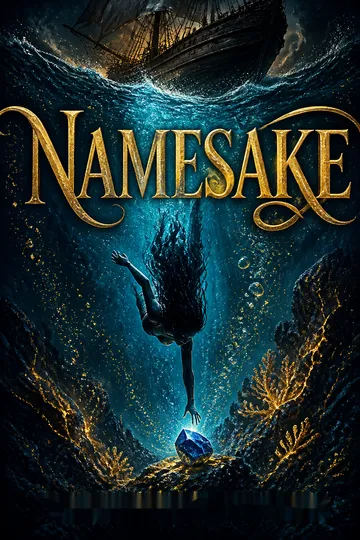
Namesake treats inheritance as a contested form of evidence. Fable receives skills from Isolde, danger from Saint’s world, and competing stories about her mother from people who each want something. The mystery of midnight is therefore not only a treasure hunt. It tests whether Fable will accept possession as the natural reward for discovery, as the traders around her do, or recognize that withholding knowledge can be an act of protection.
The novel also distinguishes care from control. Saint’s abandonment, West’s coercive decisions, and Holland’s contracts all arise from people trying to manage danger by deciding for others. Their motives differ, but their methods narrow the freedom of those they claim to protect. Fable’s growth appears in her willingness to love without surrendering judgment: she can understand Saint’s fear, see West’s violence clearly, and still refuse Holland’s offer of power.
The Marigold’s crew provides the counter-model. Its cohesion depends on shared work and consent, so West’s unilateral order fractures the very home he wants to defend. Willa’s departure and new livelihood make autonomy part of the resolution, not a threat to family. The final trade route likewise favors ordinary goods and local opportunity over the prestige of rare gems. Fable does not erase the darkness her family has made; she chooses what not to repeat. Leaving midnight hidden is the novel’s clearest statement of that choice, while building a port at Jeval shows how a different future can be made materially real.
Review Summary
People Also Read





Characters
Fable
Dredger and gem sageFable is a young dredger, Saint’s daughter, and a gifted listener to the distinct resonance of gemstones. Her years on Jeval have made her resourceful and wary, but not indifferent: she can remember an injury without surrendering every possibility of trust. She wants a crew and a home that belong to her by choice, not because a powerful helmsman has decided where she should stay. Her central strength is practical perception. She reads reefs, people, and trade arrangements with the same attention, even when emotion makes the evidence difficult to accept.
West
Marigold's helmsmanWest commands the Marigold and loves Fable, but his understanding of protection has been shaped by years of violence carried out for Saint. He is capable of tenderness and loyalty, yet under pressure he tends to act first and explain later, especially when he fears losing someone. His bond with his sister Willa is another measure of that protective instinct. West’s struggle is not simply to escape Saint’s influence; it is to decide whether he can stop using control and force as proof of devotion.
Saint
Fable's guarded fatherSaint is a powerful trader and helmsman whose precision, discipline, and emotional reserve shape the people around him. He values strategy and often treats affection as something dangerous to show, even to his daughter. His history with Isolde and his dependence on West’s shadow work have left him with a complicated understanding of love and power. Saint can be ruthless in business while also carrying private grief he rarely permits others to see. Fable’s need for him persists alongside her anger at the choices he has made.
Isolde
Fable's first teacherIsolde was Fable’s mother and her first guide to diving and gemstone lore. Remembered through lessons, keepsakes, and stories, she appears both steady and elusive: Fable knows the care she gave, but not the full life she lived before joining Saint’s crew. Her silence about her family and discoveries has consequences long after she is gone. Isolde’s legacy is not a complete account of her choices, but a set of skills and clues that asks Fable to think independently rather than accept another person’s version of her mother.
Clove
The old family navigatorClove navigated for Saint and was one of the adults closest to Fable during her childhood aboard the Lark. His long silence and guarded manner make him difficult to read, particularly because he understands both the Narrows’ trading networks and the people who operate within them. Beneath his rough presentation is a patient, observant man who rarely explains himself before he must. Fable’s memories of his affection coexist with a deep sense of betrayal, giving their relationship the tension of family closeness strained by years of withheld truth.
Holland
Bastian's powerful traderHolland commands a wealthy trading empire from Bastian and expects precision, loyalty, and deference from the people around her. Her grief and ambition are intertwined, making it difficult to tell where personal injury ends and commercial strategy begins. She is skilled at presenting coercion as opportunity and at using public ceremony to make power appear natural. Her memories of Isolde are intense but incomplete, and her need to control the future sits beside a genuine attachment to the past she cannot recover.
Koy
Jeval's expert dredgerKoy is an exceptionally skilled diver who has built a steady living through dredging and ferry work on Jeval. He is proud, suspicious, and blunt about the terms under which he will cooperate. His history with Fable is marked by danger and mutual rescue, though neither is eager to call it friendship. Koy’s ambitions extend beyond immediate coin: he watches trade routes for opportunities that could change Jeval’s place in the sea economy.
Willa
West's fiercely loyal sisterWilla is a capable Marigold crew member with a scarred face, a sharp tongue, and a fierce desire to decide her own future. She loves West, but his habit of protecting her can feel like another form of confinement. Her anger at Fable comes from the cost of repeated detours and obligations, not simple dislike. Willa’s practical talents and independent streak make her a counterweight to West’s tendency to treat responsibility as something he must carry alone.
Paj
The Marigold's navigatorPaj charts the Marigold’s routes and is deeply invested in the crew’s hard-won independence. He is impatient with plans that risk their ship or ignore the crew’s consent, and he makes his objections unmistakable. His relationship with Auster brings tenderness into a personality often sharpened by vigilance. Paj’s anger is rooted in care for the people he has chosen as family and in memories of what it cost them to escape Bastian.
Auster
The crew's steady handAuster is a warm, perceptive member of the Marigold’s crew and Paj’s partner. His polished manner cannot erase the difficult family history he left behind in Bastian. He often recognizes the emotional stakes in a conflict before others are willing to name them, and he can disagree without surrendering compassion. His knowledge of the Roth family makes him a bridge to a dangerous part of the city he chose to leave.
Hamish
The crew's careful accountantHamish keeps the Marigold’s accounts and tracks the practical cost of every decision. Careful with ledgers and cautious about risk, he gives the crew’s ambitions a material shape: coin, repairs, cargo, and voting shares. His dry precision does not make him detached. He is invested in the ship and the people aboard it, even when their plans outrun the numbers.
Zola
The Luna's ambitious helmsmanZola is a proud trader whose appetite for risk has carried him beyond the legal and political limits of the Narrows. He masks uncertainty with theatrical confidence and prefers to make other people reveal their leverage first. His history with Isolde and Holland gives his commercial plans a personal charge, though he rarely admits vulnerability. Zola’s wealth and authority make him dangerous, but his ambition also leaves him exposed to the older debts he has tried to outrun.
Ezra
A gifted Bastian silversmithEzra is a talented silversmith whose skill earns him commissions from people more powerful than he is. He is guarded around Holland and Henrik, yet his attention to the craft itself suggests a wish to be recognized for more than his usefulness to others. His ties to Auster and the Roth family place him between personal loyalty and the dangerous expectations of his world.
Henrik Roth
The Roth family patriarchHenrik leads a family known for gem counterfeiting and conducts business with threats as readily as negotiation. He is ambitious, status-conscious, and eager for legitimacy, but he trusts no offer that does not improve his position. His relationship with Auster is strained by the younger man’s departure from the family. Henrik’s pride makes him dangerous, while his hunger for a merchant’s ring gives Fable a point of leverage.
Calla
The Luna's blunt crewwomanCalla is a Luna crew member tasked with keeping Fable in line and preparing her for work. She is direct, suspicious, and loyal to the people who already belong to her ship. Her injured hand after Fable’s escape attempt does not soften her view of the Marigold’s crew.
Ryland
A resentful Luna dredgerRyland is one of Zola’s dredgers and resents Fable’s authority over the dive. Competitive and physically imposing, he sees the expedition’s hierarchy as a contest for status. His hostility makes the dangerous conditions among the Luna’s dredgers impossible to ignore.
Tru
A young Roth family memberTru is a young member of the Roth circle whose presence becomes entangled in the adults’ bargaining. He is far more vulnerable than the traders and smiths who use him as leverage, making the consequences of their schemes personal rather than abstract.
Plot Devices
Gem-sage perception
A hidden language of stoneFable can distinguish gemstones by the resonances they produce, allowing her to locate valuable caches and judge whether stones are genuine. The ability grows from Isolde’s teaching and demands attention rather than force: Fable must quiet herself, sort overlapping signals, and interpret what a reef is concealing. It drives the search for midnight and makes her expertise useful to traders who want to control the gem supply. The gift is also a form of inheritance, passed on through practice and memory rather than property.
The midnight necklace
A keepsake concealing the prizeIsolde’s abalone necklace carries a Roth silversmith mark and a resonance Fable has mistaken for her mother’s presence. Beneath its decorative shell is a fragment of midnight, which gives Fable a direct way to recognize the legendary stone and leads her to the cavern at Fable’s Skerry. The necklace connects sensory memory, family history, and the central search. Its secret also reframes Saint’s decision to return it: he preserves a clue without knowing exactly what it contains.
The Marigold's deed
A ship turned into leverageOwnership of the Marigold gives Holland a way to make a personal bargain affect an entire crew. West signs a contract to transfer the deed to Fable, while Holland uses the deed to bind Fable to her proposed Narrows operation. The paper records more than property: it exposes West’s fear of losing Fable and the crew’s fear of losing their home. Because the Marigold represents the life they built together, control of its deed becomes a sharper threat than a simple demand for money.
Ezra's jeweled tea service
Counterfeits disguised as luxuryHolland commissions an elaborate tea service from Ezra, setting gemstones into its silver design. Fable and the Roths turn that commission into a way to expose the trade in fake gems: the service appears to confirm Holland’s wealth, but examination at the Trade Council proves the stones are counterfeit. Its beauty helps Holland command attention before it becomes the evidence that strips her of authority. The device links Ezra’s craftsmanship to the council’s procedures and makes the visual display of status collapse under technical scrutiny.
Trade Council licenses
Lawful access to the seaA trading license determines which ports a helmsman may enter and which routes a merchant can legally control. Holland’s attempt to expand into the Narrows depends on the councils granting her permission, while Saint’s charges put her existing license at risk. The meetings therefore turn private rivalries into public economic consequences. A license can protect a crew’s future, but it can also concentrate trade in the hands of someone powerful enough to shape the rules.
The World of the Narrows Series

About the Author




Download PDF
Download EPUB
.epub digital book format is ideal for reading ebooks on phones, tablets, and e-readers.








