

Plot Summary
Back to Bastian
At eighteen, Bryn Roth leaves Nimsmire, where her great-aunt Sariah raised her, and travels to Bastian to fulfill an old agreement with her uncle Henrik. Her parents died when she was young, and Sariah has kept Bryn away from the dangerous Roth family business ever since. Henrik’s letter promised that cousin Murrow would meet her at the docks, but Bryn waits alone in the rain until he appears, amused by her impatience.
He leads her through Lower Vale to the Roths’ narrow, shadowed house. Henrik greets Bryn with surprising warmth, calls the city her home, and sends her to a room once occupied by someone who is gone. For Bryn, the return is both a claim to belonging and a step into the unknown.
Bryn’s return begins as a family obligation but is emotionally driven by a hunger she has scarcely admitted: she wants a place that is hers. Sariah’s careful upbringing has given her polish and practical knowledge, yet it has also taught her to accept a future arranged by others. Bastian promises escape from that managed life, while the Roth name binds her to the very danger she was protected from. The welcome is therefore double-edged. Henrik offers belonging before Bryn understands its terms, making home feel less like shelter than a contract whose fine print is still hidden.
Blood at the Table
At her first family dinner, Bryn meets Henrik’s brothers Casimir and Noel, Noel’s wife Anthelia, and their sons Tru and Jameson. The gathering begins stiffly, but soon turns into a working meeting: the Roths trade reports about bribes, cargo, and copied harbor logs. Ezra Finch, their scarred silversmith, arrives late and answers Henrik in clipped phrases.
Bryn notices that he seems more at home in silence than among his supposed family. After dinner, she finds his room full of notes and is caught looking inside; Ezra warns her away from his private space. The family’s warmth in the kitchen contrasts with its strict hierarchy, and Bryn understands that her blood gives her a seat at the table, not yet a place among them.
The dinner introduces the Roths’ governing contradiction: their closeness is real, but it does not make them gentle. Work and kinship occupy the same table, so affection cannot be separated from discipline, money, and surveillance. Bryn has learned the manners of respectable society, yet the household’s rough ease unsettles her more than its criminal business. Ezra’s guardedness makes him a counterpoint to Murrow’s charm and Henrik’s command. His room, crowded with private records, suggests that the family’s apparent unity contains individual lives and loyalties that Bryn has not been invited to read.
An Heir Tested
Henrik gives Bryn her first assignment: collect payment and harbor records from a contact at Pier Fourteen, though Ezra objects that the route is his. At the warehouse, the contact Arthur recognizes that Bryn has no Roth tattoo, assumes she may be a trap, and strikes her when she tries to stop him leaving.
Back home, Henrik shows little concern for her injuries. From the stairwell, Bryn overhears Ezra report that he watched the encounter, while Henrik admits he wanted Arthur discredited before Simon chose a patron.
The plan turns her pain into leverage. Bryn also connects the family’s dangerous cargo thefts to the night her parents died: Henrik’s scheme had placed them in the job that killed them. His welcome now looks less like reunion than recruitment.
Bryn’s first assignment collapses the distinction she hoped to maintain between being family and being useful. Henrik does not merely expose her to danger; he converts the resulting injury into a political instrument. That calculation echoes the older loss of her parents and makes family loyalty feel structurally coercive, not simply emotionally complicated. Ezra’s presence in the alley adds another uncertainty: he was close enough to intervene, yet did not. Bryn learns that the Roths measure care and harm by consequences rather than by conventional morality. Her new knowledge is not enough to free her, but it strips away the comfort of believing that blood guarantees protection.
Eden’s Locked Door
After the incident at the pier, Henrik trains Bryn to weigh the family’s real and imitation gemstones, making her useful in the workshop. There she watches Ezra work with a talent that helps sustain the Roth enterprise.
On an errand through the Merchant’s District, Murrow tells her that her mother Eden’s tea house still stands, boarded up and unused. Bryn finds it tucked into Fig Alley, its furnishings decaying behind the glass. A well-dressed merchant, Violet Blake, pauses beside her, remarks on the wasted business, then vanishes before Bryn can learn more.
The neglected shop gives Bryn a new possibility: rather than inventing a stake from nothing, she might reclaim the enterprise her mother left behind and use it to bring the Roths into merchant society.
The tea house shifts Bryn’s ambition from earning approval to imagining an asset she can shape herself. Its decay is not only a memorial to Eden; it is a practical opening in a family system where every person is expected to produce value. Bryn’s expertise in gems and Sariah’s lessons in commerce become tools rather than ornaments. Violet’s brief appearance matters because she embodies a different kind of power, one that moves through reputation and access rather than the Roths’ intimidation. The shop’s potential links personal inheritance to public legitimacy, though Bryn has not yet learned how much of that inheritance others believe they can control.
Silk, Silver, and Bruises
Henrik orders Bryn to prepare the Roths for a dinner with Simon, the watchmaker whose support could help secure a merchant’s ring. At the couturier’s shop, Bryn challenges Ezra after he strikes ten-year-old Tru for failing to check a money count.
Murrow later explains that Ezra’s blow may have spared Tru a harsher punishment from Henrik, revealing how the household uses violence as both discipline and protection. Henrik then asks Bryn to learn lockpicking, and Ezra teaches her to open a practice chest with hairpins.
Their guarded lesson becomes a moment of hard-won trust. Bryn also learns that Ezra once apprenticed in Simon’s workshop, though no one explains why he left. As she prepares the family’s clothes and manners, she begins to recognize the rules beneath their brutality.
Bryn’s protest over Tru shows the distance between her moral instincts and the household’s survival logic. Murrow’s explanation does not make Ezra’s action harmless; it reveals that punishment is distributed within a system where a controlled injury can function as protection from worse violence. Bryn must therefore revise her judgments without surrendering them. Lockpicking becomes a parallel education: Ezra teaches her to feel for hidden mechanisms instead of relying on appearances. Their attraction grows inside that shared attention, but so does a more important recognition. To survive among the Roths, Bryn must understand the rules well enough to choose when to obey and when to resist.
Three Locks, One Mark
At Simon’s dinner, Henrik presents Bryn as refined company and urges her toward Simon’s son, Coen. While the merchants entertain their guests, Bryn spills cava on her gown, slips into Simon’s study, and picks the lock on a cabinet.
She finds a ledger bearing the name of Holland, a disgraced merchant who should no longer be trading. Rather than give Henrik the evidence, Bryn later claims she found nothing. That night, Henrik gives her a stake: Eden’s tea house, which he wants her to reopen.
He also reveals that Ezra proposed matching her with Coen, a claim that wounds her. Ezra tattoos the Roth family’s entwined snakes on her arm, giving her the mark that signals protection and belonging, even as she begins to doubt what those bonds demand.
The heist is Bryn’s first consequential act of private judgment. She enters Simon’s records under Henrik’s orders, then withholds the result because she sees that information is not neutral: it can become a weapon against people whose danger she cannot yet measure. Her lie gives her a small measure of agency, while the tattoo makes her publicly legible as a Roth. These opposite gestures capture her predicament. She wants the security that comes with belonging but refuses to let belonging erase her choices. Henrik’s offer of the tea house is both opportunity and test, and his proposed match shows how quickly an earned stake can be folded back into someone else’s design.
The Suit She Chose
Henrik’s claim that Ezra wanted Bryn matched with Coen drives her to search Ezra’s room, where she finds a letter from Simon about binding their families. Bryn reads it as proof of a marriage scheme, then rejects the gowns chosen for her and arrives at dinner in a tailored suit.
She follows Ezra after he slips away from the Roth house, but loses him in the maze of the piers. The next evening she tracks him to Pier Sixty-Four and discovers him working in a shipwright’s yard, secretly apprenticing to build vessels.
Ezra explains that he wants a trade that could let him escape the Roths before Henrik’s growing ambitions make him indispensable. Bryn admits she accused him of aiding Arthur, and Ezra clarifies that he paid Arthur to conceal the apprenticeship.
Bryn’s suit is more than a refusal of feminine display. It interrupts the role in which Henrik and Sariah have each imagined her, allowing her to appear on her own terms. The discovery of Ezra’s apprenticeship changes the meaning of his absences: what looked like disloyalty is an attempt to construct a life beyond the family’s claims. Yet Bryn has already made him vulnerable by reporting her suspicions to Henrik. Their closeness is therefore tested not by a rival romance but by the unequal risks each carries. Ezra can imagine departure; Bryn has a stake and a name pulling her inward. Their honesty arrives only after both have acted on incomplete information.
Punishment Behind Closed Doors
To shield Ezra, Bryn tells Henrik that his absences are explained by a secret girlfriend in North End. Henrik has already learned about the shipwright apprenticeship. He brings Ezra into the study and orders Murrow to beat him, forcing Bryn to witness the punishment for lying.
That night Bryn reads Sariah’s short farewell letter, which frames her arrival in Bastian as the beginning of her own destiny. She then finds Murrow with bloodied hands and learns he knew Ezra was trying to leave but stayed silent. Bryn goes to Ezra’s room and lies beside him while he recovers. They share a quiet intimacy, but Henrik’s violence has made the cost of choosing one another unmistakable.
Henrik’s punishment exposes the limits of Bryn’s new skill: she can deceive, bargain, and read motives, but she cannot yet outmaneuver the person who controls the household. Making her watch turns violence into instruction, meant to discipline her as much as Ezra. Sariah’s letter offers a counterweight, not a solution. It insists that destiny begins in action, but Bryn now sees how little freedom a person has when every choice carries consequences for someone else. Murrow’s complicity further complicates loyalty: his silence protects Ezra temporarily, yet also leaves the family’s power intact. Bryn’s comfort beside Ezra is intimate, but it is not an escape plan.
Dice Return to Eden
Bryn opens Eden’s restored tea house as both a refined salon and a discreet place for Three Widows, the dice game favored by wealthy merchants. The hybrid draws a crowd, including Coen and Violet Blake, whose arrival makes the venture instantly fashionable. Coen tells Bryn that when he was a child, he gave Henrik weighted dice so Henrik would win Ezra from Simon in a game.
Ezra’s forced transfer was not luck, as he had believed, but a choice engineered by Coen. The revelation casts a new shadow over the Roths’ history and gives Bryn another reason to distrust Simon’s offer of patronage. Her business succeeds in public, while her private understanding of the family grows more painful.
The tea house works because Bryn understands that respectable society is drawn to the very transgression it publicly disavows. She does not erase the Roths’ roughness; she stages it within a setting the merchants can safely call fashionable. The opening’s success is therefore both entrepreneurial and psychological: Bryn proves she can create access without becoming a decorative instrument. Coen’s confession then turns the dice from a symbol of chance into evidence of how power disguises itself. Ezra’s childhood was shaped by a rigged game, and the adult who benefited from that act is still embedded in the respectable world. The revelation makes inherited stories less trustworthy than the choices hidden inside them.
Simon Names His Price
The morning after the tea house opening, Simon offers Henrik patronage for the gem guild, then reveals the terms: Ezra must return to his workshop, Bryn must marry Coen, and the tea house must pass into Simon’s business. Simon has also arranged a patronage for Arthur, leaving Henrik little room to refuse.
At a family meeting, Henrik accepts that the deal may be necessary to secure the ring, while Bryn argues for waiting rather than surrendering. Anthelia, who has kept herself at the edge of Roth affairs, tells Bryn that Eden loved Simon but married Tomlin under family pressure. The story makes the proposed match feel like history repeating itself. Bryn sees that Simon’s leverage reaches beyond business into the family’s unfinished grief.
Simon’s ultimatum reveals that the guild’s respectable procedures do not replace coercion; they give it a polished vocabulary. Patronage, marriage, and ownership of the tea house are bundled as if they were ordinary terms in a trade agreement. Anthelia’s account of Eden sharpens the stakes by linking Bryn’s predicament to a previous generation’s obedience. Yet Bryn is not simply repeating her mother’s position. She has built a business and gathered allies, however precarious. Henrik’s willingness to accept the terms shows that his dream of legitimacy is still shaped by the old family logic: he will pursue a cleaner public identity through arrangements that treat individual lives as currency.
Violet’s Dangerous Bargain
Bryn asks Violet to replace Simon as Henrik’s patron, but Violet will help only if Bryn can secure the Serpent’s trade contract, which Simon took from her. Bryn and Ezra intercept Coen at the harbor and use the evidence that Simon still trades with Holland to pressure him into voiding the contract. Coen agrees, though he warns that Simon will retaliate.
At the gem guild exhibition, Violet is ready to announce her patronage, and Bryn gives Henrik the tea house deed, its key, and the Holland ledger she had concealed. She tells him to choose Violet’s offer and let Bryn and Ezra go. Henrik recognizes that holding them would cost him their trust and leaves his decision open until the final moment.
Bryn’s bargain marks a shift from surviving other people’s schemes to making one of her own. She does not defeat Simon through superior force; she uses the family’s hidden information, Coen’s desire to preserve his place beside his father, and Violet’s commercial rivalry to alter the available choices. This is a morally compromised strategy, and the story does not pretend otherwise. Bryn threatens exposure and manipulates loyalties, adopting some of Henrik’s methods while directing them toward escape. Handing over the deed and ledger makes her offer concrete: she is not demanding freedom while keeping every advantage. She gives Henrik the means to pursue Eden’s legacy, then asks him to stop treating people as its property.
Leaving Before the Vote
Henrik weighs Violet’s patronage against Simon’s demand and finally lets Bryn and Ezra leave rather than bind them to the deal. His parting recognition of Bryn as a true Roth carries affection, but it cannot undo the coercion that brought her there.
Murrow stays behind with the family, offering Bryn a quiet farewell rather than following her. As the guild exhibition begins inside the commission, Bryn and Ezra reach the harbor and board the Mystic, a ship bound for an unknown destination.
Ezra sheds the formal clothes and watchful posture Henrik imposed on him; Bryn steps into a future without knowing whether Henrik will win the ring. Their escape does not settle the Roths’ business, but it gives them the first choice that belongs wholly to them.
The ending refuses the comfort of a clean victory. Henrik may still gain the ring, and the family remains entangled in its old business, but Bryn and Ezra are no longer available as payment for that ambition. Henrik’s farewell is emotionally sincere and politically revealing: affection exists inside his authority, yet it does not excuse the harm that authority permits. Bryn leaves with neither a guaranteed destination nor a completed plan. That uncertainty is essential to the resolution. Earlier, she wanted Bastian to tell her where she belonged; now she accepts not knowing where she is headed. Freedom is presented not as safety but as authorship, the right to take a risk whose cost she has chosen herself.
Analysis
The novel makes belonging a practical question before it makes it an emotional one. Bryn wants the Roth name to give her a home, but the family’s language of loyalty is inseparable from work, discipline, and ownership. Each person has a stake, and the household measures worth through contribution. The tea house becomes Bryn’s answer to that economy: it earns money, draws merchants into the Roth orbit, and lets her build influence without becoming only a marriageable intermediary. Its hybrid identity, refined tea paired with illicit dice, also refuses the idea that social legitimacy requires the Roths to disguise every rough edge.
The novel’s strongest recurring image is the game of Three Widows. It appears as leisure, as the mechanism that determined Ezra’s childhood, and finally as a reminder that chance can be engineered by people with power. Coen’s weighted dice clarify that fate in this world is often another person’s decision disguised as luck. Bryn’s growth therefore does not consist of becoming morally untouched or escaping every compromise. She learns to recognize who has loaded the game, what each participant wants, and which risks she is willing to take.
Henrik is difficult to dismiss as a simple villain because his ambition is bound up with care for the family and grief for Eden. Yet the novel insists that love does not cancel coercion. Henrik’s desire to secure the ring and honor his sister’s hopes repeatedly leads him to treat Bryn and Ezra as instruments. The same tension shapes Ezra’s craft: his extraordinary ability gives him value but also makes him easier to trap. His wish to build ships rather than silverwork is an attempt to claim a future beyond the identity other people have assigned him.
Bryn’s final choice rejects both the obedient match and the fantasy that she can reform the Roths from within without cost. She leaves before the guild vote, accepting uncertainty rather than another carefully arranged bargain. The ending does not promise that freedom will be safe or permanent. It defines freedom more modestly and more convincingly: the right to choose the next risk for oneself.
Review Summary
People Also Read





Characters
Bryn Roth
The self-made heirBryn is the eighteen-year-old daughter of Eden Roth, raised in Nimsmire by her great-aunt Sariah and summoned back to the family’s home in Bastian. She has been trained in etiquette, gem identification, bookkeeping, and the social instincts needed to negotiate with merchants. Under the polished manners is a quick temper and a strong resistance to being treated as an ornament or bargaining chip. Bryn wants a place in the family, but she also wants the right to define what that place means. Her gift is reading people’s motives and adapting without losing sight of her own interests. Her central tension is between the safety of belonging and the harder freedom of choosing for herself.
Ezra Finch
The guarded silversmithEzra is a gifted silversmith employed by the Roth family, though he is not related to them by blood. His scarred hands and careful work make his skill visible; his reserved manner keeps his thoughts private. He is disciplined, watchful, and difficult to approach, in part because he has learned that talent can make a person valuable to powerful people without making that person free. Ezra’s history links him to Simon’s workshop and to the Roth household, leaving him caught between competing claims. Bryn’s directness unsettles his practiced distance, while his own guardedness tests her ability to distinguish distrust from indifference.
Henrik Roth
The calculating patriarchHenrik is Bryn’s uncle and the head of the Bastian Roths. He oversees a family enterprise built on forged gemstones, illicit cargo, bribes, and information gathered around the harbor. Intelligent and meticulously organized, he can be warm, funny, or frighteningly cold, sometimes within the same conversation. Henrik’s ambition is to secure a merchant’s ring and make the family’s position legitimate, but his methods remain rooted in control and leverage. He regards responsibility for the Roths as a personal burden, which helps explain his protectiveness without making it harmless. His authority shapes the household’s rules, including what family loyalty is allowed to cost.
Murrow Roth
The watchful cousinMurrow is Bryn’s cousin and Henrik’s nephew, a quick-witted intermediary who gathers information from sailors, navigators, and harbor crews. His charm makes him approachable, but his easy humor conceals close observation and a strong awareness of hierarchy. He helps Bryn navigate Bastian while remaining loyal to the family structure that raised him. Murrow often eases tension with jokes, yet he understands the consequences of defying Henrik better than Bryn does. His divided impulses make him an important measure of the Roth household: he can care for someone deeply while still participating in choices that protect the family’s order.
Sariah Roth
The distant guardianSariah is Bryn’s great-aunt, a formidable businesswoman who raised her after the deaths of her parents. She is exacting rather than openly affectionate, teaching Bryn how to read gems, keep accounts, dress for influence, and manage her temper. Sariah’s life in Nimsmire gives Bryn an example of a woman who built power outside the merchant guilds, though the distance between them leaves much unsaid. She believes preparation is a form of care and equips Bryn for a world she cannot control on her behalf. Her rare gestures of tenderness matter because Bryn has learned to look for love in instruction as much as in comfort.
Simon
The formidable watchmakerSimon is a successful watchmaker and member of the gem guild, respected for having risen from a less privileged background. He is polished in company and feared for his willingness to punish those who cross him. His workshop represents legitimate trade, but his business is not as clean as the guild’s public image suggests. Simon is also a father whose expectations weigh heavily on Coen. His relationships with Henrik, Ezra, and the Roth family carry old rivalries and unresolved personal history, making his offers of support difficult to separate from his demands.
Coen
The watchmaker’s heirCoen is Simon’s son and the likely heir to his father’s place in the gem guild. He is handsome, sociable, and proud of the business Simon built, but his affection for his father makes him vulnerable to the pressure of winning approval. He once knew Ezra as a boy in Simon’s workshop, giving him a personal connection to the Roth silversmith. Coen is neither simply a suitor nor merely a rival: his choices are shaped by family ambition, loyalty, and the fear of losing his place.
Violet Blake
The ambitious merchantViolet Blake is an affluent gem merchant with a striking public presence and a sharp instinct for business. She understands the value of being seen and is comfortable using spectacle to control a room. Her rivalry with Simon gives her a reason to challenge the established balance of the Merchant’s District, while her connection to Sariah gives Bryn a possible line of approach. Violet does not confuse loyalty with charity; she expects any alliance to benefit her as well. Her blend of elegance, appetite, and caution makes her a formidable negotiator.
Casimir Roth
The harbor operatorCasimir is Henrik’s brother and Murrow’s father. He manages harbor business, including bribes and the movement of goods, and tends to express himself through practical questions and a stern manner. He is skeptical of Bryn’s unconventional plans, but his skepticism comes from a working knowledge of how quickly a bad risk can injure the whole family. Casimir represents the Roths’ established methods and the pressure to favor reliable profit over change.
Noel Roth
The family informantNoel is Henrik’s youngest brother and the father of Tru and Jameson. He gathers information about merchants, ships, and potential trade opportunities, contributing the intelligence that keeps the Roth enterprise moving. He appears gentler than Henrik and Casimir, but he participates in the family’s criminal work and accepts its rules. His tenderness with his children exists alongside his willingness to live within a harsh household, a contrast that complicates any simple division between caring and complicity.
Anthelia
The guarded wifeAnthelia is Noel’s wife and the mother of Tru and Jameson. She is quiet in the Roth household, often keeping close to her children rather than joining the family’s business discussions. Her reserve can look like passivity, but it also suggests a practiced effort to limit her exposure to the family’s conflicts. When she shares what she knows about Eden, she offers Bryn a perspective unavailable from the Roth men.
Tru
The young Roth apprenticeTru is Noel and Anthelia’s ten-year-old son, dressed and trained to behave like a small adult in the Roth household. He helps with family tasks and takes mistakes seriously, reflecting how early the family expects its children to accept responsibility. Tru’s matter-of-fact response to punishment unsettles Bryn, whose ideas about childhood differ sharply from his. He is bright, curious, and eager to be treated as capable.
Eden Roth
The absent motherEden is Bryn’s mother and Henrik’s sister. Though she is absent from the present action, her abandoned tea house and place in the Roth family history shape Bryn’s understanding of inheritance. Eden hoped to give the family a more respectable enterprise and imagined a stake of her own. What others remember about her is incomplete and colored by grief, obligation, and old loyalties, leaving Bryn to assemble a picture from fragments.
Sylvie
The household caretakerSylvie cooks for the Roth household and tends to its practical needs, from bread and tea to the care of bruises. Her humor and directness soften the house’s harsher atmosphere. She is observant, but rarely enters the family’s decisions.
Auster
The absent Roth relativeAuster is Sariah’s grandson and a former occupant of Bryn’s room. His name is associated with the family’s past and with the possibility of a life beyond the Roth household. What he experienced remains largely unknown to Bryn.
Plot Devices
The Merchant’s Ring
A gateway to legitimacyA merchant’s ring grants its bearer standing to trade within a guild and access to the power concentrated in Bastian’s Merchant’s District. Henrik already holds a ring connected to trade in Ceros, but he wants one for the gem guild in Bastian. A candidate needs a guild member’s patronage and must present a collection for review. This process gives the Roths a possible path out of their illegal trade, but it also creates leverage for Simon, Violet, and other merchants. The ring makes social legitimacy tangible: it can open a market, shift a family’s status, and turn a personal favor into a binding obligation.
The Roth Tattoo
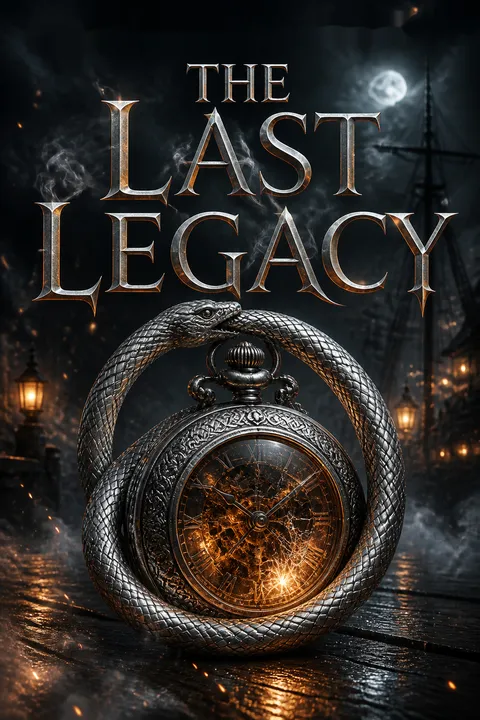
A mark of belongingThe ouroboros tattoo, two snakes joined in a loop, identifies members of the Roth family. Arthur searches Bryn’s arm for it when she arrives to collect money, treating its absence as evidence that she may be a trap. The mark can protect a Roth from casual violence, but it also binds its bearer to a family whose authority is difficult to escape. When Ezra inks the design onto Bryn, it gives her recognition and a measure of safety while deepening her conflict over whether belonging is protection, ownership, or both.
The Holland Ledger
Leverage hidden in inkThe ledger in Simon’s locked cabinet records transactions connected to Holland, a former merchant who lost her guild standing after trading in fake gems. Henrik wants proof that Simon continues to do business with her because exposure could damage Simon’s position. Bryn uses hairpins to enter the cabinet but chooses not to give Henrik what she found. Later, the information becomes leverage in negotiations with Coen and helps open an alternative route to freedom. The ledger turns bookkeeping into a weapon, showing how a name on a page can carry more force than a threat made in public.
Three Widows
Chance conceals old bargainsThree Widows is a dice game played in both private merchant circles and rougher gathering places. In the Roth household, it is a familiar pastime, but the game also connects to Ezra’s childhood and the way he came under Henrik’s control. Bryn adapts it for Eden’s Tea House, combining respectable tea service with a form of entertainment that merchants call scandalous. The game makes risk visible while raising the question of whether any outcome is truly chance when powerful people can alter the rules or weight the dice.
Eden’s Tea House
A stake and a meeting groundEden’s boarded-up tea house sits in Fig Alley between Lower Vale and the Merchant’s District. Bryn sees it as both an inheritance and a way to create the social access Henrik needs. She restores the elegant interior, introduces rare teas, and adds Three Widows to attract customers who might otherwise avoid the Roths. The enterprise lets Bryn demonstrate her business skills while gathering merchants in a space she can manage. Its public success does not free her from Henrik’s control, but it gives her an independent asset and a bargaining position the family did not initially expect.
The World of the Narrows Series



About the Author




Download PDF
Download EPUB
.epub digital book format is ideal for reading ebooks on phones, tablets, and e-readers.








