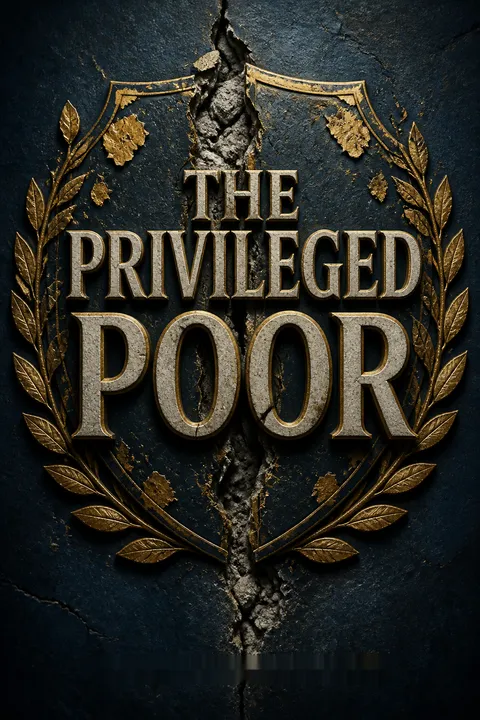


Key Takeaways
Financial aid gets poor students admitted; it does not make campus theirs.
Admission is only the entrance. Anthony Abraham Jack begins with his arrival at Amherst, where classmates swapped stories of private planes and international trips. He was a first-generation student from a poor Miami neighborhood, but his year at an elite prep school had given him an early glimpse of wealthy academic life. His experience sharpened the book’s central question: what happens after colleges open their doors to students with little money?
Access still falls short. No-loan aid policies have helped more low-income students attend elite colleges, but those campuses remain dominated by wealth. At the university Jack studied, about one-third of undergraduates came from families earning more than $250,000 a year. Admission can offer a powerful route to opportunity, yet it does not ensure that students feel welcome, can meet basic needs, or can use the institution’s resources.
What's striking is the distinction between formal access and lived membership. An institution can meet an admissions target while its ordinary routines still presume that students have money, insider knowledge, and a safe home to return to. This resembles a broader organizational problem: representation changes faster than norms, procedures, and informal expectations. The book therefore shifts evaluation away from entry counts alone and toward whether students can participate without repeated social and material penalties. That shift is valuable, though belonging should not become a demand that every student feel at home in the same way. The institutional test is whether students have meaningful choices and support, not whether discomfort disappears.
Separate low-income students by prior exposure, not income alone.
Two paths lead to campus. Jack calls low-income students who attended elite private high schools the Privileged Poor. Those who came from under-resourced public schools are the Doubly Disadvantaged: they experienced poverty and entered college without prior familiarity with elite academic settings. Both groups may share difficult home circumstances, but their high school experiences leave them with different tools for navigating college.
The contrast is visible in the study. Jack interviewed 76 low-income students at one elite university: 21 Privileged Poor and 55 Doubly Disadvantaged. Patrice and Alice grew up in similar circumstances, but Patrice attended a well-resourced boarding school while Alice stayed in an underfunded local school. Patrice described college as familiar; Alice initially withdrew from campus life. The distinction is not talent or effort. It is unequal access to preparation, relationships with adults, and practice in elite settings.
This distinction improves on the blunt category of first-generation or low-income student by showing how institutions outside the family shape preparation. It also cautions against interpreting ease as innate confidence: a student may simply have rehearsed the setting before arriving. The comparison is especially useful for administrators designing support, since the same program may be unnecessary for one student and insufficient for another. At the same time, the categories are analytic tools, not identities that capture every individual. Private-school attendance varies widely, and a student can acquire institutional fluency through other routes. The point is to ask what experience a student has had, rather than infer capacity from income.
Recognize that wealth can exclude without an explicit insult.
Ordinary talk can draw boundaries. At Jack’s study site, students casually discussed luxury clothes, expensive restaurants, and travel. For a student who had never flown before college, hearing a classmate offer another student a trip to Italy over espresso could make campus feel like a place built for someone else. The Doubly Disadvantaged often read these exchanges as reminders of what they could not afford, and some withdrew from peers and campus activities.
Exposure changes the reaction. The Privileged Poor had already encountered similar wealth at prep school, so it was less startling in college. That familiarity could make them more socially at ease, but it did not erase poverty or family pressures. One student could navigate affluent conversation and still worry about violence back home. Belonging, Jack argues, depends partly on what students have encountered before, not simply on their income or race.
The book makes status visible in its small, repeatable signals, not only in dramatic acts of discrimination. This matters because repeated cues can shape where people choose to sit, whom they approach, and which opportunities seem meant for them. The distinction also helps explain why a campus can appear diverse yet remain socially narrow. Still, exposure is not the same as acceptance: learning to tolerate elite customs can make a student more fluent without making those customs fair. A useful institutional response is not to censor every mention of travel or consumption, but to create social life that does not routinely require spending money or performing familiarity with wealth.
Make office hours explicit; opportunity follows relationships.
The rules are often unstated. Jack calls the hidden curriculum the unwritten expectations that students must understand to navigate college. Many professors invite students to office hours but do not explain what they are, what students can discuss, or that no special problem is required to attend. Some students interpret the phrase literally as time when the professor is busy alone in an office.
Connections open doors. In Jack’s interviews and observations, students who knew faculty and administrators could gain academic help, recommendation letters, internships, job referrals, and nominations for awards. A student adviser noted that nominators often put forward students they knew personally. The Doubly Disadvantaged were more likely to wait, unsure whether it was appropriate to approach faculty. The Privileged Poor had often practiced these interactions in high school. Making expectations explicit can reduce a gap that grades alone do not reveal.
This is a case where a seemingly neutral procedure rewards prior knowledge. In organizational life, access often depends on informal sponsorship as much as on published criteria. Explaining office hours is a modest intervention because it converts tacit knowledge into shared information; inviting students directly can further lower the social cost of asking. The book also raises a harder question: if awards and referrals depend heavily on personal familiarity, can institutions make those systems more transparent without eliminating valuable mentorship? Clear criteria and proactive outreach can complement relationships rather than replace them. A student should not need to guess which doors are genuinely open.
Do not mistake learned self-reliance for equal opportunity.
Survival habits can misfire. Some Doubly Disadvantaged students learned at home to avoid burdening adults, accept what was offered, and solve problems alone. Those strategies could be sensible in unstable circumstances, but college rewarded students who asked questions and built relationships. Shaniqua described how homelessness had taught her not to complain; even when her grades were at risk, she struggled to ask a professor for help.
Merit has social mechanics. Daniel believed that strong work should speak for itself and saw students who cultivated faculty relationships as ingratiating. He eventually recognized that this approach cost him recommendations and contributed to abandoning his ambition to become a doctor. The issue is not that independence is a flaw. It is that a college may quietly require networking while presenting academic effort as the whole path to success.
The book resists a familiar institutional mistake: treating reluctance to seek help as evidence of low motivation. A behavior shaped by past experience can be adaptive in one setting and costly in another. Support works best when it recognizes that history without making students feel deficient for it. There is also a legitimate concern beneath Daniel’s objection. If advancement relies on personal access, students may reasonably see the process as favoritism. Colleges should teach relationship-building while also making referrals, recommendations, and awards less dependent on hidden social proximity.
Never make students clean classmates' bathrooms to finance belonging.
A paid job can carry a social price. Renowned’s Community Detail program paid students to clean dorm rooms before the school year and bathrooms during it. It offered flexible hours and a relatively high wage, but many low-income students felt pushed toward it because they needed the money. During preorientation, 60 percent of participants came from the 15 percent of students receiving full financial aid, making those students sharply overrepresented.
Work can reproduce hierarchy. Students described being ignored, treated like service staff, or confronted with filthy bathrooms they were expected to clean. For some Black and Latino students, the job echoed family experiences in domestic and janitorial work, as well as stereotypes about who performs manual labor. The problem is not that cleaning lacks dignity. It is that a university placed financially vulnerable students in a job that made them serve their own peers and did little to build academic or career connections.
The example shows how employment design communicates status. A campus job can provide income and still undermine students’ sense that they are peers, especially when workers enter classmates’ private rooms and are treated as a service. Distinguishing respect for the work from criticism of the arrangement is essential. Institutions need paid jobs, but they can offer roles that build skills, connect students to faculty, or distribute necessary work more equitably. Higher pay alone does not compensate for humiliation or lost opportunity. The test should include not just the wage, but also the job’s conditions, social meaning, and contribution to a student’s future.
Deliver assistance without turning poverty into a public label.
Good help can be badly designed. Scholarship Plus gave eligible low-income students free tickets to campus events. Students valued the chance to attend performances and social activities they otherwise could not afford. But ticket pickup involved a separate line and entrance. The program intended to ease participation, yet its visible administration identified recipients in front of their peers.
Choice matters alongside support. Some students felt proud to use the benefit; others compared the experience to being singled out at a public assistance office. One student wished she could collect the ticket in advance, alongside everyone else. The issue was not the aid itself, but the public signal attached to claiming it. Jack’s account shows that a program’s delivery can either support inclusion or re-create the boundary it was meant to remove.
This is a strong example of stigma as a design effect rather than a necessary feature of receiving help. A benefit can be generous in substance and costly in the moment of access. Universal systems, discreet eligibility checks, and advance distribution can preserve targeted spending while reducing unwanted disclosure. Yet not every recipient experiences visibility as shame; some may claim a benefit openly and proudly. Good design should preserve that choice. The deeper principle is agency: people should not have to trade privacy or social comfort for access to an opportunity their institution says they deserve.
Keep food available when campus routines assume everyone can leave.
A closed cafeteria means more than inconvenience. During the nine-day spring break at Renowned, all campus eateries shut down because administrators assumed students would leave. About one in seven students stayed on campus, including students who could not afford a trip home. Some rationed groceries, lived on pantry food, or ate only one meal a day. Tracey fainted after going without enough food.
Scarcity follows students into elite colleges. Jack reports that studies across colleges found food insecurity affecting 20 to 36 percent of students. At Renowned, athletes who remained for training received a daily food allowance, while other students were left to improvise. The contrast shows how an ordinary calendar decision can turn financial need into hunger. Food access is not an extra comfort when students are expected to study and participate in campus life.
Food insecurity is often treated as a problem that belongs elsewhere, but campus policies can create predictable periods of need. Scarcity also consumes attention: a student searching for affordable food has less time and mental energy for coursework, social connection, and rest. The book’s example supports designing basic provision around who actually remains, rather than around the presumed majority. There is a practical question about cost and demand, but it can be answered with enrollment and access data, as the author’s estimate of students staying on campus illustrates. A meal plan that disappears precisely when students have few alternatives is not a complete safety net.
Make elite preparation ordinary instead of selecting a few students for rescue.
Individual pathways cannot repair unequal schools. Prep schools gave the Privileged Poor small classes, experienced teachers, college counselors, and repeated contact with adults. These students brought useful skills to college, but pipeline programs reached only a small number of young people. Jack argues that sending selected students away from under-resourced schools can help individuals while leaving the wider system unchanged.
Build support into institutions. Colleges can explain academic customs, offer low-stakes opportunities to meet faculty, provide paid work that develops skills, and ensure food is available throughout the year. Before college, schools can create advising networks and teach students how to navigate higher education. The broader goal is to bring strong resources to disadvantaged communities, not make elite preparation depend on being singled out for a rare opportunity.
This conclusion guards against turning a successful mobility route into a universal policy. Prep-school experience demonstrates that resources and coaching matter, but expanding individual escape routes cannot substitute for improving public education. At the same time, upstream investment and campus reform operate on different timelines; students already enrolled need practical support now. The strongest approach is therefore layered: widen access to excellent preparation, make college expectations visible, and redesign campus procedures that assume prior fluency or personal wealth. The book’s challenge is not to erase difference, but to stop converting unequal preparation into a permanent advantage.
Analysis
The book’s central contribution is to show that poverty does not produce one predictable college experience. Jack’s comparison between the Privileged Poor and the Doubly Disadvantaged reframes cultural advantage as something acquired through institutions, not simply inherited from parents. Elite high schools provide more than academic preparation: they give students repeated practice with adults, campus-like environments, and the expectations that colleges often leave unexplained. This helps account for why students with similar economic hardship can encounter the same university so differently.
The argument also insists that cultural fluency is only part of the story. A student may know how to approach a professor and still lack money for food, clothes, or social participation. Community Detail, Scholarship Plus, and spring-break closures show how university operations can translate financial inequality into visible status differences. That combination of interactional and material analysis is the book’s most useful corrective to accounts that attribute unequal outcomes either to individual confidence or to financial aid alone.
The evidence is strongest as a mechanism-rich account, not as a population-wide estimate. Two years of observation and interviews with 103 undergraduates at one pseudonymous elite institution allow Jack to trace how norms and policies are experienced in daily life. But participants were already admitted and enrolled, and the sample cannot establish how common each experience is across all colleges or isolate high school exposure as the only cause of differences. The categories also simplify varied experiences within each group. Those limits do not erase the insight; they clarify its scope.
The policy implication is both immediate and structural. Colleges should make expectations explicit, provide material support without stigma, and avoid employment arrangements that reproduce social hierarchy. Public schools also need durable resources so that access to elite preparation is not a lottery for a few. The book ultimately evaluates universities not only by whom they admit, but by what happens to students once they arrive.
Review Summary
The Privileged Poor examines the experiences of low-income students at elite universities, distinguishing between the "privileged poor" who attended elite high schools and the "doubly disadvantaged" from public schools. Readers found the book insightful, praising Jack's analysis of cultural and economic barriers faced by these students. Many appreciated the personal stories and concrete policy recommendations. Some readers felt parts were repetitive or overgeneralized, but most agreed it offers valuable perspectives on diversity and inclusion in higher education.
People Also Read




Glossary
Privileged Poor
Low-income, elite-school experiencedJack’s term for low-income students who attended elite private, boarding, or preparatory high schools before college. They remain economically disadvantaged, but have already experienced affluent academic settings and practiced norms such as building relationships with teachers. This familiarity often makes their transition to selective colleges smoother than that of low-income students from under-resourced public schools.
Doubly Disadvantaged
Poor and unfamiliar with elite settingsJack’s term for low-income students who enter elite colleges from public high schools, often under-resourced and segregated. They face economic hardship and, unlike the Privileged Poor, generally have little prior exposure to elite academic environments. Unfamiliar social expectations can make it harder to connect with peers, seek help from faculty, and feel that campus belongs to them.
Structural exclusion
Policies that marginalize studentsJack’s term for the ways specific university policies and operating practices push disadvantaged students toward the margins. The exclusion may occur without an explicit intention to discriminate. Examples include closing dining halls during breaks, routing aid recipients through separate ticket lines, or assigning financially vulnerable students jobs that position them as service workers to their peers.
Culture shock
Class-based outsider experienceJack uses this term for the discomfort and sense of marginalization students can feel when entering an environment shaped by different class norms. It is not determined by low income alone. Students who have previously attended elite schools may encounter similar wealth and customs in college with less surprise, while students encountering these settings for the first time may feel isolated.
Hidden curriculum
Unstated rules of collegeThe unwritten expectations that shape success in college but are not consistently explained to students. These include knowing what office hours are for, when to contact professors, and how relationships with faculty can lead to recommendations or opportunities. Students who learned these practices before college can benefit, while others may mistake unfamiliarity for personal failure.
Cultural capital
Context-valued ways of actingA sociological concept associated with Pierre Bourdieu, used in the book to describe ways of speaking, behaving, and interacting that institutions value. At an elite college, examples include feeling comfortable approaching professors or expecting adults to make time for questions. Jack emphasizes that schools, as well as families, can teach students these skills.
Community Detail
Student-run dorm cleaning workThe pseudonymous university’s paid program for students who cleaned dorm rooms before the academic year and bathrooms during it. The work offered flexible hours and relatively high wages, attracting students who needed income. Many workers, however, experienced the job as stigmatizing because they cleaned spaces used by fellow students, sometimes under conditions that reinforced class and racial hierarchies.
Scholarship Plus
Free event tickets for aid recipientsThe university’s program providing eligible low-income students with free tickets to campus events. It reduced the cost barrier to cultural and social activities, but tickets were distributed through a visibly separate line and entrance. Students valued the access while some felt exposed or stigmatized by the way the benefit was administered.
FAQ
What's The Privileged Poor about?
- Focus on Inequality: The book explores how elite colleges fail to support disadvantaged students, particularly those from low-income backgrounds.
- Two Student Groups: It introduces the "Privileged Poor," who attended elite preparatory schools, and the "Doubly Disadvantaged," from under-resourced public schools.
- Cultural Capital: The author discusses how cultural capital affects students' ability to navigate college life, emphasizing that access to elite education doesn't guarantee success without support.
Why should I read The Privileged Poor by Anthony Abraham Jack?
- Insight into Higher Education: The book provides a critical perspective on inequalities in American higher education, essential for educators, policymakers, and students.
- Personal Narratives: It uses personal stories and interviews to illustrate the real-life implications of educational policies, making the book relatable and engaging.
- Call for Change: The book advocates for systemic changes in how colleges support disadvantaged students, making it a valuable resource for educational reform and social justice.
What are the key takeaways of The Privileged Poor?
- Access vs. Inclusion: Admission to elite colleges is not enough; students must feel included and supported to succeed.
- Cultural Capital's Role: The experiences of the Privileged Poor and the Doubly Disadvantaged highlight the importance of cultural capital in navigating college life.
- Need for Institutional Support: Colleges must implement policies that actively support the integration of lower-income students into campus life.
What is the difference between the Privileged Poor and the Doubly Disadvantaged?
- Background and Preparation: The Privileged Poor attended elite preparatory schools, while the Doubly Disadvantaged come from under-resourced public schools.
- Experience in Elite Spaces: The Privileged Poor are more comfortable in elite settings, while the Doubly Disadvantaged often feel out of place.
- Support Systems: The Privileged Poor are more likely to utilize support systems, while the Doubly Disadvantaged may avoid them due to intimidation.
How does The Privileged Poor address the issue of food insecurity?
- Cafeteria Closures: The book discusses how Renowned University closes its cafeterias during breaks, affecting lower-income students.
- Experiences of Hunger: It shares personal accounts of students struggling to find food, highlighting food insecurity on affluent campuses.
- Call for Policy Change: Jack advocates for colleges to reconsider policies that neglect the needs of lower-income students.
What role does cultural capital play in the experiences of students at elite colleges?
- Definition of Cultural Capital: It refers to the knowledge and skills that enable individuals to navigate social environments effectively.
- Impact on Success: Students with higher cultural capital, like the Privileged Poor, are better equipped to engage with faculty and access resources.
- Need for Support: The book argues that colleges must help all students develop the skills necessary to thrive in elite academic settings.
How does Anthony Abraham Jack suggest colleges can better support disadvantaged students?
- Implementing Mentorship Programs: Jack advocates for initiatives that connect disadvantaged students with faculty and staff for guidance.
- Creating Inclusive Policies: Colleges should review policies that marginalize lower-income students, such as cafeteria closures during breaks.
- Encouraging Open Communication: Clear communication about resources and expectations is crucial for student engagement and support.
What is Community Detail, and why is it problematic according to The Privileged Poor?
- Definition of Community Detail: A preorientation program where low-income students clean dorms, reinforcing class divisions.
- Reinforces Class Divisions: It creates a visible divide between students who can afford enriching activities and those who must work.
- Emotional Toll on Students: Many students feel humiliation and resentment, undermining their sense of belonging.
What is Scholarship Plus, and how does it affect students?
- Overview of Scholarship Plus: Provides free tickets to events for low-income students but creates a separate line, highlighting economic status.
- Stigmatization of Low-Income Students: Participants feel embarrassed and excluded, as the program outs them as poor.
- Need for Policy Reform: Jack suggests restructuring the program to avoid stigmatization, such as electronic ticketing.
What are some examples of the emotional challenges faced by students in The Privileged Poor?
- Feelings of Isolation: Many students feel disconnected from peers due to socioeconomic status, affecting mental health and performance.
- Coping with Stigma: Financial stigma leads to shame and embarrassment, exacerbated by programs like Community Detail.
- Impact on Identity: Navigating affluent environments can lead to identity conflicts and feelings of inadequacy.
How does The Privileged Poor challenge the dominant narrative about poor students in elite colleges?
- Complexity of Experiences: Jack argues that poor students' experiences vary significantly based on their backgrounds.
- Highlighting Success Stories: The book showcases the resilience and achievements of disadvantaged students, countering the narrative of inherent incapability.
- Call for Nuanced Understanding: Educators and policymakers are urged to recognize diverse experiences and tailor support systems accordingly.
What are the best quotes from The Privileged Poor and what do they mean?
- “Access is not inclusion.”: Emphasizes that admitting disadvantaged students doesn't ensure they feel welcomed or supported.
- “I, too, am hungry.”: Reflects the struggles of lower-income students facing food insecurity on affluent campuses.
- “We are warriors. We are invincible.”: Illustrates the resilience of disadvantaged students but also the emotional toll of navigating elite environments.
Download PDF
Download EPUB
.epub digital book format is ideal for reading ebooks on phones, tablets, and e-readers.








