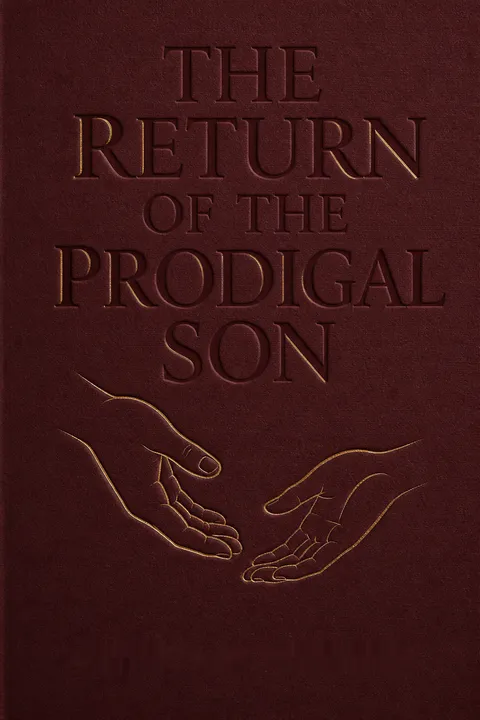


Key Takeaways
Let the painting expose where you are still standing outside love
A picture becomes a mirror. Henri Nouwen first encountered Rembrandt’s painting of a father embracing his returning son in 1983, when he was exhausted by a lecture tour and longing for a place to belong. The image reached him before he could explain why. Years later, he saw the original in Saint Petersburg and noticed the whole scene: not only the embrace, but also the elder son watching from a distance and other figures who remain onlookers.
The image follows him home. Nouwen left Harvard to join L’Arche, a community for people with intellectual disabilities, and began to see his spiritual life in the painting. He had spent years teaching about love, yet still struggled to receive it. The book follows his movement from identifying with the lost sons to accepting the harder call represented by the father.
The painting works as more than an illustration because it gives an inward conflict a visible geography: closeness, distance, welcome, and hesitation. Nouwen’s attention shifts as his own circumstances change, reminding readers that an image can reveal new questions without changing its details. The method is powerful precisely because it is personal, though it is not neutral art criticism. The painting becomes a spiritual mirror through Nouwen’s commitments and experiences. Readers need not share his theology to recognize the underlying exercise: notice which figure draws sympathy, and which one exposes a less comfortable part of the self.
Stop asking the world to certify a worth it cannot grant
Leaving begins inwardly. In the parable, the younger son demands his inheritance while his father is alive, then leaves home and spends it. Nouwen reads this as more than youthful escape: it is a rupture with family and belonging. He calls the imagined place of life without that belonging the distant country. There, people seek love through achievement, status, wealth, or admiration, only to become dependent on approval that always comes with conditions.
Remember what precedes success. Nouwen uses the word Beloved for the identity he believes God gives before performance or praise. When he forgets that grounding, ordinary criticism can crush him and someone else’s success can provoke envy. The problem is not ambition or advice itself. It is treating external approval as the final authority on personal worth.
Nouwen’s account links the hunger for approval to a deeper problem of identity: the self becomes a public project, perpetually awaiting a favorable verdict. That helps explain why achievement can soothe insecurity without resolving it. His spiritual answer is to receive worth as given, not earned. The distinction is useful even beyond faith, but it should not be mistaken for a call to ignore real social judgments. Communities and institutions do distribute opportunity unfairly. Inner freedom can loosen approval’s grip, but it cannot replace the work of changing unjust conditions.
Return by reclaiming your identity, not bargaining for a lesser place
The way back starts small. The younger son loses his money, status, and security, and ends up hungry while tending pigs. At his lowest point, he remembers that he is still his father’s son. Even so, he plans to ask for the status of a hired worker, as if survival is all he can reasonably request. Rembrandt’s painting preserves a sign of that remembered identity: the son still wears a sword associated with his family standing.
Acceptance comes before repair. Nouwen recalls a consuming friendship that pulled him away from prayer and community. When it collapsed, he had to choose between further self-destruction and returning to the commitments that had once sustained him. He connects the journey home to a second innocence: a mature, chosen openness to dependence and love, rather than childish ignorance. The Beatitudes, with their emphasis on mercy, humility, and peacemaking, offer him a path toward it.
The son’s prepared apology captures a familiar strategy: offer self-punishment in advance to make rejection less painful. Nouwen sees that strategy as a failure to trust restoration. His alternative does not erase wrongdoing. It begins from the premise that a person is more than the worst thing they have done, making honest repair possible without reducing the self to a permanent sentence. That distinction matters in moral and therapeutic settings alike. Accountability asks someone to face consequences; shame insists that their identity is nothing but the failure.
Duty can keep you home while resentment makes you a stranger
The obedient son is lost too. The elder son has stayed, worked, and followed expectations. When his brother returns to a celebration, he refuses to join. He sees the welcome as unfair, describes his own service as slavery, and treats his brother as a rival rather than family. Nouwen recognizes this pattern in himself: a dutiful religious life accompanied by envy, anger, and a sense that other people receive affection too easily.
Virtue can conceal a grievance. Unlike the younger son’s visible excess, the elder son’s lostness hides behind respectable behavior. Nouwen recalls becoming angry when a newly converted friend criticized his prayer life. His reaction revealed that discipline had become a source of superiority and resentment, not simply a freely chosen practice. The father’s invitation confronts him with a difficult question: can he accept another person’s welcome without turning it into a judgment on himself?
This is one of the book’s sharpest psychological observations: doing the right things does not guarantee a generous inner life. When duty is experienced as a debt owed by others, virtue can become an accounting system, and another person’s good fortune looks like an unpaid bill. Still, the distinction is not between discipline and spontaneity. Consistent commitments can be loving and life-giving. The warning is against using good conduct to claim superiority or to demand that others be less generously treated. Resentment is a cue to examine the hidden bargain beneath service.
Practice gratitude before resentment agrees that life is fair
Trust and gratitude require practice. Nouwen argues that the elder son cannot free himself from resentment by insight alone. Trust means believing that he is wanted home; gratitude means choosing to notice life as gift, even when hurt feelings remain. He describes gratitude as a discipline rather than a mood. A person can acknowledge beauty, speak kindly, or make a healing gesture while still feeling anger.
A crisis makes the choice concrete. After being struck by a car and hospitalized, Nouwen realized he was holding on to the complaint that his father had not loved him enough. When his elderly father visited from the Netherlands, Nouwen told him directly that he loved him and was grateful for his care. He describes this as a turn away from comparison and toward receiving a human parent as loving, but limited.
The value of this practice is that it does not require feelings to change before behavior can change. Gratitude becomes a chosen orientation, not a demand to pretend that pain is absent. Nouwen’s account also shows why comparison is so corrosive: it converts affection into a contest with winners and losers. Yet gratitude should not be used to silence justified anger or pressure people to reconcile with someone unsafe. Its strongest use is as a way to loosen habitual grievance while preserving an honest view of what happened.
Receive love without turning grace into a competition
The father goes out twice. In the parable, the father welcomes the younger son, then leaves the celebration to speak with the angry elder son. Nouwen stresses that neither receives a portion of love at the other’s expense. The younger son is restored with a robe, ring, and sandals; the elder is reminded that he already belongs in the household. The father invites both, while leaving each free to respond.
The painting makes welcome tangible. Nouwen reads the father’s different hands as both strong and tender, and the broad red cloak as shelter. He sees a parental love with both fatherly and motherly qualities. This is his interpretation of the image, not a claim about Rembrandt’s documented intention. Its central challenge is practical: stop measuring another person’s forgiveness, attention, or success as evidence that less remains for you.
The scene challenges the assumption that love must be scarce to be meaningful. The elder son’s distress makes sense if family affection is treated as a fixed supply, but the father’s response rejects that arithmetic. This gives the parable unusual emotional range: mercy must be received by the person who has failed and by the person who feels overlooked. The image of shelter adds tenderness to an otherwise abstract claim. Still, non-comparison does not mean identical treatment in every circumstance. Equal dignity can coexist with different needs, histories, and forms of repair.
See Christ as both lost sons, and home as a shared return
Nouwen extends the parable. He reads Jesus as both sons: like the younger son, Jesus leaves the Father’s home, enters human vulnerability, and gives himself away; like the elder son, he remains faithful without resentment. In this interpretation, Jesus does not stand above humanity as a distant rescuer. He enters human loss and carries people toward reconciliation with God.
The painting widens in meaning. The exhausted figure in Rembrandt’s embrace becomes, for Nouwen, more than one repentant individual. He represents humanity returning through Christ. Nouwen acknowledges that this is a personal theological reading, not an interpretation he can attribute to Rembrandt. Its purpose is to make the scene a shared homecoming: the son’s return is not merely an isolated reward for one sinner, but a picture of restored relationship.
This reading turns a family drama into a claim about solidarity: the divine does not simply wait for human suffering to end but enters it. That is a powerful imaginative move, especially for readers who experience failure as isolation. It also changes the meaning of the embrace, from an exceptional pardon to a shared restoration. The interpretation is best understood as contemplative theology rather than a plain reading of the parable or a statement of the painter’s intent. Its strength lies in what it illuminates, not in proving that this was the only meaning available.
Celebrate small returns without pretending suffering has disappeared
Welcome becomes a feast. The father orders the finest clothing and a celebration for his returning son. Nouwen reads the robe, ring, and sandals as public signs that the son’s dignity and place in the family are restored. The feast matters too: forgiveness is not a private transaction between father and child, but a joy the household is invited to share.
Joy notices what despair misses. At L’Arche, Nouwen experienced welcome through hugs, shared meals, and ordinary acts of affection from people with intellectual disabilities. He describes joy as a practice of noticing signs of forgiveness, hope, and return amid suffering, not as denial that suffering exists. A small reconciliation can matter even when war, injustice, or grief remain. The celebration asks the onlookers, especially the elder son, whether they can enter another person’s joy.
Nouwen’s emphasis on celebration corrects a spirituality that treats seriousness as proof of moral depth. Joy, in this account, is attention to concrete signs of restored connection, not a claim that the world is well. That distinction makes the idea more credible: grief and gladness can occupy the same life. Celebration can also strengthen a community by making welcome visible and shared. Its limit is equally important. A feast cannot substitute for changed behavior, material support, or justice. The book’s strongest version of joy makes room for those demands rather than obscuring them.
Grow from forgiven child into a parent who welcomes without control
Homecoming is not the final task. Nouwen’s central vocation emerges from the father in Rembrandt’s painting: a person who welcomes others without demanding repayment, control, or a defense. He calls this spiritual fatherhood, the work of offering others the compassion one has received. In L’Arche, this became more than a metaphor. Nouwen had to resist the urge to be needed, informed, or praised, and learn to offer a steady place of return.
Compassion has three disciplines. Nouwen describes grief, forgiveness, and generosity as ways to grow into this role:
1. Grieve over the suffering caused by human cruelty and estrangement.
2. Forgive without making praise or an apology the price of release.
3. Give time, attention, and care as kinship rather than leverage.
The goal is not authority over others, but an open-handed form of care.
The book’s ending makes receiving compassion a beginning, not an excuse to remain dependent. Its adult ideal is not domination but care that can welcome without possessing. That is a demanding redefinition of authority: the caregiver’s steadiness matters more than control or recognition. Nouwen’s three practices also balance emotional awareness, moral release, and concrete giving. A necessary nuance is that non-demanding love need not mean abandoning boundaries. Responsible care can protect people, name harm, and require change without treating welcome as a prize that must be earned.
Analysis
Nouwen builds his argument through a double act of interpretation. Rembrandt’s painting gives the Gospel parable a physical form, while Nouwen’s own life supplies a changing lens through which its figures become recognizable. The younger son first offers a language for exhaustion and the wish to be held. The elder son then complicates the comforting story by exposing how duty can coexist with envy and spiritual distance. Finally, the father transforms the desired destination into a vocation: the person who has been welcomed must learn to welcome.
This progression is the book’s governing insight. Home is not simply a place where one is forgiven. It is a relationship that makes a different way of treating others possible. Nouwen’s emphasis on receiving love is persuasive because it identifies a hidden obstacle to generosity: people who experience worth as something to earn often make approval, service, and even forgiveness transactional. The painting’s stillness supports this argument. Its central action is not a dramatic rescue but a sustained contact that the onlookers can either approach or refuse.
The method also has limits. Nouwen’s theological reading is intimate and fruitful, but it sometimes moves quickly from a personal response to claims about human nature and God. A reader need not accept those claims to value the emotional map. In addition, unconditional welcome can sound incomplete when separated from questions of accountability, safety, and material repair. The strongest reading holds both together: dignity is not conditional, but relationships still need truth and responsible action.
The book’s lasting contribution is its refusal to make the obvious sinner the only lost person. The dutiful critic may need mercy as urgently as the rebel, and the person who longs to be embraced may also be called to extend that embrace. Its central movement is from needing a home, to recognizing one, to becoming a trustworthy source of welcome for others.
Review Summary
The Return of the Prodigal Son is highly praised for its profound insights into the biblical parable and Rembrandt's painting. Readers appreciate Nouwen's personal reflections, his exploration of the roles of the younger son, elder son, and father, and how these relate to spiritual growth. Many find the book deeply moving, transformative, and applicable to their own lives. Nouwen's writing style is described as warm, vulnerable, and persuasive. The book is seen as a valuable resource for understanding God's love and mercy, and for personal spiritual development.
People Also Read






Glossary
distant country
Life away from belongingNouwen’s spiritual name for a life organized around separation from God and the search for worth through conditional sources such as status, achievement, wealth, or approval. It does not refer only to physical travel. The younger son’s departure gives the image its narrative form, while Nouwen uses it to describe patterns of alienation and dependence.
Beloved
Worth received before achievementNouwen’s name for the identity of being loved by God independently of success, praise, or moral performance. Remembering this identity makes it possible to act without constantly seeking approval. Forgetting it, in his account, leaves a person vulnerable to voices that demand proof of worth through accomplishment, popularity, or power.
second innocence
Mature, chosen opennessA form of childlike trust reached through conscious spiritual choices, rather than the untested innocence of infancy. Nouwen connects it with becoming receptive to God, living the Beatitudes, and giving up the belief that love must be earned. It describes a mature return to dependence and openness after experience, failure, and struggle.
discipline of gratitude
Choosing to notice giftsNouwen’s practice of deliberately acknowledging life as gift, even when resentment or hurt remains emotionally present. It includes choosing to notice goodness, speak of beauty, and respond with generosity instead of rehearsing grievance. Gratitude is not presented as spontaneous cheerfulness or denial of suffering, but as a repeated choice that can reshape attention.
spiritual fatherhood
Compassionate, non-controlling careNouwen’s term for becoming a source of welcome and forgiveness to others, modeled on the father in the parable. It is not defined by status, authority, or biological parenthood. It means offering care without using it to secure obedience, praise, or repayment, while remaining a dependable presence for people who need a place to return.
authority of compassion
Influence grounded in mercyThe kind of authority Nouwen sees in the father who welcomes both sons. It acts through empathy, forgiveness, and a willingness to bear another person’s pain, rather than through coercion or control. The phrase names a spiritual ideal: influence used to restore relationship and dignity, not to enforce dependence.
FAQ
What's "Return of the Prodigal Son" by Henri J.M. Nouwen about?
- Exploration of a Parable: The book is a spiritual reflection on the parable of the prodigal son, focusing on the themes of homecoming, forgiveness, and reconciliation.
- Personal Journey: Nouwen shares his personal journey of identifying with the younger son, the elder son, and ultimately the father, as depicted in Rembrandt's painting.
- Spiritual Insights: It delves into the spiritual insights gained from contemplating the painting and the parable, emphasizing the boundless love and compassion of God.
- Art and Spirituality: The book intertwines art and spirituality, using Rembrandt's painting as a lens to explore deeper theological and existential questions.
Why should I read "Return of the Prodigal Son" by Henri J.M. Nouwen?
- Deep Spiritual Reflection: The book offers profound insights into the nature of God's love and forgiveness, making it a valuable read for those seeking spiritual growth.
- Personal Transformation: Nouwen's personal journey and reflections encourage readers to examine their own lives and spiritual journeys.
- Artistic Interpretation: It provides a unique perspective by combining art analysis with spiritual reflection, appealing to those interested in both fields.
- Universal Themes: The themes of homecoming, forgiveness, and compassion are universal, resonating with readers from various backgrounds and beliefs.
What are the key takeaways of "Return of the Prodigal Son" by Henri J.M. Nouwen?
- God's Unconditional Love: The book emphasizes the boundless and unconditional love of God, who welcomes all his children back home.
- Role of the Father: Nouwen highlights the importance of becoming like the father in the parable, embodying compassion and forgiveness.
- Personal Identification: Readers are encouraged to identify with the younger son, the elder son, and the father, reflecting on their own spiritual journeys.
- Art as a Spiritual Tool: The book demonstrates how art can be a powerful tool for spiritual reflection and understanding.
How does Henri J.M. Nouwen interpret the roles of the younger and elder sons in "Return of the Prodigal Son"?
- Younger Son's Journey: Nouwen sees the younger son as a symbol of human waywardness and the journey back to God, emphasizing repentance and return.
- Elder Son's Struggle: The elder son represents resentment and self-righteousness, highlighting the difficulty of accepting God's unconditional love.
- Personal Reflection: Nouwen identifies with both sons, using their stories to reflect on his own spiritual struggles and growth.
- Call to Transformation: The book calls readers to move beyond the roles of the sons and embrace the compassionate nature of the father.
What is the significance of Rembrandt's painting in "Return of the Prodigal Son" by Henri J.M. Nouwen?
- Visual Meditation: The painting serves as a visual meditation on the parable, offering insights into the characters and their spiritual journeys.
- Artistic Interpretation: Nouwen uses the painting to explore themes of forgiveness, compassion, and divine love, seeing it as a reflection of God's nature.
- Personal Connection: The painting deeply moved Nouwen, prompting his own spiritual journey and reflections shared in the book.
- Symbolic Elements: Nouwen analyzes the symbolic elements of the painting, such as the father's hands and the contrasting figures of the sons, to draw spiritual lessons.
How does Henri J.M. Nouwen describe the father's role in "Return of the Prodigal Son"?
- Embodiment of Compassion: The father is portrayed as the embodiment of divine compassion, welcoming both sons with unconditional love.
- Call to Fatherhood: Nouwen emphasizes the call for individuals to become like the father, offering forgiveness and love to others.
- Central Figure: The father is the central figure in both the parable and the painting, representing God's desire for reconciliation and joy.
- Beyond Human Limitations: The father's love transcends human limitations, offering a model for how to live a life of compassion and generosity.
What are the best quotes from "Return of the Prodigal Son" by Henri J.M. Nouwen and what do they mean?
- "You are my Beloved, on you my favor rests." This quote emphasizes the core message of God's unconditional love for each individual.
- "Be compassionate as your Father is compassionate." It highlights the call to emulate God's compassion in our own lives.
- "The Father’s love does not force itself on the beloved." This reflects the idea that God's love is freely given and must be freely received.
- "The journey from teaching about love to allowing myself to be loved proved much longer than I realized." Nouwen shares his personal struggle to accept God's love, a journey many readers may relate to.
How does "Return of the Prodigal Son" by Henri J.M. Nouwen address the theme of forgiveness?
- Central to the Parable: Forgiveness is a central theme, with the father's unconditional forgiveness serving as a model for readers.
- Personal Reflection: Nouwen reflects on his own need for forgiveness and the difficulty of forgiving others, drawing parallels to the elder son.
- Divine Example: The book emphasizes that true forgiveness is a divine act, requiring us to let go of resentment and embrace compassion.
- Path to Healing: Forgiveness is presented as a path to healing and reconciliation, both with God and with others.
What spiritual practices does Henri J.M. Nouwen recommend in "Return of the Prodigal Son"?
- Contemplation of Art: Nouwen suggests using art, like Rembrandt's painting, as a tool for spiritual reflection and meditation.
- Embracing Silence: He emphasizes the importance of silence and solitude in hearing God's voice and experiencing His love.
- Practicing Compassion: The book encourages readers to practice compassion and forgiveness in their daily interactions.
- Living in Gratitude: Nouwen highlights the discipline of gratitude as a way to recognize and celebrate God's gifts.
How does "Return of the Prodigal Son" by Henri J.M. Nouwen explore the concept of homecoming?
- Spiritual Homecoming: The book portrays homecoming as a return to God's love and acceptance, a central theme of the parable.
- Personal Journey: Nouwen shares his own journey of returning to God, using the parable as a framework for understanding spiritual homecoming.
- Invitation to All: The book invites readers to see themselves in the story and to embark on their own journey of homecoming.
- Celebration of Return: Homecoming is depicted as a joyful celebration, reflecting God's delight in welcoming His children back.
What role does community play in "Return of the Prodigal Son" by Henri J.M. Nouwen?
- L'Arche Community: Nouwen's experience with the L'Arche community plays a significant role in his reflections, offering a real-life example of living out the parable's themes.
- Support and Challenge: Community is seen as both a support and a challenge, helping individuals confront their own spiritual struggles.
- Place of Healing: The community provides a space for healing and reconciliation, embodying the father's welcoming embrace.
- Model of Compassion: Nouwen views community as a model for practicing compassion and forgiveness, essential elements of the spiritual journey.
How does "Return of the Prodigal Son" by Henri J.M. Nouwen address the struggle between resentment and gratitude?
- Elder Son's Resentment: The book explores the elder son's resentment as a barrier to experiencing God's love and joy.
- Choice of Gratitude: Nouwen emphasizes the importance of choosing gratitude over resentment, seeing it as a path to spiritual freedom.
- Personal Struggle: He shares his own struggles with resentment and the transformative power of gratitude in his life.
- Invitation to Joy: The book invites readers to embrace gratitude as a way to participate in the joy of God's Kingdom.
About the Author
Other books by Henri J.M. Nouwen






Download PDF
Download EPUB
.epub digital book format is ideal for reading ebooks on phones, tablets, and e-readers.








