

Key Takeaways
Treat spiritual growth as recurring movement, not a climb toward perfection.
A different map. Nouwen questions the idea that spiritual maturity means advancing through a ladder of stages until every struggle is resolved. Instead, formation is a continuing movement toward freedom and love. The seven movements he gathers are from opaqueness to transparency, illusion to prayer, sorrow to joy, resentment to gratitude, fear to love, exclusion to inclusion, and denying to befriending death.
Return without shame. These movements are not a fixed sequence or a graduation checklist. People may move back and forth between their poles as life changes. Progress means becoming more able to notice what is happening within, name it honestly, and respond with greater freedom, connection, and compassion.
This model fits how learning and emotional change often work: insight does not permanently erase an old reaction, but can make it easier to recognize and respond differently when it returns. It also challenges the performance mindset that turns spiritual life into another contest of measurable achievement. The useful test is not whether fear or resentment has vanished, but whether a person can identify it without being wholly governed by it. A cyclical model has a tradeoff, however: without observable signs of change, it can make growth difficult to assess. Nouwen offers practical signs in increasing honesty, freedom, and capacity for service.
Make inward prayer answerable to community and service.
Two journeys belong together. Nouwen describes spiritual formation as an inward journey toward the heart and an outward journey toward community and ministry. The heart here means the whole center of a person, where thought, feeling, choice, body, and spirit meet. Looking inward helps people recognize their motives and struggles, but it is not meant to end in private self-improvement.
Practices that connect. Nouwen highlights reflection on lived experience, sacred reading, silence, community, and service. Anton Boisen’s idea of a “living document” means treating one’s actual life as material for spiritual reflection. Reading scripture prayerfully, listening in silence, and seeking guidance are meant to lead into shared life and care for people who are vulnerable.
The inward and outward journeys correct each other. Reflection without relationship can become self-absorption; action without reflection can become frantic or self-congratulatory. This resembles a feedback loop: private attention clarifies how someone acts, while relationships reveal what private self-understanding misses. Communities can also provide accountability and practical support that solitary practice lacks. Yet community is not automatically healing. Groups can silence dissent or protect harmful norms, so a community worthy of this role must make room for honest speech, mutual responsibility, and the voices of those with less power.
Give prayer time with no productivity test.
Space without a payoff. Nouwen calls prayer a deliberate practice of making room for God, rather than a technique for producing insight, calm, or success. A story about a tree deemed useless as lumber shows the point: because it was not cut down for its practical value, it grew large enough to offer shade. Prayer, likewise, need not justify itself through visible results.
Practice makes room. Jesus withdraws to pray before returning to public work. Nouwen recommends setting a regular time and place, then focusing on a short sacred passage or repeated prayer. Distractions are expected. The practice is to notice them and return attention gently, rather than treating a wandering mind as proof of failure.
The refusal to measure every activity by output offers a needed counterweight to cultures that equate worth with usefulness. Attention practices across traditions also suggest that returning to a chosen focus can steady the mind without requiring the impossible goal of having no thoughts. Still, a protected hour is not equally available to everyone, especially caregivers and people working under difficult conditions. The principle is more flexible than the ideal schedule: a modest, repeatable interval can preserve the distinction between a person’s value and their productivity.
Practice seeing through things, not merely using them.
Attention changes what appears. Nouwen uses the term theoria physike for contemplation that sees the real nature and connections of things. Its discipline, praktike, means clearing habits that cloud perception. He applies this to three relationships: nature is more than raw material, time is more than a rushed sequence of tasks, and people are more than useful roles or convenient labels.
Time can become meaningful. Nouwen contrasts chronos, time counted as a sequence, with kairos, a moment understood as an opportunity for change. Cooking, visiting a friend, or doing dishes can then be received as part of a meaningful life rather than as interruptions to it. This does not make every event pleasant; it invites attention to what an event may disclose or ask.
This is an ethics of attention as much as a theology of contemplation. Seeing a river as more than a resource, or a person as more than a job title, can interrupt habits of extraction and categorization. The distinction between clock time and meaningful time also helps explain why a crowded schedule can feel strangely empty. But sacred perception alone cannot repair polluted waterways or unjust institutions. Reverence becomes more credible when it informs concrete choices, such as how resources are used and whose needs receive attention.
Grieve openly, then let shared suffering loosen isolation.
Loss needs honest mourning. Nouwen argues that grief cannot be hurried away by pretending to be strong. He recalls how his mother’s death made familiar holidays feel newly altered, each one exposing her absence again. Facing that pain, rather than denying it, opened a deeper possibility of joy. The point is not that sadness disappears, but that it can be lived without being hidden.
Suffering connects people. In the story of Kisa Gotami, a grieving mother seeks mustard seeds from a household untouched by death. Finding no such household helps her recognize that loss is shared across human life. Nouwen also interprets the Emmaus story through two grieving travelers who are heard by a stranger before they can make sense of their loss.
The movement from grief toward connection has a strong interpersonal logic: people who are listened to without correction or forced optimism need not carry pain as a private failure. Shared experience can make compassion more specific, because it begins with presence rather than advice. The universal nature of loss, however, should never be used to flatten the differences between losses. A death, an eviction, and a betrayal may all hurt, but they have distinct causes and consequences. Solidarity matters most when it makes room for each person’s particular story.
Name resentment before it hardens; practice receiving others' gifts.
Cold anger narrows life. Nouwen describes resentment as anger that has been swallowed until it becomes a settled way of seeing. The parable of vineyard workers makes the feeling vivid: those hired early resent workers who arrive near closing time and receive the same wage. Nouwen recognizes his own indignation and asks what it hides: a failure to appreciate what he has received, or to rejoice in another person’s good fortune.
Gratitude changes the relationship. Gratitude is more than polite thanks. It includes noticing what others offer and allowing oneself to receive it. Nouwen recalls learning from Lucha, a Bolivian woman whose kindness and openness gave him something to learn, even though he had imagined himself as the helper. Naming resentment in a supportive community can make space for forgiveness and renewed action.
The chapter’s strongest insight is that resentment can grow inside people who see themselves as dutiful and generous. It is not limited to obvious selfishness; it can arise when effort becomes an unspoken claim to special reward. Gratitude can loosen that claim and restore reciprocity. Yet gratitude must not be demanded from people who have been exploited or harmed. Naming injustice may require anger, boundaries, and repair, not a quick spiritual reframing. The distinction is between anger that clarifies what needs to change and resentment that becomes a permanent identity organized around grievance.
Replace fear's scarcity logic with a home rooted in love.
Fear builds its own prison. Nouwen tells of people who hoard resources for imagined emergencies, then build higher walls to protect what they have accumulated. Their defenses leave them isolated and less secure. He sees fear working this way in personal life too: anxiety about acceptance, money, safety, or status generates new worries rather than lasting reassurance.
Love offers another center. Nouwen describes the “house of love” as belonging rooted in God, not in other people’s approval or a guarantee that nothing painful will happen. He uses Andrei Rublev’s icon of the Trinity, with its figures gathered around a table, as an image of shared welcome. Prayer helps people return to that sense of belonging, which should shape not only private choices but also public commitments to peace and care.
Fear is both emotional and political in this account. When insecurity is treated as proof that everyone else is a threat, defensive choices can reproduce the isolation they were meant to prevent. A stable sense of belonging may help people act with greater generosity under uncertainty. Still, not every fear is an illusion, and spiritual reassurance cannot substitute for protection from real violence or deprivation. The book’s public challenge is important: inner security should not become an excuse to ignore material conditions. Love requires both trust and practical attention to safety and justice.
Welcome the person beyond their usefulness, label, or need.
Hospitality interrupts categories. In a story from the Desert Fathers, a monk carries a disabled stranger to town, buys what the stranger requests, and carries him back. Only then does the monk recognize that the stranger was an angel. Nouwen first finds the story uncomfortable because the stranger appears manipulative. Its challenge is to question how quickly a person in need gets reduced to a problem to manage.
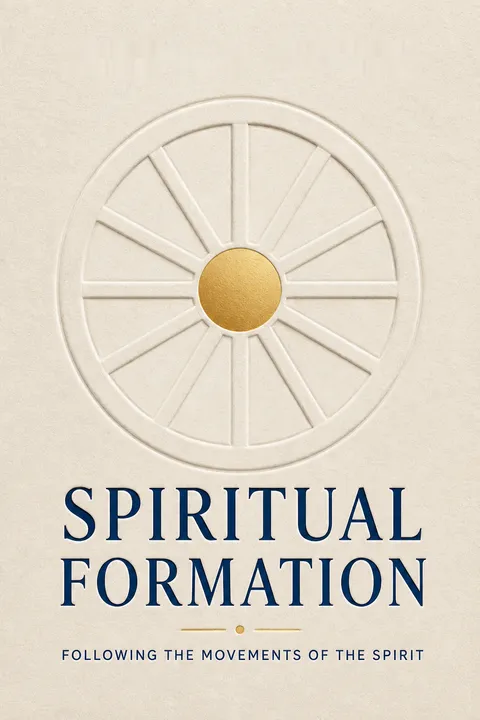
Weakness can create community. At L’Arche Daybreak, Nouwen learned from Adam, a man with substantial disabilities who needed daily assistance. Nouwen came to see that Adam helped form the community by drawing people into care, forgiveness, and mutual dependence. A wagon-wheel image expresses the idea: a life centered in communion can connect many people without racing around trying to reach them all.
This approach contests the assumption that care flows in one direction from capable giver to passive recipient. People who receive assistance also shape relationships and teach others how to depend, listen, and cooperate. That is a meaningful correction to service models focused only on the helper’s intentions. But radical hospitality should not mean abandoning safeguards or overlooking coercion. Boundaries can protect both people and make genuine welcome sustainable. Inclusion is not pretending that disability, power, or difference do not exist; it is refusing to treat those differences as reasons a person has less to offer or less claim to belong.
Prepare for death by practicing forgiveness and dependence now.
Mortality clarifies unfinished business. Nouwen calls for befriending death: facing mortality as part of life instead of treating it only as an enemy to avoid. When he was seriously injured in a car accident, he became acutely aware of relationships marked by anger and unresolved forgiveness. The experience brought a desire to seek forgiveness, offer it, and release the weight of judgment. He presents this as a movement toward freedom, not as a reason to stop resisting illness or danger.
Belonging supports dependence. Nouwen connects preparation for death with reclaiming one’s identity as beloved, accepting dependence, and trusting the Communion of Saints, the bond between the living and the dead in Christian faith. His image of twins in the womb suggests that an unknown passage may open onto a larger life, though its mystery cannot be demonstrated.
Thinking about mortality can make present priorities less abstract: relationships, forgiveness, care plans, and the desire not to die alone become harder to postpone. Nouwen’s emphasis on dependence also pushes against the idea that autonomy is the only dignified way to live. This can support more honest conversations about care at the end of life. The spiritual image of death as a passage may be consoling to believers, but it should not be imposed on someone who experiences dying as frightening or unjust. Befriending death means facing reality, not denying pain or surrendering needed treatment.
Analysis
The book’s central move is to replace a staircase with a living rhythm. Spiritual maturity is not a final state in which fear, grief, or resentment are permanently conquered. It is a practiced capacity to recognize these states, bring them into relation with prayer and other people, and move toward more generous forms of life. That shift matters because religious self-improvement can reproduce the very performance culture Nouwen criticizes: the believer becomes a spiritual achiever measuring progress toward perfection.
The seven movements give readers an accessible vocabulary for difficult inner experiences. Their strength lies in pairing emotional honesty with direction. Grief is not dismissed, but connected to companionship; fear is not merely condemned, but answered with belonging; resentment is identified as a constriction that may give way to gratitude. The book’s stories make these transitions memorable, especially Kisa Gotami’s search for a household untouched by death and Nouwen’s own learning at L’Arche. In both, insight arises through contact with another life, not through abstract instruction alone.
The framework is also deliberately communal. Solitude should lead beyond private comfort toward service, while service should remain rooted in inward attention. This offers a useful correction to both spiritual individualism and activism that burns through people without examining its motives. The tension is that the book’s theological interpretations sometimes move quickly from suffering toward grace. Such meaning can sustain people, but it cannot be prescribed as the explanation for another person’s pain, nor should it replace material responses to injustice.
The text is a posthumous synthesis assembled from Nouwen’s writings and teaching, rather than a single continuous argument. Its repetitions reinforce core themes, although they can make the account feel less systematic than a formal developmental theory. That looseness is also consistent with its claim: formation is responsive, recurring, and unfinished. Its most practical invitation is modest and demanding at once: attend to what is happening within, name it truthfully, and let that awareness deepen how one receives and serves others.
Review Summary
Spiritual Formation by Henri Nouwen receives overwhelmingly positive reviews (4.33/5). Readers praise its depth, vulnerability, and wisdom about spiritual transformation through "movements" like fear to love, resentment to gratitude, and exclusion to inclusion. Many note it should be read slowly with reflection exercises. Reviewers appreciate Nouwen's storytelling, inclusion of visio divina practices, and practical spiritual disciplines. Some Protestant readers note minor theological differences with Nouwen's Catholic perspective. The book challenges readers deeply while offering freedom and peace through its insights on prayer, community, and spiritual growth.
People Also Read






Glossary
Spiritual formation
Ongoing shaping of the heartIn Nouwen’s account, spiritual formation is the continuing process of becoming more responsive to God in the center of one’s life. It is not a sequence of steps toward spiritual perfection. Through prayer, reflection, community, and service, people become more able to recognize inner struggles and move toward freedom, love, and connection.
lectio divina
Prayerful reading of scriptureA Benedictine practice of reading the Bible reverently and receptively, rather than treating it only as information to analyze or use. The reader attends to a passage, word, or image and considers how it speaks in the present moment. In Nouwen’s account, this allows the reader’s lived experience to meet the biblical story.
visio divina
Prayerful contemplation of imagesA practice of sacred seeing in which a person gazes attentively at an icon or religious image as a focus for prayer and reflection. The book’s editors use this term to complement lectio divina. The image is not merely decorative: sustained attention to its forms and details can help a person reflect on spiritual experience.
chronos
Time counted in sequenceThe ordinary experience of time as chronology: one event following another, often felt as a schedule or a stream of demands. Nouwen contrasts chronos with kairos. When life is seen only as chronos, events may seem disconnected, burdensome, or meaningless, and time can feel as though it controls the person.
kairos
A meaningful moment of changeA moment understood as an opening for change, spiritual attention, or renewed possibility. Nouwen contrasts kairos with chronos, or time experienced merely as sequence. Ordinary activities and difficult events may be received as meaningful occasions rather than interruptions, though this does not mean every event is pleasant or easy to interpret.
theoria physike
Contemplation of things' true natureA term Nouwen draws from Evagrius Ponticus for contemplative vision of the real nature and connections of things. It describes seeing beyond a surface use or appearance. In the book, this vision helps people perceive nature as more than property, time as more than a schedule, and other people as more than roles or labels.
praktike
Discipline that clears perceptionA term from Evagrius Ponticus that Nouwen uses for spiritual discipline aimed at removing the habits and distortions that prevent clear seeing. It complements theoria physike: discipline helps clear perception, while contemplation attends to the deeper reality of things. Nouwen connects this work with prayer and the loosening of illusions.
prayer of the heart
Prayer rooted in the inner selfA form of interior prayer in which repeated sacred words move from deliberate thought toward the center of a person’s being. Nouwen gives examples such as repeating a short prayer or phrase while returning attention to it when distracted. The practice is intended to unite mind, heart, and body in attentive presence to God.
Communion of Saints
Spiritual bond across generationsA Christian belief that the community of faith includes the living and those who have died. Nouwen describes the dead as remaining present through memory, love, and prayer, and sees this shared spiritual belonging as a source of support when facing mortality. The term refers to communion, not simply remembrance as a private act.
About the Author
Other books by Henri J.M. Nouwen


Download PDF
Download EPUB
.epub digital book format is ideal for reading ebooks on phones, tablets, and e-readers.








