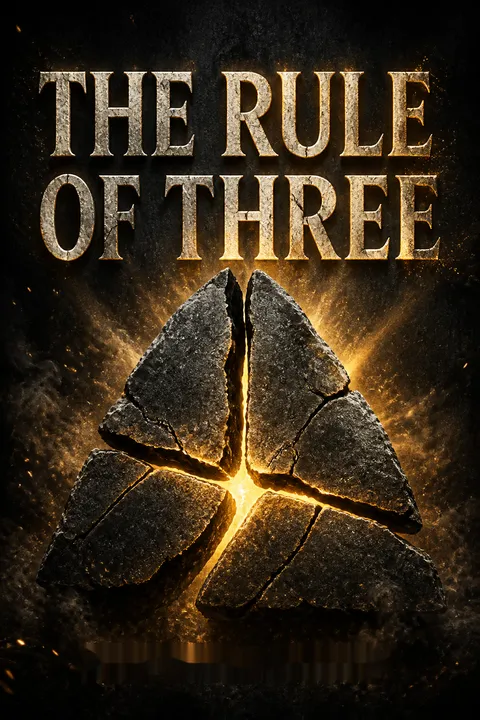


Plot Summary
The Old Omega Runs
Sixteen-year-old Adam Daley1 is helping his best friend, Todd,4 finish a school essay when the lights fail. The computers shut down, and so do students’ phones, including those with charged batteries. The school sends everyone home, assuming a local outage.
Adam’s1 old, computer-free Omega starts when newer cars remain dead, so he drives Todd4 and Lori Peterson,5 a classmate he secretly likes, through streets jammed with abandoned vehicles. He collects his younger twin siblings,6 Danny6 and Rachel,7 from elementary school.
Beyond the traffic, frightened people are already stranded without transport or phone service. Adam1 suspects a computer virus has disabled the machinery behind everyday life, though he cannot explain how it spread. His father is away on a flight, and his police-captain mother3 is still on duty.
Chlorine for Tomorrow
At home, Adam’s1 elderly neighbor Herb Campbell2 confirms through an old shortwave radio that the same shutdown has struck elsewhere. Herb2 asks Adam1 to drive him to a pool-supply shop, where he buys a carload of chlorine tablets with cash.
Six men corner them outside and demand the working car. Herb2 displays a licensed pistol and persuades the group to back down without firing. On the drive home, he explains that pumps and treatment systems need computers and electricity, so clean water may soon disappear.
Chlorine can make contaminated water drinkable. Adam1 realizes the purchase is not an eccentric effort to keep Herb’s2 nonexistent pool clean. Herb2 is preparing for a crisis that could last weeks, even as Adam1 still hopes the outage will be fixed quickly.
A Grocery Store Mob
During the first night, Adam1 joins Herb2 on neighborhood watch and helps a shoeless, exhausted woman reach her family after she walks home from the city. By morning, the blackouts have produced reports of looting, assaults, and fires.
At the local supermarket, a crowd breaks windows and surges inside while Adam’s mother,3 Captain Kate Daley,3 and rookie officer8 Brett8 try to stop them. Herb2 calms the crowd by arranging rationed sales of food that will spoil, allowing cash or written promises to pay later.
The store manager14 accepts the plan, and neighbors form a line instead of a mob. Kate3 then approves civilian partners and patrols using minibikes, scooters, and other vehicles that still run. A frightened neighborhood begins turning cooperation into routine.
The Farmstead Watch
Herb2 takes Adam,1 Brett,8 Todd,4 and the twins6 to the Peterson farm, where the family has a well, livestock, a generator, and stored food. Adam1 hopes to spend time with Lori,5 but instead helps her father,9 Stan,9 repair equipment and build a perimeter from barbed wire.
Herb2 gives Adam1 a concealed pistol for the night watch. Lori’s5 family has already faced theft, and Adam1 and Todd4 patrol the farm’s dark approaches with baseball bats. When seven men arrive carrying weapons and empty water containers, Adam1 steps forward rather than let fear trigger a gunfight.
He persuades them to lower their weapons, then helps arrange water deliveries without exposing the farm to a desperate crowd. The encounter leaves the Petersons9 safer for the moment, but makes clear how quickly need can become a threat.
The Checkpoint Goes Quiet
Back in the neighborhood, Adam’s mother3 and Herb2 hear gunfire near a school checkpoint. A raiding party has attacked the guards; one neighbor, Mike Smith,13 is shot and later dies, while two attackers are killed. The first death among Adam’s1 neighbors changes the crisis from frightening uncertainty into personal grief.
While adults debate defense, Adam1 studies Herb’s census of local residents and finds erased marks beside people with useful skills. The marks originally identified families for a possible relocation to the Peterson farm.
Herb2 explains that the neighborhood has too many people and too little food to defend indefinitely; a smaller group might survive on the farm. Kate3 resists abandoning her jurisdiction, and Adam1 recoils at leaving neighbors behind. The plan is only a contingency, but it forces him to ask who gets to choose whose lives matter.
Adam Rejects the Lifeboat
Instead of accepting Herb’s2 plan to select a small group for the farm, Adam1 proposes using the neighborhood itself. Parks, schoolyards, gardens, and the field beneath the power towers could be cultivated; fences could be dismantled to build a perimeter wall; new wells could supplement the dwindling creeks.
The Petersons9 could bring their farming knowledge and equipment into the suburb. Adam1 insists that residents should hear the facts and decide together, not have their futures assigned in private.
Herb2 recognizes that the idea may work, though it will demand labor, discipline, and shared resources. Kate3 agrees to explore it. Adam’s1 choice does not erase the danger or guarantee enough food. It changes the question from who will be abandoned to whether a whole community can organize itself to endure.
The Farm Is Besieged
A coordinated gang attacks the Peterson farm, sets a shed and barn alight, and shoots at the family. Brett8 takes command under fire, helping the Petersons9 and their defenders survive, but the assault convinces Herb2 that the isolated property cannot be held.
He urges Stan9 to bring his family, animals, tractor, tools, seeds, and supplies to the neighborhood. Stan9 refuses at first, bound to land his family has lived on for generations. Adam1 argues that the farm’s harvest could feed many people if they work together, and Lori5 adds that the neighborhood needs her father’s9 skills.
Stan9 agrees to leave with his family and equipment, though the decision is painful. The farm is not surrendered to an enemy by choice; it becomes the foundation for Adam’s1 larger plan.
The Toll Road Ambush
The Petersons’9 loaded convoy moves toward Adam’s1 neighborhood with livestock, food, and farm machinery, guarded by volunteers and police. An armed group blocks the road and takes Herb2 and Adam1 hostage behind a barricade.
Herb2 offers a cow as a toll, but the men demand the entire herd and threaten to use their captives to seize it. He pretends to weaken, then draws a hidden pistol and forces the captors to surrender their weapons and clear a path. Adam1 retrieves the rifles and signals the convoy through.
The Petersons9 arrive safely before dark, bringing the resources the neighborhood needs to plant crops. The encounter also confirms Herb’s2 talent for deception and raises an uncomfortable question for Adam:1 in a world where survival depends on force, how much can a community compromise without becoming what it fears?
Eden Mills Takes Shape
After Adam1 and Herb2 test the unfinished ultralight, Adam1 flies Captain Kate3 to another police station and discovers it burned and attacked. Kate3 relocates the station’s weapons, supplies, officers, and records into the neighborhood. At a crowded school meeting, she explains that the shutdown is widespread and will not end soon; Herb2 describes the danger beyond their streets.
Adam1 presents the plan for collective survival, and the residents stand to support it. They cultivate vacant land, build walls and checkpoints, establish medical care, organize communal meals, and survey residents’ skills.
The Petersons9 direct planting, while mechanics convert lawn equipment into useful machines. Five families choose to remain independent, and their choice is respected. The neighborhood becomes a functioning settlement, not because its danger has passed, but because its residents have accepted responsibility for one another.
Neighbors Beyond the Wall
As Eden Mills strengthens its food and defenses, Adam1 and Lori5 grow closer. After their first kiss, they fly a message and chlorine tablets to Olde Burnham, a smaller gated community across the river. Herb2 arranges a cautious meeting on the bridge, where the two settlements agree to trade medical care for mechanics who can help adapt old engines.
The partnership gives each community skills it lacks and offers Eden Mills a nearby ally. Yet Herb2 warns that repaired vehicles also increase the threat of attack by making more people mobile.
Meanwhile, Kate’s3 guards accidentally shoot three people in a passing truck, mistaking them for attackers. Herb2 burns the evidence and persuades Kate3 and Howie11 to conceal the mistake as a successful defense. The settlement’s solidarity grows, but so does the cost of keeping its people confident.
Olde Burnham Falls
Olde Burnham comes under a coordinated assault by a heavily armed force using explosives and firearms. Adam1 and Herb2 reach the settlement by ultralight after the attack, then Kate3 leads rescuers through the ruins. They find more than a hundred dead and thirty-five survivors, including women and children.
Herb2 identifies evidence of executions and learns from the wreckage that the attackers are organized, ruthless, and equipped beyond anything Eden Mills can match. Brett8 finds one surviving attacker gravely wounded and brings him back for treatment and questioning.
The attack destroys the illusion that a strong wall and a friendly neighbor are enough. Adam1 recognizes people among the dead, while Lori’s5 hope for safety becomes grief. The surviving residents need shelter, and Eden Mills has gained both a burden and a dangerous source of intelligence.
The Cessna Pursues
On the flight home from Olde Burnham, a Cessna catches Adam1 and Herb2 in the air and fires on their ultralight. Adam1 uses the smaller craft’s ability to turn and fly slowly, drawing the faster plane into repeated passes. Herb2 takes aim with a rifle while Adam1 maneuvers near the river valley.
On a final pass, Adam1 slows abruptly, letting the Cessna overshoot; Herb2 fires into its fuselage, and it crashes against the valley wall. The victory is sickening rather than triumphant. A few days later, Adam1 helps Herb2 question their wounded captive, who confirms that the attackers are a rogue military unit joined by other fighters.
They already know about Eden Mills and intend to target it. Adam1 leaves the interrogation with proof that the settlement is not merely preparing for a distant danger. It has become the enemy’s next objective.
The Attack Is Chosen
After the prisoner confirms the enemy’s size, weapons, and plans, Herb2 tells Eden Mills’s leaders that surrender, escape, and negotiation would all expose residents to death. He proposes a surprise attack, despite admitting that the settlement is unlikely to win a conventional battle.
Adam’s1 ultralight can scout and strike from above, while ground teams target the enemy’s vehicles and supplies. The committee accepts the plan and prepares thirty-two evacuation groups in case the defense fails.
Kate,3 Brett,8 and Howie11 lead separate forces; Adam1 and Herb2 take the modified ultralight, now armored around its engine and fuel tank. Before setting out, Adam1 and Lori5 promise to protect his younger siblings6 if he does not return. His first flight began as an escape into the sky. Now he climbs into the same machine to defend the people below.
Fire Over the Convoy
Before dawn, Eden Mills’s ground teams strike the enemy compound while Adam1 and Herb2 approach in the ultralight carrying grenades and incendiary bottles. They ignite fuel and vehicles, then turn to intercept the enemy convoy pursuing the retreating teams.
Adam1 flies low over the trucks as Herb2 drops more explosives, forcing the convoy to brake and collide. The attackers abandon their pursuit and turn back toward their base. Adam1 and Herb2 follow, releasing their remaining explosives above the vehicles.
Gunfire hits the plane, and the blast damages its tail, but the attack destroys several trucks and scatters the force. Adam1 struggles to keep the aircraft level and guide it home. The strike has bought Eden Mills time, not safety. Herb2 expects the enemy to retaliate, and the battered ultralight may be needed again.
The Bridge Comes Down
The enemy advances with hundreds of men and dozens of vehicles along Burnham, heading for the bridge to Eden Mills. Adam,1 flying the repaired ultralight, drops firebombs along the road to slow and bunch the convoy. The attackers smash through the first barricade and continue onto the bridge, where Eden Mills’s defenders wait behind a second blockade.
As trucks cross, hidden charges detonate. The bridge fractures and collapses into the river valley, carrying the convoy, its weapons, and hundreds of attackers with it.
Adam1 circles above the wreckage and sees that the force capable of overrunning the settlement has been destroyed. He returns to the neighborhood with Herb.2 The walls still stand, the people they love are alive, and the immediate attack is over. Herb’s2 final caution is implicit in the outcome: survival is secured for now, not forever.
Analysis
The novel’s central experiment is whether a community can survive catastrophe without surrendering the values that make it worth saving. The computer failure exposes how much ordinary life depends on invisible systems: pumps deliver water, engines move food, radios coordinate rescue. Once those systems vanish, Eden Mills must rebuild from what remains, including old cars, hand tools, local knowledge, and relationships that had been neglected during normal life. The crisis turns practical competence into civic power.
Herb2 and Adam1 embody competing survival logics. Herb2 sees scarcity as a problem of numbers, timing, and force. His proposed relocation to the Peterson farm is strategically coherent, but it treats people as variables to be selected. Adam1 does not deny the scarcity. He challenges the assumption that expertise grants a few people the right to decide who is expendable. His plan to cultivate the neighborhood and involve its residents makes democracy a material practice: people vote, but they also build walls, dig wells, share food, and accept limits.
The story refuses to make communal solidarity innocent. Eden Mills protects its residents by turning strangers away, takes control of resources, and hides the accidental killing of civilians to preserve confidence in its guards. Those choices expose the danger that emergency leadership can slide from persuasion into manipulation. Herb’s2 competence saves lives, yet his use of secrecy makes Adam’s1 demand for honesty essential. The settlement’s moral identity depends not on avoiding hard choices, which is impossible, but on continuing to examine who makes them and whose interests they serve.
Adam’s1 flight gives this ethical conflict an intimate form. The ultralight begins as an unfinished bond with his absent father and becomes a tool of public responsibility. Each flight offers distance from the suffering below, but also forces Adam1 to return to it with information or action. By the ending, Eden Mills has survived an attack through planning, cooperation, and overwhelming force. Its victory is real but provisional. The final reassurance lasts only for the day, preserving the novel’s tension between hope as necessary commitment and hope as an unearned promise.
Review Summary
The Rule of Three received mixed reviews. Many readers found it gripping and realistic, praising its portrayal of a world without technology. They appreciated the believable characters and intense plot. However, some criticized the slow pacing, lack of character development, and treatment of female characters. Readers enjoyed the unique premise and Eric Walters' writing style, though some felt the ending was abrupt. Despite its flaws, many considered it an engaging dystopian novel that explores human nature and survival in a crisis.
People Also Read




Characters
Adam Daley
The young pilotAdam is a sixteen-year-old who loves flying, builds an ultralight with his father, and prefers responsibility to the adolescent laziness his friend Todd4 teases him about. He is observant and technically minded, which lets him recognize that modern cars have failed because their computer systems are dead. His initial confidence is narrow: he thinks in terms of getting his family home and waiting for normal life to resume. Herb’s2 planning and the crisis push Adam to consider the lives of neighbors he barely knows. He resists a survival plan that would exclude most residents, then uses his knowledge, courage, and public voice to help organize a shared alternative. His growing competence does not erase his fear or his longing for his absent father.
Herb Campbell
The guarded strategistHerb is Adam’s1 older neighbor, a retired government employee with an old radio, practical supplies, and a close eye for danger. He is generous with the Daley family1 but rarely explains his past or the full reasoning behind his plans. His experience in unstable places makes him quick to see how shortages, rumors, and fear can turn neighbors against one another. He treats preparation as a way to preserve life, even when his proposed choices are severe. Adam’s1 insistence on fairness challenges Herb’s instinct to control risk by selecting who can be saved. His calm manner is both a source of reassurance and a tool he uses to influence frightened people.
Kate Daley
The neighborhood captainKate is Adam’s mother1 and the police captain responsible for a large precinct. She is a disciplined public servant who must balance the safety of her children with obligations to people far beyond her own street. The shutdown strips away the vehicles, communications, and staffing on which her authority depends, but she continues to make difficult decisions and accept help when it serves the wider community. Kate is cautious about arming civilians and reluctant to abandon her station. Her practical leadership complements Herb’s2 long-range planning, though she does not simply defer to him. At home, she tries to steady Danny6 and Rachel7 while sharing Adam’s1 unspoken anxiety about his father.
Todd
Adam’s irrepressible friendTodd is Adam’s1 best friend, an energetic student who avoids homework, enjoys teasing, and can turn even a strained moment into comedy. Beneath the bravado, he is loyal. He rides with Adam1, helps protect the Peterson9 farm, and contributes labor beside his father as the neighborhood builds its defenses. Todd’s humor does not make him careless about danger; it gives Adam1 a familiar voice in a world that keeps changing. He is also more eager than Adam1 to carry a gun, reflecting his attraction to action and status. The contrast between Todd’s jokes and his willingness to stand watch makes their friendship feel like a real partnership rather than a source of comic relief alone.
Lori Peterson
The farm girl and pilot’s loveLori is a classmate Adam1 has admired from a distance, the daughter of a farming family living beyond the suburb. She is practical and capable, at home with animals and farm work, yet she is also a teenager trying to make sense of fear, interrupted plans, and the boys who pursue her. Her warmth toward Adam1 grows through shared labor and flights, while the danger around her family makes romance inseparable from uncertainty. Lori’s courage is quiet rather than showy: she helps with the ultralight, supports her father’s9 decisions, and accepts the responsibilities of a changed community. She is not simply Adam’s1 reward; she has her own family loyalties, competence, and judgment.
Danny Daley
Adam’s younger brotherDanny is one of Adam’s1 fourth-grade twin siblings. He meets the disaster with jokes about missed school and lost entertainment, but he is old enough to understand that their father’s absence is frightening. He bickers with Rachel7 and sometimes challenges Adam’s1 attempts to manage him. His ordinary wishes for cold drinks, games, and familiar friends give the family’s survival work a child’s scale.
Rachel Daley
Adam’s younger sisterRachel is Adam’s1 twin sister, affectionate and openly expressive. She loves horses and quickly bonds with Lori5 and the Peterson9 farm. When she fears that her father may be stranded, her grief breaks through the reassuring explanations her family offers. Rachel understands more than Adam1 sometimes assumes, and her questions remind him that protecting children means telling them enough truth to trust the adults around them.
Brett
The daring rookie officerBrett is a young police officer serving under Kate3. Initially treated as an inexperienced rookie, he proves brave and resourceful during the attack on the Peterson9 farm and later leads dangerous missions beyond the walls. He has a strong appetite for action and a looser relationship to authority than his uniform first suggests. Herb2 recognizes that Brett’s decisiveness can be useful, while Adam1 finds him difficult to read. His confidence is an asset in a crisis, but it also makes supervision important.
Stan Peterson
The rooted farmerStan is Lori’s father5, a farmer attached to land worked by several generations of his family. He knows how to grow food, maintain equipment, and live with the practical limits of water and weather. His reluctance to leave the farm comes from more than stubbornness: the property holds family history, work, and burial places. As the crisis deepens, he must weigh that inheritance against his duty to his wife10, daughter5, and a much larger community.
Susie Peterson
The farm’s watchful motherSusie is Lori’s mother5 and Stan’s9 partner in running the farm. She is alert to danger and willing to defend her home, but she also sees the human need behind the people who come looking for water. Her judgment helps turn a tense confrontation into a controlled act of aid. She shares her husband’s9 practical knowledge and her daughter’s5 loyalty, while bringing a steadier instinct for when generosity can be made safe.
Howie
The neighborhood’s big guardHowie is a large, genial police officer who helps organize patrols and later oversees the neighborhood’s sentries. He jokes easily, but the violence tests his confidence and makes him confront the responsibility of leading armed civilians. He cares about the people assigned to him and feels the weight of decisions made under uncertainty. His concern about turning away desperate outsiders gives the settlement’s security problem a human face.
Sergeant Evans
The wary patrol sergeantSergeant Evans is one of Kate’s3 experienced officers. He helps coordinate neighborhood patrols and understands the limits of a police force without working vehicles or reliable backup. The crisis forces him to confront violence he has never previously faced in the line of duty. His unease reflects the gulf between professional training and the emotional reality of taking a life.
Mike Smith
A neighbor on the perimeterMike Smith is a member of the neighborhood whose presence becomes personal to Adam1 through the community’s shared routines. He represents the ordinary residents who are pulled into dangerous work simply because they live inside the settlement’s boundaries.
Ernie Williams
The grocery store managerErnie manages the local supermarket. When panic breaks through the storefront, he is frightened and unsure whether he can keep control of his inventory or protect himself. Herb2 persuades him to distribute perishable food fairly and record promises of later payment. Ernie’s cooperation turns a threatened store into a community resource, and his practical knowledge later supports food planning.
Mr. Nicholas
The neighborhood engineerMr. Nicholas is an engineer whose skills become central to adapting ordinary equipment for a world without computerized systems. He helps repair and modify machines, supports construction, and contributes to the settlement’s efforts to manage water and power. He approaches shortages as technical problems to be worked through rather than reasons to give up.
Judge Roberts
The civic conscienceJudge Roberts is a local judge who helps give the settlement’s decisions a legal and civic framework. He worries about respecting property and maintaining due process even as residents repurpose abandoned resources. His role anchors the community’s attempt to preserve rules while adapting them to an emergency.
Councilwoman Stevens
The elected representativeCouncilwoman Stevens brings local government into the neighborhood’s planning. She questions proposals about security, food, and shared property, helping ensure that practical decisions receive public scrutiny. Her presence signals that Eden Mills is trying to act as a community rather than simply obey whoever holds the most weapons.
Paul Robson
The computer-free mechanicPaul is a displaced father with the rare ability to repair engines that do not depend on computers. He arrives with his wife and children, bringing useful skill as well as new mouths to feed. His family’s welcome tests Eden Mills’s rule that newcomers need a way to contribute.
Plot Devices
The computer virus
The machinery goes silentA worldwide catastrophe disables computer systems and the technologies that depend on them. The failure reaches beyond phones and household electronics: modern cars, utilities, communications, and emergency services stop functioning. The cause remains uncertain in the text, but the consequences drive every major choice. People must rely on analog tools, manual labor, and knowledge that still works without networks or processors. The outage is not only a setting; it removes the systems that normally coordinate help, making local cooperation necessary and making distance itself a strategic problem.
The rule of three
A survival clockHerb2 uses a survival maxim about the limits of going without air, water, and food to explain why he buys chlorine before the crisis becomes obvious to everyone. It gives Adam1 a concrete way to understand the difference between temporary inconvenience and a breakdown of basic life support. The rule shapes the story’s priorities: water treatment, food preservation, sanitation, and agricultural planning. Its force comes from being practical rather than magical. It turns an abstract catastrophe into a sequence of needs that residents must meet before the lack of supplies becomes fatal.
The neighborhood census
People become infrastructureHerb’s2 survey records who lives in Eden Mills and what skills they possess. Initially it helps the leaders identify police officers, medical workers, mechanics, farmers, and other people who could support survival. Adam1 discovers that Herb2 has also marked a smaller group for a possible move to the Peterson9 farm. The same document therefore carries two competing visions: strategic selection by an experienced planner and a community whose members should have a voice in their future. The census later helps Eden Mills organize work, but its private markings reveal how easily planning for survival can become deciding other people’s worth.
The ultralight
Eyes above the wallsAdam’s1 unfinished, two-seat ultralight uses simple mechanics rather than computer controls, so it can fly after modern aviation systems fail. His flying lessons and his father’s work on the plane give Adam1 a rare means of scouting the surrounding area, carrying messages, and reaching isolated communities. The aircraft also makes him vulnerable: it attracts attention, can be damaged by gunfire, and carries Adam1 into confrontations where speed alone cannot protect him. The plane’s purpose shifts from a personal dream shared with his father to a tool the settlement depends on, linking Adam’s1 coming of age to the community’s survival.
Walls and the bridge
Defense becomes geographyThe settlement transforms familiar boundaries into a defensive system. Neighbors dismantle fences, build barriers and sentry positions, and use the river crossings to control access. These structures offer protection but also make Eden Mills visible as a place worth taking. The Burnham bridge becomes the decisive choke point because the attackers’ vehicles must cross it to reach the neighborhood. The community’s engineering and planning turn geography into a weapon, although every barrier raises ethical questions about exclusion and force. This device culminates the settlement’s shift from defending individual homes to coordinating the fate of thousands.
FAQ
Basic Details
What is The Rule of Three about?
- Global tech collapse: A sudden, unexplained event shuts down all computers and technology-dependent systems worldwide.
- Suburban community struggles: A typical suburban neighborhood in Canada is thrown into chaos as residents grapple with the loss of power, communication, and essential services.
- Teenager steps up: Sixteen-year-old Adam Daley, along with his family and neighbors, must learn to survive and protect their community in this new, technology-free world.
Why should I read The Rule of Three?
- Thrill of a realistic disaster: The book offers a gripping and plausible scenario of societal breakdown, making it a page-turner for readers interested in survival stories.
- Exploration of human nature: It delves into how ordinary people react under extraordinary circumstances, showcasing both the best and worst aspects of human behavior.
- Focus on community and survival: The story emphasizes the importance of community, resourcefulness, and adaptability in overcoming adversity, offering a message of hope and resilience amidst chaos.
What is the background of The Rule of Three?
- Technological dependence: The story highlights society's over-reliance on technology and the potential consequences of its sudden absence.
- Suburban setting: The choice of a typical suburban neighborhood emphasizes the vulnerability of even seemingly stable communities to widespread disruption.
- Social commentary: The book touches on themes of social order, resource management, and the potential for both cooperation and conflict in times of crisis.
What are the most memorable quotes in The Rule of Three?
- "Optimism is a fine quality.": Herb's dry observation highlights the tension between Adam's hopefulness and Herb's more pragmatic, cautious outlook.
- "Everything changes when people are desperate for water, food, when they're scared for the well-being of their children.": Herb's statement underscores the fragility of civilization and the potential for societal breakdown in the face of scarcity and fear.
- "Civilized behavior is nothing more than a thin veneer.": Herb's quote encapsulates a central theme of the book, suggesting that societal norms can quickly erode under pressure.
What writing style, narrative choices, and literary techniques does Eric Walters use?
- First-person perspective: The story is told from Adam's point of view, creating a sense of immediacy and allowing readers to experience the events through his eyes.
- Fast-paced plot: The narrative moves quickly, mirroring the escalating chaos of the situation and keeping readers engaged.
- Realistic dialogue: The characters' conversations feel natural and authentic, adding to the story's believability.
Hidden Details & Subtle Connections
What are some minor details that add significant meaning?
- The '81 Omega's age: The car's age is a constant reminder of the pre-computer era, and its reliability becomes a symbol of resilience against technological dependence.
- Herb's shortwave radio: The analog radio is a lifeline to the outside world, emphasizing the value of older, less sophisticated technology.
- The Gomez family's reunion: The scene highlights the importance of community and the emotional impact of the crisis on individuals and families.
What are some subtle foreshadowing and callbacks?
- Todd's zombie movie comparison: Todd's early joke foreshadows the increasingly desperate and dangerous behavior of some people as the crisis unfolds.
- Herb's "paper pusher" description: Herb's repeated downplaying of his past hints at his true skills and experience, which become increasingly important as the story progresses.
- Adam's flying lessons: Adam's initial desire to become a pilot foreshadows his later use of the ultralight for reconnaissance and defense.
What are some unexpected character connections?
- Herb's connection to Adam's mother: The subtle hints about Herb and Adam's mother's shared understanding and respect suggest a deeper connection based on their experiences with danger and responsibility.
- Brett's farm background: Brett's revelation about his upbringing adds depth to his character and explains his competence in practical skills, contrasting with his initial "rookie" image.
- Mr. Peterson's military service: The subtle hints about Stan's past suggest a hidden strength and preparedness that contribute to the farm's resilience.
Who are the most significant supporting characters?
- Todd: Provides comic relief and unwavering loyalty, highlighting the importance of friendship in times of crisis.
- Herb: Offers strategic planning and practical skills, serving as a mentor to Adam and a key figure in the community's survival efforts.
- Lori: Represents hope and connection, providing emotional support to Adam and embodying the values of community and resilience.
Psychological, Emotional, & Relational Analysis
What are some unspoken motivations of the characters?
- Adam's desire for Lori's approval: Adam's actions are often driven by his unspoken feelings for Lori, motivating him to take risks and demonstrate his competence.
- Herb's need for redemption: Herb's past experiences and potential regrets may motivate his desire to protect the community and guide Adam, seeking a sense of purpose and atonement.
- Captain Kate Daley's fear for her family's safety: Adam's mother's decisions are driven by her deep-seated fear for her children's well-being, leading her to make difficult choices to protect them.
What psychological complexities do the characters exhibit?
- Adam's internal conflict: Adam struggles with the burden of responsibility and the moral dilemmas of his actions, questioning his own competence and the choices he must make.
- Herb's guarded nature: Herb's reluctance to reveal his past and his tendency to control situations suggest a deep-seated need for control and a fear of vulnerability.
- Brett's suppressed aggression: Brett's eagerness for action and his casual attitude toward violence hint at a suppressed aggression that is unleashed by the crisis.
What are the major emotional turning points?
- Adam's realization of the global scale of the disaster: The moment Adam understands the true extent of the crisis marks a shift from youthful optimism to a more serious and responsible mindset.
- The attack on Olde Burnham: The destruction of the neighboring community shatters the illusion of safety and forces the characters to confront the brutal reality of their situation.
- Herb's revelation of his past: Herb's admission about his past actions and his fear of karma creates a moment of vulnerability and deepens his connection with Adam.
How do relationship dynamics evolve?
- Adam and Lori's relationship: Their bond deepens as they face shared challenges, moving from friendship to a romantic connection forged in adversity.
- Adam and Herb's mentorship: Their relationship evolves from neighborly acquaintance to a close mentorship, with Herb guiding Adam through the complexities of leadership and survival.
- The community's collective identity: The shared experience of the crisis fosters a sense of collective identity and interdependence, transforming a group of individuals into a cohesive community.
Interpretation & Debate
Which parts of the story remain ambiguous or open-ended?
- The cause of the technological collapse: The book never explicitly reveals the reason for the global shutdown, leaving readers to speculate about the potential causes and the future of technology.
- The long-term fate of the community: The ending leaves the community's future uncertain, with the threat of future attacks and the challenges of rebuilding society still looming large.
- Herb's true motivations: Herb's past and his ultimate goals remain somewhat ambiguous, leaving readers to question the extent of his influence and the true nature of his intentions.
What are some debatable, controversial scenes or moments in The Rule of Three?
- Herb's plan to relocate to the farm: The decision to leave some behind raises ethical questions about the value of individual lives versus the survival of the group.
- The killing of the truck occupants: The guards' actions in shooting the occupants of the truck, even if they were innocent, spark debate about the justification of violence in times of crisis.
- Herb's manipulation of information: Herb's control over information and his willingness to deceive the community raise questions about the ethics of leadership and the balance between security and transparency.
The Rule of Three Ending Explained: How It Ends & What It Means
- The bridge's destruction: The destruction of the bridge symbolizes a decisive break from the old world and a commitment to a new, self-reliant way of life.
- The community's survival: The community's ability to defend itself and secure its resources demonstrates the power of collective action and the resilience of the human spirit.
- The uncertain future: The ending leaves the community's long-term fate ambiguous, highlighting the ongoing challenges of rebuilding society and the need for continued vigilance and adaptation.
The Rule of Three Series
Download PDF
Download EPUB
.epub digital book format is ideal for reading ebooks on phones, tablets, and e-readers.








