

Key Takeaways
Treat the gut as a brain for digestion, not a passive tube
A self-running circuit. The enteric nervous system (ENS) is the network of neurons embedded in the digestive tract. It senses conditions, processes information, and coordinates gut reflexes without orders from the brain or spinal cord. Gershon reports more than 100 million neurons in the small intestine alone, roughly the count in the spinal cord. Across the whole bowel, there are more neurons than in the rest of the peripheral nervous system combined.
Independence, not isolation. Bayliss and Starling found that pressure inside the bowel could trigger a coordinated propulsive reflex even after its connecting nerves were cut. Trendelenburg later produced the same response in isolated guinea pig intestine. The ENS does not think in language. Its claim to brain status rests on its ability to integrate local information and control its organ.
The useful shift is from a command-center model to a distributed one. The head brain remains influential, but it is not the sole site where information becomes action. That distinction helps explain why bowel function can persist after central connections are severed, and why a disorder may originate locally. The phrase "second brain" can mislead if taken to imply consciousness or human-like thought. Gershon's evidence supports a narrower, stronger claim: the gut has its own neural control system.
Notice how tidy models can erase inconvenient discoveries
A forgotten third division. In 1921, J. N. Langley described the autonomic nervous system as having sympathetic, parasympathetic, and enteric divisions. Yet textbooks came to teach a simpler two-part version. The gut's neurons were often treated as merely the final links in parasympathetic pathways, despite earlier experiments showing that gut reflexes could occur without the brain or spinal cord.
A field returns. Gershon argues that the rise of a tidy two-transmitter model helped push the ENS out of view. At a 1981 neuroscience meeting in Cincinnati, he and colleagues presented evidence for the system and for serotonin's role within it. The audience's changed response marked a turning point for neurogastroenterology, the study of how the nervous system controls the digestive tract.
Scientific knowledge depends not only on what has been observed, but on what a field chooses to remember. A compact model is useful until it turns into a gate that excludes evidence that does not fit. The book's history shows how established findings can be cited and still effectively disappear when later explanations make them seem unnecessary. The caution is not that simple models are inherently bad. It is that elegance should organize evidence, not decide in advance which evidence is allowed to count.
Prove a gut transmitter with converging tests, not resemblance alone
A five-part case. In the 1960s, Gershon proposed that serotonin acts as a neurotransmitter in the gut. The idea challenged the prevailing view that only acetylcholine and norepinephrine carried peripheral nerve signals. He found serotonin in enteric nerves, showed that those nerves released it when stimulated, and demonstrated that serotonin could reproduce nerve effects. Further tests showed that blocking serotonin's action disrupted those effects and that the nerves could inactivate it after release.
A decisive addition. The gut makes more than 95 percent of the body's serotonin, while the brain makes about 1 percent, according to the book. In 1981, Marcello Costa used immunocytochemistry, a method that uses antibodies to locate specific molecules in tissue, to show serotonin inside enteric nerve cells. Evidence from chemistry, physiology, and microscopy converged, strengthening the case beyond any single suggestive result.
This episode offers a general lesson in causal reasoning: resemblance is a clue, not a demonstration. A molecule that imitates a nerve effect might still be acting indirectly, so the strongest case links location, release, action, and interruption of action. The convergence matters because each method has different weaknesses. The book also makes scientific disagreement human without making consensus a popularity contest: the claim gains strength when the evidence becomes harder to explain away.
Give digestion local control because its timing and dangers demand it
More than a chemical soup. Digestion requires the right substances in the right place at the right time. The stomach stores food, grinds it, and releases acid and enzymes as needed. The duodenum must then neutralize incoming acid so pancreatic enzymes can work. Sensors, nerves, hormones, muscles, and glands coordinate these changing tasks. The ENS helps match gut activity to what is actually present inside the digestive tract.
A local control problem. If the stomach releases acidic contents too quickly, the small intestine can be damaged. If pancreatic enzymes escape their ducts, they can digest the body's own tissue. The gut's own neural circuits help coordinate movement and secretion, while central input also matters in some regions. The digestive tract is therefore not a passive pipe. It manages a sequence of powerful chemical operations that require close regulation.
The gut's complexity makes local control look less like evolutionary excess and more like practical engineering. A nearby sensor can respond to changing conditions without routing every small adjustment through a distant command center. The system also has to coordinate actions that can be useful in one location and harmful in another, such as acid secretion. Still, the book does not establish that the ENS controls every digestive event on its own. Its argument is strongest when it treats autonomy as a capacity that varies by task and location.
Follow enteric nerves beyond the bowel to pancreas and gall bladder
The gut has partners. Gershon's laboratory investigated whether enteric neurons communicate with nearby digestive organs. In isolated preparations containing both duodenum and pancreas, stimulating nerves in the gut activated nerve cells in the pancreas and prompted digestive enzyme release. The preparation excluded the brain and circulating hormones, supporting a direct neural connection. The same research found that acetylcholine promotes pancreatic activity, while serotonin-containing nerves can restrain it.
A wider network. Related work found that neurons in the gut connect with nerve cells in the gall bladder, an organ that stores and concentrates bile. The gall bladder's neural structures resembled those of the ENS more than ordinary peripheral ganglia. These findings broaden the picture: the gut's nervous system can help coordinate organs that supply digestion, not merely control the tract through which food passes.
The significance is architectural. The digestive system is not a set of neighboring organs acting independently, but a network with direct neural links as well as hormonal communication. The isolated-organ experiments are especially persuasive because they reduce competing explanations and make a direct connection visible. At the same time, showing that a nerve pathway exists does not by itself reveal all of its normal functions in a living body. The work is a map of a system beginning to be understood, not a complete operating manual.
Read diarrhea as defense, but treat dehydration as the danger
A cleansing response. The colon normally reabsorbs water, but infection can trigger enteric reflexes that move salt and water into the bowel and speed its contents onward. This flush can remove microbes and their toxins. The response is protective in principle, though it can become dangerous when fluid loss outruns replacement, especially in infants and older people.
A defense hijacked. Gershon explains how cholera toxin exploits the cells' signaling machinery, keeping secretion switched on and producing extreme watery diarrhea. The bacteria attach to the small intestine, while the resulting flood can wash competing microbes from the colon. The book reports that diarrhea killed nearly three million children annually at the time it was written. The same mechanism that helps clear an ordinary infection can become life-threatening when an invader forces it into overdrive.
This is a vivid example of how a defense can become a liability when its scale or duration changes. The reflex is not simply a malfunction: it can serve a purpose by clearing harmful material. The danger comes from losing control of the response and the water balance it disrupts. That distinction matters because suppressing a symptom and solving its cause are not always the same thing. The account also puts physiology in a social frame: a preventable biological crisis becomes fatal when care and resources are unavailable.
Do not mistake an unexplained bowel for an imaginary illness
Symptoms without a visible lesion. Gershon describes functional bowel disease as real digestive distress without an obvious structural defect. He estimates that about 20 percent of Americans suffer from it, with irritable bowel syndrome among its common forms. Only about 10 percent of people with IBS seek medical care, while those who do may face extensive testing because similar symptoms can arise from serious diseases.
A dangerous shortcut. Some physicians attributed unexplained symptoms to anxiety or unconscious conflict, even when they had no evidence that the pain was minor or psychological. The book argues that the ENS itself could be malfunctioning, while also recognizing that the brain can influence the bowel. In the late 1990s, the cause and even the number of diseases grouped under functional bowel labels remained uncertain.
The central ethical point is also an epistemic one: an absent explanation is not evidence that the experience is unreal. A symptom category can be clinically useful while concealing several different mechanisms. The book rightly challenges the habit of assigning psychological causes simply because conventional tests find no lesion. Its own case is more careful than a simple reversal, though. Brain and gut interact, and acknowledging local gut disorders need not deny that emotion can affect digestion.
Many ulcers were infections, not evidence of a defective personality
Stress was not the whole cause. Anxiety and severe physical stress can affect stomach activity, and stress ulcers are real. But the familiar explanation that ordinary anxiety caused most peptic ulcers was not supported by convincing evidence. Researchers repeatedly found Helicobacter pylori in ulcer disease, and work described in the book established the bacterium as a major cause rather than a harmless visitor.
Treatment changed the story. By the book's 1998 publication, ulcer care had shifted from operations and acid suppression alone toward combining antibiotics with acid-reducing medicine to eliminate H. pylori. Gershon recounts his mother's repeated stomach bleeding and the surgery she underwent despite his argument for trying a newer acid-blocking drug. She never recovered from the operation. Her story shows the human cost of clinical decisions made before evidence, access, and institutional practice align.
The ulcer story shows how a plausible psychological account can harden into blame. Stress can alter bodily function, but that does not prove it caused a particular disease. Identifying infection changed both the explanatory model and the available treatment choices. The personal account makes the stakes tangible, although a single tragic case cannot establish how often a different decision would have changed an outcome. Its force lies in the broader demand: clinical explanations should remain revisable when stronger causal evidence appears.
Target distinct serotonin receptors instead of silencing gut signals wholesale
One molecule, different messages. The book describes several serotonin receptors in the gut with distinct effects. The 5-HT1P receptor helps local sensory nerves initiate reflexes such as propulsion and secretion. The 5-HT3 receptor on sensory fibers can carry gut distress signals toward the brain, contributing to nausea. The 5-HT4 receptor can increase acetylcholine release from enteric nerves. These differences explain why serotonin cannot be treated as one simple on-off signal.
Selectivity offers leverage. By the late 1990s, 5-HT3-blocking drugs were used to reduce nausea from cancer treatment, and researchers were exploring serotonin-targeting drugs for IBS. Gershon also proposes that serotonin reuptake inhibitors, including Prozac, can disrupt the gut's ability to clear serotonin, helping explain gastrointestinal effects such as nausea, diarrhea, and constipation. These mechanisms and proposed treatments reflect the book's research period, not a current treatment guide.
Receptor diversity is a useful antidote to the idea that a chemical has one fixed effect. The outcome depends on which cells receive the signal and which receptor they carry. That creates a path toward selective intervention: block an unwanted message without disabling essential reflexes. It also raises a practical limit. A drug's effect in an isolated preparation or on one receptor does not guarantee a predictable result across an intact person, where signals and compensations interact.
Trace missing bowel neurons to the neural crest's interrupted migration
The neurons arrive from elsewhere. The ENS develops largely from neural crest cells, embryonic cells that leave the forming nervous system and migrate through the body. Cells from vagal and sacral regions contribute to the gut. In Gershon's account, these migrating cells enter the bowel and form its nerve networks rather than being born fully formed in place.
A missing destination. In Hirschsprung's disease, the terminal colon lacks enteric ganglia. Without those neurons, propulsion fails, the bowel above the affected segment can enlarge, and surgery may be needed. Gershon reports an incidence of about one case per 5,000 births. Animal studies showed that migrating cells can stop short of the lower bowel, highlighting how a failure of development can produce a mechanical obstruction without a physical object blocking the gut.
The migration model changes the question from "What is wrong with this colon?" to "Which steps failed before birth?" That shift can connect a visible defect to cell movement, survival, and local tissue conditions. It also warns against assuming that an organ's adult structure explains its entire history. The account's strength is its developmental logic, though the book emphasizes that different genetic defects may converge on the same aganglionic outcome, so one mechanism cannot explain every case.
Judge developmental genes by the local signals and timing they control
Genes act through context. The book describes GDNF and its receptor Ret as essential for the survival and development of enteric precursors. It also examines endothelin-3 and the ETB receptor, whose absence is linked to aganglionosis in some animal models and people. Gershon's experiments suggest that endothelin-3 restrains premature nerve-cell differentiation, while laminin can promote differentiation. If precursors mature too soon, they may stop migrating before they populate the lower bowel.
A hypothesis, not a settled answer. These findings illustrate why identifying a mutated gene does not automatically explain a birth defect. The cells, signals, and timing must also be traced. Gershon presents the endothelin and laminin account as a supported hypothesis, not a final solution. Different genetic disruptions can produce similar outcomes, and the precise cause of Hirschsprung's disease remained unresolved in the book.
Development is not a parts list in which each gene maps neatly to one finished structure. The same signal can support one cell type and restrain another, depending on developmental stage and tissue. This makes timing and local environment central to causal explanation. The book models scientific restraint by distinguishing observations from its preferred mechanism. That distinction is essential: an elegant hypothesis becomes knowledge only when it survives tests that could have shown it to be wrong.
Analysis
The book's central move is to relocate some digestive intelligence from the head to the gut. Gershon argues that the enteric nervous system is not merely a relay for the brain's commands: it can sense, integrate, and generate reflexes locally. The claim is powerful because it rests on a biological demonstration, not metaphor alone. Gut reflexes persist in isolated tissue, and the bowel contains a vast neural network with a rich chemical vocabulary.
The narrative also makes scientific rediscovery part of the argument. The field's history shows that evidence can be neglected when it conflicts with a clean explanatory scheme. Gershon's serotonin dispute, culminating in the 1981 Cincinnati meeting, gives the reader both the personal conflict and the methodological resolution: claims strengthen when anatomy, chemistry, and physiology converge. The book's most useful clinical implication follows from this history. A symptom without an obvious lesion deserves investigation, not automatic assignment to a patient's emotional state.
The account is strongest when it links scales. It moves from receptors and reflexes to digestion, infection, clinical decisions, and embryonic development. The neural crest story further demonstrates that an adult organ is the product of migration and local signals, and that multiple developmental failures can lead to similar disease. This gives the book a coherent scientific architecture rather than a catalog of stomach facts.
Its main limitation is also part of its value: the book captures a field in motion. Several mechanisms, especially those proposed for functional bowel disease and Hirschsprung's disease, remain hypotheses in the text. The title's "second brain" can also tempt readers to overstate the gut's autonomy. Gershon's evidence supports local neural control, not a second conscious mind. Read carefully, the metaphor expands the map of nervous function while preserving the distinction between neural processing and thought.
Review Summary
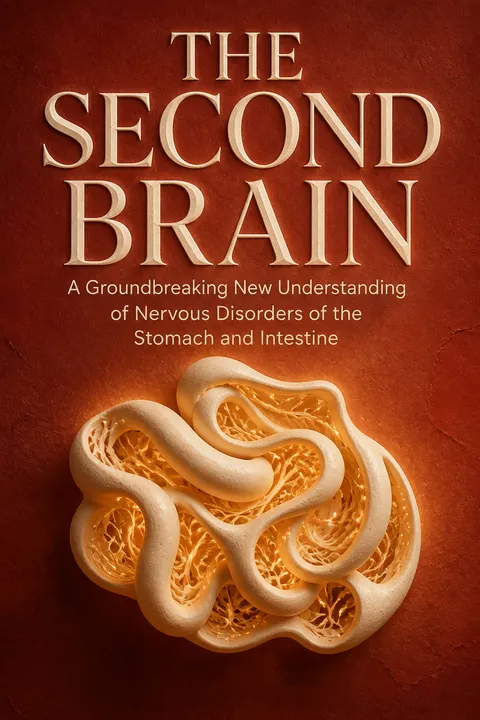
The Second Brain by Michael D. Gershon explores the enteric nervous system, revealing the gut's role as a "second brain." Readers appreciate Gershon's engaging writing style, humor, and scientific expertise. The book provides detailed explanations of gut function, neurobiology, and the author's research journey. While some find it informative and fascinating, others struggle with its technical complexity. Critics note the book's focus on Gershon's work and lack of practical applications. Overall, it's considered a valuable resource for those interested in gastrointestinal science, despite its dense scientific content.
People Also Read









Glossary
Enteric nervous system
Gut's intrinsic neural networkThe network of nerve cells and fibers embedded in the wall of the digestive tract. It senses conditions inside the gut, processes information, and coordinates functions such as movement and secretion. It communicates with the brain and spinal cord, but can also mediate reflexes without their input.
Neurogastroenterology
Nervous control of digestionThe field that studies how the nervous system interacts with the digestive tract. In Gershon's account, it emerged as researchers restored attention to the enteric nervous system, its chemical signals, its reflexes, and its possible role in digestive disorders.
Peristaltic reflex
Reflex that propels gut contentsA coordinated intestinal response to pressure or contents in the gut. The bowel contracts on the oral side of the stimulus and relaxes on the anal side, pushing material forward. Experiments showed that this reflex can occur in isolated intestine, without commands from the brain or spinal cord.
Enterochromaffin cells
Mucosal cells that release serotoninSpecialized cells in the lining of the gut that contain and release serotonin. Gershon describes them as sensors that respond to mechanical stimulation or pressure. Their serotonin can activate enteric sensory nerves and help initiate reflexes involved in propulsion and secretion.
5-HT1P receptor
Serotonin receptor for gut reflexesA serotonin receptor identified in Gershon's research on the enteric nervous system. The book associates it with slow excitatory responses in enteric neurons and with sensory signaling that initiates local reflexes. It distinguishes this receptor from other serotonin receptors that mediate different effects.
Ileal brake
Reflex that slows intestinal transitA response in which fatty acids in the digestive tract slow the movement of contents through the terminal small intestine. Gershon presents it as a way to hold material in the small bowel while digestion and absorption continue, rather than sending it onward too soon.
Functional bowel disease
Digestive symptoms without visible lesionsA group of disorders defined by digestive symptoms when routine examination does not reveal an obvious structural defect. Gershon emphasizes that the symptoms are real, while the causes and boundaries of the category remained uncertain. Irritable bowel syndrome is one common form discussed in the book.
Neural crest
Embryonic source of gut neuronsA temporary population of embryonic cells that separates from the developing neural tube and migrates through the body. Cells from particular neural crest regions contribute to the enteric nervous system. Their migration, survival, and interaction with the bowel's local environment shape the developing gut's neural networks.
Hirschsprung's disease
Congenital absence of gut gangliaA birth defect in which a segment of the terminal bowel lacks enteric ganglia. The affected region cannot propel intestinal contents normally, causing obstruction and enlargement of the bowel above it. The book discusses surgery and developmental research into why migrating neural crest cells fail to populate the region.
Interstitial cells of Cajal
Gut muscle pacemaker cellsSpecialized cells in the bowel located near nerve networks and smooth muscle. Research described in the book identifies them as pacemakers for the slow electrical rhythms of intestinal muscle and suggests that they also help relay or amplify neural signals to muscle.
GDNF
Growth signal for gut precursorsGlial cell line derived neurotrophic factor, a signal that Gershon's experiments associate with the development and survival of enteric nerve cells. It acts through Ret-related signaling and supports early neural crest-derived precursors. In the animal studies discussed, disrupting GDNF or Ret severely impairs formation of the enteric nervous system.
Endothelin-3 and ETB receptors
Signals linked to colon developmentEndothelin-3 is a signaling peptide, and ETB is a receptor that can respond to it. The book links defects in either to aganglionosis in some models of Hirschsprung's disease. Gershon's experiments suggest that endothelin-3 may restrain premature nerve-cell differentiation in the developing bowel, while noting that the mechanism was not settled.
FAQ
What is "The Second Brain" by Michael D. Gershon about?
- Focus on the enteric nervous system: The book explores the discovery, structure, and function of the enteric nervous system (ENS), often called the "second brain," which operates independently within the gut.
- Scientific and historical journey: Gershon recounts the history of research on the ENS, including key discoveries and his own contributions, especially regarding serotonin as a neurotransmitter in the gut.
- Clinical implications: The book discusses how understanding the ENS can revolutionize the treatment of gastrointestinal disorders, particularly functional bowel diseases.
- Comprehensive structure: Divided into three parts, the book covers early breakthroughs, a detailed exploration of the gut, and the origins and disorders of the ENS.
Why should I read "The Second Brain" by Michael D. Gershon?
- Revolutionary perspective: The book challenges traditional views by revealing the gut’s nervous system as a complex, semi-autonomous "second brain" that influences health and disease.
- Bridging science and medicine: Gershon makes neurogastroenterology accessible, blending rigorous science with engaging storytelling and personal anecdotes.
- Hope for patients: The book offers optimism for millions suffering from gut-related illnesses, highlighting new therapies targeting the ENS.
- Changing medical attitudes: It advocates for greater understanding and compassion for patients with gastrointestinal disorders, moving beyond dismissive psychosomatic explanations.
What are the key takeaways from "The Second Brain" by Michael D. Gershon?
- Gut autonomy: The ENS is a vast network of neurons capable of independent reflexes and complex regulation of digestion, absorption, and immune defense.
- Serotonin’s central role: Serotonin is a major neurotransmitter in the gut, crucial for motility and sensation, and a target for new therapies.
- Clinical revolution: Understanding the ENS has led to better treatments for ulcers, IBS, and other gut disorders, shifting away from surgery and psychosomatic diagnoses.
- Developmental and genetic insights: Disorders like Hirschsprung’s disease are linked to developmental and genetic defects in ENS formation.
What are the best quotes from "The Second Brain" by Michael D. Gershon and what do they mean?
- "Descartes may have said, 'I think, therefore I am,' but he only said that because his gut let him." This underscores the foundational role of the gut in enabling higher brain functions.
- "The enteric nervous system is a rebel, the only element of the peripheral nervous system that can elect not to do the bidding of the brain or spinal cord." This highlights the ENS’s autonomy and complexity.
- "No one thinks straight when his mind is focused on the toilet." A humorous reminder of how gut dysfunction can dominate mental focus.
- "Understanding spells relief." Emphasizes the hope that scientific insight into the ENS will lead to effective treatments for gut diseases.
How does Michael D. Gershon define the enteric nervous system in "The Second Brain"?
- Vast neural network: The ENS consists of over 100 million nerve cells embedded in the gut wall, organized into two main plexuses: Auerbach’s (myenteric) and Meissner’s (submucosal).
- Functional independence: It can mediate reflexes and control digestion without input from the brain or spinal cord, making it a true "second brain."
- Evolutionary significance: The ENS is an ancient, evolutionarily conserved system, reflecting its critical role in survival.
- Complexity and diversity: It uses a wide array of neurotransmitters and receptors, rivaling the brain in complexity.
What is the significance of serotonin in the enteric nervous system according to "The Second Brain"?
- Key neurotransmitter: Gershon established serotonin as a major neurotransmitter in the gut, essential for initiating peristaltic and secretory reflexes.
- Multiple receptor types: The gut contains at least seven serotonin receptors, including 5-HT3 and 5-HT4, each mediating different responses.
- Therapeutic implications: Drugs targeting serotonin receptors, such as 5-HT3 antagonists, are used to treat conditions like IBS and chemotherapy-induced nausea.
- Dual role: Serotonin also acts as a growth factor influencing ENS development, not just as a neurotransmitter.
How does "The Second Brain" by Michael D. Gershon explain the relationship between the enteric nervous system and the autonomic nervous system?
- Three-division model: The ENS is one of three divisions of the autonomic nervous system, alongside the sympathetic and parasympathetic systems, but is anatomically and functionally independent.
- Local control: Most enteric neurons operate without direct input from the brain or spinal cord, processing sensory information and coordinating motor responses locally.
- Neurotransmitter diversity: The ENS uses a rich array of neurotransmitters, including acetylcholine and serotonin, reflecting its brain-like properties.
- Functional autonomy: The ENS can manage digestion and gut reflexes independently, but also communicates with the central nervous system.
What clinical implications does "The Second Brain" by Michael D. Gershon highlight regarding gastrointestinal disorders?
- Functional bowel diseases: Many common gut disorders, such as IBS, are linked to ENS dysfunction rather than structural abnormalities.
- Serotonin-targeted therapies: Drugs that modulate serotonin signaling can alleviate symptoms of motility disorders and IBS.
- Changing medical practice: Recognizing the ENS as a separate brain has shifted treatment approaches from surgery and psychosomatic explanations to targeted pharmacology.
- Compassion for patients: The book calls for greater empathy and understanding for those with gut disorders, moving beyond outdated stigmas.
How does "The Second Brain" by Michael D. Gershon describe the development and genetic basis of the enteric nervous system?
- Neural crest origin: The ENS develops from neural crest cells that migrate to the gut during embryogenesis.
- Gene regulation: Genes like RET, Mash-1, GDNF, and endothelin-3 orchestrate the proliferation, migration, and differentiation of enteric nerve precursors.
- Microenvironmental influence: The gut’s microenvironment instructs neural crest cells on their fate, affecting ENS formation.
- Disease connection: Defects in these developmental processes can lead to disorders like Hirschsprung’s disease.
What is Hirschsprung’s disease and how is it explained in "The Second Brain" by Michael D. Gershon?
- Congenital absence of ganglia: Hirschsprung’s disease is characterized by missing enteric ganglia in the terminal colon, causing bowel obstruction and megacolon.
- Genetic mutations: Mutations in genes such as RET, GDNF, and endothelin-3 disrupt neural crest cell migration or colonization.
- Role of colon environment: Abnormalities in the colon, like excessive laminin, can cause premature differentiation and migration failure of nerve precursors.
- Clinical impact: The disease highlights the importance of proper ENS development for normal gut function.
What are interstitial cells of Cajal (ICCs) and their significance in "The Second Brain" by Michael D. Gershon?
- Pacemaker cells: ICCs are specialized cells in the gut that act as pacemakers, coordinating smooth muscle contractions for motility.
- Signal transmission: They transmit and amplify signals from enteric nerves to smooth muscle, especially for inhibitory neurotransmission via nitric oxide.
- Discovery and identification: First described by Ramon y Cajal, ICCs are identified by molecular markers like Kit (c-kit).
- Clinical relevance: Defects in ICC networks are linked to motility disorders, making them a target for future therapies.
How does "The Second Brain" by Michael D. Gershon connect serotonin transporters and SSRIs to gut function and side effects?
- Serotonin transporter location: The serotonin transporter is found in intestinal lining cells, not in serotonin-producing EC cells, and regulates serotonin’s duration of action.
- SSRI effects: Drugs like Prozac block this transporter, prolonging serotonin action and leading to gastrointestinal side effects such as nausea, diarrhea, and constipation.
- Mechanistic insight: This explains why SSRIs, commonly used for depression, often cause gut-related side effects.
- Therapeutic potential: Targeting serotonin transporters and receptors in the gut could lead to better treatments for functional bowel disorders.
Download PDF
Download EPUB
.epub digital book format is ideal for reading ebooks on phones, tablets, and e-readers.








