

Key Takeaways
Turn chance into smart luck by noticing, connecting, and acting
Luck needs a reader. Serendipity is an unexpected, valuable outcome that emerges when chance meets an alert, active response. It differs from blind luck because someone recognizes a possibility and does something with it. The book calls the linking of seemingly unrelated observations bisociation. In its retelling of Archimedes, noticing how water rose in a bath suggested a way to test a king's crown. Spencer Silver's attempt to make stronger glue produced a weak adhesive that became useful for removable notes. Alexander Fleming investigated mold that had killed bacteria instead of throwing away the contaminated dish.
Chance starts the process. These examples range from an unexpected route to a known answer, to a solution for a different problem, to a discovery that reveals a need nobody had identified. Busch's near-fatal car crash at eighteen also forced him to reconsider what mattered and redirect his life. In each case, the event alone was not the whole story. Attention, interpretation, and follow-through made the difference.
The distinction between a random event and a serendipitous outcome is useful because it locates agency without pretending people control chance. It resembles creativity research that treats invention as recombination: useful ideas often arise when existing knowledge is applied in a new context. The important unit is not the lucky incident but the conversion process. Still, this framing should not turn every misfortune into a personal test of resourcefulness. Many events are simply harmful, and unequal access to time, safety, education, and networks shapes who can act on an opening.
Expect improbability, or you'll walk past an opportunity in plain sight
Chance is more common than it feels. The birthday paradox illustrates why: among just twenty-three people, there is about a 50 percent chance that two share a birthday, because the number of possible pairs grows quickly. We often underestimate such possibilities by thinking linearly. In psychologist Richard Wiseman's experiment, a participant who described himself as lucky noticed money placed outside a café and struck up a conversation with a successful businessman. Another participant, given the same chances, noticed neither opportunity.
Attention has blind spots. The book identifies several: expecting the unusual to be rare, conforming to a group's assumptions, retelling the past as if success were planned, and seeing familiar tools only in their usual roles. A journal can help: record unexpected encounters, ideas that were not pursued, and what information was available when important decisions were made. Honest records make it easier to notice patterns without rewriting history.
This is partly a lesson in attention and partly one in probability. When people expect only familiar outcomes, they behave like narrow-band sensors, filtering out information that does not match the task at hand. A broader attentional set can reveal opportunities, as the café experiment suggests. Yet noticing a cue is not the same as benefiting from it: financial security, discrimination, fatigue, and social risk affect whether someone can respond. The most useful practice is not to label oneself lucky or unlucky, but to widen attention while staying realistic about what action is possible.
Reframe constraints and questions to reveal resources nobody counted
Change the frame first. In South Africa, Reconstructed Living Labs, or RLabs, shifted attention from what a community lacked to the resources already present. Abandoned garages became training sites, and people previously dismissed as unemployable, including former drug dealers and addicts, became teachers and contributors. The change was not just practical. It gave people more agency and dignity. The approach can be as simple as asking whether a needed item is essential, already available through someone nearby, or replaceable with a cheaper alternative.
Keep the problem open. A narrow brief can hide better answers. In a negotiation exercise, a service-station owner demanded more money than a buyer could pay. Asking why revealed that the owner wanted to retire and sail, making sponsorship or other arrangements relevant. For unclear problems, Busch recommends exploring and revising the question through quick trials rather than forcing an early, precise definition.
Reframing resembles asset-based community development: begin with local capacities rather than treating people as bundles of deficits. It also changes who is authorized to identify solutions. That shift can surface knowledge that formal experts miss. But the approach needs an important boundary. Resourcefulness is not a substitute for resources, and structural poverty is not merely a story people tell themselves. Reframing is strongest when it expands agency while also making genuine shortages and power imbalances visible, rather than asking disadvantaged people to solve systemic problems with ingenuity alone.
Give others more hooks to connect your interests to their opportunities
Make your direction legible. Michele Cantos sent friends short, honest updates while taking time to reconsider her career. On returning to New York, she described her experience and the kind of next step she hoped to find. An acquaintance recognized her fit for a technology job and recommended her. Michele says she probably would not have applied without that suggestion. Someone else connected the dots because she had shared enough information to make a connection possible.
Offer several openings. Entrepreneur Oli Barrett describes his work, interests, and enthusiasms rather than giving a single narrow job label. Each detail gives a conversation partner another possible point of connection. The same principle applies to reaching out to people whose work is interesting, attending events beyond one's usual circle, and following up with useful introductions. The aim is not to collect contacts mechanically. It is to create more chances for people to notice overlapping interests and needs.
This insight treats communication as part of opportunity design. In network research, weak ties often carry information across social circles that close friends do not reach. A clear, varied introduction gives those ties material to work with, while a request for help can let another person contribute meaningfully. The caution is that openness should not become relentless self-promotion or an obligation to disclose private information. The most productive signal is specific enough to invite recognition, but broad enough to let the other person make an unexpected connection.
Follow the promising spark through incubation, feedback, and focused work
An insight may take time. Researchers Aaron Kellner and Lewis Thomas both noticed that rabbits' ears flopped after receiving an enzyme. Kellner moved on; Thomas later investigated the observation and found changes in the ears' cellular structure, contributing to new understanding of disease. The contrast shows how a trigger can be noticed without being pursued. Photographer Daniel Spencer also set aside an idea for rotating actor portraits for months before testing it and turning it into a business.
Protect the work. Promising ideas need both feedback and uninterrupted time. Busch recommends consulting several thoughtful people rather than trusting a single mentor's experience, and setting aside blocks for focused making. A meeting can cost more than its duration when it interrupts a complex task. At the same time, incubation is not an excuse for endless delay: testing an inexpensive version, asking users what works, and revising the idea can turn a hunch into evidence.
Incubation fits what cognitive science describes as unconscious processing: stepping away can help people reorganize information gathered during deliberate work. But a mysterious, sudden insight is easy to romanticize after the fact. In practice, ideas improve through exposure, critique, and repeated attempts, not simply waiting for a flash of genius. The combination here matters: protect attention long enough to think, then return to the outside world for feedback. Focus and openness are complementary modes, not competing virtues.
Choose a North Star, not a script, and let your route adapt
Direction need not dictate the route. A North Star is a broad principle or aspiration that guides choices without specifying every step. The book argues that this is more useful in uncertain settings than pretending to know a precise destination. After the 2008 financial crisis made a planned international conference unaffordable, Busch and his colleagues changed course. Small local gatherings gradually became the basis of the global Sandbox community, while the original aim of connecting young changemakers remained.
Meaning can guide experiments. People can treat a job or institution as a platform for skills, relationships, and exploration rather than as a fixed career identity. Values also help with fast decisions: they give a person a basis for choosing when an unexpected opportunity appears. Busch's own car crash prompted him to reassess his priorities, but the lesson is not that crisis is necessary. Curiosity, small trials, and reflection can also reveal what feels worth pursuing.
A guiding aspiration paired with flexible tactics resembles adaptive strategy: hold the purpose steady enough to coordinate action, but revise the means as evidence changes. It also avoids the false choice between rigid planning and aimless spontaneity. The risk is that a supposedly clear purpose can become a retrospective story that excuses poor decisions or makes every detour seem destined. A useful North Star should guide choices before outcomes are known, while remaining open to revision when lived experience reveals that the stated aim no longer fits.
Build trusted, diverse groups that make weak ties useful
Relationships multiply openings. Compound serendipity describes how one useful encounter can expand access to further encounters. Communities can accelerate this by combining diversity with trust. In a trusted group, a member may receive help from people they barely know because shared membership supplies a degree of confidence, sometimes called proxy trust. When a volcanic ash cloud stranded attendees of a social-entrepreneurship conference in London, Nathaniel Whittemore used contacts at TED and the Sandbox community to assemble a spontaneous event in about a day and a half. It drew 200 attendees and a livestream audience of more than 10,000.
Design for genuine exchange. Interest-based gatherings, shared projects, and introductions based on passions can build relationships more naturally than transactional networking. Yet a group that is too homogeneous can become an echo chamber. The book also emphasizes unequal starting points: some people have much less access to useful networks, information, and mentors. Expanding opportunity means building bridges across groups, not only strengthening the circles that already have influence.
Networks are not just collections of contacts. They distribute information, credibility, and the capacity to act. The ash-cloud event shows how trust can travel through affiliations, allowing a small organizer to coordinate strangers quickly. Network science also suggests that bridges between otherwise separate groups can expose people to nonredundant information. But diversity without safety can produce silence, and trust without diversity can reinforce blind spots. Effective communities need both a shared reason to participate and deliberate routes for outsiders to enter.
Reward candor and learning, not just polished plans or lucky outcomes
Safety makes anomalies speakable. Psychological safety means people can raise concerns, admit uncertainty, or share an unfinished idea without fearing humiliation or punishment. At Wells Fargo, employees saw that customers could not afford the extra products they were being pressured to sell, but aggressive targets made speaking up dangerous. The result was misconduct rather than useful correction. Pixar took a different approach by normalizing candid critique and acknowledging that early creative work needs improvement.
Let failed work teach. A project funeral gives participants a structured, blame-conscious setting to discuss a project that did not succeed. At one company, a coating that had no market for picture frames was reconsidered during such a discussion. Someone connected its ability to transmit light to solar panels, opening a new application. Organizations can support similar discovery through cross-team encounters, time to explore, and spaces that encourage informal conversation. These practices should complement rigorous execution, not replace it.
Psychological safety is not comfort or permissiveness. It is a condition for surfacing information early enough to correct a course, especially when people closest to the work see risks senior leaders cannot. The project-funeral example also shows how the ending of one project can become a knowledge resource for another. The model has limits: some environments, such as aviation or medical care, require strict procedures because variation can be dangerous. The challenge is to protect disciplined execution while making it safe to report anomalies and question assumptions.
Judge outcomes against alternate histories, not the survivor's victory story
Success hides its counterfactual. In studies of elite Canadian hockey players, more than 40 percent were born in January, February, or March. With a January 1 age cutoff, those players were often physically more mature when selected, gaining better coaching and experience that compounded over time. Their early advantage was not proof of superior talent. This is one form of accumulated advantage: an initial edge can create further chances to excel.
Near misses are warnings. NASA officials had seen foam detach from the Space Shuttle Columbia on earlier flights without catastrophe, and came to treat the problem as routine. On the shuttle's final flight, foam damage contributed to the loss of all seven crew members. Looking at alternative outcomes can expose how close a success came to failure. When evaluating people or plans, consider the quality of decisions and context, not only the final result. A lucky win does not establish a reliable method.
Counterfactual thinking is a tool for causal humility. It asks which parts of an outcome came from skill, context, chance, or a chain reaction that could have gone another way. That distinction improves learning and fairness, particularly when promotions, blame, or public praise depend on noisy results. It should not become an excuse to ignore responsibility: decision quality still matters, and preventable risks deserve scrutiny. The stronger standard is to assess what was knowable at the time, how uncertainty was handled, and whether the process can be repeated.
Analysis
The book's central contribution is a practical account of agency under uncertainty. Rather than treating luck as either pure chance or a reward for merit, it describes a sequence: an unexpected trigger appears, someone notices a possible connection, and further effort turns that connection into value. This model makes serendipity discussable without claiming that chance can be controlled. It also helps explain why similar events produce different results: attention, relevant knowledge, motivation, relationships, and room to act all shape the conversion.
The argument is strongest when it moves between individual habits and social conditions. Keeping a journal, asking open questions, sharing interests, and protecting focused time can improve a person's readiness. Communities and organizations determine whether those practices have somewhere to operate. Psychological safety, cross-group relationships, and permission to experiment make unusual observations easier to voice and test. The discussion of RLabs usefully shows how changing the frame can uncover overlooked capability, while its attention to structural inequality prevents the simple claim that anyone can manufacture equivalent opportunity.
The evidence, however, is heterogeneous. The book combines established psychological findings, organizational research, interviews, and compelling success stories. These forms of evidence illuminate mechanisms but do not establish that each recommended practice reliably causes better outcomes across settings. Memorable stories are particularly vulnerable to hindsight bias, the very distortion the book warns against. A failed experiment may be invisible, and a successful connection may depend on privilege or timing as much as attentiveness.
The most defensible interpretation is therefore not that people can make themselves lucky at will. They can improve their exposure to new information, their ability to interpret it, and their capacity to respond. Those conditions increase possibilities, not guarantees. The book is most persuasive as a guide to designing for discovery while retaining humility about outcomes, structural constraints, and the difference between a promising coincidence and a genuinely good result.
Review Summary
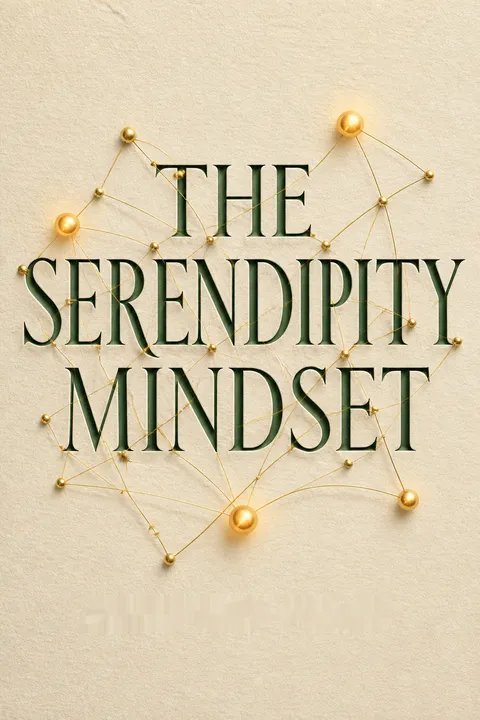
The Serendipity Mindset receives mostly positive reviews, with readers praising its insights on creating "smart luck" and fostering serendipity in various aspects of life. Many appreciate the book's mix of storytelling, scientific research, and actionable advice. Some readers find it particularly relevant for business professionals and entrepreneurs. Critics note that the book can be repetitive and overly focused on corporate examples. Overall, readers find the book inspiring and thought-provoking, offering a fresh perspective on luck and opportunity.
People Also Read





Glossary
Serendipity Mindset
Readiness to use chanceA developed way of approaching life that combines openness to unexpected events with the ability to recognize possible value and act on it. It is both a philosophy and a practical capability. The mindset does not make outcomes predictable; it improves a person's readiness to notice, interpret, and pursue useful possibilities.
bisociation
Connecting unrelated observationsThe act of linking two observations, ideas, or events that had not previously seemed related. In the book's account, an unexpected trigger becomes useful when someone recognizes a meaningful connection between it and existing knowledge, a need, or an opportunity. The connection can be made by one person or collaboratively with others.
Serendipity field
Potential useful connectionsThe collection of possible connections among people, information, resources, and ideas, together with the capacity to recognize and act on them. A person, team, or organization can enlarge this field by broadening its relationships, attention, and exposure to new information. It describes potential, not a guarantee that any particular connection will be valuable.
Opportunity space
Possible paths and connectionsThe range of options that could emerge from a person's current resources, relationships, interests, and experiences. It is broader than a single fixed goal because new interactions can create possibilities that were not imaginable beforehand. Keeping an opportunity space open allows exploration while a general direction or aspiration still guides choices.
North Star
Broad guiding aspirationA principle, purpose, or broad ambition that provides direction without prescribing every step. It helps people decide which unexpected possibilities fit what matters to them, while leaving room to change tactics or discover a different route. A North Star is a guide, not a detailed plan or a guaranteed destination.
Compound serendipity
Serendipity that builds on itselfA cumulative process in which one useful encounter creates relationships, information, or resources that make further valuable encounters more likely. Communities can amplify this effect by helping members access opportunities through shared trust and introductions. The process can compound, but it also depends on the quality and accessibility of the network.
psychological safety
Safety to speak candidlyA shared belief that people can raise concerns, ask questions, admit mistakes, and offer unfinished ideas without facing humiliation or punishment. In the book, this supports learning because workers can report anomalies and failures before they become larger problems. It does not mean avoiding standards, accountability, or difficult feedback.
serendipitor
Cultivator of useful chanceA person who actively creates favorable conditions for unexpected discoveries and is prepared to notice and develop them. A serendipitor may share interests, build relationships, ask questions, or persist with a promising idea. The term describes an active approach to chance, not someone who controls the outcomes.
zemblanity
Unhappy expected discoveryThe opposite of serendipity: the process of making an unhappy, unlucky, or otherwise unwelcome discovery that was foreseeable or deliberately brought about. The term highlights that unexpected outcomes are not necessarily beneficial. It also cautions that one person's apparent opportunity can create costs or harm for someone else.
FAQ
What's The Serendipity Mindset about?
- Exploring serendipity's role: The book examines how unexpected events and coincidences can significantly impact our lives and success. It argues that serendipity is not just blind luck but can be cultivated through proactive behaviors and an open mindset.
- Cultivating a mindset: Dr. Christian Busch presents a framework for developing a "serendipity mindset," which involves being open to opportunities, connecting the dots between ideas, and embracing uncertainty.
- Practical strategies: The book offers practical advice and exercises to help readers recognize and act on serendipitous moments, transforming unexpected moments into meaningful opportunities.
Why should I read The Serendipity Mindset?
- Enhance personal growth: The book provides insights into navigating life's unpredictability and turning chance encounters into valuable experiences, encouraging readers to embrace uncertainty.
- Applicable to various fields: Its insights and strategies are relevant for individuals and organizations looking to foster innovation and adaptability, making it a valuable resource across different industries.
- Inspiring real-life examples: Filled with stories from diverse individuals who have successfully harnessed serendipity, the book illustrates the practical application of its concepts, making it relatable and engaging.
What are the key takeaways of The Serendipity Mindset?
- Serendipity is a skill: The book argues that serendipity can be cultivated through specific mindsets and behaviors, rather than being left to chance.
- Importance of connection: Networking and building relationships are crucial, as many serendipitous moments arise from interactions with others.
- Mindset shifts: Moving from a fixed mindset to one that embraces flexibility and curiosity can lead to greater resilience and adaptability in the face of challenges.
What is the definition of serendipity according to The Serendipity Mindset?
- Unexpected good luck: Dr. Busch defines serendipity as "unexpected good luck resulting from unplanned moments in which proactive decisions lead to positive outcomes."
- Interaction of chance and action: Serendipity involves a synthesis of unexpected events and human effort, encouraging readers to take initiative in their lives.
- Cultivating a serendipity mindset: Developing a mindset open to serendipity can lead to more frequent and meaningful encounters, nurtured through specific practices and attitudes.
What specific methods does The Serendipity Mindset recommend for cultivating serendipity?
- Serendipity triggers: The book introduces "serendipity triggers," unexpected events or encounters that can lead to new opportunities, encouraging readers to be alert and act on them.
- Connecting the dots: Recognizing connections between seemingly unrelated events or ideas, referred to as "bisociation," is crucial for transforming serendipitous moments into actionable outcomes.
- Practical exercises: Exercises like keeping a serendipity journal help readers reflect on their experiences and identify patterns of serendipity in their lives.
How does The Serendipity Mindset address the concept of resilience?
- Resilience as a key component: The book discusses resilience as essential for recognizing and acting on serendipitous opportunities, emphasizing that overcoming challenges can lead to unexpected rewards.
- Learning from failure: It highlights the importance of learning from failures and setbacks as part of developing resilience, encouraging individuals to view challenges as growth opportunities.
- Embracing discomfort: Discomfort is often a precursor to meaningful experiences, and by embracing it, individuals can cultivate resilience and increase their chances of encountering serendipity.
What role do social networks play in The Serendipity Mindset?
- Leveraging social capital: Social networks are crucial for creating opportunities for serendipity, as building and nurturing relationships enhance access to unexpected insights and connections.
- Multipliers and community: Engaging with "multipliers," individuals who can amplify serendipity within their networks, can lead to greater opportunities and collaborative efforts.
- Diversity in networks: Seeking diverse connections within social networks can lead to richer interactions and a higher likelihood of serendipitous encounters.
How can organizations foster a culture of serendipity according to The Serendipity Mindset?
- Creating psychological safety: Organizations should allow employees to share ideas and experiences without fear of negative consequences, fostering innovative thinking and serendipitous outcomes.
- Encouraging collaboration: Shifting from competitive to collaborative cultures can create environments where serendipity thrives, promoting teamwork and shared goals.
- Designing for serendipity: Thoughtful layouts and opportunities for informal conversations in physical and virtual spaces can enhance the likelihood of serendipitous encounters.
What are some practical exercises from The Serendipity Mindset?
- Serendipity journal: Keeping a journal to document serendipitous encounters and reflections helps readers identify patterns and increase their awareness of serendipity.
- Networking strategies: Tips for seeding serendipity triggers, such as sharing personal interests in conversations, can help create connections and open up opportunities.
- Mindfulness practices: Techniques like meditation enhance awareness and receptivity to serendipity, helping individuals cultivate a more open and alert mindset.
What is the "serendipity score" mentioned in The Serendipity Mindset?
- Measuring serendipity potential: The "serendipity score" is a self-assessment tool that helps individuals evaluate their openness to serendipity and their ability to recognize and act on opportunities.
- Reflecting on personal growth: Regularly assessing their score allows readers to track their progress in cultivating a serendipity mindset, leading to increased awareness of their behaviors and attitudes.
- Encouraging proactive behavior: The score serves as a reminder to adopt proactive behaviors that enhance serendipity potential, encouraging openness to new experiences and connections.
What are the best quotes from The Serendipity Mindset and what do they mean?
- “Chance favours the prepared mind only.”: This quote by Louis Pasteur emphasizes that while luck plays a role in success, being prepared and open to opportunities is crucial for recognizing and acting on them.
- “You miss one hundred per cent of the shots you don’t take.”: Attributed to Wayne Gretzky, this quote highlights the importance of taking risks and seizing opportunities, reinforcing the idea of proactive engagement.
- “Discomfort is the price of admission to a meaningful life.”: This quote underscores the importance of embracing challenges and discomfort as part of the journey towards personal growth and serendipity.
Download PDF
Download EPUB
.epub digital book format is ideal for reading ebooks on phones, tablets, and e-readers.








