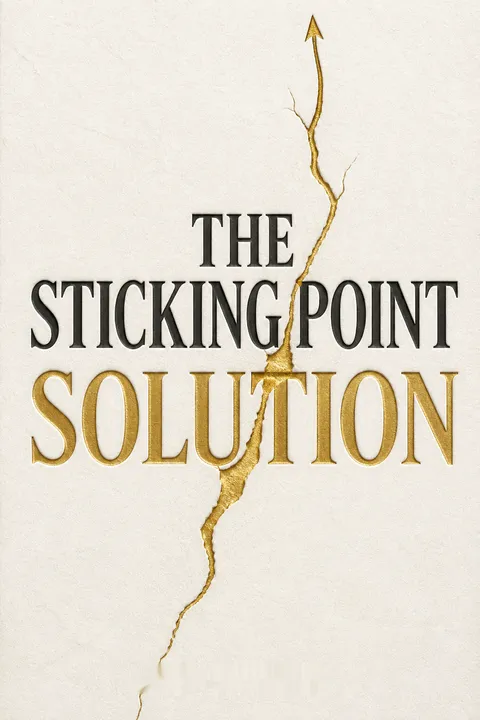


Key Takeaways
Treat a downturn as a test of strategy, not a verdict on demand
Market growth can disguise weakness. Abraham calls a business stuck when its progress depends on a rising market rather than deliberate decisions. A company that grows from $100,000 to $110,000 may have benefited mostly from the market's expansion. When demand falls, that borrowed momentum disappears. He reports that 95 percent of small and midsize businesses and start-ups miss their goals, linking this failure to weak planning, inadequate measurement, and unclear strategy.
Look for openings, not guarantees. During a downturn, competitors may retreat or keep repeating tactics that were already failing. A business that studies changing needs and acts on them can gain ground. But hard times do not automatically create opportunity: the task is to identify customers who are still buying, understand what they need now, and offer a credible solution.
The useful distinction here is between growth caused by a favorable environment and growth caused by repeatable capability. That resembles resilience thinking: a system is robust when it can adapt to changing conditions, not merely perform well under ideal ones. Still, a recession is not a universal advantage. Falling demand can shrink the whole market, and an aggressive competitor can mistake a temporary opening for durable demand. The practical test is whether a new tactic produces measured results with limited downside, not whether the surrounding gloom makes a bold story feel appealing.
Track what each buyer is worth after the first sale
Measure the whole relationship. Abraham urges businesses to track leads, sales, products, sources, repeat purchases, and profit rather than judging an ad by its first day's receipts. He calls the expected future profit from a buyer the lifetime value, also described as marginal net worth. In one example, a clinic thought a $6,000 newspaper ad merely broke even because it brought twenty initial consultations. Abraham estimated that the patients' differing treatment plans could produce about $135,000 in annual profit.
Follow the buyers. The projection depended on what patients purchased and whether they returned, not simply on the number of consultations. The book also invokes the 80-20 pattern: a minority of customers may account for most profit. Businesses should identify which buyers and sources actually produce that value, then adjust investment accordingly.
This is a strong argument for cohort analysis, which means comparing customers acquired through different channels and tracking their behavior over time. It replaces vanity metrics, such as clicks or initial sales, with economics that can guide real decisions. The clinic example also exposes a risk: projected value is not collected cash. Churn, treatment costs, refunds, and the time value of money can turn optimistic forecasts into losses. A sound model therefore records realized profit by customer group and revises projections as evidence accumulates.
Tune what works before risking money on something new
Improve before replacing. Abraham distinguishes optimization, making an existing process perform better, from innovation, testing a different approach. He recommends stabilizing current revenue first, then using the gains to test alternatives. His diamond-simulation story contrasts two sellers. Tom spent $30,000 on an ad, made about $3,000 after expenses, and quit. Larry spent the same amount, initially brought in less than the ad cost, then used premium packaging, an upgrade offer, and a generous return policy to encourage larger purchases. The book says his business reached $25 million in its first year.
Treat ideas as tests. The lesson is to evaluate the whole customer journey and the future value of a sale, rather than judging a strategy only by its first transaction. Compare new methods with the old ones, expand what performs better, and stop what does not.
The sequence is persuasive because it protects the operating business while making room for discovery. It also reflects experimental design: isolate a change, measure its effect, and scale only after evidence appears. Yet the dramatic diamond outcome is a single success story, not proof that a similar offer will work elsewhere. Testing can reveal what works in a specific market, but it cannot remove uncertainty about competitors, execution, or changing demand. The soundest version of the advice is controlled experimentation with a capped budget and clear criteria for continuing.
Diagnose the buyer's need before presenting a solution
Sell through diagnosis. Consultative advisory sales means understanding a buyer's problem and desired outcome before recommending a product. Abraham's Quid Pro Quo method first clarifies the buyer's needs, then checks whether the buyer will proceed if the seller can meet them, and only then presents a solution. The buyer's decision process matters: a shopper already ready to order may need a quick transaction, not a long sales consultation. In one catalog business, moving salespeople off the phone and letting administrative staff complete ready-to-buy orders reportedly tripled sales.
Match the process. Prospects may act to avoid pain, reduce fear, or gain a desired outcome. The seller's task is to ask clear questions, understand which motive matters, and be candid when the offer is not a fit. This approach aims to replace pressure with informed agreement.
The approach connects sales to diagnosis in medicine and needs assessment in professional services. Asking before recommending can improve fit, trust, and the buyer's understanding of trade-offs. It also counters a familiar incentive problem: sellers are rewarded for closing, even when a poor-fit sale creates complaints or cancellations. The method requires restraint, however. A sales conversation should not imitate clinical authority or manufacture pain to force urgency. The buyer's capacity to decline, compare options, or ask for time is part of a genuinely consultative process.
Build a deliberate path from lead to repeat customer and referral
Design the next purchase. A migration strategy is a planned progression that moves prospects from first contact to an initial purchase, repeat buying, and potentially referrals. Abraham argues that businesses should not assume a customer will return without guidance. A low-cost introduction, useful information, or a sample can begin the relationship; follow-up and appropriate offers can then help buyers find more value. The aim is not simply to sell once, but to make repeat business predictable enough to plan around.
Create your own route. The book recounts Colonial Penn's search for affinity groups through which to sell insurance. Rather than relying only on outside organizations, the company created a membership group to reach senior customers. The account identifies that group as AARP. The broader lesson is to build a reliable channel when access to existing channels is uncertain, then develop the relationship over time.
A designed customer journey can reduce the cost of repeatedly finding new buyers and help a firm learn where people lose interest. In modern product practice, this is often called lifecycle management: understanding how customers move from discovery to use, renewal, or departure. The caution is that a progression must serve the customer, not just maximize extraction. Repeated offers become irritating when they ignore actual needs. Tracking satisfaction, cancellations, and customer effort alongside revenue helps distinguish a valuable relationship from a sales funnel that merely pushes people onward.
Make every marketing dollar prove its return, especially in a downturn
Treat marketing as investment. Abraham argues that businesses often cut promotion during hard times without knowing whether it works, or spend more on old tactics without measuring results. His alternative is to calculate the cost and return of each activity, including future purchases, and to distinguish an expense from a profit-producing investment. In a crisis, one client renegotiated a newspaper page priced at $18,000 to $3,500, making the ad easier to justify if it continued to attract buyers.
Trade unused capacity. Bartering can exchange available inventory, space, or services for something the business needs. The book describes a hotel trading advertising for rooms that might otherwise sit empty. Such deals can conserve cash, but only if the business accounts for delivery costs, expiration terms, and the value of the capacity it gives up.
The core discipline is unit economics: knowing what it costs to acquire and serve a buyer, and what revenue remains after direct costs. That discipline helps prevent both reflexive austerity and reckless spending. Barter can unlock otherwise idle capacity, but it is not free simply because no cash changes hands. Inventory has an opportunity cost, and fulfillment still consumes labor and resources. The most useful measure is not the nominal value assigned to a trade, but the profit and strategic benefit actually realized compared with the best alternative use.
Spend founder time where judgment, skill, and energy matter most
Use time deliberately. Abraham's highest and best use concept asks whether a task is relevant to the business's future, whether the person doing it is competent at it, and whether that person has energy or passion for it. Tasks that fail these tests may belong with someone else. A business owner could delegate routine email, appointment setting, or administrative checks and reserve personal attention for strategy, customer problems, or decisions that materially affect growth.
Free capacity for growth. The book also warns against letting messages, calls, and meetings interrupt the entire day. Scheduling them and giving meetings agendas can protect focused work. Delegation does not mean abandoning oversight: the owner can define the result, assign responsibility, and review performance without doing every step personally.
This is an application of comparative advantage: people create more value when their work fits their strongest contribution, while routine tasks are handled efficiently elsewhere. It also points to attention as a scarce resource, a concern supported by research on task switching, which can impose mental costs even when each interruption seems brief. Delegation is not automatically productive, though. Poorly specified tasks create rework, and some sensitive decisions cannot be handed off casually. The practical aim is not to delegate everything, but to make ownership, standards, and feedback explicit.
Earn premium status by reducing buyer uncertainty, not by boasting
Make the difference tangible. The strategy of preeminence means becoming the provider buyers trust most because the business contributes distinctive value and understands their needs. It is not simply a claim of superiority. Abraham describes a financial-services client who struggled to distinguish his annuity offer from competitors. With an endorsement through investment newsletters, he reportedly reached $60 million in sales within six months. The example shows how credibility and distribution can alter buyers' perception of a similar product.
Answer doubts in advance. A preemptive approach identifies concerns that could delay a purchase, explains how the offer addresses them, and makes the relevant evidence visible. Proof might include clear terms, useful support, testimonials, or a candid account of limitations. Distinction is strongest when a buyer can see why the offer is better for a particular need, rather than being told it is better in general.
Positioning works partly through signals: buyers use endorsements, evidence, and consistent service as shortcuts when they cannot inspect quality in advance. This makes trust a real commercial asset, especially in complex purchases. But borrowed credibility is not the same as demonstrated performance. An endorsement can open attention while leaving the buyer exposed if claims are inflated or incentives are hidden. The durable version of preeminence joins a clear promise with transparent evidence, reliable delivery, and an honest boundary around what the provider can actually achieve.
Teach buyers how to choose, then become their trusted guide
Educate the market. Abraham defines marketing as teaching potential customers how a business can solve a problem or help achieve an outcome. The Maven Matrix is his nine-part route to becoming a trusted authority in a market, combining customer understanding, a recognizable public voice, useful communication, community, and outside guidance. One example is Gary Vaynerchuk, who used informal online wine videos to speak to ordinary drinkers rather than only connoisseurs. The book says his family's liquor business grew to $50 million in sales.
Build a recognizable voice. A business can share practical information through a newsletter, video, article, or other consistent channel. Stories and a distinct point of view can make the message memorable, while useful advice earns attention before a sale. The aim is not to invent expertise, but to make genuine knowledge accessible to the people who need it.
Education-based marketing resembles public scholarship: it lowers the cost of understanding a complicated choice and lets audiences assess the source before buying. A distinctive voice can also create social identity, helping customers feel they belong to a community rather than facing a transaction alone. The risk is that persona can outrun competence. A memorable character, bold opinion, or steady stream of content does not prove a product works. Trust grows most reliably when engaging communication is paired with verifiable expertise and consistent customer outcomes.
Borrow distribution and expertise before building expensive capacity
Grow through collaboration. Abraham calls result-oriented collaboration good leverage: using another party's assets, expertise, audience, or relationships while agreeing how both sides benefit. This can avoid the fixed cost and risk of building every capability in-house. One Australian entrepreneur, according to the book, secured rights to run successful American infomercials in Australia and New Zealand. He did not need to create the programs himself, and the account says the arrangement produced $20 million a year.
Start with mutual value. A credible proposal identifies what the partner already has, what the business can contribute, how results will be measured, and how revenue or costs will be shared. Joint ventures can open a market or use idle capacity, but they depend on clear expectations. The owner should test a limited arrangement before committing critical operations or reputation to a partner.
Partnerships are a form of organizational modularity: instead of owning every resource, a firm connects specialized capabilities through agreements. That can increase speed and reduce capital needs, particularly for small companies. It also creates coordination and dependency risks. Partners may disagree about customer ownership, quality standards, data access, or how to calculate earnings. A small pilot and a written agreement on responsibilities, exit terms, and measurement can preserve flexibility without pretending collaboration is costless.
Analysis
The book's central argument is that stagnation is less a single marketing failure than a failure of business design. It links measurement, positioning, sales conversations, customer retention, time allocation, and collaboration into one operating logic: replace vague effort with observable processes, then improve those processes. Its most useful move is to make the reader look beyond the immediate sale. A buyer can represent recurring revenue, referrals, learning about the market, or access to a wider distribution channel. That broader view changes how an owner evaluates advertising, service, and partnerships.
The narrative is built from vivid turnaround anecdotes, which make abstract commercial concepts concrete. The diamond seller who invested in follow-up rather than judging only the first ad, the clinic that recalculated the value of consultations, and the small businesses that borrowed access from partners all illustrate the same pattern: results depend on the full system around a transaction. The stories are memorable, but they are not controlled evidence. The book often reports large outcomes without specifying comparison groups, selection effects, or how much success depended on unusual circumstances. Its percentages and revenue claims should therefore prompt questions, not function as forecasts.
A modern reading can preserve the book's entrepreneurial energy while adding disciplined testing. Track acquisition cost, gross margin, retention, refunds, and service burden by customer cohort. Treat lifetime value as a forecast that must be revised, not a fixed fact. Test offers with budgets small enough to survive failure, and distinguish correlation from causation when a marketing change coincides with growth. Partnerships also need clear contracts, incentives, and exit plans. Finally, preeminence is most durable when reputation follows substantiated performance, not theatrical certainty. The book is strongest as a toolkit for asking better business questions and weakest when its confidence suggests that almost any business can grow dramatically in a downturn. Strategic skill improves a firm's odds, but it cannot abolish market risk.
Review Summary
The Sticking Point Solution receives mostly positive reviews, with an average rating of 4.25/5. Readers appreciate its practical business advice, marketing strategies, and focus on overcoming stagnation. Many find it valuable for small business owners and entrepreneurs. Some criticize its repetitiveness and occasional narcissism. The book is praised for encouraging out-of-the-box thinking and providing actionable steps. While some find it less relevant for certain markets or early-stage startups, others consider it a must-read for business growth and problem-solving.
People Also Read









Glossary
Sticking points
Recurring sources of stagnationThe book's name for recurring areas where a business becomes stalled, such as weak sales, erratic demand, poor strategy, high costs, ineffective marketing, or dependence on the owner. The term organizes the book's diagnosis: identify the specific constraint rather than treating slow growth as one vague problem.
Optimization
Improving an existing processThe process of making current revenue-producing activities perform better before replacing them. It includes measuring results, improving what works, and correcting or removing what does not. Abraham presents optimization as a safer first move because it can strengthen current cash flow and help fund experiments with new approaches.
Migration strategy
Planned customer progressionA system for moving prospects through stages of a business relationship, from initial contact to first purchase, repeat purchases, larger transactions, and potentially referrals. The strategy uses suitable offers and follow-up to make customer development more deliberate and predictable, rather than assuming buyers will return on their own.
Consultative advisory sales
Selling through customer diagnosisA sales approach in which the seller first learns about the buyer's situation, goals, and concerns, then recommends a suitable solution. It contrasts with pitching a product before understanding the need. The seller should be willing to acknowledge when the offer is not appropriate, rather than forcing a transaction.
Quid Pro Quo
Commitment before presentationThe book's name for a consultative sales sequence: clarify the buyer's problem and intended outcome, establish whether the buyer will proceed if the proposed solution meets those conditions, and then present the offer. It aims to prevent wasted presentations and make the buyer's decision criteria explicit.
Lifetime value
Expected profit across purchasesThe expected cumulative value of a customer relationship, including repeat purchases and related products or services, rather than only the profit from the first sale. Abraham uses this estimate to determine how much a business can reasonably invest in acquiring a buyer. It is a projection, not a guaranteed amount.
Strategy of preeminence
Becoming a trusted market leaderA way of positioning a business as a particularly trusted and valuable provider by understanding the market's needs, contributing more than competitors, and making the difference clear to buyers. In the book, preeminence is grounded in service and distinct value, not simply in declaring a company superior.
Maven Matrix
Framework for market authorityA nine-part framework, developed by Abraham and Rich Schefren, for becoming a recognized and trusted authority in a market. It combines customer understanding, a distinctive public persona, a clear point of view, useful communication, community, and guidance from experienced people. Its purpose is to make marketing educational and relationship-based.
reticular activating system (RAS)
Filter for salient informationA brain system discussed in the book as helping determine which incoming information receives attention. Abraham applies the idea to marketing, arguing that familiar or personally relevant cues are more likely to be noticed. The book uses this as a metaphor for earning a place in customers' awareness, though attention alone does not establish trust or prove product quality.
FAQ
What is The Sticking Point Solution by Jay Abraham about?
- Business growth focus: The book identifies nine key reasons why businesses get stuck and provides actionable strategies to move from stagnation to stunning growth, especially in tough economic times.
- Practical, real-world advice: Jay Abraham shares tools, case studies, and frameworks to help entrepreneurs, executives, and business owners unlock their company’s true potential.
- Mindset and strategy: Emphasizes shifting from traditional, often ineffective business practices to creative, empathetic, and strategic approaches that focus on client value and continuous improvement.
Why should I read The Sticking Point Solution by Jay Abraham?
- Expertise and proven results: Jay Abraham is a renowned marketing expert with decades of experience and a track record of generating billions in client wealth.
- Comprehensive problem-solving: The book addresses common business challenges like cash flow issues, ineffective marketing, and lack of innovation, offering clear, actionable solutions.
- Empowerment and mindset: It helps business owners develop a proactive, growth-oriented mindset, teaching them to leverage partnerships and focus on client needs to outperform competitors.
What are the nine sticking points that cause businesses to get stuck according to The Sticking Point Solution by Jay Abraham?
- Nine key areas: The book identifies nine reasons businesses stagnate, including losing out to competition, not selling enough, erratic business volume, failing to strategize, costs eating profits, doing what's not working, being marginalized, mediocre marketing, and the "I can do it myself" mentality.
- Detailed solutions: Each sticking point is explored in its own chapter, with specific strategies to overcome it and move toward growth.
- Measurement and optimization: A recurring theme is the importance of measuring ROI, optimizing existing assets before innovating, and continuously testing and refining business processes.
What are the key takeaways from The Sticking Point Solution by Jay Abraham?
- Identify and overcome sticking points: Recognize the specific areas where your business is stuck and apply targeted solutions.
- Leverage resources and partnerships: Use bartering, joint ventures, and strategic alliances to maximize growth without heavy upfront costs.
- Adopt a preeminent mindset: Focus on becoming the most trusted advisor in your market, differentiating your business, and creating proprietary value.
- Continuous measurement and improvement: Always measure results, optimize what works, and innovate to stay ahead of the competition.
How does Jay Abraham define a "stuck" business in The Sticking Point Solution?
- Lack of predictable growth: A stuck business fails to grow predictably and is often carried along by market trends rather than proactive action.
- Focus on wrong activities: Entrepreneurs may focus on the wrong things and lack clarity on how to solve the problems causing stagnation.
- Four main reasons: Not incorporating growth thinking, not measuring results, lacking a detailed strategic marketing plan, and not setting specific goals.
What is the difference between optimization and innovation in The Sticking Point Solution by Jay Abraham?
- Optimization first: Make existing processes work to their optimum by fixing or improving what's working and replacing what's not.
- Innovation second: After stabilizing the business, engineer breakthroughs by taking controlled risks and looking outside the industry for new ideas.
- Order matters: Abraham stresses optimizing current activities before innovating to ensure a solid foundation for growth.
What is the strategy of preeminence in The Sticking Point Solution by Jay Abraham and why is it important?
- Trusted advisor role: Preeminence means positioning yourself as the most trusted, valued, and prized provider in your market.
- Set buying criteria: Define and satisfy the market’s buying criteria in a way that only your business can.
- Emotional connection: Make clients feel special, valued, and respected, which differentiates your business and allows you to command premium pricing.
- Avoid commoditization: By being preeminent, you prevent your business from being marginalized or seen as just another commodity.
How does Jay Abraham recommend using bartering to improve cash flow in The Sticking Point Solution?
- Bartering as leverage: Trade products or services without immediate cash outlay, conserving cash and leveraging existing assets.
- Create barter profit centers: Trade at full rates and resell bartered goods or services, turning barter into a profit center.
- Finance growth: Use barter certificates within a business ecosystem to save cash and finance rapid growth, as demonstrated by companies like Carnival Cruise and Home Shopping Network.
What is the Maven Matrix and how does it help with marketing in The Sticking Point Solution by Jay Abraham?
- Nine-step marketing blueprint: The Maven Matrix guides businesses through building trust, establishing a persona, developing a vision, telling a compelling story, and more.
- Personal brand building: Emphasizes creating a relatable, authentic character persona that resonates with the market and fosters loyalty.
- Engagement and differentiation: Moves businesses beyond mediocre marketing by educating the marketplace, creating dialogue, and turning clients into evangelists.
How does Jay Abraham recommend leveraging joint ventures in The Sticking Point Solution?
- Good leverage: Joint ventures allow businesses to access resources, markets, and expertise without heavy upfront costs.
- Multiple benefits: Increase sales, reduce risk, access new markets, share costs, and focus on core competencies while expanding reach.
- Creative collaboration: Overcome fear of collaboration, approach partners with empathy and clear value, and structure deals based on performance and shared outcomes.
What is consultative selling according to The Sticking Point Solution by Jay Abraham?
- Client-focused approach: Consultative selling emphasizes understanding client needs first, then providing solutions, making the salesperson a trusted advisor.
- Quid Pro Quo method: Qualify transaction parameters, pre-close by ensuring the client will buy if needs are met, then present the product or service.
- Benefits: Shortens sales cycles, increases closing rates, eliminates discounting, and improves cash flow and profit margins.
What are the best quotes from The Sticking Point Solution by Jay Abraham and what do they mean?
- "No man is an island. And no business is, either." Highlights the importance of collaboration and joint ventures for business growth.
- "If you believe you're a commodity, then you're a self-fulfilling prophecy." Stresses the need to differentiate and be preeminent to avoid marginalization.
- "Marketing is the greatest return-an-investment activity a business can ever do." Emphasizes marketing’s power to generate exponential growth when done strategically.
- "The moment is now. It's time to unstick yourself!" A call to action encouraging entrepreneurs to apply the book’s principles immediately for transformative results.
About the Author

Download PDF
Download EPUB
.epub digital book format is ideal for reading ebooks on phones, tablets, and e-readers.








