

Key Takeaways
One archivist's private notes exposed thousands of KGB operations worldwide.
A hidden record. Vasili Mitrokhin spent 1972 to 1984 reviewing the First Chief Directorate's files as they were moved from central Moscow to new headquarters. He was not allowed to take original documents. Instead, he copied names and details into notes, first smuggling scraps out in his shoes, then hiding typed pages beneath the floor of his dacha.
A dangerous journey. Mitrokhin's notes covered KGB operations dating back to 1918. After the Soviet Union began to dissolve, he carried samples to the British embassy in 1992, then returned with his family and the archive. British intelligence removed the material from the dacha. The result was an extraordinary record, but it remained Mitrokhin's notes on files, not the original files themselves.
What's striking is that the archive's value rests on both access and method. Mitrokhin's unusual job let him read far more files than most officers, while his private record preserved material the state could later destroy. But access does not make every note self-verifying. Intelligence files record what institutions believed, claimed, or wanted superiors to believe. The strongest historical use therefore comes from treating the archive as a map to evidence, then checking its claims against other records and the circumstances in which each report was produced.
Read the KGB as both spy service and machinery of Party control.
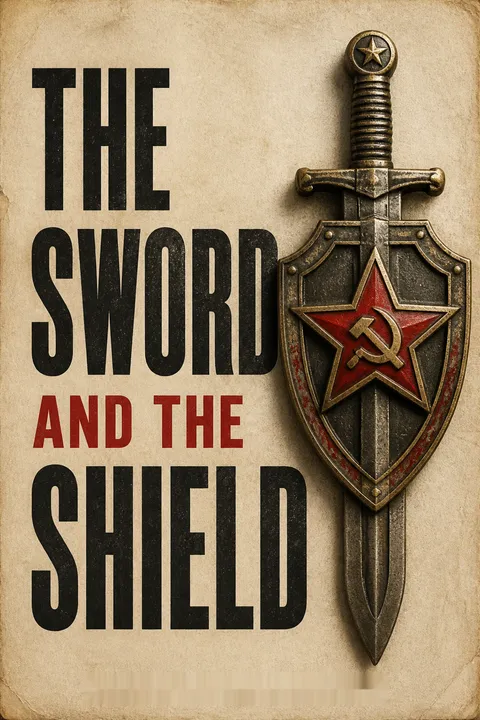
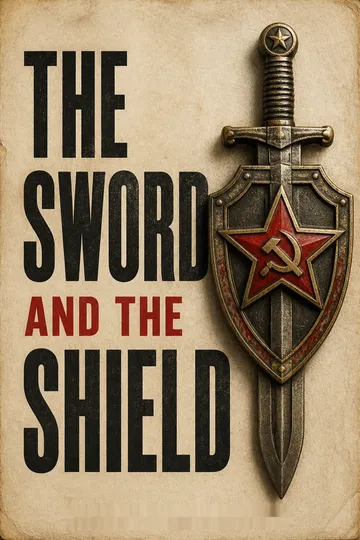
Two jobs, one institution. The KGB inherited the Cheka, founded soon after the Bolshevik Revolution. Its emblem joined a shield and sword, symbols for defending the state and striking its enemies. In practice, the distinction blurred. Foreign intelligence officers gathered information abroad, but also pursued dissidents, defectors, and critics of Soviet rule outside the country.
A managed past. Soviet security chiefs repeatedly removed embarrassing records and promoted a cleaned-up story of their own history. The archive's accounts of foreign operations show the same system coordinating with domestic repression, including the pursuit of dissidents in the Soviet Bloc. The KGB was not simply a professional spy service serving a stable state. It helped preserve the Party's monopoly on power, and protected that monopoly from evidence as well as opposition.
This dual role changes how the institution should be judged. In democratic systems, intelligence agencies are usually described as instruments of the state, even when they exceed their authority. Here the Party and state were fused, so defending national security could mean defending a ruling faction from its own citizens. That makes institutional labels less useful than asking who an operation protected, against whom, and under what definition of threat. The distinction also cautions against assuming that technically competent intelligence is politically neutral.
More intelligence cannot rescue leaders who punish bad news.
Warnings met disbelief. Before Germany invaded the Soviet Union on June 22, 1941, Soviet intelligence collected repeated, accurate reports of the coming attack. Sources included the German anti-Nazi networks around Arvid Harnack and Harro Schulze-Boysen, as well as Richard Sorge in Tokyo. The KGB later counted more than a hundred warnings forwarded to Stalin in the first half of 1941.
The leader chose his story. Stalin dismissed reports as British deception and denounced sources who contradicted his expectations. The Soviet system rewarded officials for confirming the leader's assumptions, not for correcting them. By contrast, decrypted Japanese communications later helped Stalin conclude that Japan would not attack, allowing Soviet forces to move west. Collection mattered, but only when leaders could accept what it revealed.
The episode is a classic problem of organizational learning: a system can gather accurate data yet remain unable to act on it. When disagreement carries personal risk, officials filter information before it reaches the top, and leaders interpret even reliable evidence through their preferred narrative. This is more than a failure of individual judgment. It is a feedback failure built into the institution. The contrast with the Japanese decrypts is useful: intelligence gains influence when decision-makers can connect it to a choice they are willing to reconsider.
Recruit believers before ambition carries them into government.
Ideology opened doors. In the 1930s, KGB officer Arnold Deutsch targeted promising students at Cambridge before they entered public life. He recruited Kim Philby, who helped bring in Donald Maclean and Guy Burgess; Anthony Blunt and John Cairncross followed. The group became known as the Cambridge Five. Their shared commitment to Communism helped them accept long careers under cover and pass highly classified material from the Foreign Office and intelligence services.
A strategic advantage. Deutsch understood that youthful political commitments could be hidden as youthful experiments, while a new, respectable identity carried recruits into elite institutions. Their output was so large that Moscow struggled to process it. Yet the same ideological loyalty could blind agents to Soviet crimes, and Stalin's paranoia eventually disrupted the network by purging its controllers and doubting its sources.
The recruitment strategy resembles long-horizon talent scouting: identify motivation and access before either becomes visible to an employer. Its striking feature is that trust came from shared belief, not merely money or blackmail. That made the agents unusually productive, but also created a moral hazard. Commitment to an ideal can motivate sacrifice while insulating the ideal from evidence. The Cambridge case therefore resists a simple lesson that ideology makes spies reliable. It made them reliable to Moscow until Moscow's own suspicion made loyalty impossible to demonstrate.
Weak security and ordinary access beat exotic spycraft.
The unlocked door. In the 1920s and 1930s, British embassy security was often remarkably lax. Francesco Constantini, a low-ranking employee at the embassy in Rome, passed diplomatic documents and cipher material to Soviet intelligence. He could access red boxes, filing cabinets, and embassy papers. By 1925 he was reportedly supplying around 150 pages of classified material each week.
A second breach. Foreign Office cipher clerk Ernest Oldham also sold access to British diplomatic ciphers. His Soviet controller, Dmitri Bystroletov, used charm, money, pressure, and a relationship with Oldham's wife to keep the flow going. The story shows that espionage often depends less on ingenious equipment than on routine access, poor procedures, and vulnerable employees. The Centre sometimes misunderstood the scale of British carelessness because it assumed its own security standards were universal.
The episode connects intelligence history to a basic security principle: systems fail at their ordinary interfaces. A locked cabinet matters less if staff share keys, servants enter offices, and nobody owns responsibility for access. The same pattern appears in modern cybersecurity, where human habits can defeat sophisticated technical controls. Still, the book's contrast should not imply that British institutions were uniquely careless or that every breach was preventable. Security is a tradeoff, and bureaucracies often notice vulnerabilities only after a trusted insider has exploited them.
The KGB stole technology better than it converted secrets into progress.
Secrets with practical value. The KGB's Line X specialized in scientific and technological intelligence. During the Second World War, Soviet agents in Britain and the United States passed atomic research to Moscow. Klaus Fuchs and the young Los Alamos physicist Theodore Hall supplied crucial information about the American bomb; British sources provided complementary details. The first Soviet atomic bomb, tested four years after the American one, closely copied its design.
Acquisition was not innovation. During the Cold War, Line X obtained information on aircraft, radar, computers, and industrial processes. Yet Soviet industry often took years to use what intelligence had acquired. A command economy could collect a design without having the incentives, production flexibility, or institutional freedom to turn it into a competitive product. Espionage shortened some research paths, but it could not repair the economic system that had to exploit the results.
This distinction between knowledge transfer and productive capability is central to innovation economics. A blueprint has little value without skilled teams, flexible suppliers, feedback from users, and authority to change a production process. The book shows espionage closing gaps in military technology while leaving wider economic weakness intact. That is a useful corrective to the fantasy that stolen information automatically creates parity. It also suggests why secret collection can become a substitute for reform: leaders can celebrate acquisition while avoiding the harder question of why domestic systems fail to innovate.
Foreign intelligence often defended one-party rule, not just national security.
Covert control. During the Prague Spring of 1968, the KGB sent illegals posing as Western visitors to penetrate reform groups and create evidence of a Western-backed plot. Agents planted reports of hidden American weapons, which Soviet media used to justify intervention. The invasion crushed the effort to create a more open form of socialism, and KGB operations helped identify reformers who could be purged afterward.
Allies served the system. Communist parties outside the Soviet Bloc also helped recruit agents and support intelligence work, while Moscow secretly subsidized many of them. The KGB then treated reform and dissent across the Bloc as security threats. Its procedures could produce intelligence about public sentiment, but their deeper purpose was to preserve political conformity, not to test whether Communist rule still had popular consent.
The Prague operation reveals how security agencies can manufacture evidence for a policy already chosen. The planted weapons did not uncover a conspiracy; they made intervention easier to sell. This is a form of institutionalized confirmation bias, where intelligence is used to validate power rather than constrain it. The episode also shows why authoritarian governments fear reform more than isolated criticism. Reform creates new institutions and loyalties that cannot be managed through ordinary surveillance. The irony is that coercion may restore control while destroying the legitimacy it claims to defend.
Disinformation works best when it flatters existing suspicion.
A tailored falsehood. The KGB's active measures included forged documents, planted stories, covert subsidies, and efforts to provoke conflict between political groups. During the 1970s, it fabricated an apparent letter linking Lee Harvey Oswald to a former CIA officer, hoping to support claims of a conspiracy behind Kennedy's assassination. It also spread the false claim that AIDS had been created by American biological warfare researchers.
Real distrust helped. These stories found audiences because genuine secrecy and misconduct by Western agencies had made conspiracy theories plausible. Some KGB operations succeeded abroad, where targets had little ability to verify forged evidence. Others were clumsy or exaggerated. The operation against Oswald, for example, became tangled in confusion over two men named Hunt. Disinformation could intensify suspicion, but it could not reliably control how people interpreted it.
The mechanism resembles modern information disorder: a message travels furthest when it confirms what an audience already fears. Disinformation does not need universal belief; it can succeed by making reliable knowledge seem impossible and weakening trust in institutions. Yet the book also shows the limit of this strategy. A forged claim can be exposed, and real institutional secrecy can do more to nourish conspiracy thinking than any foreign operation. The strongest defense is not merely rebuttal, but transparent evidence and institutions willing to acknowledge their own failures.
Do not confuse a spy's legend with his operational value.
An ideal on paper. After the war, the KGB tried to rebuild its network of illegals, officers living abroad under false identities without diplomatic cover. The most celebrated was William Fisher, better known in the United States as Rudolf Abel. His cover as an artist made him a durable symbol of Soviet professionalism, but his American mission produced little of the ambitious agent recruitment the Centre expected.
Weak links mattered. Fisher's assistant, Reino Hayhanen, drank heavily, lost a coded coin, stole money meant for another agent, and eventually defected. Fisher ignored an order to leave the United States and was arrested. Other planned residencies failed through poor cover, personal instability, or double agents. The KGB later promoted Fisher as a master spy, obscuring the gap between a compelling public legend and the modest results of his actual operation.
The difference between reputation and performance is a recurring organizational problem. Institutions reward stories that protect morale, especially after failure, so a captured officer can be recast as a hero whose best work simply remains secret. That narrative may preserve prestige while preventing learning. At the same time, the KGB's repeated failures were not just individual incompetence. Long isolation, implausible cover stories, and distant command created conditions in which ordinary human needs became operational liabilities.
Dissidents preserved evidence the KGB could punish, but never erase.
A record against erasure. The KGB imprisoned writers such as Aleksandr Solzhenitsyn, persecuted Andrei Sakharov, and tried to break activists through surveillance, exile, and staged trials. In Poland, the Catholic Church and Solidarity offered a mass public alternative to the Communist Party. The election of Polish cardinal Karol Wojtyła as Pope John Paul II gave that challenge a powerful international voice.
Pressure changed the political climate. The dissidents did not bring down the Soviet system by themselves. But their documentation of abuses, including Charter 77 in Czechoslovakia and the Helsinki monitoring groups, gave reformers evidence and language with which to challenge official claims. Gorbachev's reforms then opened political space that the security services could no longer close. By 1989 the movement once labeled subversion had become part of the argument for change.
The dissidents' achievement was not simply survival. They built a counter-record that challenged the state's monopoly on describing reality, then connected local suffering to international commitments such as the Helsinki Accords. This resembles the function of human-rights documentation today: evidence can outlast the people who first collect it and become useful when political conditions change. Still, the narrative should not turn dissidents into the sole cause of collapse. Elite reform, economic weakness, and the refusal to use force were also decisive. Their contribution was moral and informational, not magical.
Analysis
The book's central paradox is that the KGB could be extraordinarily effective at collecting secrets and persistently poor at understanding what those secrets meant. Its agents penetrated ministries, embassies, military contractors, churches, and international organizations. Yet the Soviet leadership often rejected accurate reporting when it contradicted prior beliefs. This is not merely a story about bad analysts. In a one-party state, information moves upward through officials who know that unwelcome facts can damage their careers. Surveillance grows, but honest feedback shrinks.
The Mitrokhin Archive is powerful because it exposes both operational detail and institutional self-deception. It also requires care. The archive consists primarily of Mitrokhin's notes on files, not the files themselves. KGB reports can document an operation while exaggerating its success, disguising its purpose, or repeating a theory favored by the leadership. The book's method is strongest when it compares internal records with independent evidence, and when it separates what the KGB intended from what it actually achieved.
A second tension runs through the history. Soviet intelligence collected Western technology with impressive results, including atomic information, but could not reproduce the economic institutions that made Western innovation productive. Meanwhile, its covert political operations aimed to preserve the Party, often by manufacturing threats or suppressing peaceful alternatives. Tactical gains therefore coexisted with strategic decline.
The dissidents expose the limit of surveillance as a theory of power. A state can monitor conversations, infiltrate churches, and arrest organizers, yet still lose authority when its official account of reality becomes unbelievable. The collapse of Soviet rule was not simply a victory of espionage, counterespionage, or dissent. It came from the interaction of economic failure, elite reform, popular opposition, and a leadership unwilling to repeat the mass violence of earlier decades. The KGB's archive makes that interaction visible by showing both the reach of the state and the limits of its understanding.
Review Summary
The Sword and the Shield receives mixed reviews. Many praise its wealth of information on Soviet intelligence but criticize its organization and writing style. Readers find the details fascinating but sometimes overwhelming. Some appreciate the historical insights, while others struggle with the dense content. The book is noted for revealing KGB operations and the extent of Soviet espionage. Opinions vary on its readability, with some finding it engaging and others tedious. Overall, it's considered an important but challenging work for those interested in Cold War history and espionage.
People Also Read





Glossary
Mitrokhin Archive
KGB files recorded in secretThe collection of handwritten and typed notes Vasili Mitrokhin made while reviewing files of the KGB First Chief Directorate. It covers foreign intelligence operations from the early Soviet period through the Cold War. Mitrokhin smuggled the notes out of Russia in 1992. The collection is not the original KGB archive, but a detailed record of material he read.
First Chief Directorate
KGB foreign intelligence serviceThe KGB directorate responsible for intelligence operations outside the Soviet Union. It ran legal residencies under diplomatic cover, developed agents, collected political and technical information, and conducted covert influence operations. Its work overlapped with the domestic security mission of the wider KGB, especially when Soviet leaders treated foreign influence and internal dissent as parts of the same threat.
Directorate S
Directorate for deep-cover operationsThe FCD unit responsible for illegals, Soviet officers or agents living abroad under assumed identities without diplomatic cover. Directorate S selected and trained them, constructed their false biographies, and supported their communications and operations. Its files reveal both the elaborate preparation required for deep cover and the personal and organizational failures that repeatedly undermined it.
illegals
Agents under false foreign identitiesKGB officers or agents who operated abroad without official Soviet cover, often posing as citizens of another country. They could live and work outside the protections of an embassy, making them harder to identify through routine diplomatic surveillance. Their assumed identities, known as legends, required years of preparation and could collapse through minor inconsistencies or personal behavior.
Active measures
Covert influence and deceptionKGB operations intended to shape political opinion or disrupt an adversary, rather than simply collect information. They included forged documents, planted stories, covert subsidies, manipulated contacts, and efforts to deepen social or political divisions. The Centre often exaggerated their impact, and many succeeded mainly when they exploited suspicions or grievances that already existed.
Line X
Scientific and technical intelligenceThe KGB residency function focused on acquiring scientific and technological information from foreign targets. Line X officers recruited engineers, researchers, and business employees, and sought documents, prototypes, and samples useful to Soviet industry or the military. Its collection could be impressive, but the Soviet economy often struggled to turn stolen information into effective products.
PROGRESS operations
Illegals targeting Soviet Bloc dissentKGB operations that used illegals, often posing as Western visitors, to penetrate and monitor dissent in Soviet Bloc countries. The operations gathered information about reformers and dissident groups and could include efforts to discredit them or fabricate evidence of Western interference. They became especially prominent during the Prague Spring and the subsequent effort to restore Soviet control.
Operation RYAN
Search for a feared first strikeA KGB and GRU intelligence program launched in 1981 to detect what Soviet leaders believed were American preparations for a nuclear first strike. The threat was not real, but the operation directed residencies to seek alarming indicators. Their reports then reinforced the leadership's fear, creating a feedback loop in which biased collection made an imagined danger seem more credible.
Line PR
Political intelligence in residenciesThe KGB foreign-intelligence function responsible for political reporting from overseas residencies. Its officers cultivated politicians, journalists, diplomats, and other contacts, and gathered information about government policy. Line PR also participated in active measures. Its reporting often relied on public information and informal conversations when high-level agents were unavailable.
Directorate T
FCD technical intelligence directorateThe KGB directorate that coordinated scientific and technical intelligence, especially information sought by Soviet military and industrial planners. It directed Line X operations, set collection priorities, and processed material from agents and allied services. Directorate T could help Soviet weapons programs copy Western designs, but it could not overcome the structural weaknesses of the Soviet economy.
The Magnificent Five
Five Cambridge-recruited Soviet agentsA popular name for Kim Philby, Guy Burgess, Donald Maclean, Anthony Blunt, and John Cairncross, recruited directly or indirectly by Soviet intelligence while young men at Cambridge. Their careers later gave them access to British government and intelligence secrets. The group was not a formal KGB unit, and its members differed greatly in their roles, reliability, and later treatment by Moscow.
FAQ
1. What is The Sword and the Shield: The Mitrokhin Archive and the Secret History of the KGB by Christopher Andrew about?
- Comprehensive KGB history: The book provides an unprecedented look into the secret history of the KGB, focusing on its foreign intelligence operations from the Bolshevik era through the Cold War, based on the Mitrokhin Archive.
- Mitrokhin Archive foundation: It draws on thousands of pages of secret KGB files smuggled out by Vasili Mitrokhin, revealing agent networks, espionage tactics, and the inner workings of Soviet intelligence.
- Global impact: The narrative covers major historical events, espionage successes and failures, and the KGB’s influence on international relations and Soviet foreign policy.
- Human and political dimension: The book also explores the personal stories of agents, the ideological motivations behind espionage, and the costs of secrecy and paranoia.
2. Why should I read The Sword and the Shield by Christopher Andrew?
- Unprecedented access to secrets: The book is based on the unique Mitrokhin Archive, offering insights into KGB operations and Soviet espionage previously unknown to the West.
- Detailed case studies: Readers gain in-depth profiles of famous spies, operations, and the methods used to penetrate Western governments and scientific establishments.
- Understanding Cold War dynamics: The book explains how intelligence shaped the Cold War, influenced global politics, and affected the balance of power between East and West.
- Authoritative and engaging: Christopher Andrew, a leading intelligence historian, provides a well-researched, accessible narrative that appeals to both general readers and specialists.
3. Who was Vasili Mitrokhin and what is the significance of the Mitrokhin Archive in The Sword and the Shield?
- KGB archivist and defector: Vasili Mitrokhin was a senior KGB archivist who secretly copied and smuggled out thousands of pages of top-secret files over twelve years.
- Creation of the archive: He used ingenious methods to record and hide his notes, eventually burying them in milk churns and trunks before defecting to Britain in 1992.
- Unparalleled intelligence source: The Mitrokhin Archive is considered the most complete and extensive intelligence ever received from any source, according to the FBI.
- Foundation of the book: The archive forms the backbone of Christopher Andrew’s work, providing authentic documentation of KGB operations, agent identities, and internal dynamics.
4. How did the KGB’s foreign intelligence operations evolve from Lenin’s Cheka to the Cold War era, according to The Sword and the Shield?
- Origins in the Cheka: Soviet intelligence began with the Cheka, combining domestic repression with early foreign espionage, and learning tradecraft from the Tsarist Okhrana.
- Expansion under OGPU and NKVD: The foreign department (INO) and later the OGPU expanded illegal residencies and deep-cover operations abroad, focusing on espionage and destabilization.
- Stalin’s purges and paranoia: The Great Terror decimated experienced officers, shifting priorities from intelligence collection to hunting “enemies of the people” and causing operational chaos.
- Cold War transformation: The KGB became a global intelligence powerhouse, using both legal and illegal residencies, active measures, and technological espionage to target the West.
5. What were “illegals” in the KGB, and how did they operate as described in The Sword and the Shield?
- Definition of illegals: “Illegals” were KGB officers and agents operating under deep cover abroad, without diplomatic immunity, using false identities and elaborate backstories.
- Oath and mystique: They swore solemn oaths to the Party and homeland, and were celebrated in Soviet propaganda as the ultimate embodiment of loyalty and sacrifice.
- Operational roles: Illegals penetrated Western societies, established false identities, and gathered intelligence from positions ranging from diplomats to ordinary workers.
- Challenges and risks: Many struggled with the contrast between Soviet ideology and Western reality, and faced personal and operational difficulties, including exposure and defection.
6. Who were the Cambridge Five and what was their impact on Soviet espionage according to The Sword and the Shield?
- Elite Soviet agents: The Cambridge Five—Kim Philby, Guy Burgess, Donald Maclean, Anthony Blunt, and John Cairncross—were British spies who provided vast intelligence to the KGB.
- Recruitment by Arnold Deutsch: They were recruited at Cambridge University by KGB illegal Arnold Deutsch, who targeted young, idealistic high-fliers for deep penetration of the British establishment.
- Major intelligence contributions: Their information influenced Soviet strategy during WWII and the early Cold War, including the Battle of Kursk and Allied conferences.
- Long-term impact: The group’s success demonstrated the effectiveness of ideological recruitment and had lasting effects on British and Western intelligence.
7. How did the KGB penetrate the Manhattan Project and Western scientific establishments, as revealed in The Sword and the Shield?
- Multiple agents involved: Soviet espionage on the atomic bomb project included agents like Klaus Fuchs, Theodore Hall, David Greenglass, and Melita Norwood, who provided technical details on bomb design and production.
- Coordination between agencies: Both the GRU and NKGB managed atomic espionage, with agents transferring between services to maximize intelligence flow.
- Accelerated Soviet nuclear program: The intelligence allowed Stalin to order the Soviet bomb’s development, resulting in a near-exact copy of the American design and shortening the Soviet timeline.
- Broader S&T focus: The KGB’s Directorate T prioritized scientific and technological intelligence, targeting Western advances in military, aerospace, and computing technology.
8. What were “active measures” and how did the KGB use them during the Cold War, according to The Sword and the Shield?
- Definition of active measures: “Active measures” (aktivinyye meropriatia) included disinformation, forgeries, media manipulation, and covert operations to influence foreign governments and public opinion.
- Service A’s role: The KGB’s Service A specialized in these operations, targeting the United States, Western Europe, and dissident movements with fabricated documents and propaganda.
- Examples of operations: The KGB spread conspiracy theories about the JFK assassination, funded American conspiracy theorists, and forged documents to discredit US leaders and civil rights activists.
- Impact on global events: Active measures aimed to sow discord, undermine adversaries, and support Soviet foreign policy objectives, often with significant influence on public perception.
9. How did the KGB interact with and influence Western Communist parties, as detailed in The Sword and the Shield?
- Espionage and support: Western Communist parties provided covert assistance to the KGB, including intelligence, recruitment, and logistical support for illegal operations.
- Financial subsidies: The CPSU secretly funneled millions of dollars annually to sustain these parties and ensure ideological loyalty.
- Eurocommunism challenge: The rise of Eurocommunism, advocating independence from Moscow and democratic socialism, alarmed the KGB, leading to covert campaigns to discredit reformist leaders.
- Declining effectiveness: By the 1970s, ideological shifts and generational changes reduced the parties’ utility for Soviet intelligence, though financial and operational ties persisted.
10. What were the KGB’s main methods and successes in signals intelligence (SIGINT) and technological espionage, according to The Sword and the Shield?
- Extensive bugging operations: The KGB bugged US, British, and allied embassies worldwide, planting listening devices in buildings, furniture, and communication systems.
- Intercept stations and cryptanalysis: The KGB operated global intercept posts, monitoring diplomatic, military, and intelligence communications, and decrypted hundreds of thousands of messages annually.
- Human intelligence integration: Walk-in agents and defectors with access to cryptographic secrets were crucial to SIGINT successes, often more so than technical means alone.
- Technological adaptation: The KGB expanded into satellite intercepts and adapted to new encryption technologies, though faced challenges with fiber optics and advanced Western security.
11. How did the KGB handle defections, double agents, and internal security threats as described in The Sword and the Shield?
- Paranoia and purges: Defections caused major damage and heightened KGB paranoia, leading to internal purges, tighter security, and reorganization.
- Countermeasures: The KGB used double agents, operational games, and disinformation to mislead Western intelligence and protect its own networks.
- Assassination attempts: Defectors were often sentenced to death in absentia, with the KGB attempting to liquidate them abroad, though with limited success and frequent operational failures.
- Impact on operations: High-profile defections and betrayals led to the collapse of illegal residencies and forced the KGB to rebuild under increased surveillance and suspicion.
12. What is the legacy of the KGB and its successor agencies in post-Soviet Russia, according to The Sword and the Shield by Christopher Andrew?
- Continuity of intelligence services: The SVR (foreign intelligence) and FSB (internal security) inherited the KGB’s structures, methods, and influence, remaining powerful actors in Russian politics.
- Public assertiveness: The SVR became more publicly assertive, directly influencing foreign policy and sometimes outshining the foreign ministry.
- Role under Putin: Vladimir Putin’s rise marked a renewed emphasis on intelligence services, with the SVR and FSB playing central roles in state security and foreign affairs.
- Enduring East-West rivalry: The agencies expect ongoing conflict with the West, rooted in deep historical and cultural divides, continuing the
Mitrokhin Archive Series
Download PDF
Download EPUB
.epub digital book format is ideal for reading ebooks on phones, tablets, and e-readers.








