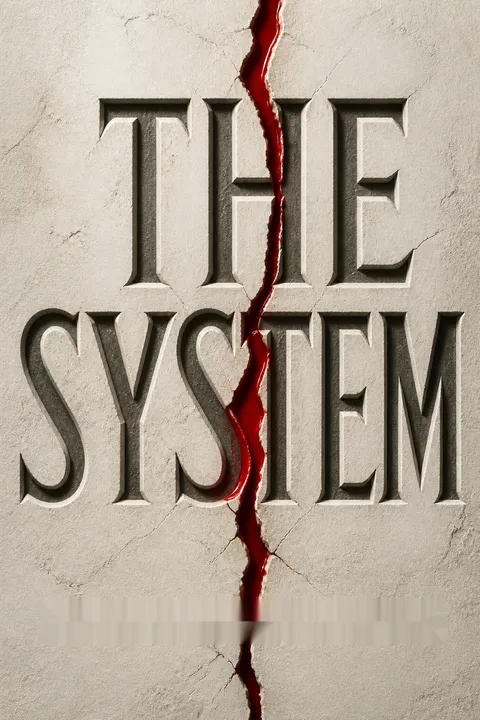


Key Takeaways
Treat democracy versus oligarchy as the real divide, not left versus right
Power sets the divide. Reich argues that the central political conflict is between a wealthy minority able to shape the rules and a majority with little influence over them. He calls rule by a small, exceptionally rich group an oligarchy. The book’s recurring example is Jamie Dimon, head of JPMorgan Chase and the Business Roundtable: not a singular villain, but a capable executive operating within incentives that reward concentrating wealth and influence.
The numbers show the shift. From 1980 to 2019, CEO pay rose 940 percent while typical worker pay increased 12 percent. The richest 0.1 percent came to hold about as much wealth as the bottom 90 percent combined. Reich’s point is not that every rich person acts alike, but that concentrated wealth can purchase political power, which can then secure more wealth.
What's useful about this framing is that it shifts attention from politicians' labels to the distribution of decision-making power. It also explains why people with different party identities may share complaints about political influence and economic insecurity. The caution is that oligarchy can become too broad a label if every policy outcome is attributed to elite control. The strongest version of the argument asks for evidence in each case: who influenced the rule, who benefited, and who bore the cost? That discipline preserves the concept's explanatory force without treating the public as powerless or elites as a unified bloc.
Treat markets as political rules, then ask who gets to write them
Markets need rules. Reich rejects the idea that a free market exists outside government. Laws define what can be owned and traded, whether monopolies are permitted, how workers can organize, what counts as fraud, and who receives protection when debts cannot be paid. Government does not merely interrupt a market; it establishes the market's operating conditions.
Rules distribute gains. Bankruptcy rules, for example, helped determine why major banks received public support during the 2008 crisis while homeowners had far less help keeping their homes. Patent protections and weak antitrust enforcement can also shield dominant firms from competition. Reich applies the same test to claims about national competitiveness: a global corporation's profits are not the same thing as Americans' prosperity. He defines real competitiveness through people's productivity, which depends on health, education, and infrastructure.
This is a powerful corrective to debates that treat regulation and markets as opposites. Rules are unavoidable; the meaningful question is whose risks and interests they encode. The perspective also makes distribution part of economic analysis rather than an afterthought. Still, rule changes can produce mixed effects, and a policy that benefits a powerful group may also deliver public benefits. Careful analysis therefore needs to examine design and consequences, not merely infer motive from the identity of the winner. Reich's framework is most useful as a prompt to make institutional choices visible.
Do not mistake corporate charity for changing the incentives causing harm
Good deeds are not system change. Dimon publicly highlighted JPMorgan programs for affordable housing, worker training, and struggling cities. Reich recognizes their potential value, but compares them with the scale of the bank's business: JPMorgan reported $30.7 billion in net income in 2018, while its new worker-training initiative promised $350 million over five years.
Follow the larger choices. Dimon also lobbied for the 2017 corporate tax cut, which Reich says brought his bank substantial savings while increasing federal borrowing. JPMorgan continued financing fossil fuels, faced a settlement over discriminatory mortgage lending, and paid some tellers wages that left them short of basic expenses. The issue is not whether a company can fund useful programs. It is whether voluntary generosity can outweigh policies and business practices that preserve the harms those programs address.
The distinction here is between amelioration and governance. Philanthropy can address immediate needs, but it is discretionary: beneficiaries cannot reliably demand it, and its priorities remain with the giver. Binding standards, transparent reporting, and enforceable penalties put decisions within public reach. That does not make private initiatives worthless; they can test ideas and deliver help quickly. But their scale and durability are limited when the same firm can lobby against public revenue or regulation. Evaluating corporate responsibility therefore means comparing charitable spending with the firm's ordinary operations and political activity, not assessing its values statement alone.
When crises hit, banks get rescued while households carry the damage
Protection flows upward. Reich uses the 2008 financial crisis to illustrate what he calls socialism for the rich: public support that cushions powerful firms from losses while ordinary people face the market's full force. JPMorgan received $25 billion in federal assistance during the crisis. Meanwhile, 8.7 million people lost jobs, household wealth fell sharply, and millions lost homes.
The safety net was unequal. The five largest banks held 46 percent of U.S. deposits by 2019, compared with 12 percent in the early 1990s. Reich cites an estimated $83 billion annual subsidy from the market's belief that the biggest banks would not be allowed to fail. Homeowners, by contrast, did not receive comparable protection, and Wall Street opposed allowing bankruptcy judges to modify primary-home mortgages. The asymmetry is political: the rules determine whose failure becomes a public emergency.
The example clarifies that market discipline is not applied evenly when institutions are interconnected enough to threaten the whole economy. Rescuing a bank may prevent wider damage, but that practical case does not settle who should pay, what conditions should attach, or whether executives should face consequences. Those are separate choices. The concept of public subsidy is especially revealing because support can be valuable even when no direct payment is visible: an implicit guarantee changes what investors charge a firm to borrow. A fair assessment should distinguish emergency stabilization from rewarding the decisions that made rescue necessary.
Rebuild citizens' counterweight before campaign money writes the rules
Voice requires organization. A study by political scientists Martin Gilens and Benjamin Page examined 1,799 policy issues from 1981 to 2002. It found that average citizens' preferences had little measurable influence on policy, while economic elites and business groups had substantially more. Reich argues that the imbalance has worsened as campaign finance expanded and organized labor weakened.
The counterweight has thinned. Countervailing power means organized groups capable of balancing corporate influence, such as unions, cooperatives, local banks, and membership organizations. In the 2015-16 election cycle, business gave candidates about $34 for every $1 contributed by unions and public-interest organizations combined. Corporate lobbying reached roughly $3 billion annually, compared with about $48 million for unions. Campaign donations, lobbying, and the revolving door between government and industry create sustained access that isolated voters rarely possess.
Political participation is not only about whether citizens hold opinions; it is also about whether they can coordinate, persist, and reach decision-makers. This helps explain why membership organizations matter beyond their immediate workplace or local mission. They aggregate scattered interests into a voice institutions can hear. The study cited here is influential, but its time period predates later campaign-finance changes, and measuring political influence across many issues is methodologically difficult. Its result should not be read as proof that public opinion never matters. It does, however, make a strong case for examining whose preferences translate into policy consistently.
Shareholder primacy made workers and towns disposable to protect stock prices
Corporate purpose changed. Reich contrasts stakeholder capitalism, in which corporate leaders consider workers, customers, communities, and shareholders, with shareholder capitalism, which makes shareholder returns the overriding measure. In the 1980s, raiders such as Carl Icahn used takeovers and pressure on management to extract value. The threat of being replaced pushed CEOs to pursue stock-price gains through layoffs, wage cuts, debt, and factory closures.
The costs landed elsewhere. General Electric under Jack Welch became a prominent example. Between 1981 and 1985, GE laid off about 100,000 workers; it later cut its U.S. workforce while expanding employment abroad. The share price rose dramatically, but workers and communities absorbed the disruption. Reich challenges the idea that efficiency automatically benefits society: gains can accrue to executives and investors while displaced workers lose income, benefits, and the value of their local ties.
The key insight is that corporate governance is not a technical matter separate from social policy. It determines which interests count when a company reorganizes. The argument also exposes a weakness in treating workers as mobile resources: people have family obligations, specialized skills, and homes that cannot be transferred as easily as financial capital. Yet stakeholder language can be vague, and managers may use it to avoid accountability to any group. Effective alternatives need clear duties and representation, such as worker voice in decisions, rather than relying on executives' personal sense of stewardship.
Pair antitrust with worker power to stop monopolies setting everyone's terms
Concentration changes bargaining. Reich says that two-thirds of American industries became more concentrated after the 1980s as antitrust enforcement weakened. Airline mergers reduced twelve major carriers to four, while a small number of technology companies came to dominate key digital platforms. When customers have few alternatives, dominant firms can raise prices or shape access; when workers have few employers, they have less leverage to negotiate pay and conditions.
Labor lost its counterweight. Private-sector union membership fell from 35 percent in the mid-1950s to 6.4 percent. Reich argues that this shift helped move income from wages toward profits. He points to the contrast between a unionized General Motors worker earning about $40 an hour in today's dollars fifty years ago and a typical entry-level Walmart worker earning about $11. His proposed response combines stronger antitrust enforcement with unions and other forms of worker ownership and voice.
Monopoly and labor power belong in the same conversation because both shape people's alternatives. Antitrust can protect consumers and encourage new firms, while collective bargaining gives workers a way to negotiate with employers that otherwise hold greater leverage. These tools address different sides of market power, so one cannot substitute fully for the other. The challenge is defining when size itself threatens competition and when scale creates genuine efficiencies. A durable policy should examine conduct, barriers to entry, worker mobility, and the distribution of gains, rather than assuming that every large firm is harmful or every merger is efficient.
Debt hid stagnant wages until Wall Street's bets finally broke households
Families improvised around flat pay. Reich describes three ways households maintained their consumption as wages stagnated: more women entered paid work, adults worked longer hours, and families saved less while borrowing more. By the mid-2000s, Americans worked an average of 1,780 hours annually, substantially more than workers in several European countries. The personal savings rate fell from about 9 percent after World War II to 2.6 percent in 2008.
Borrowing filled the gap. By 2007, typical household debt reached 138 percent of after-tax income. Rising home prices made refinancing seem like a source of spendable cash, and households extracted $2.3 trillion from homes between 2002 and 2007. Meanwhile, Wall Street had expanded risky financial trading after deregulation, including the repeal of Glass-Steagall's separation between commercial and investment banking. When housing values collapsed, household borrowing and financial bets failed together.
This account connects household behavior to institutions without denying that individual choices mattered. Debt can temporarily smooth consumption, but it cannot permanently replace income growth; when asset prices reverse, the same borrowing that sustained spending magnifies the shock. The narrative also makes clear why a growing economy can feel secure until it suddenly does not. One nuance is that increased women's employment also reflected expanded opportunity, not simply family distress. Economic analysis should recognize both realities: paid work opened options, while families also relied on additional labor to compensate for weak wage growth.
Recognize working-class anger without letting demagogues aim it at scapegoats
The anger predates the slogans. In visits to Midwestern and Southern communities, Reich heard people across party lines describe a rigged system: stagnant pay, lost homes, political favors, and a sense that effort no longer offered a fair chance. The 2016 appeal of both Bernie Sanders and Donald Trump drew on anti-establishment frustration, though they offered very different diagnoses and remedies.
Scapegoats redirect attention. Reich argues that Trump channeled real economic and status anxiety toward immigrants, minorities, and cultural enemies, while his policies favored wealthy donors and corporations. This does not mean racism was irrelevant. The book treats racial resentment and xenophobia as real forces, while arguing that economic betrayal helped make such appeals powerful. A coalition against concentrated power must therefore confront discrimination directly rather than assume shared economic hardship will automatically unite people.
This is a useful account of political anger as both material and interpretive. People experience economic insecurity, but political actors supply stories about its cause and identify who deserves blame. The same hardship can support solidarity or exclusion, depending on the narrative and the institutions available to organize it. The caution is against making class grievance an all-purpose explanation for racial politics. Racism has its own history and agency, not merely a function of economic stress. The strongest reading holds both truths together: insecurity can intensify scapegoating, and equal citizenship requires confronting prejudice on its own terms.
Organize across class and race to change power, not merely win policies
Policy needs political capacity. Reich argues that proposals such as health-care access, better schools, wealth taxation, and climate action cannot endure without a democracy capable of enacting them. His remedy is a broad coalition of working-class, poor, and middle-class people across racial and regional lines, supported by active citizens who organize between elections.
Change the machinery. The book points toward campaign-finance reform, stronger unions, antitrust enforcement, worker representation in corporate decisions, and laws that make companies accountable to communities and the environment. It also insists that penalties must outweigh the gains from breaking laws. Historical reform movements, from Progressive Era organizing to the New Deal and civil-rights struggles, show that concentrated power can be challenged. The immediate task is not simply to choose better leaders, but to build enough organized public power to make different rules possible.
The distinction between policy change and power change is consequential: a law passed without an organized constituency can be weakened, ignored, or reversed. Durable reform usually requires institutions that keep affected people involved after the headline moment, from unions and civic groups to transparent enforcement. A broad coalition is strategically compelling, but coalition-building cannot erase real conflicts over race, identity, and resource distribution. Shared interests need to be made credible through fair rules and mutual accountability. Citizenship in this account is not a mood of concern; it is a repeated practice of learning, organizing, and exerting pressure.
Analysis
The book's deepest contribution is to treat political economy as a contest over institutional design. It refuses the convenient split between a naturally functioning market and a politically meddling state. Property, corporate structure, bargaining rights, bankruptcy, and finance all depend on public rules. The book then traces a feedback loop: concentrated wealth buys greater access to rulemaking, favorable rules increase concentration, and weaker counterweights make the process harder to reverse. This is more explanatory than a morality tale about greedy executives because it accounts for why similar outcomes persist across different leaders.
The Jamie Dimon portrait makes the abstraction legible. Dimon can express genuine concern for poverty while serving an institution whose incentives and political activity often conflict with that concern. The tension is not resolved by labeling him hypocritical; it illustrates a structural conflict between corporate leadership and public responsibility. That is also why the book distrusts voluntary corporate benevolence and emphasizes enforceable rules.
The argument is strongest when it identifies mechanisms: executive compensation tied to share prices, diminished union leverage, merger concentration, political donations, and financial deregulation. It is less conclusive when it compresses varied political outcomes into a single oligarchic explanation. Public policy has multiple causes, and economic change also reflects technology, trade, and changing consumer behavior. Those factors do not negate the institutional argument, but causal claims require careful distinction between evidence of influence and proof of control.
The book's proposed remedy is therefore institutional and civic at once. Antitrust, labor organization, campaign-finance reform, and corporate accountability can redistribute bargaining power, but they depend on citizens capable of sustaining pressure. Its central warning is that democratic forms alone do not guarantee democratic influence. Its practical test is whether ordinary people can shape the rules that govern economic life, and whether those rules make prosperity broadly shared rather than politically purchased.
Review Summary
The System is highly praised for its insightful analysis of America's economic and political landscape. Reich argues that the real conflict is between democracy and oligarchy, not left and right. He examines how wealth concentration has led to corporate control of politics, eroding the middle class and workers' rights. Readers appreciate Reich's clear explanations of complex issues and his passionate call for reform. While some find the solutions section brief, most consider the book a compelling wake-up call about the need to address systemic inequality and restore democracy.
People Also Read






Glossary
Oligarchy
Rule by a wealthy fewA system in which a small, exceptionally wealthy group controls or strongly influences major social, economic, and political institutions. In Reich's account, wealth provides access to political power, and political influence can then produce rules that increase wealth further. An oligarchy can operate inside institutions that formally remain democratic.
Countervailing power
Organized power that balances corporationsThe collective influence of groups that can balance the power of large businesses. Reich uses the term for institutions such as labor unions, cooperatives, local banks, and membership organizations. These groups give workers and communities a way to negotiate, organize, and influence public policy rather than confronting corporations as isolated individuals.
Stakeholder capitalism
Corporate responsibility to multiple groupsA view of corporate purpose in which managers consider the interests of workers, customers, communities, and shareholders. Reich contrasts it with an approach that treats shareholder returns as the overriding goal. He describes an earlier period when some large companies were rooted in local communities and their leaders were expected to balance several constituencies.
Shareholder capitalism
Corporate priority on shareholder returnsA model of corporate governance that makes increasing shareholder value the dominant measure of managerial success. Reich links its rise in the 1980s to takeover pressure and executive incentives tied to stock prices. He argues that layoffs, wage restraint, outsourcing, and factory closures became common ways to raise returns, while workers and communities bore substantial costs.
Market fundamentalism
Markets treated as natural and rightfulA belief system that presents market outcomes as natural, neutral, and deserved, while minimizing the role of government rules and unequal power. In Reich's account, it encourages people to interpret wealth as proof of merit and poverty as personal failure, obscuring how law and political influence shape opportunities and rewards.
DINS
Double income, no sexReich's shorthand for households in which both partners work long hours and have little time or energy for intimacy and family life. The term appears in his account of how families responded to stagnant wages: after more women entered paid employment, households increasingly relied on longer work hours before turning to reduced savings and borrowing.
Socialism for the rich
Public protection for powerful firmsReich's critical label for arrangements that protect large corporations and wealthy investors from losses through bailouts, guarantees, subsidies, or favorable rules, while ordinary households receive less protection from economic shocks. The phrase highlights an unequal distribution of risk: private actors may retain gains, while the public helps absorb the consequences of failure.
Gilens and Page study
Study of unequal policy influenceA 2014 analysis by political scientists Martin Gilens and Benjamin Page examined 1,799 policy issues from 1981 to 2002. It compared the influence of average citizens, economic elites, and organized interest groups on policy outcomes. Reich cites its finding that average citizens had little measurable independent influence, while elites and business groups had more.
FAQ
What's "The System: Who Rigged It, How We Fix It" about?
- Author's Exploration: The book, written by Robert B. Reich, explores how the American political and economic system has been rigged in favor of a wealthy elite, leading to increased inequality and a weakened democracy.
- Focus on Oligarchy: Reich delves into the concept of oligarchy, where a small group of wealthy individuals and corporations hold disproportionate power over the political and economic systems.
- Call for Reform: The book outlines how this system can be reformed to ensure a more equitable distribution of wealth and power, emphasizing the need for systemic change rather than mere policy adjustments.
Why should I read "The System: Who Rigged It, How We Fix It"?
- Understanding Inequality: The book provides a comprehensive analysis of the causes behind the growing economic inequality in the United States.
- Insight into Power Dynamics: It offers insights into how power is concentrated among a few and the impact this has on democracy and the economy.
- Actionable Solutions: Reich not only identifies problems but also suggests ways to fix the system, making it a valuable read for those interested in social justice and economic reform.
What are the key takeaways of "The System: Who Rigged It, How We Fix It"?
- Concentration of Wealth and Power: The book highlights how wealth and power have become concentrated in the hands of a few, leading to a rigged system.
- Impact on Democracy: Reich discusses how this concentration undermines democracy, as the wealthy elite can influence political decisions to their advantage.
- Need for Systemic Change: The author argues for systemic reforms, including changes in corporate governance, campaign finance, and antitrust laws, to redistribute power and wealth more equitably.
How does Robert B. Reich define oligarchy in "The System"?
- Definition of Oligarchy: Reich defines oligarchy as a system where a small number of wealthy individuals and families control major institutions and have significant power over others' lives.
- Historical Context: He compares modern-day America to past oligarchies, such as those in Russia and the Gilded Age in the U.S., where wealth and power were similarly concentrated.
- Consequences: The book explains how oligarchies manipulate laws and policies to maintain their wealth and power, often at the expense of the broader public.
What solutions does Robert B. Reich propose in "The System" to fix the rigged system?
- Corporate Governance Reform: Reich suggests changes in corporate governance to give workers and communities a larger voice in decision-making.
- Campaign Finance Reform: He advocates for reducing the influence of big money in politics through public financing of campaigns and stricter lobbying regulations.
- Antitrust Enforcement: The book calls for stronger antitrust laws to break up monopolies and reduce the concentration of economic power.
How does "The System" explain the role of corporate social responsibility?
- Critique of CSR: Reich argues that corporate social responsibility (CSR) is often a public relations strategy rather than a genuine commitment to social good.
- Lack of Systemic Change: He points out that CSR does not address the underlying power imbalances and systemic issues within the economy.
- Need for Regulation: The book suggests that real change requires laws that enforce corporate accountability, rather than relying on voluntary CSR initiatives.
What role does Jamie Dimon play in "The System"?
- Symbol of the System: Reich uses Jamie Dimon, CEO of JPMorgan Chase, as a symbol of the American oligarchy and its influence over the political-economic system.
- Contradictions Highlighted: The book highlights the contradictions between Dimon's public statements on social issues and the actions of his bank, which often prioritize profits over public good.
- Call for Accountability: Reich argues that leaders like Dimon have a moral obligation to use their power to reform the system rather than perpetuate it.
How does "The System" address the issue of wealth inequality?
- Historical Comparison: Reich compares current levels of wealth inequality to those seen during the Gilded Age, emphasizing the dangers of concentrated wealth.
- Impact on Society: The book discusses how wealth inequality leads to social and economic instability, undermining the middle class and democracy.
- Redistributive Policies: Reich advocates for policies that redistribute wealth more equitably, such as progressive taxation and increased public investment in education and infrastructure.
What are the best quotes from "The System" and what do they mean?
- "The biggest political divide in America today is not between Republicans and Democrats. It’s between democracy and oligarchy." This quote encapsulates Reich's argument that the real battle is against the concentration of power and wealth, not traditional political divisions.
- "We can have democracy in this country or we can have great wealth concentrated in the hands of a few, but we can’t have both." This quote highlights the incompatibility of extreme wealth concentration with a functioning democracy.
- "The system is not a meritocracy where ability and hard work are rewarded but a cruel sham dominated by wealth and privilege." Reich challenges the notion of meritocracy, arguing that the system is rigged to favor the wealthy.
How does "The System" explain the relationship between wealth and political power?
- Interconnectedness: Reich explains that wealth and political power are deeply interconnected, with the wealthy using their resources to influence political decisions.
- Impact on Legislation: The book discusses how this relationship leads to legislation that favors the wealthy, such as tax cuts and deregulation.
- Erosion of Democracy: Reich argues that this concentration of power erodes democratic institutions and processes, making it difficult for ordinary citizens to have their voices heard.
What historical examples does "The System" use to illustrate its points?
- Gilded Age Oligarchs: Reich draws parallels between today's oligarchs and the robber barons of the Gilded Age, who amassed great wealth and power.
- Progressive Era Reforms: He references the reforms of the early 20th century, such as antitrust laws and labor protections, as examples of successful systemic change.
- New Deal Policies: The book highlights the New Deal as a period when power was redistributed more equitably, leading to a stronger middle class.
How does "The System" suggest individuals can contribute to systemic change?
- Active Citizenship: Reich emphasizes the importance of active citizenship, encouraging individuals to engage in political processes and advocate for change.
- Building Coalitions: He suggests building coalitions across different groups to challenge the concentration of power and push for reforms.
- Educating Others: The book encourages individuals to educate themselves and others about the systemic issues and the need for reform, fostering a more informed and engaged citizenry.
About the Author
Other books by Robert B. Reich



Download PDF
Download EPUB
.epub digital book format is ideal for reading ebooks on phones, tablets, and e-readers.








