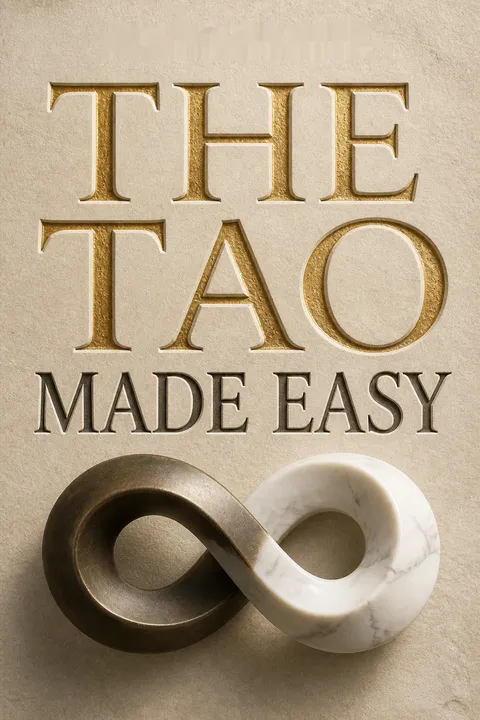


Key Takeaways
Use the Tao as a compass, not another system to control
Start with what is here. Cohen presents the Tao as the underlying way of life, present in people and nature whether or not they notice it. His point is less about acquiring a special power than about loosening the fear and assumptions that block clear judgment. After an astrologer predicts years of bad luck, the narrator’s imagined Lao Tse urges him to make choices rather than hand his future to a forecast.
Trust without surrendering judgment. Cohen’s opening story about receiving a mentor’s loving letter on a terrible day gives this worldview its emotional force: help can arrive unexpectedly, through other people. The Tao is a spiritual interpretation of life, not a demonstrated guarantee that events are arranged for our benefit. Its practical value lies in inviting steadier attention and responsibility.
The useful move is from prediction to agency. A forecast, diagnosis, or expert opinion can inform a decision without becoming a verdict about identity or destiny. This resembles psychological approaches that distinguish what can be controlled from what cannot: the distinction reduces helplessness while preserving realism. The risk is turning trust into a claim that every event is secretly benevolent. That can make suffering seem deserved or discourage practical help. The stronger reading is modest: uncertainty is real, but people retain choices about how to respond.
Stop forcing the river; learn the rhythm before you act
Work with conditions. Cohen uses the Taoist idea of non-action to mean unforced action that responds to circumstances, not laziness or refusal to help. Nature offers the model: events have rhythms, and effort spent against them can make matters worse. A scuba diver tangled in kelp first thrashes and tightens the entanglement. Once she moves with the current, she finds a way out.
Notice the cycle. Work and rest, solitude and company, and periods of growth and decline all have their time. The book applies this to relationships, careers, and public life, urging readers to adjust rather than demand that every phase last. Working with a situation still takes judgment and effort. It means choosing actions that fit the moment instead of mistaking strain for proof of commitment.
This is a practical account of adaptive behavior: observe feedback, reduce counterproductive effort, and change tactics. In ecology and engineering, resilient systems do not impose one fixed response on changing conditions. The kelp story makes that principle memorable. Yet “nature” is not automatically wise in every human situation, and accepting a current can become an excuse for tolerating preventable harm. The key question is whether yielding helps someone act more effectively, or merely keeps them from confronting a problem that needs direct intervention.
Stop performing goodness; act from integrity rather than applause
Goodness is not a costume. Cohen argues that trying to prove one is good can conceal a belief in personal inadequacy. The effort then becomes a performance for recognition, rather than a response to what is needed. In one story, Lao Tse gives aid to a bereaved neighbor anonymously, preferring the recipient’s well-being to credit. Cohen contrasts this with people who display status or virtue to win approval.
Check the motive. The book encourages readers to ask whether an action comes from care, fear, vanity, or pressure. It also favors inner discernment over rigid rules when rules conflict with humane judgment. That does not mean all rules are useless: laws and shared norms can protect people, especially when power is unequal. Integrity requires both reflection and attention to the consequences for others.
The distinction between moral action and moral display is important in a culture that rewards visibility. Research on intrinsic motivation broadly supports the idea that people can act differently when they focus on meaningful purpose rather than external rewards. Still, private conviction is not automatically ethical. People can sincerely believe harmful things. A useful test is whether an action respects others’ safety and agency, not simply whether it feels internally authentic. Humility works best alongside accountability.
Offer help without claiming control over someone else's outcome
Care without coercion. Cohen’s version of non-action does not mean standing aside when someone needs help. It means offering support without insisting that the other person respond exactly as hoped. In a tavern story, Lao Tse sees a drunken man grieving his dead partner. Rather than scolding him, he listens, helps him sit, and pays for a room and dinner. The intervention meets the immediate need without pretending to solve the man’s grief.
Separate support from rescue. A listener may offer time, information, practical assistance, or protection, while recognizing that another person retains agency. Cohen applies the same idea to personal change: pressure can provoke resentment instead of lasting change. But non-coercion has limits. When someone faces abuse, imminent danger, or serious medical need, respectful action and outside help may be essential.
This insight aligns with motivational interviewing, a counseling approach that elicits a person’s own reasons for change rather than arguing them into compliance. Listening can restore dignity and make clearer thinking possible. But the advice needs a boundary: non-control is not neutrality toward danger. Supporters can respect autonomy while naming risks, setting limits, and contacting professionals when appropriate. Compassion is strongest when it combines patience with a clear-eyed account of what the situation requires.
Lead by serving first, and let competence matter more than status
Make service visible. Cohen presents humility as a leadership strength, not self-erasure. Akoni Pule, a former Hawaii legislator, lost an election and took a janitorial job in the legislative building to remain near public service and learn. He later returned to office and became a respected advocate. The story makes leadership less about rank than about willingness to contribute and keep learning.
Let the work lead. The book warns against chasing recognition, titles, and influence for their own sake. A manager who serves the group, shares credit, and develops other people can create stronger results than a leader who demands deference. Humility still allows ambition and confidence; it asks that ability be used for a purpose beyond self-display. Service is not a substitute for skill, and good intentions alone do not make someone effective.
The strongest version of humble leadership is not modest performance but a redistribution of attention: credit flows outward, responsibility flows inward. That pattern can build trust and make it easier for colleagues to speak honestly. The Pule story also suggests that setbacks can become apprenticeship if a person remains engaged. Yet service language can be exploited to demand unpaid labor or silence legitimate self-advocacy. A healthy leader serves a shared purpose while recognizing limits, fair compensation, and the need for competence.
Ask what you truly need before chasing another measure of wealth
Separate need from fear. Cohen asks readers to distinguish genuine needs from wants accumulated through comparison, status, or anxiety. A scene from the film It’s a Wonderful Life illustrates the question: a bank manager facing a run asks a frightened customer what amount he actually needs, and the answer is far smaller than the demand made in panic. The book uses this shift to argue that contentment can reduce the appetite for more.
Let resources circulate. Cohen also treats generosity as a practice of abundance, including gifts of time, attention, and skill, not only money. He argues that giving can make life feel richer, but this should not be mistaken for a financial law guaranteeing that generosity produces money. A practical version is to share within one’s means, while keeping enough for responsibilities and emergencies.
The question of “enough” counters hedonic adaptation, the tendency for new possessions and comforts to become ordinary, prompting fresh wants. It also challenges status competition, where success is measured by comparison rather than usefulness. Generosity can strengthen social ties and create a sense of participation, but it should not be sold as a supernatural investment strategy. The distinction matters: generosity is valuable as an ethical choice even when no material return follows.
Let relationships change without treating every ending as failure
Honor each phase. Cohen describes relationships as serving different purposes: a brief encounter may offer a needed moment of help, a time-limited partnership may bring lasting lessons, and some connections endure. He tells of Tom and Haley, whose marriage ended but who continued to cooperate as parents and eventually supported each other as friends. The relationship changed form; its earlier meaning was not erased.
Release the old script. Cohen calls a timely meeting that benefits both people a “golden intersection.” The idea encourages gratitude for what a connection gave without demanding it remain unchanged. This can help people stop treating a breakup, job change, or friendship shift as proof that the past was wasted. It should not imply that every relationship is destined or that people must remain in harmful situations to complete a lesson.
The value of this framing is that it loosens the all-or-nothing story of relationships: permanent union is not the only evidence that a bond mattered. Developmental psychology likewise recognizes that roles and needs change across a lifetime. The caution is crucial, because destiny language can romanticize coercion or keep someone attached to a damaging person. Meaning can be made from a relationship without assuming that the relationship was cosmically prescribed or must continue.
Treat discomfort as information, not proof that suffering is required
Notice the warning. Cohen recounts taking dock work despite a strong unease about the employer, then going unpaid when the fisherman left. In the imagined conversation that follows, Lao Tse points out that the narrator had overridden his own judgment because he feared not having enough money. The lesson is to notice discomfort and investigate it, rather than dismiss it automatically.
Make a small correction. Cohen compares gradual adaptation to a frog story: a frog supposedly fails to escape water whose temperature rises slowly. The tale functions as a warning about becoming numb to worsening conditions, not as reliable evidence about frog behavior. The book urges honest naming of what feels “not right” and taking a manageable next step. Discomfort can signal danger, stress, or growth, so it needs interpretation, not blind obedience.
This is a useful model of drift: people can normalize a bad situation because each small change seems tolerable on its own. The practical response is to track patterns and seek outside perspective before a crisis forces a decision. Intuition can be valuable, particularly when it registers cues that have not yet reached conscious explanation, but it can also reflect bias or fear. It is best treated as a prompt to gather evidence and consider options, not as an infallible command.
Build work around what makes you feel alive, then develop the craft
Follow the thread. Cohen uses the Zone to describe a state of absorbed, fluent activity in which attention settles into meaningful work. He points to coach Jim Johnson’s decision to let autistic student Jason McElwain play in a final basketball game. McElwain scored 20 points in less than four minutes, an extraordinary story Cohen uses to illustrate the possibility of unexpected performance when someone is given a chance.
Pair joy with practice. The book recommends identifying activities that energize you, then building skill and finding ways to serve others through them. It does not require quitting a job immediately: a person can develop a new direction alongside existing responsibilities. Passion is a clue, not a guarantee of income or effortless success. The goal is to make work more aligned with ability and purpose, while still respecting practical constraints.
The Zone resembles flow, a concept in psychology describing deep concentration when challenge and skill are well matched. The concept helps explain why some demanding work feels absorbing rather than draining. McElwain’s game is inspiring, but a remarkable performance cannot prove that everyone will find a career through passion alone. A more reliable approach combines interest, deliberate practice, feedback, and viable opportunities. Enjoyment can guide exploration; skill and context determine what can be sustained.
Choose balance by adjusting to your limits, not worshipping extremes
Find the workable middle. Cohen connects Taoist balance with the yin-yang image, in which contrasting forces belong to one larger whole. He recalls Siddhartha’s movement from royal comfort to severe self-denial, and his recognition that neither extreme offered a complete answer. In a parallel story, the narrator works through exhaustion to finish chopping wood; Lao Tse points out that fatigue had already signaled a need to stop.
Use feedback. Balance is not a fixed midpoint or a demand to give every priority equal time. It means noticing when work, rest, ambition, comfort, or discipline has begun to undermine the whole. A person may need more effort in one season and recovery in another. The practical measure is whether the pattern supports health and useful action, rather than whether it looks moderate from the outside.
This version of balance is dynamic: it resembles homeostasis, the way living systems adjust to remain functional under changing conditions. It avoids the simplistic idea that every disagreement has two equally valid sides or that moderation is always wise. Some situations demand decisive action, especially where safety or rights are at stake. The value lies in monitoring consequences and correcting course, not in splitting the difference between extremes for its own sake.
Protect attention and care for your body as part of spiritual practice
Make room to notice. Cohen argues that constant activity and screens can crowd out attention, conversation, and direct experience. He describes entering a juice bar where nearly everyone was absorbed in a phone, including people sitting together. The scene makes a simple point: a tool that connects people across distance can also distract them from the person beside them.
Return to basic care. The book treats the body as a companion to spiritual life, not an enemy to punish or an idol to perfect. It recommends ordinary practices such as rest, movement, nourishing food, breathing, and reducing avoidable stress. These habits are not a cure-all, and illness should not be interpreted as proof of spiritual failure. Technology and medicine can be beneficial; the question is whether their use supports life rather than displacing it.
Attention is limited, and digital environments compete to capture it through novelty and interruption. Deliberate phone-free time can protect conversation and make it easier to notice bodily cues. Cohen’s broader point about embodiment also counters spiritual approaches that treat physical needs as inferior. His health claims sometimes move beyond what the anecdotes can establish, so the safest application is ordinary: care for the body, use evidence-based medical support, and make technology serve chosen priorities.
Analysis
The book’s central move is to translate the Tao Te Ching from a compact classical text into a guide for ordinary decisions: whether to persist or pause, how to help without controlling, when to leave a relationship, and how to keep work from consuming a life. Its recurring stories give the ideas emotional handles. A student ignores a warning about a job, a leader serves before returning to office, a worker mistakes exhaustion for virtue. Across these examples, the proposed discipline is to notice conditions, loosen ego-driven striving, and choose a response that preserves connection and integrity.
This is an adaptation through Cohen’s own spiritual worldview, not a neutral survey of historical Taoism. He presents the Tao as a benevolent intelligence that supports people and sometimes arranges meaningful outcomes. That belief gives the book its warmth and its language of trust, but it is not the same as evidence that events are orchestrated for individual benefit. Readers can retain the practical insights without accepting every metaphysical claim: uncertainty can be met with agency, attention, humility, and adaptive action.
The most compelling sections are those that turn abstract values into observable choices. Listening rather than lecturing, giving without taking credit, and stopping when the body signals strain are concrete behaviors. The least reliable moments are those that imply suffering always contains a gift, or that health and prosperity follow from alignment. Such claims risk blaming people for hardship and underestimating structural forces, illness, or chance. A humane reading keeps the book’s invitation to meaning while refusing to make pain compulsory or self-blame spiritual.
Cohen also discloses that his Lao Tse dialogues are fictional scenes, designed to dramatize teachings rather than document historical encounters. That device makes the text approachable, but it should not be confused with evidence about Lao Tse’s biography. The book works best as a practical, openly personal companion: a call to simplify, observe, and act with care, not a scientific manual or definitive account of Taoist philosophy.
Review Summary
The Tao Made Easy receives mixed reviews with an overall 4.36/5 rating. Many readers praise it as an accessible introduction to Taoism and the Tao Te Ching, appreciating the fictional stories about Lao Tzu and practical modern applications. Several found it deeply meaningful and life-changing during difficult times. Critics note excessive "new age" content, questionable factual claims, and insufficient understanding of progressive concepts like transsexuality. Some felt the repetitive nature and oversimplification detracted from the wisdom. Most agree it effectively explains complex Taoist principles for Western audiences.
People Also Read








Glossary
Tao
Underlying way of lifeIn Cohen’s presentation, the Tao is the fundamental way or source underlying nature and human life. It is not a rulebook or a force that must be summoned; it is already present, and people can live more harmoniously by noticing it and acting with less fear and coercion. The book uses the term in a spiritual, benevolent sense.
non-action
Unforced, responsive actionNon-action is Cohen’s practical interpretation of acting without unnecessary force, control, or resistance. It does not mean passivity or refusing to help. A person may still take decisive action, but aims to respond to the actual situation rather than impose a rigid plan or demand a particular result from others.
The Zone
Absorbed, fluent activityThe Zone is Cohen’s term for a state of heightened engagement in which a person becomes absorbed in an activity and self-conscious effort recedes. He associates it with joy, trust, skill, and a sense of flow. The book suggests that meaningful work and attention to genuine interests can help people enter this state, while recognizing that practice is still required.
golden intersection
Timely, mutual connectionA golden intersection is Cohen’s name for a period when two people’s paths cross in a way that benefits or supports them. The connection may be brief or may develop into a lasting relationship. The concept encourages gratitude for what a meeting offers without assuming that every relationship must continue in its original form.
spiritually legal
Ethically helpful choiceCohen uses “spiritually legal” as a question for ethical decisions: what action best serves care and human well-being when formal rules seem inadequate or misguided? It asks a person to consider intention and consequences, rather than obeying a rule mechanically. The idea requires caution because good intentions alone do not establish that an action is safe or just.
Virtue
Integrity expressed in conductIn this book, Virtue means living in alignment with the Tao through qualities such as honesty, humility, kindness, patience, generosity, and keeping one’s word. It is contrasted with public displays of goodness or rigid moral performance. Cohen treats it as a practical orientation expressed in how people serve, relate, and make decisions.
About the Author

Download PDF
Download EPUB
.epub digital book format is ideal for reading ebooks on phones, tablets, and e-readers.








