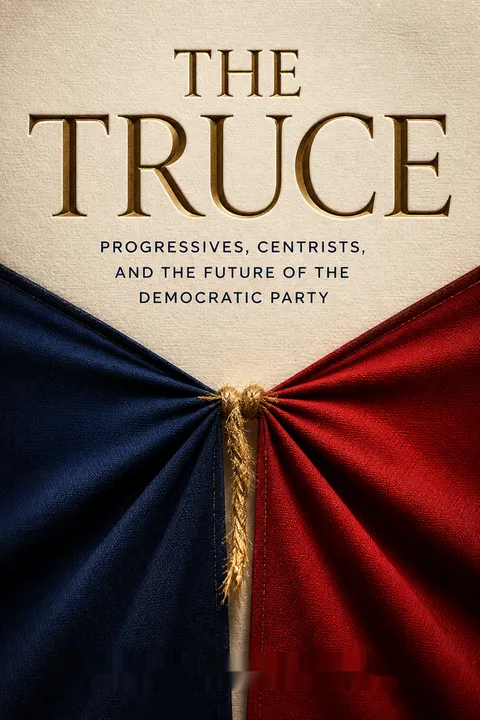


Key Takeaways
Treat disaffection inside your coalition as a warning, not a temporary mood.
The fracture had history. In 2016, Joe Biden believed Hillary Clinton was failing to connect with voters, but Barack Obama’s team persuaded him not to run. Clinton then faced Bernie Sanders, whose challenge energized young progressives while deepening their distrust of party leaders. The campaign’s internal emails, released in a hack, appeared to confirm suspicions of favoritism. Biden later sensed disaffection among voters in places such as Wisconsin, which Clinton never visited. Trump won narrowly, while post-election polling suggested more Democratic-leaning voters stayed home than Republican-leaning voters.
A pause, not a cure. In 2020, Biden defeated Sanders and Trump, then built a truce with Sanders’s supporters. The book’s central question is whether that alliance settled the party’s conflict or merely postponed it.
A coalition is not unified simply because its members vote for the same candidate once. The account makes electoral loss legible as a failure of listening and trust, not just a bad message or an unlucky campaign map. That distinction matters: a party can replace a candidate without repairing the relationships that candidate’s campaign exposed. The evidence is suggestive rather than conclusive, since turnout and voter dissatisfaction are difficult to isolate from other causes. Still, Biden’s warnings and the eventual result show why leaders should treat internal dissent as information about the coalition’s weak points.
Primary challenges can change a party before challengers win many seats.
A small insurgency mattered. After Sanders lost in 2016, his campaign alumni helped create Justice Democrats, an organization seeking candidates who would reject corporate donations and challenge establishment Democrats. Its expansive ambition shrank as money and time ran short. One race became the priority: Alexandria Ocasio-Cortez’s challenge to Joe Crowley, a powerful Queens party boss who had barely campaigned in his district.
Organization beat pedigree. Ocasio-Cortez was still bartending while canvassing. The Democratic Socialists of America supplied more than one hundred volunteers, about one-fifth of her field operation. Her victory, alongside three other Justice Democrats-backed wins, transformed the image and politics of the House despite most of the organization’s candidates losing. The campaign showed how a focused challenge can exploit low turnout and turn a local contest into a national argument about who the party represents.
The insurgents’ leverage came less from immediate control of Congress than from changing what seemed possible. A challenger who wins can embarrass an institution, attract new participants, and give a movement a visible representative. Concentrating scarce resources on one winnable race also proved more effective than trying to contest hundreds. Yet the story cautions against treating a breakthrough as a replicable formula: Crowley’s local absence, the district’s low-turnout primary, and Ocasio-Cortez’s unusual communication skill all mattered. A movement needs both a powerful symbol and the unglamorous work that can make that symbol electorally consequential.
Turn visibility into leverage through organization, not celebrity alone.
Attention was a political tool. The Squad, a group of four newly elected progressive women, had little seniority in Congress but attracted enormous public attention. During a 2019 visit to a migrant detention facility, Ocasio-Cortez listened to detained women describe separation from their children and poor conditions. She used her platform to make their accounts visible, while the group’s clash with Speaker Nancy Pelosi showed how their public influence could pressure their own party.
The method has a name. The members called this the “inside-outside game”: organizing within institutions while using public support beyond them to build leverage. Their influence grew from protest, media skill, and congressional work, not online fame alone. After the January 6 attack, the Squad’s role in pushing for Trump’s impeachment reflected a changed relationship with party leadership.
This approach connects representation to power: a legislator may lack formal seniority yet still shape what colleagues must answer for publicly. It also explains why the Squad’s visibility was both useful and costly. Attention can amplify testimony that institutions would otherwise ignore, but it can also invite threats, distort policy disagreements into personality drama, and make a movement dependent on a few recognizable figures. The strongest version of the strategy pairs public pressure with durable relationships and procedural knowledge, so a viral moment has a path into decisions.
Give voters a recognizable political position, not just an appealing biography.
A compelling story needs a program. Kamala Harris’s biography made her a historic candidate, and her campaign launch drew a crowd of 20,000 in Oakland. Yet she often tried to avoid choosing between progressive and moderate labels. The book contrasts her approach with California congressman Ron Dellums, who repeatedly pressed for sanctions against apartheid South Africa, even when his first bill had almost no support. His persistence helped shift the debate until Congress passed sanctions in 1986.
Ambiguity became costly. Harris supported Bernie Sanders’s Medicare for All bill, then softened her position when challenged about private insurance. After a forceful debate attack on Biden’s record on school integration, she shifted her position on federally mandated busing. Staff described campaign divisions and management problems as well. Her victories in debate and fundraising could not compensate for uncertainty about what she would do.
Representation can open a door, but voters still need to know what a candidate intends to change. Dellums’s example shows how a politician can help move the range of acceptable debate by consistently defending a clear policy. Harris’s difficulty was not simply that she sought a broad coalition; it was that her public positions sometimes shifted without a persuasive explanation. At the same time, the account recognizes that criticism of a woman of color can reflect prejudice as well as real strategic failures. Clarity is a useful test, not a license to dismiss unequal scrutiny.
In a primary, control the story when the vote count stalls.
Iowa was a contest in interpretation. In 2020, the state party’s results app failed, and the Sanders campaign’s own reporting app also broke. The caucus produced several kinds of totals, including “state delegate equivalents,” a formula based on local results and district rules rather than a simple statewide vote count. Sanders’s campaign believed it had done well, but its internal data was incomplete.
Confidence shaped coverage. Pete Buttigieg’s campaign had more reliable internal reporting and declared that he was emerging victorious before official results were available. Sanders, wary of another credibility fight, held back from claiming a win. When results arrived three days later, Buttigieg led Sanders by one-tenth of a state delegate equivalent. The muddled count also diverted attention from Biden’s fourth-place finish. Sanders may have won the popular vote, but Buttigieg gained the early media momentum.
The episode shows that campaign communication depends on operational competence. A narrative cannot be separated from the systems producing the numbers, the confidence a team has in them, and the timing of its response. Buttigieg’s declaration did not prove the count was sound, and Sanders’s caution was not necessarily a strategic error in ethical terms. But caution has a cost when rivals fill the public vacuum. The broader lesson is to prepare both a credible data process and a plan for communicating uncertainty, especially when the rules produce several plausible measures of success.
Pragmatism can be a survival strategy for voters facing hostile state power.
South Carolina rewarded a practical coalition. Black voters formed the largest bloc in the state’s Democratic primary, and influential representative Jim Clyburn worried that a bitter nomination fight could weaken the party against Trump. He endorsed Biden shortly before the primary, after Biden promised to appoint a Black woman to the Supreme Court. Biden then won every county, while Sanders finished second.
The choice was not apathy. Local Democrats described their approach as pragmatic progressivism: pursuing health care, wages, and family security while recognizing that Republicans dominated state government. The primary results still contained a generational split. Sanders performed far better among voters under thirty than among older voters. Clyburn’s endorsement helped Biden claim momentum, but the result reflected voters’ judgments about risk, political history, and who seemed capable of winning.
The South Carolina story complicates the assumption that progressive voters simply want the boldest platform, or that moderate voters lack ambition. People make choices within their political environment, including histories of exclusion and the practical limits of governing in a heavily Republican state. Biden’s win depended on trust and relationships as well as ideological positioning. But the result cannot establish that moderation is always electorally safer: the strong youth vote for Sanders points to constituencies that a winning coalition still has to motivate and retain.
Make unity credible by giving rivals real influence over policy.
The truce had a structure. After Biden secured the nomination in 2020, his campaign and Sanders’s team created unity task forces to shape the party platform. Their members included progressives such as Ocasio-Cortez and Pramila Jayapal, alongside more moderate Democrats. They produced 110 pages of recommendations. Biden’s platform did not adopt every progressive demand, but it moved left of the platforms associated with his earlier Democratic predecessors.
Access built trust. In office, Biden chief of staff Ron Klain maintained contact with Jayapal and other progressives. Jayapal described the relationship as consultative, including advance notice when the Progressive Caucus planned public criticism. By presenting progressive priorities as part of the president’s agenda, rather than as a separate factional project, the caucus helped keep disagreement from becoming open revolt.
Unity becomes more durable when political rivals can point to decisions they helped shape, rather than merely being asked to endorse a finished product. The task forces provided both a policy channel and a relationship-building exercise. That distinction is important: consultation does not guarantee agreement, but it can make defeat or compromise feel less like exclusion. The arrangement also depended heavily on relationships with particular officials. A coalition built through personal trust can work quickly, yet it is vulnerable if the habits of consultation are not carried by institutions as well as individuals.
A narrow majority gives internal holdouts power to rewrite the mandate.
The Senate magnified individual vetoes. A filibuster can require sixty votes to end debate on ordinary legislation. The practice grew from a Senate rule change, not an explicit constitutional design, and was repeatedly used to block civil rights bills. In 2021, Democrats held the Senate by the narrowest possible margin, but Joe Manchin and Kyrsten Sinema opposed ending the legislative filibuster.
The agenda shrank in negotiation. A Senate parliamentarian ruled that a proposed $15 minimum wage could not be included in the COVID relief bill. The American Rescue Plan still expanded the Child Tax Credit, a change associated with keeping six million children out of poverty in its first month, but the expansion expired at year’s end. Later, centrist negotiations stripped down the larger Build Back Better agenda before it became the Inflation Reduction Act.
The chapter makes institutional rules visible as political choices with distributive consequences. A majority can win an election and still lack the means to enact its platform when a minority, or a handful of members within the majority, can block action. That does not make every procedural safeguard illegitimate: requiring broader agreement can protect minority interests. The question is whether a rule encourages negotiation or enables indefinite obstruction. The temporary child credit is especially revealing because a measurable policy benefit did not ensure the coalition needed to preserve it.
Money and coordination determine whether insurgents can convert momentum into seats.
New York exposed the limits of local wins. Progressive lawmakers Alessandra Biaggi and Yuh-Line Niou had defeated powerful political machines in state politics and helped challenge Governor Andrew Cuomo. In 2022, both sought congressional seats amid redistricting chaos, unusually late primaries, and crowded contests. Biaggi lost to Sean Patrick Maloney, who had raised several times more campaign money. Niou narrowly lost to Daniel Goldman as several progressive candidates divided overlapping support.
The establishment also stumbled. Maloney, then chair of the Democratic Congressional Campaign Committee, challenged a fellow Democrat after the new map shifted his district. He lost in the general election. New York Democrats lost four House seats even as the party performed better nationally than forecasts predicted and held the Senate. The episode showed that neither insurgents nor party leaders could rely on reputation alone to overcome poor coordination, money gaps, and bad strategic choices.
The New York races resist a simple morality tale in which grassroots candidates are virtuous and party insiders are invincible. Progressives had a message and prior victories, but they lacked a unified strategy in key contests. Established Democrats had money and infrastructure, yet their redistricting gambit and internal disputes damaged their own prospects. Campaign resources matter, but they do not operate independently of timing, candidate fit, and message. The useful question is not just who had more money, but whether each side converted its resources into a coherent plan voters could understand.
Primary calendars are political power, not neutral election administration.
The order shapes influence. After the violence surrounding the 1968 Democratic convention, party reforms gave primary voters a larger role in choosing nominees. Iowa and New Hampshire eventually became the first contests. But the 2020 Iowa caucus combined a complicated voting process with a failed results app, while critics argued that an overwhelmingly white state had too much early influence.
Reform created new disputes. Biden urged the party to prioritize states with more voters of color and to end caucuses. The DNC moved South Carolina to the front, followed by New Hampshire and Nevada, Georgia, and Michigan. Supporters saw a more representative process; Sanders allies saw an advantage for Biden and his political allies. State laws and Republican officials could resist the calendar, while the DNC threatened penalties. Biden’s call to revisit the schedule every four years also guaranteed future fights over who votes first.
Election rules distribute attention before they distribute delegates. A state that votes early can influence which candidates appear viable, attract campaign resources, and set the terms of national debate. Replacing an exclusionary or unreliable process may improve participation, but the authority to redesign the rules can itself become a source of suspicion. The South Carolina decision illustrates both concerns: its electorate better reflected important parts of the Democratic coalition, and its timing helped the incumbent’s path. A legitimate reform needs transparent criteria that remain defensible when different candidates benefit.
The Democratic truce still has no agreed successor or settled ideology.
The coalition lacks a clear heir. Biden and Sanders were both in their eighties in the period covered by the book, and neither had identified a successor capable of uniting the factions. Harris’s 2020 campaign had struggled to define a consistent policy identity, while Buttigieg’s early promise as a national candidate met challenges in his cabinet role. Progressives largely avoided a primary challenge to Biden, arguing that it could weaken the party against Trump.
The movement itself disagrees. Sanders defined progressivism chiefly around workers, wages, health care, and economic power. Other progressives emphasized race, gender, immigration, and the value of representation. Sanders urged organizers to build influence in Congress, statehouses, and local offices, not only in presidential campaigns. The party’s temporary unity therefore rests on unresolved questions about leadership, strategy, and what a progressive coalition should mean.
A movement’s durability depends on more than the stature of its founding figure or the success of one president. It needs ways to develop leaders, settle disputes, and translate broad values into choices that voters can recognize. Sanders’s emphasis on economic class can unite people across backgrounds, while the Squad’s experience shows how race, gender, and representation shape who is heard. These priorities need not cancel one another, but the book shows that their relationship remains contested. Without a shared process for negotiating those differences, a truce can hold without becoming a common project.
Analysis
The book’s central argument is that the Democratic Party’s unity under Joe Biden was negotiated, not achieved. Its factions had reasons to cooperate: defeating Donald Trump, advancing selected policies, and avoiding a replay of 2016. Yet the underlying conflicts remained visible in primary challenges, the filibuster fight, candidate positioning, and arguments over how to choose nominees. The truce worked best when it had a mechanism, such as unity task forces or regular White House contact, and worst when one faction experienced the process as exclusion or unilateral control.
The narrative also shows that political power is not concentrated in one place. Candidates need a message, but campaigns also depend on field work, fundraising, data, media timing, party rules, and relationships with local leaders. Ocasio-Cortez’s primary victory, Sanders’s Iowa setback, Clyburn’s endorsement, and the Senate’s narrow margins each reveal a different lever. The result is a useful correction to stories that explain elections through ideology alone. A popular policy does not automatically become law, and a strong candidate does not automatically control the story about a result.
The book’s reporting is strongest when it juxtaposes competing accounts, as with the motives behind endorsements, campaign failures, and party negotiations. That access also brings limits. Much of the evidence comes from political insiders whose recollections are shaped by factional loyalty, self-protection, and the need to explain decisions after the fact. The authors signal these conflicts rather than resolving every one. Readers should therefore treat some motive claims as informed interpretations, not settled facts. Even with that caution, the accumulation of episodes supports the larger conclusion: a party can survive internal conflict through tactical cooperation, but lasting unity requires agreed rules, credible succession, and a story about whom the party serves.
Review Summary
The Truce receives mixed reviews, with an average rating of 3.94 out of 5. Readers appreciate its insights into Democratic Party dynamics, praising the in-depth reporting and analysis of intra-party relationships. Many find it informative and well-written, offering a clear overview of recent political events. Some criticize the book for lacking clarity on certain topics or being too politically focused. Overall, it's seen as a valuable resource for understanding the current state of the Democratic Party and its evolution over the past decade.
People Also Read









Glossary
Inside-outside game
Combining institutional and public pressureA political strategy that pairs work inside formal institutions, such as Congress, with organizing and public pressure outside them. The Squad used this approach because junior lawmakers had little seniority or committee power. They sought to build influence through public attention, activist networks, and direct pressure on party leaders.
Overton Window
Range of politically acceptable ideasA model of how the range of policies considered acceptable can shift over time. In the book, Ron Dellums’s sustained advocacy for sanctions against apartheid South Africa illustrates the idea: a proposal initially treated as too radical can become politically viable as supporters keep pressing it and build broader backing.
State delegate equivalents
Iowa caucus delegate estimateA measure used in Iowa’s Democratic caucuses to estimate each candidate’s share of the state’s convention delegates. It was calculated from local caucus results and formulas that accounted for precincts and districts. Because it was not the same as a statewide popular vote, a candidate could lead one measure and trail another.
Unity task forces
Joint policy working groupsGroups formed by the Biden and Sanders campaigns in 2020 to develop shared policy recommendations after Biden won the Democratic nomination. Their membership included representatives selected by both campaigns, including progressive lawmakers. The recommendations helped shape the party platform and gave Sanders allies a formal role in building a common agenda.
Fusion voting
One candidate, multiple party linesAn election system that allows a candidate to appear on more than one party’s ballot line. In New York, it enabled the Working Families Party to support a major-party candidate while giving voters a separate line on which to express support for the smaller party. Votes on that line could help the party retain ballot access.
Filibuster
Senate delay requiring broad supportA Senate procedure that can prevent a bill from advancing unless a supermajority votes to end debate, generally sixty senators. The book traces its modern form to changes in Senate rules and describes its use to obstruct civil rights legislation and other measures. In the 2021 Senate, it constrained the Democratic agenda.
The Narrative
Campaign story about resultsCampaign insiders’ term for the public interpretation of an election result, especially during early presidential contests. Candidates compete for media attention and for the first persuasive account of who is succeeding. The Iowa caucus showed how a campaign could gain momentum by projecting confidence before official results were available, even when the count remained unsettled.
Download PDF
Download EPUB
.epub digital book format is ideal for reading ebooks on phones, tablets, and e-readers.








