

Key Takeaways
Use zombies to test what makes a person more than a body
The self is disputed. The book opens with a question raised by Rick’s certainty that Morgan’s zombified son is no longer his son: does personal identity depend on the body, the mind, or something beyond both? The contrast is between dualism, which treats mind and body as distinct, and materialism, which holds that mental life is wholly physical. The zombie analogy sharpens the disagreement: if a being could match a person physically yet lack inner experience, consciousness might not be reducible to the body.
Experience resists inspection. Philosophers call subjective inner experience consciousness. Chalmers argues that a physically identical, unfeeling counterpart is conceivable, while Dennett doubts that such a creature can be coherently imagined. The show’s scientist Jenner represents the view that the brain is the person; Rick’s response suggests that bodily survival alone is not personal survival.
The debate remains useful because it separates two questions often treated as one: what causes experience, and what makes someone the same person over time. Neuroscience can link changes in brain activity to changes in perception and memory without settling why experience feels like anything from the inside. The thought experiment makes that gap vivid, but conceivability is not proof of possibility. A compelling image can expose an explanatory problem without establishing that consciousness is nonphysical.
Behavior can suggest a mind without proving what experience lies behind it
Walkers know some things. The book contrasts Dr. Jenner’s claim that walkers act only by instinct with scenes in which they appear to recognize familiar places, turn a door handle, find a toy, or use a rock to break glass. These behaviors suggest retained memories and practical knowledge, even if walkers cannot speak or plan complexly. The chapter distinguishes propositional knowledge, knowing that something is true, from practical knowledge, knowing how to do something.
Imitation has limits. Behaviorism identifies mental states with the behavior associated with them; functionalism defines them by how they connect stimuli, other mental states, and actions. A hypothetical computer made from walkers and pulleys could reproduce human-like outputs without, it seems, understanding them. The example challenges the idea that outward performance alone settles whether a creature has a mind.
The problem resembles the challenge posed by artificial intelligence: fluent answers can signal understanding, imitate it, or do both in ways that are difficult to distinguish. Behavior is still our main evidence for other minds, including animal minds, so dismissing it wholesale would be a mistake. The sharper lesson is to treat behavioral evidence as graded. A walker opening a door supports a claim about memory more readily than a claim about self-awareness or rich emotion.
When a being’s awareness is uncertain, separate danger from moral worth
The anthology disagrees. One chapter argues that walkers lack the higher brain functions required for personhood and can be killed without moral concern. Others argue that their bodies remain linked to former people, and that rudimentary behaviors may preserve traces of memory or purpose. The book uses Wayne, a walker whose driver’s license identifies him as an organ donor, to ask whether his past choices still matter when Rick uses his body as camouflage.
Respect can survive death. One account treats a corpse as deserving respect because the person’s prior wishes continue to guide how others should handle it. Another proposes that walkers might have limited moral standing if they can feel or experience anything. These positions clash, but both make the survivors’ choices morally consequential: killing a threat may be necessary, while cruelty for amusement is harder to defend.
This is a case of moral uncertainty, not simply a puzzle about classification. When the cost of mistakenly granting consideration is inconvenience, but the cost of mistakenly denying it is severe suffering, precaution has a strong ethical rationale. Yet precaution cannot mean allowing a dangerous being to harm others without limit. The useful distinction is between protecting potential moral patients from needless cruelty and protecting living people from immediate attack.
Keep moral claims alive after government collapses, but revise property rules
Two accounts of lawlessness. Hobbes treats the absence of a shared authority as a condition where rights have no reliable force and people face conflict with one another. Locke argues that basic rights, including life, liberty, and property, exist before government; people create government to protect them more fairly. The book tests these views against Andrea taking a mermaid necklace from an abandoned store and Morgan occupying a neighbor’s vacant house.
Context changes ownership. Locke’s account permits a claim to resources through use and labor, while limiting appropriation that leaves others without enough. In an apocalypse, a shop’s absent owner may never return, and occupying an empty home can preserve it from damage. But taking supplies from another survivor is different from scavenging abandoned goods. The collapse of enforcement does not automatically make every action permissible.
The distinction between rules and enforcement is central to political life. A norm can persist even when no institution can punish violations, but shared expectations are fragile without procedures for resolving disputes. Locke’s account helps distinguish survival use from predation, though real emergencies make ownership and abandonment hard to determine. Communities need practical rules for these borderline cases, not only confidence that everyone will act reasonably.
Survival changes moral choices, but it does not erase responsibility
Need matters morally. The book compares utilitarianism, which judges acts partly by their consequences, with Kantian ethics, which emphasizes respect for persons and rules that can be applied consistently. That contrast helps explain why eating someone who died for another reason may be defensible in an extreme survival situation, while killing an innocent person for food is much harder to justify. The hunters who capture Dale and eat his legs are condemned not merely for cannibalism, but for deliberately prolonging his suffering.
Rules need judgment. Another chapter argues that general moral principles, such as doing good and avoiding needless harm, remain binding even when state laws disappear. Applying them requires practical wisdom: weighing duties to oneself, family, strangers, and the vulnerable. The contributors do not settle every case, but they resist the claim that desperation makes every choice morally equivalent.
Emergency ethics is strongest when it distinguishes tragic necessity from convenience dressed up as necessity. Consequences matter, but a purely outcome-focused calculation can license sacrificing one person whenever a group predicts a net benefit. Absolute rules can also become cruel when they ignore context. The book’s competing frameworks are most useful as checks on one another: ask both what an act prevents and whether it treats someone as disposable.
A survivor’s personal authority cannot replace durable institutions
Leadership is not enough. A political analysis compares Rick’s informal rule at the prison with the Governor’s authoritarian control in Woodbury and the more organized Alexandria community. Rick often makes urgent decisions, but the prison lacks dependable procedures for enforcing rules, settling disputes, and maintaining leadership when he is absent. The result is vulnerability to factional conflict and sudden crises.
Order has a price. Realist political theory prioritizes power and security among communities, warning that moral virtue alone cannot protect a settlement from a stronger rival. The Governor’s forceful rule makes Woodbury more cohesive, but its apparent order depends on intimidation and abuse. The book’s criticism of Rick is not that he cares too much about morality; it is that he fails to turn leadership into institutions that can protect people beyond his immediate presence.
The contrast echoes a basic problem in institutional design: a capable leader can coordinate a crisis, but a community organized around one person is brittle. Rules, succession, and accountability help preserve cooperation when trust is strained or the leader is gone. Still, security is not the only measure of a good political order. A stable system that protects residents through fear may be effective at control while failing at legitimacy.
Question gender roles before treating them as survival necessities
The book contains opposing arguments. One chapter claims that biological differences make men more suited to leadership and women to supporting roles, using the survivors’ division of labor as evidence. Another argues that gender roles are learned and repeated, not inevitable: women fish, shoot, and fight, while men such as the former custodian Guillermo take on caregiving. In both accounts, the survivors initially reproduce familiar arrangements, with women doing laundry and men taking dangerous missions.
Capability is not a stereotype. Andrea’s skill with a rifle and Michonne’s combat ability challenge assumptions about who can perform essential work. The chapters also disagree over whether traditional roles are efficient or merely familiar. Their shared material invites a practical question: assign work according to demonstrated skill and actual need, rather than presuming a person’s role from sex.
The useful insight is not that every role must be identical, but that a crisis makes mistaken assumptions costly. Gender stereotypes can hide available skills and distribute risk unfairly. At the same time, the chapter defending fixed roles relies on broad claims about biology and leadership that do not establish what any individual can do. A sounder test is task-specific evidence: assess competence, consent, and workload rather than turning group averages into rules for everyone.
Choose what gives life meaning instead of waiting for normality to return
Freedom brings responsibility. The book reads Rick’s world through existentialism, the view that people do not receive a fixed purpose in advance but create meaning through choices. Hershel’s insistence that the walkers in his barn might recover shows the danger of forcing old beliefs onto a changed reality. Rick, by contrast, repeatedly takes on chosen tasks: finding family, protecting the group, and deciding what conduct he can live with.
The absurd remains. Camus describes absurdity as the clash between human longing for meaning and an indifferent world. His model of an absurd hero is Sisyphus, condemned to repeat a futile task yet able to face it consciously. The survivors cannot make the apocalypse fair, but they can choose how to meet it. Their commitments do not prove that the universe has a purpose; they make action possible within uncertainty.
This approach resembles meaning-making in psychology: people can retain agency by choosing commitments even when they cannot control outcomes. It avoids the false comfort that every loss serves a hidden plan. But freedom is not unlimited, and calling every decision authentic risks excusing cruelty as personal choice. The book’s strongest version pairs self-authorship with accountability: choices shape the chooser and affect other people, so meaning cannot be made in isolation.
Fear the organized cruelty of survivors as much as the walkers
The living can be worse. Walkers pose a persistent physical threat, but the book repeatedly turns attention to human choices: the Governor tortures and manipulates people, while the hunters capture survivors and consume them. Unlike the walkers, these antagonists can plan and justify their violence. One chapter argues that desperate people, not merely the undead, are often the most frightening danger.
The threat is social, too. Scarcity and fear can dissolve trust, but they do not make every response unavoidable. Rick’s group sometimes shares weapons or protects strangers, while other groups exploit people for power. The contrast makes the apocalypse a test of institutions and character, not simply a contest between the living and the dead.
The distinction between a predictable hazard and a strategic adversary matters in risk analysis. A walker attacks without negotiation; a human group can deceive, bargain, or coordinate. That makes social trust both essential and dangerous. However, stories can overstate how quickly scarcity produces brutality. Cooperation is also a survival strategy, so the human response to disaster depends on institutions, prior trust, and who controls resources.
Test parenthood against the child’s likely life, not only adult longing
A provocative ethical challenge. When Glenn and Maggie discuss having a baby, Glenn worries that the world is too dangerous; Maggie counters that their sheltered prison may be the safest place they can find. Another chapter presses the question further: if a child is likely to face severe suffering, is creating that life justified? It argues that caring for children who already exist, including through adoption, may be preferable to bringing another child into danger.
The argument demands consistency. The chapter compares the survivors’ world with real conditions of poverty, violence, and illness, asking readers not to reserve concern for dramatic disasters alone. Its conclusion is deliberately challenging, not a consensus across the book. It shifts attention from parents’ desire for a family to the welfare of the person who would be born.
The chapter exposes how often reproduction is treated as a private aspiration rather than a decision with consequences for another person. Yet its inference from possible suffering to a duty not to procreate is contested. The nonidentity problem in population ethics asks how a child can be harmed by being born if the alternative was never existing. That does not settle the issue, but it requires a more careful account of risk, quality of life, and parental responsibility.
Use horror to examine the fears ordinary life keeps out of view
Monsters make abstractions visible. The book links zombie stories to fear of death, loss of identity, urban alienation, and dependence on technology. In one reading, walkers embody the modern worry that people can move through routines without reflection; in another, Rick’s solitary journey and abandoned cityscapes make human vulnerability feel concrete. The chapters also draw on the paradox of horror: audiences seek frightening fiction despite finding real danger and disgust unpleasant.
Enjoyment is not endorsement. A contributor considers why fans might want to play a zombie in a television extra role. The appeal may lie less in wanting to experience the creature’s suffering than in performing as an awkward, comic underdog. Horror can offer curiosity, play, and social commentary at once. Its meaning depends on how a story positions its monsters and invites audiences to identify with them.
Horror works as a low-risk rehearsal for emotions people may avoid discussing directly: vulnerability, mortality, and the collapse of familiar institutions. It can also create pleasure through craft, suspense, and communal play, so social critique is not the only explanation for its popularity. The zombie is especially flexible because it can represent both a threatening outsider and an unflattering image of human habit. That flexibility makes the metaphor potent, but never automatic.
Analysis
This anthology is not a single argument about zombies. It is a set of philosophical experiments using The Walking Dead to make abstract questions emotionally legible. The most productive chapters ask what consciousness, identity, moral standing, and political authority require. A walker’s familiar face makes a question about personhood harder to evade; an abandoned shop turns property theory into a decision about a necklace; the prison settlement exposes the difference between having a leader and having a political order.
The book’s main strength is its use of conflicting interpretations. Some contributors infer that walkers lack personhood and may be killed freely; others argue that human remains, prior wishes, or residual mental activity deserve respect. This disagreement is not noise to be edited away. It shows how ethical conclusions depend on disputed definitions of mind, agency, and harm. Similarly, the chapters on gender offer sharply different views, from biological hierarchy to learned performance. Their coexistence makes the volume less a verdict than an invitation to inspect the assumptions behind survival choices.
Several arguments are more persuasive as provocations than as demonstrations. The possibility of a philosophical zombie does not by itself prove that consciousness is immaterial. The Governor’s cohesion does not show that authoritarian rule is a sound political model. And the claim that dangerous conditions make parenthood wrong requires more than pointing to danger. These limitations matter because thought experiments can reveal hidden premises while leaving the real-world conclusion unsettled.
The anthology’s lasting value is methodological: it treats popular fiction as a controlled imaginative setting where familiar rules are stressed, not discarded. Its strongest lesson is that catastrophe intensifies old questions rather than replacing them. People still need reasons for how they treat others, who holds authority, and what makes life worth continuing. The dead create the test. The living supply the answers, often inconsistently.
Review Summary
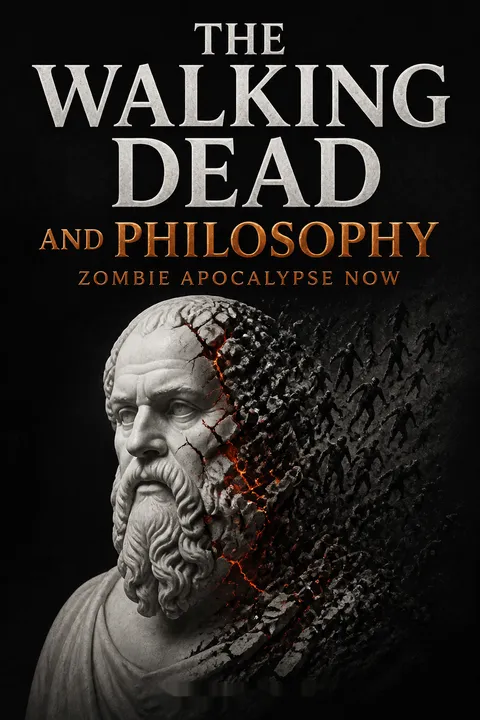
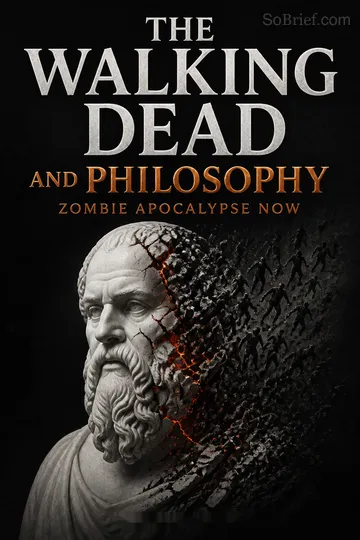
The Walking Dead and Philosophy receives mixed reviews, averaging 3.62 out of 5 stars. Readers appreciate its accessible approach to philosophy through the lens of the popular zombie series. Many find it engaging and thought-provoking, praising its exploration of moral dilemmas and philosophical concepts. However, some criticize repetitive content, editing errors, and occasional weak essays. The book covers both the TV show and comics, potentially spoiling content for some readers. Overall, fans of The Walking Dead generally enjoy the philosophical analysis, despite its flaws.
Glossary
P-zombie
A behaviorally identical being without experienceA philosophical zombie is imagined as physically indistinguishable from a conscious human, including in speech and behavior, but with no subjective inner experience. The thought experiment tests whether consciousness can be fully explained by physical facts. The book distinguishes these abstract P-zombies from the flesh-eating walkers in The Walking Dead.
Zombie Argument
An argument against physicalismDavid Chalmers’s Zombie Argument uses the conceivability of a physically identical but unconscious being to challenge the claim that consciousness is entirely physical. If such a being is genuinely possible, then physical facts alone may not determine experience. The book presents the argument alongside Daniel Dennett’s objection that the imagined case is incoherent.
intentionality
Thoughts being about thingsIn philosophy of mind, intentionality is the feature by which thoughts, beliefs, and perceptions refer to or concern something. A person can think about a page, a memory, or a claim that is false. The book presents intentionality as one aspect of mental life that remains difficult to explain solely by describing physical brain activity.
functionalism
Mental states defined by their rolesFunctionalism identifies a mental state by the role it plays among inputs, other mental states, and behavior, rather than by the material from which a system is made. The same kind of state could, in principle, occur in different physical systems if they perform the same functional role. The book uses a walker-powered computer to question whether matching function guarantees consciousness.
residual subjectivity
Mental traces persisting after deathA term used for limited remnants of a deceased person’s mental life that may appear in a walker’s behavior, such as returning to a familiar home or performing a simple learned action. The chapter argues that these traces could make a walker more than an inert object, though they do not amount to full consciousness or rational agency.
state of nature
Life without common governmentIn social contract theory, the state of nature is a condition in which people share no common political authority. Hobbes describes it as insecure and conflict-prone, while Locke holds that basic rights exist there even before government. The book applies both accounts to the survivors’ world after public institutions collapse.
Realism
Politics centered on power and securityPolitical Realism treats power, security, and the survival of political communities as central features of relations among states. In the book’s analysis, this view explains why Rick’s group is vulnerable when it lacks organization and military readiness, while Woodbury is more cohesive under the Governor. The framework does not make that regime morally admirable.
existentialism
Meaning made through human choiceExistentialism, as presented in the book through Sartre, holds that people do not receive a fixed purpose in advance. They define themselves through choices and bear responsibility for those choices. The apocalypse removes familiar authorities and conventions, forcing characters to decide what commitments and values will guide their lives.
absurdity
Conflict between longing and indifferenceFor Camus, absurdity arises from the conflict between human desire for order, justice, and meaning and a world that does not answer those demands. The book connects this idea to survivors who grieve, hope, and act despite having no guarantee that their efforts will succeed. Conscious resistance, rather than denial, becomes a way to face the condition.
natural law
Moral principles grounded in human natureNatural law is the view that general moral principles can be discerned through reason and apply independently of a government’s rules. The book discusses principles such as avoiding needless harm and helping others, while emphasizing that applying them to specific cases requires judgment. Contributors disagree about whether such principles are truly self-evident or objective.
expanding circle
Widening moral considerationPeter Singer’s expanding circle is the idea that moral consideration should extend beyond humans to any beings capable of experiencing pleasure and pain. The book applies this challenge to walkers: if they can suffer, their interests may matter even if they lack human reasoning. The argument raises questions about where moral concern should stop.
FAQ
1. What’s "The Walking Dead and Philosophy: Zombie Apocalypse Now" by Wayne Yuen about?
- Philosophy Meets Pop Culture: The book explores philosophical questions and ethical dilemmas through the lens of the popular TV series and comic, "The Walking Dead."
- Zombie Apocalypse as Metaphor: It uses the zombie apocalypse as a backdrop to examine human nature, morality, and society.
- Accessible Philosophy: The essays are written to make complex philosophical ideas accessible to fans of the show and newcomers to philosophy alike.
- Wide Range of Topics: Topics include ethics, personal identity, leadership, and the meaning of life in a world overrun by zombies.
2. Why should I read "The Walking Dead and Philosophy: Zombie Apocalypse Now" by Wayne Yuen?
- Engaging Introduction to Philosophy: The book makes philosophy relatable by connecting it to a popular cultural phenomenon.
- Deepens Understanding of the Show: It offers new perspectives on characters and storylines, enriching the viewing experience.
- Thought-Provoking Questions: Readers are encouraged to reflect on their own values and beliefs in extreme situations.
- Diverse Contributors: Multiple philosophers contribute essays, providing a variety of viewpoints and interpretations.
3. What are the key takeaways from "The Walking Dead and Philosophy: Zombie Apocalypse Now"?
- Ethics in Crisis: The book highlights how moral choices become more complex in life-and-death situations.
- Human Nature Explored: It examines what it means to be human when civilization collapses.
- Leadership and Authority: The essays discuss the challenges of leadership and the legitimacy of power in a lawless world.
- Survival vs. Humanity: The tension between surviving at any cost and maintaining one’s humanity is a central theme.
4. How does Wayne Yuen use "The Walking Dead" to explore philosophical concepts?
- Case Studies from the Show: Specific episodes and character arcs are analyzed to illustrate philosophical dilemmas.
- Classic Philosophers Referenced: The book draws on thinkers like Hobbes, Kant, and Nietzsche to frame discussions.
- Moral Dilemmas Highlighted: Scenarios such as killing for survival or sacrificing one for the many are examined in depth.
- Identity and Personhood: The transformation of characters and the nature of zombies themselves are used to question what makes someone a person.
5. What ethical dilemmas are discussed in "The Walking Dead and Philosophy: Zombie Apocalypse Now"?
- Killing and Mercy: The morality of killing both zombies and humans is debated, including mercy killings.
- Group Loyalty vs. Outsiders: The ethics of protecting one’s group at the expense of others is explored.
- Resource Allocation: Decisions about who gets scarce resources are analyzed from utilitarian and deontological perspectives.
- Ends Justify the Means?: The book questions whether survival justifies morally questionable actions.
6. How does "The Walking Dead and Philosophy: Zombie Apocalypse Now" address the concept of personal identity?
- Continuity of Self: The book discusses whether survivors remain the same people after traumatic experiences.
- Zombies and Personhood: It questions if zombies retain any aspect of their former identity or moral status.
- Memory and Identity: The role of memory in maintaining personal identity is explored through character transformations.
- Moral Responsibility: The loss of self in zombies raises questions about moral responsibility and agency.
7. What does Wayne Yuen say about leadership and authority in a post-apocalyptic world?
- Legitimacy of Power: The book examines what makes a leader legitimate when traditional structures collapse.
- Types of Leadership: Different leadership styles, such as Rick’s democracy vs. the Governor’s tyranny, are compared.
- Moral Burdens: The ethical weight of making life-and-death decisions for a group is discussed.
- Social Contracts: The formation of new social contracts and rules in the absence of government is analyzed.
8. How does "The Walking Dead and Philosophy: Zombie Apocalypse Now" explore the tension between survival and morality?
- Survival Instincts: The book looks at how the drive to survive can conflict with moral principles.
- Moral Compromises: Characters are often forced to compromise their values to stay alive.
- Redefining Right and Wrong: The collapse of society leads to new definitions of what is acceptable behavior.
- Consequences of Choices: The long-term effects of moral decisions on individuals and groups are considered.
9. What philosophical theories and thinkers are referenced in "The Walking Dead and Philosophy: Zombie Apocalypse Now"?
- Thomas Hobbes: The state of nature and the need for social contracts are discussed in relation to the show’s chaos.
- Immanuel Kant: Kantian ethics, such as treating people as ends in themselves, are applied to survivor interactions.
- Utilitarianism: The greatest good for the greatest number is debated in resource allocation and group decisions.
- Nietzsche and Existentialism: The search for meaning in a meaningless world is a recurring theme.
10. How does "The Walking Dead and Philosophy: Zombie Apocalypse Now" define humanity in the context of a zombie apocalypse?
- Humanity vs. Survival: The book questions whether maintaining one’s humanity is possible or even desirable in extreme conditions.
- Empathy and Compassion: Acts of kindness are contrasted with brutality, highlighting what makes us human.
- Dehumanization: The process by which survivors and zombies are dehumanized is explored.
- Moral Boundaries: The shifting boundaries of acceptable behavior challenge traditional notions of humanity.
11. What are the best quotes from "The Walking Dead and Philosophy: Zombie Apocalypse Now" and what do they mean?
- "In the end, we are all the walking dead." This quote reflects on the universality of mortality and the thin line between survivors and zombies.
- "Morality is a luxury in a world of scarcity." It suggests that ethical behavior becomes harder to maintain when resources are limited.
- "Leadership is not about power, but about responsibility." This highlights the ethical burdens leaders face in crisis.
- "To lose one’s humanity is to lose everything." The book emphasizes that survival without moral values is ultimately empty.
12. How can readers apply the philosophical insights from "The Walking Dead and Philosophy: Zombie Apocalypse Now" to real life?
- Ethical Decision-Making: The book encourages readers to think critically about their own moral choices, even outside of extreme situations.
- Understanding Authority: Insights into leadership and power dynamics can be applied to workplaces and communities.
- Resilience and Identity: The exploration of personal identity and resilience is relevant to anyone facing hardship or change.
- Value of Community: The importance of social bonds and cooperation is underscored, reminding readers of the need for empathy and solidarity.
Popular Culture and Philosophy Series Series

Download PDF
Download EPUB
.epub digital book format is ideal for reading ebooks on phones, tablets, and e-readers.








